At my father’s will reading…
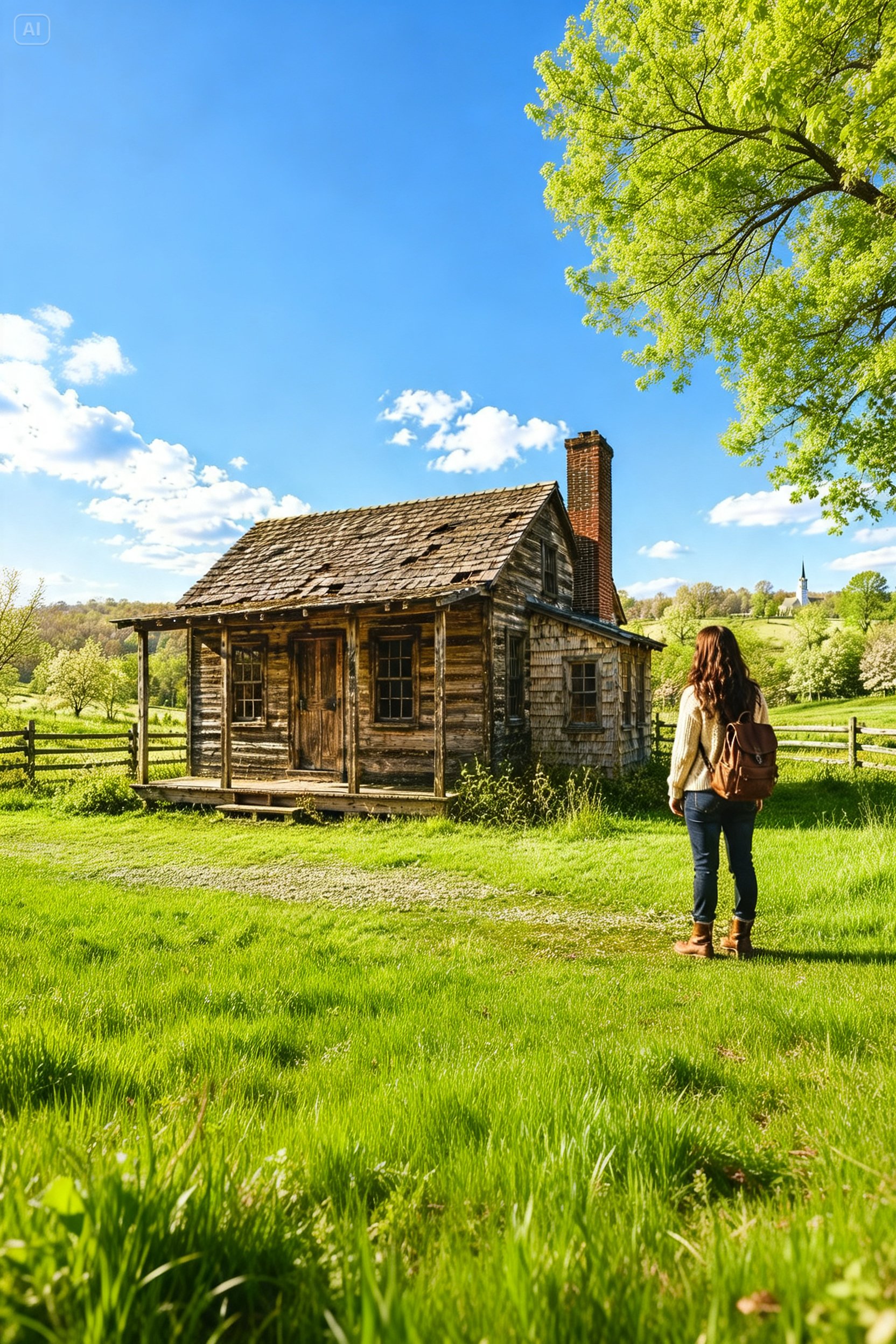
At my father’s will reading, my sister inherited $11.5 million and laughed when I was given an old blacksmith’s forge. I almost let her convince me it was worthless, until I remembered something our grandfather once showed me….
My name is Etta Mattingly. I was 24 when I sat at the far end of a walnut conference table in a lawyer’s office on Main Street in Bardstown, Kentucky, waiting to hear what my father had left behind. I wore my only black dress, my grandfather’s cream cotton work shirt, and an old oxblood barn jacket, because December in Nelson County has a way of finding every gap in your clothes.
My older sister, Cressida Mattingly Bulitt, was 35 and already settled in Louisville. She had driven down from Cherokee Triangle in her charcoal Mercedes wagon, dressed like someone expecting a very successful appointment. Her husband, Beauregard, a hedge fund partner, sat beside her checking his Bloomberg screen.
Our attorney, Bedford Wickliffe, was 71, my father’s old Vanderbilt law school roommate. He read the will in a measured voice while Cressida made notes with a gold pen. There were no tears, and nobody asked how I was doing.
The Bourbon Country farm above Bardstown went to Cressida. So did a Louisville Vanguard portfolio worth $4.8 million, a thoroughbred share at Hagyard Farm in Lexington, a condo in Bermuda, the Mercedes, our Steinway piano, and the family silver. The property and investments amounted to about $11.5 million, and my sister had already begun checking her inventory.
Then Mr. Wickliffe turned a page. My father left me a 0.8-acre parcel on Bardstown Road, including the timber-framed blacksmith’s forge built by my great-grandfather, Caspar Mattingly, in 1898, and everything inside it. The lawyer stopped just long enough for the words to settle.
Cressida laughed. “Daddy left her the rusted shed?” Beauregard said the county had condemned it four years earlier and calculated that an offer connected to the Heaven Hill expansion might leave me roughly $120,000 after demolition, if I was lucky. Cressida glanced at her watch and said, “Congratulations, E. You got the forge.”
Mr. Wickliffe didn’t laugh. He watched me over his glasses with an expression I couldn’t read. We signed the papers, and within 32 minutes my sister had the fortune, while I held the deed to a building nobody wanted.
What Cressida never understood was that the forge wasn’t just a shed to me. My grandfather, Roland Caspar Mattingly—Roly to everybody who loved him—had carried me there when I was three. Almost every Saturday and summer afternoon of my childhood, I stood beside him while he worked iron at the same anvil his father had used.
Cressida was eleven years older than I was and had spent much of my childhood away at Bardstown Academy. She hated the coal smoke and quit visiting the forge when she was little. I loved the smell of it: warm metal, old ash, beeswax on wooden tool handles, and pine boards worn smooth beneath a blacksmith’s boots.
Roly taught me how wrought iron could be drawn, twisted, and scrolled into garden-gate hinges, while modern mild steel behaved differently under a hammer. He showed me how a horseshoe had to fit a particular hoof, not merely a particular breed. He also taught me about the copper line arms and fittings that carried vapor through Kentucky bourbon stills. Caspar had learned his trade from Cleophas Hagen, bought the parcel for $60, and raised the forge himself in 1898.
At five, I was learning to shape shoes for a pony. By eight, I had forged a gate hinge for Mrs. Cordelia Buckner, down to the leaf pattern chased into the metal. Grandpa handed the finished piece back to me without a speech, and I carried that quiet approval around for weeks.
His favorite word was “patience.” He said iron didn’t need to hurry toward my hammer; my hammer had to come to the iron slowly, a quarter turn at a time. When I once worked a strip too aggressively, he showed me how over-hammering could damage its grain and leave a hinge looking fine today but vulnerable to corrosion in the years ahead.
He taught me to listen to the anvil, too. His 180-pound Hay-Budden had stood in that shop since 1898, and its clear ring could tell a practiced ear whether the face and heel were sound. By my teens, I could tell which part of it needed attention just by striking it once.
By fifteen, I was finishing regular customer orders myself, using the old tongs, swage blocks, and chasing tools. I stamped the pieces with Caspar’s little “CM” maker’s mark. I thought I was only spending time with my grandfather, never realizing he was handing me a trade that had survived more than a century.
He also told me stories about the people behind the orders. Henry Beam came every Tuesday for decades to collect distillery hardware; a Honduran blacksmith named Esteban Reyes learned the local techniques in one autumn and went on to teach the craft in Louisville. Grandpa never spoke as if these customers were less important than the work itself.
The story he returned to most took place during the Depression winter of 1932–33. My great-grandfather Caspar opened the forge before dawn and worked for 98 days without charging 47 local farming families for the repairs they needed. He made plow points, wagon parts, horseshoes, gate hinges, and rake teeth so their land could keep producing.
According to Grandpa, none of those 47 farms was sold at the February foreclosure auctions. The Bardstown Standard ran a story on March 18, 1933, honoring the forge. Two years later, an immigrant businessman named Marvin Shapiro came to thank Caspar and handed him a folded paper, though Grandpa never told me what the paper said.
When I once asked why he spent hours making a hinge that could be bought cheaply in Louisville, Grandpa set down his hammer. “A factory hinge is a part, darling,” he told me. “A hand-forged hinge is a story.” I understood him, even if I couldn’t have explained it then.
My mother, Margaret, died of ovarian cancer when I was eleven. After eighteen months of illness, our farmhouse fell quiet, and my father, Wendell, seemed to retreat into that silence. He spoke to me mostly about the fields and the herd, and Grandpa’s forge became the place where I could still hear a voice that wanted me there.
When Roly died in his sleep in October 2018, at 79, my father buried him at St. Joseph’s Catholic Cemetery and padlocked the forge the next morning. For seven years I drove past its dark windows, unable to go inside. I knew the anvil and every tool were waiting beyond that door, but the key was gone.
After Dad’s funeral, Cressida told me she would sell the farmhouse by spring and that I needed to be out by April 1. She didn’t ask where I would go. A few days after the will reading, Mr. Wickliffe gave me a small envelope sealed in red wax; inside was the brass key Dad had taken from the forge.
One cold Wednesday, I drove my old 1989 GMC Sierra to the 0.8-acre lot and opened the padlock. The roof had lost slates, and the shop smelled of years without a fire, but the original anvil still stood in the middle of the golden pine floor. The long iron tool rack held Grandpa’s hammers exactly where he’d left them.
I took off my boots and socks and walked across the cool boards. Then I remembered something Grandpa had told me when I was nine: Caspar had built a hidden hatch beside the anvil stand, a place where the forge kept what must never be lost. Grandpa said he had never lifted it.
I knelt where the wood grain ran a little darker and noticed a tiny iron ring I had stepped over a thousand times. When I pulled, a three-inch-thick floorboard rose from its frame, exposing a brick-lined cavity beneath my grandfather’s anvil. At the bottom sat a small tin box, and beneath it was another door, its seams sealed with brown wax stamped with a horseshoe. Part 2…..
I lifted the tin box with both hands and set it in the pale December light. The lid bore Caspar’s name and the year 1898. Inside an oilcloth bundle lay 205 gold coins—Liberty half eagles, quarter eagles, and a few Saint-Gaudens double eagles—stacked in careful rows.
Under the coins was Caspar’s leather-bound forging curriculum, filled with patterns for wrought iron, farrier measurements, and drawings of copper still fittings arranged by distillery. There was also Grandpa’s 310-page commission ledger, recording what he had made from 1962 until 2018. A sepia photograph showed the newly built forge in 1898, with Caspar holding a hammer at the door.
I found a yellowing clipping from the March 18, 1933, Bardstown Standard. It described the 98 days Caspar had spent helping those 47 farms, naming families such as Beam, Wickliffe, Hagen, Buckner, Higdon, and Wathen. Marvin Shapiro had been quoted saying the community would carry Caspar’s iron for as long as their gates still hung.
At the top of the box lay a folded letter with my name on it, sealed in the same brown wax. Grandpa had written it on October 7, 2018, just before he died. My hands felt steadier once I recognized his handwriting.
He said Caspar had hidden money beneath the shop floor because he distrusted banks. A week before his death in 1949, Caspar had told Grandpa about the hiding place and made him promise not to lift the board. Grandpa had kept that promise, and he had left the note so I could decide what to do with the forge.
“Your sister will sell what she can,” he wrote, “but this box she cannot sell because she does not know it is here.” He told me the curriculum belonged to Caspar, the ledger was the record, and I should forge again if it suited me. I tucked his letter inside the work shirt he had left me.
The gold mattered. I had barely any cash and no longer had a secure place in the farmhouse. But sitting on that cold floor, the words “Forge again” struck me harder than the sight of those coins.
Then I looked back at the other hatch. Eight unbroken horseshoe seals ran along the waxed edges of the narrow wooden trapdoor. I eased it upward and found fourteen brick steps descending into darkness.
I took the kerosene lantern from the wall, lit it, and went down carefully. At the bottom was a limestone-floored cellar, about twelve feet by twenty, with low ceilings and heart-pine shelves on every wall. The air smelled of old paper, coal dust, and damp stone.
There were 47 leather-bound ledgers along the upper shelves, holding the commission history of the Mattingly Forge from 1898 to 2018. Beneath them stood 380 hand-drawn master design plates. Bundles on the lower shelves carried contracts that explained an entire part of our family’s history I had never been told.
The first bundle was marked “Shapiro Mattingly design contract, Heaven Hill founding apparatus, December 18, 1935.” I unfolded eight handwritten pages and saw the signatures of Marvin Shapiro and Caspar Mattingly. For $300, Caspar had designed the copper still hardware that helped launch the distillery’s post-Prohibition equipment.
The drawings described doubler and thumper fittings, line-arm angles, and the copper joints that connected the stills. The agreement required Caspar’s work to remain anonymous, reflecting the anti-Catholic and anti-Jewish hostility the two families feared at the time. Neither man had tried to claim public recognition.
Other bundles were labeled Beam, January 1936; Wathen, May 1936; and Fenwick, August 1936. More contracts followed through August 2018, only two months before Grandpa’s death. In all, the cellar held 44 distillery hardware design contracts—a record of 83 years of work that nobody outside the family shop had credited to its makers.
I had known Grandpa made bourbon hardware. I had not known the simple forge beside Bardstown Road contained original drawings and agreements connecting four generations of Mattinglys to the industry. After carefully returning the papers to their oilcloth, I closed the cellar hatch and sat beside the anvil until the light faded.
I went back to the farmhouse the next morning. My father’s walnut rolltop desk stood in his small study, the room where he had spent so many silent evenings. I raised the top and found an envelope centered on the green leather blotter, addressed to me in his deliberate handwriting.
It was sealed with the same brown horseshoe wax. I opened it and began reading the words my father had apparently been unable to say aloud.
Part 3 Etta, his letter began, if you have found the forge, you have found the hidden cavity and the cellar archive. He wrote that the Smithsonian Institution’s National Museum of American History had been searching for the Mattingly Forge Industrial Design Archive for fifty years. The University of Kentucky College of Engineering and the Kentucky Bourbon Trail Heritage Foundation, he said, had spent decades looking for Caspar’s anonymous designs and maker’s stamp punches.
Dad knew the historical drawings might be valuable, but he made a distinction I had never expected from him. The old punches, he wrote, could matter more than money because they connected surviving pieces of hardware to the hands that made them. He told me to contact a Smithsonian curator, Dr. Adelaide Higdon, a relative of Grandpa’s, who was expecting my call.
Then came the paragraph that made me sit down. Dad and Grandpa, he said, had sold one of the hidden gold coins through a Louisville intermediary each winter for 47 years. They used the proceeds to quietly endow 47 full scholarships at Bardstown Community College, one for each farm Caspar had helped during the Depression.
The scholarships ran from 1972 through 2018, without the Mattingly name attached. My mother had known; Cressida had not. All those years when Dad seemed incapable of speaking to me, he had been continuing a kindness his grandfather began.
“I have left you the forge because the forge is the only thing in this whole estate your grandfather would have wanted you to have,” he wrote. At the end of his September 18, 2024, letter, he added, “I am not a man of words. I am sorry I was not a man of more words for you.” I read that apology more than once.
I couldn’t pretend one letter gave us back the years we had missed. But it changed the way I understood his silence and the will Mr. Wickliffe had read. The forge had not been an afterthought, and my father had known far more about its contents than my sister or I had realized.
The following Monday, I took the tin of gold coins to Bardstown Community Federal on Main Street. The branch manager, Mrs. Cordelia Buckner, was a relative of Grandpa’s and the woman whose gate hinge I had once forged as a child. She helped arrange a dealer’s assessment; the coins were valued at $24,200.
I deposited $23,300 and carried $900 back to my GMC. It was not anything like the wealth Cressida inherited, but it meant I could buy supplies and keep myself going while I decided how to care for the shop. Mrs. Buckner looked at the receipt without asking me to explain where the coins had come from.
I called Dr. Higdon that Wednesday. She arrived from Washington the next Saturday with three industrial-design archivists and a climate-controlled van. They spent twelve hours documenting the 47 ledgers, 380 pattern plates, and 44 contracts, comparing the dates and makers’ marks with their research.
Dr. Higdon proposed acquiring the complete archive for $5.8 million, with the collection kept together permanently under the Mattingly Forge name. The agreement would recognize me as the donor while allowing Caspar’s 1898 curriculum notebook and the original anvil to remain at the forge for working use. I did not give an answer until I understood that the records would remain intact and accessible for future study.
When we agreed, we shook hands beside the anvil. The first Smithsonian transfer cleared on February 5. It was more than enough to repair the roof, restore the tools, and give the place a future—though it was still hard to look at that worn pine floor and think in millions of dollars.
A week after that agreement, I contacted Heaven Hill Distillery. Alan Shapiro, Marvin’s great-great-grandson, came from Loretto with three engineering directors and drawings preserved in his family’s vault. They laid their 1935 plans beside Caspar’s matching contract and found both ancestors’ signatures where they belonged.
Alan offered the Mattingly Forge a ten-year heritage-design consultancy worth $47,000 a year. In return, I would continue making and preserving the hand-forged copper hardware needed for the founding still apparatus restoration. I accepted, because the contract wasn’t just a payment for a family name: it was an agreement for real work my hands already knew how to do.
By March, the first consultancy payment had arrived. I could have closed the door, sold the tools, and lived comfortably elsewhere. Instead I kept working through the repairs I had begun that January, because the forge I had inherited was still in poor condition and needed careful restoration.
Part 4 Back in those first January weeks, twenty-two slate tiles were missing from the roof. The front window needed new glass and putty, the thirty-foot iron tool rack was dry and rusting, and the anvil face needed gentle attention. I bought two hundred replacement slate tiles from a quarry near Slate Run in Boyle County for $800, then began addressing the damage one piece at a time.
I found a retired horseshoer named Tobias Wickliffe, who was 82 and lived near Loretto. He came over on a Wednesday and showed me how to dress the anvil face without spoiling its temper. When he tested the ring, I recognized the clean, high note Grandpa had taught me to listen for.
I reglazed the shop window over two evenings and treated the long iron rack with three coats of beeswax and linseed oil. Then I sorted and cleaned Caspar’s original hammers, tongs, chisels, swage blocks, and fullers. Each tool had a place, and my hands remembered more of those places than my mind did.
In late January, I brought fresh Pennsylvania anthracite into the fire pit and lit the forge for the first time since 2018. My first commission was nothing grand: another wrought-iron gate hinge for Mrs. Cordelia Buckner. The iron drew clean beneath the cross-peen hammer, and for the first time in years I heard the familiar rhythm filling the room.
I kept Caspar’s old curriculum by the anvil and started a new ledger. On January 24, 2025, I recorded the first new Mattingly Forge commission: one hand-forged gate hinge for Mrs. Buckner, $24. I stamped it with the little CM mark and felt as though I had added one more line to something my grandfather had trusted me to continue.
The caretaker’s cabin attached to the back of the shop gradually became my home. Before Cressida’s real estate agent came to photograph the farmhouse, I moved a folding bed from an upstairs room. I brought in a two-burner kerosene cooker, found a kitchen table for $24 at a barn sale near New Haven, and bought a wool quilt for $16 at a thrift shop in Bardstown.
Mr. Wickliffe returned with a small cast-iron parlor stove from his shed and installed it with a proper vent through the brick wall. When I tried to pay him, he shook his head. Grandpa, he said, had forged the hinges for his father’s barn gate in 1972. “Just bring me coffee.”
That first winter, I slept on the folding bed and listened to the stove settle as the room warmed. I heard the eleven o’clock bell from St. Joseph’s and traffic thinning along Bardstown Road. The cabin was simple, but its roof was mine, and nobody could give me an April deadline there.
I hung Grandpa’s cream work shirt on a peg above the kitchen table. His old tin box sat on the shelf over the door, now empty, and Caspar’s maker’s stamp returned to its place beside the anvil. There were no marble counters, no silver place settings, and no view of the Bermuda coast. There was a sound forge, a ledger, and work waiting at the door.
Tobias began arriving on Saturday mornings in his sand-colored 1968 Mercedes 220D. He brought a thermos and a paper sack of his wife’s caramel-pecan cookies, stayed long enough for coffee, and sometimes looked around the newly restored shop before saying, “Roly would’ve liked this.” I had to turn back to my work the first time he said it.
The orders grew as word traveled that the old Mattingly anvil was ringing again. I repaired garden gates and made ironwork for families who still remembered what my grandfather’s hands had made. Some people knew my name from the news about the archive; others came because an old hinge needed fixing and someone had told them I would know how.
I had imagined that inheriting a forge meant being left with a ruin. Instead I was learning how much of the county’s past had quietly passed through that small building. Keeping it open demanded work every day, but it was the first responsibility I had ever chosen without needing anyone’s approval.
Part 5 In the forge’s second year, the Heaven Hill consultancy widened into a partnership serving seven historic Bardstown-area distilleries along the Bourbon Trail. Their directors needed hand-forged copper still-hardware preservation pieces, including 47 line-arm fittings a year. We agreed on $1,200 per fitting for ten years, a standing order that would keep the old craft employed rather than merely displayed behind museum glass.
They chose the number 47 deliberately, in memory of the farms Caspar had saved in 1933. I liked that the work would arrive as a yearly commitment, just as Grandpa’s customers used to bring him a steady list of repairs. Each part would still have to be made correctly; no amount of heritage language could replace sound workmanship.
Henry Beam IV came down from Loretto one March with a bottle of his family’s twelve-year reserve and a story. His family traced its connection to one of those Depression-era farms, and he told me how a relative had received one of the quiet college scholarships. What Dad and Grandpa had done without their names attached was still changing lives outside our family.
Henry came back in November with three nephews who wanted to see the forge. I showed them how a line of chalk on hot iron becomes a bend under a hammer, and how a poorly formed fitting can fail long after a customer carries it home. The boys watched the anvil more closely than they watched me, exactly as I once had.
One April Saturday, Mr. Bedford Wickliffe arrived carrying the hand-painted “Mattingly Forge, Est. 1898, Bardstown, KY” sign. He had bought it at Caspar’s estate sale in 1949 and kept it in his law office hallway for seventy-five years. He set it beside the anvil, declined even a cup of coffee, and let me find my own words.
A Kentucky heritage magazine published a feature on the shop, and commissions came from farther and farther across bourbon country. I eventually increased my price per piece by twelve dollars, and even then the order book stretched thirteen months ahead. For a woman who had been told her inheritance was worth little more than a demolished lot, the work itself was becoming a living answer.
Cressida still owned the farm, the investments, the thoroughbred share, the condo, the piano, and the silver. I did not try to take those things away from her or turn her laugh into a public humiliation. Dad had given us different legacies, and I had enough to do without measuring mine against hers every morning.
Final By the second autumn, I had developed a habit of sitting on the forge’s timber-framed front step with a warm mug in my hands as the light left the fields. Bardstown Road grew quiet, the pastures turned amber, and the steeple of St. Joseph’s stood against the evening sky. Inside, the anvil waited for the next day’s work.
I thought about Caspar, who had built the place in 1898 with his own money and labor. I thought about the 98 days when he made repairs for neighbors who had no money to give him, and about the business agreement he signed with Marvin Shapiro in 1935 without asking for his name to be celebrated. Those decisions had become forty-four contracts, shelves of drawings, and a history other people would now be able to study.
I thought about Roly, who taught me to shape a hinge without thinning away what made it strong. He had also taken a stranger into the forge, listened to customers’ family stories, and quietly helped students go to college. When he told me iron needed patience, he was teaching me more than a way to hold a hammer.
And I thought about my father. I could not recover the conversations we never had, and I would always wish he had said more while he was alive. But his final letter told me he had noticed where I belonged, and his will made certain that place would come to me.
The Smithsonian preserved the historical archive. The distilleries helped support the working shop. The scholarships honored the 47 farm families, and the new annual hardware orders carried that number forward. My sister had inherited the things our father could price on paper; I had inherited the work that connected all those names and years.
People sometimes asked what I found beneath the floorboard. I could tell them about the gold coins and the documents, or about the $5.8 million archival agreement and the contracts that followed. Those were real discoveries, and I was grateful for them.
But when I stood at the old anvil, listening for that clear ring, I knew what mattered most. My grandfather had spent my childhood teaching me to make something useful with my hands and to care about the person who would carry it home. The floorboard had only shown me how many people before me had lived by the same promise.
THE END. I’ve shared the complete story, and I truly hope it touched your heart. If this story moved you, please , like, and share the post. Thank you for reading! ❤️
✓ Lynn R. Adams
At my father’s will reading, my sister inherited $11.5 million and laughed when I was given an old blacksmith’s forge. I almost let her convince me it was worthless, until I remembered something our g…