At five in the morning, a police officer called to tell me my five-month-pregnant daughter had been found bleeding at
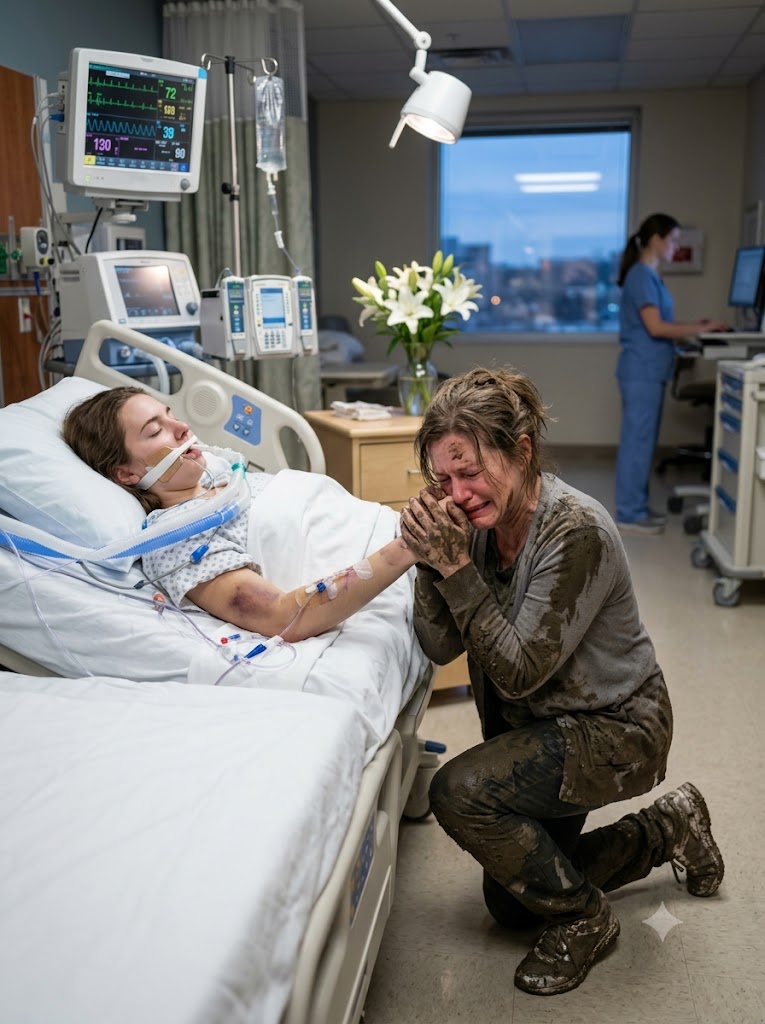
At five in the morning, a police officer called to tell me my five-month-pregnant daughter had been found bleeding at a freezing bus stop outside Boston. Her wealthy husband claimed she had simply walked out after an argument, but the hospital told me a different story. His mother had been there, and both of them had left my daughter alone in the cold. They believed their money, reputation, and powerful connections would protect them from every consequence. What they didn’t know was that I had spent twenty-eight years building a life around secrets, investigations, and men who thought themselves untouchable. I made one phone call, and before another sunrise, their perfect world began collapsing. Part 1: One devastating hospital call awakens a father’s buried past. At a.m., a police officer told me my daughter might not survive the morning, and I learned that the two people responsible were sleeping inside a mansion worth fourteen million dollars. My daughter, Emily, was twenty-nine years old, five months pregnant, and had been found unconscious at a bus stop in the freezing Massachusetts winter. She had no coat, no purse, and only one shoe, while her wedding ring had been pressed so tightly into her swollen finger that the emergency staff had struggled to remove it. Her husband, Nathan Whitmore, had already informed the police that Emily was emotionally unstable and had left their home voluntarily. His mother, Victoria Whitmore, had apparently confirmed every word. I stood in my kitchen holding the telephone, listening to Officer Michael Reeves explain that Emily had been taken to Massachusetts General Hospital. Outside my window, snow covered the quiet streets of Concord, and the clock above my refrigerator continued ticking as though nothing had changed. I asked the officer whether my daughter was conscious, and his hesitation told me more than his answer. He said the doctors were doing everything possible and that I needed to come immediately. I thanked him, hung up, and stood perfectly still for several seconds. My name is Richard Bennett, and I was sixty-two years old when that call came. For most of Emily’s adult life, she had believed I was a retired federal accountant who spent his days restoring antique furniture and complaining about the price of coffee. That description wasn’t entirely false, but it left out the twenty-eight years I had spent investigating financial crimes, corporate corruption, and the elaborate networks powerful people used to protect themselves. I had served as a senior forensic investigator with a federal law enforcement agency before retiring, and I still maintained friendships with people who understood how to follow evidence that others preferred to ignore. Nathan Whitmore had never asked about my career because, in his eyes, a man living in a modest colonial house couldn’t possibly matter. I drove to Boston through streets so empty that the traffic lights seemed unnecessary. During the forty-minute journey, I remembered Emily at seven years old, running across our backyard with a butterfly net and calling me to help her rescue a bird trapped inside the garage. I remembered her high school graduation, her first job as an elementary school teacher, and the afternoon she introduced me to Nathan with a nervous smile. He had arrived in a luxury car, wearing a watch that cost more than my house, and had shaken my hand without bothering to look me in the eyes. Victoria had been worse, openly examining my furniture during her first visit and asking whether I had ever considered moving somewhere more respectable. At the hospital, Dr. Laura Mitchell led me into a private consultation room. She explained that Emily had suffered serious injuries, substantial blood loss, and dangerous complications involving her pregnancy, and that the medical team was working to stabilize both mother and baby. Her voice was calm, but I could see the exhaustion around her eyes. She told me that some injuries were consistent with a physical assault and that Emily had managed to identify her husband and mother-in-law before losing consciousness again. I asked whether the police had been informed, and she assured me they had. When I finally entered Emily’s room, I barely recognized the woman lying beneath the white blankets. Her face was bruised, her lips were pale, and machines monitored every fragile change in her condition. I held her hand carefully, remembering how small that same hand had felt when she was born. She opened her eyes for a moment and whispered, “Dad, I tried to protect the baby.” I leaned close and told her that she had already done everything she could. Then she said something that changed the entire morning. “Don’t let Nathan find the blue folder.” Before I could ask what she meant, the monitor beside her bed sounded, and nurses hurried toward us. A doctor gently guided me into the hallway while the emergency team surrounded my daughter. I watched the doors close and felt a kind of anger I had not experienced in decades. I did not shout, threaten anyone, or demand special treatment. I walked to the end of the corridor and made one phone call. “Daniel,” I said when the man answered, “I need you to look into Nathan Whitmore, his mother Victoria, and every business they control.” My former colleague was silent for a moment. Then he asked, “Richard, how serious is this?” I stared through the hospital window at the snow falling over Boston. “Serious enough that I need every document preserved before they know we’re looking.” Part 2: A hidden recording exposes the cruelty behind a perfect marriage. By eight that morning, Nathan Whitmore had already begun constructing his version of what happened. His attorney called the hospital claiming Nathan was a devoted husband who wanted access to his wife, while Victoria contacted several family friends to explain that Emily had suffered an unfortunate emotional episode. The hospital restricted access in accordance with Emily’s wishes and the applicable procedures, and Officer Reeves arranged for a detective to interview medical personnel. I remained beside my daughter’s room, watching people in expensive coats arrive with sympathy that seemed suspiciously rehearsed. Nobody from the Whitmore family asked whether the baby was still alive. Detective Sarah Collins introduced herself shortly after nine. She was in her early forties, with dark hair pulled into a tight bun and the patient expression of someone accustomed to separating facts from excuses. I told her about Emily’s marriage, the increasingly rare phone calls, and the occasions when Nathan had answered Emily’s phone and insisted she was too busy to talk. I also described Victoria’s habit of criticizing Emily’s clothes, teaching salary, and family background. Sarah listened without interruption and asked whether Emily had ever disclosed physical mistreatment. I admitted that she hadn’t, although I now remembered several conversations differently. Three months earlier, Emily had arrived at my house wearing a long-sleeved sweater despite unusually warm weather, and she had pulled away when I reached to hug her. She claimed she had strained her shoulder while moving furniture, but Nathan had later told me they employed a full-time household staff. Another time, she had called after midnight, said she missed her mother, and suddenly ended the conversation when someone entered the room. My wife, Margaret, had died six years earlier, and Emily had often sought comfort in talking about her. Sarah asked whether I had access to Emily’s belongings. I explained that Emily kept a small storage box in my guest bedroom, containing childhood photographs, documents, and items she didn’t want to leave at the Whitmore estate. We drove to my house together, where I gave Sarah permission to inspect the box and contacted Emily’s attorney to clarify ownership of any sensitive materials. Beneath an old college sweatshirt, we discovered a blue document folder with Emily’s name written across the front. It contained financial statements, photographs of injuries, screenshots of threatening messages, and a handwritten account of incidents inside the mansion. The final item was a small digital recording device wrapped in a scarf. A note attached to it read, “Dad, if I’m too frightened to explain, please listen.” Sarah arranged for the recordings to be handled as evidence, and we reviewed an authorized copy later that afternoon. Most files captured ordinary household sounds, but one contained an argument between Emily, Nathan, and Victoria. Nathan demanded that Emily sign papers transferring control of a trust established by her late grandmother, while Victoria described my daughter as an ungrateful embarrassment to their family. Then we heard Emily refuse. Nathan’s voice turned cold. “You came into this family with nothing, Emily, and everything you have belongs to us.” My daughter’s answer was quiet but unmistakable. “The money was left to me, and I won’t give you control of it.” Victoria interrupted, telling Nathan that Emily needed to learn what happened when she embarrassed people who had supported her. The recording ended with a loud sound, Emily crying out, and Nathan ordering her to stop making a scene. I sat motionless while Sarah made notes. For the first time, the wealthy family I had tolerated for five years appeared before me without its polished manners. That evening, Daniel called with preliminary information from publicly available records. Nathan’s real estate company had recently refinanced several properties, and a development project worth sixty million dollars was facing unexpected financial pressure. Victoria personally controlled portions of the family holding company, while Nathan had guaranteed debts far larger than I had imagined. Daniel also discovered that Emily’s grandmother had left her a substantial inheritance, originally intended to remain under Emily’s independent control. I began to understand why Nathan had married a schoolteacher whose family he considered beneath him. Emily was not merely his wife; she represented access to money his business desperately needed. The blue folder suggested that Nathan and Victoria had spent months attempting to pressure her into signing documents she didn’t understand or didn’t want to approve. But another page contained a discovery even more disturbing. Emily had written that Nathan was arranging an emergency meeting with his lenders the following Monday. She believed they planned to present documents bearing her signature, despite her refusal to authorize the transaction. Beside that observation, she had drawn a small question mark and written, “What if they already forged it?” I realized that the violence might have been connected to something larger than a domestic argument. And if the Whitmores had already prepared documents using my daughter’s identity, how far would they go to make sure she never testified against them? Part 3: The Whitmore empire begins collapsing under its own concealed debts. The next morning, I met with Rachel Morgan, an attorney who had once worked with me on a complicated financial investigation. She was precise, skeptical, and more interested in documentary evidence than dramatic accusations. I showed her the materials Emily had collected, explained what the detectives were investigating, and asked her to help protect my daughter’s financial interests. Rachel warned me that the criminal investigation needed to remain separate from our civil and financial work, particularly because Emily might eventually testify. I agreed immediately, because revenge had no value if careless actions damaged the case against Nathan. Rachel began by contacting the financial institutions identified in the blue folder through the appropriate legal channels. She also helped prepare notices disputing any purported authorization that Emily had not given, subject to verification once Emily was medically able to participate. Daniel continued reviewing corporate filings and public records, while Sarah pursued witness statements, surveillance footage, and evidence from the bus stop. Each of us had a different responsibility, and I intended to keep those boundaries clear. Nathan had relied on intimidation and confusion, but I wanted a case built from records that could survive scrutiny. Shortly before noon, Nathan arrived at the hospital with two attorneys and a public relations consultant. His photograph appeared in a local business publication that afternoon, accompanied by a statement expressing his devastation over Emily’s unexplained medical emergency. He claimed he had spent the previous evening attending a charitable fundraiser before returning home to discover she was missing. Victoria provided an equally polished statement, describing Emily as a beloved member of the family. Neither mentioned the recording, the inheritance dispute, or the financial documents concealed in my guest bedroom. I watched Nathan speak to reporters through a television in the hospital waiting room. He wore a navy overcoat, his hair was perfectly arranged, and his expression conveyed the controlled sadness of a man accustomed to public attention. When a reporter asked whether police were treating Emily’s injuries as suspicious, his attorney interrupted and ended the interview. Nathan then noticed me standing near the hospital entrance and approached with a confident smile. He extended his hand as though we were meeting at a business luncheon. “Richard, this must be difficult for you,” he said. I looked at his hand without taking it. “How is Emily?” he asked. “She’s receiving medical care.” He sighed dramatically. “I’ve tried everything to see her, but people seem determined to turn a private family matter into something ugly.” I studied his face. “Then you should cooperate fully with the investigators.” His smile tightened. “Of course. My attorneys are handling everything.” “Good.” He stepped closer and lowered his voice. “Emily has been under enormous stress lately. She’s confused about certain financial arrangements, and I hope you won’t encourage misunderstandings.” I thought of my daughter’s bruised face and the recording in which he demanded control of her inheritance. Still, I kept my expression neutral. I told him that Emily’s health was my priority and that any financial matters would be handled through appropriate legal representatives. He stared at me for several seconds before turning away. By late afternoon, the first independent witness had come forward. A housekeeper named Teresa Alvarez told Detective Collins she had heard a heated confrontation inside the Whitmore mansion shortly before midnight. She described seeing Emily leave the upstairs hallway with visible injuries and hearing Victoria order an employee not to interfere. Teresa had been frightened of losing her job, particularly because her wages supported two children and an elderly parent. But when she learned Emily was in critical condition, she decided she could no longer remain silent. The estate’s security records soon contradicted Nathan’s public statement. His vehicle had entered the property hours before he claimed to have returned home, and a camera near the service entrance showed Emily being placed in a car after the confrontation. Investigators also obtained traffic-camera footage showing that vehicle traveling toward the bus stop shortly before Emily was discovered. The evidence required careful authentication, but Nathan’s story was already showing serious weaknesses. Sarah told me the district attorney’s office was reviewing the case. That evening, Rachel called with news from the financial investigation. A lender had identified a disputed guarantee supposedly executed by Emily, supporting millions of dollars in Whitmore-related debt. The date on the document corresponded to a day Emily had been teaching at school, and her signature appeared inconsistent with verified examples. Rachel explained that a handwriting comparison alone would not settle the issue, but the discrepancy justified further investigation. Most importantly, the lender had agreed to review the authenticity concerns before relying on the document. I hung up and looked through the hospital window toward the city. Nathan believed wealth meant having the final word in every room, and Victoria had spent years teaching him that consequences belonged to other families. Now investigators were asking questions he could not silence with a donation or a polished press statement. The mansion remained standing, its gates still closed against ordinary people. But the first cracks had appeared beneath its foundations. Part 4: A frightened employee reveals what happened inside the mansion. Emily regained consciousness on the third morning, and the doctors told me she was responding to treatment. Her condition remained serious, but the immediate danger had begun to ease, and the baby’s heartbeat was stable. I sat beside her bed while she slept, holding a book I couldn’t concentrate on reading. Every few minutes, I looked toward the monitors and reminded myself that recovery would not happen according to my impatience. When she finally opened her eyes, she recognized me immediately. “Dad,” she whispered. “I’m here, sweetheart.” Her fingers moved against mine. “Did Nathan come?” “He tried.” She looked frightened. “Don’t let him near me.” “I won’t ignore what you’re telling me,” I said. “The hospital and investigators know you don’t want him here.” Emily closed her eyes again, and a tear slipped toward her pillow. I wanted to promise that Nathan would never frighten her again, but I knew better than to make promises I couldn’t personally guarantee. Instead, I explained that she had legal support, medical care, and people who believed her. She was not required to return to the mansion or make decisions about the marriage that morning. Her only immediate responsibility was to recover. Later that day, Teresa agreed to speak with Rachel and me, with the investigators’ knowledge. We met in a quiet conference room where she sat clutching a paper cup of water. She apologized repeatedly for failing to intervene sooner, and I assured her that the responsibility belonged to the people who had harmed Emily. Teresa explained that tensions inside the household had intensified after Nathan’s most recent business refinancing attempt failed. He had begun demanding that Emily attend meetings with accountants and sign documents presented without adequate explanation. Victoria had taken a particularly active role in the pressure. She reminded Emily that the Whitmore name gave her privileges and insisted she owed the family cooperation. Teresa had overheard Victoria accuse Emily of attempting to humiliate Nathan by questioning financial arrangements in front of his advisers. When Emily refused to sign, Nathan began controlling access to household accounts and transportation. Teresa also remembered Emily quietly packing a small overnight bag two days before the incident. “She was planning to leave,” Teresa said. I nodded. “She was coming to my house.” Teresa looked surprised. “She told me she had somewhere safe to go.” My chest tightened as I pictured Emily preparing to escape while pretending everything was normal. She had likely spent days calculating how to leave without provoking another confrontation. Teresa explained that Victoria discovered the overnight bag and confronted her shortly after dinner. Nathan returned home earlier than expected, and the argument continued for hours. Teresa had retreated to the service corridor after being ordered away, but she heard enough to know Emily was in danger. When I asked about the bus stop, Teresa shook her head. She had not witnessed the entire journey and refused to speculate, which made her account more credible to me. She knew that Emily had been taken from the mansion in a vehicle and that Nathan later instructed staff to say she had left willingly. Before Teresa went home, she also provided investigators with information about the estate’s security contractor and the location of additional camera equipment. Those details helped Sarah’s team identify footage that had not been included in the initial records supplied by the Whitmores. The most disturbing revelation came from the estate’s former security supervisor, James Porter. He had resigned several months earlier after disagreeing with Nathan over instructions to restrict Emily’s movements. James told investigators that Nathan often ordered security personnel to record visitors and report Emily’s telephone conversations, although he did not personally know whether any unlawful recording had occurred. He had kept work-related messages documenting the instructions he received. The messages provided context for the controlling environment Emily described in her handwritten notes. That evening, Emily asked to speak with Detective Collins. Her voice was weak, and the interview was carefully limited by medical advice, but she confirmed that Nathan and Victoria had confronted her over the inheritance documents. She also identified the vehicle used to take her from the estate. Sarah asked only what Emily was able to answer without compromising her recovery. When the interview ended, Emily looked at me and asked whether anyone would believe a woman whose husband employed half the lawyers in Boston. I placed my hand over hers. “Emily, they’ve already started believing the evidence.” Part 5: A forged financial guarantee threatens the Whitmore family’s fortune. On the fourth day, the financial dispute moved from suspicion to formal action. Rachel obtained sufficient information to challenge the disputed guarantee and pursue protective relief through the courts. An independent examiner began reviewing the questioned signatures, while the lender’s compliance department examined the process used to verify Emily’s authorization. Nathan’s business partners received requests for documents through proper legal channels, and several began distancing themselves from his company. I knew none of this guaranteed a criminal conviction, but it meant the financial machinery that supported his influence was no longer operating without scrutiny. The Whitmore family’s wealth had always appeared limitless from the outside. Their mansion overlooked landscaped grounds, their charity galas attracted business leaders, and their name appeared on hospital donor walls and university buildings. Yet Daniel’s research showed that much of the visible fortune depended on borrowed money and optimistic property valuations. Nathan’s flagship development, Whitmore Harbor, was behind schedule and underperforming financial projections. Its lenders had granted extensions based partly on anticipated family capital that now appeared uncertain. Emily’s inheritance had become central to Nathan’s plans because it represented an asset he did not control. Her grandmother, Evelyn Bennett, had established a trust after becoming concerned about financial dependency within marriages. Evelyn had been a successful entrepreneur who built a regional manufacturing business and later sold it for a substantial sum. She wanted Emily to have resources that could support an independent life, regardless of whom she married. Nathan had mocked that precaution when we discussed it at a family dinner years earlier. “Old-fashioned women always expect disaster,” he had said. Emily had laughed uncomfortably. I remembered that laughter now. It was the sound of someone trying not to create an argument. As the financial records were reviewed, Rachel found that the disputed guarantee was not an isolated problem. Several related documents contained inconsistent dates, incomplete verification records, and references to approvals that could not readily be confirmed. She refused to call them fraudulent until the evidence supported that conclusion. But she advised Emily, once medically able, to authorize a comprehensive review of her accounts and trust transactions. Emily agreed without hesitation. Meanwhile, Nathan’s attorneys approached Rachel with a proposal. They offered to resolve marital and financial disagreements privately if Emily withdrew certain civil claims and refrained from public discussion of the family. Rachel rejected any suggestion that a private settlement could control the criminal investigation or prevent Emily from cooperating with law enforcement. She also made clear that Emily would not sign away rights while recovering from serious injuries. The message was delivered professionally, without threats or unnecessary argument. That afternoon, a local television station reported that authorities had executed a court-authorized search at the Whitmore estate in connection with the investigation into Emily’s injuries. The report carefully avoided declaring Nathan or Victoria guilty, but footage showed investigators carrying sealed evidence containers from the house. Nathan’s public relations representative declined to answer detailed questions. Victoria appeared briefly at an upstairs window, watching the cameras with an expression unlike her usual confidence. For the first time, she looked uncertain. I watched the coverage beside Emily’s bed. She had asked to see it, and I respected her decision. When the camera showed the mansion’s front entrance, she tightened her grip on the blanket. I asked whether she wanted me to turn it off, but she shook her head. She said she needed to see that the house where she had felt trapped was no longer beyond scrutiny. The next morning, Rachel received confirmation that a court had granted temporary relief preserving certain disputed assets and records while the civil issues were examined. The ruling did not transfer Nathan’s property to Emily or establish that every allegation was true. It simply prevented specified transactions from proceeding without further review. Nevertheless, the financial consequences were immediate because lenders began reassessing the risks associated with Whitmore Harbor. Nathan’s carefully maintained image of unstoppable success was becoming increasingly difficult to sustain. Then came the most unexpected visitor of the week. Victoria Whitmore appeared at my front door shortly after sunset, wearing a cream-colored coat and carrying a designer handbag. Her driver remained in the car while she stood on my porch, visibly uncomfortable. She said Nathan’s lawyers had advised her not to discuss the case, but she had come because she believed I could still prevent a family catastrophe. I invited her to remain on the porch and told her I was recording the conversation only after receiving her agreement. She looked at my modest house with the same contempt she had shown years earlier. “Richard, you’re enjoying this, aren’t you?” I considered her question. “My daughter is recovering from serious injuries,” I said. “There’s nothing enjoyable about that.” Victoria’s lips tightened. “You know perfectly well what I mean.” “Then say exactly what you came to say.” She glanced toward the driveway. “Nathan has made mistakes, but destroying his life won’t help Emily.” I studied her carefully. “Are you admitting Nathan did something to her?” Victoria looked away. “I’m saying families should handle painful matters privately.” I remembered Emily’s words in the hospital. Don’t let Nathan near me. I stepped back toward the door. “Emily will decide what she wants from her future, and investigators will determine what the evidence supports.” Victoria’s expression hardened. “You have no idea who you’re dealing with.” I looked directly into her eyes. “Victoria, that’s been your family’s mistake from the beginning.” Part 6: The courtroom reveals how deeply Nathan controlled his wife. Six weeks later, Emily walked into the courthouse supported by a cane and a determined expression. Her pregnancy had progressed, and her doctors had approved limited activity while continuing careful monitoring. She wore a simple navy dress beneath a gray coat, and her hair was pinned loosely at the back of her head. The bruises had faded, but the exhaustion remained visible around her eyes. I walked beside her without offering my arm until she asked for it. The proceedings concerned protective orders and related preliminary matters, not a final determination of criminal guilt. Nathan sat beside his attorneys, staring straight ahead, while Victoria occupied the front row with several family associates. I noticed that neither of them looked directly at Emily when she entered. Perhaps they were following legal advice, or perhaps seeing her alive challenged the story they had told themselves. Either way, the silence felt different from the certainty they once displayed. Emily described her experience in a steady voice. She explained how Nathan had gradually isolated her from friends, discouraged her from working, and criticized her whenever she made independent decisions. She described Victoria’s involvement in disputes over money and the increasingly aggressive pressure to sign financial documents. She also explained why she had hidden evidence outside the marital home. Her testimony contained pauses, but she did not allow Nathan’s presence to silence her. When the attorney questioning her asked why she had not left earlier, Emily looked toward the judge. “Because he always made the next apology sound like the last one I’d ever need.” The courtroom became quiet. Emily continued. “He would be kind for a week, sometimes two. Then something would upset him, and he would tell me I had caused it.” She glanced briefly at Nathan. “Eventually, I stopped asking whether his behavior was reasonable and started asking what I could do to keep him calm.” I lowered my eyes. For months, I had replayed every warning sign I missed. I wondered whether I should have confronted Nathan sooner or insisted Emily spend more time at my house. But hearing her explain the gradual nature of the control helped me understand why simple advice to leave had never been enough. Nathan had not built a prison with locked doors. He had built one from uncertainty, dependence, fear, and the constant promise that tomorrow would be better. The judge considered evidence presented by both sides and issued a protective order under the applicable standards. Nathan was prohibited from contacting Emily except through authorized legal arrangements, and provisions addressed her safety and access to necessary personal belongings. Victoria faced separate restrictions based on the court’s findings concerning her conduct. The orders were not criminal convictions, but they gave Emily additional legal protection while the investigations continued. Outside the courthouse, reporters waited behind barriers, hoping for a dramatic confrontation. Emily declined to speak to them. Nathan’s lawyer issued a brief statement disputing allegations of criminal wrongdoing. Victoria hurried into a waiting vehicle without answering questions. I helped Emily down the courthouse steps and guided her toward our car. She paused halfway across the sidewalk and looked back at the building. For a moment, I thought she might be frightened or regretful. Instead, she said something I had been waiting years to hear. “I thought I’d feel smaller after telling everyone.” I looked at her. “And?” She took a slow breath. “I don’t.” During the ride home, she rested one hand on her growing stomach. We discussed ordinary things, including the nursery she wanted to prepare and whether the old guest bedroom would have enough sunlight. She asked if I still had the wooden rocking chair her mother used when Emily was a baby. I told her it was stored in the attic and needed a little repair. She smiled and said that sounded like a project for a retired accountant. I laughed for the first time since the hospital call. Then she looked at me thoughtfully. “Dad, what did you actually do before you retired?” I kept my eyes on the road. “Investigated people who thought paperwork could hide the truth.” She was quiet for a moment. “Is that why Nathan was afraid when he found out?” I glanced at her. “Did he say he was afraid?” Emily nodded. “His attorney told him you used to work federal cases. Nathan said he’d underestimated you.” I shook my head. “He underestimated the evidence, sweetheart.” She looked out at the passing trees. Then whispered, “And he underestimated me.” Part 7: A former business partner delivers evidence Nathan cannot explain. The criminal investigation continued for several months, and I discovered that patience was considerably harder when the victim was my child. Prosecutors reviewed medical findings, digital records, witness testimony, and the circumstances surrounding Emily’s removal from the estate. Nathan and Victoria retained experienced attorneys who challenged the interpretations offered by investigators. The process moved through hearings, disclosures, and legal arguments that often seemed painfully distant from what Emily had endured. I reminded myself repeatedly that a strong case required care, not shortcuts. At the same time, the financial investigation uncovered deeper problems within Whitmore Harbor. Several investors alleged that projected revenues had been overstated and that important financial assumptions had not been adequately disclosed. Those claims were separate from Emily’s injuries, and Rachel insisted we keep them that way. Still, the disputes revealed why Nathan had been desperate to access new capital. His reputation had depended on presenting confidence while privately struggling to keep his largest project afloat. One afternoon, Daniel arranged a meeting with a former Whitmore executive named Thomas Grant. Thomas was fifty-six, recently divorced, and visibly exhausted by months of disputes with Nathan’s company. He had served as chief financial officer before resigning after disagreements over financial reporting. He arrived at Rachel’s office with his own attorney and several boxes of documents. I expected another account of arrogance and poor judgment, but what he brought was considerably more significant. Thomas explained that he had questioned a series of financial guarantees used to support Whitmore Harbor’s refinancing. Some documents had been prepared through outside advisers, and certain verification procedures appeared to have been bypassed. When he raised concerns, Nathan removed him from key meetings and eventually pressured him to resign. Thomas had preserved relevant work records through lawful means and was now cooperating with the appropriate authorities. His attorney emphasized that the evidence needed independent examination before conclusions could be reached. One email drew Rachel’s attention immediately. It had been sent from Nathan’s corporate account to a senior adviser several weeks before Emily’s injuries. The message discussed obtaining Emily’s signature and referred to the possibility of using an existing authorization if she continued refusing. Its wording was ambiguous enough to require context, but it contradicted Nathan’s claim that Emily had voluntarily approved everything. A second message showed Victoria asking whether the transaction could proceed without another meeting with Emily. I read the messages in silence. Thomas watched me. “Mr. Bennett, I didn’t know your daughter was being mistreated.” I looked up. “Did you know the company was in trouble?” He nodded. “Yes.” “Did Nathan understand the risks?” “Absolutely.” “Then why did he keep pushing?” Thomas sighed. “Because he believed one successful refinancing would solve everything, and he couldn’t accept the possibility that it wouldn’t.” That answer stayed with me. Nathan had not been a brilliant mastermind controlling every outcome. He was an arrogant man who had built his identity around never being refused. When his business began failing, he treated Emily’s independence as an obstacle rather than a right. His mother reinforced that belief because acknowledging his mistakes would have meant questioning the family superiority she had spent decades promoting. Their choices had become increasingly destructive as their options narrowed. The financial evidence ultimately supported additional civil claims and prompted broader regulatory scrutiny. Nathan’s company faced serious difficulties obtaining new financing, and several business partners sought to end their relationships. Whitmore Harbor entered a restructuring process after the lenders and stakeholders failed to agree on a sustainable plan. The mansion itself was not immediately seized or destroyed, despite rumors circulating online. Its fate depended on ownership records, liens, debt obligations, and the outcome of the relevant proceedings. Emily followed the developments with cautious interest. She wanted accountability, but she did not want to spend the rest of her pregnancy reading about Nathan. Her therapist helped her establish boundaries around news, legal updates, and conversations about the marriage. Some days she wanted every detail, while other days she asked us not to mention the case at all. I respected both choices. In early May, prosecutors informed Emily that formal criminal charges had been filed against Nathan and Victoria based on the evidence gathered. The charges included offenses related to the alleged assault, and additional financial allegations were being evaluated separately. Both defendants maintained their innocence and were entitled to contest the accusations. The news brought Emily a complicated mixture of relief and anxiety. She sat beside me on the porch that evening, watching the sunset. “Does this mean it’s almost over?” she asked. I considered the question carefully. “It means the case is moving forward.” She nodded. Then placed my hand against her stomach. The baby kicked. For a moment, the entire world became smaller and more important. “That’s what I’m trying to protect now,” she whispered. I smiled. “So am I.” Part 8: A premature birth transforms a family’s deepest fear into hope. The baby arrived seven weeks early on a rainy Thursday morning. Emily had been experiencing complications that required close medical monitoring, and her obstetric team decided that delivery was the safest course when her condition changed. I was at home repairing the old rocking chair when the hospital called. For one terrible second, the memory of the first emergency returned so vividly that I had to grip the workbench. Then the nurse explained that Emily was conscious, receiving care, and asking for me. I arrived to find Megan waiting outside the maternity unit. She hugged me before I could ask a question, and I knew from her expression that the baby had been born alive. Emily had delivered a little girl weighing just over four pounds, and the newborn had been transferred to the neonatal intensive care unit for breathing and feeding support. The doctors were cautiously optimistic about both mother and daughter. I closed my eyes and let the relief move through me. When I entered Emily’s room, she looked pale but alert. She smiled when she saw me, and I recognized the same determined expression she had worn outside the courthouse. I kissed her forehead and told her how proud I was. She reached for my hand and asked whether I wanted to meet my granddaughter. I could barely answer. The nurse led me into the neonatal unit, where tiny babies rested beneath carefully monitored equipment. My granddaughter lay inside a clear incubator, wrapped in a soft blanket with a knitted pink cap covering her head. Her fingers were impossibly small, and her chest rose and fell beneath the attentive supervision of the medical staff. I stood beside her for several minutes, afraid to move too quickly. The nurse explained the equipment and showed me how to place my hand gently near the baby’s feet. “Does she have a name?” the nurse asked. I smiled. “Her mother is calling her Grace.” The nurse looked at the sleeping child. “That’s a beautiful name.” I thought about Emily at the bus stop. The freezing darkness. The hospital monitors. The days when doctors couldn’t promise either of them would survive. Then I looked at Grace. She was here. Not because the world had suddenly become fair, but because medical professionals had worked tirelessly and Emily had endured more than anyone should have been asked to endure. I knew there would be difficult days ahead. Grace needed time to grow stronger, and Emily needed time to recover physically and emotionally. Still, the sound of my granddaughter’s breathing felt like a promise. Three weeks after Grace’s birth, Nathan’s attorneys requested discussions concerning parental rights and future arrangements. Emily’s family-law attorney handled those communications, and the court considered the relevant safety concerns, evidence, and applicable legal standards. Emily made clear that she wanted no informal meetings or direct contact. Any future decisions involving Nathan and Grace would be handled through the legal system with the child’s welfare at the center. I supported Emily without attempting to make those decisions for her. Meanwhile, the Whitmore financial empire continued unraveling. The restructuring process revealed that Nathan’s wealth was far less secure than the public had believed. Several assets were encumbered by substantial debt, and the mansion became part of negotiations involving lenders and other stakeholders. Victoria moved into a smaller residence while the family company reduced operations. News organizations that once celebrated the Whitmores’ lavish events now covered their legal problems with equal enthusiasm. I took no pleasure in the photographs. Every article reminded me of Emily’s suffering. The satisfaction I felt came from watching her build an independent life. She began taking short walks again. She met with friends she had avoided during her marriage. She returned to sketching, an old hobby she had abandoned after Nathan criticized it as childish. Most importantly, she began laughing without looking around to see whether someone disapproved. Grace came home from the hospital after several weeks of neonatal care. We decorated the guest bedroom in pale yellow and placed the repaired rocking chair beside the window. Emily chose little embroidered curtains that reminded her of the nursery her mother had prepared years earlier. Megan brought homemade meals, and neighbors left baby supplies on the porch. The house became noisy in a way it hadn’t been since Margaret died. One evening, I found Emily sitting in the rocking chair with Grace asleep against her shoulder. She looked up and smiled. “Dad, do you remember when Nathan said this house was too small for a real family?” I nodded. She glanced around the room. “I think he was wrong.” I looked at the photographs on the wall, the baby blankets folded on the sofa, and the warm light spilling from the kitchen. “Yes,” I said quietly. “He was.” Part 9: The final verdict destroys a legacy built on intimidation. Nearly a year after Emily was found at the bus stop, the criminal proceedings reached their most consequential stage. Nathan and Victoria had continued denying responsibility, and their attorneys challenged several aspects of the prosecution’s evidence. The court heard testimony from medical professionals, responding officers, Teresa Alvarez, and other witnesses. Digital records were examined, and the defense was permitted to question the reliability and interpretation of that evidence. The process was difficult for Emily, but she had prepared carefully with her attorney and support team. When Emily testified, I sat where she could see me without feeling watched. She described the argument over her inheritance, the events that led to her injuries, and the terrifying period before police found her. Her account was supported by evidence gathered during the investigation, including relevant communications, medical findings, and testimony about movements to and from the estate. She did not exaggerate or attempt to fill gaps in her memory with assumptions. When she could not remember something, she said so. Nathan’s attorney questioned her about marital disagreements and financial disputes. Emily acknowledged that they had argued, sometimes intensely, but rejected the suggestion that disagreements justified the conduct she described. She explained that she had repeatedly asked for independent legal advice before signing financial documents. She also testified that she had planned to leave the marriage and stay with me. Her voice shook briefly when she spoke about fearing for her unborn child, but she continued. Victoria’s testimony presented a different account. She insisted that she had tried to calm the situation and denied participating in any assault. Prosecutors challenged her version using witness testimony and electronic records. I watched her struggle to reconcile statements that had once seemed perfectly rehearsed. The woman who had mocked my modest home now answered questions in a room where wealth offered no exemption from the ordinary rules of evidence. After lengthy proceedings, the jury returned guilty verdicts against Nathan and Victoria on the principal assault-related charges submitted to it. The court later imposed prison sentences reflecting the offenses and applicable law, while separate matters concerning financial misconduct continued through their own processes. I did not cheer when the verdicts were announced. I looked at Emily, who sat with her hands folded tightly in her lap. She closed her eyes and exhaled. Outside the courthouse, reporters called her name. Emily stopped briefly at the microphones. She had prepared a statement with her attorney, and she read it without raising her voice. “I spent a long time believing that speaking about what happened would make things worse. I was afraid of losing my home, my marriage, and the future I had imagined for my daughter. Today, I’m grateful to the people who listened, to the medical team who cared for us, and to everyone who helped us find safety. My daughter and I are building a different future now, and I hope other people who feel trapped know that support exists.” She stepped away without answering additional questions. I walked beside her to the car. Only after the doors closed did she begin to cry. I held her while she cried. For once, I didn’t try to fix anything. She had spent so long holding herself together that she needed the freedom to fall apart in a place where nobody would punish her for it. Several months later, the financial proceedings reached their own resolution. The disputed guarantee was determined not to be an enforceable authorization by Emily, and related claims produced significant financial consequences for the Whitmore businesses. Investors and lenders received distributions according to the applicable proceedings, while other claims were resolved through settlements and judgments. The family mansion was eventually sold as part of the broader restructuring. Its ornate gates, marble foyer, and expensive gardens passed into the hands of strangers. I drove past the property only once. A moving truck stood in the circular driveway. Workers carried furniture through the front doors. The elaborate stone fountain had been switched off. For years, Nathan had used that mansion as proof of his superiority. He believed its walls could conceal cruelty and its value could purchase silence. Now it was simply real estate, subject to the same financial and legal realities as any other property. I felt no urge to stop. Instead, I drove home. Grace was learning to walk. And I didn’t want to miss it. Part 10: A father’s quiet victory becomes his daughter’s second beginning. Two years after that terrible January morning, Emily bought a small house ten minutes from mine. It had three bedrooms, a sunny kitchen, and a backyard large enough for Grace to chase butterflies. The purchase came from Emily’s own protected assets and income, following careful planning with independent advisers. She insisted on choosing the house herself, negotiating the price, and arranging the renovations. I helped with painting because she asked me to, not because I believed she needed someone to manage her life. Emily eventually returned to teaching part-time at a local elementary school. She had always loved working with children, and she wanted Grace to grow up seeing her mother do something meaningful and fulfilling. Her first weeks back were exhausting, but they gave her a sense of identity separate from the marriage. She made new friends, joined a community gardening project, and slowly rebuilt routines that had once seemed impossible. She also continued therapy, understanding that healing was not a single event marked by a verdict. I began spending more time with Grace. Every Tuesday, she came to my house while Emily worked. We made pancakes shaped like animals. We watered the flowers Margaret had planted. We walked to the little park near the library, where Grace insisted on climbing the smallest slide without assistance. Sometimes she asked about the photograph of Margaret on my mantelpiece. “Who’s that, Grandpa?” “That’s your grandmother.” “Is she nice?” I smiled. “She was the kindest person I ever knew.” Grace would study the picture for a moment before returning to whatever toy had captured her attention. Children rarely understood how much healing they brought into rooms simply by being alive. One Saturday afternoon, Emily visited while I was repairing a loose board on the back porch. Grace was asleep upstairs, and the house smelled of fresh coffee and the apple pie Emily had brought. She sat beside me and watched as I finished tightening a screw. Then she asked a question I had been expecting for a long time. “Dad, why didn’t you tell me more about your old job?” I put down the screwdriver. “Because I wanted you to grow up without believing that everyone was hiding something.” She smiled faintly. “That didn’t work out exactly as planned.” “No,” I admitted. “It didn’t.” She looked across the backyard. “Did you really investigate men like Nathan?” “Some were like him. Others were much worse.” “Were you ever frightened?” I thought about the investigations, the threats, and the colleagues who had faced dangerous situations. Then I remembered a winter morning when a doctor told me my daughter might not survive. “Yes,” I said. “But nothing frightened me as much as what happened to you.” Emily reached for my hand. “You stayed calm.” “I tried.” “Everyone kept saying you were frighteningly calm.” I laughed softly. “I was angry enough to make some terrible decisions. Staying calm was the only way I knew to avoid them.” She considered that. “Did you ever want revenge?” I looked toward the apple tree beside the fence. “Of course.” “What stopped you?” I thought about the phone call to Daniel, the documents Rachel preserved, the detectives who followed the evidence, and the doctors who saved Emily and Grace. “You,” I said. She looked surprised. “Me?” “I wanted you to have a future more than I wanted Nathan to suffer.” Emily remained quiet. Then she rested her head against my shoulder. For several minutes, neither of us spoke. The wind moved through the trees. Somewhere inside, the old grandfather clock chimed. And I realized that the silence surrounding us was no longer the silence of fear. It was peace. Later that evening, Emily brought Grace downstairs in her pajamas. My granddaughter climbed onto my lap and demanded the same story she had requested nearly every night that week. It was a simple story about a brave little rabbit who got lost in a storm and found her way home by following the stars. Grace knew every part by heart, but she still interrupted to warn the rabbit whenever danger approached. Emily sat across from us, smiling as her daughter corrected my storytelling. When the story ended, Grace touched my cheek. “Grandpa, did the rabbit get home?” “Yes, sweetheart.” “Was her mommy there?” “She was.” “Was she happy?” I looked at Emily. She nodded, understanding the question beneath my answer. “Very happy.” Grace curled against me and closed her eyes. For a long moment, I watched my daughter watching her own child. The woman who had once whispered that she was sorry for causing trouble now sat in a home where she had nothing to apologize for. She no longer checked her phone in fear or asked permission before making ordinary decisions. She could disagree, laugh loudly, change her mind, and make mistakes without waiting for punishment. The future had not become perfect, but it belonged to her again. After Grace fell asleep, Emily carried her upstairs. I remained in the rocking chair, listening to their footsteps and remembering the phone call that had nearly destroyed our family. Nathan had once believed his mansion made him powerful, while Victoria had believed her family name placed her above consequences. They had mistaken intimidation for strength and obedience for love. Their downfall came not from a dramatic act of retaliation, but from the evidence they left behind and the people who finally refused to remain silent. I never regretted making that one phone call. But I understood something differently now. My old career had helped me know whom to contact, which questions to ask, and why documents mattered. It had not made me more important than the doctors, nurses, investigators, witnesses, attorneys, or ordinary people who helped Emily survive. Teresa had risked her employment to tell the truth. Thomas had preserved records despite professional pressure. Rachel had protected Emily’s rights, and Sarah had conducted an investigation that treated her as someone worthy of being heard. Most importantly, Emily herself had found the courage to speak. A few weeks later, we gathered in her backyard to celebrate Grace’s second birthday. The weather was warm, the lawn was covered in colorful balloons, and a dozen children ran around a picnic table covered with cupcakes. Megan brought lemonade, Rachel stopped by with a gift, and Teresa arrived with her two children. Emily wore a simple green dress and laughed when Grace attempted to blow out her birthday candles before anyone had finished singing. I stood near the porch, holding a paper plate, and watched the family we had almost lost. Emily walked over and slipped her arm through mine. “You’re staring again, Dad.” “I know.” “At what?” I looked at Grace, who was showing her new stuffed rabbit to another child. “Something I thought I might never see.” Emily leaned against me. “You know what the strangest part is?” “What?” “For so long, I thought that leaving Nathan meant losing my whole life.” She looked toward her daughter. “But it turned out I was getting it back.” I kissed her forehead. Then Grace spotted us from across the lawn and came running. “Grandpa! Mommy! Come play!” Emily took one of her hands. I took the other. And together, we followed her into the sunshine. That was the ending Nathan Whitmore had never imagined. Not a ruined mansion. Not headlines about his conviction. Not the collapse of his business. Those were consequences of his choices. The real ending was a little girl running safely across a backyard, a mother who no longer lived in fear, and an old man who finally understood that protecting his family did not require destroying anyone else. It required standing beside them until they could stand freely on their own. And on that beautiful afternoon, watching Emily laugh as Grace chased butterflies beneath the apple tree, I knew something with absolute certainty. The night Nathan tried to take away my daughter’s future, he failed. Because two years later, she was living a life he could no longer control. And that was a victory no amount of money could ever buy. THE END
✓ Lynn R. Adams
At five in the morning, a police officer called to tell me my five-month-pregnant daughter had been found bleeding at a freezing bus stop outside Boston. Her wealthy husband claimed she had simply wal…