At 57, I went hiking to escape…
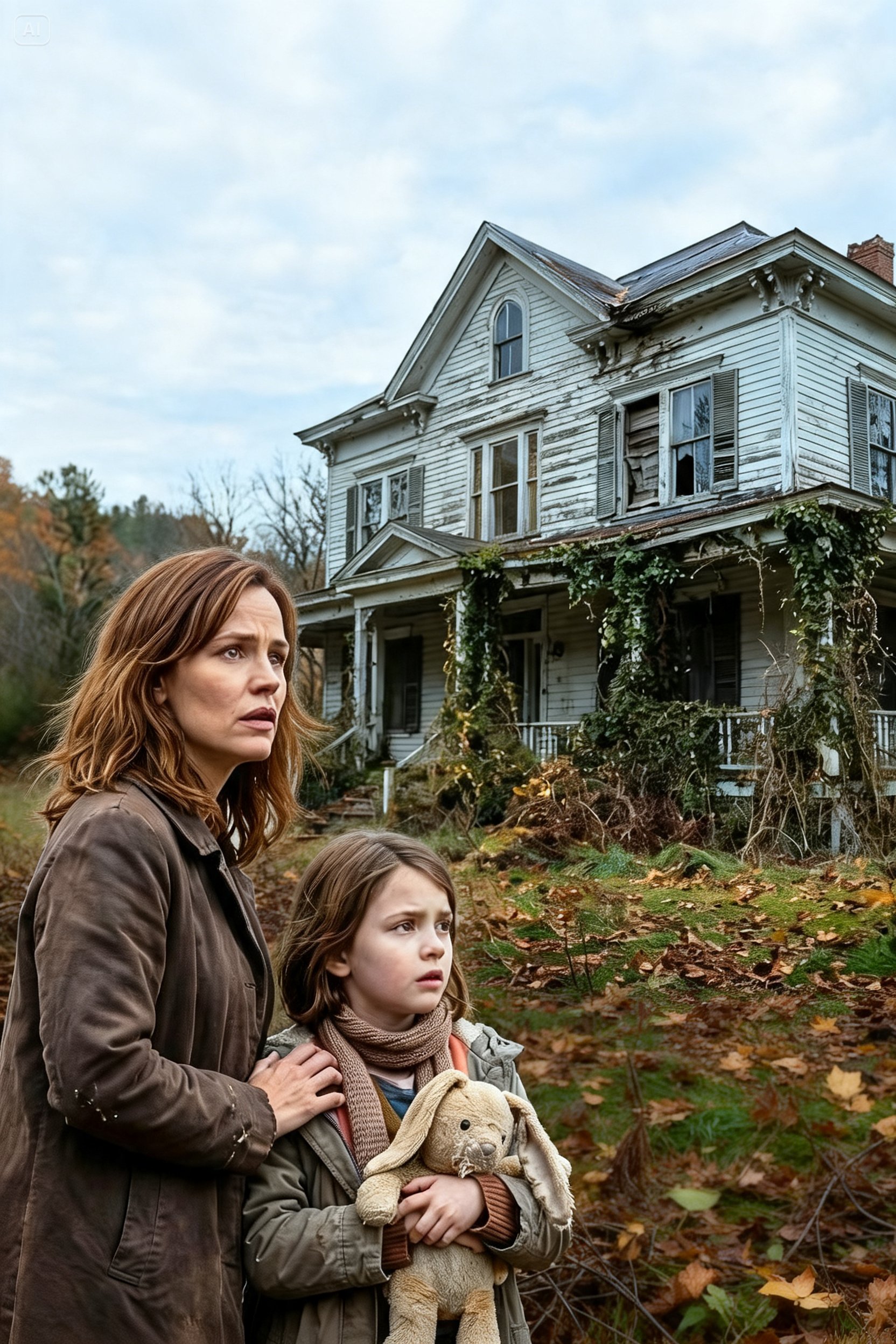
At 57, I went hiking to escape the silence after my divorce. Deep in Washington’s Olympic Mountains, I found a cabin that shouldn’t have existed, and what waited inside made me wish I had listened to two strange warnings….
For twenty-seven years, I made coffee for two people. Even after my divorce, my hand sometimes reached for a second mug before I remembered that nobody was coming downstairs to drink it. That small, foolish habit hurt more than the arguments or the paperwork ever had.
My name is Evelyn Carter. I was fifty-seven, living alone in Chicago, and struggling to understand how a life could be so full for so long and then become so quiet. I’d spent more than thirty years managing medical records at a hospital, raising my daughter, Amelia, and taking care of my aging parents.
Amelia was thirty-two now, married, with a little boy I adored, and she lived several states away. I loved our phone calls, especially when my grandson wanted to tell me something, but after Amelia said, “Mom, I have to go,” I would stand in my kitchen listening to the silence. I’d left the hospital, too, and suddenly there was no shift to cover, no problem to solve, and no one expecting me at eight in the morning.
People told me I ought to enjoy my freedom. I tried. I cleaned closets, took walks around the neighborhood, and accepted invitations I canceled at the last minute because I couldn’t bear explaining how I was doing.
One rainy evening, I found an old hiking forum about a nearly abandoned trail in Washington’s Olympic Mountains. The pictures showed cedar trees, wet stone, mountains disappearing into low clouds, and not another person in sight. For a woman who’d spent decades being everybody’s dependable person, that kind of solitude sounded like relief.
Most of the posts warned about washed-out bridges and missing trail markers. Then I noticed the final comment, written eleven years earlier: “If you see the light, leave.” I read it twice, felt uneasy, and told myself someone was trying to scare inexperienced hikers.
I booked a flight anyway. I wasn’t looking to prove anything, and I certainly wasn’t looking for danger. I wanted a few days where I didn’t have to be somebody’s ex-wife, somebody’s mother, or the woman who used to keep an entire department running.
The morning I reached a small logging town near the mountains, rain had left the streets shining. At a general store, I bought bottled water, batteries, and a paper map because I’d read that cell service vanished in the forest. The man at the counter had a white beard and a name tag that said Walter.
“You heading up Old Cedar Ridge?” he asked when he saw my map. I said yes, and he explained that the trail hadn’t been maintained in years. Storms had taken most of the markers, he said, and hardly anyone went beyond the old logging road.
“I’ll be careful,” I promised. Walter folded the map and handed it back, but he didn’t smile. “Careful isn’t always the same as knowing when to turn around.”
An hour later, the town was behind me. The forest smelled of wet cedar and earth, and for the first time in months, I felt light on my feet. There was no phone ringing, no empty apartment waiting to be cleaned, and nobody asking me to make a decision for them. Even carrying the pack felt strange: for years, I had carried schedules and spare keys for other people, but everything in this bag was for me.
Around noon, I reached the remains of the logging road, where the trail became a narrow opening through ferns. An older ranger stood near a weathered wooden sign, wearing an old Forest Service jacket and carrying a faded canvas pack. He looked toward the ridge when I told him I planned to stay out for a couple of days.
“Weather changes fast up there,” he said. I told him I had rain gear, but he shook his head. “That isn’t what I meant.”
Then he said something that made my stomach tighten: “If you see a light after dark, don’t follow it.” I asked what light he meant. He called it an old story and walked away before I could get another answer.
I stood there remembering the words from that eleven-year-old forum post. I could have turned back. Instead, I kept going, partly because I’d paid for the trip and partly because I was tired of letting fear decide what I could do.
By late afternoon, the path had nearly disappeared beneath fallen branches. The birds had gone quiet, and twice I heard a faint crackling sound that stopped whenever I stood still. I searched between the trees for smoke but couldn’t find any.
Then I looked across a narrow ravine and saw a dark cliff rising above the forest. High on its face was a perfectly square window, as if someone had built a room into the stone. Behind the glass, an orange light flickered.
I remembered both warnings at once. I also noticed a weathered wooden ladder concealed beneath the cliff, its rope bindings dark with moisture. There were fresh footprints in the wet ground beside it, which meant someone had been there very recently.
I should have left. Instead, I tested the lowest rung with my boot, tightened my backpack, and began climbing. The ladder groaned as the trees dropped farther below me, and wind carried the unmistakable smell of wood smoke down from the window.
At the top was a narrow platform and a door standing slightly open. I called hello twice, but nobody answered. Inside, a small iron stove held glowing embers, and the room was orderly: a narrow bed, folded blanket, canned food, glass jars, books, and a desk covered with handwritten pages.
An old typewriter sat on the desk with an unfinished sentence still caught in its rollers. Beside it, a man sat in a chair facing the window, his head tipped to one side. I asked whether he needed help, then stepped close enough to see his still, colorless hand.
He was dead. And when I saw his face, I recognized him from book jackets and the news reports I’d watched years earlier. It was Henry Whitmore, the famous novelist who had vanished fifteen years ago while the entire country searched for him. I remembered how his disappearance had become a mystery people argued over on television, until even those stories gradually faded away.
An envelope lay apart from the manuscript pages on his desk. There was no address, only a date written across the front: that very morning. I glanced at the warm stove and the fresh footprints outside, unable to make sense of any of it.
I unfolded the page inside. One sentence was written there: “If you found this room, someone has already found you.” Before I could put it down, a wooden rung creaked outside the door. Someone was climbing the ladder toward me. Part 2…..
I stood frozen with that letter in my hand. There was nowhere to hide in the little cabin, and the sound came again, one rung higher. On Henry’s desk, I spotted several loose manuscript pages titled Those Who Remain Unseen, with a symbol beneath the title: a circle crossed by two diagonal lines.
I shoved the pages into my backpack and stepped toward the doorway. The creaking stopped. When I looked out, the ladder was empty, but far below, two sets of fresh footprints marked the wet earth: one leading toward the ladder and another turning away into the trees.
I climbed down as quickly as I dared. Once my boots touched the ground, I hurried back into the forest, refusing to run on a trail where a careless step could break an ankle. Still, I kept hearing movement behind me: a branch flexing, wet leaves shifting, footsteps that fell silent when I stopped.
In a small clearing, I sat on a fallen log and pulled out Henry’s pages. They described people who lived beyond ordinary records, not because they were criminals, but because being found could destroy their lives. One was a frightened wife fleeing a powerful husband; another was a witness who knew too much.
Henry called the people who helped them disappear “the Keepers.” They helped willing people slip out of public view, and his manuscript said they protected living people who had chosen to become ghosts. I wondered if the world had been wrong about his disappearance all along.
When I looked up, a man stood across the clearing. He appeared to be around forty, with short brown hair and a rain-darkened coat. I asked who he was and whether he’d been at the cabin, but he only watched me, stepped behind a cedar, and disappeared.
That night, the trail was too uncertain to follow in darkness, so I pitched my tent. Sometime after midnight, slow footsteps approached and stopped beside the thin nylon wall. I could hear someone breathing, calmly and patiently, before the footsteps moved away.
At first light, I found the same crossed-circle symbol carved into a cedar near my tent. My things were untouched. I packed anyway and headed toward the nearest ranger station, no longer thinking about peaceful solitude.
The man in the coat appeared ahead of me on the trail. When he reached into his pocket, I stumbled back, but he only took out the small brass compass my father had given me when I was seventeen. I hadn’t noticed it was missing.
He placed the compass on a flat stone and said, “You dropped it.” I demanded to know why he was following me. He looked at Henry’s pages sticking out of my pack and told me I shouldn’t have taken them.
Then he gave me a warning: “When you reach the ranger station, don’t give those pages to anyone.” I asked if he intended to hurt me. He answered, “If I wanted to hurt you, Evelyn, you never would have made it down from that cabin.”
I had never told him my name. He vanished among the trees, leaving me with my compass and a worse question than whether I was being followed: how much did these people already know about me?
Part 3 I walked for almost four hours before I saw the ranger station. It was a weathered building with a faded green door, an antenna, and an old pickup outside, but it looked like the safest place on earth. The ranger behind the desk was a broad-shouldered man in his forties named Connor Hayes.
“I found a dead man,” I told him. Connor sat me down and listened while I described the cabin, the warm stove, Henry Whitmore’s body, the dated envelope, and the stranger in the coat. I kept the manuscript hidden, remembering the warning.
Connor radioed a search team, and they headed toward the coordinates I’d marked. I waited as the rain began to tap against the windows. When the team finally called back, Connor leaned toward the radio to hear them over the static.
They had reached the cliff, they said. There was no cabin, no ladder, and no body. Worse, they couldn’t find evidence that a structure had stood there recently.
I protested until my voice shook. I had climbed the ladder and touched Henry’s desk; I knew I hadn’t imagined that room. Connor asked gently if I could have gotten turned around, but I knew the coordinates were right.
A noise at the window made me turn. For an instant, I saw the man in the dark coat at the edge of the trees, looking directly toward the station. I pointed him out, but by the time Connor turned, the man was gone.
I finally put one of Henry’s pages on Connor’s desk. He went still when he saw the crossed-circle symbol and admitted his father had spent thirty-six years in mountain search and rescue. His father used to say there were places in those woods best left alone.
Night fell, and the search team stopped answering the radio. Connor locked the door. Just after nine, three quiet knocks came from outside, followed by the scraping sound of something being pushed beneath it.
An envelope lay on the floor with my full name on the front. Inside were a USB drive and a note: “This is what Henry wanted one person to understand.” Connor asked me to wait for the police or at least until morning, but waiting had become the only thing I’d done for months.
I crossed to the old computer and plugged in the drive. There was one video file, without a name or date. When I opened it, the image flickered, and the same cabin appeared on the screen.
A frail older man walked into view and sat at the desk. His hair was silver and thin, and his hands trembled, but I recognized Henry Whitmore instantly. He looked into the camera, alive at the moment of recording, and began to speak.
Part 4 Henry said he’d neither been kidnapped nor murdered. Fifteen years earlier, he’d chosen to leave. Fame had brought readers and money, but it had also turned him into a man constantly performing the role everyone expected of him.
He described strangers pursuing him for photographs, publishers demanding another bestseller, and interviews that made his own answers sound rehearsed. The Keepers had helped him retreat to the hidden cabin, keep the route private, and receive supplies when he needed them. They had protected his decision, not imprisoned him.
For a time, Henry said, he’d loved being free to write without anyone watching. Then years passed, his health declined, and the solitude that had once felt like freedom grew into isolation. He’d mistaken removing himself from the world for building a life he could enjoy.
I sat beside Connor, listening to a man I’d assumed was dead describe a loneliness I understood too well. Henry spoke to whoever might find the recording: perhaps they’d lost a marriage or a career, perhaps their children had grown up, or perhaps they no longer recognized themselves without the roles they’d played for decades.
It was almost unbearably close to my own life. I thought of Amelia, the hospital, the divorce, and the second coffee cup I kept reaching for. I had told myself the trip was about hiking, but part of me had wondered whether anybody would notice if I simply stopped showing up.
Henry said the man I’d seen had protected his choice for years and helped preserve unfinished pages when Henry’s hands had become too weak to write. Then he cautioned me not to copy his decision simply because I was tired. He urged me to rest, grieve, and find quiet when needed, but not to confuse peace with absence.
“Tell your story,” he said. “Not mine. Yours.” The video ended, leaving my reflection in the dark monitor and the sound of rain on the roof.
Three knocks came again. This time I stopped Connor from opening the door and went myself. The man in the dark coat stood on the porch, wet and exhausted, looking less like a threat than somebody who had carried a difficult responsibility for too long.
I asked who the Keepers really were. He wouldn’t explain. Instead, when I asked why he’d allowed me to leave the cabin, he said, “Because you still wanted to.”
He told me that Henry had spent fifteen years thinking disappearance meant freedom. Near the end, Henry understood that sometimes people didn’t truly want to vanish; they only wanted their lives to stop hurting. I asked whether I would ever learn the whole truth, and he quietly said no.
By sunrise, he was gone. The missing search team returned safely after their radio equipment failed in the storm. They searched the cliff again and found nothing but wet stone, trees, and fog.
Final Two days later, I flew back to Chicago. My apartment was unchanged, right down to the two coffee cups in the cabinet. The next morning, I took out one mug and stood beside the window, watching the city wake up.
For the first time in months, I didn’t ask whether anyone needed me. I asked what I still wanted from my own life. I didn’t have an immediate answer, but that didn’t scare me the way it once had.
I joined a Saturday walking group, volunteered twice a week helping older patients organize medical paperwork, and said yes to a dinner invitation I would once have declined. None of it erased my divorce or restored the years I’d spent at the hospital, but each small decision belonged to me.
One Sunday, I called Amelia just to hear her voice. She asked if something was wrong, and I laughed and told her nothing was wrong at all. After a pause, she said, “I miss you, Mom.”
“I miss you, too,” I told her. That evening, I opened a blank notebook and began writing about a fifty-seven-year-old woman who had forgotten she was allowed to want things for herself. I didn’t write to prove the cabin existed or to expose the Keepers.
Weeks turned into months. One winter morning, I found an unmarked envelope beneath my apartment door, with the same crossed-circle symbol on the paper inside. It said, “Some people disappear to escape the world. Others disappear long enough to remember why they belong in it.”
I put the note inside my notebook. I never saw the man in the coat again, never found Henry’s cabin, and never learned the full truth about the Keepers. Henry had disappeared trying to reclaim his freedom, while I had nearly disappeared inside a life I no longer recognized.
The difference was that I came back. On the last page of my notebook, I wrote four words: “To be seen again.” Then I picked up the phone and called my daughter.
I know now that being needed less doesn’t mean mattering less. A marriage can end, children can grow up, and a career can finish without your story being finished, too. At fifty-seven, I still had another page to write, and I intended to fill it.
THE END. I’ve shared the complete story, and I truly hope it touched your heart. If this story moved you, please , like, and share the post. Thank you for reading! ❤️
✓ Lynn R. Adams
At 57, I went hiking to escape the silence after my divorce. Deep in Washington’s Olympic Mountains, I found a cabin that shouldn’t have existed, and what waited inside made me wish I had listened to …