At 5 A.M., Police Found My Pregnant Daughter Bleeding in the Cold—Her Millionaire Husband Never Knew Who Her Father Really Was
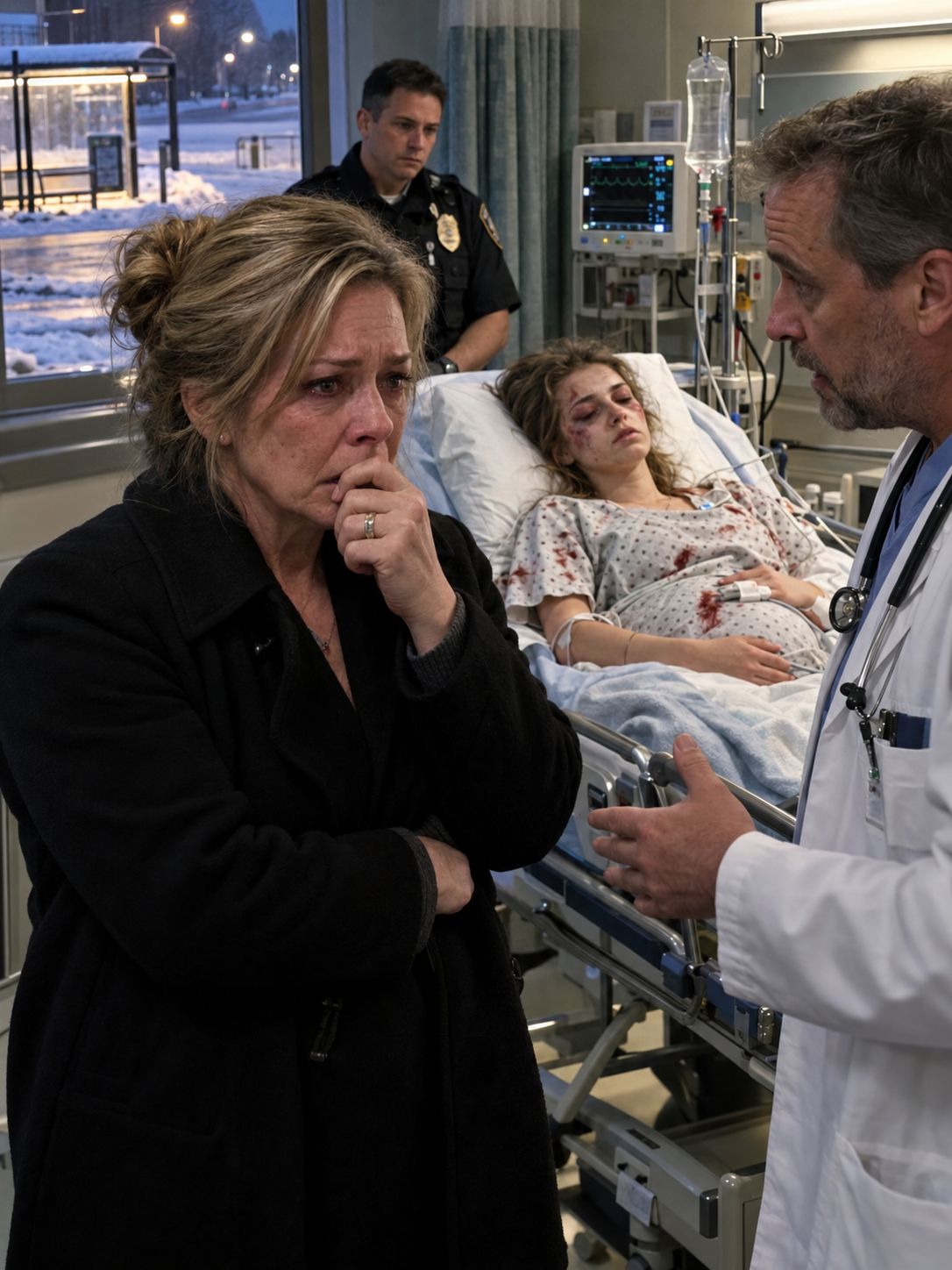
At 5 A.M., Police Found My Pregnant Daughter Bleeding in the Cold—Her Millionaire Husband Never Knew Who Her Father Really Was At in the morning, police found my five-month-pregnant daughter bleeding beneath a bus stop shelter in freezing weather, with one shoe missing and her wedding ring forced so tightly into her swollen finger that the emergency room had to cut it off. At , a doctor told me her husband and mother-in-law had beaten her badly enough that neither she nor my unborn granddaughter might survive. At , I made a phone call to a man who had once helped me put dangerous people behind bars. And before the following night was over, my wealthy son-in-law would discover that the quiet retired mechanic he had spent four years insulting was the last father in America he should have made an enemy. My name is Robert Hayes. I’m sixty-three years old. I live in a modest three-bedroom house outside Pittsburgh, Pennsylvania. I drive a fourteen-year-old Ford F-150, repair lawn equipment for neighbors, and keep a faded American flag flying above my front porch. My wife, Linda, died seven years ago. My only child, Emily, was twenty-nine. She was a kindergarten teacher before she married a man named Preston Whitmore. Preston was thirty-seven, wealthy, polished, and absolutely convinced that money made him more important than other human beings. His family owned Whitmore Development, a regional company that built luxury apartments, office parks, and gated communities across western Pennsylvania. Their mansion stood on twenty-two acres outside Sewickley. It had marble staircases, heated floors, a six-car garage, and a private security system that probably cost more than my house. None of those things impressed me. But Emily loved him. At least, she had once. And for four years, I had tried to respect her decision. That ended when I saw her lying in a hospital bed with purple bruises along her throat. Her face was swollen. One eye was nearly closed. A ventilator breathed for her. A nurse had carefully placed her damaged wedding ring inside a small plastic evidence bag. The diamond was still there. The marriage was not. I stood beside her bed for seventeen seconds without speaking. Then I rested two fingers against her wrist. Her skin was cool. Her pulse was there. Weak. But there. I looked at the machines. The intravenous lines. The blood-pressure monitor. The small blanket covering the curve of her pregnant stomach. Somewhere beneath that blanket was the granddaughter Emily had already named Lily. She had chosen the name because her mother loved flowers. I leaned close enough that my daughter might hear me. “I’m here, sweetheart.” The monitor beeped. “I’m going to take care of what needs taking care of.” I straightened. And I walked out of the room. I did not cry in the hallway. I did not call Preston to scream at him. I did not drive to his mansion carrying the kind of anger that sends ordinary fathers to prison while wealthy criminals hire better lawyers. I knew exactly what blind rage could cost. I had seen it happen before. I had also seen what careful preparation could accomplish. For twenty-seven years, before I retired and bought a small automotive repair shop, I had worked in federal law enforcement. My final assignment had involved complex financial crime, organized criminal networks, and public corruption. Preston knew none of that. He had never asked. To him, I was an old man with grease beneath his fingernails. That mistake was about to become very expensive. What should a father do when the people who nearly murdered his pregnant daughter believe their wealth can erase the crime—and when he knows that one reckless move could destroy the very case needed to protect her? I had one answer. I would not give Preston Whitmore the satisfaction of seeing me lose control. I would give him something much worse. Consequences. I remembered the first time Preston had insulted me. It was at his engagement dinner. He had reserved the private dining room of an expensive restaurant downtown. There were seventeen guests, white tablecloths, crystal glasses, and a waiter whose job seemed to involve replacing everyone’s water before they realized they were thirsty. Emily wore a navy dress. Her hair fell in loose blonde waves across her shoulders. She looked happy. So happy that I had promised myself I wouldn’t let anything spoil the evening. Preston’s mother, Margaret Whitmore, sat at the head of the table. She was sixty-two, elegant, and wore a diamond necklace that looked heavy enough to require structural reinforcement. She asked what I did for a living. “I repair engines,” I said. Preston laughed. “Robert’s being modest. He’s basically the neighborhood grease monkey.” Several people chuckled. I smiled. “Something like that.” Margaret raised her eyebrows. “How wonderfully practical.” The way she said practical made it sound like a contagious disease. Preston leaned back. “Emily comes from a very different world than ours.” I looked at him. “She comes from a good world.” The room went quiet. Emily touched my arm beneath the table. “Dad.” I squeezed her hand. Preston smiled again. “Of course. I only meant financially.” I nodded. “Then that’s what you should have said.” His smile disappeared. It returned a few seconds later, but it never reached his eyes. I should have paid more attention to that moment. Not because wealthy people can’t be kind. Many are. And not because a tasteless remark proves someone is dangerous. It doesn’t. But Preston had a habit of testing how much disrespect people would tolerate. He tested waiters. He tested employees. He tested contractors. Eventually, he began testing Emily. At first, she explained everything away. Preston was stressed. Preston had a difficult childhood. Preston carried enormous responsibilities. Preston didn’t always mean what he said. I listened. I didn’t attack her husband. I didn’t demand she leave. I asked questions. Was she happy? Did she feel safe? Did she have access to her own money? Could she visit whenever she wanted? At first, the answers came easily. Yes. Of course. Absolutely. Then, gradually, the answers changed. She stopped calling as often. She canceled Sunday dinners. She quit teaching because Preston thought his wife shouldn’t work for what he called “a teacher’s salary.” He bought her a new car, then registered it under one of his companies. He insisted on managing their finances. He discouraged her friendships. And every time I asked whether she was all right, she smiled too quickly. “I’m fine, Dad.” Those three words became the ones I feared most. Because my daughter had never been particularly good at lying. Not as a child. Not as a teenager. Not even when she backed my truck into the garage door at sixteen and tried to blame the wind. But marriage had taught her how to hide things. And I had spent years trying to understand whether I was seeing normal marital tension or something far more dangerous. I know what people like to say afterward. Why didn’t you notice? Why didn’t you intervene? Why didn’t you take her away? I noticed. I asked. I offered her a place to stay. I told her my door would always be open. But Emily was an adult. And Preston had made himself the center of her world. The more forcefully I criticized him, the more carefully she defended him. So I stayed close enough that she knew she could come home. I never imagined I would first learn how badly she needed that home from a police officer calling before sunrise. I will never forget that call. “Mr. Hayes?” “Speaking.” “This is Officer Daniel Carter with the Sewickley Police Department. Are you Emily Whitmore’s father?” I was in my kitchen, making coffee. “Yes.” “Sir, your daughter has been transported to Allegheny General Hospital.” I set down the coffee scoop. “What happened?” “She’s been seriously injured.” “What kind of injuries?” There was a pause. “Sir, you should come to the hospital.” I looked at the clock. a.m. “Is she alive?” “Yes, sir.” “And the baby?” “We don’t have that information.” I was already reaching for my coat. “I’m leaving now.” I drove through dark streets covered with a thin layer of frozen rain. The temperature was nineteen degrees. The windshield wipers scraped across ice. At every red light, I pictured Emily as a little girl. Her yellow rain boots. The way she used to hold my hand with both of hers. The first time she rode a bicycle without training wheels. The morning she graduated from Penn State, standing beside her mother, laughing because the wind kept blowing her cap off. I forced the memories away. Memories could wait. Driving required attention. When I reached the hospital, a nurse directed me to a private waiting room. A doctor named Sarah Collins met me there. She was in her forties, wearing navy scrubs. Her expression told me enough before she spoke. “Mr. Hayes, your daughter has suffered significant trauma.” “Tell me.” She sat across from me. “We’re treating internal bleeding, head injuries, and injuries consistent with a violent assault. She’s also severely hypothermic.” “How far along is the pregnancy?” “Approximately twenty-one weeks.” “Fetal heartbeat?” “Present at the last assessment, but there are serious concerns. Our obstetric team is monitoring closely.” I nodded. “Do you know who did this?” The doctor hesitated. “Your daughter was conscious briefly when she arrived. She told medical staff that her husband and his mother had hurt her.” I felt something cold move through my chest. “Her husband and his mother?” “Those were her words.” “Was that documented?” “Yes.” “Have police been notified?” “They’re already involved.” I nodded again. “What happens next?” The doctor explained the immediate medical priorities. Surgery. Monitoring. Blood loss. Possible neurological complications. The risks to the pregnancy. She did not promise Emily would survive. She did not promise Lily would survive. I appreciated that. False reassurance would have been an insult. When she finished, I asked one final question. “Can I see her?” “Yes.” And then I walked into the room where my daughter’s life hung between machines and the skill of strangers. I had spent years imagining the ordinary things I would do as a grandfather. Building a wooden cradle. Teaching Lily how to ride a bicycle. Letting her eat ice cream before dinner while pretending her mother hadn’t noticed. Now I was staring at a monitor showing my unborn granddaughter’s heartbeat. It was the smallest, bravest sound I had ever heard. A rapid rhythm. Steady for the moment. Fragile. The obstetric nurse pointed to the screen. “That’s your granddaughter.” I swallowed. “She’s still fighting.” “Yes, sir.” I looked at Emily. “So are we.” I don’t know whether Emily heard me. But I like to believe she did. I stayed beside her for another minute. Then I stepped into the hallway and took out my phone. There were names in that phone I had not called professionally in years. One belonged to Michael Donovan. Michael was sixty-five, a former federal prosecutor who had spent decades handling complex criminal cases. He was also my oldest friend. He had been beside me during the worst investigation of my career. He had stood beside me at Linda’s funeral. And he had promised me something that day. “If you ever need a friend, Robert, don’t waste time deciding whether the problem is important enough.” At a.m., I called him. He answered on the fourth ring. “Robert?” “Michael.” He heard my voice. “What happened?” “My daughter is in intensive care.” Silence. “Emily?” “Yes.” “How bad?” “Critical.” “Who?” “Her husband and possibly his mother.” Michael took one slow breath. “Where are you?” “Allegheny General.” “I’m coming.” “Michael.” “Yes?” “I need you to help me make sure this case is handled correctly.” His voice changed. The sleepy warmth disappeared. “What do you need?” “An experienced attorney for Emily. Someone independent of the Whitmores. And I need to know who can advise her about protective orders, preservation of evidence, and the financial issues if she survives.” “I know someone.” “Good.” “Robert, are you thinking about going to that man’s house?” I looked through the hospital window. Snowflakes were drifting past the glass. “No.” “Promise me.” “I’m not going to touch him.” Michael waited. I continued. “I’m going to make sure no one can buy his way out of this.” He exhaled. “Then we’re going to do this carefully.” “That’s the plan.” He arrived forty-five minutes later. Michael Donovan looked older than I remembered. His hair had turned completely white. He wore a dark wool coat over a wrinkled shirt. But his eyes were as sharp as ever. He found me beside a vending machine. “You eaten?” “No.” He handed me a breakfast sandwich. “Eat.” “I’m not hungry.” “I didn’t ask.” I took it. That was Michael. He didn’t waste words when the situation was bad enough already. We sat in the waiting room. I told him everything I knew. He listened. Asked questions. Wrote down times. Names. Statements. Then he said, “The police need to investigate the assault independently. We do not interfere.” “Agreed.” “Your daughter’s lawyer can seek emergency protection for her and help address access to the house, accounts, and medical information.” “Good.” “And you cannot use your old contacts to get confidential information.” “I know.” He studied me. “Do you?” I looked at him. “Michael, I spent twenty-seven years telling people the rules still mattered when they were angry. I’m not changing my mind because this time the victim is my daughter.” He nodded. “That’s what I needed to hear.” Then he opened his notebook. “Tell me about Whitmore Development.” I looked at him. “Why?” “You said the husband controls everything. I want to understand what resources he’s going to use to pressure Emily if she wakes up.” I stared at the floor. Then I began telling him what I knew. Preston’s business. His family. His mother. The company structure. The properties. The lawyers. The charitable foundations. The political donations. The gated estate. Michael listened closely. Then he asked something unexpected. “Was Emily still teaching when she married?” “Yes.” “When did she stop?” “About a year later.” “Did Preston insist?” “According to Emily, they agreed.” Michael wrote it down. “What about her bank accounts?” “She had her own checking account before the wedding.” “Does she still?” “I don’t know.” “What about her phone?” “Preston bought it.” “Car?” “Company vehicle.” Michael nodded slowly. “Isolation.” I looked at him. “I know.” He closed the notebook. “Robert, this isn’t just about what happened last night. We need to understand how much control he had over her life.” I thought about Emily’s canceled visits. The nervous smiles. The carefully rehearsed explanations. And something inside me hardened. Not rage. Resolve. Because if Preston had spent four years making my daughter believe she had nowhere to go, I was going to spend whatever time remained making sure she never believed that again. At that morning, Preston called. His name appeared on my phone. I let it ring twice. Then answered. “Robert.” His voice was smooth. Controlled. Almost cheerful. “Preston.” “I understand Emily’s in the hospital.” I looked at Michael. He motioned for me to stay calm. “She is.” “Terrible situation.” I said nothing. Preston continued. “She’s been having a difficult time emotionally. The pregnancy has been stressful.” I stared at the wall. “Is that so?” “Unfortunately, she had an episode last night.” “What kind of episode?” He sighed. “She became hysterical. There was an argument. She left the house.” “At four in the morning?” “Something like that.” “In freezing weather?” “She wasn’t thinking rationally.” I closed my eyes. The man was already building his story. A troubled pregnant woman. An emotional outburst. An unfortunate accident. Preston continued. “My mother and I are devastated.” I looked at Michael. He was writing. “Where was your mother when Emily left?” Preston hesitated. “At home.” “Did she see Emily leave?” “Robert, this isn’t an interrogation.” “No. It’s a conversation.” “Then stop treating me like a criminal.” I let the silence grow. Finally, he said, “I’m sending our family attorney to the hospital.” “Why?” “To handle the situation.” “What situation?” “The misunderstandings.” I looked at the ceiling. “Emily has her own legal representation.” Another pause. “Since when?” “Since today.” His voice sharpened. “Robert, don’t complicate this.” “Then don’t give us anything to untangle.” He inhaled. “You need to understand something. My family has influence in this county.” I glanced at Michael. He heard it too. “Preston,” I said, “my daughter is fighting for her life.” “I know.” “Then your concern should be her condition.” “It is.” “Good.” I hung up. Michael held out his hand. “Give me the phone.” I passed it over. He checked the call time and wrote it down. Then he looked at me. “That man is afraid of something.” “Yes.” “What?” I pictured Preston standing in his marble kitchen. His expensive watch. His mother nearby. Their lawyers already moving. “I think he’s afraid Emily might wake up.” Michael said nothing. Neither did I. At 10:32, the first representative of the Whitmore family arrived at the hospital. He was a tall attorney named Andrew Pierce. He wore a dark gray suit and carried a leather briefcase. A hospital administrator directed him to the waiting area. He approached me with a practiced expression of sympathy. “Mr. Hayes.” “Yes.” “Andrew Pierce. I represent the Whitmore family.” “I know who you are.” He glanced at Michael. “And you are?” “Michael Donovan.” Pierce recognized the name. His smile changed slightly. “Mr. Donovan. I wasn’t aware you were involved.” “Neither was I until this morning.” Pierce adjusted his cuff. “I’d like to discuss a practical resolution to what has clearly become a distressing family misunderstanding.” I stared at him. “A misunderstanding?” He lowered his voice. “Mr. Whitmore is concerned that emotions may lead to exaggerated statements.” Michael spoke before I could. “Andrew, the young woman is in critical care. This is not the time to suggest anyone has exaggerated anything.” Pierce looked uncomfortable. “Of course.” “Then state your purpose.” He opened his briefcase. “Preston wants to ensure Emily receives the best possible care. He’s prepared to cover all medical expenses and provide additional financial support.” I leaned forward. “Does he know he’s not being asked for permission to treat his wife?” Pierce’s expression tightened. “Mr. Hayes, I’m only trying to help.” “Then encourage your client to cooperate fully with law enforcement.” “We intend to.” “Good.” Pierce glanced at Michael. “Could we speak privately?” Michael shook his head. “Not without Robert’s agreement.” I stood. “Our conversation is finished.” Pierce looked at me for a moment. Then he closed his briefcase. “I hope you understand the family wants to avoid unnecessary publicity.” I met his eyes. “My daughter may die.” He swallowed. “Yes.” “Then perhaps her life should matter more to your client than his reputation.” Pierce left without another word. Michael watched him disappear down the hallway. Then he looked at me. “That was not an offer to help.” “No.” “What was it?” I stared at the closed doors. “An attempt to establish a price.” By noon, the police had located several people who had been near the bus stop when Emily was found. I learned the details later through Emily’s attorney, through lawful disclosures, and through what eventually became part of the court record. A municipal snowplow driver named Harold Jensen had spotted a woman sitting beneath the shelter. At first, he thought she was waiting for the first morning bus. Then he noticed she wasn’t moving. He pulled over. Walked toward her. And saw blood on the concrete. Emily was curled around her stomach. Her coat was open. One shoe was missing. She was whispering something. Harold couldn’t understand her at first. He called 911. Then he removed his own winter jacket and wrapped it around her. When he leaned close, she grabbed his sleeve. “Please,” she whispered. “Help is coming,” Harold told her. She shook her head. “My baby.” He looked at her stomach. “Hold on, sweetheart.” She gripped his sleeve harder. “Don’t let them take me back.” That sentence became important later. Not because it solved the case. But because it showed what Emily feared most at the moment strangers found her. Not the cold. Not the pain. Going home. The police also recovered security footage from a nearby gas station. At a.m., a dark vehicle had stopped near the bus shelter. The footage wasn’t clear enough to identify the driver. But investigators could see someone opening a passenger-side door. A figure stumbled out. Then the vehicle drove away. Emily had not walked there. Someone had brought her. And left her. I learned another detail that made my hands go numb. The gas station’s outdoor thermometer showed eighteen degrees. The first scheduled bus wouldn’t arrive until . Whoever left my daughter there had abandoned a seriously injured pregnant woman in freezing weather more than fifty minutes before the first bus was due. I sat alone with that information for several minutes. Then I went to the restroom. Washed my face. And returned to my daughter’s bedside. I did not allow myself to imagine what might have happened if Harold Jensen had taken a different route. There would be time for those thoughts later. If I let them in now, they would consume everything. Emily needed a father. Not a man drowning in what-ifs. At p.m., her condition worsened. An alarm sounded. Two nurses entered. Then another physician. Someone asked me to step outside. I obeyed. I stood in the hallway while medical staff moved quickly around her bed. The doors closed. I looked down at my hands. They were steady. But I could feel every heartbeat in my throat. Michael arrived beside me. “Robert?” “Something changed.” He looked at the closed doors. “All right.” We waited. Ten minutes. Twenty. Thirty. A nurse passed us twice. Finally, Dr. Collins emerged. She looked tired. But not defeated. “We’ve stabilized the immediate problem.” I exhaled slowly. “And the baby?” “Still has a heartbeat. The obstetric team is continuing close monitoring.” I nodded. “Thank you.” She touched my arm. “Mr. Hayes, I need you to understand that the next twenty-four hours remain critical.” “I understand.” She hesitated. Then said, “Your daughter is very strong.” I looked through the glass. Emily lay motionless beneath a white blanket. “She’s always been stubborn.” The doctor smiled faintly. “Sometimes that’s useful.” “Today,” I said, “it’s everything.” At , something happened at the Whitmore mansion that Preston never expected. Police obtained judicial authorization to search areas of the estate relevant to the assault investigation. They arrived in marked vehicles. Investigators photographed the entryway. The kitchen. A hallway near the rear staircase. The attached garage. They collected potential evidence according to the warrant. They documented visible damage and stains. They sought relevant security-system records. And they interviewed people who had been present during the previous evening. Preston’s mother, Margaret Whitmore, was furious. She demanded to speak to the sheriff. She accused the police of humiliating a respected family. She insisted her son had done nothing wrong. And when an investigator asked where she had been between midnight and four in the morning, she reportedly answered with a question. “Do you have any idea who my son is?” The investigator did. That was the point. Preston owned six luxury vehicles. A wine cellar. A home theater. A private gym. A marble fountain imported from Italy. None of those things could make the search warrant disappear. The mansion had always been designed to impress visitors. That afternoon, it impressed nobody. By , the family attorney had arrived. By , Preston’s business partners were calling. By , the first local reporter was asking whether police had responded to an incident involving Whitmore Development’s chief executive. And by , Preston had stopped answering my calls. I hadn’t called him. Not once. But I later learned he had told several people I was orchestrating the investigation. That was the arrogance of the man. He couldn’t imagine that the police might be investigating because a woman had been found nearly dead. In his mind, everything had to be about power. Connections. Reputation. Men competing with men. Even his wife’s suffering had become an inconvenience to his authority. He believed someone was attacking him. He had not yet considered that he might simply be facing the consequences of what he had done. At that evening, I received a call from an unfamiliar number. “Mr. Hayes?” “Speaking.” “My name is Olivia Grant.” The voice belonged to a young woman. She sounded nervous. “I used to work for Mr. Whitmore.” I sat straighter. “In what capacity?” “Personal assistant.” “How did you get my number?” “Emily gave it to me last year.” I looked toward the intensive care doors. “Is something wrong?” There was a pause. Then she whispered, “I saw what happened last night.” I didn’t move. “Have you spoken to the police?” “No.” “Why not?” “Because I’m scared.” I took one slow breath. “Olivia, if you witnessed a serious crime, the safest thing you can do is contact the investigators handling the case. I can give you their official number.” She began crying. “He told me he’d destroy my career.” “Who?” “Preston.” I kept my voice even. “Where are you now?” “At my sister’s apartment.” “Are you safe there?” “I think so.” “Then stay with someone you trust and call the police. Do not meet me alone. Do not send evidence to strangers.” There was silence. Then she said, “I have something.” “What?” “A recording.” My stomach tightened. “Of last night?” “Part of it.” I closed my eyes. “Olivia, listen carefully. Preserve the original. Don’t edit it, don’t post it online, and don’t let anyone pressure you to delete it. Tell the investigators exactly how you made it.” She drew a shaky breath. “Will they believe me?” “I can’t promise what anyone will conclude. But your statement matters, and they can examine what you have.” She was silent for several seconds. Then she whispered, “Emily tried to leave him.” I gripped the phone. “When?” “Last night.” “Why?” Another pause. “Because she found out something about the baby.” I stared at the wall. “What about the baby?” Olivia lowered her voice. “Preston didn’t want her to have it.” For a moment, I couldn’t speak. I had known Preston wasn’t pleased about becoming a father. Emily had told me he wanted to wait another year. Maybe two. But that had seemed like an ordinary disagreement between married people. Now I remembered a conversation from Thanksgiving. Emily had been five months pregnant. Preston had barely looked at her stomach. When my daughter mentioned nursery colors, he had changed the subject. Margaret Whitmore had commented that children should arrive at the “appropriate time.” I had thought the remark was merely rude. Now it sounded different. “Olivia,” I said, “tell the police everything you know. Let them assess the recording.” “I will.” “And Olivia?” “Yes?” “Thank you for calling.” She began crying again. Then the line went dead. I sat motionless for a long time. The hospital hallway smelled of disinfectant and stale coffee. A man pushed a cart of clean linens past me. Two nurses laughed quietly at the far end. Life continued. As though the world had not cracked open. I thought about Preston. His expensive suits. His polished speeches. His public donations to children’s charities. And somewhere beneath all that polish, a man who may have been willing to destroy two lives because they complicated his plans. I called Michael. He answered immediately. “What happened?” “A former assistant says she witnessed something.” “Did you tell her to contact police?” “Yes.” “Good.” “She says she has a recording.” Michael was silent. Then he said, “Robert, this could be important.” “I know.” “But remember, recordings need context. Investigators will need to establish when it was made, whether it’s complete, and what it actually shows.” “I know.” He sighed. “And Robert?” “Yes?” “Don’t build a verdict in your head before the evidence is tested.” I looked through the glass at Emily. “I’m not building a verdict.” “What are you building?” I thought about the woman who had once fit inside the crook of my arm. The little girl who had asked me to check under her bed for monsters. The teenager who had cried when her mother died. The young woman who had walked down an aisle toward a man I had never trusted. “I’m building a way for my daughter to come home.” Michael’s voice softened. “Then keep doing that.” The following morning, I arrived at the hospital before sunrise. I had slept less than three hours. My coffee tasted bitter. My shirt was wrinkled. But I had a folder under my arm. Inside were copies of Emily’s birth certificate, insurance information, contact details, and the documents her attorney had requested. I had also brought a small pink blanket. Linda had knitted it years earlier. She had made it for the granddaughter she hoped one day to meet. The blanket had sat in a cedar chest for seven years. I had almost forgotten it existed. Now I carried it into my daughter’s room. A nurse helped me place it over the chair beside her bed, away from the medical equipment. I looked at Emily. Her bruises seemed darker. Her face was swollen. But the nurse told me her blood pressure had remained stable overnight. I took her hand. “Good morning, sweetheart.” No response. “I brought something from Mom.” The monitor beeped softly. I sat down. “She always said she’d spoil your children worse than she spoiled you.” I swallowed. “She would’ve been good at it.” A tear slipped down my cheek. I wiped it away before anyone entered. Then I leaned closer. “You don’t have to fight alone anymore.” For nearly twenty minutes, I sat beside her. I talked about ordinary things. The weather. The neighbor’s dog. The cracked driveway I still hadn’t repaired. The way her mother used to burn toast because she insisted on reading the newspaper while making breakfast. I didn’t mention Preston. I didn’t mention the police. I didn’t mention the recording. I wanted Emily to hear the sounds of home. Not the sounds of danger. At , her fingers moved. Barely. A small pressure against mine. I froze. “Emily?” Nothing. Then another movement. I stood. Called the nurse. The medical team assessed her. I stepped back. Watched. Waited. Finally, the nurse looked at me. “She may be responding.” My heart seemed to stop. “Does that mean she’s waking up?” “It’s too early to say, but it’s encouraging.” I nodded. Then looked at my daughter’s face. For the first time since the call, hope felt like something solid enough to hold. At , the first arrest occurred. Not Preston. His mother. Margaret Whitmore was taken into custody in connection with the assault investigation. I learned about it from Emily’s attorney after public booking information became available. The exact charges would be determined through the legal process. But the arrest itself was real. The woman who had spent four years sneering at my house, my truck, and my job had been escorted out of her mansion by officers who did not care about her jewelry. She reportedly demanded that Preston call the governor. He called his attorney instead. I stared at the booking notice for a long moment. Then put my phone away. I felt no celebration. No satisfaction. Just a heavy, quiet recognition that the first wall around my daughter had begun to fall. At 11:06, Preston arrived at the hospital. I was standing beside a window when I saw him approaching the intensive care reception desk. He wore a navy suit. His hair was perfectly styled. A watch glittered on his wrist. He looked like a man arriving for a board meeting. Not a man whose wife was fighting for her life. He spoke to the receptionist. She shook her head. He said something sharply. A security officer approached. I walked toward them. Preston saw me. His expression changed instantly. “There you are.” I stopped several feet away. “Preston.” He pointed toward the secure doors. “They won’t let me see my wife.” “Her care team and the hospital are following their procedures.” “I’m her husband.” “That doesn’t give you the right to intimidate hospital staff.” His jaw tightened. “You’ve poisoned everyone against me.” I looked at him. “Your wife was found bleeding at a bus stop.” “She fell.” The words came too quickly. Too confidently. I waited. He continued. “She was unstable. She left the house in the middle of the night. None of this is what it looks like.” I studied his face. “Then tell the investigators.” He leaned closer. “You think you’re clever, don’t you?” “No.” “You think you can take my family apart because you don’t like me.” I looked at the security officer. Then back at Preston. “Your mother was arrested this morning.” His face darkened. “She did nothing wrong.” “Then her attorney can present that defense.” He took one step toward me. The security officer moved. Preston stopped. “You don’t understand how things work.” I almost smiled. “I understand more than you think.” He lowered his voice. “My company employs nearly eight hundred people.” “Good for them.” “People depend on me.” “Then you should have considered your responsibilities before this happened.” His eyes narrowed. “What are you, Robert? Some washed-up mechanic who thinks he can intimidate me?” I held his gaze. “No.” He smirked. “Then what?” I looked at the doors behind him. At the officers. At the frightened receptionist. At the expensive man who had walked into a hospital expecting his name to open every door. “I’m Emily’s father.” He laughed once. “That doesn’t frighten me.” “It wasn’t meant to.” A security supervisor approached. “Mr. Whitmore, you need to leave this area.” Preston turned. “This is outrageous.” “Sir.” He looked back at me. And in a voice low enough that only I could hear, he said, “You should’ve stayed in your garage.” Then he walked away. I watched until he disappeared around the corner. Michael had arrived during the exchange. He came to stand beside me. “You all right?” “Yes.” “You didn’t tell him.” “No.” Michael looked amused despite everything. “That must have taken effort.” “Not much.” “Why?” I watched the elevator doors close. “Because he still thinks this is a contest between him and me.” Michael nodded. “And it isn’t.” “No.” I turned toward Emily’s room. “It’s about whether my daughter gets to live without being afraid.” By early afternoon, Olivia Grant had given investigators her account. Her recording reportedly captured part of an argument inside the Whitmore mansion. It began shortly after midnight. Emily could be heard saying she wanted to leave. Preston demanded to know where she intended to go. His mother insisted that Emily was embarrassing the family. The voices grew louder. There was a crash. Then a scream. The recording did not capture everything. It was not a complete account of the assault. Investigators would still need medical evidence, witness statements, and corroboration. But it directly contradicted the harmless disagreement Preston had described to me. And it helped establish that Emily had been trying to leave. Olivia also provided information about the mansion’s security cameras. She said some footage was stored locally before being uploaded to a managed service. Investigators pursued the relevant records through proper legal channels. I didn’t ask anyone to tell me what they weren’t allowed to share. I didn’t need to. What mattered was that evidence was being preserved. The truth did not require me to break the law. It required patience. And patience was something Preston had never bothered to develop. At , a second piece of information reached Emily’s attorney. A medical social worker reported that Emily had previously sought advice about leaving an unsafe relationship. She had not completed a formal separation. But she had explored options. She had asked about housing. Financial independence. Protecting her unborn child. She had even begun gathering copies of important documents. I sat beside Michael as he explained the information. “She was planning to leave,” I said. “Apparently.” “Why didn’t she tell me?” Michael looked at me. “Maybe she wanted to protect you. Maybe she wasn’t ready. Maybe she was afraid Preston would find out.” I stared at my hands. “I would’ve helped.” “I know.” “She knew that.” “Probably.” I looked up. “Then why?” Michael’s expression softened. “Robert, people living under coercive control often make decisions that don’t look logical from the outside. They’re trying to stay safe in a situation where the rules keep changing.” I thought of Emily. How carefully she had defended Preston. How quickly she had ended conversations whenever he entered the room. The Christmas dinner she had canceled at the last minute. The birthday card she had sent instead of visiting. I had been angry sometimes. Not at her. At the distance. Now I realized she may have been trying to survive from one day to the next. I looked at Michael. “If she wakes up, I’m not going to ask why she stayed.” He nodded. “Good.” “I’m going to ask what she needs.” “Better.” “And then I’m going to listen.” Michael rested a hand on my shoulder. “That’s what she needs from you.” At p.m., Dr. Collins asked to speak with me. I followed her into a small consultation room. My heart pounded. She closed the door. “Mr. Hayes, I have some news.” I gripped the chair. “Emily?” “She’s showing encouraging neurological responses. We’re cautiously optimistic that we may be able to reduce some of her support as her condition allows.” I exhaled. “And Lily?” The doctor smiled slightly. “The fetal heartbeat remains present. The obstetric team continues to monitor both patients closely.” I sat down. For the first time in two days, the room seemed brighter. Not because everything was safe. It wasn’t. Not because we had won. We hadn’t. But because my daughter had moved one small step toward coming home. I covered my face with both hands. And I cried. Quietly. For perhaps thirty seconds. Then I wiped my eyes. “Thank you, Doctor.” She nodded. “We’re doing everything we can.” “I know.” I returned to the hallway. Michael was waiting. “Well?” I looked at him. “She’s still fighting.” He closed his eyes. “Thank God.” I leaned against the wall. For a moment, we were just two old men relieved that a young woman might live. The past could wait. The investigation could wait. Everything could wait for that one moment. Then my phone vibrated. A message from an unknown number. ROBERT HAYES. I stared at the screen. A second message appeared. YOU SHOULD HAVE STAYED RETIRED. I felt the blood drain from my face. Michael noticed. “What?” I showed him. He read the message twice. Then looked at me. “Who knows?” I didn’t answer. Because I understood the question. Who knew about my former career? Who knew I had worked federal investigations? Who knew I was retired? Preston had never cared enough to ask. His mother had never cared. His attorney might have discovered it with a background search. But the wording troubled me. You should have stayed retired. Not: You should have stayed out of this. Not: Stop interfering. Retired. Someone knew exactly what I used to do. I looked at Michael. “That’s not Preston’s language.” “Don’t assume.” “I’m not.” I read the message again. And suddenly, I remembered something I hadn’t thought about in almost twenty years. A name. A case. An investigation that had nearly ended my career. The Black River investigation. For three years, Michael and I had worked on a network of fraudulent construction contracts, illegal payments, and money laundering tied to organized criminal groups operating across three states. Several men went to prison. A few companies collapsed. Some assets were seized. But one central figure had never been successfully prosecuted. A financier who operated through layers of legitimate businesses. He rarely appeared in documents. Never used his own name on suspicious transfers. And seemed to know whenever investigators were getting close. His name was Victor Sloane. I had not heard it in seventeen years. I looked at Michael. He was watching me carefully. “You thought of him too,” I said. Michael didn’t answer immediately. Then he whispered, “Yes.” My stomach tightened. “Why?” He glanced toward the hallway. “Because I looked at the Whitmore corporate filings last night.” I stared at him. “And?” “There are connections I don’t like.” “What connections?” “One of Whitmore Development’s older financing partners was associated with a company that appeared in the Black River investigation.” I felt a cold weight settle in my chest. “Which company?” Michael lowered his voice. “Sterling Bridge Capital.” I remembered the name. A respectable investment firm. Beautiful offices. Expensive attorneys. And financial transactions we had spent months trying to untangle. I looked toward Emily’s room. “Does Preston know?” “I don’t know.” “Does Sloane still control it?” “I don’t know that either.” I stared at the message on my phone. YOU SHOULD HAVE STAYED RETIRED. Michael placed a hand on my arm. “Robert, we need to report the threat. And we need to be very careful about assuming there’s a connection without proof.” I nodded. He was right. A familiar name was not evidence of a conspiracy. A threatening message was not proof of its sender. And my daughter’s assault was already a serious crime without attaching an old investigation to it. But something about the timing made me uneasy. I forwarded the message to the police. Then returned to Emily’s room. I sat beside her bed. Took her hand. And made another promise. Not aloud. Not dramatically. Just quietly, to myself. Whatever Preston had done, he would answer for it. Whatever his mother had done, she would answer for it. And if someone else was using their wealth and influence to conceal those crimes, that person would have to answer too. I had no intention of becoming a vigilante. I had spent too many years watching violence destroy families to believe more violence would repair mine. But I knew how to read records. I knew how to recognize pressure. I knew the difference between a coincidence and a lead worth examining. And I knew that men who believed themselves untouchable often made the same mistake. They confused other people’s restraint with weakness. Preston had made that mistake every time he mocked my old truck. Every time he referred to me as a grease monkey. Every time he spoke to my daughter as though her opinions were inconveniences. He thought quiet men had nothing to say. He was about to learn that some quiet men were simply waiting until they had something worth saying. At that evening, the television in the hospital waiting room showed the first public report. “Police continue investigating an alleged assault involving members of the prominent Whitmore family…” The reporter stood outside the mansion’s gates. Behind her, police vehicles lined the long driveway. The estate’s white stone columns rose into the dark. The house looked less like a home than a monument to money. The reporter said Margaret Whitmore had been arrested and that investigators were examining the circumstances surrounding Emily’s injuries. Preston had not yet been charged. His attorney issued a statement denying wrongdoing and requesting privacy. I listened without reacting. The television showed an older photograph of Preston and Emily at a charity gala. He wore a black tuxedo. She wore an emerald-green dress. They were smiling. I remembered that evening. Emily had called me afterward. She sounded tired. “Did you have fun?” I asked. “Sure.” “You sound exhausted.” “Just a long night.” “Want to come over tomorrow?” A pause. “Preston has plans.” “Another time, then.” “Yeah.” Then she had said something strange. “Dad?” “Yes, sweetheart?” “Do you think people can change?” I had considered the question. “Sometimes.” “Even if they’ve been a certain way their whole life?” “Change takes honesty and effort. Not just promises.” She had been silent. Then she’d said, “Okay.” I had asked whether everything was all right. She had told me it was. I wished now that I could return to that moment. But wishes are useless after the fact. All I could do was make sure the future looked different. The next morning, Emily opened her eyes. Not fully. Not for long. But enough. I was sitting beside her when I felt her hand move. I leaned forward. “Emily?” Her eyelids fluttered. The nurse stepped closer. “Emily, can you hear me?” Her eyes opened a fraction. I held my breath. For one terrible second, I wondered whether she would recognize me. Then she looked toward my voice. Her lips moved. “Dad.” It was barely a sound. More breath than word. But it was my name. I felt my entire body go weak. “I’m here.” Her eyes filled with tears. She tried to speak. The nurse gently reminded her not to strain. I leaned closer. “You’re safe right now.” Her fingers gripped mine. Harder than I expected. I squeezed back. “Don’t worry about anything else.” She shook her head slightly. A tear slipped down her temple. Her lips moved again. I bent closer. “Sweetheart?” She whispered two words. “The baby.” I looked at the nurse. The nurse nodded. I turned back. “Lily still has a heartbeat. The doctors are watching her closely.” Emily closed her eyes. A sob shook her chest. I rested my hand against her forehead. “She’s still with us.” Emily’s lips trembled. Then she whispered something else. A name. “Preston.” I felt myself go still. “He’s not here.” Her fingers tightened. I leaned closer. “He can’t come into this room right now. The hospital is protecting you.” She shook her head. It took several attempts before I understood. “Not… safe.” I nodded. “I know.” Then she whispered another word. “Phone.” I looked at the nurse. The nurse approached. “Emily, you don’t have to worry about anything right now. Your father is here.” But my daughter kept trying. “Phone.” I leaned close. “Your phone?” She nodded faintly. “Where is it?” Her lips moved. I couldn’t hear. I bent lower. “Sweetheart, say it again if you can.” She whispered, “Hidden.” The nurse touched my shoulder. “Mr. Hayes, she needs rest.” I nodded. Emily’s hand tightened once more. Then she whispered something I would later repeat to investigators exactly as she said it. “Not… my… car.” I stared at her. “What?” She tried again. “Blue… bag.” Her eyes closed. Her grip loosened. The nurse began checking her monitors. I stepped back. My heart was pounding. Blue bag. Hidden phone. Not my car. I looked at Michael, who had entered quietly during the exchange. He saw my face. “What?” I motioned for him to follow me into the hallway. Then I told him everything. He listened. “Could mean several things,” he said. “Yes.” “We need to tell the investigators.” “I know.” But I also knew my daughter. Emily had always carried a blue canvas bag when she taught kindergarten. She used it for lesson plans. Children’s drawings. Books. And sometimes the small personal things she didn’t want to lose. I remembered buying it for her at a college bookstore. It had a white sunflower embroidered on one side. She carried it for years. Even after she married Preston. I had seen it hanging on a hook in her mudroom during my last visit. I looked at Michael. “If that bag is at the mansion, the police need to know.” “Then we’ll tell them.” We did. Within an hour, Emily’s statement had been passed to the investigators handling the case. I did not ask whether the bag had been recovered. I did not ask anyone to search places they weren’t authorized to search. I waited. That was the hardest part. Not knowing. Not acting. Not trying to force an answer. But I’d spent too much of my career watching cases unravel because someone couldn’t tolerate uncertainty. So I waited. At p.m., Preston Whitmore was arrested. The news reached me while I was standing beside a vending machine. Michael’s phone rang. He listened. Then looked at me. “Robert.” I turned. “What?” “Preston has been taken into custody.” I stood still. For several seconds, I couldn’t speak. Then I asked, “Is Emily awake?” “She’s resting.” “Good.” Michael frowned. “Good?” I looked toward the intensive care unit. “Then she doesn’t have to hear about this yet.” He nodded. The arrest did not mean the case was finished. It did not mean guilt had been established in court. There would be hearings. Motions. Evidence disputes. Witness interviews. Medical testimony. Possibly a trial. And no amount of outrage could replace those things. But it meant that Preston’s money had not prevented law enforcement from acting. For the first time, he was being required to answer questions in a setting where his name alone could not dictate the rules. I looked down at the floor. Then whispered, “Linda, our girl has a chance.” I don’t know why I said it aloud. Perhaps because my wife had always been the stronger parent when it came to matters of the heart. She knew when to hold Emily. When to give her space. When to challenge her. And when to say nothing. I wished she were standing beside me. Then I remembered the pink blanket in Emily’s room. And I felt, for a moment, that perhaps she was. That afternoon, Margaret Whitmore’s attorney requested a hearing concerning her detention and conditions of release. Preston’s company issued another statement. Its board announced that he was stepping aside from executive duties pending review. The first major investor publicly expressed concern. A bank reportedly began evaluating certain financing arrangements. A charity removed Preston’s name from an upcoming fundraising announcement. These were business decisions, not criminal findings. But they mattered. For years, Preston had used status to control people. Now status was becoming something he could no longer rely on. The mansion remained standing. Its marble floors were untouched. Its imported chandeliers still glittered. But the family who lived there could no longer pretend that the house was a fortress. There were police reports. Witness statements. Medical records. Security footage under investigation. And a woman in intensive care whose voice was slowly returning. The mansion had nearly become a graveyard. Not because I sent anyone there to hurt its occupants. But because two innocent lives had nearly been lost, and the consequences of that violence had finally reached the gates. That evening, Michael and I ate dinner in a small café near the hospital. Neither of us was particularly hungry. I ordered soup. He ordered a sandwich. We sat beside a window overlooking the parking garage. After several minutes, he said, “Robert, there’s something I need to tell you.” I looked up. “What?” “I made some inquiries using public records and information I was authorized to review.” “About Whitmore?” “Yes.” I set down my spoon. He continued. “That Sterling Bridge connection is real. But it’s older and more complicated than I initially thought.” I studied his face. “How complicated?” “Whitmore Development received financing from a fund associated with Sterling Bridge during an expansion about twelve years ago.” “And?” “Some of that financing was later restructured.” “That happens.” “Yes.” He hesitated. “But one of the signatories on the original agreement was a man named Victor Sloane.” I stopped moving. Sloane. The name came back with the force of a door slamming in an empty room. I remembered his face. Gray hair. Pale blue eyes. A soft voice. He never raised it. He never needed to. During Black River, we’d suspected he was using legitimate financing arrangements to conceal illicit payments and intimidate business owners. We had gathered substantial evidence against several associates. But Sloane had remained just beyond the reach of the charges we could prove. One witness disappeared from the case. Another recanted. A third died from natural causes before trial. Sloane walked away. And a year later, I retired. Not because he had defeated me. But because Linda was ill, Emily was entering college, and I had already sacrificed too many years to work that never seemed to end. I looked at Michael. “Is he still alive?” “According to the most recent public records, yes.” “Where?” “His last reported business address was in Virginia.” I stared out the window. “And you think he’s involved with Whitmore?” “I think there’s a documented business connection. That’s all we know.” I nodded. Michael studied me. “Don’t turn this into Black River, Robert.” I looked at him. “I’m not.” “Promise?” I took a breath. “My daughter comes first.” “Good.” But the name lingered. Victor Sloane. I had spent years trying to prove what kind of man he was. Now, somehow, his name had appeared in the financial history of the family that had nearly killed my daughter. Maybe it was coincidence. Maybe it wasn’t. I wasn’t going to assume. But I wasn’t going to ignore it either. At that night, my phone rang. Unknown number. I answered. “Robert Hayes.” Silence. Then a man’s voice. Smooth. Controlled. Familiar. “Robert.” I felt my stomach tighten. I had not heard that voice in seventeen years. “Victor.” He gave a soft chuckle. “Still good with voices.” I looked across the table at Michael. His expression changed. I held up one finger. He stopped moving. “How did you get my number?” I asked. “You’re not difficult to find.” “What do you want?” “To offer condolences.” I looked at the café window. Cars moved slowly through the rain. “My daughter’s alive.” “So I understand.” “Then save your condolences.” A pause. “You’re angry.” “No.” “That’s not how I remember you.” “People change.” “Not as much as they think.” I said nothing. Victor continued. “Preston Whitmore is a reckless young man.” I felt my pulse quicken. “Do you know him?” “His family has done business with people I know.” “That’s not an answer.” “It’s the only one you’re getting tonight.” I looked at Michael. He had opened his notebook. Victor’s voice softened. “Robert, you should be careful.” “About what?” “About letting personal tragedy revive old obsessions.” I stared at the table. “Are you threatening me?” “No.” “Then what are you doing?” “Reminding you that some matters are more complicated than they appear.” I leaned forward. “My daughter was beaten and abandoned in freezing weather. That’s not complicated.” “No,” he said quietly. “It isn’t.” For the first time, there was something unusual in his voice. Not sympathy. Not exactly. Something closer to discomfort. Then he asked, “Has Emily told you why she was trying to leave?” I went completely still. “How do you know she was trying to leave?” He didn’t answer. “Victor?” A pause. Then he said, “You need to listen to me carefully.” I felt my heartbeat in my throat. “Go ahead.” “Preston made a mistake.” “Several.” “Yes.” Victor sighed. “But your daughter discovered something before she left that house.” I thought of the hidden phone. The blue bag. The recording. “What?” Victor’s voice lowered. “Something Preston was never supposed to show her.” I looked at Michael. He was watching me. “Then perhaps you should tell the investigators,” I said. Victor laughed softly. “Still the same Robert Hayes.” I felt anger rise. I kept it out of my voice. “What did Emily find?” A long silence. Then Victor said, “Ask yourself why Preston became so frightened of a kindergarten teacher.” I stared at the wall. Before I could respond, the call ended. I immediately saved the call details and contacted the investigators. Michael sat back. “What did he say?” I told him. Every word. When I finished, he looked older. Much older. “Robert.” “Yes?” “This may be bigger than Whitmore.” I looked toward the hospital. “Then we’ll deal with it through the right channels.” Michael nodded. But neither of us looked reassured. The following morning, Emily was able to speak for a few minutes. Her voice was weak. Her breathing shallow. But her eyes were clear. I sat beside her. The nurse had given us a little time before the next examination. I held her hand. “How are you feeling?” She managed a tiny smile. “Like a truck hit me.” I swallowed. “Your grandfather would’ve said you should’ve seen the truck.” She closed her eyes. A faint laugh escaped her. It turned into a cough. The nurse glanced over. I raised my hands. “Sorry. No jokes.” Emily squeezed my fingers. “Keep… jokes.” I smiled. “All right.” We sat quietly. Then she whispered, “Dad.” “Yes?” “I’m sorry.” The words hit harder than anything else. I leaned closer. “For what?” “For Preston.” I shook my head. “Emily, you don’t owe me an apology.” Her eyes filled. “I thought he loved me.” I rested my hand against her cheek. “I know.” “He wasn’t always…” Her voice faded. I waited. She swallowed. “He wasn’t always like this.” I nodded. “You don’t have to explain him to me.” A tear slipped down her face. “I should’ve left sooner.” I squeezed her hand. “You were trying to survive. What matters now is that you’re here.” She stared at me. Then whispered, “I was going to come home.” My throat tightened. “I know.” “I packed a bag.” “The blue one?” Her eyes widened. She nodded. I leaned closer. “Emily, the investigators know about it.” She looked frightened. “No.” I stopped. “What?” “Not… that one.” I felt my pulse quicken. “Which one?” She drew a shaky breath. “The other bag.” I stared at her. “What other bag?” She closed her eyes. “Preston’s office.” The nurse approached. “Emily, let’s give you a break.” My daughter gripped my hand. “No.” Her voice was stronger this time. I leaned close. “I’m listening.” She whispered, “I found papers.” I thought of Sloane’s phone call. “What kind of papers?” Her eyes moved toward the door. Then back to me. “Transfers.” “What transfers?” She swallowed. “Money.” I held still. “From where?” She shook her head. “Not… his money.” My stomach tightened. “Whose money?” She looked at me. And whispered a name. “Your old case.” I felt as though the room had tilted. “What?” She squeezed my hand. “Black River.” I stopped breathing. For seventeen years, I had kept that investigation separate from my family. I rarely spoke about it. Emily knew I’d worked federal cases. But I had never discussed the details. Not names. Not methods. Not confidential evidence. Not the people who had escaped prosecution. I stared at my daughter. “Emily, how do you know that name?” She began crying. “Preston said…” Her voice broke. I leaned closer. “What did he say?” She whispered, “He said you ruined everything.” I felt cold. “Who?” She looked at me. Then shook her head. “Not Preston.” I waited. She took a shallow breath. “The man…” Her eyes filled with terror. “The man who came to dinner.” My heart pounded. “What man?” She looked toward the ceiling. Then whispered, “Victor.” I sat motionless. Victor Sloane had been inside my daughter’s home. I thought of his phone call. His warning. His knowledge of Emily’s attempt to leave. “Emily,” I said gently, “did he hurt you?” She shook her head. “Preston… mother…” She began struggling to breathe more comfortably. The nurse stepped forward. “Mr. Hayes, she needs rest.” I nodded immediately. “All right.” Emily tightened her grip. “Dad.” I leaned close. “I’m here.” She looked straight into my eyes. And whispered something that made every hair on my body stand up. “He knows where Lily is.” I froze. “What?” Her eyes closed. I looked at the nurse. “She needs to rest,” the nurse said. I nodded. But my mind was racing. Lily was still in Emily’s womb. Emily was five months pregnant. What could she possibly mean? He knows where Lily is. Was she confused? Was she referring to the baby? To some document? To a threat Preston had made? I could not know. And I refused to build conclusions from a few exhausted words spoken by a critically injured woman. But I wrote them down exactly. Then I called Michael. He listened. And for the first time since this began, he sounded genuinely shaken. “Robert, we need to tell the investigators everything she said.” “Already doing it.” “Good.” He paused. “There’s something else.” “What?” “I heard from Emily’s attorney.” I waited. “The police recovered a blue canvas bag from the mansion.” I closed my eyes. “The one with the sunflower?” “Yes.” “What was inside?” “Her personal belongings. The contents are being examined as part of the investigation.” I nodded. “Anything else?” Michael hesitated. “Robert, I don’t want to tell you something we can’t verify yet.” “Then don’t.” He exhaled. “But there is reason to believe Emily kept copies of certain financial records.” I looked at the hospital doors. “From Preston’s office?” “Possibly.” I thought of Victor Sloane. Black River. The hidden phone. The name Emily had whispered. Then Michael said something that made the room feel colder. “Robert, there’s a possibility your daughter was trying to expose something, not just escape her marriage.” I looked at the ceiling. For years, I had believed Emily was slowly losing herself. Quietly. Painfully. A frightened woman trapped inside a wealthy family. But perhaps I had misunderstood one part of her story. Perhaps she had been gathering evidence. Perhaps she had been waiting for the right moment. Perhaps she had been braver than any of us realized. I thought of her childhood. At nine, Emily had found a classmate crying behind the school gym because older children kept stealing his lunch money. She hadn’t fought them. She hadn’t screamed. She had written down what she saw, told her teacher, and stayed beside the boy until the adults took action. Linda had laughed when she heard. “That girl got your stubbornness and my common sense.” I had forgotten that. Now I remembered. Emily was not foolish. She was not weak. And whatever Preston had done to make her afraid, he had not erased the person she was. I stood outside her room. Looked through the glass. And whispered, “That’s my girl.” By late afternoon, the Whitmore estate had become the most photographed house in western Pennsylvania. Reporters lined the public road outside the gates. Aerial footage appeared on local television. The company board announced an independent review of Preston’s leadership. Several executives were placed on leave pending internal investigations. No one had yet determined whether those business matters were connected to Emily’s assault. But the scrutiny was growing. For the first time in years, people who had quietly tolerated Preston’s behavior were speaking. An employee described being threatened after requesting unpaid wages. A former contractor alleged that the company had withheld payments improperly. Another employee said Margaret Whitmore frequently interfered with staffing decisions and treated workers as disposable. Those complaints did not prove criminal wrongdoing in Emily’s case. But they changed the public image of a family that had built its reputation on elegance and generosity. The Whitmores had spent years constructing a beautiful façade. Now people were asking what stood behind it. At p.m., Preston’s attorney called Michael. He wanted to discuss the possibility of a negotiated resolution concerning Emily’s marital and financial rights. Michael listened. Then reminded him that any criminal matter belonged to the appropriate authorities. He also made clear that Emily’s civil interests would be handled by her own counsel. No private settlement could make the criminal investigation disappear. No nondisclosure clause could force a victim to lie. And no amount of money would purchase my daughter’s silence without her informed, voluntary decision. When Michael told me, I nodded. “Good.” He studied me. “You don’t seem surprised.” “I’m not.” “Why?” I looked at Emily’s wedding photograph on my phone. “Because Preston has spent his whole life believing a checkbook is a universal remote.” Michael laughed despite himself. “That’s one way to put it.” I put the phone away. “But this time, the television isn’t his.” That night, I drove home for the first time in three days. I needed clean clothes. Medication. A shower. And a few minutes inside the house Emily had grown up in. The porch light was on. The flag moved gently above the steps. Inside, everything was exactly where I’d left it. Linda’s photograph sat on the mantel. Emily’s high school graduation picture hung beside the hallway mirror. Her childhood bedroom remained mostly unchanged. A bookshelf. A wooden desk. A faded quilt. A small collection of stuffed animals she had never wanted me to throw away. I stood in the doorway. For years, I had worried that keeping the room untouched meant I couldn’t move forward. Now I was grateful. Because when Emily came home, there would still be a place that belonged to her. Not Preston. Not the Whitmores. Her. I opened the closet. Found an old suitcase. And began making space. I folded blankets. Cleared a drawer. Moved a small lamp closer to the bed. On the bookshelf, I found a framed photograph of Linda holding Emily on her first day of kindergarten. Linda was laughing. Emily’s backpack was almost as big as she was. I picked it up. My throat tightened. “She’s coming home, Lin.” The house was silent. “I don’t know when.” I wiped my eyes. “But she’s coming home.” Then my phone rang. Michael. “Robert.” I answered immediately. “What’s happened?” “Are you home?” “Yes.” “Good. Stay there for a moment.” I felt my stomach tighten. “Why?” “There’s something you need to know before you return to the hospital.” I sat on the edge of Emily’s bed. “Tell me.” Michael exhaled. “Investigators have been reviewing financial documents obtained through lawful process.” I waited. “They found an account that appears to connect Whitmore Development to an old Black River-related entity.” I closed my eyes. “Sterling Bridge?” “Not exactly.” “What?” “A holding company called Northstar Reserve.” The name struck me like a hammer. I knew it. Not from public filings. Not from the cases that had reached trial. From a document we had received during Black River. A document I had spent years trying to authenticate. Northstar Reserve had been one of the suspected pathways through which illicit funds moved between accounts before disappearing into legitimate investments. We had never proved who ultimately controlled it. I gripped the phone. “Michael.” “Yes?” “Are you certain that’s the name?” “Yes.” I stared at the wall. “Then this isn’t just a coincidence.” “We still need evidence before drawing conclusions.” “I know.” He paused. “Robert, there’s something else.” I waited. “The account records apparently include a reference to an individual.” “Who?” Michael hesitated. “Your name.” For several seconds, I couldn’t speak. My own name. In financial records connected to the man whose family had nearly killed my daughter. “What kind of reference?” “I don’t have enough verified information to say.” I stood. “Michael, listen to me. I have never had anything to do with Northstar Reserve.” “I know.” “Nothing.” “I know.” My mind raced. Old investigations. Evidence. Corporate structures. Sloane. Preston. Emily. And suddenly, a terrible possibility took shape. What if someone had been using my name? What if the past I thought I’d left behind had been quietly following me all these years? What if Emily had discovered something in Preston’s office that connected her husband to the very people I had once investigated? I looked at Linda’s photograph. Then at Emily’s childhood bed. And for the first time, I understood that my daughter might not simply have married the wrong man. She might have married into the unfinished business of my old life. “Robert,” Michael said, “are you there?” “Yes.” “What are you thinking?” I looked toward the window. A black car was parked across the street. Its engine was running. The headlights were off. I hadn’t noticed it when I arrived. Now I watched as the driver’s-side window lowered. A man sat behind the wheel. Even from that distance, I recognized the shape of his face. The pale hair. The calm posture. Victor Sloane. My breath caught. “Michael.” “What?” “Victor is outside my house.” Silence. Then Michael spoke sharply. “Do not go outside.” “I’m not.” “Call the police.” “Already reaching for the phone.” I ended the call. Dialed 911. Gave my address. Described the vehicle. Then I stepped away from the window. The phone remained in my hand. I did not confront him. I did not reach for a weapon. I waited for officers. After a minute, my phone vibrated. Unknown number. A text message. LOOK IN YOUR GARAGE. I stared at it. Another message appeared. YOUR DAUGHTER WAS BRAVER THAN YOU THINK. My pulse quickened. I looked toward the hallway leading to the garage. The door was closed. The house was quiet. Then a third message appeared. SHE LEFT SOMETHING FOR YOU BEFORE THE WHITMORES FOUND OUT. I stood motionless. The garage. My garage. The place Preston had mocked. The place Emily had visited hundreds of times as a child. The place where she used to sit on an overturned bucket and watch me repair engines. I thought of the last time she’d come home. Three weeks before the assault. She had stayed less than an hour. Preston had called twice. She’d looked nervous. Before leaving, she’d asked whether she could borrow my spare garage key. I had laughed. “Sweetheart, you’ve had a key to this place since you were sixteen.” She smiled. “Just checking.” I had thought nothing of it. Now I wondered. Had she come here alone afterward? Had she hidden something? Outside, the black car pulled away. I heard its tires against the wet pavement. I waited for the police. They arrived within minutes. After explaining the messages, I asked the officers to accompany me while I checked the garage. One officer inspected the exterior. Another stayed near the doorway. I entered. The smell of motor oil and sawdust welcomed me. Everything looked normal. The red toolbox. The shelves of spare parts. The old workbench. Linda’s gardening supplies stacked in the corner. I looked around. Where would Emily hide something? Not in a place Preston would think to search. Not somewhere obvious. Then I saw it. A small pink sticker on the side of my old metal filing cabinet. A sunflower. Emily used to put those stickers on everything when she was little. I had never seen one on that cabinet. I walked toward it. The bottom drawer was slightly open. I crouched. Inside were old invoices, warranty records, and a cardboard box containing spare spark plugs. On top of the box lay an envelope. White. Unsealed. My name written across the front. DAD. I felt my throat tighten. I picked it up carefully, told the officers what I had found, and showed it to them before opening it. Inside was a handwritten letter. Emily’s handwriting. I recognized the small loops. The way she crossed her sevens. The tiny heart she sometimes used instead of a dot above the letter i. I unfolded the paper. Dad, If you’re reading this, something happened before I could explain everything. I’m sorry I didn’t tell you sooner. I thought I could handle it myself. Preston doesn’t know I came here. Please don’t confront him. Please don’t try to protect me by doing something that gets you hurt. I know you never talk much about your old job, but I found something in Preston’s office that I think you need to see. It has your name on it. And Mom’s. I stopped breathing. Linda. My dead wife. I read the sentence again. It has your name on it. And Mom’s. A cold sensation spread through my chest. I continued. I took photographs of the documents. I also copied a recording. I couldn’t keep everything on my phone because Preston checks it. I put the copies somewhere he would never look. The old blue engine manual. You know the one. Please give everything to someone you trust. I love you. Emily. I lowered the letter. The old blue engine manual. I knew exactly which one she meant. A thick shop manual for a 1972 Chevrolet Chevelle. Its cover was faded blue. Linda had given it to me when we were newly married. Emily used to tease me because I refused to throw it away even after the pages began falling out. I looked toward the top shelf. There it was. Between a box of brake pads and an old radio. I reached up. Pulled it down. And placed it on the workbench. The officers watched as I opened the cover. A small flash drive had been taped inside a hollowed section of the thick cardboard backing. Beside it was a folded sheet of paper. I did not plug the drive into a computer. I showed both items to the officers and asked them to document the discovery for the investigators. The folded sheet contained a printed photograph. A photograph of a financial document. At the top was the name Northstar Reserve. Below it were account references. Transaction dates. Corporate entities. And two names. Robert Hayes. Linda Hayes. My hands began to shake. Not because I understood the document. I didn’t. Not yet. But because Linda had died seven years ago. And one of the transactions listed on the page was dated less than six months earlier. Someone had used my dead wife’s name in a financial record. Someone connected to Preston. Someone connected to Victor Sloane. Someone had brought my family into something I had spent nearly two decades trying to forget. I looked at the officer beside me. “I want this handled as potential evidence.” He nodded. “We’ll document it and contact the investigators.” I stood very still. For years, I had thought retiring meant leaving the shadows behind. But shadows don’t disappear because a man turns out the lights. Sometimes they simply wait. I looked at Emily’s letter again. At her careful handwriting. At the little heart above the i in my name. And something shifted inside me. My daughter had known she was in danger. She had known her husband might discover what she was doing. And instead of destroying the evidence, she had carried it to the one place she still trusted. Home. I folded the letter carefully. Then looked toward the garage door. The officers were speaking quietly into their radios. Outside, the street was empty. Victor Sloane was gone. But now I knew why he had come. He wasn’t simply warning me. He wanted to know whether I had found what Emily left. I took one slow breath. Then I made another phone call. Not to an old colleague. Not to someone who owed me a favor. To Emily’s attorney. Because whatever was on that flash drive, it belonged in the hands of people who could preserve it, verify it, and use it without destroying the case. I would not become the man Preston expected. I would not make threats. I would not break into houses. I would not let grief turn me into someone my daughter would fear. I would do what Linda would have wanted. I would protect our girl. And I would make sure the truth survived. That night, I returned to the hospital. Emily was resting. Her breathing was easier. The obstetric monitor showed Lily’s heartbeat was still present. I sat beside her. Took her hand. And whispered, “I found it, sweetheart.” Her fingers moved. I leaned closer. “The garage. The manual. Everything.” Her eyes opened slowly. For a moment, she looked confused. Then she recognized me. I smiled. “You did good.” Tears filled her eyes. She tried to speak. I shook my head gently. “Save your strength.” But she squeezed my hand. Hard. Then whispered, “Dad.” “I’m here.” Her expression changed. Fear. Real fear. I leaned closer. “What is it?” She swallowed. Her voice was barely audible. “The recording.” I nodded. “They found it.” She shook her head. “No.” I went still. “What?” “Not… the money.” My pulse quickened. “Then what?” Emily’s eyes filled with tears. She glanced toward the door. Then back at me. Her voice was weak. But the words were unmistakable. “Mom.” I felt the floor disappear beneath me. “What about Mom?” Emily began crying. I leaned closer. “Sweetheart, your mother died seven years ago.” She shook her head again. “No.” My blood turned cold. “Emily.” Her fingers dug into my palm. She looked straight into my eyes. Then whispered: “I heard her voice.” For several seconds, I could not breathe. Linda’s voice. On the recording. My wife had died in a hospital bed after a long illness. I had held her hand when she took her final breath. I had buried her. I had spent seven years learning how to live in a house that no longer contained her laughter. There was no possibility that Emily had spoken to her recently. Unless the recording was old. Unless it had been preserved. Unless there was something about Linda’s life I had never known. I leaned closer. “Emily, when was the recording made?” She struggled to answer. Then whispered: “Three months ago.” I stared at her. Three months. Not seven years. Three months. The nurse stepped forward. “Mr. Hayes, she needs to rest.” I barely heard her. Emily’s eyes closed. Her grip weakened. Then she whispered one final sentence. A sentence that would haunt me for the rest of my life. “Dad… Mom told Victor where to find you.” I froze. The room seemed to tilt. I could hear the monitors. The ventilator equipment. The soft footsteps of the nurse. But all I could think about was Linda. My wife. The woman I had loved for thirty-six years. The woman I had buried beneath a maple tree in Allegheny Cemetery. The woman whose photograph still stood on my mantel. I looked down at Emily. She was exhausted. Her eyes were closed. The nurse gently guided me backward. I stepped into the hallway. And for the first time since my daughter had been found at that freezing bus stop, I didn’t know what to do next. Then my phone vibrated. A message from Michael. ROBERT. CALL ME NOW. I called immediately. He answered before the first ring finished. “Michael?” His voice sounded shaken. “Robert, I’ve been speaking with the investigators about the documents Emily left.” I gripped the phone. “What did they find?” A long silence. Then he said, “The recording has been preserved for examination. They haven’t authenticated it yet.” I closed my eyes. “Michael, Emily says Linda’s voice is on it.” He didn’t respond. “Michael?” “I know.” My heart stopped. “What do you mean, you know?” He drew a trembling breath. “Robert, there’s something you need to understand about the Black River investigation.” I stared at the wall. “What?” “Seventeen years ago, when you retired, we thought Victor Sloane had escaped because we couldn’t prove who was helping him.” I swallowed. “Yes.” Michael’s voice broke. “We were wrong about how much we knew.” I felt cold spread through my body. “Explain.” He hesitated. Then whispered: “There was an informant, Robert. Someone close to you. Someone whose identity was never disclosed to the trial team.” My hand tightened around the phone. “Who?” Michael said nothing. I looked through the glass at my daughter. At the pink blanket. At the small curve of her stomach. Then I whispered: “Michael, who was the informant?” His answer came slowly. “Linda.” I stared into the hospital room. My wife. My dead wife. An informant in the investigation that had nearly destroyed my career. A woman whose name had appeared on financial transactions after her death. A voice my daughter claimed to have heard on a recent recording. And somewhere in the middle stood Victor Sloane. I could barely speak. “How long have you known?” Michael’s silence was answer enough. Then he whispered, “Robert, the evidence of Linda’s involvement is incomplete. I didn’t know about these recent transactions or the recording. There’s something we still don’t understand.” I leaned against the wall. “What?” He took a breath. “Why someone would want you to believe she was still alive.” My entire body went cold. At that moment, another call appeared on my phone. Unknown number. I let it go to voicemail. A few seconds later, a message notification appeared. I opened it. The audio recording was eleven seconds long. I pressed play. Static. A click. Then a woman’s voice. Soft. Warm. Familiar enough to bring my entire world to a stop. “Robert, honey…” My knees nearly gave way. It was Linda’s voice. The voice that had told me to take an umbrella. The voice that had sung to Emily. The voice that had whispered she loved me from a hospital bed seven years ago. The recording continued. “If you’re hearing this, don’t trust Michael.” I stared at the phone. My breath stopped. Then the voice said: “He knows why they went after Emily.” The recording ended. I looked at Michael’s name still glowing on the screen. Then at my daughter’s room. Then at the dark window reflecting my own face. And for the first time in seventeen years, I understood that the most dangerous secret in the Black River investigation might not have been hidden inside a bank account. It might have been living at my kitchen table all along. THE END
✓ Lynn R. Adams
At 5 A.M., Police Found My Pregnant Daughter Bleeding in the Cold—Her Millionaire Husband Never Knew Who Her Father Really Was At in the morning, police found my five-month-pregnant daughter bleeding …