At 2:27 a.m., my mother called from a police-station bathroom to say
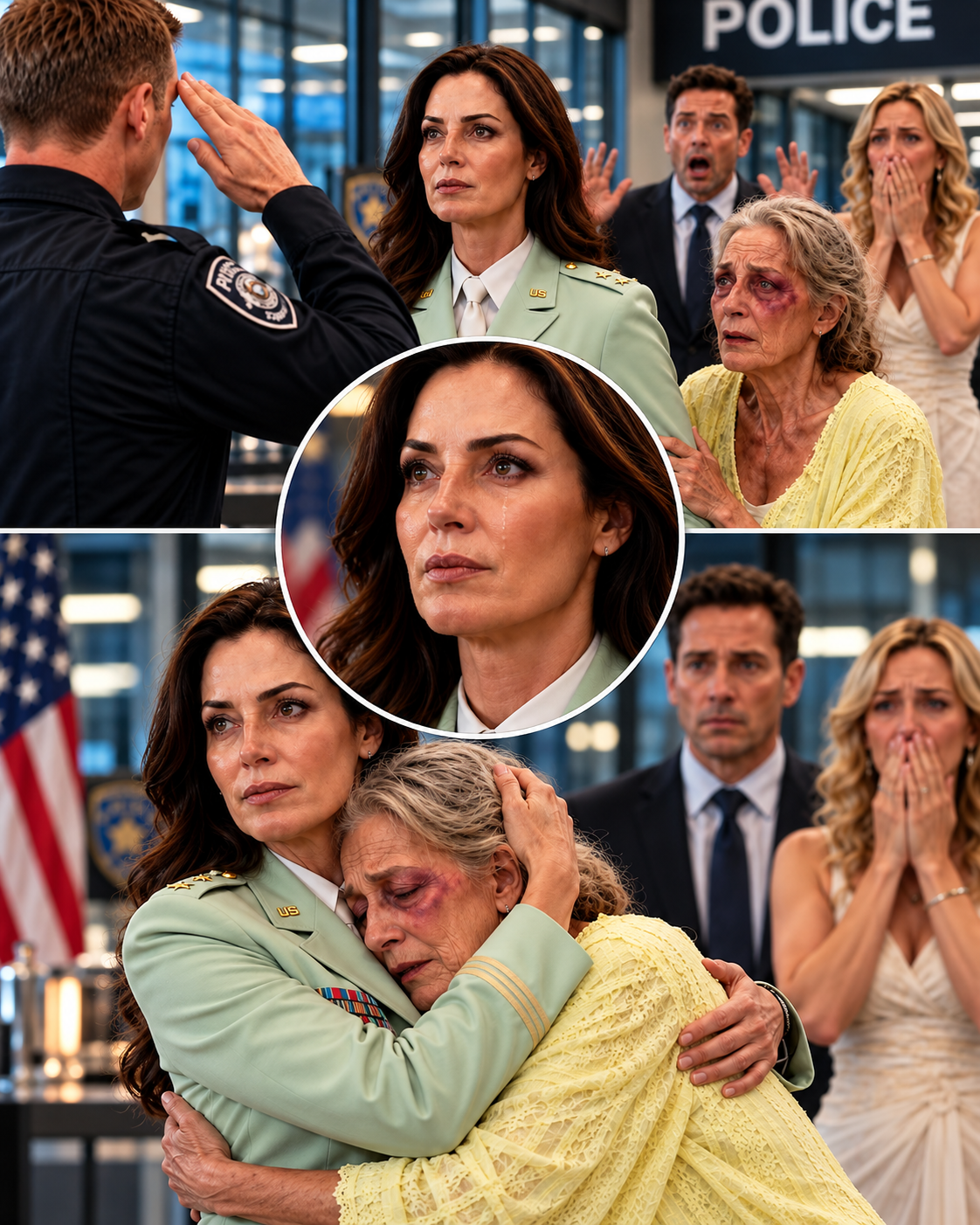
Part 2: A neighbor’s video destroys Brooke’s staged assault and exposes lies
Before Mom left for the hospital, a rain-soaked neighbor named Margaret Hale entered the precinct clutching her phone. She said Brooke’s attack had not been spontaneous; she had recorded some of the preparation from her kitchen window across the street. Margaret had lived beside Mom for twenty-three years and knew the difference between confusion and fear. Landry tried to stop her speaking until a state investigator reminded him he no longer controlled the scene. The shaky video showed Brooke beneath a streetlamp holding a bat, Arthur beside her, and the two discussing Mom’s medication.
Arthur told Brooke Helena should already be asleep, then warned her to scare their mother without losing control if she woke. A third figure stepped from the dark and handed Arthur a key. “The cameras are handled,” the man said. “You’ve got twenty minutes before anyone notices.” Margaret’s video also captured his face. It was Captain Landry. He lunged toward the phone, but investigators restrained him and preserved the original recording. Brooke called the footage edited, while Arthur went pale. Helena told me what happened after they entered her home.
Brooke pinned Mom down while Arthur searched the bedroom. Then she dragged Helena into the kitchen and demanded that she sign documents transferring the family property, claiming unpaid county liabilities would cost them everything. Mom refused because the twelve-acre Carter property had become valuable after a logistics company announced a distribution center nearby. I asked what papers Brooke carried. The tears disappeared from her face, replaced by pure hatred. Investigators found a deed transferring the property to Arthur and a notarized declaration stating Helena was mentally incompetent, both bearing convincing but false signatures.
The notary was Elaine Porter, Brooke’s mother and Landry’s sister. The supposed family dispute had become a coordinated attempt to manufacture incapacity and seize land worth millions. Helena denied signing either document. Arthur collapsed into a chair as Brooke ordered him to stand, then slapped him when he refused. He admitted Mom was supposed to sign after being frightened, not beaten. Brooke shouted that Arthur had said fear would work because Helena loved him too much to believe he would truly betray her.
Arthur confessed he knew about the false debt story, the key, the disabled cameras, the incapacity narrative, and the deed. He said he needed money because people connected to Landry claimed he owed three hundred thousand dollars after getting involved in prescription fraud. Landry had hidden the original arrest, then used that secret to make Arthur move cash, hide evidence, and identify vulnerable properties. Clara’s brother had been manipulated by a corrupt system, but he still chose to participate whenever protecting himself meant sacrificing someone weaker. “I watched her beg,” Arthur said, staring at the floor. “I know what I did.”
Part 3: A hidden drive reveals the corruption behind a midnight attack
Arthur said Landry answered to someone known only as Bishop. Daniel Ross, my deputy, reacted as if the name carried history inside the attorney general’s office. Before he could explain, the precinct lights failed, emergency systems went dark, and glass shattered at the front entrance. Gunfire sent officers, investigators, and witnesses to the floor. Sprinklers drenched computers and paper. Two armed figures moved through the station with the precision of people who knew the cameras, exits, and evidence rooms. Brooke ran toward the evidence corridor instead of safety, and Arthur followed.
When emergency lights came on, I found Arthur bleeding against the evidence-room wall. Brooke had shot him with a weapon Landry hid for her, then taken the bag holding the baseball bat. Arthur grabbed my sleeve and said the bat had a hollow handle containing a storage drive. It held names, payments, judges, police officials, contractors, blackmail files, and property transactions belonging to Landry’s network. Brooke wanted the family land because selling it would fund her escape and give her leverage to trade the drive. The bat should have remained in Landry’s evidence room if Helena had been successfully arrested as Brooke’s attacker.
Arthur said the attackers had not come simply to rescue allies; they were cleaning unstable pieces from Bishop. Daniel ordered Mom and Arthur transferred to separate hospitals under protection. He finally explained that Bishop was the name attached to anonymous files the attorney general’s office received three years earlier. The files described a regional corruption broker connecting judges, police commanders, developers, attorneys, and organized crime. The investigation collapsed when evidence vanished, a source disappeared, and two investigators resigned. I asked who had closed the case. Daniel reluctantly named Deputy Attorney General Marcus Vale, the mentor who recruited me.
Almost at once, the hospital said Mom had been transferred under an order from Marcus’s office. Arthur called from an unknown location, saying men dressed as medical staff had intercepted his ambulance and killed the driver. His captors wanted the backup copy of Bishop’s drive, because Brooke had not taken the only one. Arthur admitted Mom had secretly found a second copy before Brooke attacked her, but he did not know where she hid it. Before the call ended, he whispered, “Bishop isn’t a man.” Then my phone received a photograph of Mom in a vehicle beside Marcus, who held a gun.
The message demanded that I bring confidential warrant files to the old Carter house before noon and come alone. A second warned me not to trust Daniel, claiming he had served Bishop from the beginning. I asked Daniel for his service weapon and phone because trust had become a risk assessment, not an emotion. He surrendered both without protest. “If I’m innocent, I understand why you have to remove every variable,” he said. I locked myself in Landry’s office and studied the investigation my own mentor had authorized.
Part 4: A coded message leads inside the burning house
The audit showed elderly homeowners and isolated business owners repeatedly arrested on weak allegations. The charges later disappeared, while their properties changed hands through shell companies linked to the St. Alban Development Fund. Marcus’s name appeared on authorization memos, Daniel’s on others, and even my signature had been copied onto lawful documents later used to support unrelated seizures. Bishop survived by wrapping corruption around legitimate procedures until responsibility became difficult to separate. Hospital surveillance showed Mom tapping the corridor wall as orderlies wheeled her away. She was repeating a childhood code she had taught Arthur and me during hide-and-seek.
I thought the numbers referred to a barn, but realized they pointed to our old family property. I drove there with a decoy case containing blank paper, tracking powder, and a beacon; the actual warrant files were secured elsewhere. The farmhouse had been torn apart. Mattresses were cut open, drawers emptied, photographs smashed, and dried blood marked the kitchen floor. Marcus stepped from the pantry holding me at gunpoint. He claimed he had transferred Mom to keep worse people from taking her, but demanded the case with the urgency of a man losing control. Brooke came downstairs with the bat and said Mom was nearby.
Then Daniel emerged from behind the pantry and aimed at me. “Hands behind your head,” he ordered, apparently confirming the anonymous warning. Marcus relaxed, and Brooke laughed at how easily I had trusted my deputy. Daniel waited until Brooke moved into his line, then shot her shoulder and knocked Marcus’s weapon away. He sent me toward the cellar, where Mom was bound beneath the stairs. I freed her and asked what the code meant. It pointed not to a barn but to a sequence in the hymnbook beside our father’s grave.
Someone locked the cellar from above and started a fire. Smoke poured through the floorboards while Mom led me toward an old coal chute with a hidden release Thomas had built because he distrusted anything that might trap his family. We crawled through wet soil into daylight. Brooke lay wounded near the porch, and a black sedan disappeared down the drive with Marcus behind the wheel and an unconscious Daniel in the passenger seat. State teams arrested Brooke, but the firefighters could not save the house. Mom stood silently as the roof collapsed over decades of ordinary family history.
Under armed escort, we opened the memorial lantern beside Thomas’s grave and found a waterproof pouch. The drive inside held years of transactions, recorded calls, property thefts, blackmail files, and links to judges, developers, police, attorneys, and politicians. Its most disturbing folder was labeled CARTER. Thomas had been a confidential informant almost three decades earlier, after discovering county officials forced farmers to surrender land through fraudulent tax liens. Photos of the highway crash that killed him showed his brake line had been cut cleanly. Mom admitted she had always suspected the death was not an accident.
Part 5: The women behind Bishop reveal themselves through one careless recording
A video on Thomas’s drive showed Marcus warning someone that my Westbridge audit was moving too quickly because I had inherited my father’s instincts. A woman off camera told him to use Arthur against me if necessary. I recognized the voice as Attorney General Rebecca Shaw, the person who publicly encouraged my integrity investigation. She had not authorized the audit to destroy Bishop; she had planned to control what I found and when evidence could be redirected. My phone rang before I could absorb that. Rebecca calmly asked whether I had the drive. When I confronted her, she called me emotional, using the same language Brooke had used against Mom.
Rebecca offered Arthur and Daniel in exchange for the evidence. She claimed Marcus had both men and Daniel knew the location of a surviving federal archive. Mom said we could not abandon them, but neither could we surrender decades of records. Thomas’s plan was to make corrupt people believe cooperation served their interests. We built a counterfeit drive with damaged copies and a hidden transmission routine that would upload the real archive when connected to Bishop’s internal systems. Mom insisted on attending, despite her injuries, because everyone in Bishop still underestimated the older woman they had called confused.
At midnight, Mom and I entered an abandoned courthouse. Rebecca stood beneath the judge’s bench beside Marcus, with Daniel bound to a chair, Arthur pale from blood loss, and Brooke nearby with her wounded arm in a sling. I placed the false drive on the table while the hidden program began transmitting. Arthur used the delay to confess that the debt story had been manipulated. Brooke had moved Bishop money through his accounts, then showed him evidence designed to make him believe he personally stole hundreds of thousands. When he tried to withdraw, she and Bishop threatened my life. He participated in attacking Mom because he thought sacrificing the property might keep me safe.
I told Arthur that pressure explained what happened but did not erase his choices. He agreed. As the upload neared completion, Marcus recognized the system activity. Mom knocked Brooke sideways, Daniel tipped his chair into Marcus, and the courtroom broke into chaos. Rebecca raised a pistol toward Helena, but Brooke shot Rebecca first after realizing Bishop planned to dispose of every witness once they recovered the drive. Arthur dragged Mom behind the witness stand while Daniel shielded me and took a second bullet. The transmission reached one hundred percent before federal teams entered.
The files went to multiple federal agencies, newsrooms, and secure storage locations. Bishop could not erase them by destroying one archive. Marcus was captured trying to escape through the judge’s chambers. Brooke surrendered after Arthur refused to shoot her, despite having the chance. Rebecca survived under guard. Investigators warned that the central server had triggered a purge, but one protected package had automatically gone to Mom. The package contained Thomas’s contingency plan for ending Bishop without destroying innocent people who relied on institutions funded by its stolen money.
Part 6: My mother reveals the secret war my father fought alone
Mom explained Thomas designed the final archive so she would receive it if Bishop collapsed. He trusted his wife more than agencies he had watched become compromised. The package held files on families who lost farms and homes, workers whose pensions vanished, businesses forced into sales, and witnesses who were murdered. Bishop survived partly because exposing every dollar carelessly could also damage the people it had exploited. Thomas created a restitution trust to receive recovered assets and compensate verified victims while preserving essential community services where possible. He had planned not only how to reveal the network but how to stop truth from becoming another weapon.
Mom also admitted Arthur had warned her thirty minutes before Brooke arrived. He said he had made terrible choices and begged her to leave because things were dangerous. Mom stayed because she needed Brooke, Landry, and Arthur to believe the backup drive was still in the house. She hid it in the memorial lantern before waiting for them to come. I was furious that she had used herself as bait and concealed Bishop for decades. She said she had spent twenty-eight years trying to keep both children alive after Thomas was murdered. I told her protection did not give her unlimited permission to decide what truths I could survive. “I know,” she said.
Arthur and Daniel survived surgery. Brooke remained in custody, Marcus sought a cooperation deal, and Bishop began collapsing as warrants spread through four states. Judges resigned, police chiefs were arrested, developers tried to flee, and federal receivers moved to protect hospitals and community programs from financial ruin. Then Governor Evelyn Shaw appeared on television portraying herself as the brave official who secretly authorized the investigation. She described Rebecca as a daughter who had corrupted their family foundation without her knowledge. For three hours, much of the public believed her. Marcus ended the performance with records showing Evelyn had built the modern Bishop compact and trained Rebecca as her successor.
Evelyn tried to use emergency authority to protect Rebecca, but federal agents arrested her before she could intervene. I visited Arthur in the hospital. He expected prison and said he did not deserve forgiveness. He promised to confess everything, including the deed, surveillance, evidence movement, and his role in the circumstances that let Brooke attack Mom. I told him confession would not turn betrayal into courage unless he accepted whatever came next. Arthur said living honestly with the consequences was the only thing he had left to offer.
Two days later, Mom received Thomas’s missing wedding ring in a package accusing her of betraying him. The allegation reopened every doubt, especially when she recognized the ring had been in the custody of Samuel Voss, Thomas’s original handler. Records said Samuel had died more than twenty years ago, but Daniel found an elderly man living under another identity in Vermont. Mom looked frightened when she learned he was alive. I demanded a secure interview. I was finished allowing other people to define protection as secrecy.
Part 7: My father’s handler confesses the choice that killed him once
Samuel appeared by video and admitted he had betrayed the location of Thomas’s final meeting after Bishop threatened to kill his daughter. He believed the network intended only to frighten Thomas into silence. He realized too late the operatives planned to cut the brake line and tried warning him, but the message arrived minutes before the crash. Thomas mailed Samuel his ring that morning with a note saying one terrible choice made to protect a child did not have to define every decision afterward. Samuel spent decades preserving evidence and helping Mom hide fragments of the archive. He accepted that coercion explained his choice without making him innocent.
I asked who sent the package accusing Mom. Samuel had not. Only one other person knew he still possessed Thomas’s ring: Daniel Ross. Daniel entered the conversation wearing a sling and admitted he arranged the message to draw Samuel out of hiding. He had discovered Bishop remnants were hunting the old handler. I was furious because Daniel had manipulated my grief, implicated Mom, and used our family history as leverage. He said he had protected me for years. I answered that protection did not give him ownership over which lies I should endure.
Daniel revealed his father had been among the farmers destroyed by Bishop and died by suicide when Daniel was eleven. That loss drove him into state investigations and kept him close to me because Thomas’s archive seemed to be the only way to dismantle the network. He admitted pointing a gun at me in the farmhouse, withholding information, and repeatedly deciding outcomes for me because he feared transparency would get me killed. I refused to romanticize it. Samuel then revealed one final offshore structure held nearly two billion dollars and required biometric authorization from Rebecca and Evelyn. Recovering it legally could fund Thomas’s restitution plan for generations.
Investigators offered the two women separate agreements that appeared to reward cooperation. Neither knew the other had received the same offer. Both authorized movement of the offshore assets, believing the money would remain protected inside Bishop. Under court supervision and forfeiture orders, it instead moved into Thomas’s restitution trust. Verified victims received funds; hospitals and schools dependent on Bishop money were stabilized. Returning stolen wealth took far more work than announcing the villains had lost. Arthur pleaded guilty to conspiracy, fraud, evidence tampering, unlawful restraint, and related offenses. His cooperation exposed officials and helped recover records before they disappeared.
Arthur received a six-year sentence, reduced from the prosecutors’ original request. Brooke received a longer sentence for assaulting Mom, attempting to kill witnesses, stealing evidence, and moving Bishop funds through false companies. Rebecca and Evelyn were convicted after trials built on documents rather than political spectacle. Marcus entered a controlled witness-protection arrangement after cooperating. Daniel resigned and submitted to an independent review of his own conduct. I did not defend him. One year after the midnight call, Mom’s wrist still lacked full strength and our farmhouse was only an empty foundation. We decided not to rebuild the exact structure and turn memory into an obligation.
Part 8: A final file changes everything I know about my family
We used legally recovered land and restitution funds to establish the Thomas Carter Center for Legal Protection. It helped elderly property owners, whistleblowers, and families facing institutional abuse or false declarations of incapacity. Mom called her damaged wrist evidence rather than tragedy, though I reminded her she did not have to make every injury a mission. Arthur wrote every Sunday from prison. I ignored his first several months of letters. Daniel left one letter on my desk after resigning. It offered no defense, only the hope that someday truth would matter more than the person who concealed it. I placed it beside Thomas’s ring and did not answer.
Months later, Mom and I visited Thomas’s grave on the anniversary of his death. Daniel waited at a respectful distance beneath the trees with one last sealed file recovered from a Bishop archive. Inside was my birth certificate. Helena Carter was listed as my mother, but Thomas Carter was not my biological father. Samuel Voss was. A note from Thomas said I was his daughter in every way that mattered; Samuel gave them evidence, and Thomas gave Samuel’s child a safe life. Bishop could never learn the truth because blood could become another weapon.
Mom explained that she had loved Samuel before she married Thomas. She became pregnant while Samuel was deep inside Bishop, where anyone connected to him could be used as leverage. Thomas was Samuel’s closest friend and offered Mom protection, marriage, and his name—not out of pity, but because he loved her and later loved me before I was born. Samuel surrendered every legal and emotional claim because he believed disappearing gave us the best chance to survive. Thomas knew the truth from the start and never treated me as borrowed. He was my father because he chose to be, every morning.
A black car stopped near the cemetery gate. Samuel stepped out beside his adult daughter, Anna, the girl Bishop once threatened and my half-sister. Anna knew Samuel had once protected a baby but never knew where I lived. Samuel had spent decades believing that contacting me might expose me. I told him I already had a father and Thomas’s place could never be replaced. Then I added that refusing to replace Thomas did not mean Samuel was nothing. I opened my arms only after deciding the embrace belonged to me.
Part 9: We rebuild our family without pretending truth heals every wound
The Thomas Carter Center opened six months later. Mom cut the ribbon with the hand Brooke had permanently weakened. Anna led victim outreach, Samuel quietly helped archivists authenticate old evidence, and Daniel joined an independent ethics commission only after a public review of his conduct. Arthur attended for one supervised day under correctional authorization. He stopped several feet from Mom and said he did not deserve to hug the woman he had allowed Brooke to attack. Helena told him he was right. Then she chose to hug him anyway.
When Arthur turned toward me, I said he had finally told the truth, but far too late. He agreed without asking me to soften the judgment. I embraced him briefly because accountability and love were not opposites, though closeness would take years to feel safe again. Brooke never apologized. Rebecca never admitted guilt. Evelyn died insisting she had protected the state. Marcus disappeared into protected cooperation after giving evidence against people who otherwise might have escaped prosecution. Bishop’s central structure collapsed, but corruption did not vanish with it. Someone would always be tempted to trade public power for private protection.
I stayed in public-integrity work but refused promotions that would have required me to defend the old office culture just because reformers wanted a heroic face. Instead, I divided my time between prosecution and the center Thomas never lived to see. We barred staff from secretly turning relatives into informants. Family conflicts in investigations required independent review, and elderly victims received medical support before anyone questioned their capacity. Mom challenged some policies, Anna challenged others, and Daniel submitted written criticism through the proper committees rather than asking for special treatment. Arthur began teaching addiction-recovery lessons remotely from prison, admitting that prescription abuse had opened the door Landry used to control him. None of it erased the night Mom begged him to stop Brooke.
One Sunday, I finally answered Arthur’s letters. He wrote about a childhood game in which Thomas made whichever sibling reached the porch first wait for the other. Arthur always ran faster and always waited, until adulthood taught him to treat arriving first as permission to abandon the people behind him. I wrote only: “I remember. Keep walking.” It was not forgiveness, but it was no longer silence. Sometimes a relationship could recover only at a distance honest enough to prevent another lie.
Years later, Mom sat with me on the center’s porch while children played in the memorial garden and evening light turned the fields gold. Samuel and Anna argued about roses. Daniel carried boxes through the front doors. One of Arthur’s letters rested unopened in Mom’s lap, because she had learned she could answer when ready rather than on demand. Thomas’s name was carved above the entrance, not because biology made him my father, but because his choices did. Mom said he would have been proud of all of us.
I remembered her in handcuffs, the open evidence-room door, Brooke’s false bandage, Arthur’s lowered eyes, the burning farmhouse, Thomas’s cut brake line, Rebecca’s voice on the recording, and Daniel pointing a weapon at me. Truth had not returned our house, repaired Mom’s wrist, given Thomas another twenty-eight years, or erased Arthur’s conviction. It had not made betrayal useful. It had stopped the people who caused the damage from controlling what the damage meant. That mattered. At a.m., Mom had called because she believed her daughter might be powerful enough to make the police listen. Later, I understood she never needed a powerful daughter to rescue her. She needed institutions willing to treat her injuries as evidence before learning who her daughter was. That became our work.
✓ Lynn R. Adams
Part 2: A neighbor’s video destroys Brooke’s staged assault and exposes lies Before Mom left for the hospital, a rain-soaked neighbor named Margaret Hale entered the precinct clutching her phone. She…