After seventeen years in a wheelchair, I watched another neurologist tell my father there was nothing left to try,
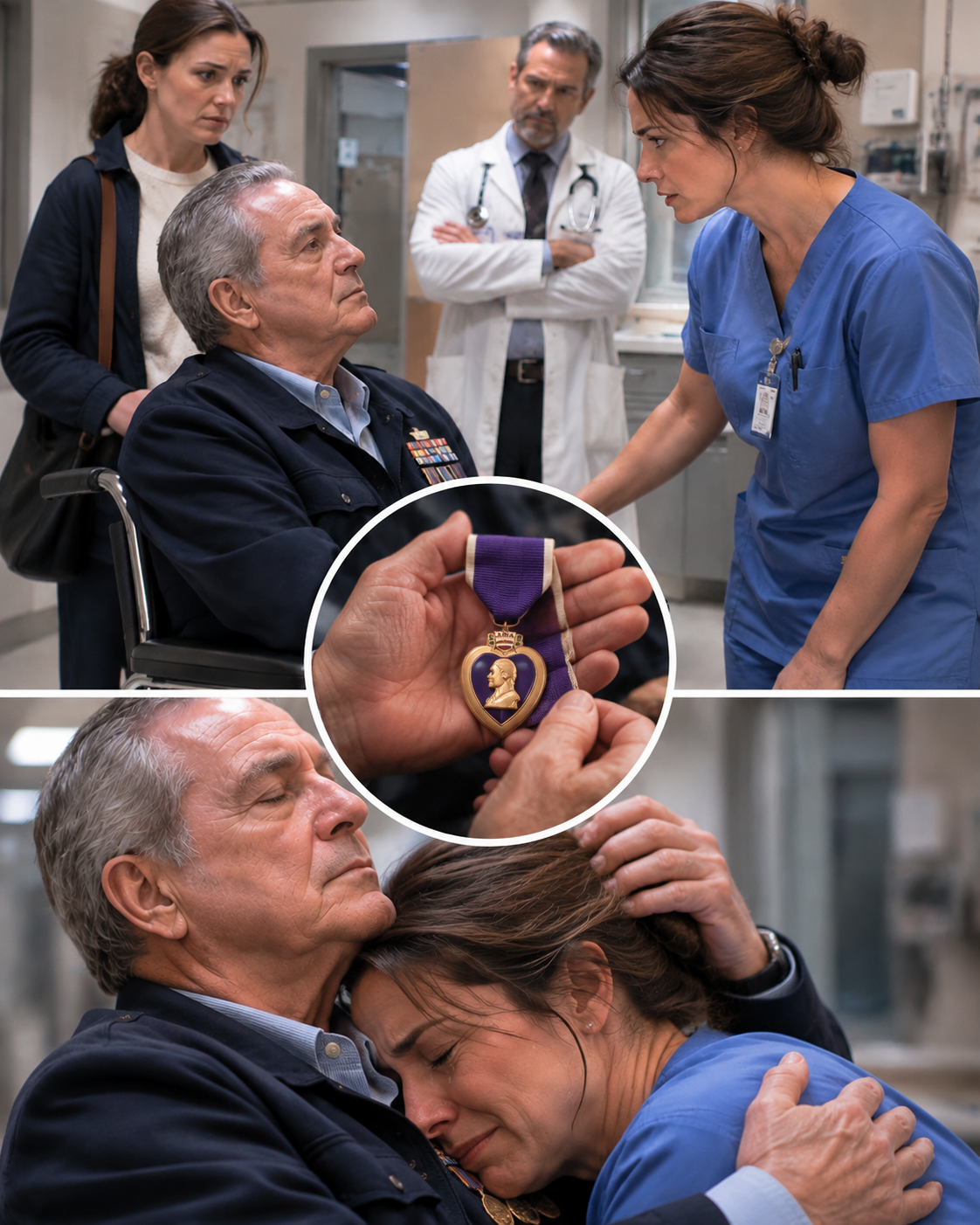
IF FACEBOOK BROUGHT YOU HERE, HERE’S THE CONTINUATION YOU’VE BEEN WAITING FOR. ENJOY! 👇 Vanessa later told me she had taken the long way to Dr. Kellaway’s office, stopping to wash hands that were already clean. When something mattered, she made herself move at an ordinary pace instead of letting her nerves carry her down the hallway.
He was standing behind his desk when she arrived. The new images showed bilateral calcified deposits at T6 and T7, consistent with the possibility she had raised. It was not a guarantee of recovery, but it was a finding the previous discussions had never accounted for.
Dr. Kellaway said an operation was theoretically possible, though the approach was unusual and required specialized review. He knew of two Canadian centers with comparable experience, Ottawa Civic and Vancouver General, and had already contacted Ottawa. Then, after a pause, he told Vanessa it was a good catch.
She told him she had read a small 2019 case study about military patients whose undocumented field procedures had been associated with similar findings. He admitted he was unfamiliar with it. When he asked how she had known to raise the question, she answered, “Because I know what gets left out of files. And I know the kind of men who don’t tell anyone how much something hurt them.”
Dr. Kellaway met with us to discuss the imaging and the possibility of a surgical consultation. I listened carefully to the risks, because after seventeen years I had learned that hope could hurt if you treated it like a promise. Dad asked direct questions about the spinal cord, the procedure, and what rehabilitation might look like.
Three weeks later, we were driving to Ottawa in November. The road was cold and long, and we listened to CBC Radio until neither of us wanted the sound. Dad stared through the windshield for a while before speaking.
“She didn’t have to do that,” he said. I knew he meant Vanessa speaking up when the appointment had effectively ended. “No,” I answered. “She didn’t.”
“She reminded me of people I served with,” he said. “Not the flashy ones. The ones who were there every time and did the right thing.” I kept my eyes on the highway because my throat had tightened.
Then Dad said, “I’m going to walk at Christmas. I’m going to walk into your house for dinner.” I knew there was no certainty in that prediction, no matter how confidently he said it. Still, I answered, “I know, Dad,” because I understood how much he needed something to aim toward.
The operation in Ottawa lasted six hours. Dr. Osqam, the neurosurgeon, came to the family room afterward and said the procedure had gone as well as they could have hoped. The deposits were more extensive than the imaging had suggested, but the spinal cord had been compressed rather than severed.
He explained that recovery would depend on healing and rehabilitation, and that no one could promise how much movement would return. I heard the caution. I also heard that there was a chance, and I sat with those two truths until I could breathe normally again.
Rehabilitation was not a sudden miracle. Dad spent three weeks in a facility in Ottawa, repeating small, exhausting exercises under supervision. Some days the progress was barely visible, and some days he had to work just to repeat what he had managed the day before.
Then he came home to Sudbury for another six weeks of physiotherapy. Gord, his physiotherapist, arrived every Tuesday and Thursday at eight in the morning with a cheerfulness Dad did not particularly enjoy. Dad nevertheless followed every instruction, as he had always done when someone knew their job.
One morning I was in the kitchen, about to make coffee, when I heard an unfamiliar shuffling sound. I stepped into the doorway and saw my father standing behind his walker. He moved one foot, steadied himself, then moved the other, and managed three careful steps.
His face was set in fierce concentration. I went back into the kitchen, held a dish towel to my face, and cried for about thirty seconds. When I returned, he was seated again, watching me with that same expression he wore when he pretended nothing unusual had happened.
“Good coffee?” he asked. “I forgot to make it,” I admitted. “Mm,” he said, as though that explained everything.
Final We held our family Christmas dinner on December 23 because my husband, Rob, drove for a regional ambulance service and was working the next two days. Our children, nine-year-old Bram and six-year-old Lucy, had grown up celebrating on whichever day his shifts allowed. Dad had always considered that perfectly sensible.
That afternoon Dad came out of his house in Sudbury wearing his good coat. He used the railing to negotiate the three front steps, exactly as Gord had allowed, and stood in the driveway while light snow fell. When our car pulled up, I got out and stopped moving.
Rob stood beside me, and the children climbed out. Lucy, in her red coat and rubber boots decorated with penguins, approached her grandfather slowly. She had never seen him stand in her entire life.
“Papa,” she said, looking up, “you’re tall.” Dad’s face changed in a way I had not seen since my mother’s funeral, as though some weight he had carried for years had finally been set down.
He carefully crouched to her level, with effort and balance and the help of two legs that had not carried him that way for seventeen years. “I used to be taller,” he told her. Lucy considered that answer, then wrapped her arms around his neck, and he held her close.
Three weeks into the new year, Dad sent a card to the nursing staff on 7 North. His handwriting was a little unsteady but clear. He addressed it to the nurse who had asked the question nobody else thought to ask, and wrote that after thirty-four years as a naval officer, he recognized someone who did what needed doing without waiting to be told. He thanked Vanessa for doing her job the way it ought to be done.
Vanessa read the card in the break room on a Tuesday afternoon. She folded it once and slipped it into the pocket of her bright blue scrubs. When the unit clerk, Hamed, asked if it was good news, she said, “Yeah. Good news.”
Then she went back to her patients. I think about that whenever I remember the doctor standing at the examination-room door and Vanessa refusing to let our appointment end without one more question. She did not promise Dad a cure or pretend the years in his wheelchair had never happened. She listened closely enough to find a missing part of his history, and that gave the specialists something new to investigate.
When I picture Christmas now, I still see the snow, the driveway, and Lucy’s little penguin boots. Mostly I see my father bending down to hold his granddaughter, doing something she had never seen him do. That is the picture I will keep.
THE END. I’ve shared the complete story, and I truly hope it touched your heart. If this story moved you, please , like, and share the post. Thank you for reading! ❤️
✓ Lynn R. Adams
IF FACEBOOK BROUGHT YOU HERE, HERE’S THE CONTINUATION YOU’VE BEEN WAITING FOR. ENJOY! 👇 Vanessa later told me she had taken the long way to Dr. Kellaway’s office, stopping to wash hands that were alr…