After my husband’s affair…
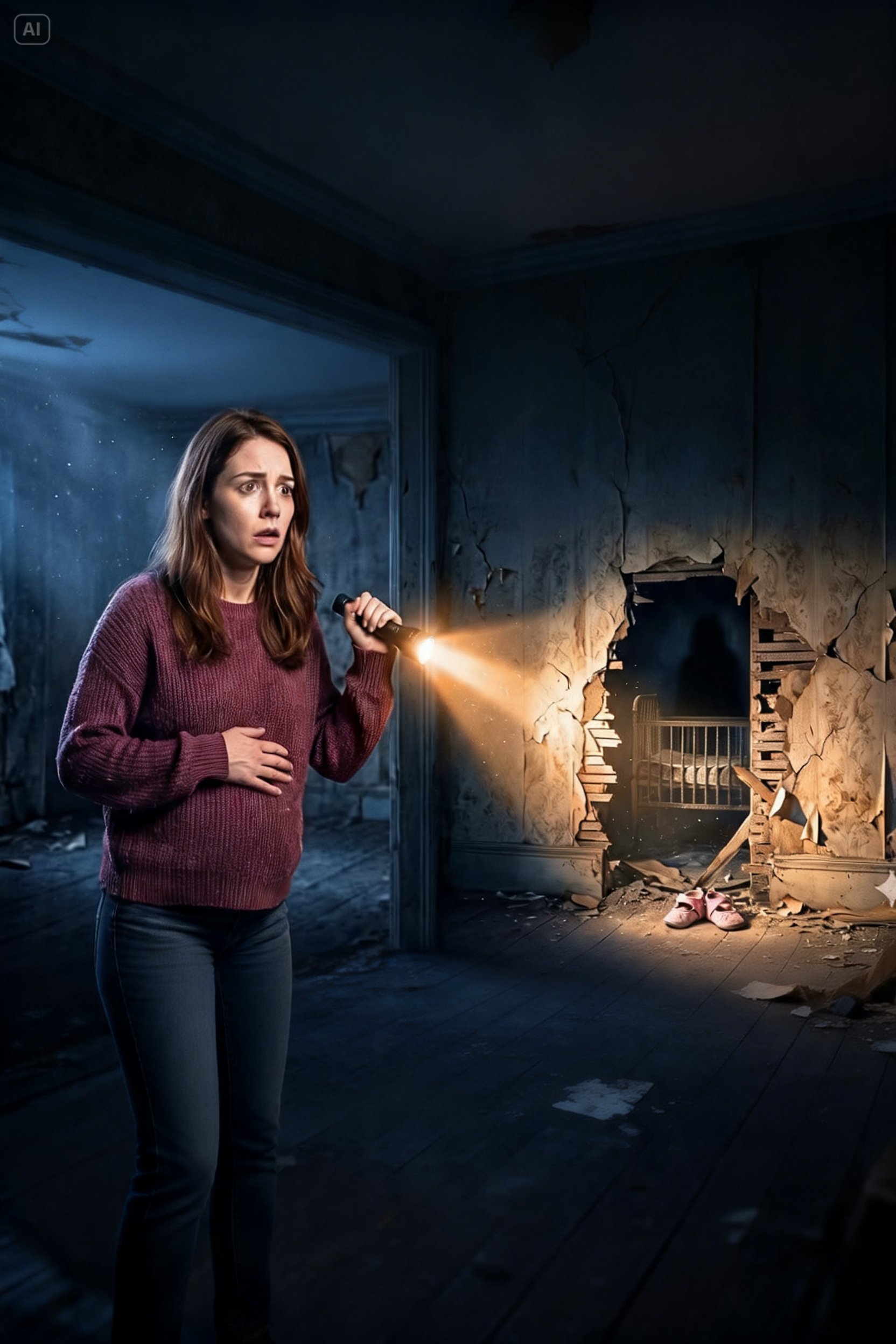
After my husband’s affair cost us our home, my 12-year-old son and I drove into the Vermont mountains to see what my late father had left us. The workshop looked abandoned, but my boy noticed something I couldn’t explain….
Three weeks before I found that workshop, I still thought sixteen years of marriage had to count for something. My name is Corinne Halstead. I was thirty-nine, and for most of my adult life I’d been raising our son, Tobin, keeping our household running, and helping my husband, Russell, build a business he called his own. I never asked for applause. I just thought we were building a life together.
I remembered Russell sitting across our kitchen table one snowy evening, holding my hands and saying I’d never have to worry about money while he was around. I believed him. So when he asked me to sign paperwork, I signed. He handled the finances, and I trusted him in the way you trust someone who’s been sleeping beside you for sixteen years.
Then I learned about his affair. As I tried to understand what he’d done, I discovered financial decisions he’d kept from me and the consequences of papers I hadn’t questioned. The divorce moved faster than I could catch up. By the time it was over, Tobin and I were in a roadside motel, and I couldn’t afford to keep us there another week.
One evening I split takeout food between two paper plates, giving my son most of it. Tobin took one look at the plates and asked, “Aren’t you hungry, Mom?” I told him I’d eaten earlier. The truth was I’d had nothing since morning, and I was trying to figure out how to make the money in my purse last.
He slid half his dinner back toward me. “We can share,” he said. “Grandpa always said things are better when you share.” I sat beside him and ate because refusing would have hurt him more than admitting I was hungry. We talked about his homework while I tried not to stare at the motel room door.
Before bed, Tobin asked if he’d have to leave his school. He tried to sound casual, but he’d been carrying our old house key in his pocket for days. He’d already asked me if it meant we didn’t have a home anymore. I told him I’d do everything I could to keep things steady for him, though I had no idea how.
After he fell asleep, I counted our bills again by the window. Behind my driver’s license I kept a photograph of my father, Elias Marlow, beside his workbench. Dad had died nearly seven years earlier. He’d been a mechanic, as far as I knew, the kind of man who came home tired and still fixed my bicycle or listened to whatever was bothering me.
My mother had died long before him. Sometimes, when I looked at that old picture, I remembered Dad holding my hand at her funeral and wished I could borrow his strength for just one more day. That night I whispered, “I don’t know how to do this alone, Dad.” A few minutes later my phone rang, and I didn’t recognize the number.
I let it go to voicemail. The caller introduced himself as Benton Clark, said he’d been my father’s attorney, and asked me to call him that night about something Elias had left behind. I listened twice. Dad hadn’t had much money, and in all the years since his death no attorney had called to tell me there was an inheritance.
I stepped into the motel hallway so I wouldn’t wake Tobin and called back. Benton answered almost immediately. He spoke gently, like someone who understood that a late-night call from a stranger might sound frightening. He said my father had been a dear friend and had asked him to protect something until the right time. When I said Dad was only a mechanic, Benton replied, “There was more to him than you knew.”
The next morning I drove Tobin to Benton’s small brick office outside Montpelier. Benton was seventy-one, with silver hair and patient eyes. He brought Tobin hot chocolate, then set a worn leather folder on his desk. My hands were cold even though the room was warm, and I kept watching my son swing his legs beneath the chair.
Benton said my father had bought eight and a half acres in Vermont’s Green Mountains twenty-seven years before. An old woodworking workshop stood on the property. Dad had placed the land in a trust for me, with instructions controlling when it could be transferred. After my divorce and financial hardship, the trustee had authorized the transfer to me.
I asked the question that wouldn’t leave my mind: “Why didn’t he tell me?” Benton said Dad wanted me to have a life that wasn’t weighed down by his past. Then he handed me a yellowed envelope. Across the front, in the handwriting I remembered from birthday cards and notes tucked into my school lunches, he’d written: “For my daughter, when she needs courage.”
I asked if I could open it. Benton nodded, and I carefully unfolded the single page. Dad said that if I was reading it, life had probably been harder than he’d wanted it to be. He wished he could sit beside me and tell me things would be all right. Instead, he’d left me a place where I could begin again.
He warned me not to judge the place by how it looked. He also wrote, “Please don’t mistake what I kept hidden for something I was ashamed of.” There were parts of his life, he said, that I had never known. I read those words again because they sounded so unlike the quiet father who had always told me everything important.
Tobin reached for my hand. “Does that mean Grandpa left us a house?” he asked. Benton gave him a small, sad smile and said it wasn’t exactly a house, but it was something we should see. I thanked him and gathered the documents, trying not to let my hopes get too big on the drive.
That afternoon, we followed a narrow road into the mountains. Maple leaves moved across the windshield, and there were fewer houses with every mile. Tobin was quiet at first, then began pointing out the colors in the trees. For a little while it felt like an ordinary drive with my boy instead of a desperate search for somewhere to go.
We finally stopped at a rusted iron gate. Beyond it stood a wooden building with a sagging roof, weeds choking the gravel drive, and a boarded-up window. I checked the address twice. The building looked as if it hadn’t been used in years. I had let myself imagine a small, livable place, maybe somewhere Tobin could sleep in a real bedroom again.
“Are you sure this is it?” he asked. I nodded, although my heart was sinking. The workshop didn’t look safe, much less like the answer to our problems. I almost turned back, but Tobin pointed above the door. A small wooden star had been carved into the frame. Dad used to carve stars into the things he made for me, even little shelves and toy boxes.
I got out, walked through the weeds, and fitted Benton’s brass key into the lock. The door opened with a long creak. Dust floated in the light behind us. There were shapes under white sheets, cabinets against the walls, and a workbench at the far end. Everything smelled of old wood and closed-up rooms. I stood on the threshold, wondering why my father had kept this place from me.
Then Tobin caught my sleeve and pointed toward a small chair in the far corner. Its curved wooden back was decorated with tiny stars. He took a step closer, brushed dust off the seat, and looked at me with an expression I couldn’t read. A name had been carefully carved into the wood. It was his name: Tobin. Part 2…..
I crouched beside the chair and ran my thumb along the carved letters. Tobin had been only five when Dad died. The chair was small enough for the little boy he’d been back then, and one armrest still hadn’t been polished. A piece of blue painter’s tape on the back read, “For my little stargazer. One last coat of varnish.”
“Grandpa remembered,” Tobin said, sitting on his heels. I remembered evenings when Dad pointed out constellations from the porch and told Tobin even the smallest light mattered. I had thought the chair was the mystery. Then I looked around the room more carefully and realized how much work my father had hidden here.
Beneath the dust were oak cabinets, rocking chairs with hand-carved details, and dining tables made with a skill I’d never seen in his little home repairs. A tiny star was worked into each piece, sometimes where you had to bend down to see it. On the workbench sat an open notebook, and I recognized Dad’s handwriting on the first page.
“My name is Elias Marlow. Before I became the man my daughter knew, I was someone else.” The words made me sit down. He wrote about designing furniture and starting a successful company with a business partner named Dorian Stroud. Dad drew the designs, selected wood, and worked beside the craftspeople. Dorian managed the contracts and accounts, and Dad trusted him like a brother.
Years into their partnership, Dad discovered that company profits had been moved into accounts he didn’t know about. His designs were being sold under agreements that left his name out. When he confronted Dorian, the man threatened to bury him in lawsuits and damage his reputation. At the same time, my mother was seriously ill, and Dad had a young daughter to care for.
He chose us. He walked away from the fight, spent his strength caring for Mom, and eventually worked as a mechanic. I found an old photograph of him beside a carved walnut table in his company’s early days. On the back he’d written that he’d once thought success meant putting his name on something beautiful, until having a daughter taught him what beauty meant.
I cried with the photograph in my hands. I hadn’t known what he gave up, or how much disappointment he carried into those years when he’d come home in a grease-stained uniform and still ask about my day. Tobin put an arm around my shoulders. “He knew you loved him, Mom,” he told me. For once, I let my son comfort me.
Then he noticed a brass handle underneath the workbench. A narrow drawer was hidden there, with a small lock and four words carved into the wood: “The truth is here.” Tobin spotted a little brass key taped beneath a wooden ruler. I turned it in the lock, and the drawer slid open with a soft scrape.
Inside were faded bank statements, handwritten letters, original furniture drawings, old invoices, photographs, and an envelope marked “Dorian Stroud Private Records.” There was also a notarized statement signed by a former accountant, Margaret Bell. Her account described hidden transfers, altered contracts, and payments for designs Dad hadn’t been credited with. I spread everything across the workbench, afraid to breathe too hard over the brittle pages.
Another letter was addressed to me. Dad wrote that he had wanted to tell the world what happened, but every hour spent fighting for his name would have been an hour away from my sick mother and from watching me grow. “I made my choice,” he wrote. “I won’t pretend it didn’t hurt, but I never regretted choosing you.”
I thought of Russell and how I’d been replaying his betrayal, wondering if I was foolish for trusting him. Dad had trusted the wrong man too. He had been hurt, but he’d refused to let that dishonesty decide what kind of father he’d become. I couldn’t make the divorce disappear; I could decide what sort of mother I would be next.
I called Benton that evening. He cautioned me that evidence and a courtroom victory were not the same thing. The agreements were decades old, legal claims might have expired, and a lawyer would need to examine the records and find out whether witnesses could still help. I appreciated that he didn’t promise me money or a happy ending. I told him I wanted to understand what had happened anyway.
Back at the motel, Tobin turned our old house key over in his palm and asked whether Russell missed us. I told him I didn’t know what his dad was feeling, but that none of this was Tobin’s doing, and he deserved love from both parents. When he finally slept, I laid Dad’s letter beside the workshop key and made a decision: I would try to bring the place back to life.
Part 3 The next morning I came back with a notebook and measuring tape. I wanted to start with the furniture, but a dark patch spread across the ceiling, followed by a sharp crack overhead. I grabbed Tobin’s hand and got us outside. Rainwater slipped through broken shingles, and the sound of the old beams made it plain that we couldn’t safely work inside yet.
A contractor inspected the building two days later. The roof needed major repairs, support beams were rotten, and the wiring wasn’t safe. I folded his estimate and put it in my purse, embarrassed by how little money I had. Tobin suggested selling some of Grandpa’s furniture. I said maybe someday, but first we needed to understand what those pieces meant.
At a hardware store in the small town of Maple Hollow, I met Harlan Fitch. He was seventy-four, with worn hands and the kind of steady gaze that makes it easy to tell the truth. When I mentioned Elias Marlow, Harlan took off his glasses. He had known Dad and called him one of the finest craftsmen he’d ever met. Then he said what he remembered best was how Dad treated people.
Harlan offered to help me find a qualified crew and figure out which repairs could be staged. He also offered to teach me woodworking in his heated garage while the workshop was unsafe. I warned him I couldn’t even hang a picture straight. “Then we’ll start easier,” he said, and set a scrap board on the bench in front of me.
I took a morning job at a home goods store. In the afternoons I learned to measure twice, read the grain, cut joints, and sand carefully. I ruined a shelf by cutting it too short and made another that leaned sideways. One day I cried over a mistake so small I was ashamed to tell Harlan. He sat beside me and said Dad had made plenty of mistakes too. A bad piece of wood didn’t make somebody a bad carpenter.
Tobin spent some afternoons with us, sanding scraps under Harlan’s eye and drawing furniture on the backs of old paper. He made a small wooden box for Dad’s photograph. I kept it beside my pillow at the motel, where I could see it first thing in the morning. It was the first object in that room that felt entirely ours.
A widow named Mrs. Alden brought me an oak table her late husband had made for their first home. I was frightened to take the job, but Harlan guided me through the restoration. When she returned, she laid her palm against the tabletop and said her husband would have loved it. For the first time I understood that people weren’t just paying me to fix wood. They wanted to keep a memory close.
That evening a thick envelope from a law firm was slipped under our motel door. It concerned Dorian Stroud’s estate. His representatives offered me money in exchange for a confidential settlement tied to the old business records. It was enough to make needed repairs and give Tobin some stability. But the agreement said it would not constitute an admission of wrongdoing.
I read that sentence until the words blurred. I couldn’t afford to treat the offer lightly, yet I didn’t want Dad’s name left out of the story one more time. Benton told me Dad wouldn’t have wanted us to suffer on his behalf. He also reminded me I didn’t have to make my choice out of fear. With his help, I met an attorney who handled business disputes.
She studied the contracts, Margaret Bell’s statement, and the financial documents. She couldn’t promise we had a claim that could still be taken to court, but she thought the estate’s willingness to negotiate gave us room to ask for more. I asked for a fair financial settlement and a written acknowledgment of my father’s designs and contributions. It was the first major decision I’d made in years without letting Russell decide for me.
Negotiations dragged on. The estate questioned documents, the workshop repairs stayed on hold, and I kept going to my store job and to Harlan’s garage. My palms ached. Sometimes a finished piece came back because a customer wanted it changed. And there were mornings I sat in the motel parking lot, too tired to start the engine, then went to work because Tobin needed breakfast and a place to sleep.
Russell called when he heard Tobin had been spending time in a woodworking shop. He said furniture couldn’t possibly provide the stability our son needed. I told him he was right that Tobin needed stability, and that was what I was trying to build. Afterward my hands shook, but I hadn’t begged Russell to understand. That felt new.
One night Tobin showed me the little box he’d made. Inside was a photograph of Dad holding him at five years old under a summer sky. He said he’d made it so I could remember Grandpa believed in me when I was scared. The next day I put it on Dad’s workbench, in a spot that stayed dry, and picked up my tools again.
Three days later Benton called. During a review of Dorian’s estate, an old accounting ledger had surfaced. Its entries appeared to support Dad’s account of concealed payments. The estate was now willing to discuss something it had resisted before: putting the truth in writing. I didn’t celebrate yet. I waited for the people who knew the documents to finish their work.
Final When Benton called again on a Thursday morning, I was sanding an oak tabletop in Harlan’s garage. I put down the sanding block as he explained what had happened. The ledger confirmed several payments Dorian had concealed. After weeks of negotiation, the estate’s representatives had agreed to a financial settlement and a signed statement acknowledging Dad’s original designs, his part in building the company, and the financial misconduct supported by the records.
It couldn’t return the years Dad had lost. But his work would no longer have to stand in someone else’s shadow. I told Harlan, and he took off his glasses and looked out the window for a long moment. “I wish Elias could have heard that,” he said. I did too.
The settlement didn’t make us rich. I paid our overdue bills, set aside what I could for Tobin, and hired professionals for the roof, beams, and electrical work. Some of the repairs took longer than I expected. In the meantime, I kept working and learning. There were late orders, awkward customer conversations, and pieces I had to make twice, but people started bringing me the things they couldn’t bear to throw away.
An older couple trusted me with their grandmother’s rocking chair. A retired teacher brought in a writing desk he’d received on his wedding day. I treated every scratch and worn edge with care because I knew the story behind an object could matter more than what somebody could sell it for. Gradually, the business started to feel possible.
Eighteen months after Tobin and I first unlocked Dad’s workshop, the repairs were finished and we held an opening for Marlow Legacy Woodworks. The roof was sound, sunlight came through the windows, and our neighbors gathered beneath the maple trees. Harlan arrived with wildflowers. I told him I couldn’t have done it without him. He said he’d shown me how to hold the tools, but I was the one who kept picking them up.
Inside, we displayed photographs of Dad’s furniture and a picture of him at his workbench. Beneath that photograph I placed a small brass plaque: “His work was taken. His dignity never was.” Tobin proudly showed visitors the tiny stars his grandpa had carved into each piece. Watching him speak, I remembered how frightened he’d been in the motel, asking if we still had a home.
Russell appeared near the doorway. Tobin had invited him, and I was glad our son could show his dad what we had done. Russell looked around and said he hadn’t known I could build something like this. “Neither did I,” I told him. “Not at first.” I didn’t need an argument, or an apology, to know what we’d accomplished.
Before everyone left, Tobin asked if he could say something. He told the room that his grandpa had left us a broken workshop, and that he and I had been scared when we first saw it. Then he said, “Grandpa gave us a place to start, but my mom made it a home.” I held him close while our neighbors applauded.
That evening, after the last visitor had gone, Tobin led me to the small chair we’d found under a sheet on our first visit. Its last armrest was still unfinished. Together we sanded it smooth and gave it the attention Dad had planned to give it. Under the seat were the words he’d left for Tobin: “For Tobin, my little stargazer. Love, Grandpa.”
Tobin said he wished Grandpa could see us. I told him I thought Dad would have been proud. Then my son took our old house key out of his pocket and set it inside the wooden box he’d made for Grandpa’s photograph. “I don’t need this anymore, Mom,” he said. “We’re home.”
I used to think Dad had left us an abandoned building. Now I know he left us a place to begin, the truth about who he was, and the courage to do work I never thought I could do. I couldn’t restore the marriage I believed in or give Dad back his lost years. But Tobin and I had a home we were building with our own hands, and a family story we could tell without shame.
THE END. I’ve shared the complete story, and I truly hope it touched your heart. If this story moved you, please , like, and share the post. Thank you for reading! ❤️
✓ Lynn R. Adams
After my husband’s affair cost us our home, my 12-year-old son and I drove into the Vermont mountains to see what my late father had left us. The workshop looked abandoned, but my boy noticed somethin…