After Her Family Threw Them Out, an Elderly Couple Inherited a Log Cabin—Then a Stone Vault Revealed $265 Million
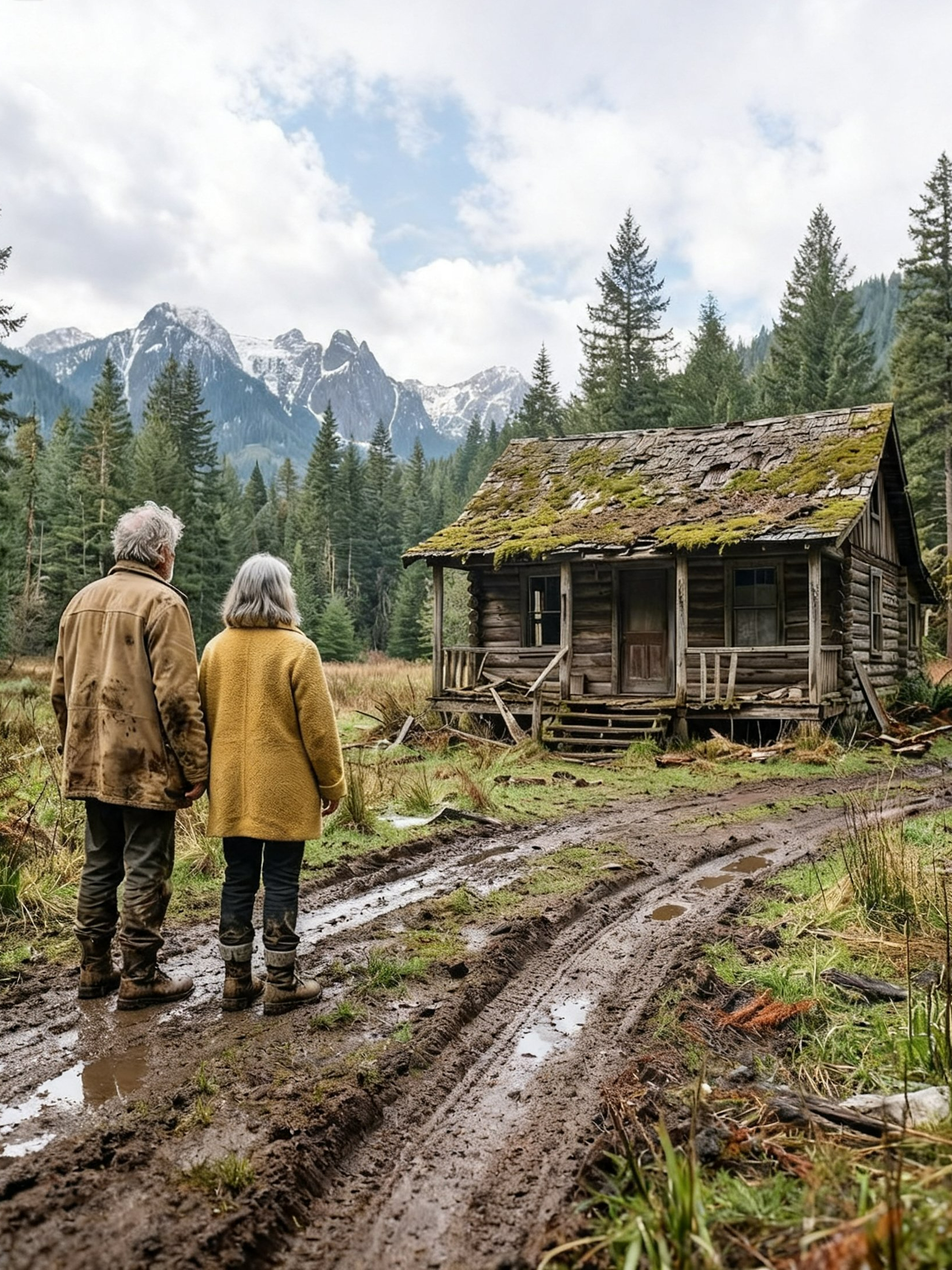
After Her Family Threw Them Out, an Elderly Couple Inherited a Log Cabin—Then a Stone Vault Revealed $265 Million
“You have three days to get your things out of my house.”
Evelyn Mercer stared at her son as if he had just commented on the weather.
Daniel stood in the marble kitchen she had helped pay for, one hand resting on the edge of an island that had cost more than Evelyn and her husband Thomas had once spent on their first home.
Beside him stood his wife, Caroline, wearing a cream cashmere sweater Evelyn had given her for Christmas.
At the doorway, Evelyn’s daughter Melissa folded her arms.
Nobody looked embarrassed.
Nobody apologized.
Nobody even pretended this hurt them.
Daniel slid a manila envelope across the countertop.
“You and Dad can stay at a motel until you figure something out.”
Thomas Mercer, seventy-three, sat at the breakfast table with both hands wrapped around a mug of coffee that had gone cold.
He looked smaller than Evelyn remembered him looking the week before.
Just tired.
There was a difference.
For forty-eight years, Thomas had been the kind of man who fixed broken porch steps before anyone knew they were loose. He had worked night shifts at a paper mill, repaired farm equipment on weekends, coached Little League when Daniel was ten, built Melissa a bedroom in the attic when she complained about sharing space with her younger brother.
Now his own children were discussing where he could sleep as though they were relocating an old refrigerator.
Evelyn opened the envelope.
Inside was a notice terminating their permission to live in the guest wing.
Thirty days had been crossed out.
Three days had been written beside it.
Caroline had initialed the change.
Evelyn looked at her.
“You changed this?”
Caroline lifted one shoulder.
“We have renovations scheduled.”
“Monday,” Daniel added. “Contractors are coming Monday.”
It was Friday.
Evelyn glanced toward the wide windows overlooking six acres of landscaped property outside Asheville, North Carolina.
Six acres she and Thomas had helped save.
Six acres Daniel would never have owned if Thomas had not emptied a retirement account twelve years earlier when Daniel’s construction company nearly collapsed.
Six acres purchased partly with the $180,000 Evelyn had inherited from her mother and quietly loaned to her son without interest.
There had never been a formal repayment schedule.
Daniel had called that generosity.
Now his attorney called it a gift.
Melissa stepped forward.
“Mom, please don’t make this dramatic.”
That almost made Evelyn laugh.
Instead, she folded the eviction notice carefully.
Then she slipped it back into the envelope.
Melissa frowned.
“Did you hear me?”
“You’re not going to start crying, are you?”
Thomas lifted his eyes.
Evelyn touched his wrist before he could speak.
That small gesture stopped him.
For years, their children had mistaken Evelyn’s patience for surrender.
They had mistaken quiet for ignorance.
They had mistaken sacrifice for an endless resource.
Most dangerously, they had mistaken love for weakness.
Evelyn looked at Daniel.
“What time Monday?”
He blinked.
“The contractors.”
“All right.”
That was all she said.
Caroline exchanged a glance with Melissa.
The silence unsettled them more than screaming would have.
Because Evelyn did not beg.
She did not list the money they owed her.
She did not remind Daniel that Thomas had once driven through an ice storm at two in the morning because Daniel, drunk and twenty-one, had wrapped a pickup around a utility pole.
She did not remind Melissa that Evelyn had spent six months sleeping in a vinyl chair beside her hospital bed after a complicated pregnancy.
She did not mention selling her mother’s wedding ring to cover the first missed mortgage payment on Melissa’s house after Melissa’s husband lost his job.
She did not remind any of them about the graduations, bailouts, babysitting, checks, loans, groceries, emergency plane tickets, tuition gaps, medical bills, business losses, property taxes, or countless Sunday dinners where Thomas quietly slipped cash into an envelope because one of the children was “having a difficult month.”
She simply asked Thomas, “Would you like me to pack your blue sweater?”
Thomas watched her for several seconds.
Then he understood.
“Yes,” he said softly. “I think I would.”
Melissa rolled her eyes.
“Why are you acting like this?”
Evelyn turned.
“Like what?”
Evelyn smiled.
It was not a warm smile.
“I’m seventy-one years old, sweetheart. Eventually you learn not to waste a good reaction on people who haven’t earned it.”
Nobody answered.
Three days later, Daniel watched from the front steps as his parents loaded everything they still owned into a twelve-year-old Ford pickup.
There was not much.
Two suitcases.
Four cardboard boxes.
Thomas’s tool chest.
Evelyn’s sewing basket.
A framed wedding photograph.
Three photo albums.
An old walnut clock.
And one object none of them had noticed.
A narrow brass key.
Evelyn had found it six days earlier inside the inner lining of an old hunting coat that belonged to her late uncle, Samuel Mercer.
Samuel had died at eighty-eight.
The coat arrived in a box from his attorney two days after the funeral.
Nobody in the family wanted it.
Samuel had been considered the strange one.
He had lived alone in the Blue Ridge Mountains for most of his adult life.
Never married.
Never had children.
Rarely attended holidays.
He had once owned a regional timber company called Mercer Appalachian Holdings, but decades earlier he had supposedly sold most of his interest and retreated to a remote log cabin near an abandoned logging settlement called Black Hollow.
In his later years, relatives treated him as an eccentric old man with mud on his boots and no idea how money worked.
Daniel had called him “Mountain Sam.”
Melissa had once joked that Samuel’s greatest asset was probably a raccoon trap.
At the reading of Samuel’s will, Daniel received an antique shotgun.
Melissa received a collection of family silver.
Two cousins received hunting acreage.
Several charities received cash.
Evelyn received the cabin.
Just the cabin.
The attorney described it as a deteriorating one-bedroom structure on approximately four acres.
Assessed value: $38,600.
Daniel laughed aloud when he heard it.
“Uncle Sam always did like you best.”
The room laughed with him.
Evelyn didn’t.
Three days later, she found the key.
And inside the coat pocket, beneath a torn lining, she found a piece of paper folded into a square no larger than a postage stamp.
Samuel’s handwriting had become shaky toward the end.
But the words were clear.
THE HOUSE IS NOT THE INHERITANCE.
THE THING UNDER THE HOUSE IS.
TRUST NO ONE WHO ASKS YOU TO SELL BEFORE YOU HAVE SEEN THE WEST WALL.
ESPECIALLY A LAWYER.
Evelyn told nobody except Thomas.
Not Daniel.
Not Melissa.
Not Caroline.
Not Samuel’s attorney, Richard Cavanaugh.
Especially not Richard Cavanaugh.
Now, as Daniel watched them leave his driveway, Evelyn felt the brass key resting in her coat pocket.
“You’ll call when you find a place?” Daniel asked.
Thomas climbed into the passenger side.
Evelyn closed the tailgate.
“We have a place.”
Daniel frowned.
“Uncle Samuel’s cabin.”
Caroline laughed from the porch.
“You’re serious?”
“That thing doesn’t even have proper heat.”
“We’ll manage.”
Daniel stepped down from the porch.
“Mom, don’t be ridiculous. Sell it. Even thirty grand would cover an apartment for a while.”
Evelyn studied him.
A faint pulse began behind her eyes.
Recognition.
Samuel’s warning.
Trust no one who asks you to sell before you have seen the west wall.
“How much did you say it was worth?” Evelyn asked.
Daniel shrugged.
“Thirty, forty thousand, maybe.”
“And you think I should sell quickly?”
“Obviously.”
Caroline called from behind him.
“Before winter. Nobody wants mountain property once the roads ice over.”
Evelyn nodded slowly.
“I’ll remember that.”
Daniel seemed relieved.
In his mind, the matter was over.
His parents would disappear into a crumbling cabin.
The family’s financial center had shifted.
He had the large house.
Melissa had their father’s remaining brokerage accounts under a durable power of attorney she had convinced him to sign during a heart procedure two years earlier.
Daniel controlled a family LLC that contained two commercial properties originally purchased with Thomas’s money.
Even the lake cottage Evelyn once dreamed of leaving to her grandchildren had been transferred into an entity Daniel’s attorney managed.
The old people had been reduced to sentimental possessions and a log cabin.
The children had won.
At least that was what they believed.
The road into Black Hollow narrowed after the old ranger station.
October had painted the mountains in rust, gold, and deep red.
Evelyn drove while Thomas watched ridgelines disappear behind mist.
Neither spoke for nearly twenty minutes.
Then Thomas said, “I should have stopped it years ago.”
Evelyn kept her eyes on the road.
“Stopped what?”
“The way they treated you.”
“They treated both of us that way.”
His voice tightened.
“They needed me when something broke. They needed you for everything else.”
She looked at him briefly.
Thomas stared through the windshield.
“I kept telling myself they’d grow out of it.”
“They’re forty-six and forty-three.”
“I noticed.”
That made Evelyn smile.
Thomas reached across the console and squeezed her hand.
“I’m sorry.”
Evelyn squeezed back.
“You stayed.”
“That’s enough.”
The cabin appeared around the final bend.
Daniel had been right about one thing.
It was rough.
The structure stood beneath towering hemlocks, its logs darkened by rain and time. Moss crawled over the stone chimney. A section of porch railing leaned outward. One shutter hung from a single hinge.
But the roof was intact.
The foundation looked solid.
And somebody had stacked two cords of dry firewood beneath the rear overhang.
Thomas raised an eyebrow.
“Dead men don’t usually stack firewood.”
Evelyn noticed something else.
Fresh tire tracks.
She stopped the truck.
“Somebody’s been here.”
Thomas opened the glove box and removed an old flashlight.
They approached slowly.
The front door was locked.
No windows appeared broken.
Inside, the cabin smelled of cedar, cold ashes, and dust.
Samuel’s belongings remained almost exactly as Evelyn remembered them.
A wool blanket folded across a leather sofa.
Fishing rods above the doorway.
Cast-iron skillet hanging beside the stove.
A photograph of Evelyn at age sixteen standing beside Samuel near a river.
She hadn’t seen it in fifty-five years.
Thomas picked it up.
“You had that same look.”
“What look?”
“Like you’d already decided something and everyone else would find out eventually.”
She almost laughed.
Then she saw the west wall.
It was built of rough stone.
A fireplace occupied the center.
A bookshelf stood on either side.
Nothing unusual.
Evelyn removed Samuel’s folded note from her pocket.
Thomas began examining the masonry.
Evelyn checked shelves.
Twenty minutes passed.
Then Thomas stopped.
He was kneeling beside the left side of the fireplace.
One stone near the floor had a shallow circular groove carved into its center.
Almost invisible beneath soot.
Evelyn removed the brass key.
It did not look like a normal door key.
Its end was cylindrical, with three small teeth around the perimeter.
She inserted it into the groove.
Neither moved.
Thomas whispered, “Well, I’ll be damned.”
Evelyn turned the key.
Something clicked inside the wall.
Not a small click.
A mechanical one.
The bookshelf beside the fireplace shifted forward less than an inch.
Thomas pulled it.
The entire unit swung outward on concealed steel hinges.
Behind it was darkness.
Cold air moved across Evelyn’s face.
Stone steps descended underground.
Thomas looked at her.
“What exactly was your uncle doing up here?”
“I’m starting to think we never knew.”
They found a switch.
Yellow bulbs flickered to life one after another down the stairwell.
At the bottom stood a steel door set inside fieldstone.
No electronic lock.
Just an old mechanical handle and another brass fitting.
The key turned again.
The door opened.
Thomas stepped inside first.
Then stopped so suddenly Evelyn nearly walked into him.
He raised the flashlight.
The beam passed across shelves.
Steel cabinets.
A long oak table.
And a second door.
This one looked like something from a bank.
A circular vault door, thick enough to survive a war.
On the table lay a white envelope.
Evelyn’s name was written on it.
Not “Mrs. Mercer.”
Not “Evelyn Rose Mercer.”
Samuel was the only person who still called her that.
Her fingers trembled for the first time that week.
She opened it.
My dear Evie,
If you are reading this, then either you finally learned to ignore the people who tell you what something is worth, or they pushed you hard enough that you came here because you had nowhere else to go.
Knowing this family, I suspect the second.
Evelyn sat down.
Thomas remained beside her.
She continued.
You were sixteen when your father lost the farm.
Everyone blamed weather.
That was a lie.
Everyone blamed bad loans.
That was only half a lie.
Your father lost the farm because our brother Charles forged his signature on collateral documents to save Mercer Timber.
I discovered it too late.
I spent fifty years trying to repair what happened.
Charles’s children inherited the company.
They believed it belonged to them.
It never entirely did.
Neither did the land.
Evelyn stopped.
Daniel and Melissa’s beloved great-uncle.
The family success story.
The man whose portrait hung in the headquarters of Mercer Appalachian Holdings.
Samuel continued.
Your father took the blame because Charles had three children and your father believed prison would destroy them.
So he sold everything.
You remember what happened next.
Evelyn did.
She remembered moving at seventeen.
She remembered her father leaving their farm in silence.
She remembered her mother crying in a motel bathroom.
She remembered quitting college after one semester because there was no money.
She remembered working at a pharmacy during the day and a diner at night.
She remembered meeting Thomas there.
She remembered building a life without ever understanding why their own relatives prospered while her parents died with almost nothing.
Samuel’s letter shook in her hands.
Thomas touched her shoulder.
She kept reading.
Your father made me promise not to expose Charles while Charles lived.
I kept that promise.
I should not have.
Silence can be honorable.
It can also become cowardice.
So I spent the years afterward buying back what Charles thought he owned.
Mineral rights.
Timber rights.
Voting shares.
Water rights.
Sometimes directly.
Sometimes through trusts.
Sometimes through shell companies his lawyers never bothered to trace because rich men become careless when they inherit other people’s sacrifices.
Behind the vault door is the accounting.
Not money alone.
Evelyn’s eyes moved faster.
The Mercer Family Restoration Trust currently owns, directly or indirectly, assets appraised at approximately $265 million.
Thomas sat down.
For several seconds, neither breathed normally.
Evelyn looked at the number again.
Two hundred sixty-five million dollars.
Samuel had underlined the next sentence.
You are the sole primary beneficiary.
Thomas whispered, “Jesus.”
But Evelyn’s attention was already on what followed.
Do not celebrate yet.
If you found my key, others may already suspect this trust exists.
Richard Cavanaugh knows part of the structure.
He does not know all of it.
He has tried three times to persuade me to consolidate the holdings.
If he approaches you about selling the cabin, transferring your inheritance, waiving an audit, signing a family settlement, or acknowledging that the cabin is your “full and complete inheritance,” sign nothing.
Most importantly:
The trust contains a forfeiture clause.
Any named family beneficiary who knowingly attempts to conceal, transfer, encumber, or dispose of trust-controlled property before disclosure to you loses all beneficial rights.
Every signature matters.
Every email matters.
Every lie matters.
Let them think they won.
Then make them put it in writing.
Evelyn lowered the letter.
The underground room was silent.
Thomas eventually said, “Daniel told you to sell.”
“Does Daniel know?”
“I don’t think so.”
“What about Melissa?”
“I don’t know.”
Thomas looked toward the vault.
“And Cavanaugh?”
Evelyn folded Samuel’s letter.
“We’re about to find out.”
They opened the main vault thirty minutes later.
There were no mountains of cash.
No movie stacks of hundred-dollar bills.
What Samuel had hidden was more powerful.
Hundreds of them.
Original deeds.
Stock certificates.
Partnership agreements.
Mineral leases.
Trust documents.
Audited statements.
Hard drives sealed in waterproof cases.
Ledgers dating back to 1969.
Photocopies of Charles Mercer’s forged loan documents.
Correspondence from bankers.
Statements showing Samuel systematically acquiring distressed notes against the very company Charles’s descendants believed they controlled.
There were also twenty-three gold bars in a locked crate, apparently purchased decades earlier as a reserve.
But compared with everything else, the gold was almost incidental.
Thomas opened one steel drawer.
Inside was a folder labeled DANIEL / MELISSA.
She stared at it.
Thomas did not touch it.
“Maybe tomorrow.”
She opened it.
The first document was dated eleven months earlier.
It was a letter from Richard Cavanaugh.
Your continued refusal to consolidate the Black Hollow holdings is creating unnecessary exposure. Evelyn’s branch of the family has no operational experience and no reasonable claim to management control.
Evelyn felt something inside her go still.
There were more.
Printed notes.
A proposed restructuring plan.
One sentence appeared repeatedly:
Upon Samuel Mercer’s death, the Black Hollow parcel should be isolated as Evelyn Mercer’s individual inheritance, allowing the remaining family interests to pass without dispute.
Thomas read it twice.
“They wanted you to think the cabin was all you got.”
“That was the plan.”
Another email included Melissa.
Another included Daniel.
The date was four months before Samuel died.
Melissa had written:
If Aunt—if Mom gets the cabin directly, she’ll be satisfied. She’s sentimental. She won’t ask questions.
Daniel responded:
Agreed. Just make sure the old trust language can’t interfere with MAH control after Sam dies.
Evelyn stopped breathing.
Thomas saw her expression.
She kept reading.
Cavanaugh replied:
I am addressing that separately. Do not communicate about trust assets by email going forward.
Thomas stood up.
His chair scraped across the stone floor.
“I’m going back.”
Evelyn grabbed his hand.
“Our children knew.”
“They knew your uncle was leaving you something bigger.”
“They knew something existed.”
“And they threw us out.”
Thomas’s face reddened.
“After everything we gave them.”
Evelyn’s voice remained quiet.
“That is exactly why we are not going back angry.”
He stared at her.
“Then what are we doing?”
Evelyn looked around the vault.
At Samuel’s files.
At the records of her father’s humiliation.
At the evidence of a family fortune built partly on one man taking the blame for another.
At emails proving her own children had participated in the same old pattern.
Take from the quiet one.
Assume she won’t fight.
Offer her something small.
Call it generosity.
Make her grateful.
Make her ashamed to ask for more.
Evelyn had spent seventy-one years believing dignity meant enduring things without becoming cruel.
She still believed that.
But dignity, she now understood, did not require surrender.
“We’re going to let them finish,” she said.
Thomas slowly sat down again.
“Finish what?”
“Their mistake.”
For the next four days, Evelyn and Thomas told nobody what they had found.
They cleaned the cabin.
They fixed a leaking pipe.
Thomas repaired the porch railing.
Evelyn washed Samuel’s curtains and aired the blankets in the autumn sun.
At night, they read.
Samuel’s archive told a story spanning half a century.
After Charles forged their father’s name and used the family farm as collateral, the resulting debt forced Evelyn’s father, Henry Mercer, to surrender nearly everything he owned.
Charles survived.
The company survived.
Henry’s reputation did not.
Relatives whispered that he had been careless.
That he was bad with money.
That he had nearly ruined everyone.
Charles never corrected them.
Henry died when Evelyn was twenty-nine.
He still owed money.
Evelyn had quietly paid his remaining funeral bill over eighteen months.
Samuel never forgot.
He had spent his life making investments while allowing everyone to assume he had withdrawn from business.
The “worthless” Black Hollow property was the legal anchor for the Restoration Trust.
Over five decades, that trust acquired 31 percent of Mercer Appalachian Holdings.
A second entity controlled another 24 percent of voting rights through debt conversion agreements.
Combined control: 55 percent.
There were 18,700 acres of mineral rights across western North Carolina and eastern Tennessee.
Two natural gas royalty agreements.
A hydroelectric easement.
Commercial timberland.
A portfolio of municipal bonds.
An industrial warehouse complex outside Knoxville.
And a private investment account worth just over $41 million.
Samuel’s independent appraisers had valued the trust conservatively at $265.4 million.
But the money was not the part that made Evelyn cry.
The only time she cried was when she found a small notebook in Samuel’s desk.
Each page documented something Evelyn had done for someone else.
1981 — Evie sent Mother $300. Didn’t tell Thomas because she was embarrassed her family needed help.
1986 — Evie paid Martha’s electric bill.
1994 — Evie loaned Charles Jr. $5,000 after his divorce. He never repaid her.
2001 — Evie covered Melissa’s tuition shortfall.
2008 — Evie postponed kitchen repairs to help Daniel.
2013 — Evie and Thomas refinanced their home for Daniel’s company.
2019 — Evie paid Caroline’s mother’s rehabilitation expenses anonymously.
2023 — Evie still believes nobody notices.
Evelyn sat at Samuel’s little kitchen table and pressed both hands over her mouth.
Thomas found her there.
He read the final line.
Then he sat beside her.
For several minutes, neither spoke.
That was the moment the fortune stopped being exciting.
It became something else.
Not proof that Evelyn had secretly been important because she was now rich.
Proof that she had always mattered, even when nobody could profit from recognizing it.
On Tuesday morning, Richard Cavanaugh called.
Evelyn put him on speaker.
“Evelyn, I understand you and Thomas are staying at Black Hollow.”
“How is it?”
He laughed politely.
“I can imagine.”
Thomas sat across the table, expressionless.
Cavanaugh continued.
“I wanted to discuss an administrative issue regarding Samuel’s estate.”
“What kind of issue?”
“There are some efficiencies available if we wrap up your cabin inheritance promptly.”
Samuel’s warning flashed through her mind.
Let them think they won.
Then make them put it in writing.
Evelyn sounded uncertain.
“I don’t understand legal things very well, Richard.”
Thomas looked at her.
She nearly smiled.
Cavanaugh’s tone changed instantly.
“Of course. That’s why I’m here.”
“What would I need to do?”
“Nothing complicated. There’s a receipt and release. It simply confirms you received the Black Hollow property as your designated share.”
“My share of Uncle Samuel’s estate?”
“My complete share?”
A tiny pause.
Thomas closed his eyes.
There it was.
Evelyn continued.
“Daniel said I should sell.”
“Well, that may be sensible.”
“Would you recommend it?”
Another pause.
“If maintaining the property would be burdensome, absolutely.”
Evelyn stared at Samuel’s letter lying on the table.
“What would happen if I sold it?”
“We could arrange that.”
“Would Daniel buy it?”
Cavanaugh hesitated.
“That has been discussed.”
Of course it had.
“For how much?”
“Daniel’s group might offer fifty thousand.”
Thomas silently mouthed the words fifty thousand.
The property beneath them controlled a trust worth more than a quarter of a billion dollars.
Evelyn made herself sound relieved.
“That seems generous.”
Cavanaugh relaxed.
“When would you need me to sign?”
“We could all meet Friday.”
“Daniel and Melissa have related estate documents.”
“Would ten o’clock work?”
Evelyn looked at Thomas.
He stared back at her.
“Yes,” she said. “Ten would be perfect.”
When the call ended, Thomas asked, “How did I spend forty-eight years married to someone who can lie that calmly?”
“I didn’t lie.”
“You said fifty thousand sounded generous.”
“It is generous.”
“For a garden shed.”
She laughed for the first time in days.
Friday morning arrived cold and bright.
Evelyn wore a navy dress she had owned for twelve years.
Thomas wore his best gray suit.
They drove to Asheville.
Richard Cavanaugh’s office occupied the seventh floor of a glass building overlooking downtown.
Everyone was already there.
Melissa’s husband, Aaron.
Richard Cavanaugh.
A bank trust officer named Gregory Bell.
And two lawyers Evelyn had never met.
Not one villain.
Not one cruel child.
An entire table full of educated, polished people who had reached the same conclusion:
The elderly woman at the end of the table would sign whatever they put in front of her.
Daniel smiled.
“Mom. Dad.”
Thomas nodded.
Evelyn placed her purse on the chair beside her.
Cavanaugh arranged several documents.
“We’ve tried to keep this simple.”
“I appreciate that.”
He pushed the first packet toward her.
“This confirms the distribution of Black Hollow.”
Evelyn looked at the signature line.
Then she looked at her children.
Melissa was checking her phone.
Daniel leaned back in his chair.
Caroline whispered something to Aaron.
They were bored.
That hurt more than greed.
They had not even bothered to look nervous.
Evelyn asked, “And after I sign this?”
Cavanaugh answered.
“Your portion of Samuel’s estate will be considered fully distributed.”
“And Daniel?”
“Daniel will receive interests designated elsewhere.”
“Melissa too?”
“Are their interests valuable?”
Daniel smiled.
“Mom, don’t worry about that.”
Evelyn looked at him.
“I’m not worried.”
Cavanaugh slid the next page closer.
“This is simply a waiver of accounting.”
“What does that mean?”
“It means you don’t require the estate to provide detailed information regarding assets that do not concern your distribution.”
Thomas’s jaw tightened.
Evelyn said, “So I’m agreeing I don’t need to know what else Uncle Samuel owned.”
“In practical terms, yes.”
Cavanaugh smiled.
“To avoid unnecessary legal expenses.”
“That sounds sensible.”
Melissa finally looked up.
Evelyn turned another page.
“Is there anything called the Mercer Family Restoration Trust?”
Not dramatic silence.
Not at first.
Just the ordinary half-second in which seven people forgot how to arrange their faces.
Then Cavanaugh cleared his throat.
“I’m not sure where you heard that phrase.”
“So it exists?”
“There have been numerous entities with Mercer-related names over the years.”
Gregory Bell, the banker, suddenly became fascinated with his pen.
Evelyn looked at Daniel.
“Have you heard of it?”
The answer came too quickly.
Melissa said, “Neither have I.”
Evelyn nodded.
Cavanaugh leaned forward.
“Evelyn, I strongly advise against becoming distracted by old entity names. Samuel’s records were complicated.”
“I imagine.”
“Sign the distribution receipt first. Then we can discuss any questions.”
Thomas looked at his wife.
She did not touch the pen.
Instead, she opened her purse.
Daniel’s smile faded.
Evelyn removed Samuel’s brass key.
She placed it on the polished conference table.
Cavanaugh’s face lost its color.
Gregory Bell stopped moving.
Daniel stared at the key.
Melissa whispered, “What is that?”
Evelyn watched Cavanaugh.
That was all she needed.
He swallowed.
“Where did you get that?”
“My inheritance.”
Cavanaugh pushed back slightly from the table.
Daniel looked between them.
“What does the key open?”
Evelyn did not answer him.
She removed a second item.
Samuel’s letter.
Then a third.
A photocopy of Cavanaugh’s email proposing that Black Hollow be isolated as Evelyn’s inheritance so the remaining family interests could pass without dispute.
Melissa’s face changed.
Daniel sat upright.
Cavanaugh’s voice sharpened.
“Those documents may be confidential estate materials.”
“They were in my uncle’s vault.”
Nobody spoke.
Caroline whispered, “Vault?”
Evelyn turned to her.
“Underground.”
Thomas almost smiled.
Evelyn placed another folder on the table.
Then another.
Then another.
She had not brought originals.
Samuel had provided instructions for that too.
The originals were now in the custody of an independent law firm in Charlotte.
Copies had been delivered to a forensic accountant.
Digital archives had been duplicated.
And at that morning, the trustee designated in Samuel’s sealed succession instrument had been notified.
A retired federal judge named Margaret Holloway.
Cavanaugh did not know that yet.
Daniel stood.
“Mom, whatever you found, we can work this out as a family.”
There it was.
The word people used when fairness became inconvenient.
Evelyn looked up at her son.
“Sit down, Daniel.”
He stared at her.
Perhaps it was the first time in his adult life she had spoken to him in that tone.
Evelyn opened Samuel’s trust document.
“Article Nine.”
Cavanaugh said immediately, “Evelyn, I would caution you against interpreting complex—”
“Be quiet, Richard.”
His mouth closed.
Thomas turned his face slightly, hiding his reaction.
Evelyn read.
“Any beneficiary, officer, advisor, fiduciary, heir, or related party who knowingly attempts to conceal the trust, misrepresent its assets to the primary beneficiary, obtain a waiver through material omission, or transfer trust-controlled property prior to full disclosure shall forfeit all contingent beneficial rights.”
Melissa’s lips parted.
Daniel looked at Cavanaugh.
Cavanaugh said, “That provision may not be enforceable.”
Evelyn turned a page.
“Samuel anticipated you would say that.”
She slid forward a legal opinion written eighteen months earlier by a nationally known trust attorney.
Then a court validation order.
Samuel had petitioned privately for judicial confirmation of several trust provisions while alive.
The forfeiture mechanism had already survived review.
Gregory Bell whispered, “Richard.”
Cavanaugh ignored him.
Evelyn looked at the banker.
“You work for Piedmont Heritage Bank?”
“Your institution is named custodian of three trust accounts.”
Bell’s face went pale.
“I was told those accounts were dormant.”
He did not answer.
Still nothing.
Evelyn opened another folder.
“Someone attempted to transfer voting control of Black Ridge Timber Partners eleven days after Samuel died.”
Daniel turned toward Cavanaugh.
Cavanaugh’s composure cracked.
“This meeting is over.”
“No,” Evelyn said. “I don’t think it is.”
Thomas stood too.
Thomas had spent his life avoiding fights.
But at seventy-three, he was still six feet tall.
Cavanaugh remained where he was.
Evelyn continued.
“The transfer required three approvals. Richard’s. Gregory Bell’s. And one Mercer family managing member.”
She looked at Daniel.
He stared at the table.
Melissa whispered, “Daniel?”
Daniel’s face hardened.
“I signed what Richard gave me.”
“Did you read it?” Evelyn asked.
“It was a routine corporate authorization.”
“Did Richard tell you Black Ridge controlled assets belonging to Samuel’s trust?”
Cavanaugh snapped, “Careful.”
Daniel turned on him.
“You told me it was company property.”
“It is company property.”
“No,” Evelyn said. “It is trust-controlled property.”
Caroline whispered something under her breath.
Melissa looked sick.
Then Evelyn produced an email.
Daniel had written it nine days before Samuel’s death.
Once Sam is gone, move everything before Mom hears about the trust. She’ll never challenge us if the cabin transfer looks final.
Thomas closed his eyes.
Daniel looked at the email.
His face collapsed.
Evelyn felt no triumph.
That surprised her.
For days, she had imagined this moment.
She expected satisfaction.
Instead, she felt grief.
Not because Daniel might lose money.
Because the boy she once carried through a fever at three in the morning had become a man capable of writing that sentence.
“Did you write it?”
He said nothing.
Melissa stared at him.
“You told me she knew.”
Daniel turned.
“You said Mom knew about the trust and had agreed she didn’t want involvement.”
Now Evelyn looked at Melissa.
Melissa’s eyes filled.
For one hopeful second, Evelyn thought perhaps her daughter had been deceived.
Then Aaron, Melissa’s husband, muttered, “Don’t.”
Melissa looked at him.
Evelyn pulled out another document.
An email from Melissa to Cavanaugh.
If Mom gets sentimental, use Dad’s health as leverage. She won’t risk upsetting him.
Melissa stopped breathing.
Thomas read the line.
Something in his face changed.
Something colder.
“You were going to use my heart condition against your mother?”
“Dad, I didn’t mean—”
“You typed it.”
“I was under pressure.”
“From whom?”
Nobody answered.
Thomas sat down.
“I spent forty years under pressure.”
His voice was quiet.
“Mortgage pressure. Work pressure. Hospital pressure. Raising-you pressure. Your mother and I were scared half our lives. You know what we never did?”
Melissa cried now.
Thomas continued.
“We never made our fear somebody else’s punishment.”
Evelyn reached for his hand.
The room went silent again.
Then Cavanaugh did the worst possible thing.
He tried to recover control.
“This discussion has become emotional. Whatever private communications exist, the underlying assets remain subject to dispute. My recommendation is that everyone refrain from accusations until—”
A knock sounded at the door.
Cavanaugh turned.
His receptionist entered.
Behind her were three people.
Judge Margaret Holloway, retired.
A forensic accountant named Steven Park.
And attorney Rachel Quinn of Quinn, Foster & Hale in Charlotte.
Rachel carried a locked document case.
Evelyn watched Cavanaugh’s face.
For the first time, he looked afraid.
Judge Holloway removed her coat.
“Mr. Cavanaugh.”
He said nothing.
She continued.
“I believe you have documents for Mrs. Mercer to sign.”
Nobody moved.
Evelyn almost felt sorry for him.
Over the next six months, the Mercer family discovered exactly how expensive arrogance could become.
Richard Cavanaugh resigned from Samuel’s estate representation two days later.
He did not resign voluntarily.
A court removed him from every fiduciary role connected to the trust.
The state bar opened an investigation.
Piedmont Heritage Bank froze three accounts and commissioned an independent audit.
Gregory Bell was placed on administrative leave.
Daniel was removed from management authority over two Mercer entities.
Melissa lost her contingent interest under the trust’s forfeiture clause after investigators established that she had knowingly participated in the concealment effort.
Daniel lost his as well.
But Samuel had designed the trust with a cruelty-free precision Evelyn admired.
Their children were not left destitute.
They simply did not inherit what dishonesty had led them to expect.
Education trusts for the grandchildren remained protected.
Medical trusts remained protected.
Existing modest annuities continued.
Samuel’s punishment was aimed at greed, not survival.
Evelyn refused suggestions that she cut off her grandchildren.
“They didn’t choose their parents’ mistakes,” she said.
That sentence became the dividing line between her and the people who had hurt her.
She would protect herself.
She would pursue accountability.
She would not become vindictive simply because vindictiveness was finally affordable.
The financial audit uncovered even more.
For thirty-one years, Mercer Appalachian Holdings had benefited from land and mineral rights tied to Henry Mercer’s original property.
Evelyn’s father.
The man everyone had blamed.
Samuel had recovered those interests slowly and placed them into the Restoration Trust.
The trust’s value eventually exceeded the initial estimate.
Two hundred sixty-eight million after updated mineral valuations.
Evelyn barely reacted when Rachel told her.
“What does that change?” she asked.
Rachel smiled.
“Practically?”
“Nothing unless you want it to.”
Evelyn knew exactly what she wanted.
The first check she authorized was not for a car.
Not a house.
Not jewelry.
She paid for a historical review of every family affected by the collapse of the original Mercer timber operation in the 1970s.
Samuel’s records revealed twelve small landowners had lost property during Charles Mercer’s aggressive expansion.
Some transactions were legal.
Several were morally indefensible.
Two appeared fraudulent.
Evelyn established the Henry Mercer Restitution Foundation.
Where descendants could be identified, claims were reviewed.
Land was returned when practical.
Compensation was offered when it was not.
The foundation also created scholarships for rural students whose families had lost farms to medical debt or predatory lending.
Thomas suggested one condition.
“No buildings named after us.”
Evelyn agreed.
They did, however, restore Samuel’s cabin.
The porch remained simple.
The stone fireplace stayed.
The underground vault remained intact.
They added reliable heat, reinforced the roof, and built a second bedroom.
Thomas refused to replace the old kitchen table.
“That table knows too much,” he said.
They kept living there.
People could not understand it.
A woman controlling a fortune worth more than $265 million lived in a restored log cabin at the end of a mountain road.
She drove the same Ford pickup for another year.
Thomas still repaired things himself.
Evelyn still clipped coupons for groceries out of habit until Thomas finally asked why.
She stared at the coupon in her hand.
Then they both started laughing so hard Thomas had to sit down.
Daniel called repeatedly.
Evelyn answered eventually.
They met at a diner halfway between Asheville and Black Hollow.
He looked older.
Humiliation had stripped away some of his polish.
“I’m sorry,” he said.
Evelyn stirred her coffee.
“For what?”
He looked confused.
“For everything.”
“That’s not an answer.”
He looked down.
“For throwing you out.”
She waited.
“For hiding the trust.”
She waited.
“For taking your money all those years and acting like I earned everything myself.”
She waited.
“For letting Caroline talk about you like you were a burden.”
Evelyn stopped stirring.
Daniel’s eyes reddened.
“And for knowing Uncle Samuel might have left you something important and still trying to make sure you never saw it.”
There it was.
Specific truth.
Not “everything.”
Evelyn nodded.
“Thank you.”
He looked up.
“Can you forgive me?”
“I already have.”
Hope flashed across his face.
Then Evelyn continued.
“Forgiveness does not mean restoration.”
He swallowed.
“What does that mean?”
“It means I don’t want revenge. It means I don’t wake up hoping something bad happens to you. It means if you’re sick, I’ll care. If you’re hungry, I’ll feed you. If you’re in real trouble, I’ll listen.”
She leaned forward.
“But you will never control my money again. You will never speak for your father. You will never decide where we live. And you will never use the word family as a substitute for accountability.”
Daniel stared at her.
“I understand.”
“I’m trying.”
For the first time in years, that was enough.
Melissa took longer.
She blamed Daniel.
Then Cavanaugh.
Then her husband.
Then stress.
Then Samuel.
Eventually, after months of silence, she arrived at the cabin alone.
It was snowing.
Evelyn opened the door.
Melissa stood on the porch crying.
“Can I come in?”
Evelyn looked at her daughter.
Decades earlier, Melissa had stood on another porch after falling off a bicycle, both knees bloody, asking the exact same question.
Can I come in?
Evelyn stepped aside.
They spoke for three hours.
There was no miracle.
No instant repair.
Some things, once broken, are not restored by one emotional conversation.
But rebuilding began.
Without access to accounts.
Without signatures.
Without property transfers.
Love returned before trust did.
Evelyn considered that appropriate.
A year after Samuel’s death, the family gathered at Black Hollow for the unveiling of something Evelyn had kept secret.
Not a monument.
Not a mansion.
A small building on twelve acres down the road from the cabin.
It was called the Henry and Samuel Center for Rural Legal Aid.
Free lawyers would help elderly homeowners fight deed fraud, predatory contracts, wrongful foreclosures, exploitative guardianships, and inheritance theft.
Thomas stood beside Evelyn as the first visitors arrived.
Daniel came.
Melissa came.
The grandchildren ran through fallen leaves behind the building.
Judge Holloway attended.
Rachel Quinn attended.
Several families helped by the restitution program attended.
No reporters had been invited, although two appeared anyway.
Evelyn declined interviews.
At sunset, she and Thomas walked back toward the cabin.
The mountains turned purple beneath a pale October sky.
Thomas’s steps were slower now.
Evelyn matched them.
He said, “You know what Samuel got wrong?”
“He said the thing under the house was the inheritance.”
Evelyn smiled.
“What was it, then?”
Thomas looked toward the legal aid center in the distance.
“The choice.”
She understood.
Samuel had given her money.
He had given her proof.
He had given her power.
But the true inheritance was the ability to decide what kind of person she would become once nobody could force her to remain small.
Evelyn stopped near the porch.
A year earlier, she and Thomas had arrived here with four boxes and nowhere else to go.
Her own children had treated her like excess furniture.
People who had benefited from her sacrifices had bet that she would be too sentimental, too old, too tired, too frightened, or simply too decent to resist them.
They had confused kindness with permission.
They had confused age with helplessness.
They had confused silence with defeat.
Samuel had understood something they had not.
A quiet person is not necessarily surrendering.
Sometimes she is counting.
Sometimes she is remembering.
Sometimes she is waiting for everyone else to finish signing their names.
Three weeks later, Evelyn attended the final settlement conference involving the Mercer trust.
Daniel and Melissa had accepted the forfeiture findings.
The bank had agreed to substantial restitution.
Cavanaugh faced separate disciplinary proceedings and civil liability.
Every disputed asset was now under independent oversight.
The last document required Evelyn’s signature.
Rachel placed it before her.
Across the table sat the same people who, more than a year earlier, had expected a confused elderly woman to sign away her rights.
The atmosphere could not have been more different.
Evelyn read every page.
All twenty-eight of them.
Nobody rushed her.
Nobody sighed.
Nobody explained anything she had not asked to have explained.
When she reached the final page, she picked up the pen.
Then she stopped.
Daniel glanced at her.
Melissa sat very still.
Rachel waited.
Evelyn looked around the table.
She thought about the motel where her mother cried after losing their farm.
She thought about her father dying under the weight of a disgrace that belonged to his brother.
She thought about Thomas giving up retirement money for children who later gave him three days to leave.
She thought about Samuel spending fifty years quietly rebuilding justice brick by brick, deed by deed, share by share.
She thought about the cabin.
The west wall.
The brass key.
The stone stairs.
The $265 million.
And the sentence Samuel had left for her.
Let them think they won.
Then make them put it in writing.
Evelyn rested the pen against the signature line.
Her voice was almost gentle.
“Before I sign,” she asked, “is there anyone here who still thinks I don’t need to know what I’m signing?”
✓ Lynn R. Adams
After Her Family Threw Them Out, an Elderly Couple Inherited a Log Cabin—Then a Stone Vault Revealed $265 Million “You have three days to get your things out of my house.” Evelyn Mercer stared at he…