Abandoned at Forty-One, She Inherited a Rotting Mountain Cabin—Then One Locked Floorboard Exposed the Family That Betrayed Her
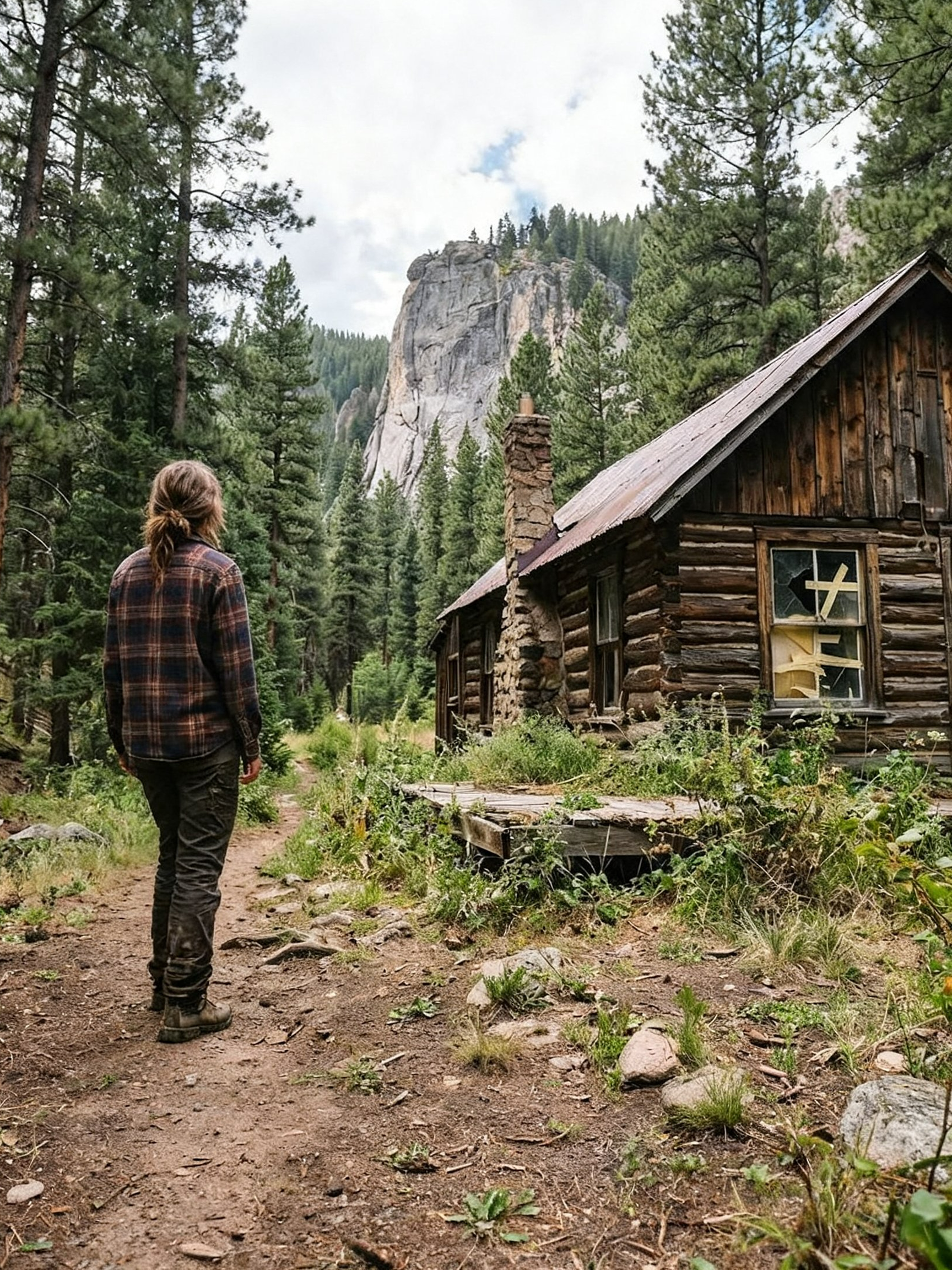
Abandoned at Forty-One, She Inherited a Rotting Mountain Cabin—Then One Locked Floorboard Exposed the Family That Betrayed Her
“You’ve got three days to get your things out.”
Those were the first words Derek Bennett said to his wife after fourteen years of marriage.
Not I’m sorry.
Not we need to talk.
Not even I met someone else.
Just three days.
He stood in the kitchen of the two-story house outside Asheville, North Carolina, wearing the charcoal suit Mara had pressed for him that morning, while another woman waited in his black SUV at the curb.
Mara could see her through the window.
A white coat folded over one arm.
Derek’s assistant, Allison Gray.
The woman Mara had invited to Christmas dinner two months earlier because Allison had told them she had nowhere else to go.
Derek slid a folder across the granite island.
“I’ve already spoken to an attorney.”
Mara looked at the folder but didn’t touch it.
Derek exhaled impatiently.
“The house is in my name.”
She lifted her eyes to him.
He seemed almost irritated by the fact that she wasn’t crying.
“I paid the mortgage.”
Mara said nothing.
He gave a short laugh.
“Well, technically, I paid most of it. You haven’t had a real career in years.”
There it was.
The knife he had been sharpening for a decade.
Mara had once worked as a project manager for a construction company in Charlotte. She had been good at it, too. At thirty-one, she had been supervising commercial renovation projects worth millions.
Then her mother had gotten sick.
Breast cancer first.
Then complications.
Then her father’s stroke.
Mara cut her hours.
Then cut them again.
Her brother Mark lived twenty minutes from their parents and somehow never had time.
Her younger sister, Jenna, lived forty-five minutes away and always had an emergency involving her children, her salon, her boyfriend, her allergies, her migraines, or her “mental health.”
So Mara became the one who handled everything.
Grocery shopping.
Physical therapy.
Medication schedules.
Bathing her father after he lost movement on his left side.
Cleaning her mother’s surgical drains.
Driving forty miles at midnight because her father thought someone was breaking into the house when he was actually hearing branches against the roof.
Derek used to call her devoted.
Later, he called her unavailable.
Then he started calling her unemployed.
Now he was calling her disposable.
“I want this clean,” he said. “No drama. No scene. Take what’s yours and go.”
Mara looked past him toward the driveway.
Allison turned away quickly.
“You brought her here?”
Derek shrugged.
“She’ll be moving in.”
Mara nodded once.
That was all.
It unsettled him.
She could see it.
Derek had rehearsed this moment expecting tears, accusations, perhaps a shattered wineglass.
Instead, Mara opened the folder.
Divorce petition.
Proposed settlement.
A list of household property.
A demand that she vacate the house within seventy-two hours.
Near the bottom was a paragraph describing her as having made “minimal financial contribution to the marital residence during the preceding nine years.”
Mara read it twice.
Then she closed the folder.
“Three days?”
Derek’s shoulders loosened.
He thought she was surrendering.
“All right.”
He blinked.
“That’s it?”
Mara picked up the folder.
“What would you like me to do? Beg?”
He looked uncomfortable for half a second.
Then his arrogance returned.
“I’m trying to be fair.”
Mara almost smiled.
She had spent nine years caring for two dying parents while Derek built his consulting business with meals appearing in the refrigerator, shirts appearing in the closet, tax documents organized, clients entertained, flights booked, birthdays remembered, his mother’s prescriptions collected, and every domestic inconvenience quietly erased.
Now the same man was standing beneath pendant lights she had chosen, in a kitchen she had designed, calling the destruction of her life fair.
Mara walked upstairs.
She did not slam the bedroom door.
That bothered him more.
She packed one suitcase the first night.
Two cardboard boxes the second.
On the third morning, she carried them downstairs.
Allison was already in the kitchen.
Wearing Mara’s bathrobe.
That nearly did it.
Not because Mara wanted the robe.
Because her mother had given it to her during the first winter of chemotherapy.
Allison looked embarrassed.
Derek did not.
“We thought you were leaving earlier.”
Mara set her suitcase beside the door.
She walked calmly toward Allison.
Allison pulled the robe closed.
Mara stopped three feet away.
“That belonged to my mother.”
Allison looked at Derek.
Derek sighed dramatically.
“For God’s sake, Mara.”
Mara held out her hand.
Allison slipped off the robe.
Underneath she wore silk pajamas.
Mara folded the robe over her arm.
Then she walked outside.
No final plea.
Only silence.
The silence followed Derek long after Mara’s car disappeared.
She had barely reached Interstate 40 when her phone rang.
Mara almost ignored it.
Instead, she answered.
“Mark told me.”
Of course he had.
News traveled quickly in families when the suffering belonged to someone else.
“Are you okay?”
“I’m driving.”
“That’s not what I asked.”
Then Jenna lowered her voice.
“So… where are you going?”
Their parents’ house seemed like the obvious answer.
Their father had died eleven months earlier.
Their mother six months before him.
The house sat empty.
At least Mara thought it did.
“I figured I’d stay at Mom and Dad’s place for a couple weeks.”
Different this time.
Her hands tightened around the steering wheel.
“You can’t.”
“Mark and I sold it.”
Mara thought she had misheard.
“You what?”
“We sold it.”
“Closing was last Friday.”
Mara pulled onto the shoulder.
Cars rushed past, rocking her Honda.
“You sold Mom and Dad’s house?”
“It was becoming expensive.”
“I paid the property taxes.”
“For one year.”
“For three years.”
“Well, Mark handled the paperwork.”
Mara stared through the windshield.
The Blue Ridge Mountains rose dark against a February sky.
“I’m an heir.”
Jenna sounded defensive.
“You received your share.”
“No, I didn’t.”
Another silence.
“Mara, you got Aunt Evelyn’s cabin.”
Mara frowned.
“What cabin?”
“The old place near Black Mountain.”
Mara almost laughed.
Aunt Evelyn had died five weeks earlier at eighty-seven.
She had been their father’s older sister.
Sharp-eyed.
Widowed young.
Never remarried.
She had spent thirty years working around the Buncombe County courthouse, first as a clerk, later as a records supervisor.
She also owned a collapsing mountain cabin no sane person wanted.
Mara had visited it as a child.
The roof leaked.
The porch leaned.
There was no central heat.
“You’re telling me you sold our parents’ house without me and decided a condemned cabin was my share?”
“It wasn’t like that.”
“What was it like?”
“Dad changed some things before he died.”
“Dad couldn’t hold a pen during his last seven months.”
“Mark had power of attorney.”
“For medical decisions.”
“Mara, please don’t start.”
There it was again.
Don’t start.
The phrase people used when they wanted the injured person to make everyone else comfortable.
Jenna continued.
“You’ve been through enough. Just… take the cabin. Sell it to Travis Cole. He’s been trying to buy that land forever. You might get ten or fifteen thousand dollars.”
“Who is Travis Cole?”
“The developer.”
Mara remembered the name.
Cole Ridge Communities.
Luxury mountain homes.
Vacation rentals.
Private roads.
Golf simulators.
Stone entrance gates.
She had seen their signs outside Asheville.
Jenna hurried on.
“Honestly, it could be a blessing. Derek leaves, you sell the cabin, you get some cash, and you start over.”
Mara looked at the divorce folder on the passenger seat.
Three days.
Her husband.
Her sister.
Her brother.
Her parents’ house.
Piece by piece, everyone she had spent years supporting was explaining why she should be grateful for what remained after they took what mattered.
Mara closed her eyes.
When she opened them again, her voice was calm.
“Send me the address.”
Jenna hesitated.
“Of the cabin?”
“Mara, there’s probably mold.”
“Send me the address.”
She hung up.
An hour later, Mara turned off a paved mountain road onto gravel.
Then gravel became dirt.
Then dirt became two muddy tracks winding through bare oak trees.
The cabin appeared after the final bend.
It looked worse than she remembered.
A sagging porch.
Gray boards.
Rust-stained metal roof.
One broken shutter.
A stone chimney leaning slightly away from the house.
The property around it was beautiful, though.
Too beautiful.
Thirty or forty wooded acres, maybe more, stretching down a mountain slope where winter sunlight flashed through bare branches.
Mara parked.
For a moment she sat without moving.
Fourteen years of marriage fit inside the back of a Honda Accord.
One suitcase.
And somewhere behind her, another woman was already opening cabinets in Mara’s kitchen.
She stepped out.
Cold air hit her face.
On the porch sat a metal mailbox.
Inside it was one envelope.
Not mailed.
Hand-delivered.
Her name was written across the front.
MARA BENNETT.
The handwriting made her knees weaken.
Aunt Evelyn.
Mara carried the envelope inside.
The cabin smelled like dust, cedar, and cold stone.
There was old furniture covered with sheets.
A woodstove.
A cracked leather chair.
A kitchen table.
No electricity.
No running water that Mara could find.
She sat at the table and opened the envelope.
Inside was a brass key taped to a folded piece of paper.
The note contained only six lines.
If they gave you this place, it means they think they won.
Do not sell it.
Do not sign a quitclaim deed.
Do not trust the acreage written on the tax card.
The cabin is the lock, not the treasure.
And if Travis Cole contacts you, ask him why he needs Parcel 17 to reach land he claims he already owns.
Love, Evelyn
Mara read it once.
Then again.
On the back, Evelyn had written one more sentence.
If they rush you, slow down.
Mara sat in the freezing cabin for a long time.
Then she looked at the brass key.
It was too small for the front door.
Too heavy for a desk drawer.
She began searching.
Kitchen cabinets.
Old steamer trunk.
Locked, but the key didn’t fit.
She finally noticed scratches near the woodstove.
One floorboard was different from the others.
Just newer.
Mara knelt.
At one end of the plank was a narrow brass keyhole.
Her heartbeat changed.
The key fit.
She turned it.
A hidden latch released.
The floorboard lifted.
Beneath it was a metal document box wrapped in oilcloth.
Mara pulled it out.
The box contained no gold.
No jewelry.
It contained paper.
Hundreds of pages.
Survey maps.
Photographs.
Tax records.
Bank statements.
A flash drive.
A small digital recorder sealed in a plastic bag.
And a red leather binder with three words embossed across the front.
BENNETT LAND TRUST.
Mara opened it.
The first page made no sense.
The second made even less.
By the fourth, she stopped breathing.
The cabin did not sit on fourteen acres, as the county tax website showed.
It sat at the center of a 614-acre tract.
Or, more precisely, the cabin occupied a seventeen-acre parcel that controlled legal access to another 597 acres stretching along the eastern ridge.
Land currently being marketed by Cole Ridge Communities as the future site of a 186-home luxury development called Summit Falls.
Mara unfolded a glossy brochure found inside the binder.
Summit Falls.
Mountain living reimagined.
Private clubhouse.
Hiking trails.
Infinity pool.
Starting in the low $900s.
Phase One coming soon.
Mara stared at the site plan.
The planned entrance road crossed directly through Aunt Evelyn’s seventeen acres.
More importantly, according to the recorded survey map beneath it, the entire 597-acre tract had once belonged to Mara’s grandparents.
A handwritten note in Evelyn’s file pointed to a deed recorded in 1986.
TRANSFER VOID IF TRUST CONDITIONS NOT SATISFIED.
Mara kept reading.
Their grandfather, Samuel Bennett, had placed the mountain property in a family trust after watching several relatives lose farms to debt and predatory land deals.
The trust agreement allowed descendants to use the land.
Harvest timber under restrictions.
But they could not permanently sell the core acreage unless every living beneficiary signed and the county court approved termination of the trust.
That had never happened.
Yet sixteen years earlier, after Samuel’s death, a deed had appeared transferring nearly six hundred acres to a holding company.
Bennett Ridge Holdings LLC.
The signatures supposedly included Mara’s father.
Mara stared at her own name.
MARIA ANNE BENNETT.
Her birth certificate said Mara.
Always had.
Someone had forged her signature badly enough to spell her first name wrong.
She flipped to the next page.
The deed had been notarized by Linda Sloane.
Mark’s mother-in-law.
Mara leaned back.
Cold air slipped through gaps in the cabin wall.
Suddenly the ruin around her no longer looked empty.
It looked like a vault.
Her phone buzzed.
Unknown number.
She answered.
“Mrs. Bennett?”
“This is Travis Cole.”
Mara looked down at Evelyn’s note.
If Travis Cole contacts you…
“I understand you’re the new owner of Evelyn Bennett’s cabin.”
“So I’ve been told.”
He laughed warmly.
Too warmly.
“I knew Evelyn. Tough lady.”
“I imagine.”
“I’m sorry for your loss.”
“Thank you.”
“I also heard you’re going through some personal changes.”
Mara’s expression hardened.
The news had traveled from Derek to Mark to Jenna to a developer she had never met.
Not one person.
“I’m not sure how my marriage concerns you.”
“It doesn’t. I just understand timing matters. Sometimes liquidity matters.”
There it was.
He offered her thirty thousand dollars for the cabin.
Cash closing.
No inspection.
His attorney would handle everything.
“All we need is a simple quitclaim deed,” he said.
Mara looked at Aunt Evelyn’s handwriting.
Do not sign a quitclaim deed.
“Thirty thousand?”
“Generous for the condition.”
“Why do you want it?”
“Neighboring property.”
“What property?”
“Land we’re developing.”
“Summit Falls?”
Only a second.
But Mara heard it.
She ran her finger along Evelyn’s final instruction.
Ask him why he needs Parcel 17 to reach land he claims he already owns.
Mara almost asked.
Instead, she did something better.
She pretended not to understand.
“I really don’t know anything about land,” she said softly.
Travis relaxed immediately.
Men like him loved ignorance, especially when it arrived in a woman’s voice.
“That’s exactly why you should let professionals handle it.”
“I’m sure.”
“We could probably increase the offer to thirty-five if you sign this week.”
Mara closed the red binder.
“That sounds helpful.”
“Can you send the paperwork?”
“I’ll have someone bring it tomorrow.”
“Thank you.”
When the call ended, Mara remained still.
Then she picked up the old digital recorder.
A label was taped to it.
So she did not play it.
Instead, she searched the cabin until sunset.
In the bedroom closet, she found a battery lantern.
In the kitchen, canned food.
Behind the cabin, a hand pump produced rusty water that eventually ran clear.
Evelyn had prepared this place.
Not for comfort.
For survival.
That night Mara slept in her coat beside the woodstove.
At the next morning, someone pounded on the door.
Her brother stood on the porch in an expensive quilted jacket, staring at the cabin as though embarrassed to be seen near it.
“How did you know I was here?”
He stepped inside without being invited.
“You shouldn’t stay here. It’s dangerous.”
“I’ve stayed in worse hospital rooms.”
He ignored that.
“Derek called me.”
Mara laughed once.
It surprised him.
“He wants to know when you’re picking up the rest of your stuff.”
“There is no rest.”
Mark shifted.
“Listen. I know things look bad.”
“Which things?”
“The divorce. Dad’s estate. Evelyn dying.”
“Which one did you come to discuss?”
“The cabin.”
Mark walked around the room.
“You talked to Travis?”
“How did you know?”
“He mentioned it.”
Mara studied her brother.
Mark was forty-six.
Real estate broker.
Former college quarterback.
Permanent family favorite.
When their father needed physical therapy at seven in the morning, Mark had meetings.
When their mother vomited through chemotherapy, Mark had showings.
When their parents needed someone to manage medications, bills, repairs, meals, appointments, insurance appeals, and hospice care, Mark said Mara was “better at that stuff.”
But whenever paperwork needed signing, suddenly Mark was available.
“He offered thirty-five thousand,” Mara said.
“That’s good.”
“You think?”
“For this dump? Absolutely.”
Mara walked to the kitchen table.
The red binder was hidden beneath a loose cabinet panel now.
She poured coffee from an old French press.
Mark watched her.
“You should sign.”
“Because you need money.”
“I have some.”
“How much?”
Mara raised an eyebrow.
“I’m your brother.”
“You sold our parents’ house without telling me.”
His smile disappeared.
“That estate was complicated.”
“I cared for them for nine years.”
“No one asked you to sacrifice your whole life.”
The words landed harder than Mara expected.
Not because they were new.
Because she finally understood what they meant.
To Mark, her sacrifices had never created a debt.
They had erased her value.
The more she gave, the more natural it became that she should receive nothing.
She remembered missed promotions.
A canceled anniversary trip because their father fell.
A night sleeping in an oncology waiting room.
Her mother apologizing because Mara looked tired.
Her father, unable to speak clearly after his stroke, squeezing Mara’s hand whenever she entered the room.
Mark had arrived at the funeral in a black Mercedes and accepted condolences as the eldest son.
Mara had gone home afterward and washed her father’s final coffee cup because she could not bear to throw it away.
“No,” she said.
Mark frowned.
“I’m not signing today.”
His expression changed.
Only slightly.
But enough.
“What’s there to think about?”
“Thirty-five thousand dollars.”
“So another day won’t matter.”
Mark stepped closer.
“You always do this.”
Mara almost smiled.
“Make things difficult.”
“I spent nine years making everything easy for you.”
He opened his mouth.
Mara took another sip of coffee.
“Anything else?”
Mark stared at her.
Then his gaze dropped to the floor near the woodstove.
For one second.
Mara noticed.
So Mark knew there was something beneath the floor.
Maybe not what.
But something.
He left fifteen minutes later.
By noon, Cole Ridge’s attorney arrived.
His name was Brent Holloway.
He brought a leather portfolio and the kind of smile people practiced before billing four hundred dollars an hour.
The quitclaim deed was simple.
Too simple.
It transferred “all ownership, title, interest, access rights, appurtenant easements, mineral interests, timber interests, and any associated claims” connected to Parcel 17.
For thirty-five thousand dollars.
Mara nearly admired the audacity.
“Can I have a copy?”
“Of course.”
“I’d like to read it.”
Brent leaned back.
“There’s really nothing unusual.”
“I’m sure.”
“We could notarize today.”
“I don’t have identification with this address.”
“That won’t be a problem.”
Mara looked up.
Then smiled again.
“I mean your driver’s license is sufficient.”
Mara folded the pages.
“I’ll call you.”
His friendliness vanished.
“Mr. Cole is making this offer because he wants to help.”
“I appreciate that.”
“The offer may expire.”
“I understand.”
“Possibly tomorrow.”
Mara nodded.
“That’s all right.”
For the first time, Holloway looked directly at her.
He had expected desperation.
She gave him none.
After he left, Mara drove to Asheville.
Not to a divorce lawyer.
She went to the county register of deeds.
Aunt Evelyn had worked there for decades.
An elderly clerk named Barbara Quinn recognized Mara immediately.
“Oh, honey.”
Barbara came around the counter and hugged her.
Mara stiffened, then returned it.
“I heard about Evelyn.”
“Did you know her well?”
“Everybody knew Evelyn.”
Barbara glanced toward the back offices.
Then lowered her voice.
“She scared dishonest men.”
Mara almost laughed.
“That sounds right.”
She showed Barbara only the parcel number.
Nothing else.
“I want copies of every recorded instrument tied to this property.”
Barbara typed.
Her eyebrows lifted.
Then lifted again.
“That’s a lot.”
“How much?”
“Depends how far back.”
“Go back to 1950.”
Barbara studied Mara for a moment.
Then nodded.
Three hours later, Mara left carrying two banker’s boxes.
That evening, beneath the yellow battery lantern, she built a timeline.
1958: Samuel Bennett bought 614 acres.
1976: Samuel created the Bennett Land Preservation Trust.
1986: trust restrictions recorded.
1998: Samuel died.
2000: a questionable deed attempted to move 597 acres into Bennett Ridge Holdings.
2001: Bennett Ridge Holdings mortgaged the property.
2004: loan default.
2005: property transferred to Blue Mountain Capital.
2011: Blue Mountain transferred it to Summit Holdings.
2024: Summit Holdings sold development rights to Cole Ridge Communities for $18.6 million.
But the chain of title depended on the 2000 deed.
And the 2000 deed depended on five signatures.
At least two were fraudulent.
Mara found something else.
A memorandum Evelyn recorded three months before her death.
NOTICE OF BENEFICIAL INTEREST AND CHALLENGE TO TITLE.
It stated that Parcel 17 remained trust property and that no development, access easement, sale, or transfer affecting the Bennett tract should occur until unresolved beneficiary claims were adjudicated.
It had been recorded publicly.
Which meant Travis Cole’s lawyers had seen it.
They had bought the development rights anyway.
Or believed they had enough influence to make the warning disappear.
Mara finally understood Evelyn’s first sentence.
If they gave you this place, it means they think they won.
They had not given Mara the cabin out of kindness.
They had placed the most dangerous parcel in the hands of the family member they considered easiest to pressure.
The unemployed wife.
The caregiver.
The woman whose husband had just left.
The woman they assumed needed cash.
They expected Mara to sign away whatever legal infection was attached to Parcel 17.
Thirty-five thousand dollars to sterilize an eighteen-million-dollar deal.
Her phone rang again.
Mara answered.
“You need to sign the settlement.”
“Hello to you too.”
“I’m serious.”
“I have a life to move forward with.”
Mara looked around the dark cabin.
“Yes. You’ve made that clear.”
“Mark said you’re refusing to sell some cabin?”
She closed her eyes.
Of course Derek knew.
“Why are you talking to Mark about my property?”
“He’s worried.”
“About me?”
“That’s interesting.”
“Mara, don’t turn everything into a conspiracy because you’re hurt.”
There it was.
Another knife.
Sharper now.
“You have no income,” Derek continued. “You’re living in an abandoned building. I’m offering you a clean divorce, and apparently someone’s offering money for that place. Take it.”
“Why do you care?”
“I don’t want you coming back in six months claiming you can’t support yourself.”
Mara’s hand tightened around the phone.
Then she released it.
“Don’t worry.”
“I am worried.”
“No. You’re afraid.”
“Afraid of what?”
“I don’t know yet.”
Then Mara hung up.
The next morning, she drove two hours east to meet Rebecca Shaw, an attorney recommended by Barbara.
Rebecca was fifty-three, silver-haired, and unimpressed by almost everything.
She practiced land litigation.
Mara handed her copies of the trust documents.
Rebecca read for twenty minutes without speaking.
Then she removed her glasses.
“Where did you get these?”
“Originals?”
“Has anyone else seen them?”
“Maybe my brother.”
“Does Cole Ridge know you have them?”
“I don’t think so.”
Rebecca leaned back.
“How much did they offer you?”
“Thirty-five thousand.”
The attorney laughed.
It was not a happy laugh.
“They’re terrified.”
Mara felt something cold move through her chest.
“Because if this trust is enforceable, there is a serious argument that the 2000 deed was void from the beginning.”
“And that means?”
“That means every deed after it may have transferred defective title.”
Mara pictured the glossy Summit Falls brochure.
“How serious?”
Rebecca tapped the document.
“Potentially catastrophic.”
“For Cole?”
“For everybody in the chain.”
Mara swallowed.
“What happens to the land?”
“That depends. We need to verify beneficiaries, trust terms, limitations periods, notice, adverse possession issues, equitable defenses, every transfer, every tax payment, every recorded challenge, every survey.”
“So we don’t know.”
“We know enough to understand why someone wants your signature.”
Rebecca turned another page.
“This clause is interesting.”
“If unauthorized trust property is transferred, proceeds derived from that transfer may be recoverable by the trust.”
Mara stared at her.
“Meaning what?”
“Not just the land.”
Rebecca looked toward the window.
“Possibly the money made from the land.”
The first estimate came three weeks later.
Timber leases.
Mineral royalties.
Option payments.
Financing fees.
Land transfers.
Development rights.
Easement payments.
Adjusted across twenty-six years.
Potential claims exceeded eleven million dollars.
Mara did not celebrate.
Instead, she drove back to the cabin and sat on the porch until dark.
Eleven million dollars sounded obscene compared with the woman she had been three weeks earlier.
A woman carrying two boxes out of a house while her husband’s mistress wore her mother’s robe.
But that was not what made Mara angry.
What made her angry was one file Rebecca had uncovered.
In 2007, Mara’s father had received $420,000 from a settlement related to an early land dispute.
The money had disappeared into a joint account controlled by Mark under power of attorney years later.
A handwritten note from Evelyn stated:
Robert intended Mara to receive reimbursement for nine years of caregiving before estate division.
Below it was a photocopy of a letter her father had dictated before losing speech.
You gave us the years your brother and sister would not give.
I know what it cost you.
I told Mark to make sure you were repaid before anything is divided.
You should not have to become poor because you were the one who stayed.
Mara read the letter sitting alone at the kitchen table.
For the first time since Derek left, she cried.
Not loudly.
No sobbing.
Just tears falling silently onto paper.
Because her father had noticed.
That mattered more than the amount.
He had noticed.
And Mark had known.
The parents’ house sold for $782,000.
Mara’s inheritance should have been substantial.
Instead, the estate accounting showed expenses, debt, management fees, reimbursements to Mark, and deductions that left Mara with Evelyn’s “worthless” cabin.
It was not carelessness.
It was design.
A family system that had spent years taking Mara’s labor for free had finally tried to convert her silence into legal consent.
Rebecca told her not to confront anyone.
So Mara became even quieter.
That frightened them.
Derek called.
She didn’t argue.
Mark texted.
She replied politely.
Jenna asked whether she had sold.
Mara said she was thinking.
Travis Cole increased his offer.
Fifty thousand.
Then seventy-five.
Then one hundred twenty-five thousand.
Mara declined each without explanation.
Meanwhile, she repaired the cabin.
She patched the roof.
Installed a small propane heater.
Replaced two windows.
Scrubbed mildew from the walls.
A retired carpenter named Walter Hayes helped her reinforce the porch.
He had known Evelyn.
One afternoon, while replacing a beam, Walter looked toward the ridge.
“Folks have wanted this mountain a long time.”
“Same reason people want anything they can’t make more of.”
He drove a nail.
Mara handed him another.
“Did Evelyn ever talk about Cole Ridge?”
Walter snorted.
He looked at Mara.
“She fought them for ten years.”
Mara froze.
“For what?”
“Road mostly. They bought land on the other side. Problem is, the old Bennett road is the only reasonable way in.”
Mara remembered Evelyn’s note.
Why does he need Parcel 17 to reach land he claims he already owns?
Without Parcel 17, Cole Ridge could technically access Summit Falls from the north.
But doing so required building nearly four miles of mountain road, two bridges, and an expensive slope stabilization system.
Engineering estimates later showed the alternate entrance would cost at least $14 million.
The road across Mara’s parcel would cost less than one.
The cabin was not merely attached to the development.
It held its throat.
That explained the pressure.
But not all of it.
Rebecca subpoenaed communications in an emergency title action.
The first messages arrived six weeks later.
Mara read them in Rebecca’s office.
One from Travis Cole to Brent Holloway:
Once Evelyn is gone, the caregiver niece gets P17. She’s broke. Thirty should do it.
Mark says husband is leaving her. Timing couldn’t be better.
Need quitclaim before bank closes construction facility.
Mara read that one twice.
Mark says husband is leaving her.
Derek had filed for divorce three days before he told Mara.
But Mark had apparently known earlier.
How much earlier?
Rebecca kept reading.
Then she stopped.
Rebecca turned the laptop.
A message from Mark Bennett to Travis Cole, dated nine days before Derek ended the marriage.
Derek confirms she’ll need cash fast. Push after she’s out.
Mara did not move.
The room became very quiet.
Her brother and husband had discussed her divorce with a developer before she knew her marriage was ending.
Not because they cared.
Because her emotional collapse was part of the transaction strategy.
Mara stared at the screen.
“Keep going.”
Rebecca looked at her carefully.
“You sure?”
There were more.
Mark believed Mara would accept anything after Derek removed her from the marital home.
Jenna had been instructed to encourage the cabin sale.
Brent Holloway had prepared a quitclaim deed before Evelyn was even buried.
Derek had been promised a consulting contract on Cole Ridge’s development.
Two hundred thousand dollars.
Contingent on “access resolution.”
Mara sat back.
For almost a minute, she felt nothing.
Then everything aligned.
The seventy-two-hour eviction.
Mark’s sudden interest.
Jenna’s advice.
Travis’s immediate call.
Derek’s concern about her refusing to sell.
They had built a corridor around her.
Every direction pointed toward the signature they needed.
Rebecca waited.
Mara finally asked, “Is that legal?”
“The affair?”
She pointed to the messages.
“The coordination.”
Rebecca’s expression hardened.
“Some of it may be.”
“Potentially.”
“Civil conspiracy?”
“Potentially.”
“Undue influence?”
“Estate fraud?”
“If Mark concealed assets or violated fiduciary duties, absolutely.”
Mara looked at the window.
“What about Derek?”
“That gets interesting.”
“If his consulting compensation was tied to obtaining a property concession from you while he concealed that interest during divorce negotiations, your divorce lawyer is going to enjoy meeting him.”
Mara’s divorce lawyer did.
His name was Aaron Patel.
He was thirty-eight, meticulous, and had the alarming habit of becoming friendlier when he discovered someone had lied.
When Mara showed him Derek’s proposed settlement and the Cole Ridge communications, he smiled.
Mara asked.
Aaron shook his head.
“You’re smiling.”
“I smile when opposing parties create evidence for me.”
Derek’s clean divorce stopped being clean.
His business records were subpoenaed.
So were his communications with Mark.
So were payments connected to Cole Ridge.
Derek suddenly wanted mediation.
Mara declined.
Mark suddenly wanted to “repair the family.”
Mara declined lunch.
Jenna arrived at the cabin one Sunday afternoon carrying homemade banana bread.
Mara opened the door.
Her sister looked exhausted.
“I’m sorry.”
Mara said nothing.
Jenna began crying before she reached the kitchen.
“I didn’t know everything.”
“How much did you know?”
“Mark said the land deal was basically finished. He said Evelyn was holding things up for spite.”
Jenna looked down.
“He said you’d get money.”
“How much?”
“I don’t know.”
“How much were you getting?”
Jenna’s face answered before her mouth did.
Mara waited.
“Two hundred fifty thousand.”
“For what?”
“From Mark.”
“For helping me sell?”
Jenna wiped her face.
“He said it was our family’s share.”
“Our family.”
“I know how it sounds.”
“No. I don’t think you do.”
“Mara, I have kids.”
“I need stability.”
Mara almost laughed.
She looked around at the half-renovated cabin.
A folding table.
Mismatched chairs.
Bare wood walls.
Her entire life had been dismantled, yet Jenna was explaining stability.
“You had Mom’s jewelry,” Mara said.
Jenna flinched.
“You had Dad’s truck. Mark took the house proceeds. You were promised a quarter million dollars to help strangers obtain land that might never have legally belonged to Mark. And you let me drive to this cabin thinking I was the family failure.”
“I’m sorry.”
Mara’s voice remained quiet.
Jenna cried harder.
But Mara did not raise hers.
“Sorry is what you say when you break a plate. You watched me give nine years to Mom and Dad. You knew Derek left me. You knew I had nowhere to go. And your first instinct was not to protect me. It was to calculate whether I was desperate enough to sign.”
Jenna covered her mouth.
“I’m not yelling at you.”
That made Jenna look up.
Mara’s eyes were dry.
“You should think about why.”
Jenna left the banana bread.
Mara threw it away.
The legal case exploded publicly two months later.
Cole Ridge had already taken deposits from thirty-seven prospective buyers.
A regional bank had approved a $42 million construction facility.
County commissioners had approved preliminary infrastructure.
Contractors had mobilized equipment.
Road clearing was scheduled.
Then Rebecca filed Mara’s action challenging title and seeking an injunction.
The judge froze development.
Heavy machinery stopped.
The bank suspended funding.
Buyers demanded answers.
Local reporters discovered the family trust.
Then they discovered Aunt Evelyn’s recorded warnings.
Then the forged signature.
Then the misspelled name.
Within forty-eight hours, the quiet caregiver living in a broken cabin became the woman who might control the future of one of western North Carolina’s largest planned developments.
Travis Cole went on television.
He called Mara’s lawsuit opportunistic.
He said she was exploiting a technicality.
He claimed Cole Ridge had purchased property in good faith.
Mark gave a statement.
He said his sister was emotionally distressed by divorce.
Mara watched that interview from the cabin.
Mark stood outside his real estate office in a navy blazer.
“We love Mara,” he told reporters. “This has been a difficult season for her. We hope she gets the support she needs.”
Mara turned off the television.
Walter, sitting across the room, said, “You gonna answer that?”
“Because documents don’t get emotional.”
She was right.
The documents became worse.
A forensic handwriting expert concluded Mara’s signature had been simulated.
Then another signature created a bigger problem.
Aunt Evelyn’s.
Her signature on the 2000 transfer deed was also forged.
Evelyn had discovered it years later and begun quietly collecting evidence.
She had challenged title repeatedly, but every time she got close, paperwork vanished, deadlines shifted, attorneys withdrew, banks refinanced, and ownership moved through another LLC.
So Evelyn changed strategy.
She waited.
She allowed everyone involved to believe age had defeated her.
Meanwhile, she recorded documents.
Preserved originals.
Copied correspondence.
Tracked money.
And identified the one person in the family who had never profited from the land.
The red binder contained Evelyn’s amended trust designation.
Upon Evelyn’s death, her beneficial interest transferred entirely to Mara.
More importantly, Evelyn had purchased several outstanding beneficiary interests from distant relatives over fifteen years.
Those interests also passed to Mara.
Rebecca’s final calculation showed something astonishing.
Mara did not merely own the cabin.
She controlled 62 percent of the beneficial interest in the Bennett Land Preservation Trust.
A majority.
She had authority to block termination.
Approve leases.
Demand accountings.
Pursue recovery.
And nominate replacement trustees.
Travis Cole’s development had been designed around the assumption that the trust was dead.
It had simply been waiting for Mara.
Then she finally listened to Evelyn’s recorder.
The old woman’s voice filled the cabin.
“Mara, if you’re hearing this, I’m gone, and they’ve probably treated you exactly the way I expected.”
Mara closed her eyes.
Evelyn continued.
“I watched this family use your goodness like it was public property.”
Mara’s throat tightened.
“You took care of your mother because you loved her. You took care of your father because you loved him. Those were gifts. But somewhere along the way, your brother decided gifts were obligations, your sister decided your time was worth less than hers, and I suspect your husband decided the same.”
Mara covered her mouth.
“I could have left you money directly. I chose not to.”
“You would have split it. Paid someone’s debt. Helped someone’s child. Forgiven someone too quickly.”
Mara laughed through tears.
Evelyn knew her.
“So I left you something they could not spend before you learned what it was worth.”
The recording clicked.
Then resumed.
“The land is not the point.”
Mara straightened.
“This family was built by women whose names rarely appeared on deeds. Your grandmother kept books for the farm. Her mother ran it during the war. Widows signed papers they did not understand because men told them not to worry. Caregivers worked without wages because family called love a duty. I have watched women disappear from records while everyone lived on the value they created.”
Mara stared at the floor.
“If the trust survives, use it better.”
Another pause.
“There is enough money buried in their mistakes to make you rich. That is not justice. Justice is making sure the next woman who stays does not end up with nothing because staying was considered her job.”
Mara did not move for a long time.
Then Evelyn gave her final warning.
“One more thing. They may produce a deed with your signature dated before my death. Do not panic.”
Mara’s eyes narrowed.
“I believe Mark arranged one as insurance.”
The recorder crackled.
“If he uses it, ask one question before you accuse him of anything.”
Evelyn told her the question.
Then the recording ended.
Mara sat alone until sunrise.
After that, the case changed.
Not legally.
Inside her.
Until then, some small part of Mara still imagined winning meant recovering what had been taken.
Her dignity.
Now she understood Evelyn’s larger design.
Aunt Evelyn had not preserved the land so Mara could become wealthy.
She had preserved leverage.
The first settlement offer from Cole Ridge was $2 million.
Mara rejected it.
Then seven.
Travis requested a private meeting.
Mara agreed only with attorneys present.
He arrived angry.
“You’re going to destroy a hundred million dollars in economic activity over an old family grievance.”
Mara folded her hands.
“I didn’t forge the deed.”
“That happened twenty-six years ago.”
“I was twenty-five.”
“You didn’t even know about this land.”
“That doesn’t make forgery legal.”
Travis looked at Rebecca.
Then back at Mara.
“What do you want?”
Mara answered immediately.
“Recognition of the trust.”
“Impossible.”
“Then we go to trial.”
“Ten million.”
Travis stared at her.
“Everyone has a number.”
“What was it?”
“Apparently thirty-five thousand.”
He did not laugh.
Mara leaned forward.
“You should have accepted when I was cheap.”
The county investigation began soon afterward.
Then the state attorney general’s office requested records.
Linda Sloane, the notary on the disputed deed, admitted under questioning that she had notarized signatures without all parties present.
She claimed Mark’s father had assured her everyone consented.
Then prosecutors showed her bank records.
Three days after the deed was recorded, $18,000 had entered her account.
She stopped talking.
Mark’s real estate license was suspended pending investigation.
Brent Holloway withdrew from representing Cole Ridge.
Derek’s consulting agreement surfaced during divorce discovery.
Aaron Patel used it beautifully.
Derek had argued Mara deserved little because she had made minimal financial contribution to the marriage.
Aaron produced records showing Mara’s unpaid caregiving allowed Derek to expand his business while she also handled most household responsibilities.
Then he produced Derek’s secret $200,000 Cole Ridge agreement.
Then his messages with Mark.
Then messages with Allison discussing the timing of moving Mara out.
Derek stopped asking for a clean divorce.
He began asking for confidentiality.
Mara refused.
Not because she wanted revenge.
Because secrecy had protected everyone except her.
By autumn, the cabin no longer looked abandoned.
Mara replaced the roof with dark metal.
Restored the original stone chimney.
Refinished the floorboards.
Installed electricity without disturbing the hidden compartment.
She kept Evelyn’s table.
She kept the brass key.
She kept the old porch railing even after Walter complained it would have been cheaper to replace.
Some things were allowed to show their age.
One morning, six months after Derek left her, Mara drove past the old marital house.
Allison’s SUV was gone.
Derek was standing outside beside a moving truck.
Mara did not stop.
Later, she heard Allison had left after discovering Derek had failed to disclose the scale of his legal problems.
There was a bitter symmetry to it.
But Mara felt almost nothing.
That surprised her.
For months she had imagined the day Derek regretted leaving.
When it came, his regret was irrelevant.
The real hearing began in November.
The courtroom was packed.
Developers.
Bank representatives.
Family members.
Former county employees.
Buyers from Summit Falls.
Mara sat beside Rebecca.
Mark sat behind his attorney.
Jenna sat alone.
Travis Cole arrived with three lawyers.
Derek appeared because several communications involving him had become relevant to the civil conspiracy claims.
The opposing side’s strategy was clear.
Even if the original transfer had problems, they argued, decades had passed.
Taxes had been paid.
Properties transferred.
Investments made.
Third parties relied on recorded deeds.
Equity should protect current owners.
Rebecca expected that.
She answered with evidence that Evelyn repeatedly challenged title.
That trust restrictions had remained recorded.
That multiple parties had actual notice.
That Cole Ridge’s own attorneys flagged the risk before purchase.
And that Travis proceeded anyway because Mark assured him the remaining beneficiary could be pressured into signing.
Then came the surprise.
Mark’s attorney produced a deed.
A quitclaim deed.
Purportedly signed by Mara.
It transferred all her interest in Parcel 17 and the Bennett trust to Bennett Ridge Holdings.
The date was January 9.
Three weeks before Evelyn died.
If valid, it could destroy much of Mara’s case.
The courtroom erupted in whispers.
Rebecca leaned toward Mara.
“Did you sign that?”
“Have you seen it?”
The judge called for silence.
Mark’s attorney looked almost relieved.
Their insurance policy had finally appeared.
The deed contained Mara’s signature.
It looked convincing.
It was notarized.
Properly formatted.
Mark glanced toward Mara.
For the first time in months, he smiled.
He thought he had won.
Travis whispered to his lawyer.
Derek leaned back.
Even Jenna stared at Mara with something close to pity.
There it was again.
The old family picture.
Mara losing.
Everyone else deciding what remained for her.
Rebecca requested a recess.
Mara touched her arm.
Rebecca looked at her.
“No recess.”
“Are you sure?”
Mara remembered Evelyn’s recording.
They may produce a deed with your signature dated before my death.
Do not panic.
Ask one question.
Mara whispered something to Rebecca.
The attorney stared at her.
Then slowly smiled.
It was the same kind of smile Aaron Patel wore when someone created evidence for him.
Rebecca stood.
“Your Honor, we have no objection to admitting the document provisionally.”
Mark’s attorney looked surprised.
The judge nodded.
The deed entered the record.
Mark was called to authenticate it.
Under oath, he testified that Mara had signed willingly.
“Where?” Rebecca asked.
“At our parents’ house.”
“January ninth.”
“Who was present?”
“Myself. My sister Jenna for part of it. The notary.”
“You saw Mara sign?”
“You are certain?”
“And she understood that she was relinquishing any interest in the Bennett land?”
“What did you give her in exchange?”
“It was part of settling family property.”
“What did she receive?”
“The cabin.”
A few people in the courtroom shifted.
Rebecca glanced toward Mara.
Then back to Mark.
“Mr. Bennett, was your aunt Evelyn alive on January ninth?”
“Did she know about this deed?”
“I assume so.”
“Did you inform Cole Ridge?”
“Eventually.”
“Did you inform your sister that the signature was important to an access arrangement worth millions?”
“She knew what she was signing.”
Rebecca paused.
“Nothing further.”
Mark looked relieved.
Too relieved.
Then Rebecca called Mara.
Mara walked to the witness stand.
She swore the oath.
Rebecca asked only a few questions.
“Ms. Bennett, did you sign the January ninth deed?”
“Were you at your parents’ house that day?”
“Where were you?”
“St. Anne’s Hospice Center in Richmond, Virginia.”
Mark shifted.
Rebecca produced records.
On January eighth, Mara had driven her mother’s older sister, Patricia, to Richmond after Patricia suffered a stroke while visiting family.
Mara stayed five days because Patricia’s daughter was overseas.
Hospital parking records showed Mara’s car entering.
Credit card receipts showed food purchases.
Security footage showed her in the building.
Cell tower data placed her in Richmond.
More than 300 miles from Asheville.
The supposed notary claimed the signing occurred at p.m.
At p.m., hospice security footage showed Mara walking beside Patricia’s wheelchair.
At p.m., Mara used her credit card in the hospice cafeteria.
Mark’s face lost color.
Rebecca continued.
“Is there another problem with this deed?”
Mara looked at Mark.
For a moment, the whole room disappeared.
No reporters.
No lawyers.
Just a brother and sister.
A boy who had once taught her to ride a bicycle.
A man who later watched her give away nine years of her life and decided she still had too much.
Mara answered.
“My aunt expected someone to create it.”
Mark’s attorney stood.
“Objection.”
The judge frowned.
“On what basis?”
“Foundation.”
Rebecca approached.
“Your Honor, we have a recorded statement from Evelyn Bennett describing a suspected fabricated transfer prepared before her death, along with supporting correspondence.”
The judge allowed limited examination.
Rebecca showed Mara a copy of the deed.
“Ms. Bennett, I want you to look at the notary acknowledgment.”
The notary was not Linda Sloane.
It was a man named Kenneth Pierce.
Former deputy register of deeds.
Died February 2.
Two days before Evelyn.
Convenient.
Rebecca then produced Evelyn’s final piece of evidence.
A certified copy of Kenneth Pierce’s notary commission.
It had expired the previous September.
Four months before the alleged signing.
More importantly, the embossed seal on Mara’s supposed January deed contained a commission number issued to Pierce’s replacement three weeks after Pierce died.
A seal that did not legally exist on January ninth.
The deed had not merely been forged.
It had been manufactured later and backdated.
Someone had used a newer seal while pretending the document was older.
The courtroom changed.
You could feel it.
Mark’s attorney stopped taking notes.
Travis Cole leaned toward his lawyers.
Derek looked down.
The judge stared at the deed for several seconds.
Rebecca asked one final question.
“Ms. Bennett, your aunt left instructions about what to do if this particular document appeared, correct?”
“What did she tell you?”
Mara looked at the judge.
“She told me not to accuse anyone immediately.”
“So whoever relied on it would have the opportunity to authenticate it under oath.”
Every head turned toward Mark.
For months, they had called Mara weak.
Unemployed.
A caregiver.
A discarded wife.
A woman living in a broken cabin.
Now her brother was sitting ten feet away after authenticating a fabricated deed under oath.
The trap had not been the document box.
Not the acreage.
Not even the trust.
The trap was Mara’s silence.
They had mistaken it for surrender.
The judge suspended proceedings and referred the suspected forged deed for criminal investigation.
Everything moved quickly after that.
Mark stopped giving television interviews.
His attorney withdrew.
State investigators executed search warrants at his office and home.
Electronic records connected drafts of the deed to a document-processing company used by Bennett Ridge Holdings.
Payments traced back to accounts Mark controlled.
Brent Holloway denied involvement.
Travis Cole claimed he had never seen the fabricated deed before the hearing.
That claim became difficult to maintain when deleted emails were recovered discussing “backup beneficiary release paperwork.”
Derek’s name did not appear on the forged document.
But enough other evidence connected him to the pressure campaign that his divorce position collapsed.
Nine months after telling Mara she had contributed almost nothing to their marriage, Derek signed a settlement giving her half the equity in the marital home, a significant share of marital investments, attorney fees, and a separate payment resolving claims connected to concealed compensation.
He asked to speak to her privately after mediation.
Mara almost refused.
Then agreed.
They stood in an empty conference room.
Derek looked older.
“I made a terrible mistake.”
Mara waited.
“I know you hate me.”
That seemed to hurt him more.
“I thought…” He rubbed his forehead. “I thought you’d become someone who needed me.”
Mara’s expression did not change.
“I did need you.”
He looked up.
“That was the problem. You thought being needed made you more valuable than the person who needed you.”
“You watched me care for my parents until there was almost nothing left of me. Then you used that exhaustion to tell yourself I had become nothing.”
His eyes filled.
“I loved you.”
She picked up her bag.
“But you loved being important more.”
He whispered, “Is there any chance—”
No cruelty.
No revenge.
Just a door closing.
By the following spring, the Bennett trust litigation settled.
Not because Mara surrendered.
Because the defendants finally understood what trial could cost them.
The trust’s ownership was formally recognized.
The 597 disputed acres returned to trust control subject to negotiated protections for certain innocent third parties.
Cole Ridge abandoned Summit Falls.
The bank recovered part of its losses through title insurance litigation.
Several entities paid settlements into the trust.
Timber and mineral accounts were restored.
Past proceeds were partially recovered.
Mara’s direct financial position became substantial.
More money than she had ever expected to see.
But she followed Evelyn’s instructions.
The land was not the point.
Mara established the Evelyn Bennett Caregiver Justice Fund.
Its first office operated from a renovated building in Asheville.
The fund provided legal assistance to unpaid family caregivers facing inheritance disputes, housing loss, coercive property transfers, and financial exploitation.
Mara hired two attorneys.
A social worker.
An estate planner.
And a former hospice nurse.
The trust also created small grants for caregivers who had left jobs to care for terminally ill family members.
Not charity.
Recognition.
Mara insisted on that word.
Recognition.
Because that was what had been stolen first.
Long before money.
Long before land.
People had looked at years of invisible work and decided it cost nothing because no invoice existed.
Mara used the recovered trust assets to make those invisible costs visible.
Jenna eventually cooperated with investigators.
Her promised quarter-million-dollar payment had never been made.
She entered a civil settlement returning jewelry and estate property.
For nearly a year, Mara barely spoke to her.
Then one December afternoon, Jenna arrived at the cabin.
No banana bread.
No rehearsed apology.
She simply stood on the porch.
“I brought something.”
She handed Mara their mother’s recipe box.
Mara looked down at it.
Chipped corners.
She remembered it beside the stove throughout childhood.
“Where did you find this?”
“I took it after the house sold.”
Mara’s jaw tightened.
Jenna nodded.
Mara opened the lid.
Inside were recipe cards in their mother’s handwriting.
Chicken and dumplings.
Apple cake.
A Christmas fudge recipe that never worked correctly.
Beneath them was an envelope.
Their mother’s handwriting.
Mara looked at Jenna.
“I never opened it,” Jenna said.
“Because for once, I figured something with your name on it should actually reach you.”
Mara let her inside.
That was not forgiveness.
But it was a beginning.
Mark’s story ended differently.
He pleaded guilty to charges connected to estate fraud, fabrication of documents, and financial misconduct.
He avoided the maximum sentence by cooperating in related investigations.
His real estate career was finished.
Mara never visited him.
She did answer one letter.
Mark had written six pages explaining pressure.
Expectations.
Fear of losing the Cole Ridge deal.
He ended by saying he wished they could return to being brother and sister.
Mara replied with four sentences.
We were brother and sister when Mom needed help.
We were brother and sister when Dad could no longer walk.
We were brother and sister when you sold their house.
You did not lose a sister when you were caught; you lost her while you were choosing what to do.
She never wrote again.
Three years after Mara first arrived with two boxes and a suitcase, the cabin remained standing.
Restored, but recognizable.
She could have built a mansion.
She didn’t.
The porch still overlooked the same ridge.
The brass key hung beside the kitchen window.
The hidden floor compartment remained beneath the woodstove.
Inside, Mara kept copies of the trust documents, Evelyn’s letter, her father’s dictated note, and the original Summit Falls brochure.
Not because she feared losing the land.
Because she never wanted to forget how close she had come to believing everyone else’s version of her worth.
On the third anniversary of Evelyn’s death, the Caregiver Justice Fund held a gathering at the cabin.
About forty people came.
Former caregivers.
Adult children who had spent years caring for parents.
Walter brought folding chairs.
Barbara Quinn came from the register of deeds office.
Rebecca stood near the porch railing with a glass of iced tea.
Even Jenna came with her children.
Near sunset, Mara walked alone toward the edge of the property.
Below her, the old dirt road curved through trees.
No luxury gate.
No clubhouse.
No rows of million-dollar homes.
Most of the 597 acres had been placed under permanent conservation restrictions.
A smaller section was leased to local farmers.
Another portion supported the caregiver fund.
Evelyn had been right.
The land was not the point.
The point was that something finally remained after Mara gave.
Something no one could call useless because it was offered freely.
Rebecca approached from behind.
“There you are.”
Mara smiled.
“Escaping.”
“You’re allowed.”
They stood in silence.
Then Rebecca handed her a large envelope.
“What’s this?”
“Final discharge order.”
“The last Bennett Ridge entity.”
Mara opened it.
The litigation was officially finished.
All claims.
All accountings.
All disputed transfers.
Mara looked at the sunset.
For years, she had thought justice would feel like triumph.
It did not.
It felt quiet.
Like putting down something heavy after carrying it so long you forgot your hands could be empty.
A black SUV appeared on the dirt road.
Mara recognized it.
Not Derek’s.
Travis Cole’s.
Rebecca frowned.
“He shouldn’t be here.”
The SUV stopped beside the cabin.
Travis stepped out alone.
He had lost weight.
His company still existed, but smaller.
Two developments had failed after lenders became cautious.
He climbed the porch steps slowly.
Rebecca moved beside Mara.
Travis held up both hands.
“I’m not here to start anything.”
“What do you want?” Rebecca asked.
“To talk to Mara.”
“You can talk with me standing here.”
Fair enough.
Travis looked toward the ridge.
“You kept most of it undeveloped.”
“You could have made forty million.”
“Probably.”
“Maybe more.”
He laughed quietly.
“I never understood you.”
Mara leaned against the railing.
“That was expensive.”
He accepted the hit.
“I heard about the caregiver fund.”
Mara waited.
“My mother took care of my father for eleven years.”
Mara said nothing.
“He had Parkinson’s.”
Still nothing.
“I used to think she didn’t work.”
Mara looked at him then.
Travis stared at the mountains.
“She died before your lawsuit.”
“I’m sorry.”
“I found notebooks after she died. Every medication. Every appointment. Every bill. She kept everything.”
His voice roughened.
“I don’t know why I’m telling you this.”
“Yes, you do.”
He looked at her.
For once, Travis Cole had nothing polished to say.
After a moment he reached into his jacket.
Rebecca tensed.
It was only an envelope.
“A donation.”
Mara did not take it.
“How much?”
“Five hundred thousand.”
Rebecca’s eyebrows rose.
Mara studied him.
“For the fund?”
“Does it matter?”
Travis exhaled.
“I suppose because I spent twenty years measuring property and never learned how to measure what people give away.”
Mara accepted the envelope.
Not for herself.
For the fund.
Travis started toward the steps.
Then he stopped.
“There’s something I’ve wondered.”
“When I offered you thirty-five thousand for this place… did you already know?”
“Some of it.”
“How much?”
He shook his head.
“So when you acted like you didn’t understand the paperwork—”
“I understood it.”
“And when your brother came here?”
“I knew he was scared.”
“And when Holloway brought the deed?”
“I knew someone wanted more than the cabin.”
Travis gave a tired laugh.
“All that time, we thought you were cornered.”
Mara looked through the open cabin door.
At the repaired floor.
At the woodstove.
At the place everyone had considered worthless.
“No,” she said.
“You were standing inside Evelyn’s trap.”
Travis left.
Darkness settled over the mountain.
The guests slowly departed.
Walter stacked chairs.
Jenna gathered paper plates.
Rebecca drove away after reminding Mara to actually take a vacation someday.
Eventually, the cabin became quiet again.
Mara sat alone at Evelyn’s kitchen table.
She opened the final discharge order.
Then her father’s letter.
Then Evelyn’s first note.
If they gave you this place, it means they think they won.
Three years earlier, Mara had arrived here believing she had been abandoned.
By her husband.
By her brother.
By her sister.
By a life she had spent decades building for everyone else.
But abandonment had done something none of them expected.
It had removed her from the machinery that kept her obedient.
No husband to please.
No dying parent needing medication.
No brother calling with another emergency.
No sister asking for one more favor.
No house to maintain for someone who called it his.
For the first time in her adult life, Mara had been left with nothing to do except decide what she wanted.
They had mistaken her lack of possessions for weakness.
They had mistaken caregiving for dependence.
They had mistaken patience for stupidity.
They had mistaken silence for permission.
And when they finally realized she was not going to rescue them from the consequences of their own choices, it was already too late.
Mara folded Evelyn’s note.
She carried it to the hidden compartment.
The red trust binder was already inside.
So was the forged January deed.
That one she kept for a different reason.
Not bitterness.
A reminder that sometimes the most dangerous moment for dishonest people was the moment they became certain the quiet person in the room would never fight back.
Mara closed the floorboard.
The brass latch clicked.
Outside, wind moved through six hundred acres of protected mountain forest.
Inside, the woman who had once been ordered out of her own home within three days turned off the kitchen light.
Before going upstairs, she looked one last time at the document that had nearly destroyed everyone who tried to use it against her.
Then she remembered Mark on the witness stand, confidently authenticating a forged deed, certain his silent sister had finally run out of places to go.
And Mara smiled at the question she had never needed to ask him until he was under oath:
“Would you like to tell me one more time that the cabin was the only thing you left me?”
✓ Lynn R. Adams
Abandoned at Forty-One, She Inherited a Rotting Mountain Cabin—Then One Locked Floorboard Exposed the Family That Betrayed Her “You’ve got three days to get your things out.” Those were the first wo…