Abandoned at Forty-One, She Inherited a Forgotten Cabin—Then Found the Ledger Her Family Had Spent Twenty Years Hiding
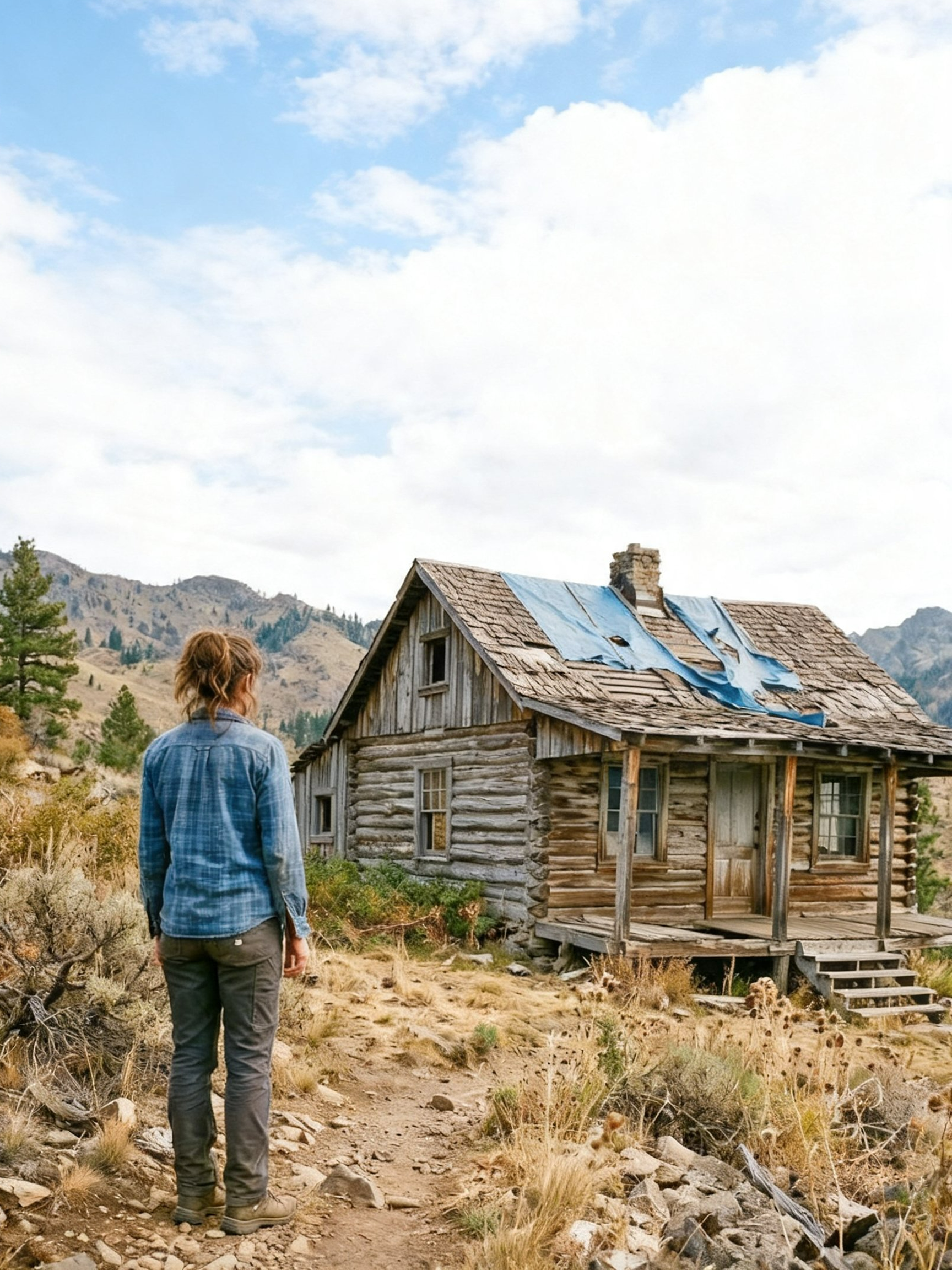
Abandoned at Forty-One, She Inherited a Forgotten Cabin—Then Found the Ledger Her Family Had Spent Twenty Years Hiding
Three days after my husband told me he had “outgrown” our marriage, my sister changed the locks on the house I had spent fourteen years paying for.
She set two black trash bags of my clothes on the porch and said, “Don’t make this humiliating, Claire. Daniel needs stability right now.”
My husband.
The man whose stability I had financed since he was thirty-two years old and still calling a maxed-out credit card a “temporary cash-flow issue.”
I looked at my sister Rebecca standing inside my own front doorway in cream slacks and a cashmere sweater I’d bought her for Christmas.
Behind her stood my brother-in-law, Mark.
Behind Mark stood my mother.
And thirty feet farther back, beside the kitchen island I had chosen, under the pendant lights I had installed, Daniel was pouring himself coffee as though this were simply another Monday morning.
No one asked me to come inside.
That was the part I remembered.
Not Rebecca’s smug little smile.
Not my mother staring at the floor.
Not Mark folding his arms like hired security.
The doorway.
My doorway.
And the fact that four people I had carried financially, emotionally, or both had formed a human wall to keep me outside it.
I was forty-one years old.
I had forty-eight dollars in cash.
My debit card had been declined at a gas station two hours earlier.
And according to the temporary separation paperwork Daniel had filed before telling me he wanted a divorce, nearly every joint account we owned had been frozen.
Rebecca pushed one trash bag toward me with the toe of her shoe.
“You should go before the neighbors start watching.”
I stared at her.
She waited for tears.
That was obvious.
My mother waited for a scene.
Mark waited for anger.
Daniel waited for me to beg.
Instead, I bent down, tied the loose top of the second trash bag, and said, “Where’s the blue coat?”
Rebecca blinked.
“My blue winter coat.”
“That’s what you’re worried about?”
“It has my gloves in the pocket.”
She laughed once.
A short, ugly sound.
“Unbelievable.”
“No,” I said quietly. “Just cold.”
Daniel appeared behind her then.
He leaned one shoulder against the doorframe.
He was wearing the navy quarter-zip I had given him on our anniversary.
His wedding ring was gone.
“I told you this doesn’t have to get nasty.”
I almost smiled.
The man had removed me from my checking accounts, filed papers through a lawyer I had introduced him to, moved my sister into the guest room, and convinced my mother that I was “emotionally unstable.”
And he was explaining civility to me from inside my house.
I picked up both bags.
“You’re right.”
That unsettled him.
I could see it.
Daniel knew my habits.
He knew I argued facts.
He knew I corrected lies.
He knew I could spend forty minutes proving why a number on a spreadsheet was wrong.
What he did not know how to handle was silence.
Rebecca stepped backward.
Daniel frowned.
My mother finally whispered, “Claire, maybe in a few weeks, when things calm down—”
Everyone looked at me.
I shifted the bags in my hands.
“You don’t get to comfort me after helping them do this.”
Mom’s face tightened.
“I’m trying to keep this family together.”
I looked past her at Daniel.
Then Rebecca.
Then the dining room table where, ten months earlier, I had written a check for twenty-two thousand dollars to stop my mother’s house from going into foreclosure.
“You picked the family you wanted to keep.”
No one answered.
I did not slam the door.
I did not scream in the driveway.
I did not call Daniel twenty times.
I did not ask Rebecca how long she had known.
I did not ask my mother why the daughter who paid the bills was always somehow the daughter expected to understand.
I did not cry until I reached the county road.
And even then, I only cried for four minutes.
I know because the dashboard clock said when my vision blurred and when I pulled back onto the highway.
By , I was thinking clearly again.
By , I had made a list.
By , I knew exactly what I owned.
Which was almost nothing.
And at , my phone rang.
The number belonged to a law office in Bellweather, Tennessee.
I nearly ignored it.
Then I saw the voicemail transcription.
Regarding the estate of Evelyn Hart.
My mother’s oldest sister.
Aunt Evelyn.
The woman half my family had spent twenty years calling crazy.
I pulled into the parking lot of a closed farm-supply store and returned the call.
An older man answered.
“Mr. Samuel Hargrove?”
“This is Claire Bennett. You called about Evelyn Hart.”
He was quiet for half a second.
Then his voice changed.
Not warmer exactly.
More careful.
“Mrs. Bennett, I’ve been waiting for your call.”
“Because your aunt died six weeks ago.”
My grip tightened around the phone.
No one had told me.
Not my mother.
Not Rebecca.
“I’m sorry,” he said.
“In her sleep. At home.”
I pictured the old cabin in Ash Creek.
A sagging porch.
Wood smoke.
A yellow kitchen with cracked linoleum.
Aunt Evelyn had lived there alone since I was a child.
“What does this have to do with me?”
Mr. Hargrove exhaled.
“She left you the cabin.”
I looked through my windshield at the darkening parking lot.
“That cabin?”
“The one on Blackwood Ridge?”
“How much is it worth?”
“On paper?”
“That sounds like a lawyer answer.”
I almost laughed for the first time that day.
He continued.
“On the county tax roll, the residence and immediate parcel are valued at twenty-eight thousand six hundred dollars.”
I closed my eyes.
Twenty-eight thousand dollars.
Daniel’s truck had cost more.
Rebecca’s kitchen renovation had cost more.
The retaining wall behind my mother’s house had cost more.
Still, it was a roof.
Maybe barely.
But a roof.
“I’ll take it.”
Mr. Hargrove didn’t answer.
“Mr. Hargrove?”
“There is something you need to understand before you go there.”
“Your aunt left instructions.”
“What kind?”
“She said that if you inherited the property while you were still married to Daniel, I was to tell you almost nothing.”
That made me sit straighter.
“She knew Daniel?”
“She knew of him.”
“She kept track of you.”
I looked down at the trash bags on the passenger-side floor.
“That’s strange.”
“Evelyn was strange in several ways.”
“What happens now?”
“You go to the cabin.”
“You’ll find a green metal box in the woodstove.”
I glanced at the clock.
It was almost seven.
“What’s inside?”
“I don’t know.”
“You’re her lawyer.”
“You expect me to believe she left you instructions about a box but didn’t tell you what was inside it?”
Another pause.
“Because your aunt didn’t trust lawyers.”
“That include you?”
“Especially me.”
I smiled despite myself.
That sounded like Evelyn.
Then Mr. Hargrove’s voice hardened.
“Claire, listen carefully. Do not sign anything anyone brings you regarding the cabin, the ridge, access roads, timber rights, water rights, or any parcel associated with Blackwood Ridge.”
My smile disappeared.
“Why would anyone bring me something?”
“I can’t answer that yet.”
“Can’t or won’t?”
“Because Evelyn structured things very precisely. She wanted you to discover certain facts in a certain order.”
“That sounds dramatic.”
“She believed drama made people careless.”
I looked toward the highway.
“What else did she say?”
Mr. Hargrove lowered his voice.
“One sentence.”
“What sentence?”
“If Claire arrives alone, the truth can still be saved.”
I did not sleep in a motel that night.
Ash Creek was three hours east.
I arrived after eleven under a sky the color of wet slate.
Blackwood Ridge rose beyond the town like the back of some enormous sleeping animal.
The cabin stood two miles past the last paved road, behind a rusted cattle gate hanging crooked from one hinge.
My headlights swept across cedar trees, a collapsed woodshed, and the porch.
For a moment, I thought I had made a terrible mistake.
The cabin looked abandoned.
Then I noticed the chimney cap.
The front steps.
Recently repaired.
And beside the door, under an overturned flowerpot, there was a key.
Aunt Evelyn had known I would come.
Inside, the air smelled like dust, pine, and old coffee.
I found matches in a drawer.
I found two oil lamps.
I found canned soup.
Bottled water.
Clean blankets.
Fresh firewood stacked along one wall.
Someone had prepared the place.
I walked to the cast-iron stove.
My hands were shaking slightly when I opened it.
There was no ash inside.
Only a green metal box.
It was the size of a large dictionary and locked with a brass clasp.
A strip of masking tape crossed the lid.
CLAIRE ONLY.
Underneath, in Evelyn’s sharp handwriting:
IF DANIEL IS WITH YOU, BURN THIS CABIN BEFORE YOU OPEN THIS BOX.
I stared at that sentence for almost a minute.
Then I laughed.
Not because it was funny.
Because after the week I had lived through, arson instructions from a dead aunt felt almost reasonable.
I carried the box to the kitchen table.
I searched the drawers.
Then I remembered something.
When I was nine, Aunt Evelyn had given me a brass compass.
She had said, “People get lost because they look for signs instead of direction.”
My mother threw it away a month later because she thought it was junk.
Or at least that was what she told me.
I looked around the cabin.
Above the fireplace hung an old framed photograph of Evelyn and my grandmother.
I lifted it.
Behind the frame was a tiny brass key taped to the wall.
The green box opened.
Inside lay four things.
A leather ledger.
A sealed envelope.
A flash drive.
And a photograph of my mother standing beside Daniel.
The photograph was dated eighteen months earlier.
My stomach went cold.
They were standing outside a bank in Ash Creek.
Daniel was holding a folder.
My mother was pointing at something.
On the back, Evelyn had written:
THEY CAME BEFORE THEY THOUGHT THEY NEEDED YOU.
I sat down.
For the next hour, I read the ledger.
Aunt Evelyn had documented almost everything.
Parcel numbers.
Conversations.
License plates.
Copies of letters stapled into pages.
She had spent twenty-three years documenting Blackwood Ridge.
At first, I did not understand why.
Then I turned to a page marked 2004.
My name was there.
CLAIRE PAID HELEN’S MORTGAGE AGAIN.
Another entry.
CLAIRE PAID REBECCA’S COMMUNITY COLLEGE TUITION.
CLAIRE COVERED MARK’S EMERGENCY SURGERY DEDUCTIBLE.
CLAIRE LOANED DANIEL $17,000 FOR BENNETT RESTORATION.
CLAIRE REFINANCED HER HOUSE TO STOP HELEN’S FORECLOSURE.
I stopped breathing for a moment.
Evelyn had recorded my life.
Not intimate details.
Transactions.
The invisible pieces.
The checks no one remembered after cashing them.
The mortgage payments nobody mentioned at Thanksgiving.
The years when I bought my own winter coat at thrift stores because Rebecca “needed help.”
The years Daniel’s business “almost turned the corner.”
The years Mom called me responsible as though responsibility were not something that cost money.
Page after page.
Then, on the next sheet, Evelyn had written one sentence in red ink.
THEY HAVE BUILT THEIR LIVES ON THE ASSUMPTION THAT CLAIRE WILL ALWAYS PAY AND NEVER COUNT.
I closed the ledger.
The cabin creaked in the wind.
For the first time since leaving my house, anger rose cleanly through me.
Not explosive.
Structured.
I opened the envelope.
Inside was a single sheet.
If you are reading this, they finally became greedy enough to stop pretending they loved you.
I also expected it.
Your mother has spent her whole life believing sacrifice proves goodness. Unfortunately, she has always preferred your sacrifice.
Rebecca learned early that need gets rewarded.
Daniel learned later that your loyalty could be monetized.
Do not hate them yet.
Hate makes people stupid.
Count first.
At the bottom of the page was a line underlined twice.
THE CABIN IS NOT THE INHERITANCE.
Below that:
Find the iron ring beneath the pantry floor.
I was on my knees two minutes later.
The pantry was barely six feet wide.
I pulled up an old braided rug.
There, set into one floorboard, was a black iron ring.
A square panel rose.
Beneath it was a shallow compartment containing an oilcloth packet.
Inside the packet was a deed.
Not the deed to the cabin.
A deed to six hundred and forty acres.
Blackwood Ridge Holdings.
Recorded 1989.
Owner: Evelyn June Hart.
I read it twice.
Then a third time.
The legal description covered the cabin parcel, timberland, two springs, a quarry road, and a narrow strip of land that curved west toward Ash Creek.
I had grown up around land.
I understood enough to know six hundred forty mountain acres could be valuable.
But the number was not what made my hands shake.
It was the map attached to the deed.
A red line marked an easement across the southern boundary.
Another line marked a reservoir.
And in one corner, handwritten in pencil:
DO NOT CONVEY ROAD 7.
The following morning, I called Mr. Hargrove.
“You knew.”
“I knew some of it.”
“Six hundred forty acres?”
“You told me the cabin was worth twenty-eight thousand dollars.”
“The cabin parcel is.”
“What’s the rest worth?”
“That depends who wants it.”
“Who wants it?”
Before he could answer, a truck came up the road.
Black Range Rover.
My sister’s.
I watched it stop outside the cabin.
Rebecca climbed out wearing sunglasses and a camel coat.
Mark got out on the passenger side.
And Daniel stepped out from the back.
I said into the phone, “Never mind.”
“I found out.”
I ended the call.
Then I put the deed beneath the pantry floor, locked the green box, and set the ledger inside an empty flour bin.
By the time Daniel knocked, I was heating coffee.
I opened the door.
Rebecca looked past me immediately.
“This is worse than I remembered.”
“Good morning.”
Daniel studied my face.
Mark glanced at the roof.
“You slept here?”
Rebecca removed her sunglasses.
“You could’ve called Mom.”
“She’s worried sick.”
“I’m sure she’ll recover.”
Daniel gave Rebecca a look.
They had rehearsed this.
I knew that instantly.
Daniel softened his voice.
“We heard about Evelyn.”
“From whom?”
He hesitated half a beat.
“Your mom.”
Interesting.
Mom had known Evelyn was dead.
Mom had simply chosen not to tell me.
Rebecca stepped forward.
“Claire, we’re not here to fight.”
“That makes four people this week who’ve told me that while standing on property they want.”
Mark’s eyes narrowed.
Daniel forced a smile.
“We came because this could actually help you.”
“There’s a buyer interested in this area.”
“What area?”
“The ridge.”
“What ridge?”
That annoyed him.
I could see it.
Daniel hated when I made him explain things he thought I should simply accept.
“Blackwood Ridge.”
I leaned against the doorway.
Mark spoke this time.
“A development company has been assembling parcels for almost two years.”
“How fortunate.”
“They’ll buy the cabin.”
“How much?”
Rebecca jumped in.
“Seventy-five thousand.”
I raised my eyebrows.
“Generous.”
“It is generous,” she said. “Look at this place.”
Daniel took a folded document from inside his jacket.
“They’ll handle closing costs. No inspection. Cash transaction.”
He handed me the paper.
I unfolded it.
Purchase agreement.
Seventy-five thousand dollars.
Bennett Ridge Ventures LLC.
I looked at Daniel.
“Bennett Ridge?”
“A holding company.”
“Not exactly.”
“Rebecca’s?”
More silence.
I looked down at the signature block.
Daniel had already initialed two pages as authorized representative for the buyer.
“You came all this way to buy a twenty-eight-thousand-dollar cabin from your homeless wife for seventy-five thousand dollars.”
“You’re not homeless.”
“My clothes are in trash bags.”
Rebecca sighed.
“Here we go.”
I looked at her.
She stopped.
I turned back to Daniel.
“What do you need the cabin for?”
There it was.
Too quickly spoken.
Mark looked at him.
Daniel realized his mistake.
I lowered my eyes to the document as though it meant nothing.
“Access to what?”
“Nothing important. Construction staging, maybe utilities. There’s an old road.”
I nodded again.
“When do you need my answer?”
Daniel relaxed.
That was the strange part.
He actually relaxed.
Because he thought silence meant surrender.
He thought exhaustion had made me stupid.
He thought my lack of screaming meant I had finally accepted that he was the smarter one.
“Today would be best.”
His face changed.
“I asked when you need it. I didn’t say I’d give it.”
Rebecca stepped onto the porch.
“Why are you always like this?”
“Like what?”
“Difficult.”
“I asked two questions.”
“You know exactly what I mean.”
Actually, I did.
Difficult was what my family called me whenever I required details.
Daniel put his hands into his coat pockets.
“The offer expires at five.”
I looked at the pages.
“Then I have until five.”
Mark laughed softly.
“This isn’t a negotiation.”
That made me look at him.
“No. You need money. We need the parcel. Seventy-five is fair.”
He glanced at Daniel.
Another mistake.
I handed the contract back.
“Come by at four-thirty.”
Daniel looked surprised.
Rebecca smiled.
Mark looked victorious.
They left at .
At , I called Samuel Hargrove.
At , I learned that Bennett Ridge Ventures had been formed nineteen months earlier.
Its members were Daniel Bennett, Rebecca Cole, Mark Cole, and my mother, Helen Walker.
At , I learned something better.
The proposed development was not seventy-five thousand dollars’ worth of anything.
It was called Blackwood Vista.
One hundred and twelve luxury homes.
Private clubhouse.
Wedding venue.
Hiking trails.
Artificial lake.
Estimated completed value:
Thirty-eight million dollars.
And none of it could be built as designed without Road 7.
Road 7 crossed Evelyn’s land.
Or at least land I might inherit.
I asked Mr. Hargrove how much Road 7 was worth.
He said, “Whatever it costs them to redesign the entire development.”
“How much?”
“Possibly several million.”
I stared out the cabin window.
“And Daniel knows this?”
“She attended two planning meetings.”
That hurt more than Daniel.
I let the silence sit between us.
Then I asked, “Why didn’t Evelyn stop them?”
“She was waiting.”
“For what?”
“For them to expose themselves.”
At 10:20, Hargrove arrived in a battered silver Volvo carrying two banker boxes.
He was seventy if he was a day, thin as a fence rail, with white hair and a brown suit that looked older than my marriage.
He sat across from me at Evelyn’s kitchen table.
“You look like your grandmother.”
“I’ve been told.”
“No, you haven’t.”
He opened the first box.
“Your mother always told you that you looked like your father because she didn’t like comparisons to her mother.”
I stared at him.
“You knew my grandmother?”
“I represented her.”
“For what?”
“Land matters.”
He removed a file.
“Blackwood Ridge belonged to your grandparents.”
I had been told my grandfather lost the family land after a timber business failed.
Apparently, that was another lie.
“What happened?”
“Your grandfather wanted to sell. Your grandmother did not. Their marriage deteriorated. Eventually, she transferred her inherited portion to Evelyn.”
“My mother got nothing?”
“She got exactly what she requested.”
“What did she request?”
I leaned back.
Hargrove continued.
“Your mother received one hundred eighty thousand dollars in 1989.”
That would have been serious money then.
“What happened to it?”
“I’m her lawyer, not her priest.”
I almost smiled.
He slid another page toward me.
“Evelyn spent decades maintaining the land.”
“For what?”
“She believed Blackwood Ridge should benefit the family member who understood stewardship.”
“And she picked me?”
“She observed you.”
“That doesn’t answer my question.”
He folded his hands.
“She picked the person everyone else was willing to use.”
I looked down.
That landed deeper than I wanted it to.
He pushed a folder toward me.
Inside were bank statements.
A loan agreement.
An easement application.
And correspondence from Blackwood Vista’s developers.
Daniel’s name appeared repeatedly.
“So they thought Evelyn would sell?”
“Originally.”
“She refused.”
“Repeatedly.”
“Then why create Bennett Ridge Ventures?”
“To buy adjacent parcels and pressure her.”
“Pressure how?”
“Code complaints. Tax challenges. Road disputes. Claims about unsafe structures. One anonymous report alleged she was mentally incompetent.”
My face went still.
Hargrove watched me.
“I assume you know who signed the witness statement.”
I did not want to ask.
“Your mother.”
The room seemed to shrink.
I pictured Mom crying when I paid her mortgage.
Mom telling me Rebecca “needed support.”
Mom telling me Daniel was a good man.
Mom telling me three days ago that she was trying to keep the family together.
“What did Evelyn do?”
“She waited.”
“For what?”
“For greed to make them sloppy.”
That phrase again.
Hargrove removed one last document.
“Six months ago, Daniel’s company obtained preliminary commitments from investors based on projected access through Road 7.”
“Without owning it?”
“That’s insane.”
“It’s risky.”
“It’s fraud if they represented access as secured.”
Hargrove said nothing.
I looked at him.
“Did they?”
He slid the document across.
On page sixteen, Road 7 access was described as:
CONTROLLED BY AFFILIATED ENTITY.
I read it twice.
“What affiliated entity?”
“Bennett Ridge Ventures.”
“They don’t own Road 7.”
“Evelyn did.”
Hargrove looked toward the pantry.
“That depends on what you found.”
I did not answer.
He smiled faintly.
“Evelyn would approve.”
At four-thirty, Daniel returned alone.
That told me something.
When people believe victory is certain, they stop bringing witnesses.
He came inside without waiting for an invitation.
He had a pen in his hand.
He frowned.
“You want coffee?”
I poured myself some.
Daniel watched me.
“You look tired.”
“I slept in a cabin.”
“This doesn’t have to be your life.”
“You know what I mean.”
“Explain it.”
He hated that sentence.
His jaw tightened.
“You don’t have the resources to fight me in the divorce.”
I sipped my coffee.
“You froze our accounts.”
“They’re marital assets.”
“You transferred eighty-six thousand dollars before filing.”
His eyes sharpened.
“You’ve been checking.”
“That money was business revenue.”
“From Bennett Restoration?”
“Interesting.”
“No reason.”
It was not Bennett Restoration money.
I already knew that.
Twenty-two thousand had come from Bennett Ridge Ventures.
The rest had moved through two accounts Hargrove was tracing.
Daniel put the contract on the table.
I looked at it.
“Seventy-five thousand.”
“Why so much for a cabin worth twenty-eight?”
“We’ve discussed this.”
His shoulders stiffened.
“Limited access.”
“To a thirty-eight-million-dollar development.”
Not surprise.
Calculation.
Daniel sat down slowly.
“Who have you been talking to?”
“Should that matter?”
“Does Blackwood Vista need Road 7?”
He stared at me.
“Your aunt filled your head with nonsense.”
“My aunt is dead.”
“You know what I mean.”
“Does Blackwood Vista need Road 7?”
He answered too fast.
“Then you don’t need my cabin.”
“That’s not what I said.”
“If there’s another route, use it.”
He leaned forward.
“You don’t understand development.”
“You don’t understand zoning.”
“Also true.”
“Environmental approvals.”
“Utility costs.”
He sat back.
“Then don’t pretend you know what you’re talking about.”
“I understand leverage.”
His face hardened.
That was the first moment Daniel realized the conversation had changed.
He reached for the contract.
I put one finger on it.
“How long have you and Rebecca been partners?”
“Don’t do this.”
“Nineteen months?”
“Did my mother invest money?”
“How much?”
“Sign the paper.”
I removed my hand.
His eyes went flat.
“Think carefully.”
“You have no income right now.”
“I have my consulting work.”
“Which you run from our house.”
“Not anymore.”
“Our divorce could take eighteen months.”
“Your credit cards are joint.”
“You have legal fees.”
“And you think hiding in this shack gives you power?”
I looked around.
The cracked cabinets.
The scarred table.
The old walls.
Then back at him.
I folded the contract in half.
“The fact that you came here with a pen gives me power.”
His face changed again.
Just slightly.
I handed the contract back.
“I’ll see you at mediation.”
He left without saying goodbye.
Twenty minutes later, Rebecca called.
I let it ring.
Then Rebecca again.
At , I received a text from Daniel.
You are making a catastrophic mistake.
I took a screenshot.
At , another arrived.
Evelyn’s property has liens you don’t understand.
Screenshot.
You could walk away with $75K and dignity.
Screenshot.
Last chance.
Then deleted it.
At , I wrote:
I’ll review everything with counsel.
Three dots appeared.
Disappeared.
Appeared again.
Then nothing.
That night, I plugged Evelyn’s flash drive into an old laptop Hargrove had brought.
There were folders labeled by year.
Photographs.
Audio recordings.
Scanned correspondence.
Tax filings.
The woman had built a private archive.
One recording changed everything.
It was dated eleven months earlier.
I heard the cabin door open.
My mother’s voice came first.
“Evelyn, be reasonable.”
Then Rebecca.
“We’re offering more than this place deserves.”
Then Daniel.
“We need the southern strip. You keep the cabin. Nothing changes.”
Evelyn’s voice sounded thin but amused.
“You mean except ownership.”
“It’s an easement.”
“It’s a road.”
“It’s unused.”
“It’s mine.”
Daniel’s voice hardened.
“Claire would sign it.”
Then Evelyn said, “Would she?”
“She trusts me.”
“That was not my question.”
I leaned closer to the laptop.
Mom spoke next.
“Claire doesn’t care about this place.”
Evelyn said, “Claire cares about people. That is her problem.”
Rebecca scoffed.
“Claire always needs to be the martyr.”
There was a long silence.
Then Evelyn said something I would remember for the rest of my life.
“No. A martyr wants witnesses. Claire has spent twenty years saving people who prefer not to remember needing rescue.”
I stopped the recording.
For several seconds, I could not move.
Then I played the rest.
Daniel made an offer.
Eight hundred thousand dollars for a permanent easement.
Evelyn refused.
Mark threatened a partition action.
Evelyn laughed.
My mother accused her of punishing the family.
Then Evelyn asked one question.
“Does Claire know?”
Nobody answered.
“Does Claire know any of you are invested?”
Still nothing.
Evelyn said, “Then we are not discussing land. We are discussing theft that hasn’t happened yet.”
The recording ended.
I slept badly.
The next morning, a county code-enforcement truck arrived.
Then a sheriff’s cruiser.
Then a man from the building department.
Daniel’s system had started moving.
The cabin had three alleged violations.
Unsafe porch.
Improper septic.
Unpermitted electrical work.
The officer was polite.
The inspector was less so.
“You can’t occupy this structure until corrections are made.”
“Who filed the complaint?”
“Anonymous.”
“Of course.”
He posted an orange notice on the door.
I photographed it.
Then I photographed his truck.
Then his badge.
Then every page he handed me.
“You’re taking this well,” he said.
“I like records.”
He looked at me for a moment.
“Appeal information is on page three.”
“Thank you.”
The sheriff’s deputy remained.
He was in his fifties, broad-shouldered, gray at the temples.
“Mrs. Bennett?”
He glanced toward the road.
“My name’s Tom Alvarez.”
“Your aunt used to call our office about trespassers.”
“I’m learning she called people about a lot of things.”
A faint smile.
“She wasn’t wrong often.”
He lowered his voice.
“Someone tried to enter this property last month after she died.”
“Couldn’t identify them. Camera caught part of a plate.”
He handed me a card.
On the back was written:
“Why tell me?”
“Because your aunt told me if anything happened to her, the next owner might have trouble.”
“She expected trouble?”
“She expected relatives.”
At noon, Hargrove filed an emergency appeal on the occupancy order.
At one, a local contractor inspected the cabin.
At two, he told me the electrical complaints were nonsense, the septic system had been serviced nine months earlier, and the porch needed two boards replaced.
At three, he fixed the boards.
At four, the county received his report.
At five, Daniel texted:
You can’t even legally live there now. Sell before this gets worse.
I screenshot that too.
The following week was a lesson in how respectable people apply pressure.
My mother called cousins.
Rebecca told mutual friends I was having a breakdown.
Daniel’s attorney claimed I was withholding marital property.
Mark contacted the developer directly.
A bank representative called about an “old lien.”
Someone removed the No Trespassing sign from Road 7.
Someone else drove stakes into the south field.
Each time, I documented.
Each time, Hargrove filed something.
Each time, the people expecting me to panic became a little more irritated.
I did not scream.
I counted dates.
I counted signatures.
I counted payments.
I counted the checks I had written over twenty years.
I counted the lies they had told in six weeks.
I counted every time they mistook patience for permission.
And when the total became large enough, I stopped feeling abandoned.
I started feeling informed.
The occupancy order was overturned nine days later.
That was my first win.
The second came when Hargrove discovered the alleged lien had been released in 1997.
The third came when a surveyor confirmed Road 7 was private property, not a county road.
The fourth came when Blackwood Vista’s primary developer, Calder Communities, requested a meeting.
Daniel attended.
So did Rebecca.
So did Mark.
So did my mother.
I walked into the conference room beside Samuel Hargrove carrying Evelyn’s leather ledger.
No one in my family knew what it was.
That pleased me.
Calder’s attorney, a woman named Denise Lambert, opened the meeting.
“We’d like to resolve access.”
Daniel interrupted.
“This is a family dispute.”
Denise looked at him.
“Mr. Bennett, our investors have thirty-eight million reasons not to treat it as one.”
Daniel’s face reddened.
Rebecca stared at me.
Mom looked tired.
For the first time in my life, I did not feel obligated to fix that.
Denise turned to me.
“Mrs. Bennett, we understand you control the cabin parcel.”
Hargrove said, “Ms. Hart’s estate controls substantially more than the cabin.”
The room went still.
Mark looked sharply at Daniel.
Daniel looked at Hargrove.
I watched my mother.
Not everything.
But enough.
Denise closed her folder.
“How much more?”
Hargrove answered.
“Six hundred forty acres.”
Rebecca whispered, “That’s impossible.”
Mom shut her eyes.
There it was.
Her reaction told me more than words could.
She had known Evelyn still owned land.
But perhaps not how much.
Daniel recovered first.
“Those parcels were divided.”
“No,” Hargrove said.
“There were transfers.”
“There were proposed transfers.”
“My attorney reviewed—”
“Your attorney reviewed documents supplied by your LLC.”
Daniel stopped.
Hargrove opened his box.
“The recorded deeds are quite clear.”
Denise leaned toward him.
“Does the Hart estate own Road 7?”
“Water rights?”
“Eastern utility corridor?”
Daniel stood.
“This meeting is over.”
“No,” Denise said. “It isn’t.”
He looked at her.
She slid a document across the table.
“Our agreement with Bennett Ridge Ventures represented Road 7 as controlled by an affiliated entity.”
Daniel’s eyes flicked toward me.
“That was based on expected conveyance.”
“Expected from whom?”
“Mrs. Bennett?”
I looked at Denise.
“I never agreed to convey anything.”
Daniel said, “You weren’t the owner.”
“No,” I said. “Evelyn was.”
His jaw tightened.
I continued.
“And she said no.”
Rebecca turned to Mom.
“Did you know about this?”
Mom whispered, “Not like this.”
I nearly laughed.
The first cracks were appearing.
A system built on shared greed rarely survives unequal information.
Mark pointed at Hargrove.
“This doesn’t matter. Probate could take months.”
Hargrove nodded.
“So Claire controls nothing.”
Mark smiled.
Then Hargrove added, “Which means neither do you.”
The smile disappeared.
Denise looked at me.
“If the estate eventually conveys Road 7, Calder is willing to negotiate directly.”
Daniel slammed his palm on the table.
“She is not the estate.”
I looked at him.
Then I placed Evelyn’s ledger on the table.
“But she seems to have known exactly who you were.”
Mom stared at the book.
“What is that?”
Her face lost color.
Rebecca asked, “Records of what?”
“Everything Evelyn thought mattered.”
Daniel said, “Claire, don’t.”
That was the first time he sounded afraid.
I opened the ledger.
Not to the land records.
To the family pages.
I turned it toward my mother.
Her eyes found the first line.
CLAIRE PAID HELEN’S MORTGAGE AGAIN.
Mom’s mouth opened.
I flipped several pages.
CLAIRE PAID REBECCA’S TUITION.
CLAIRE COVERED MARK’S MEDICAL DEBT.
CLAIRE REFINANCED HER HOME.
CLAIRE FUNDED DANIEL’S BUSINESS.
Rebecca’s face hardened.
“This is pathetic.”
I looked at her.
“Keeping score.”
“That’s what people say when they owe the score.”
Nobody spoke.
I closed the ledger.
Denise Lambert quietly said, “I think we should adjourn.”
That meeting destroyed Bennett Ridge Ventures faster than any lawsuit could have.
Calder froze its partnership.
Two investors demanded explanations.
A lender suspended a construction facility.
Daniel blamed Mark.
Mark blamed Rebecca.
Rebecca blamed me.
Mom began leaving voicemails about forgiveness.
I saved them all.
Then came the divorce mediation.
Daniel arrived with a new attorney.
His first lawyer had withdrawn.
I arrived with my own lawyer, Samantha Reed, a fifty-three-year-old litigator who wore no jewelry except a watch and scared people simply by reading documents longer than they expected.
Daniel demanded half the value of my inheritance.
Samantha explained inherited property was generally separate.
Daniel argued he had contributed to maintaining it.
Samantha asked him to produce one receipt.
He could not.
Daniel demanded reimbursement for marital money allegedly spent supporting Aunt Evelyn.
Samantha produced bank statements showing there were none.
Then she asked him about the eighty-six-thousand-dollar transfer.
His confidence weakened.
Then she asked about Bennett Ridge Ventures.
He requested a break.
During that break, my mother approached me in the hallway.
I kept reading my notes.
“Claire, please.”
I looked up.
She seemed smaller.
Maybe she was.
Or maybe I had spent my life enlarging her.
“We need to talk.”
“About what?”
“Which one?”
Her eyes filled.
“You don’t have to be cruel.”
“You’re humiliating everyone.”
I closed my folder.
“You put my belongings in trash bags.”
“That was Rebecca.”
“You stood behind her.”
“I was trying to prevent a scene.”
“By helping her lock me out?”
“Daniel told us you were unstable.”
“Did I look unstable?”
Mom’s mouth tightened.
“He said you were threatening to ruin him.”
“I didn’t know about his development.”
“He said you found out.”
She realized it too late.
“When did Daniel tell you I found out about Blackwood Vista?”
“I don’t remember.”
“Before or after you changed the locks?”
“Before or after?”
She looked toward the mediation room.
“Thank you.”
“For what?”
“You just answered a question I didn’t know I needed to ask.”
Fear moved across her face.
“Don’t do this.”
“Destroy everybody because your marriage failed.”
I looked at my mother for a long time.
Then I said, “My marriage didn’t fail in that doorway.”
She blinked.
“It was already gone. The doorway just showed me who else had left with it.”
I walked back into mediation.
That evening, I listened again to Evelyn’s recordings.
I found the answer at in the morning.
A file labeled APRIL 4.
My mother and Daniel were inside the cabin.
This time, no Rebecca.
Daniel said, “She’ll sign.”
Mom answered, “Claire asks questions.”
“You’re her mother.”
“I know my daughter.”
“Then make her feel guilty.”
My whole body went cold.
Mom sighed on the recording.
“She’s tired of helping everyone.”
“She always helps.”
“You don’t understand. Something changed after her father died.”
Daniel sounded impatient.
“We only need her signature after Evelyn is gone.”
I stopped the recording.
After Evelyn is gone.
I replayed the sentence.
Then again.
Not murder.
Nothing suggested murder.
But intent.
Preparation.
They had planned to use me to obtain Road 7 after Evelyn died.
Before Daniel left me.
Before my sister changed the locks.
Before my mother said she was trying to hold the family together.
Their biggest mistake was not betraying me.
It was assuming betrayal would make me easier to control.
The next morning, Hargrove listened to the recording.
His face became unreadable.
“There’s more,” he said.
He opened his briefcase.
“Evelyn amended her estate plan eight months ago.”
“I thought the land came to me.”
“Then what changed?”
“She created the Hart Ridge Preservation Trust.”
He placed a thick binder on the table.
“She transferred Blackwood Ridge Holdings into the trust.”
“So I don’t inherit it?”
“You inherit beneficial control.”
“What does that mean?”
“You cannot sell the core acreage outright for ten years.”
“To stop anyone from pressuring you into a quick sale.”
Evelyn had anticipated that too.
“You can lease access. License utilities. Manage timber under restrictions. Protect water rights. Use income. But the land itself remains protected.”
“That complicates Daniel’s plan.”
“That destroys Daniel’s plan.”
I looked at him.
“Why didn’t you tell me?”
“Evelyn instructed me not to until someone attempted to obtain your signature.”
“The contract.”
“Because she wanted evidence.”
I leaned back.
There it was.
The legal warning from the dead.
Not emotional.
Not dramatic.
Evelyn had not merely left me land.
She had constructed a trap.
Anyone who tried to trick, pressure, or coerce me into conveying the property before the trust was disclosed would create evidence against themselves.
Daniel had brought me a contract.
Mark had threatened me.
Rebecca had discussed the development.
My mother had participated in planning meetings.
They had all believed the inheritance made me vulnerable.
Instead, it documented them.
But Evelyn had one more safeguard.
The trust named me sole trustee after probate.
And it contained a purpose clause.
Revenue generated from Road 7, the springs, and approved development agreements had to fund two things before I could take personal distributions.
Maintenance of Blackwood Ridge.
And emergency housing grants for women displaced by divorce, domestic financial abuse, or family eviction.
I read that clause three times.
Then I stopped.
My throat tightened.
Hargrove looked away, giving me privacy I had not asked for but suddenly needed.
Evelyn had known.
Not the exact details.
But the shape.
A woman loses a marriage.
A family closes ranks.
Money becomes a weapon.
Housing becomes leverage.
People call her emotional while emptying the account.
People say “be reasonable” when they mean surrender.
The asset was large.
Possibly worth millions.
But that was not the inheritance.
The inheritance was that Evelyn had turned one family’s habit of using women into a legal structure designed to shelter them.
For once, the sacrifice did not disappear.
It became architecture.
Three months later, probate closed.
I became trustee.
Calder Communities returned with a new proposal.
Not to purchase Road 7.
To lease access.
Twenty-five years.
Annual payment: four hundred eighty thousand dollars, indexed for inflation.
Additional water-license fees.
Environmental protections.
No construction on the ridge itself.
Public hiking access on sixty acres.
And a five-million-dollar upfront payment to the trust.
I negotiated for six.
We settled at five-point-seven.
Daniel heard about the agreement through his attorney.
Rebecca heard through Daniel.
Mom heard through Rebecca.
Mark heard from a lender who demanded repayment on a note he had personally guaranteed.
The system collapsed in exactly the opposite order it had been built.
Mark filed for bankruptcy protection.
Rebecca sold the Range Rover.
Mom listed her house.
Daniel’s restoration company lost its credit line.
And Bennett Ridge Ventures dissolved with more than nine hundred thousand dollars in liabilities.
My divorce became final on a rainy Thursday in October.
Daniel kept his truck.
I kept my consulting business.
He took responsibility for debts tied to Bennett Ridge Ventures.
I gave up any claim to Bennett Restoration.
And because our house had been purchased partly with my premarital savings and because Daniel had transferred joint funds while planning the separation, I received sixty-eight percent of the equity.
Rebecca was given thirty days to leave.
I did not move back.
I sold the house.
The first emergency housing property purchased by the Hart Ridge Preservation Trust was a four-unit brick building near Ash Creek Community College.
The second was a small duplex.
The third was an old motel that we converted into short-term apartments.
We called the program Evelyn House.
I did not put my own name anywhere.
That would have made her furious.
For six months, life became quieter.
I repaired the cabin.
I kept the old floors.
The yellow kitchen.
The woodstove.
I rebuilt the porch.
I added a proper office overlooking the southern ridge.
Every morning, I walked Road 7.
Some days, I still remembered the garbage bags.
Some days, I still heard Rebecca saying, Don’t make this humiliating.
Some days, I wanted to call my mother and ask the useless questions.
Why always me?
Why was my usefulness easier to love than I was?
I never called.
There are questions people answer with behavior long before you form the sentence.
Then, one Sunday morning in March, someone knocked on the cabin door.
It was my mother.
She looked ten years older than she had at the mediation.
No camel coat.
No practiced sadness.
She held a cardboard box.
“May I come in?”
I almost said no.
Instead, I stepped aside.
She looked around the restored cabin.
“You fixed it.”
“Evelyn would like this.”
“Probably not the dishwasher.”
A tiny smile moved across Mom’s face and disappeared.
She put the box on the table.
“I’m moving.”
“Small apartment outside Knoxville.”
“Rebecca and I aren’t speaking.”
I said nothing.
“Mark left.”
Still nothing.
“Daniel called me last month.”
That got my attention.
“What did he want?”
“Do you have any?”
She sat down.
“I suppose there’s justice in that.”
“Justice isn’t the same thing as poverty.”
She looked at me.
“You sound like Evelyn.”
“I’ll take that as a compliment.”
“You should.”
For a while, we listened to rain tapping the windows.
Finally, Mom touched the cardboard box.
“I found these while packing.”
“What are they?”
“Your father’s things.”
My father, Michael, had died when I was thirty-four.
Heart attack.
At least that was what I had always been told.
He collapsed while driving home from a hunting cabin.
No autopsy.
No suspicion.
Just grief.
Inside the box were photographs, old tax receipts, his pocketknife, two watches, several notebooks, and a brown envelope.
The envelope had my name on it.
My father’s handwriting.
I looked at Mom.
“Why did you have this?”
She stared at the table.
“I didn’t know.”
“That’s not true.”
“I forgot.”
“You don’t forget a sealed letter addressed to your daughter.”
Her face crumpled slightly.
“I was afraid.”
She looked toward the window.
“Of what he knew.”
Every muscle in my body became still.
“Knew about what?”
Mom covered her mouth.
That scared me more than tears would have.
“I made mistakes.”
“That sentence can mean anything.”
“Your father and Evelyn were talking before he died.”
“About Blackwood Ridge?”
“About you taking money from the family?”
Her head jerked toward me.
“How do you know about that?”
Not until she reacted.
“What money?”
She closed her eyes.
“What money?”
“Your grandmother’s.”
“I thought you took your share in 1989.”
“Then what are you talking about?”
She began crying.
I hated that part of me still wanted to comfort her.
I kept my hands at my sides.
“There was another account,” she whispered.
“What account?”
“Your grandmother created it later.”
“For whom?”
The room became silent except for the rain.
“How much?”
“I don’t know.”
“I don’t know what it became.”
“What did it start as?”
She looked at me.
“Two hundred fifty thousand dollars.”
I laughed once.
Not because it was funny.
Because some numbers are too large to enter a life politely.
“When you were eleven.”
“And where is it?”
“I don’t know.”
“Who controlled it?”
“Your father.”
I looked at the envelope.
Dad’s name.
Dad’s notebooks.
Dad dying suddenly seven years earlier.
“What did Evelyn know?”
Mom shook her head.
“She said Michael had discovered transfers.”
“What transfers?”
“I don’t know.”
“You keep saying that.”
“Because I don’t.”
“Did Daniel know?”
I studied her.
Her silence lasted too long.
There it was.
“I knew something existed.”
“Your father confronted me.”
“About taking it?”
Her voice dropped.
“About helping someone move it.”
The cabin seemed to tilt.
She looked at the cardboard box.
I stepped backward.
“You came here.”
“You brought this.”
“You don’t get to stop at the part where telling the truth costs you something.”
She flinched.
I picked up the envelope.
It was still sealed.
The paper felt brittle.
I opened it carefully.
Inside were three sheets.
The first was a letter.
If you ever receive this, it means I failed to fix something before I ran out of time.
Do not assume anyone explaining this to you is telling the whole truth.
Not your mother.
Not Evelyn.
The money was never the important part.
The source of it was.
Read that again.
The source.
I turned to the second sheet.
Bank routing numbers.
Account identifiers.
Then I saw a name I recognized.
Not family.
County Judge Warren Pike.
The same retired judge who had signed two early zoning orders benefiting Blackwood Vista.
My pulse quickened.
The third sheet was a photocopy of an old deposit record.
$1,800,000.
Blackwood Timber Cooperative.
Beneficiary notation:
WORKERS RESTITUTION FUND.
I looked at my mother.
“What is this?”
“I don’t know the details.”
She pressed her palms together.
“Your grandfather’s timber company collapsed after an accident.”
“You know the story we told.”
I did not like the way she said that.
“What’s the real story?”
“Men were injured.”
“How many?”
“Seventeen.”
“Did they sue?”
“The company claimed there was no money.”
I looked at the deposit record.
“There was.”
Mom nodded.
“The settlement money disappeared.”
My skin went cold.
“How did Grandma get it?”
“She didn’t.”
“Her name created the account.”
Mom looked at me.
“Your grandmother found the account.”
I stopped breathing.
“She spent years tracing it. She and Evelyn.”
“And my father?”
“He helped later.”
Mom began crying again.
“I helped your father access one of the accounts.”
“To return the money?”
“What happened?”
“I don’t know.”
She stood too quickly.
The chair scraped backward.
“I have to go.”
I had never said that word to her like that.
“You brought me evidence of stolen restitution money connected to my grandfather, my father, Evelyn, and a county judge.”
She looked terrified now.
“You are going to tell me why.”
She stared past me toward the door.
Then I understood.
“Who are you afraid of?”
Her mouth trembled.
Before she could answer, headlights swept across the cabin windows.
A vehicle was coming up Road 7.
Mom turned white.
I moved toward the window.
“Whose car is that?”
“Turn off the lights.”
I looked at her.
“Turn them off.”
The vehicle stopped outside.
Not one vehicle.
My mother grabbed my wrist.
Her fingers were ice cold.
“Evelyn told me this could happen.”
“What could happen?”
A car door slammed outside.
Then another.
I reached for my phone.
Mom whispered, “There’s something else in the box.”
I looked down.
Beneath Dad’s notebooks was a black plastic case.
I had not noticed it.
I lifted it.
Inside was an old digital recorder.
A strip of tape across the back read:
MICHAEL — NIGHT OF CRASH.
Someone stepped onto the porch.
The old boards creaked once.
Then twice.
Mom stared at the recorder like it was a loaded gun.
I pressed play.
My father’s voice.
Breathing hard.
“If you’re hearing this, they found out I copied the ledger.”
A knock hit the front door.
Three slow blows.
My mother whispered, “Don’t answer.”
The recording continued.
“The workers were never paid. The money moved through four trusts, and Warren Pike signed the releases.”
Another knock.
Dad’s voice crackled from the recorder.
“Evelyn thinks Helen knows more than she admits.”
My mother covered her mouth.
Then came the last sentence.
“If anything happens to me, look at the second signature on the Ash Creek transfer.”
The recording stopped.
Outside, a man called my name.
“Mrs. Bennett?”
I knew that voice.
Judge Warren Pike.
Seventy-six years old.
The same man whose signature appeared on the zoning orders.
My mother shook her head desperately.
I looked down at Dad’s papers again.
Ash Creek transfer.
Second signature.
I found the line.
My father had circled it in red.
Warren Pike.
And below his—
Daniel Bennett.
My ex-husband.
The date was seven years before Daniel ever claimed to know anything about Blackwood Ridge.
The same week my father died.
Judge Pike knocked again.
“Claire, we only need to talk.”
Mom whispered, “He’ll know you have it.”
I looked at the recorder.
Then at the envelope.
Then at Daniel’s signature.
For six months, I had believed my family betrayed me because they wanted land.
For six months, I had believed Evelyn’s cabin was the center of the story.
For six months, I had believed Daniel discovered Blackwood Ridge eighteen months ago.
All three things were wrong.
I walked toward the door.
Mom grabbed my arm.
“Claire, please.”
I stopped with my hand on the deadbolt.
Outside, Warren Pike said, “Your aunt caused enough damage. Don’t make this worse.”
I looked through the narrow glass beside the door.
Pike stood on the porch.
Two men waited behind him.
One of them carried a leather briefcase.
The other was Daniel.
My ex-husband looked directly at me through the glass.
No surprise.
No confusion.
He had known exactly where to come.
Exactly what night.
Exactly what box my mother had brought.
And suddenly I understood something Evelyn had written on the final page of her ledger.
People do not become dangerous when they are losing.
They become dangerous when they realize you know why they were winning.
I unlocked only the top latch.
Daniel stepped closer.
“Claire, open the door.”
I held my father’s letter behind my back.
“We need to straighten something out.”
“An old financial matter.”
Judge Pike said, “Your father misunderstood several transactions.”
I looked at Daniel.
Seven years.
He had carried this secret through seven years of our marriage.
Through anniversaries.
Through Christmas dinners.
Through my father’s funeral.
Through nights when I cried against his chest because I missed Dad.
He had known.
Maybe not everything.
But enough.
Daniel raised his voice.
“Claire, this isn’t about you.”
That sentence nearly made me smile.
Because for forty-one years, every person who used me had depended on me believing exactly that.
The bills weren’t about me.
The sacrifices weren’t about me.
The stolen years weren’t about me.
The house wasn’t about me.
The inheritance wasn’t about me.
The road wasn’t about me.
And now, apparently, the dead workers’ missing money and my father’s final recording weren’t about me either.
I looked at my mother.
Then at the papers.
Then at the man I had once promised to trust until death.
I slid my phone onto the table with the recording function already running.
Then I cracked the door exactly two inches.
Daniel leaned forward.
I kept the chain locked.
I lowered my voice until all three men had to lean closer to hear me.
“I just have one question.”
Pike’s expression tightened.
Daniel sighed.
I lifted the photocopy of the Ash Creek transfer where they could see the bottom edge, but not the signatures.
And I asked as softly as I could:
“Before I open the door, would any of you like to tell me why my dead father put Daniel’s name on the last page?”
✓ Lynn R. Adams
Abandoned at Forty-One, She Inherited a Forgotten Cabin—Then Found the Ledger Her Family Had Spent Twenty Years Hiding Three days after my husband told me he had “outgrown” our marriage, my sister ch…