Abandoned at 43, She Took Shelter in a Forgotten Snow Cabin—Then Found the Deed Her Husband Thought He Already Owned
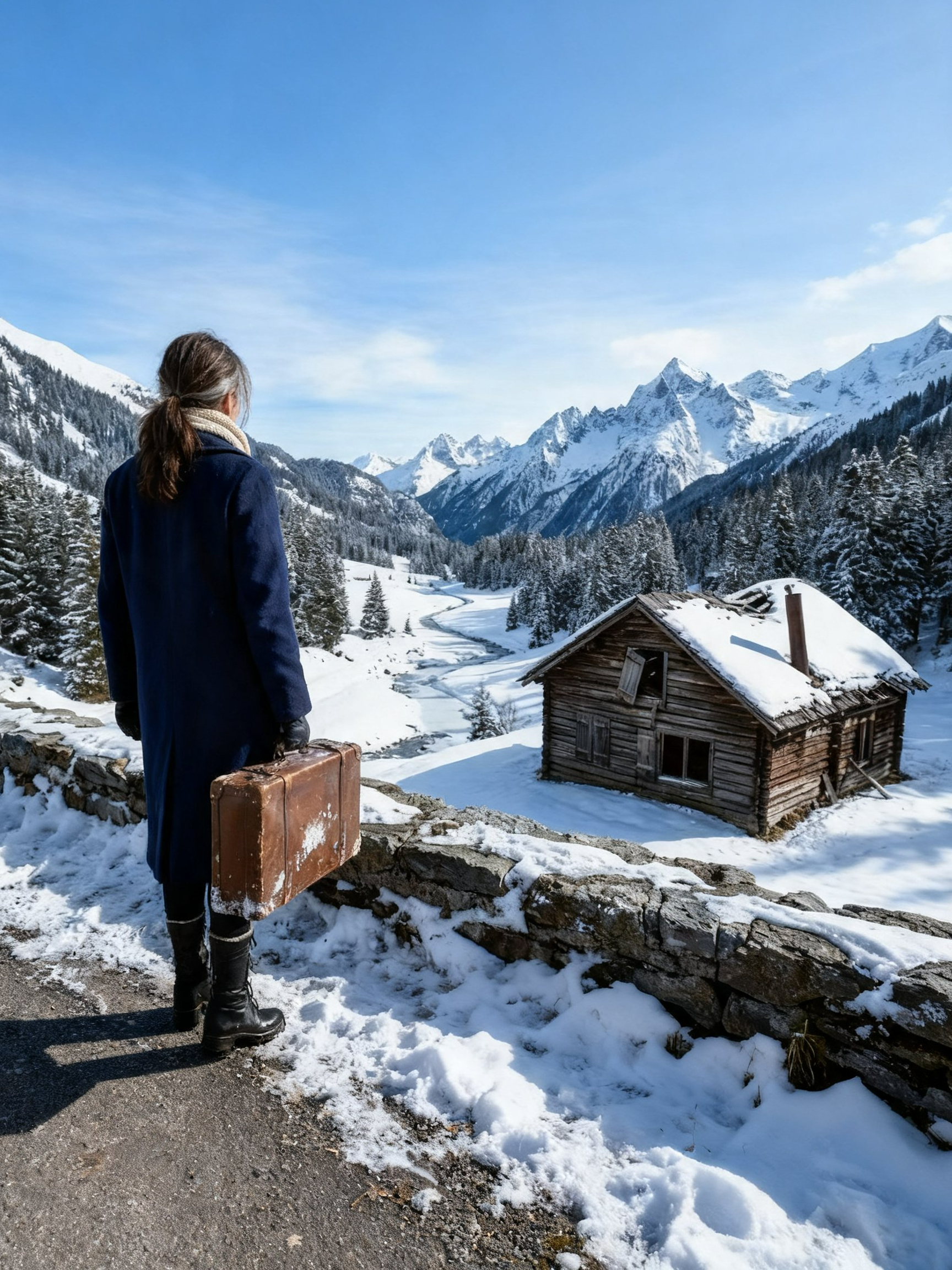
Abandoned at 43, She Took Shelter in a Forgotten Snow Cabin—Then Found the Deed Her Husband Thought He Already Owned
“You have three days to get your things out.”
David Mercer said it without looking at his wife.
He was standing in the kitchen of the house Laura had spent eleven years paying for, his hand resting on the granite island she had chosen, while his mother calmly peeled the label from a bottle of imported water.
Then Laura saw the woman sitting on her own barstool.
Wearing Laura’s gray cashmere robe.
That was the moment the humiliation stopped being abstract.
David had not merely left her.
He had replaced her before he bothered to remove her toothbrush.
Laura stood just inside the mudroom with snow melting from her boots.
She had come home early from Denver because a client meeting had been canceled.
Her overnight bag was still hanging from one shoulder.
The kitchen smelled like cinnamon coffee.
On the refrigerator, the photograph from their fifteenth anniversary was still held beneath a magnet shaped like Montana.
David was smiling in that picture.
So was Laura.
The blonde woman looked no older than thirty.
She lowered her coffee mug.
David’s mother, Eleanor, finally looked up.
“For everyone’s sake,” she said, “please don’t make this ugly.”
Laura stared at her.
That almost made her laugh.
Not because it was funny.
Because ugly had apparently been living in her kitchen for weeks and had excellent taste in bathrobes.
David straightened.
“I was going to tell you tonight.”
“No,” Laura said quietly. “You were going to tell me when it was convenient.”
The blonde woman shifted.
David’s jaw hardened.
“Her name is Madison.”
Laura looked at him.
“I didn’t ask.”
That silenced the room.
David had prepared for tears.
He had prepared for screaming.
He had prepared to call Laura unstable, emotional, hysterical, impossible.
He had not prepared for her to set her bag on the floor, remove her wet gloves one finger at a time, and study him as if he were a contract whose hidden clause she had finally found.
Eleanor stepped forward.
“The house belongs to Mercer Holdings.”
Laura’s eyes moved to her mother-in-law.
Eleanor continued before anyone could stop her.
“David’s father transferred it years ago. Technically, you’ve never owned any part of it.”
David glanced at his mother.
Laura saw it.
The flicker.
The tiny irritation of a man realizing someone had revealed a line too early.
Laura folded her gloves together.
“How long?”
David exhaled.
“How long has she been living here?”
Madison looked down.
Eleanor answered again.
“A few weeks.”
Laura nodded once.
Not because the answer did not hurt.
Because pain was information.
And Laura had spent twenty years learning never to waste information.
She walked upstairs.
David followed her halfway.
She kept walking.
“Laura, don’t start tearing things apart.”
She stopped.
The staircase chandelier cast his shadow over the wall.
“You think I’m going to break furniture?”
“I don’t know what you’re going to do.”
That sentence told her more about him than the affair did.
After fifteen years of marriage, he still believed her dignity existed only because he had never tested it.
Laura looked at the man she had met when he was thirty-two and broke enough to split a motel room with a college friend during sales trips.
The man whose first company payroll she had covered with money from her retirement account.
The man whose mother had called her “the practical one” every time the family needed something handled and “overly controlling” every time she asked where the money went.
“I’m going to pack,” Laura said.
Then she went upstairs.
She did not scream.
She did not throw Madison’s shoes into the driveway.
She did not call David’s clients.
She did not call Eleanor names.
She did not beg.
She did not ask what Madison had that she didn’t.
She did not ask whether David had ever loved her.
She did not ask because, suddenly, those were poor people’s questions.
Not poor in money.
Poor in power.
Questions begged from someone who had already made his choice.
Laura had better questions now.
She had been loyal when loyalty cost her sleep.
She had been patient when patience cost her promotion.
She had been generous when generosity cost her savings.
She had been quiet when silence protected David’s pride.
She had been useful when usefulness made everyone else comfortable.
And she had been underestimated for so long that none of them seemed to realize they had just given her the first honest advantage she’d had in years.
In the bedroom, Madison’s things had not reached the dresser yet.
That was something.
Laura opened the closet.
She removed four pairs of jeans, six sweaters, two winter coats, hiking boots, underwear, socks, toiletries, her laptop, and the old leather document pouch she had owned since college.
Nothing sentimental at first.
Sentiment made people slow.
She placed her passport inside the pouch.
Then tax returns.
Insurance records.
Copies of David’s business filings that she kept because David forgot passwords and hated paperwork.
Their marriage certificate.
Her mother’s death certificate.
Her father’s old letters.
At the bottom of the filing drawer was an envelope she had almost thrown away eleven months earlier.
Cream paper.
No return address.
Her name handwritten in blue ink.
LAURA ANN BENNETT MERCER.
Her maiden name included.
She had received it after her aunt Ruth died.
Ruth Bennett had been her father’s older sister, though calling Ruth an aunt had always felt insufficient.
When Laura’s mother became sick, Ruth drove four hundred miles every month to help.
When Laura’s father died suddenly two years later, Ruth was the only relative who did not begin discussing furniture before the funeral flowers wilted.
Ruth had lived alone outside Red Lodge, Montana, on a stretch of mountain property everyone in the family mocked as useless.
No ski access.
No paved road.
No development.
No reliable cell service.
Just timber, snow, and an old cabin nobody had occupied full-time since the 1980s.
After Ruth’s death, Laura’s younger brother Jason had said, “At least we don’t have to fight over that dump.”
The envelope had contained only three things.
A brass key.
A hand-drawn map.
And a note.
If you ever find yourself with nowhere that is truly yours, go to the cabin.
Do not sell anything.
Do not sign anything.
And if a Mercer tells you the mountain belongs to them, look beneath the black stove before you answer.
Laura had assumed the strange wording was one of Ruth’s old grudges.
Ruth had distrusted David almost from the beginning.
Once, at Thanksgiving, she had watched him boast about a commercial development and said, “Men who talk that much about owning land usually own less than they think.”
David had laughed.
Eleanor had not.
Laura had forgotten the note.
Now she held it beneath the bedroom light.
If a Mercer tells you the mountain belongs to them.
Her breathing slowed.
Downstairs, she heard a cabinet close.
Then Madison laughed at something David said.
Laura folded Ruth’s note.
Put it in the leather pouch.
And packed the brass key.
She stayed in the house for exactly two more nights.
Not because David allowed it.
Because she needed forty-eight hours.
On the first morning, Eleanor sat at Laura’s kitchen table with a real estate attorney named Peter Sloan.
Laura recognized him immediately.
He handled Mercer Holdings acquisitions.
She came downstairs wearing navy wool pants and a cream sweater.
Three folders sat on the table.
Peter gave her a look of rehearsed sympathy.
“I’m sorry we’re meeting under these circumstances.”
Laura poured herself coffee.
“You’re David’s corporate attorney.”
“In some matters.”
“So you don’t represent me.”
She took her coffee and sat.
Peter blinked.
Eleanor looked annoyed.
David entered carrying his phone.
Madison remained upstairs.
Peter pushed a document across the table.
“This is a temporary occupancy acknowledgment. It simply confirms that you understand the residence is owned by Mercer Holdings and that your presence here has been permissive.”
Laura did not touch it.
“What happens if I sign?”
“It clarifies everyone’s rights.”
“That wasn’t my question.”
Peter stopped.
“What happens if I sign?”
He chose his words carefully.
“It could prevent disputes regarding ownership.”
Laura smiled slightly.
“So it would help David.”
Eleanor leaned forward.
“This attitude is exactly why David was afraid to talk to you.”
Laura looked at her.
“David put another woman in my bathrobe and invited his corporate lawyer to breakfast. I think his courage deserves a separate conversation.”
Peter looked down.
David’s face reddened.
Laura tapped the document once.
“I’ll have my attorney review it.”
“You don’t need to make this expensive,” David said.
Laura turned to him.
“You brought a lawyer.”
Another small victory.
She left the paper unsigned.
That afternoon, David froze their joint checking account.
By dinner, Laura’s debit card declined at a gas station.
She stood beside the pump while sleet rattled against the awning and stared at the red message on the screen.
CARD DECLINED.
David had moved faster than she expected.
He had always been lazy about paperwork.
Which meant someone else was directing him.
Laura used a business credit card in her own name.
Then she called the bank.
The joint account had been emptied that morning.
$84,216.37.
Transferred to an account Laura could not access.
She did not call David.
She opened her laptop in the parking lot and downloaded the last eighteen months of statements.
Then she booked one night at a small motel.
The next morning, she returned to the house with two empty storage tubs.
David was in the driveway.
So was Jason.
Her brother.
Laura stopped beside her SUV.
Jason shoved his hands into the pockets of his expensive puffer jacket.
He would not quite meet her eyes.
“You called him?” she asked David.
Jason answered.
“Mom’s estate stuff is mixed in with some of your things. I figured I should make sure nothing gets… misplaced.”
Laura stared at him.
There it was.
The second knife.
David had betrayed their marriage.
Jason had come to inventory the bloodstains.
“What exactly are you worried I’ll steal?”
Jason rubbed his jaw.
“Don’t do that.”
“Turn this into something it isn’t.”
Laura almost smiled.
People said that when reality looked bad in plain language.
David folded his arms.
“Jason agrees this should stay civil.”
“Jason owes Mercer Holdings eighty thousand dollars.”
Her brother’s head snapped up.
David’s expression changed.
Laura continued calmly.
“You borrowed it for the franchise that failed in Boise.”
Jason lowered his voice.
“That has nothing to do with this.”
“It has everything to do with why you’re standing in my driveway.”
Eleanor opened the front door behind them.
Jason glanced toward her.
Too quickly.
Laura saw that too.
Not one husband.
Not one affair.
A system of people who had fed from the same table long enough to mistake dependency for loyalty.
David controlled Jason’s debt.
Eleanor controlled the family companies.
Peter controlled the paperwork.
Madison supplied the fantasy.
And somewhere inside the machine, they had decided Laura was the replaceable part.
She walked past her brother.
“Laura,” Jason said.
She stopped without turning.
“I’m trying to protect myself.”
Laura faced him.
Jason said nothing.
She nodded.
“I hope it’s worth what you sold.”
His face tightened.
She entered the house.
By sunset, everything she cared about fit into her SUV.
One suitcase.
Two storage tubs.
Her laptop bag.
The leather document pouch.
A framed photograph of her parents.
A cast-iron skillet that had belonged to her grandmother.
A box of Christmas ornaments.
And an old wool blanket Ruth had given her when she turned eighteen.
David watched from the porch.
Madison stood behind the window.
Eleanor was on the phone.
Jason had already left.
Laura closed the back hatch.
David came down the steps.
Snow gathered on his shoulders.
“I don’t want you thinking I’m trying to destroy you.”
Laura zipped her coat.
“What do you want me thinking?”
“That this just… ran its course.”
Fifteen years.
Reduced to a river.
Something natural.
Something nobody caused.
Laura looked at him.
“You emptied our account.”
“That money is tied to business obligations.”
“You put your girlfriend in my clothes.”
Madison disappeared from the window.
David’s mouth hardened.
“You always do this.”
“Make everything sound worse.”
Laura stepped closer.
“No, David. I make things sound precise.”
He looked away.
She opened the driver’s door.
Then David said something that made her pause.
“Whatever Ruth left you, don’t get stupid about it.”
Laura kept one hand on the door.
For one second, she heard nothing but wind.
Then she turned.
David had realized his mistake.
“What did you say?”
He shrugged too casually.
“Your aunt. That mountain property.”
Laura studied him.
She had never told David about Ruth’s note.
She had barely discussed the cabin after the funeral.
“How do you know Ruth left me anything?”
“I assumed.”
“You said whatever Ruth left me.”
David’s eyes cooled.
“How do you know?”
Eleanor appeared in the doorway.
“Drive safely,” she called.
Too cheerful.
Laura looked from Eleanor to David.
Then at the house.
Then back at the man who thought he had removed every option from her life.
And for the first time since she found Madison in the kitchen, Laura felt something warmer than anger.
She got into the SUV.
David leaned toward the window.
“Where are you going?”
Laura started the engine.
“To find out what you already know.”
Then she drove north.
The storm followed her into the mountains.
By the time she reached Red Lodge, the snow was blowing sideways across Highway 212.
Her phone had one bar.
The hand-drawn map from Ruth’s envelope showed an old Forest Service road outside town, then a split beside a creek, then a hand-written warning:
LAST TWO MILES NOT PLOWED.
Laura bought chains, water, canned soup, batteries, a shovel, firewood, and a small propane heater.
The cashier looked at the weather outside.
“You heading somewhere stupid?”
Laura looked at the stack of supplies.
“Probably.”
“Good night for it.”
The old man smiled.
Laura did too.
She had forgotten that strangers could be kind without wanting a signature afterward.
The road disappeared under snow three miles past the county line.
Laura chained the tires herself.
Her gloves soaked through.
Twice the SUV slid sideways.
Once she stopped beneath a stand of lodgepole pines and considered turning around.
Then she thought of David telling her not to get stupid about Ruth’s property.
So she kept driving.
At p.m., the headlights found the cabin.
It stood beneath six inches of snow at the edge of a dark meadow.
Stone chimney.
Deep porch.
Shutters hanging crooked.
A roof heavy with white.
Behind it rose black timber and the dark shoulder of the Beartooth Mountains.
Laura turned off the engine.
The silence was immediate.
Not suburban silence.
Not the thin quiet between passing cars and furnace vents.
Real silence.
Ancient silence.
The kind that did not care whether your marriage had failed.
She sat behind the wheel for almost a minute.
Then she whispered, “All right, Ruth.”
She carried her bags to the porch.
The brass key fit.
The door resisted.
Laura pushed harder.
It opened with a groan.
Cold air rolled from inside.
The cabin smelled like pine dust, old ashes, and years.
Her flashlight swept over a table, two chairs, a narrow bed, shelves of canned food long past expiration, a stack of split wood, and a black iron stove against the far wall.
Laura froze.
Look beneath the black stove.
She almost went straight to it.
Instead, she locked the door.
Checked the windows.
Found a kerosene lamp.
Found dry kindling in a metal box.
Built a fire.
She had learned how from Ruth.
When the stove began clicking with heat, Laura warmed her fingers and ate soup from a saucepan.
Only then did she kneel.
The stove stood on a slab of dark slate.
Laura ran her fingertips around the edge.
She used the flashlight.
No obvious latch.
She pressed one corner.
Then she noticed a crescent-shaped scratch near the wall.
She pulled the stove forward an inch.
It was heavier than it looked.
Behind the rear leg, a small brass ring lay flat inside the slate.
Laura stared.
She hooked two fingers through it.
The stone lifted.
Underneath was a cavity lined in cedar.
Inside sat a metal box.
Not dramatic.
Army green.
The paint chipped.
A combination lock hung from the front.
Laura lifted it out.
On top was a piece of masking tape.
Her heart began to pound.
Recognition.
Ruth had expected her.
Not eventually.
Specifically.
Laura examined the lock.
Four digits.
She tried Ruth’s birthday.
Her father’s.
Then she remembered the Christmas Ruth had given her the wool blanket.
Laura had been eighteen.
Her father had lost his job that fall.
Her mother was already sick.
Laura had tried to refuse the gift because she knew Ruth had little money.
Ruth had pressed it into her hands and said, “March 14. The day you stopped waiting for someone to rescue you.”
Laura entered 0314.
The lock opened.
Inside were three sealed envelopes, two flash drives, an old photograph, a leather ledger, and a key with a stamped metal tag.
Laura picked up the photograph first.
Ruth stood beside Laura’s father, Michael Bennett.
They were much younger.
Behind them was the cabin.
Beside them stood a man Laura recognized only after several seconds.
Walter Mercer.
David’s father.
On the back, Ruth had written:
THE DAY WALTER LEARNED THE LAND WAS NEVER HIS.
Laura felt the room shift.
She opened the first envelope.
My dear Laura,
If you are reading this, one of two things has happened.
Either I have been dead long enough for the greedy to become impatient, or a Mercer has finally tried to make you feel homeless.
Possibly both.
You need to understand something before you speak to anyone.
The cabin is not the inheritance.
It is the lockbox.
Do not contact David.
Do not contact Eleanor.
Do not contact your brother.
Take the key marked B-17 to First Mountain Bank in Red Lodge and ask for Samuel Keene.
If Samuel is dead, ask for the current trust officer and use the phrase “Bennett Winter File.”
Do not sign a quitclaim deed.
Do not sign an access agreement.
Do not accept a settlement.
And above all, if anyone tells you the north ridge belongs to Mercer Holdings, let them keep believing it.
Laura read the last line twice.
Then a third time.
She opened the ledger.
Page after page contained parcel numbers.
Corporate entities.
She recognized Mercer Holdings.
She recognized another name too.
Silver Crown Development.
David had spent the last three years working on Silver Crown.
A luxury mountain project.
Private chalets.
Ski access.
He had called it the deal that would make them untouchable.
He had spent countless dinners talking about investors, easements, road access, water rights.
Laura had helped him restructure household expenses when he poured nearly everything he had into the project.
She had listened when he said the land assemblage was almost complete.
She had sat beside him at a charity dinner six months earlier when he whispered, “Once Silver Crown closes, we’ll never worry about money again.”
Now she turned another page.
A red line crossed the center of a hand-drawn map.
NORTH ACCESS CORRIDOR.
Beneath it, Ruth had written:
No legal access without Parcel 18B.
Parcel 18B belonged to the Bennett Family Trust.
Laura stared.
The project David believed would make him rich crossed land his family did not own.
She opened the second envelope.
Inside was a copy of a deed dated 1991.
The legal description covered 1,842 acres.
North ridge.
And something called subsurface and senior water rights.
The beneficiary line read:
RUTH E. BENNETT, LIFE TENANT.
REMAINDER TO LAURA ANN BENNETT, OR HER LAWFUL ISSUE, IN TRUST.
Laura sat down slowly.
One thousand eight hundred forty-two acres.
She knew enough about Montana land prices to understand the number could be enormous.
But the next paragraph mattered more.
No interest herein may be transferred to, controlled by, pledged to, leased to, or encumbered for the benefit of Walter H. Mercer, his heirs, their spouses, affiliates, successors, subsidiaries, or entities under substantial common control, without unanimous approval of the independent trustees.
Laura’s mouth went dry.
She read it again.
Their spouses.
That meant her marriage to David had not merged the property into anything he controlled.
The wording was deliberate.
The dead had built a wall around the living.
Outside, wind struck the cabin.
Laura opened the third envelope.
This one was written by her father.
Ruth and I argued about whether to tell you.
I wanted to.
She said you were too young, and she was probably right.
Walter Mercer spent years trying to acquire this land because it controls the only practical winter road into the north valley and one of the oldest water claims in the district.
He tried through offers.
Then pressure.
Then family.
I made the mistake of believing that once he died, the problem died with him.
Eleanor knows.
If she ever becomes warm toward you after years of disliking you, ask yourself what changed.
If David ever becomes obsessed with keeping your finances “simple,” ask yourself who benefits.
If someone asks you to sign papers connected to roads, trusts, access, marital property, or mountain development, do not sign until an attorney who has never worked for the Mercers reads them.
There is another reason this land matters.
Your grandmother did not preserve it so our family could become rich.
She preserved it because forty-three families once depended on Bennett Creek during a drought, and because Walter tried to close the road to force three ranchers to sell.
The trust was written to stop one powerful family from deciding that everyone weaker than them was temporary.
If you inherit it, remember that.
This is not a prize.
It is leverage.
Use it like your grandmother would.
Laura lowered the letter.
For several minutes, she sat motionless beside the stove.
Her father had died twelve years earlier.
He had known.
Ruth had known.
Eleanor knew.
And maybe David knew.
The pain arrived strangely.
Not as grief.
As a rearrangement of memory.
Eleanor insisting Laura sign a broad marital property update eight years ago.
David wanting all real estate held through shared LLCs.
Peter Sloan recommending a “simplified estate plan” after Ruth became ill.
Jason suddenly encouraging Laura to let David handle “that weird mountain junk” because she was too busy.
Every little conversation returned wearing a different face.
Laura got up.
She crossed the cabin.
Locked the deadbolt again.
Then she removed both flash drives and put one inside the lining of her coat.
The other she taped beneath the bottom drawer of the old kitchen cabinet.
She photographed every page of the ledger with her phone.
Then she put everything back except her father’s letter.
She slept in her clothes with the brass key under her pillow.
At the next morning, an engine woke her.
Laura sat upright.
Gray dawn pressed against the windows.
Another engine.
Then doors.
She moved to the side of the window.
A black Ford pickup stood outside.
Behind it, a white Range Rover.
David stepped from the truck.
Eleanor got out of the Range Rover.
Laura almost admired the speed.
They had expected her to come here.
The question was how.
She slipped the B-17 key into her pocket.
Then she put the ledger box back beneath the stove, lowered the slate, and slid the stove over it.
A fist hit the door.
She let him knock again.
Then again.
Only when he tried the handle did she open the door.
David stood on the porch wearing a charcoal parka.
Eleanor waited behind him.
Neither looked surprised to see her.
Laura leaned against the frame.
“You drove four hours through a storm to check on me?”
David ignored that.
“We need to talk.”
“You have my number.”
“You weren’t answering.”
“I was sleeping.”
Eleanor looked past Laura into the cabin.
Her eyes moved immediately toward the stove.
Laura saw it.
Almost invisible.
But unmistakable.
Eleanor knew.
Laura stepped sideways and blocked her view.
“What do you want?”
David rubbed his hands together.
“This property is tied up in an old title issue.”
“What kind?”
“It’s complicated.”
Laura looked at Eleanor.
“Too complicated for me?”
Eleanor smiled tightly.
“Laura, no one said that.”
“No. You usually just arrange the room so I infer it.”
David stepped closer.
“We can fix this.”
“There’s nothing to fix.”
“There is if Ruth never properly transferred the parcel.”
Laura let her face remain blank.
He knew about the parcel.
Not everything.
But enough.
“What parcel?”
David hesitated.
A satisfying half-second.
“The cabin.”
“This cabin sits on almost two thousand acres.”
Eleanor’s mouth tightened.
Laura had guessed.
She watched their faces.
That was enough.
Neither of them asked how she knew.
David lowered his voice.
“You found something.”
Laura said nothing.
Eleanor stepped onto the porch.
“Ruth was confused near the end.”
“She beat you at bridge six weeks before she died.”
Eleanor’s cheeks colored.
“This isn’t a joke.”
Laura looked toward David’s truck.
“No, I don’t think any of you drove here because of a joke.”
David exhaled sharply.
“Silver Crown has already invested more than fourteen million dollars into the north valley.”
There it was.
Not the cabin.
Not concern.
The project.
“And a technical defect in an ancient trust could hurt everyone.”
“Everyone?”
“Investors. Contractors. Employees. Local businesses.”
Laura almost smiled.
The moral costume had arrived.
A fourteen-million-dollar development was suddenly a soup kitchen.
David kept going.
“If you found documents, you need to understand they may not be valid.”
“Then why are you here?”
His eyes narrowed.
Laura continued.
“If the documents are worthless, why did you drive through a snowstorm before sunrise?”
Behind him, Eleanor said, “We’re trying to keep you from making an expensive mistake.”
Laura nodded.
“That sounds familiar.”
David took another step.
“The access road was negotiated in good faith.”
“With whom?”
Laura tilted her head.
“With whom, David?”
“The title company believed Mercer Holdings had control through an old easement.”
“Believed?”
“It’s complex.”
“There’s that word again.”
David’s patience broke.
“Stop playing games.”
Laura’s voice remained soft.
“I’m standing in a cabin you apparently knew more about than I did while you explain that a development you hid from me needs land my dead aunt warned me not to give you. Which part feels like my game?”
Eleanor pulled a folded document from her bag.
“We brought a proposal.”
Laura looked at it.
“Of course you did.”
“Seven hundred fifty thousand dollars.”
David glanced at his mother.
Laura caught that too.
He had not expected Eleanor to start there.
“For what?”
Eleanor held out the papers.
“A complete release of any disputed access rights connected to the Bennett property.”
Laura did not take them.
“You drove here believing I was cold, alone, humiliated, and possibly broke.”
Eleanor said nothing.
“And your opening offer is three quarters of a million dollars.”
Laura smiled.
“That tells me I should ask for much more.”
David cursed under his breath.
Eleanor’s face hardened.
“This is exactly the kind of thinking that ruins people.”
Laura closed one hand around the door.
“This is the kind of thinking that ruins people who expect a woman they just threw out of her house to sign fast.”
She shut the door.
David caught it with his boot.
That changed everything.
Laura looked down at his boot.
Then at him.
“Move your foot.”
“We are not driving back without resolving this.”
Laura stepped away from the door.
For one hopeful second, David thought she was surrendering.
Then she raised her phone.
The screen showed 911 ready to call.
“I’m asking my estranged husband to leave private property. His mother is with him. I have no cell signal now, but I have already activated emergency satellite messaging.”
She had not.
Her phone did not support satellite messaging.
But David did not know that.
Neither did Eleanor.
Laura continued.
“The next time either of you crosses that door without permission, I stop treating this as a family conversation.”
David removed his foot.
Eleanor stared at Laura for a long time.
Calculating.
Then she said, “You don’t understand what you’re holding.”
Laura looked at her.
“That might be the first honest thing you’ve said to me.”
Eleanor walked to the Range Rover.
David remained.
“You think this makes you powerful?”
Laura met his eyes.
She closed the door halfway.
“I think you being afraid of it does.”
Then she shut him out.
An hour later, Laura left for Red Lodge.
She did not use the main road.
Ruth’s map showed an older route along Bennett Creek.
It took nearly twice as long, but it brought Laura into town without passing the highway overlook where David’s truck had been parked.
First Mountain Bank occupied a brick building on Broadway.
Laura entered at 10:06 a.m.
The receptionist smiled.
“How can I help you?”
“I need Samuel Keene.”
The smile faded slightly.
“Mr. Keene retired four years ago.”
Laura expected that.
“I need the current trust officer.”
“Do you have an appointment?”
“May I ask what it concerns?”
Laura placed the B-17 key on the desk.
“Bennett Winter File.”
The woman stopped typing.
She looked at the key.
Then at Laura.
“One moment.”
Seven minutes later, Laura sat across from a woman named Evelyn Price.
Late fifties.
Silver hair.
No-nonsense glasses.
A wedding band and a University of Montana mug.
Evelyn closed the office door.
“You’re Laura Bennett.”
“Mercer legally. Bennett by birth.”
That unsettled Laura.
Evelyn opened a drawer and removed a sealed folder.
“May I see identification?”
Laura handed over her license and passport.
Evelyn inspected them.
Then she asked Laura to sign three times on a blank comparison card.
Only after that did she stand.
“Come with me.”
The safe-deposit room was downstairs.
Box B-17 was long and heavy.
Laura used Ruth’s key.
Evelyn used the bank key.
The metal drawer slid open.
Inside were original deeds.
Trust instruments.
Survey maps.
Certified court orders.
A stack of correspondence.
And a red envelope marked:
IF A MERCER HAS COMMENCED DEVELOPMENT, OPEN FIRST.
Laura looked at Evelyn.
“How long has that been in here?”
“Samuel documented that your aunt deposited it in 2018.”
Silver Crown had publicly launched in 2021.
Ruth had seen it coming.
Laura opened the envelope.
The first page was not a letter.
It was a court judgment.
BENNETT FAMILY TRUST v. MERCER TIMBER & LAND COMPANY.
Laura read slowly.
Walter Mercer’s company had attempted to establish an easement across Bennett land based on an altered 1956 road agreement.
The court found the easement invalid.
More than invalid.
Fraudulent.
A document used by Walter’s company had contained a forged signature.
Laura looked up.
“Why wasn’t this in the county records?”
Evelyn folded her hands.
“Part of it is.”
“The judgment is recorded. The supporting fraud findings were sealed after settlement because they involved additional civil claims.”
Laura looked down.
“Does Mercer Holdings know?”
“Eleanor Mercer was copied on correspondence in 2003 when Walter attempted to renegotiate access.”
So Eleanor absolutely knew.
Laura turned the page.
A second document was dated 2017.
This one was from Ruth.
To Samuel Keene.
If Mercer descendants ever attempt to revive the false easement, the trustees are directed not merely to defend title but to review all connected transfers, water filings, access permits, lender representations, and investor disclosures for reliance upon that easement.
Laura felt a chill unrelated to snow.
Ruth had not built a shield.
She had built a trap.
Anyone could walk away from the land.
But if the Mercers tried again to claim access they knew had been ruled fraudulent, the trust was instructed to investigate everything they had built on that claim.
Evelyn pushed another folder toward her.
“There’s more.”
Inside were water rights.
Not decorative creek frontage.
Senior water rights filed before many surrounding ranches existed.
Rights Silver Crown needed for its planned lodge, snowmaking infrastructure, spa system, and private residences.
“How valuable?”
Evelyn considered.
“That depends on what someone is trying to build.”
“Silver Crown.”
Evelyn’s expression changed.
“You know about it.”
“My husband is part of it.”
“Was part of it.”
Laura frowned.
“What do you mean?”
Evelyn opened a laptop.
She turned the screen.
A corporate disclosure showed David Mercer as managing member of a development entity.
Another name appeared below his.
Jason Bennett.
Laura stared.
Her brother.
Five percent beneficial interest.
Dated fourteen months earlier.
Jason had not simply taken David’s side.
He had been paid.
Laura sat back.
There was the third knife.
Except this one did not hurt the same way.
By the third betrayal, pain had become architecture.
You could walk around inside it.
Study the beams.
Find the exits.
“Why would Jason have a stake?”
Evelyn looked uncomfortable.
“You’d need to ask him.”
Laura closed the laptop gently.
“I think I’d rather ask the documents.”
Evelyn watched her for a moment.
Then nodded.
“That sounds like Ruth.”
The next three hours changed Laura’s life.
Not because she discovered she was rich.
Though, potentially, she was.
The trust held 1,842 acres in direct title.
It held conservation easements on another 620 acres.
It held senior water claims.
Timber income.
A modest investment portfolio.
And shares in a regional utility cooperative acquired by Laura’s grandfather.
But Ruth had structured the trust so Laura could not simply sell everything and disappear.
There were conditions.
The creek had to remain accessible to three neighboring ranch families under historical drought agreements.
A section of meadow had to remain protected wildlife habitat.
Twenty acres near the old highway were reserved for community use.
And the cabin could never be demolished.
Laura loved Ruth more with every page.
The inheritance was not a lottery ticket.
It was responsibility with teeth.
By late afternoon, Evelyn called an attorney named Nathan Cole.
He drove from Billings the next morning.
Nathan had represented the trust after Ruth’s death.
He was forty-eight, broad-shouldered, quiet, and unimpressed by the Mercer name.
Laura liked him immediately.
Not because he told her what she wanted to hear.
Because he corrected her twice within the first twenty minutes.
“No,” he said when she referred to the whole acreage as hers. “The trust owns most of it. You control certain decisions as beneficiary, but the independent trustees matter.”
Nathan looked surprised.
“Most clients hate that distinction.”
“I like barriers.”
“After this week, I can see why.”
He spent six hours reviewing Silver Crown documents Laura had saved from David’s files.
At p.m., Nathan stopped.
He leaned back.
“This is bad.”
“For them.”
Laura waited.
Nathan turned one page around.
A lender certification.
Signed by David.
It declared Silver Crown Development possessed “vested and uncontested vehicular access to all core development parcels.”
Nathan tapped the phrase.
“If he knew about the 1994 judgment, that representation is a problem.”
“Potentially lender-fraud big. Potentially investor-litigation big. Depends on what he knew and when.”
Laura remembered David outside the cabin.
Whatever Ruth left you, don’t get stupid about it.
He had known something before she opened the box.
Nathan pulled another document.
“This is more interesting.”
A preliminary utility plan showed a pipeline crossing Bennett Trust land.
Laura frowned.
“Did Ruth approve it?”
“Did anyone?”
“Not according to our records.”
“So they planned a pipeline across land they don’t own?”
“Planning isn’t necessarily illegal.”
“Building it?”
Nathan looked at her.
“Building it would be different.”
Laura remembered fresh orange survey ribbon she had seen near the creek road.
Something cold settled inside her.
“Come with me.”
They drove to the property before sunset.
Two miles beyond the cabin, a temporary construction fence cut through the timber.
A sign read:
SILVER CROWN INFRASTRUCTURE PHASE II.
AUTHORIZED PERSONNEL ONLY.
Laura parked.
Nathan stared at the fence.
“That’s inside the trust boundary.”
“How sure?”
Laura got out.
Snow crunched beneath her boots.
They walked along the fence.
Heavy equipment tracks had carved through the trees.
A trench had been started.
Orange pipe lay stacked beneath tarps.
Nathan photographed everything.
Laura found a survey stake.
Printed on it:
MERCER HOLDINGS — N. ACCESS.
She pulled out her phone.
More photographs.
She did not touch the stake.
Nathan looked down the corridor.
“They think they have an easement.”
“No,” Laura said.
He looked at her.
“They think no one will challenge the easement.”
Nathan gave a slow nod.
“That is a more accurate sentence.”
The first legal letter went out Monday morning.
Not from Laura.
From the Bennett Family Trust.
It was four pages.
It demanded immediate cessation of construction on trust land.
It disputed all claimed access rights.
It requested copies of every permit, financing representation, survey, lender certification, investor disclosure, contractor instruction, and title opinion relying on any Mercer easement through Parcel 18B.
It also instructed Silver Crown to preserve all emails, texts, cloud files, internal messages, and drafts concerning Bennett property.
A litigation hold.
At a.m., David called.
Laura watched the phone vibrate.
She did not answer.
At 10:07, Eleanor called.
At 10:12, Peter Sloan called.
At 10:21, Jason called.
That one almost made Laura laugh.
She let every call go to voicemail.
At 11:04, David texted.
What the hell are you doing?
Laura read it.
Then placed the phone face down.
Nathan had given her one instruction.
Do not negotiate emotionally.
So she did not.
By noon, Silver Crown halted construction.
By , a lender requested clarification.
By , two contractors pulled crews from the north corridor.
At , David finally left a voicemail.
His voice had changed.
No longer irritated.
Controlled.
“Laura, this has gone too far. You’re putting a lot of innocent people at risk because you’re angry about us. I’m asking you to separate our marriage from business.”
Laura listened twice.
Then saved it.
Nathan smiled when she played it.
“He just connected your marital dispute to the business dispute himself.”
Mini-payoff number one.
David wanted to accuse her of revenge.
Instead, he had documented that he knew the disputes were connected.
Two days later, Jason arrived at the cabin alone.
Laura saw his SUV from the window.
She let him knock.
When she opened the door, he looked exhausted.
“You really live here now?”
“For the moment.”
He glanced inside.
“Can I come in?”
His face fell.
Laura stepped onto the porch and closed the door behind her.
Snow glittered beneath a pale blue sky.
Jason shoved his hands into his coat.
“David is losing his mind.”
“Sounds expensive.”
“You drove two hundred miles. Say what you came to say.”
Jason looked toward the trees.
“He gave me that ownership stake because he helped with the Boise debt.”
“No. He gave you ownership because he wanted something.”
Jason’s mouth tightened.
“You always think everything is transactional.”
“People usually say that after hiding a transaction.”
He looked at her.
“Did Dad tell you about the land?”
“Eventually.”
Jason went still.
“So there was a letter.”
Laura felt the words like a click inside a lock.
Jason knew about the letter too.
“How would you know?”
He cursed quietly.
Laura waited.
Jason’s eyes filled with frustration.
“Ruth told me years ago there was something in the cabin.”
“Did she tell you where?”
“Did you look?”
Laura took one step closer.
“Did you come into Ruth’s cabin after she died?”
Jason swallowed.
“I came once.”
“You searched it.”
“I was looking for paperwork.”
“For David?”
Laura stared at him.
Jason’s voice rose.
“You don’t understand what it was like watching you always be the responsible one.”
There it was.
Not confession.
Justification.
“You were Dad’s favorite. Ruth’s favorite. Mom called you for everything. You got the degree. You got the Denver career. You married money.”
“I married a man with seventeen thousand dollars in credit-card debt.”
Jason looked away.
Laura continued.
“I paid Mom’s mortgage for eighteen months when Dad died.”
“I paid your tuition one semester.”
“I gave you thirty thousand dollars for Boise.”
“I paid some of it back.”
“Six thousand.”
Jason flinched.
Laura’s voice stayed calm.
“And when David offered to clear the rest of your debt, you helped him figure out what Ruth left me.”
Jason looked at her sharply.
Laura had guessed.
His face confirmed it.
“How much did you tell him?”
Jason rubbed both hands over his face.
“He already knew about the ridge. Eleanor knew. They thought Ruth would leave it to both of us.”
“But she didn’t.”
“And that made me your problem.”
“It made everything complicated.”
Laura almost pitied him.
“What did David want?”
Jason hesitated.
“Your signature.”
“An estate restructuring.”
Laura remembered Peter Sloan’s proposal years earlier.
“Which one?”
“The one after Ruth got sick. David thought if everything between you was consolidated into Mercer Family Holdings, the trust restrictions might become easier to challenge.”
Laura stared at her brother.
Eight years of David telling her married couples should not keep separate assets.
Eight years of Eleanor implying Laura was distrustful for refusing.
Eight years.
Not greed triggered by Ruth’s death.
Patient, respectable planning.
Jason kept talking.
“I told him you’d never sign if you knew.”
Laura felt something inside her turn to stone.
“So what did you suggest?”
He looked ashamed now.
“I said you might sign if it was bundled with normal estate documents.”
Laura’s eyes closed for one second.
The papers Peter Sloan brought to their house three years earlier.
Healthcare directives.
Beneficiary updates.
Tax authorizations.
And one broad property-management power Laura had crossed out because the language seemed excessive.
David had sulked for two days.
Ruth’s letter had saved her before Laura even knew she needed saving.
Jason whispered, “I’m sorry.”
Laura opened her eyes.
“Then give Nathan everything.”
Jason’s face changed.
“Everything?”
“Emails. Texts. Drafts. Agreements.”
“I could lose my stake.”
“That’s the first honest thing you’ve said.”
“Laura, I could be sued.”
“You’re my sister.”
“And you were mine before you sold information about my inheritance.”
Jason looked wounded.
Laura felt no satisfaction.
That surprised her.
She had imagined betrayal would eventually produce a moment when the betrayer hurt enough to make the victim whole.
It did not.
His pain did not return anything.
It simply existed beside hers.
Jason stepped down from the porch.
Then stopped.
“There’s something else.”
Laura waited.
“David isn’t the one you should worry about.”
She said nothing.
“Eleanor is.”
“No. You don’t.”
Jason glanced toward the road.
“She’s already meeting with people in Helena.”
“I don’t know.”
“Then why tell me?”
“Because David thinks this is a title dispute. Eleanor thinks it’s war.”
Jason opened his SUV.
Laura called after him.
She made her voice almost gentle.
“Did Ruth ever tell you why she chose me?”
His expression hardened.
The old wound.
Laura nodded.
“I didn’t think so.”
He got into the car.
Before he could close the door, Laura asked the question that sounded smaller than everything else.
“Did you ever wonder why she didn’t?”
Jason froze.
Laura went inside.
That evening, he emailed Nathan seventy-three files.
Mini-payoff number two.
Among them was an email from David to Peter Sloan dated four years earlier.
BENNETT ISSUE.
David wrote:
If Laura inherits the remainder interest directly, can marital rights give us control indirectly?
Peter’s answer:
Not likely under current language. Best route remains voluntary transfer, waiver, or restructuring.
A second email from Eleanor:
She trusts David. Do not overcomplicate the documents.
Ruth is the obstacle. Once she’s gone, Laura can be managed.
Laura read that sentence at the cabin table while snow fell outside.
Laura can be managed.
She printed it.
Placed it beside her father’s letter.
Then she made tea.
No screaming.
No broken cup.
No dramatic promise of revenge.
The next morning, Nathan filed suit.
Not for money.
For declaratory judgment confirming the trust’s ownership and invalidating Silver Crown’s claimed easement.
He also sought an injunction against construction.
The first hearing took place eleven days later in Carbon County District Court.
David arrived with three attorneys.
Eleanor arrived with two.
Laura wore a dark green coat Ruth had once told her made her look “like she knows where the bodies are buried.”
She almost smiled at the memory.
The courtroom was packed with contractors, ranchers, local reporters, and Silver Crown investors.
David avoided her eyes.
Madison was not there.
Peter Sloan argued first.
He called the dispute a “technical title ambiguity.”
Nathan stood.
He placed the 1994 judgment before the judge.
“Your Honor, there is no ambiguity.”
Peter’s face changed.
Just slightly.
Nathan continued.
“The precise easement Mercer Holdings claims today was declared invalid thirty-two years ago after the court found the underlying signature had been forged.”
The room changed.
Laura felt it before she heard anything.
Someone whispering behind her.
The judge read silently.
Then looked at Peter.
Peter stood.
“We dispute the applicability of that judgment to the present corporate entity.”
Nathan answered.
“The present corporate entity represented to lenders that its rights descend from the same easement.”
The judge looked back at Peter.
“Is that correct?”
Peter paused.
David stared at the table.
Eleanor did not move.
Peter said, “That is one interpretation of the financing documents.”
Nathan handed up the financing documents.
The judge read.
Five seconds.
Then he removed his glasses.
“That appears to be the only interpretation.”
Mini-payoff number three.
The temporary injunction was granted.
Construction stopped completely.
Silver Crown’s investors panicked by lunch.
By evening, a finance blog reported that the project’s access rights were under legal challenge.
The next day, David’s primary lender froze the next funding draw.
Three days later, David came to the cabin again.
He stood on the porch holding no papers.
Laura opened the door but did not invite him in.
He looked older.
“I ended things with Madison.”
Laura said nothing.
David waited.
When she still said nothing, he gave a bitter laugh.
“You really don’t care?”
“I care that you think that sentence belongs in this conversation.”
“I made a mistake.”
“A mistake is leaving the garage open.”
“You know what I mean.”
“Then stop doing this.”
Laura looked at him.
“You still think I’m doing something to you.”
“You shut down a fourteen-million-dollar project.”
She leaned against the doorframe.
“A thirty-two-year-old court order shut down your project. I just read it.”
David rubbed his forehead.
“Investors are threatening to sue.”
“Talk to Peter.”
“Peter resigned from the project.”
That surprised her.
Laura hid it.
“He says there may be conflicts.”
Meaning Peter had begun protecting himself.
Another piece loosening from the machine.
David stepped closer.
“We can settle.”
“For what?”
“The road. The water.”
“You said the documents were invalid.”
Laura waited.
He looked toward the meadow.
Then back at her.
“Five million.”
Laura’s face did not change.
“Five million dollars. Cash. You release the access rights and water claim. You keep the rest of the land. You never have to work again.”
Laura thought of her mother working night shifts at a nursing home.
Her father repairing farm equipment on weekends.
Ruth driving through winter storms to sit beside a hospital bed.
Forty-three ranch families once depending on Bennett Creek.
Walter Mercer trying to close the road and starve three families into selling.
Five million was a lot of money.
Enough to tempt almost anyone.
That was why the offer clarified everything.
If David offered five, the thing he needed was worth far more.
“What happens to Bennett Creek?”
He stared at her.
“The water.”
“We use a portion.”
“How much?”
“We’d have engineers determine—”
David’s jaw tightened.
“The three ranches have priority under the trust.”
“Those agreements are ancient.”
“They’re people.”
“They’re businesses.”
“They’re families.”
“They can be compensated.”
Laura nodded slowly.
And there it was.
The Mercer philosophy in five words.
They can be compensated.
Everything was purchasable if the number became large enough.
Laura looked at him.
“You never understood Ruth.”
“I barely knew Ruth.”
“She understood you.”
David’s eyes narrowed.
“What does that mean?”
Laura almost told him.
About the red envelope.
The fraud judgment.
The investor disclosure.
The review trigger.
Instead, she smiled faintly.
“It means five million isn’t enough.”
He stepped back.
“How much?”
Laura shook her head.
“I’m not selling.”
David’s face changed.
“You can’t be serious.”
“You’re going to destroy a project worth hundreds of millions because of three ranches and some dead woman’s grudge?”
Laura’s eyes went cold.
“No, David.”
She closed the door partway.
“I’m refusing to rescue a project you built on land you knew you didn’t control.”
“And if it’s worth hundreds of millions…”
She paused.
“…you probably shouldn’t have thrown out the woman holding the road.”
She shut the door.
The public humiliation came two weeks later.
Not Laura’s.
Silver Crown held an emergency investor meeting at a hotel in Billings.
Laura was not invited.
Nathan was.
As counsel for the Bennett Trust.
Eleanor tried to block him from entering.
She failed.
By the end of the meeting, investors had learned four facts.
Silver Crown did not possess undisputed winter access.
Its planned water supply relied on rights controlled by the Bennett Trust.
Construction had already crossed onto trust property without permission.
And senior management had been aware of historical title litigation.
David was removed as managing member pending investigation.
Laura heard the news from Nathan at p.m.
She was chopping onions in the cabin.
“That fast?”
Nathan laughed.
“Money moves faster than morality.”
“What about Eleanor?”
“Still on the board.”
“So the head stays attached.”
Laura put the knife down.
Nathan’s voice changed.
“There’s another issue.”
“Someone filed a document at the county recorder this afternoon.”
Laura waited.
“A quitclaim deed.”
She went still.
“From whom?”
Laura stared at the wall.
Nathan continued.
“It purports to transfer any personal interest you have in the Bennett property to Mercer Family Holdings.”
“That’s impossible.”
“I didn’t sign anything.”
“When is it dated?”
“Six years ago.”
Laura’s mind raced.
Six years ago.
The year David refinanced the house.
The year Peter Sloan updated their estate package.
The year Laura signed dozens of pages over three separate appointments.
The file arrived seconds later.
Laura opened it.
There was her name.
Her address.
A legal description.
And at the bottom—
her signature.
It looked real.
For a second, Laura felt genuine fear.
Not because she believed she had knowingly signed it.
Because memory was imperfect.
Six years was long enough for doubt to enter.
“I’m here.”
Nathan’s tone remained steady.
“Do you remember this document?”
“Do you remember signing anything in front of a notary that day?”
“Probably. We refinanced.”
“Look at the notary.”
Laura zoomed in.
Her breath stopped.
Jason Bennett.
Her brother.
At the time, Jason had been a commissioned notary in Idaho for his franchise paperwork.
But the notarization stated he witnessed Laura sign in Montana.
On a date Laura knew she had not been in Montana.
She searched her old calendar.
That day she had given a presentation in Phoenix.
There were airline receipts.
Hotel records.
Photographs.
A company agenda.
Laura whispered, “I was in Arizona.”
Nathan exhaled.
“That turns their solution into a felony-shaped problem.”
The deed had been filed by a title agent working for Mercer Holdings.
Within twenty-four hours, Nathan challenged it.
Within forty-eight, the county flagged it as disputed.
Within seventy-two, Jason retained his own criminal defense attorney.
Then he called Laura.
She answered this time.
“Did you notarize it?”
Jason was crying.
Laura had never heard her brother cry as an adult.
“I didn’t know what it was.”
“That isn’t what I asked.”
A long silence.
Laura closed her eyes.
“Were you there when I signed it?”
“Did I sign it?”
“I don’t know.”
“I never saw you sign it.”
“Who gave it to you?”
Another silence.
Laura opened her eyes.
Jason rushed on.
“She said you had signed it earlier and Peter needed the notary block completed because everybody was leaving town. I was twenty-nine. I was stupid.”
“You were thirty-four.”
He stopped.
Laura’s voice softened.
“You don’t get to become younger every time you explain a choice.”
Jason breathed shakily.
“Did David know?”
“I don’t know.”
“Did Peter?”
“I don’t know.”
“Will you testify?”
Jason began crying harder.
“If I do, I could go to jail.”
Laura stared through the cabin window at snow settling on Ruth’s porch railing.
Here was the trap betrayal always built.
Eventually the person who betrayed you wanted your mercy to cost nothing.
They wanted forgiveness without evidence.
Compassion without repair.
Blood without accountability.
Laura’s voice stayed gentle.
“Then tell the truth before someone proves it without you.”
She hung up.
Jason gave a sworn statement the next morning.
He admitted the notarization was false.
He produced texts from Eleanor.
Just stamp it. Laura already agreed to everything in principle.
This is family housekeeping, not court.
Don’t mention it to her. David wants to surprise her once the development closes.
That message was six years old.
Silver Crown had not even been announced publicly then.
The plan was older than anyone admitted.
The forged deed triggered a criminal referral.
Eleanor stopped taking Laura’s calls.
Not that Laura made any.
David called once.
His voice was low.
“Did you know about the deed?”
“My mother says Peter prepared it.”
“Peter says?”
“He’s not answering.”
Laura almost laughed.
“What do you want from me, David?”
“I want to know what’s happening.”
“No. You want me to tell you how much danger you’re in.”
Then he said, “I didn’t know she forged anything.”
Laura noticed the wording.
Not I didn’t know about the deed.
I didn’t know she forged anything.
“You knew there was a deed.”
David said nothing.
Laura’s pulse slowed.
“I knew she was trying to clean up the title.”
“By transferring my property?”
“I thought you signed.”
“Why did you think I signed?”
He hesitated.
“Because Mom said you did.”
“So you believed I secretly transferred an inheritance you never told me you knew existed into your family company.”
“You’re twisting it.”
“There’s that phrase again.”
She hung up.
Nathan subpoenaed corporate communications.
The machine began opening itself.
Internal notes.
Survey files.
Lender correspondence.
One by one.
Most were boring.
Some were damaging.
One was devastating.
A 2022 internal memo from a land consultant warned that Silver Crown’s proposed north access “may conflict with Bennett Trust title and historical adverse judgment.”
David had replied:
Proceed with design. Family issue should be resolved before construction.
Family issue.
She printed that one too.
Then spring began creeping into the valley.
Snow softened along the creek.
The cabin roof dripped in afternoon sun.
Laura had been there almost three months.
She fixed the porch steps.
Replaced cracked window seals.
Cleaned Ruth’s old dishes.
Installed satellite internet.
Bought a secondhand desk.
On Saturdays, one of the ranch families brought eggs.
Another brought venison.
A widow named June Harper, whose family’s cattle had relied on Bennett Creek during the 1988 drought, brought Laura a huckleberry pie and said, “Your grandmother saved our place.”
Laura had never known.
June stood at the cabin table with weathered hands wrapped around coffee.
“Walter Mercer offered my dad half value after the well failed. Said take it or lose everything.”
“What happened?”
“Your grandmother opened Bennett Creek.”
“Just like that?”
“Not just like that. She fought your grandfather for a month because he was scared Mercer would sue.”
June smiled.
“Then she opened the gate herself.”
Laura looked toward the creek.
That night, she reread the trust.
The inheritance changed shape again.
It was not 1,842 acres.
It was a gate one stubborn woman had once refused to close.
It was families still living on land they would otherwise have lost.
It was Ruth spending decades preventing that sacrifice from being erased.
It was Laura’s father hiding documents because he feared what the Mercers could do.
It was a legal structure designed by people who had less money but better memory.
Laura finally understood what her father meant.
This is not a prize.
It is leverage.
So Laura did something David never expected.
She proposed a permanent community water covenant.
The three historic ranches would receive protected drought access.
A fourth portion would be reserved for emergency wildfire use.
The trust would create a small conservation and legal fund from timber income.
And twenty acres near the county road would be leased for one dollar a year to a nonprofit seeking land for transitional housing for women leaving domestic or financial abuse.
Nathan read the proposal.
“You know that reduces the property’s development value.”
“Significantly.”
He looked at her over his glasses.
“Ruth would have loved you.”
Laura looked down.
“That’s inconveniently emotional.”
Nathan laughed.
The proposal went public.
Everything changed.
Until then, Silver Crown had tried to frame Laura as a bitter estranged wife weaponizing an inheritance.
Now reporters interviewed ranch families.
They interviewed June.
They interviewed a firefighter about the value of creek access.
They interviewed the nonprofit director.
Silver Crown’s public-relations consultant quit.
An investor issued a statement supporting “resolution respectful of historical community rights.”
Eleanor was furious.
Laura knew because Jason forwarded a voicemail.
“You let her turn this into a morality play,” Eleanor shouted. “That land could support two hundred million dollars in development and now people are talking about cows and battered women.”
Laura listened once.
Then deleted it.
Eleanor had finally said the quiet part out loud.
Not in court.
Not publicly.
But clearly enough.
The land was valuable to the Mercers because everyone else using it was considered inefficient.
Laura’s strength came from seeing the opposite.
The people were the value.
The final civil hearing was scheduled for June.
By then, David and Madison were finished.
Silver Crown had suspended David permanently.
Peter Sloan had hired ethics counsel.
Jason had entered negotiations with prosecutors regarding the false notarization.
And Eleanor was fighting on every front.
Yet she still behaved as if she would win.
Two weeks before the hearing, she invited Laura to dinner.
Not at a restaurant.
At the old Mercer house outside Bozeman.
Laura nearly refused.
Nathan said, “Go if you want. Don’t sign anything. Don’t drink anything you didn’t watch them pour.”
Laura looked at him.
“Are you serious?”
Nathan waited nearby.
The Mercer house sat on forty acres behind stone gates.
Laura had spent thirteen Christmases there.
For years, Eleanor had made her feel like a guest who had overstayed.
Now a housekeeper opened the door and addressed her as Ms. Bennett.
Laura noticed Eleanor’s irritation.
Small pleasures.
Dinner was served for two.
No lawyers.
Eleanor wore gray silk.
Laura wore black.
For several minutes, they ate in silence.
Then Eleanor set down her fork.
“You’re enjoying this.”
Laura drank water.
“I don’t believe you.”
“That doesn’t surprise me.”
Eleanor leaned back.
“You always wanted David to fail.”
Laura almost smiled.
“I paid his first company’s payroll.”
“You wanted him dependent on you.”
“I withdrew seventy-two thousand dollars from my retirement account.”
“You kept score.”
“I kept records.”
Eleanor’s mouth tightened.
“The distinction matters to accountants.”
“And courts.”
Then Eleanor said, “Ten million.”
Laura looked at her.
“For everything.”
Laura stopped.
Twenty million dollars.
Eleanor watched her carefully.
There it was again.
The belief that everyone had a number.
“Twenty million,” Eleanor repeated. “You release all access and water objections. You withdraw fraud claims connected to the historical easement where legally permissible. You support the validity of the family transfer documents. You can keep the cabin, the western acreage, whatever sentimental piece makes you feel righteous.”
Laura placed her napkin beside her plate.
“Because I’m tired.”
Eleanor’s eyes sharpened.
“Because the hearing is in two weeks.”
“You think you’ll lose.”
“I think litigation is inefficient.”
“Ruth used to say people call morality inefficient when morality gets expensive.”
Eleanor’s face changed at Ruth’s name.
Laura saw something she had never seen before.
Hatred without disguise.
“Ruth was a vindictive woman.”
“She disliked you.”
“She sabotaged my family for thirty years.”
“Your husband forged a road agreement.”
“My husband made one mistake in a complicated acquisition.”
“A judge called it fraud.”
“A rural judge thirty years ago.”
“And six years ago someone forged a deed with my name.”
Eleanor’s jaw clenched.
“I did not forge your signature.”
Laura heard the precision.
“No. You just arranged the notarization.”
Eleanor went silent.
Laura stood.
Eleanor’s composure cracked.
“You think this makes you Ruth?”
Laura buttoned her coat.
“Then stop pretending you understand what she was protecting.”
Laura froze.
Eleanor realized it.
Laura turned slowly.
“What did you say?”
Eleanor pushed back her chair.
“You heard me.”
“What else was Ruth protecting?”
“You said what she was protecting.”
“I meant the land.”
Laura stared at her.
“You didn’t.”
Eleanor’s eyes went toward the hallway.
Laura followed it.
At the end of the hall stood the door to Walter Mercer’s old office.
Locked for years after his death.
Laura had been told Eleanor never entered.
Now the light beneath the door was on.
Eleanor stepped between Laura and the hallway.
“You should leave.”
Laura smiled faintly.
“You invited me.”
“I’m ending the evening.”
Laura walked toward the foyer.
She did not need to open Walter’s office.
Not tonight.
The glance was enough.
She texted Nathan from the driveway.
Ask for discovery covering Walter’s private office records and anything Ruth Bennett-related retained at the Mercer residence.
Nathan replied immediately.
Laura typed:
Because Eleanor just looked at a locked door like it was loaded.
Three days later, Eleanor’s attorneys objected.
They called the request invasive.
Irrelevant.
Nathan narrowed it.
They still objected.
The judge ordered a limited document review.
What they found did not appear valuable at first.
Old tax files.
Correspondence.
Business journals.
Then an archivist found a false back in a filing cabinet.
Inside were seven letters.
Six from Walter Mercer to various lawyers.
One from Ruth Bennett to Walter.
Dated February 2, 1993.
You seem convinced that because my brother Michael married into ordinary people and because I remained unmarried, no one will have the resources to stop you.
That is your mistake.
The land is not our family’s most important protection.
You keep asking about the north ridge because you still do not understand what your father signed in 1961.
If you attempt to claim Bennett access again, I will not merely defend the road.
I will open the original mineral file.
Laura read the letter in Nathan’s office.
Then looked at him.
“Mineral file?”
Nathan shook his head.
“Never heard of it.”
“Was anything else in the cabinet?”
“Nothing labeled that.”
“What did Walter’s letters say?”
“Mostly demands that lawyers investigate Ruth’s claims.”
“Did they find anything?”
“Not in what was produced.”
Laura thought of the cabin.
The metal box.
The flash drives.
The bank records.
All meticulously preserved.
But nothing about minerals beyond generic subsurface rights.
Nathan looked at her.
“Do you think Ruth hid another file?”
Laura remembered the wording in her father’s letter.
There is another reason this land matters.
She had assumed he meant the ranchers.
Maybe he did.
Maybe he meant more.
The civil hearing arrived on June 18.
The courtroom was fuller than before.
David sat behind his lawyers.
Jason sat with his own attorney.
Eleanor wore navy and pearls.
Laura sat beside Nathan.
The judge ruled first on the easement.
Permanently.
Mercer Holdings had no right to cross Bennett Trust land through the claimed corridor.
Then the water.
Silver Crown had no right to use Bennett senior water claims absent agreement with the trust.
Then the trespass.
Liability would proceed separately.
Then the fraudulent deed.
The courtroom remained silent as the judge described the notarization as “facially unreliable and potentially criminal.”
Jason lowered his head.
Eleanor stared straight ahead.
Laura did not smile.
She thought she would.
For months, she had imagined this moment.
But victory felt quieter than revenge fantasies.
It felt like a door finally closing against winter.
Outside the courthouse, reporters waited.
David approached Laura before she reached the steps.
He looked hollow.
“Can we talk?”
Nathan moved closer.
Laura raised one hand.
“It’s fine.”
David stood before her.
For fifteen years, he had been able to control the emotional temperature of a room simply by becoming displeased.
Now he seemed smaller without that power.
“I lost everything.”
Laura studied him.
He laughed bitterly.
“You shut down Silver Crown.”
“Silver Crown was built on a false assumption.”
“My investors are suing me.”
“You signed the certifications.”
“My mother—”
“You were forty-seven years old when you signed them.”
David flinched.
“You sound just like you did with Jason.”
“Maybe both of you needed someone to stop making you younger every time consequences arrived.”
He looked at the courthouse doors.
Then back at her.
“Was any of it real?”
Laura knew what he meant.
Their marriage.
For one second, she saw all fifteen years.
Cheap motel vacations when they were broke.
Christmas mornings.
A miscarriage they never told anyone about.
His hand holding hers in the emergency room when her mother died.
The first business success.
The first lie she noticed and ignored.
The first time Eleanor insulted her and David pretended not to hear.
The first year love became logistics.
The first year logistics became obligation.
The first year she stopped asking why she was the only one protecting them from collapse.
“Yes,” Laura said.
David looked surprised.
“Some of it was.”
His eyes filled.
Laura continued.
“That’s why what you did matters.”
She walked past him.
Eleanor stood near a black SUV.
She did not speak.
Laura almost kept walking.
Then Eleanor said, “You still don’t know what you inherited.”
Laura stopped.
Nathan looked at her.
Eleanor’s face was pale.
But she was smiling.
It was the first genuine smile Laura had seen from her in months.
“You think this is over because a judge gave you a road and a creek.”
Laura said nothing.
Eleanor stepped closer.
“Ask yourself why Walter spent thirty years chasing land he could have bought elsewhere for a quarter of the price.”
Laura remembered Ruth’s letter.
The original mineral file.
Eleanor continued.
“Ask yourself why Ruth never sold.”
“She cared about the families.”
“Oh, she did.”
Eleanor’s smile widened slightly.
“But Ruth was many things. Stupid wasn’t one of them.”
Nathan said, “Eleanor, if you’re trying to communicate something material—”
“I’m not talking to you.”
Her eyes remained on Laura.
“Your aunt cost my family more money than you can imagine.”
“And you still lost.”
Eleanor’s expression sharpened.
She got into the SUV.
Laura watched it leave.
Nathan stood beside her.
“That sounded theatrical.”
“She doesn’t usually do theatrical.”
“Then what?”
Laura looked toward the mountains in the distance.
“I think she wanted me to search.”
That night, Laura returned to the cabin.
Summer had transformed the valley.
Wildflowers scattered across the meadow.
Bennett Creek ran high and cold.
The cabin windows stood open.
Laura put Ruth’s letters across the kitchen table.
The mineral reference bothered her.
Not because she wanted another fortune.
Because Eleanor had wanted her to know.
That meant one of two things.
Either the information was dangerous to Eleanor—
or dangerous to Laura.
She opened the metal box again.
Read every page.
Then she examined Ruth’s original note.
If you ever find yourself with nowhere that is truly yours, go to the cabin.
Do not sell anything.
Do not sign anything.
And if a Mercer tells you the mountain belongs to them, look beneath the black stove before you answer.
Laura stared at the words.
Beneath the black stove.
The metal box was there.
But Ruth had not written inside the box.
She had written beneath the stove.
Laura went still.
She moved the stove again.
Lifted the slate.
Removed the metal box.
The cedar cavity looked exactly as it had before.
Except now Laura noticed something.
The cavity was shallower than the space beneath the floorboards should allow.
She reached inside.
Tapped the bottom.
Her pulse quickened.
She found a screwdriver.
Removed four old screws.
The cedar base lifted.
Under it was another compartment.
Inside lay a narrow steel tube wrapped in waxed cloth.
Laura sat on the floor.
For a long moment, she did not touch it.
Then she unwrapped the cloth.
The tube had no lock.
Inside were rolled maps.
A geological survey dated 1961.
A handwritten agreement.
And a photograph of four men standing beside drilling equipment.
One was Laura’s grandfather.
One was Walter Mercer’s father.
The agreement was brittle.
She unfolded it carefully.
The first paragraph referred to exploratory rights beneath the north ridge.
The second referred to royalties.
The third contained a name Laura had never seen.
Cumberland Strategic Metals Corporation.
The survey included markings for tungsten.
Molybdenum.
And another notation she did not immediately recognize.
Laura photographed the pages and sent them to Nathan.
It was nearly midnight.
He called three minutes later.
“Where did you find this?”
“Under the box.”
“No, listen to me. Don’t touch anything else.”
She looked at the survey.
“What does REE mean?”
“Rare earth elements.”
Laura’s grip tightened around the phone.
“How valuable?”
“I don’t know. And right now that’s not the important question.”
“Whether these surveys are accurate. Whether extraction rights were ever severed. Whether any company still holds claims. Whether environmental rules make development impossible. Whether this agreement was superseded.”
“And why Eleanor wanted you searching.”
Laura looked again at the handwritten agreement.
One line near the bottom had been underlined twice in faded red pencil.
Upon verified commercial discovery, Mercer Mineral Corporation shall hold a right of participation not exceeding twenty-five percent, conditioned upon continuous disclosure to Bennett ownership and successors.
Laura frowned.
“Mercer Mineral Corporation.”
“It says they get twenty-five percent if there was a commercial discovery.”
Nathan was silent.
Then he said, “Read the condition again.”
Continuous disclosure to Bennett ownership and successors.
Nathan spoke slowly.
“If Walter discovered something and concealed it from your family…”
“He could lose the participation right?”
“Possibly. I need the full agreement.”
Laura kept reading.
At the bottom was a handwritten note.
Not Ruth’s writing.
Her grandfather’s.
WALTER WANTS THIS DESTROYED.
SAYS DISCOVERY WOULD BRING FEDERAL INTEREST AND END ALL PRIVATE PLANS.
MICHAEL KNOWS WHERE SECOND COPY IS.
Laura’s father.
A second copy.
Laura’s skin prickled.
She searched the tube again.
One more item remained.
A sealed envelope.
The paper was white and clean.
Her name was typed on the front.
She tore it open.
Inside was a single page from Ruth.
If you have reached this letter, then the Mercer family has probably already lost the land dispute.
Do not celebrate yet.
The road was never the real reason they watched our family.
In 1989, your father discovered that Walter had commissioned new surveys using Bennett access without permission.
Those results were hidden.
Michael believed Walter found something beneath the north ridge valuable enough to change the county forever.
He also believed extraction would contaminate Bennett Creek.
That is why he refused to cooperate.
Three months later, your father’s equipment business suddenly failed after its largest lender called every note at once.
That lender was controlled by Walter Mercer’s closest friend.
Years later, Michael told me he had kept one original survey somewhere no Mercer would ever think to look.
He died before he told me where.
I spent the rest of my life making certain they could never control the ridge without you.
If Eleanor is still alive when you read this, she will know more than she admits.
But do not make the mistake Walter made.
Do not assume the most valuable thing underground is something you should dig up.
Your father used to say a fortune can poison a family long before it poisons a river.
There is one last thing.
Michael did not die believing his missing survey was safe.
He died believing someone had already found it.
Laura lowered the page.
Outside, Bennett Creek moved through the darkness.
A floorboard creaked behind her.
Laura turned.
The cabin was empty.
Then headlights appeared through the trees.
Not one vehicle.
They stopped beyond the meadow.
Doors opened.
Laura killed the lamp.
Her phone showed one bar.
She called Nathan.
She called again.
The first vehicle started moving toward the cabin.
No headlights now.
Laura folded Ruth’s letter and put it inside her coat.
She took photographs of every document.
Uploaded them to three separate cloud folders.
Then she picked up the geological survey.
Something had been written along the bottom edge in nearly invisible pencil.
Coordinates.
And beneath them, four words.
MICHAEL MOVED THE SAMPLE.
Laura stared.
Not survey.
The porch board creaked.
Someone was outside.
Laura quietly backed toward the kitchen.
Her hand closed around the cast-iron skillet she had brought from her old house.
A knock sounded.
Three soft taps.
Laura did not answer.
Then a man’s voice came through the door.
“Mrs. Mercer?”
Not anyone Laura recognized.
Another voice spoke farther back.
“She’s inside.”
Laura’s eyes moved to the rear window.
Dark meadow.
Possible escape.
The first man knocked again.
“We’re not here to hurt you.”
Laura almost smiled.
People with good intentions rarely announced that before being asked.
She slipped the steel tube beneath her coat.
Her phone vibrated.
She answered without speaking.
His voice came fast.
“Laura, listen carefully. I just ran Cumberland Strategic Metals.”
A shadow moved past the window.
Laura whispered, “Talk.”
“The company didn’t disappear.”
“It changed names. Merged twice. Parts were acquired.”
Another knock.
Nathan continued.
“One successor still exists.”
Laura moved toward the back door.
Nathan said the name.
Laura stopped.
She knew it.
Everyone in Montana knew it.
One of the largest mining and energy companies in the West.
A company with lobbyists.
Government contracts.
Security divisions.
And enough money to make Silver Crown look small.
Nathan’s voice lowered.
“There’s something else. I found a federal filing from 1992 referencing a confidential strategic mineral assessment on private land in Carbon County.”
The front doorknob turned.
Laura whispered, “Bennett land?”
“The coordinates are partially redacted.”
The man outside said, “Mrs. Mercer, we really need to speak with you.”
Laura looked at the penciled coordinates.
Then at the map.
Her stomach tightened.
The numbers pointed nowhere near the north ridge.
They pointed toward a smaller parcel south of the cabin.
Twenty acres beside the old highway.
The same twenty acres Ruth’s trust reserved for community use.
The same twenty acres Laura had just promised to lease for one dollar a year to the women’s transitional housing nonprofit.
Nathan said, “Laura, do not show those documents to anyone.”
A second vehicle door slammed outside.
Laura heard another voice.
Laura’s pulse steadied.
Eleanor had not warned her because she feared Laura finding the truth.
She had warned her because she wanted Laura to find it first.
The door shook beneath a harder knock.
Then Eleanor called through the wood.
“Laura, open the door.”
Laura stayed silent.
Eleanor’s voice came again.
“You think I came here for your land?”
Laura gripped the steel tube beneath her coat.
“No,” she answered.
Silence outside.
Then Laura asked the smallest question she had asked all year.
The kind of question a frightened woman might ask when powerful people came to her door in the dark.
The kind of question Eleanor had spent fifteen years assuming Laura was too weak to use properly.
Laura moved beside the window, raised her phone so Nathan could hear every word, and asked softly:
“Then why are all three of your cars parked on the twenty acres my father told you never to dig?”
✓ Lynn R. Adams
Abandoned at 43, She Took Shelter in a Forgotten Snow Cabin—Then Found the Deed Her Husband Thought He Already Owned “You have three days to get your things out.” David Mercer said it without lookin…