A retired Army colonel thought he understood betrayal until his daughter was found unconscious
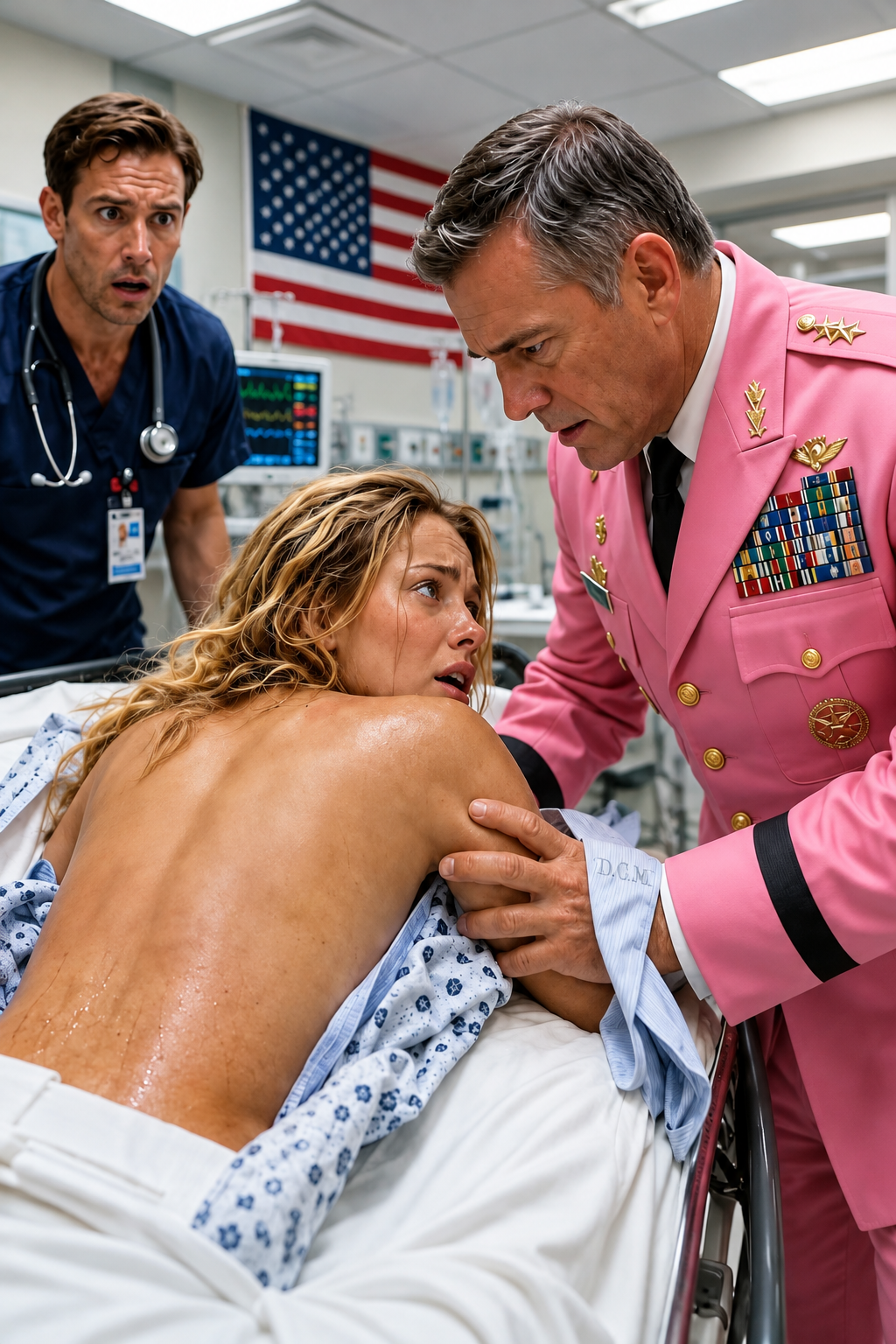
Part 2: My missing brother returns as the evidence begins collapsing
I had not spoken to Jonathan since our father’s funeral twelve years earlier, when I accused him of dishonoring the Harrison name and ordered him to leave before our relatives arrived for dinner. He had once been a gifted Army intelligence officer, brilliant at identifying patterns and reckless enough to challenge generals when their explanations failed to match the evidence. An investigation later accused him of selling restricted information to defense contractors, and he disappeared before the allegations could be fully resolved. I accepted the Army’s version because the evidence seemed overwhelming and because our father, General Thomas Harrison, personally assured me that Jonathan had betrayed his oath. Looking at his face in the photograph beside Emily, I felt the first unpleasant suspicion that I had spent twelve years condemning an innocent man.
Detective Reed asked when I had last seen my brother, and I told him the truth while withholding the threatening message that had appeared on my phone. That decision went against everything I believed about lawful investigations, but there was something unnervingly deliberate about the photograph appearing among Emily’s belongings when she had supposedly been attacked and abandoned. Vance watched me closely as I described Jonathan’s past, occasionally exchanging glances with Reed whenever I mentioned military intelligence or our father’s influence in Washington. When she asked whether Jonathan might be involved in a classified operation, I looked directly at her and replied that retired officers did not receive advance notice when their disgraced relatives became criminals. Her faint smile disappeared, and I knew I had touched something sensitive.
Emily regained consciousness half an hour later, but the moment she saw Vance near her bed she began struggling against the sheets and begging Alan to remove everyone except me. Reed respected the request, although Vance lingered just long enough for Emily to stare at her with a fear that had nothing to do with ordinary police questioning. Once the curtain closed, I asked my daughter whether she recognized the detective, and she shook her head before admitting that the woman’s voice sounded familiar. “Daniel didn’t hurt me,” she whispered, forcing each word through trembling lips while I held a cup of water near her mouth. “He was tied to a chair beside me when they made those cuts.”
My anger transformed into something far more dangerous because the violence had apparently been staged to turn me against an innocent man while concealing whoever actually controlled the room. Emily remembered being abducted with Daniel from an underground parking garage, transported separately, and restrained inside an industrial building where masked people questioned Daniel about missing financial records. She had heard a woman called Director, followed by a man’s voice warning that the colonel would come looking as soon as he saw the message. When I asked what the kidnappers wanted, Emily closed her eyes and whispered the name of a military operation I had not spoken aloud in more than three decades. “Nightglass.”
The name brought back a burning warehouse, missing intelligence files, and an officer whose death I had accepted because my father personally signed the report. In 1995, I had been a young captain assigned to Operation Nightglass, a classified investigation into communications equipment stolen through private military contractors. My orders were simple, and I carried them out without questioning why certain records vanished or why one witness died before military investigators interviewed him. Major David Mercer, a man our reports identified as a traitor, supposedly perished while escaping federal custody after threatening to expose the operation. Daniel’s father carried the same name, but I had never seriously investigated the connection because I believed the case had ended decades ago.
I stepped into the hallway intending to demand protection for Emily and immediate answers from Detective Vance, but she was nowhere near the nurses’ station. Reed checked his radio, received no response, and then learned she had requested access to a secure hospital exit without telling her partner. We hurried toward the underground parking area and saw her approaching a waiting black SUV as though someone had already arranged her departure. She attacked when I grabbed her arm, moving with the controlled violence of a trained operative rather than an ordinary detective startled by an angry father. Reed drew his weapon, and she stopped fighting only after realizing neither of us intended to release her.
Her police identification was convincing, but a second telephone and an unusual silver insignia inside her jacket suggested an entirely different employer. The insignia displayed a crowned falcon holding a key, and I remembered seeing the same symbol on an old Nightglass briefing folder my father had ordered destroyed. Before Reed could question her further, she looked at me and said, “Your brother isn’t your enemy, Colonel, and Daniel Mercer is still alive because Jonathan found him first.” She refused to explain how she knew, and federal investigators later discovered that the real Laura Vance had reported her credentials stolen three weeks earlier. Twenty minutes afterward, I received a photograph of Daniel tied to a chair with Jonathan standing behind him and a message ordering me to an abandoned railway station outside Alexandria at midnight.
Part 3: Operation Nightglass reveals the treason hidden beneath military honor
I spent the drive to Alexandria remembering how completely my father had dominated the idea of honor throughout my childhood. General Thomas Harrison believed that loyalty was proved by obedience, that personal doubts weakened institutions, and that children who questioned their fathers eventually became soldiers who endangered their units. He had been decorated, admired, and trusted by powerful people, including Senator William Calder, whose influence over national-security appointments continued long after my father retired. When Jonathan accused him of wrongdoing years earlier, I dismissed the allegations as bitterness from a younger son who had never earned his approval. Now the old photographs returning through my phone suggested my brother had recognized something I deliberately refused to see.
The station had been abandoned for more than a decade, its windows broken and platforms buried beneath dust, but a flashlight flashed twice from the far end of the building when I entered. Jonathan stepped from behind a concrete pillar looking sixty years old, his hair silver and one cheek marked by a scar I did not remember. We stared at each other without speaking, two brothers separated by pride, suspicion, and twelve years of choices neither could undo. I wanted to embrace him, strike him, interrogate him, and apologize in equal measure, but Emily’s injuries left me with only one question. “Where is Daniel?”
Jonathan guided me into a former maintenance office where Daniel sat wrapped in a blanket, his face swollen and his wrists bandaged, but clearly alive. Daniel explained that he had been auditing a corporate acquisition when he discovered dozens of shell companies funneling enormous sums into a private intelligence network connected to Operation Nightglass. The companies held surveillance contracts, telecommunications assets, medical records, political research, and confidential material collected from powerful individuals without lawful authorization. Their apparent business purpose was security consulting, but the documents revealed a network designed to gather compromising information and use it to manipulate judges, politicians, military officers, journalists, and executives. At the center of the network was a family trust bearing my full legal name.
I laughed once because the claim sounded absurd, yet Daniel placed certified documents on the table showing that Richard Thomas Harrison had been listed for decades as beneficiary and contingent trustee of a holding structure controlling major Nightglass assets. Jonathan explained that our mother had created the original family trust when we were children, long before our father secretly redirected dangerous investments and operational interests into entities associated with my inheritance. My spotless military reputation had made my name useful, and my ignorance had prevented me from challenging the documents or discovering what they concealed. When I demanded to know why Jonathan had never warned me, he said he had tried until our father destroyed his career and made him disappear. “You trusted a uniform more than your own brother,” he told me, and I could not deny it.
Daniel then showed me a file connecting Major David Mercer to Nightglass, including evidence that his supposed death had been staged after he threatened to expose illegal operations. David had raised Daniel as his son, and Daniel had believed him dead for most of his life, but recently discovered that the man had survived under another identity. Jonathan had helped arrange a meeting between them, hoping David would provide enough evidence to dismantle the network permanently. Instead, their communications had been compromised, Emily had become a hostage, and someone had planted Daniel’s initials on evidence designed to force me into the investigation. The more we uncovered, the clearer it became that my daughter’s suffering had been engineered to bring me directly to the ownership documents.
Our conversation ended when floodlights illuminated the platform outside and armed figures appeared near every available exit. A woman entered wearing a dark coat, accompanied by men displaying the crowned falcon insignia, and her expression carried a familiarity I could not immediately explain. She approached slowly, studying me with eyes I remembered from childhood summers, family photographs, and a funeral held when I was barely twenty. My younger sister Evelyn had supposedly drowned at seventeen, and although search teams never recovered her body, our father ordered a memorial service and forbade further discussion of her death. The woman standing before me had Evelyn’s eyes, Evelyn’s mouth, and the small scar above her eyebrow from falling against the kitchen table when we were children.
“You’re dead,” I whispered, and her expression tightened as though the accusation hurt more than anything else I could have said. She informed me that our father had arranged her disappearance after discovering she possessed unusual technical abilities useful to Nightglass, and she had spent decades working inside the organization under assumed identities. Jonathan looked as shocked as I felt, because although he knew she was alive, he had believed she was protecting whistleblowers rather than commanding armed personnel. Evelyn told us that our father had hidden one secret more carefully than any financial crime or surveillance program. Then she looked at me and said, “Thomas Harrison wasn’t your biological father, Richard, and Major David Mercer knows exactly why.”
Part 4: My father’s greatest lie destroys everything I believed about family
For several seconds, I could hear nothing except rain striking the broken roof, because Evelyn’s words had rearranged my childhood without offering anything solid to replace it. Thomas Harrison had taught me to shoot, saluted me when I earned my commission, attended my promotion ceremonies, and stood beside Margaret on our wedding day. The possibility that he had not been my biological father should not have changed those memories, yet the discovery that he had deliberately concealed the truth seemed inseparable from every other deception now surrounding Nightglass. I demanded evidence, and Evelyn produced a sealed envelope containing genetic records, correspondence, and an unsigned letter our mother had apparently written before her death. According to the documents, Major David Mercer was my biological father.
Daniel turned toward me with an expression of horror because he, too, had spent his childhood believing David Mercer was his father, and the revelation briefly made us fear an impossible biological relationship between him and Emily. Jonathan interrupted before that fear could take hold, explaining that David had raised Daniel but was not his biological parent. Daniel unfolded a genetic report he had carried for weeks, revealing that Jonathan Harrison was his biological father through a relationship that had occurred long before Jonathan married or understood its consequences. Jonathan looked at the document as though it had been written in another language, then stared at Daniel with a mixture of shame and bewildered grief. My brother had spent twelve years believing he had lost his entire family, and now an adult son stood directly before him.
Evelyn admitted that Nightglass had deliberately hidden these relationships because family identities were among its most effective tools of coercion. Thomas Harrison had feared that learning David Mercer was my biological father would undermine my loyalty, while Jonathan’s connection to Daniel created leverage over a man investigating the network. The organization had studied marriages, births, inheritances, medical histories, and financial weaknesses, exploiting secrets it sometimes manufactured merely to keep powerful individuals obedient. I thought of Emily lying wounded in a hospital while strangers carved words into her back, and for the first time I understood how personal Nightglass had become. It had never been interested only in national security; it had been feeding on families.
A sudden explosion of electrical sparks plunged the station into darkness before Evelyn could explain why her own armed team seemed determined to surround us. Jonathan seized Daniel’s arm and guided him toward a maintenance tunnel, while I instinctively moved to shield my sister despite having no idea whether she had come to rescue or arrest us. Gunshots cracked above the platform, breaking windows and showering the tracks with glass, but most rounds struck lighting fixtures rather than people. In a brief wash of emergency illumination, Evelyn caught my attention and flashed the secret hand signal we had invented as children whenever our father entered a room unexpectedly. Trust nobody watching.
We escaped through the maintenance tunnel and reached an empty parking lot where Jonathan had concealed a vehicle with clean license plates. Evelyn remained behind, apparently maintaining enough control of the operation to cover our disappearance, although no one could explain why her people had opened fire. As we drove back toward the hospital, Daniel asked me whether I believed our father had truly been responsible for Nightglass, and I told him I could no longer distinguish what I believed from what I had been trained to accept. Jonathan looked through the windshield and said that was precisely how the organization survived. It taught people to confuse certainty with loyalty and uncertainty with treason.
We arrived at St. Mary’s to find police vehicles blocking the emergency entrance and hospital staff gathering behind a security checkpoint. Emily’s room was empty, the monitor disconnected, and a nurse told us that federal personnel had removed her for transfer to a secure medical facility less than twenty minutes earlier. Alan Mercer had accompanied them after presenting credentials that hospital security had accepted without further review. Reed was furious because no lawful transfer had been authorized through his department, and he immediately began trying to locate the vehicles. Then my telephone displayed a live video feed showing Emily inside a moving van, her face pale but her eyes open.
A distorted voice informed me that she would remain alive only if I signed documents surrendering the Harrison Trust’s controlling interest to a successor organization. The speaker described the demand as routine corporate restructuring, as though my daughter’s life were simply another transaction requiring a signature. When I refused, the camera turned toward Emily’s injured back, and I heard her struggling to remain composed while someone tightened a restraint around her wrist. Then the voice said that Margaret, my wife who had supposedly died seven years earlier, had once made the same mistake of refusing cooperation. The screen went black before I could ask what that meant, leaving me with the unbearable possibility that her death had been part of the same operation.
Part 5: My closest friend reveals the secret behind my wife’s funeral
Reed obtained traffic-camera footage showing the medical van traveling toward downtown Washington before its tracking signal fragmented into several identical signals. Daniel recognized the deception immediately, explaining that Nightglass possessed sophisticated systems capable of duplicating location data and producing convincing electronic trails. Jonathan believed the convoy was returning to an old intelligence records facility connected to the original operation, a building officially decommissioned years earlier but still maintained through government subcontractors. We followed the strongest available lead with Reed coordinating legitimate law-enforcement support and warning me that any unauthorized action could endanger Emily. I agreed to remain within the investigation, though every mile felt like another hour stolen from my daughter.
We located the van inside a restricted underground entrance, but before Reed’s reinforcements arrived, a second vehicle blocked our exit and armed men ordered everyone to surrender. Alan stepped from the passenger side wearing a dark suit instead of hospital scrubs, and the expression on his face revealed that the man I had trusted with Margaret’s illness and Emily’s life had been performing a role for decades. I demanded to know where my daughter was, and he told me she was receiving treatment while the organization’s leadership resolved a conflict over ownership. Jonathan accused him of arranging the abduction, but Alan insisted he had intervened to prevent a separate faction from killing her outright. None of us believed him, yet we had no choice when armed guards confiscated our phones and escorted us inside.
The building contained offices, medical rooms, communications equipment, and enough surveillance infrastructure to make the old Nightglass operation seem almost primitive. We passed screens displaying public officials, corporate executives, judges, military personnel, and ordinary families who apparently had no idea their private lives were being monitored. Alan admitted that he had been assigned to observe me shortly after Margaret and I married, first through occasional professional contact and later by becoming our trusted family physician. He knew our anniversaries, our arguments, Emily’s childhood illnesses, and the grief that consumed me after Margaret’s supposed death. When I asked whether any part of our friendship had been real, he lowered his eyes rather than answering.
An elderly man entered the conference room shortly afterward, walking slowly with a cane, and I recognized him from faded photographs in the Nightglass files. Major David Mercer was older than I had imagined, but his eyes resembled mine so closely that the genetic documents suddenly felt painfully credible. He acknowledged that he was my biological father and explained that our mother had loved him before political pressure and military influence forced their relationship apart. Thomas Harrison married her, raised me as his son, and later used the secret to threaten anyone who challenged his authority. David claimed he had spent years trying to dismantle the network he helped establish, although Jonathan immediately questioned why so many innocent people continued suffering under a system David still appeared able to access.
Then David said something that stopped my heart. “Richard, Margaret isn’t dead.” I lunged toward him, but the guards restrained me before I reached the table, and he waited until I stopped struggling to continue. Alan had administered an experimental neurological compound during Margaret’s final hospitalization, a substance capable of producing symptoms resembling catastrophic medical decline and permitting a controlled disappearance. She had been revived and transported after her staged death, but escaped confinement within days, leaving Nightglass unable to locate her reliably. For seven years, the organization had used the possibility of her survival as leverage while permitting me to grieve beside an empty grave.
I remembered holding Margaret’s hand as a monitor fell silent, remembered the doctor declaring her dead, and remembered the weight of the casket at her funeral. Alan had stood beside me through all of it, offering comfort while concealing that the woman I loved might still be alive somewhere beyond my reach. When I demanded her location, Evelyn entered the room carrying Emily’s wheelchair and told me she possessed evidence Margaret had survived. Emily reached for me, and I knelt beside her while tears finally escaped the discipline I had practiced for most of my life. She whispered that the woman who had tortured her was not Evelyn but Catherine Calder, Senator William Calder’s secret daughter, who wanted the Harrison Trust transferred before the entire network collapsed.
Before we could discuss escape, emergency alarms sounded through the building and security cameras displayed a convoy arriving at the main entrance. Senator Calder himself stepped from the lead vehicle, although news reports had announced his death six months earlier following a private medical emergency. Catherine walked beside him wearing the same expression Emily had described from captivity, and heavily armed men followed them through the entrance. David looked toward Evelyn and admitted that the Calders controlled the faction responsible for the attack on Emily and the attempted elimination of witnesses. They had come to force me into signing the trust transfer, and this time they intended to remove every obstacle permanently.
Part 6: The trap they built for me becomes the end of their empire
Catherine Calder entered the conference room carrying a leather folder, and her gaze moved across us with the practiced detachment of someone assessing damaged equipment. Her father followed more slowly, smiling as though arriving at a political fundraiser rather than the center of a criminal intelligence network. He greeted me by rank, complimented my military service, and expressed regret that family circumstances had made our meeting unnecessarily unpleasant. I asked whether his daughter had carved those words into Emily’s back, and Catherine replied that effective messages sometimes required an unforgettable delivery method. The satisfaction in her voice almost drove me across the table, but Emily’s presence reminded me that violence would give the Calders exactly the confrontation they expected.
Calder explained that Nightglass had survived because governments required information they could never obtain through ordinary legal processes, and powerful people preferred privately controlled secrets to public accountability. The organization gathered intelligence, prevented certain threats, and occasionally manipulated events when its directors decided the outcome justified the means. I told him he had transformed security into organized blackmail, but he dismissed the distinction as an emotional objection from a soldier who had never understood what leadership required. Catherine placed the transfer agreement before me and said that once I signed, the Harrison Trust would relinquish its controlling interest to a new structure managed by her father. If I refused, Emily and Daniel would be executed first, followed by Jonathan and the remaining witnesses.
I studied the agreement while Daniel watched me from across the room, and suddenly remembered something Jonathan had told me during our drive. The original trust documents contained several hidden restrictions designed to protect the assets from involuntary transfer, including provisions inserted by lawyers who had apparently feared coercion long before the organization became openly criminal. Daniel had found references to those restrictions but had not been able to access the complete documents until David provided an archived copy. One clause required any transfer executed under documented threats to trigger an independent review and preservation of records, rather than allowing the transaction to proceed normally. I realized that the Calders believed they were using me to finalize their ownership when the very act of coercion might expose them.
I asked to read every page, pretending uncertainty while discreetly signaling Daniel with an old military hand gesture he recognized from our conversations about emergency communication. He understood immediately and began asking legal questions that irritated Catherine enough to distract her from my careful examination of the signatures and witness requirements. When I reached the final page, I saw the clause Daniel had described, embedded among the trust’s original protections and linked to an escrow arrangement outside Calder’s operational control. David watched me with an expression suggesting he knew exactly what I had discovered, but he said nothing. I signed my name while Catherine leaned forward to confirm the ink had touched the correct line.
The building’s central system immediately announced that a coercive transfer review had been initiated, and Calder’s satisfied expression vanished as Daniel activated the independent release authorization tied to the preserved records. Encrypted archives began transmitting to designated investigators, judicial authorities, military oversight offices, and journalists whose identities had been kept outside the Nightglass network. Catherine lunged toward the communications console, but Evelyn intervened while Jonathan knocked one of the armed guards away from Emily’s wheelchair. Alarms sounded across multiple floors as staff realized that decades of records were leaving systems they had always believed impossible to compromise. Calder shouted that we were destroying national security, and I told him we were destroying the excuse he used to enslave people.
Reed arrived with properly authorized federal teams as the building entered lockdown, and the confrontation ended only after several guards surrendered rather than defend a leadership whose crimes had become public. Catherine was arrested while attempting to erase security footage, and her father was detained with the transfer documents still lying on the conference table. David and Alan were also taken into custody because their cooperation could not erase the decisions they had made while helping build the organization. Evelyn surrendered voluntarily and offered detailed testimony about the internal factions, while Jonathan remained beside Daniel as investigators began sorting through the consequences. Emily, exhausted and trembling, looked at the screens showing the archive transfer and whispered that the message carved into her skin had finally become evidence against the people who created it.
Yet the victory was incomplete, because thousands of files had been released while one heavily encrypted project remained inaccessible to investigators. Its title appeared repeatedly throughout the surviving records: PROJECT HEIR. Daniel discovered that the program focused on children born into influential military, political, intelligence, and business families, tracking them from childhood and evaluating their usefulness as future leaders. Emily’s name appeared near the top of the priority list, accompanied by psychological assessments, educational reports, medical records, and photographs dating back to elementary school. When I saw that the organization had followed my daughter since she was a little girl, the true purpose of her abduction began to emerge.
Part 7: The woman I buried returns with the darkest secret of all
The investigation lasted for weeks, exposing corruption across government offices, corporations, security contractors, and private institutions whose leaders had accepted information obtained through surveillance or coercion. Congressional inquiries began, international authorities requested evidence, and dozens of former Nightglass employees offered testimony in exchange for consideration during prosecution. But while the country struggled to understand how the network had operated for so long, my own family remained trapped inside a more personal nightmare. Emily recovered physically, though the wounds on her back required continued treatment and her sleep was interrupted by memories she struggled to describe. Daniel remained beside her, and Jonathan gradually began learning how to be a father to a son whose existence he had only recently discovered.
Evelyn eventually provided an address in rural Virginia, telling me she believed Margaret had been living there under a protected identity while coordinating independent investigators who opposed Nightglass. I drove to the farmhouse before sunrise, carrying an old photograph from our wedding because I needed something tangible to remind myself that the woman I was seeking had once been real. The property appeared deserted, but a light burned inside the kitchen and a kettle sat warm beside two cups. On the table lay a folded note written in handwriting I recognized immediately. “Richard, soldiers always search for danger, but husbands should remember how to come home.”
I found a narrow staircase concealed behind the pantry and followed it into a basement room crowded with computers, storage drives, documents, and surveillance maps. A woman stood near the far wall wearing a gray sweater, her hair silver at the temples and her shoulders thinner than I remembered. When she turned, the years between us collapsed so violently that I could barely breathe. Margaret looked older, frightened, and exhausted, but the scar on her hand from our first apartment and the way she said my name were unmistakable. I had buried her seven years earlier, and now she stood before me alive.
I wanted to hold her until neither of us could breathe, but anger arrived alongside relief because she had allowed Emily and me to endure years of mourning. Margaret did not deny the cruelty of what happened, explaining that after escaping Nightglass custody she tried repeatedly to contact us before discovering every attempt placed our lives in immediate danger. The organization monitored our communications, our home, Emily’s school, and my military contacts, and Catherine Calder had personally threatened to kill us if Margaret revealed herself. She had spent years gathering evidence with Evelyn and a network of former operatives who wanted to dismantle Nightglass without triggering the destruction of records or the murders of witnesses. Her silence had been intended as protection, though she admitted that intention could never erase the pain it caused.
Margaret then showed me medical records explaining why she had remained hidden even after Calder’s organization began collapsing. The neurological compound used during her staged death had left lasting damage, including tremors, episodes of weakness, and symptoms that were gradually becoming more severe. David Mercer had overseen the original research, and one experimental treatment appeared capable of reversing some effects, but the surviving supply and essential research were controlled by a facility connected to Project Heir. I immediately promised that we would obtain the treatment through investigators, but Margaret warned me that David had prepared contingency arrangements long before his arrest. The network was wounded, not entirely dead, and a loyal faction still controlled the succession program.
My telephone rang while we were reviewing the records, and Emily’s name appeared on the screen. She sounded calm in a way that frightened me because I recognized the composure she inherited from her mother, the kind that often concealed a decision already made. She explained that Project Heir had contacted Daniel with evidence that Margaret was alive and medically vulnerable, offering access to the treatment if Emily agreed to assume formal leadership of the remaining organization. I demanded her location, and after a moment of silence she admitted she was inside an underground research center near Baltimore. “They want me to become Director,” she said, “and I think I know how to make sure nobody ever becomes Director after me.”
Margaret and I drove toward Baltimore while coordinating with Reed and investigators who could act without exposing the operation prematurely. During the journey, she told me that Project Heir had identified Emily as a future leader not because she was obedient, but because she possessed empathy, discipline, and the ability to inspire trust. David believed those qualities could rehabilitate Nightglass, transforming a corrupt intelligence empire into a supposedly ethical institution under new leadership. Margaret believed the idea was another seductive lie because no individual, however honorable, should possess unchecked access to the private lives of millions. We both understood that Emily had reached the same conclusion, but knowing our daughter was brave did nothing to soften the terror of imagining her surrounded by the people who had tortured her.
Part 8: My daughter accepts a criminal empire only to destroy its future
The Project Heir facility occupied a deserted research campus surrounded by woods and protected by security systems far more sophisticated than the abandoned buildings Nightglass once used. Margaret knew of an old maintenance route beneath the property, and we entered through a drainage corridor while Reed coordinated a lawful operation with federal teams outside. Inside, classrooms displayed photographs from scholarships, science camps, leadership conferences, debate programs, and youth competitions that had secretly served as recruitment opportunities. One photograph showed Emily at twelve years old holding a robotics trophy, smiling proudly beside classmates while a Nightglass observer stood in the background. I remembered taking that photograph myself and feeling proud that she was developing interests beyond the military world in which I had grown up.
We reached an underground auditorium where senior Nightglass members had assembled around a stage lined with screens and ceremonial banners displaying the crowned falcon insignia. David Mercer appeared through a secure video connection from custody, his legal representatives having obtained permission for a monitored consultation they had apparently manipulated into this final succession proceeding. Emily stood onstage beside Daniel, wearing a simple black suit that made her look older than the daughter I remembered from our last family dinner. Her back was still healing beneath the jacket, and watching her stand without visible fear before the people who had planned her abduction made me feel both unbearable pride and helpless anger. David announced that Nightglass could survive only by replacing coercion with conscientious leadership, and he identified Emily as the person uniquely qualified to oversee that transformation.
He asked whether she accepted the office of Director, and Emily said yes while Daniel lowered his eyes as though disappointed by her decision. A representative placed the crowned falcon pendant around her neck and explained that it served as a symbolic token and an authentication device for the organization’s governing network. The auditorium erupted in applause, and for a horrifying moment I believed my daughter had truly surrendered to an institution that had injured her body and hunted our family. Then she raised one hand, waited for the room to settle, and began speaking about the generations of men who had justified surveillance, blackmail, and violence by claiming ordinary people could not be trusted with freedom. She looked directly toward David’s image and said that replacing corrupt leaders with kinder leaders would never make limitless power safe.
The pendant activated her new director-level credentials, and Daniel initiated the authorization sequence Emily had prepared with independent investigators before entering the facility. Screens that had displayed the falcon emblem changed to show preserved evidence, victim records, illegal contracts, financial transfers, membership identities, and instructions to investigators for safeguarding sensitive personal information during criminal proceedings. Rather than releasing private victims’ records indiscriminately, Emily ordered the material secured under independent legal oversight and used the director’s authority to revoke operational access across the remaining network. Federal teams entered as former officers attempted to flee, and the crowd broke into panic when members realized their names had been linked to evidence investigators could lawfully examine. Emily remained at the microphone while alarms sounded, announcing that Project Heir would not appoint another Director because the organization itself was being dismantled.
An armed loyalist tried to reach the central controls, but Daniel intercepted him long enough for Reed’s officers to intervene. Catherine Calder, who had escaped custody during a chaotic transport transfer arranged by remaining loyalists, appeared on an upper balcony and shouted that Emily had stolen the inheritance intended for her family. She fired toward the stage, and the bullet struck the metal railing inches from my daughter’s shoulder before Evelyn tackled Catherine from behind. Jonathan climbed the stairs to assist his sister while Reed’s team surrounded the balcony, ending the struggle before Catherine could fire again. Emily stood frozen for one terrible second, then reached for Daniel’s hand and continued speaking into the microphone despite the danger.
I stepped onto the stage after officers secured the auditorium, and Emily turned toward me with tears in her eyes as the enormous screens showed confirmation that Nightglass’s remaining operations had been disabled. She told me she had been afraid every moment since entering the facility, but the fear had finally stopped making her choices for her. David watched through the monitored connection and admitted that he had believed an ethical successor could redeem what he had helped create. Emily answered that genuine responsibility sometimes required dismantling power rather than inheriting it, and the old man lowered his head without another argument. For the first time in thirty years, the people behind Nightglass no longer possessed a hidden structure from which to rebuild their control.
Part 9: After thirty years of lies, our family finally comes home
The months following the collapse of Nightglass passed slowly because removing an institution’s leadership was easier than repairing the lives it had damaged. Federal investigations continued, prosecutions advanced, victims sought compensation, and independent experts worked to separate genuine security information from the illegally collected personal records that should never have existed. Calder and Catherine faced extensive criminal proceedings, while David, Alan, and numerous former operatives were held accountable according to the evidence against them. Evelyn cooperated with investigators and eventually entered a supervised protection arrangement after providing testimony that explained decades of disappearances, manipulated investigations, and financial crimes. Jonathan’s old accusations were formally revisited, and the record finally acknowledged that the evidence used to destroy his career had been fabricated.
Margaret began treatment under independent medical supervision, and for six difficult weeks our family lived between cautious optimism and the fear that we had recovered her only to lose her again. There were setbacks, frightening nights, and moments when she doubted the treatment would work, but gradually her tremors lessened and she regained strength. I accompanied her to appointments, learned to stop asking questions that sounded like military briefings, and began recognizing that loving someone meant allowing them to describe their fear without immediately trying to command it away. Emily attended trauma counseling and continued rehabilitation for the injuries Catherine had inflicted, while Daniel took leave from his law practice to support her. The scars remained, but my daughter slowly began reclaiming her body from the message Nightglass had tried to make it carry.
A year after the attack, the Harrison Trust was dissolved through a legally supervised process, and legitimate recovered assets were directed toward victim assistance, privacy protection, and independent oversight programs. Emily refused offers to join government advisory boards because she wanted to build something that did not depend on another powerful institution granting permission. She founded a nonprofit dedicated to helping survivors of illegal surveillance, coercion, and institutional abuse obtain legal representation and rebuild their lives. Daniel joined her after leaving corporate law, and Jonathan became an investigator for the organization, although his habit of disappearing into research for days without answering his phone remained a source of family arguments. Margaret joked that Emily should require him to wear a tracking bracelet, and the room erupted into laughter because for once the idea of monitoring someone belonged to a joke rather than a threat.
Evelyn returned for our first complete family dinner under the terms of her supervised release, looking nervous as she entered the house she had avoided for decades. Jonathan arrived with Daniel, Margaret prepared more food than anyone could possibly eat, and Emily insisted that no one discuss government hearings until dessert. For several hours we behaved like an ordinary family, arguing about football, remembering childhood disasters, laughing at photographs, and occasionally sitting in silence when the weight of lost years became impossible to ignore. Evelyn apologized for allowing us to believe she was dead, and Margaret admitted that her own disappearance had wounded everyone she hoped to protect. Nobody claimed those mistakes had become harmless merely because their intentions were complicated.
After dinner, Emily brought out a chocolate cake decorated with three words written in white frosting. NO MORE SECRETS. Everyone laughed, but I felt something tighten in my throat because those simple words represented everything our family had been denied for most of our lives. I stood at the table holding a glass of water and looked at the people who had survived betrayals, false deaths, manipulation, physical violence, and decades of deliberate separation. For thirty years, I had believed strength meant obeying orders, controlling emotions, and carrying whatever burden duty placed upon my shoulders. Now I understood that sometimes strength meant refusing an order, admitting a mistake, and putting down a burden that should never have belonged to you.
I told my family that my father had taught me to honor the Harrison name, but Emily had taught me that honor did not live inside a surname or uniform. It lived in the decisions people made when telling the truth would cost them something, and in the courage to stop repeating lies simply because those lies had been inherited. Jonathan raised his glass to second chances, Evelyn thanked the family for allowing her to come home, and Margaret squeezed my hand beneath the table. Emily smiled and said that being wounded had taught her nothing about weakness, only about the astonishing amount of courage ordinary people could find when someone tried to silence them. Daniel kissed her forehead while the rain began tapping softly against the windows.
Later that night, I stood beside Margaret on the porch and remembered the call that had dragged me from sleep at 11:43 p.m. I remembered seeing my daughter lying beneath hospital lights, the torn fabric clutched in her hand, and the four words carved across her skin to make me accuse the wrong man. The message had been designed to break me, but instead it forced me to question the lies protecting an empire of cruelty and the smaller lies I had told myself about family, loyalty, and unquestioning obedience. Margaret leaned against my shoulder, alive and warm, while laughter drifted through the windows behind us. After thirty years of fighting wars both real and imagined, I finally understood that the greatest victory of my life had not been defeating an enemy, but bringing my family home without becoming the kind of man who had tried to destroy it.
✓ Lynn R. Adams
Part 2: My missing brother returns as the evidence begins collapsing I had not spoken to Jonathan since our father’s funeral twelve years earlier, when I accused him of dishonoring the Harrison name …