A Homeless Mother Inherited a Hillside House Everyone Feared—Then She Discovered Gold Hidden Where Nobody Thought to Look
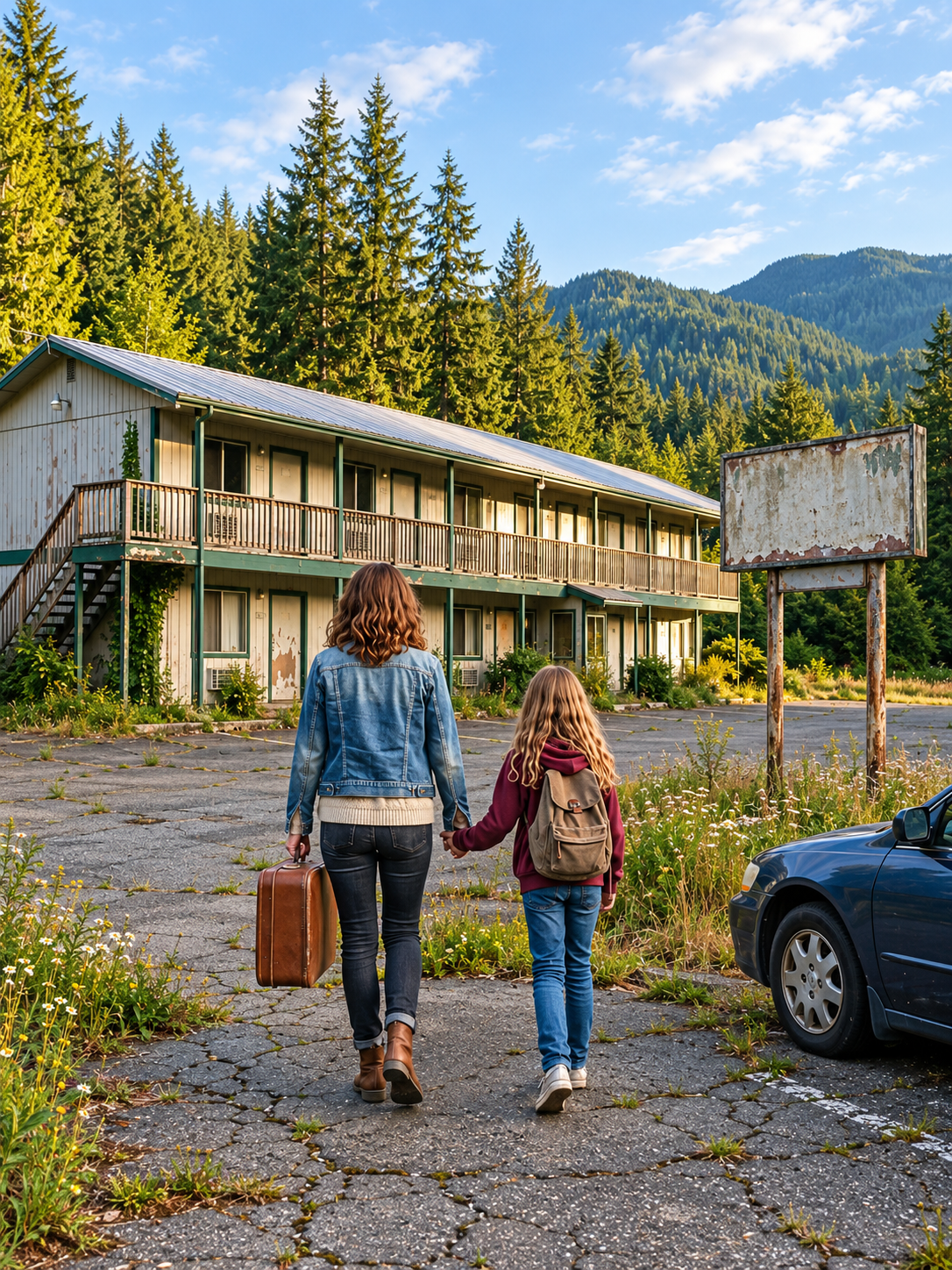
A Homeless Mother Inherited a Hillside House Everyone Feared—Then She Discovered Gold Hidden Where Nobody Thought to Look
The shelter volunteer was helping thirty-two-year-old Sarah Mitchell fold her daughter’s clothes into a plastic grocery bag when the attorney called.
By sunset, Sarah learned she had inherited a house in the mountains from a grandfather she had been told died before she was born.
By midnight, someone had already offered her $90,000 for the property.
And before she ever slept beneath its roof, a stranger slipped a note under the front door.
DON’T DIG FOR THE GOLD.
Sarah read it twice.
Her eight-year-old daughter, Lucy, stood behind her wearing pink pajamas and holding a stuffed rabbit with one ear missing.
Sarah turned the paper over.
“Does it say something bad?”
That answer came automatically.
For almost a year, Sarah had become an expert in making dangerous things sound temporary.
We’re staying with Aunt Kelly for a while.
The apartment is only being sold.
Daddy needs time to figure things out.
The motel is just for tonight.
The shelter has rules because lots of people need help.
None of those sentences were exactly lies.
None were the whole truth either.
Lucy pointed toward the note.
“What does it say?”
Sarah folded it carefully.
“That somebody has bad handwriting.”
Lucy narrowed her eyes.
“You always say that when you don’t want to tell me.”
“I do not.”
“You said Uncle Mark had bad handwriting when he sent the divorce papers.”
Sarah almost laughed.
Her daughter was getting too observant for protective fiction.
“Go brush your teeth.”
“There’s only one bathroom.”
“Then claim it before I do.”
Lucy ran down the hallway.
Sarah waited until she heard the door close.
Then she looked through the dusty front window of the hillside house.
Nothing moved outside.
Only pine trees.
A narrow gravel driveway dropping toward the valley.
No headlights.
No footsteps.
No person standing near the porch.
Still, someone had been close enough to reach the door.
And that person knew something about gold.
Sarah did not.
Should Sarah pack Lucy back into their old minivan and leave before sunrise—or stay long enough to learn why someone was warning a homeless mother away from a house she had owned for less than six hours?
Six months earlier, Sarah Mitchell had not been homeless.
She had been exhausted.
There was a difference.
She worked thirty-two hours a week at a dental supply company outside Denver and cleaned offices three nights a week because one paycheck disappeared too quickly into rent, food, after-school care, and the debts her ex-husband, Kevin, had helped create before leaving.
Kevin had once been charming.
Then ambitious.
Then restless.
He moved to Phoenix with a woman from his sales team and promised child support would start “as soon as things settled.”
Things apparently never settled.
Sarah stopped expecting the money.
Then her landlord sold the duplex.
The new owner gave legal notice.
Sixty days.
Sarah tried everything.
Apartments required deposits she did not have.
Her credit had been damaged by a joint card Kevin stopped paying.
Her dental supply company reduced hours.
A friend let Sarah and Lucy sleep on her couch for three weeks.
Then the friend’s landlord objected.
Next came an inexpensive motel.
Then a cheaper motel.
Then one night in the minivan.
Then a family shelter.
Sarah had $217 left when attorney Jonathan Pierce called.
“Ms. Mitchell?”
“My name is Jonathan Pierce. I’m an attorney in Silver Ridge.”
“About three hours southwest of Denver.”
“I represent the estate of Arthur Bennett.”
The name meant nothing.
“Is this about Kevin?”
“Debt collection?”
“Then I’m listening.”
Arthur Bennett was her maternal grandfather.
Sarah almost hung up.
“My mother told me her father died before I was born.”
Jonathan paused.
“Your mother was mistaken.”
Sarah stared at the shelter wall.
Her mother, Diane, had died eleven years earlier.
She had rarely spoken about family.
When Sarah asked about grandparents, Diane always changed the subject.
Jonathan continued.
“Mr. Bennett died last month.”
“Eighty-four.”
“And he knew about me?”
“Did he ever contact me?”
“That question is complicated.”
“What did he leave?”
Sarah closed her eyes.
“What condition?”
“Mortgage?”
“Why what?”
“Why would a man who never met me leave me his house?”
“He did meet you.”
Sarah sat up.
“You were very young.”
“How young?”
“I don’t remember.”
“That doesn’t mean it didn’t happen.”
“What else?”
“Approximately sixty-three acres.”
Sarah stood.
“The home is built into a hillside above Silver Ridge. There are outbuildings and old mining features on portions of the acreage.”
That part made sense.
“Hard to estimate.”
“The house and land might reasonably appraise somewhere between four hundred thousand and six hundred thousand dollars depending on access, structural condition, and mineral title.”
Sarah gripped the phone.
“Say that again.”
Four hundred thousand.
Sarah had counted quarters that morning before buying Lucy cereal.
“What’s the catch?”
“There are title restrictions.”
“The property cannot be subdivided for ten years under a conservation covenant.”
“And Mr. Bennett refused several purchase offers.”
“How much?”
“The last one I know of was approximately $310,000.”
“Why refuse if it’s worth maybe four?”
“I don’t know.”
Jonathan then said the one thing that made her cautious again.
“He left instructions specifically stating you should not sell during the first ninety days.”
Sarah laughed.
“He knew me that well?”
“Apparently.”
“He knew I was broke?”
“Jonathan.”
“I think he had been following your situation.”
That felt invasive.
And strangely comforting.
“Can I stay there?”
“Immediately?”
“The estate allows it.”
“Then I’m coming.”
The next afternoon Sarah loaded two duffel bags, Lucy’s backpack, groceries, blankets, a tool box, and everything that mattered into the minivan.
The shelter coordinator hugged her.
“Call if it falls apart.”
Sarah appreciated that more than congratulations.
Because things often did fall apart.
The drive into the mountains took longer than expected.
Silver Ridge was a former mining town built along a narrow valley where old brick storefronts faced mountains scarred by nineteenth-century tunnels and modern ski roads.
Population:
About 2,900.
One high school.
Two gas stations.
A hardware store.
An old hotel.
A diner called Ruthie’s.
Jonathan Pierce met them outside his office.
He was fifty-eight.
Gray at the temples.
Expensive coat.
Tired eyes.
Not what Sarah expected from the voice.
He handed her a key ring.
Seven keys.
“That’s encouraging.”
“Arthur did not believe in throwing keys away.”
“What’s the house like?”
“You’ve used that word twice.”
“It was built partly into the hillside.”
“Like a basement?”
“More like the hillside is part of the house.”
Lucy’s eyes widened.
“A cave house?”
Jonathan smiled.
“Not exactly.”
Sarah signed temporary estate occupancy forms.
Then Jonathan slid a sealed envelope toward her.
“From Arthur?”
She opened it.
If you are reading this, I waited too long.
That sentence annoyed her immediately.
Old people always seemed to admit waiting too long after there was nothing left to change.
She continued.
Your mother believed I chose the mine over her.
For a long time, she was right.
Then I tried to repair what I broke, and she refused to believe me.
She had reasons.
Do not hate her for that.
The house is yours.
Do not sell it quickly.
Do not believe anyone who tells you the hillside is worthless.
And if you find something yellow, do not assume you found what everyone else is looking for.
Sarah looked up.
Jonathan shook his head.
“I have no idea.”
“Possibly.”
He hesitated.
“Arthur spent decades around old claims.”
“Did he own a mine?”
“Not an operating one.”
That distinction bothered her.
“Anybody waiting to buy?”
Jonathan’s eyes changed.
“One company.”
“Caldwell Resources.”
“Land development and mineral exploration.”
“How aggressive?”
“Persistent.”
Sarah folded Arthur’s letter.
Jonathan raised an eyebrow.
“I know how to say no.”
“I suspect Arthur knew that.”
The house stood six miles outside Silver Ridge.
The road climbed steeply through pine and aspen.
Then opened onto a shelf of land overlooking the valley.
Sarah stopped the minivan.
Lucy whispered, “Whoa.”
The house looked as if someone had pushed a two-story stone-and-timber lodge halfway into the mountain.
Front wall:
Large windows.
Deep porch.
Roof dark metal.
The rear disappeared into the hillside.
An old barn stood lower on the property.
A detached workshop leaned slightly.
Beyond it, the mountain rose.
Not beautiful in a polished way.
Beautiful in a stubborn way.
Sarah climbed out.
Cold air hit her face.
The silence felt strange after months of motels and shelters.
No televisions behind walls.
No doors slamming.
No strangers arguing in parking lots.
Lucy ran toward the porch.
Lucy stopped.
Sarah checked the steps.
Front lock worked.
Inside smelled like cedar, dust, and something faintly metallic.
Furniture remained.
Cast-iron stove.
Kitchen with old cabinets.
Electricity.
Running water.
Heating system.
Not glamorous.
But habitable.
Lucy found her room before Sarah chose one.
It had a sloped ceiling and a round window facing the valley.
“This is mine.”
“Apparently.”
Sarah opened cabinets.
Canned food.
Arthur had left supplies.
Then she saw photographs on the living room wall.
Arthur younger.
Her mother.
Then Diane holding a little girl.
She stopped.
Lucy stood beside her.
“That’s you.”
“You met him.”
“Apparently.”
Sarah touched the frame.
A memory flashed.
Rocking chair.
Peppermint candy.
A man with rough hands.
Maybe invented.
Maybe real.
Then Lucy pointed.
“Who’s that?”
Another photograph.
Diane beside a younger man Sarah did not recognize.
Arthur had written on the back:
Diane and Robert — 1994.
Sarah was born in 1994.
Her father’s name on her birth certificate was Michael Mitchell.
Who was Robert?
She put the photograph aside.
Too much for day one.
Survival first.
She checked locks.
Cell coverage weak but present.
Then twilight arrived.
Lucy ate grilled cheese.
Sarah unpacked blankets.
At p.m., she heard paper scrape under the front door.
No footsteps.
Just paper.
Then picked up the note.
DON’T DIG FOR THE GOLD.
That was six hours after they arrived.
Someone had been watching the house.
Sarah did not call Jonathan immediately.
She called the sheriff.
Deputy Mark Collins arrived thirty-five minutes later.
Late forties.
He photographed the note.
Checked the property.
Found tire tracks near the road but nothing useful.
“You expecting anyone?”
“Neighbors?”
“Don’t know any.”
“Caldwell Resources?”
His face changed.
Interesting.
“You know them?”
“Everybody does.”
“Why the look?”
“Caldwell wanted Arthur’s land.”
“How badly?”
“Bad enough to ask every year.”
“Officially? Development.”
“Unofficially?”
Mark looked toward the mountain.
“Old mining district.”
He smiled slightly.
“Everyone in Silver Ridge has a gold story.”
“That isn’t an answer.”
“It’s the most accurate answer you’ll get tonight.”
He advised cameras.
Good locks.
No exploring old mine openings.
Call immediately if anyone returned.
Sarah agreed.
The next morning she drove into town.
At Ruthie’s diner, half the room looked at her.
Small-town anonymity died quickly.
A woman behind the counter poured coffee.
“You Bennett’s granddaughter?”
“Apparently.”
The woman laughed.
“I’m Ruth.”
“You keeping the house?”
Three men at the counter turned slightly.
Ruth noticed.
“Don’t entertain offers before your eggs.”
“Is that local wisdom?”
“It is now.”
A man in a brown vest approached before Sarah finished breakfast.
“Ms. Mitchell?”
There it was.
“My name’s Evan Caldwell.”
Clean haircut.
Expensive boots trying to look rural.
“Caldwell Resources.”
“I guessed.”
“I’d like to save you some trouble.”
“Generous.”
“Arthur’s property is difficult.”
“It has heat and water. I’ve lived in worse.”
That caught him.
He sat without invitation.
“We offered Arthur three hundred ten thousand.”
“That offer was based on land development value.”
“What do you offer me?”
“Three fifty.”
Ruth stopped wiping the counter.
Sarah noticed.
Fast increase.
“I arrived yesterday.”
“The market didn’t.”
“Why does your company want sixty-three acres halfway up a mountain?”
“Residential development.”
“Where’s your road?”
“We would improve access.”
“Already available.”
“Utilities?”
“Possible.”
His eyes stayed steady.
“No active mining plan.”
Not no minerals.
No active plan.
Sarah smiled.
“I’ll think about it.”
“How long?”
“Ninety days.”
His smile vanished.
“Why ninety?”
“Grandpa’s instruction.”
That was a mistake.
Too much information.
She saw it instantly.
Evan leaned back.
“Arthur liked drama.”
“He spent thirty years convincing people his mountain held secrets.”
“Maybe it did.”
“Old men like legends.”
“And developers like cheap land.”
Ruth coughed.
Evan stood.
“Offer stands for forty-eight hours.”
“Then it doesn’t stand.”
“I’m sorry?”
“I don’t respond well to shrinking clocks.”
Ruth brought more coffee.
“Arthur would’ve liked that.”
“You knew him?”
“Everyone knew Arthur.”
“Did everyone like him?”
Better answer.
“What was he hiding?”
Ruth leaned closer.
“Depends which decade.”
Sarah laughed despite herself.
Over the next week, she did not search for gold.
She searched for facts.
County records.
Mineral rights.
Tax assessments.
Historical maps.
Arthur owned surface rights.
Also retained mineral rights over fifty-one of the sixty-three acres.
Interesting.
The remaining twelve acres had split mineral ownership dating to 1911.
Caldwell Resources had recently purchased a fractional mineral interest under those twelve acres.
More interesting.
Sarah hired an independent geologist named Dr. Natalie Brooks using an estate advance Jonathan confirmed was legal.
Natalie arrived in a dusty Subaru.
No polished boots.
Sarah showed her Arthur’s letter.
Natalie smiled.
“That could mean fifty things.”
“Would this property have gold?”
“Historically? This whole district produced gold and silver.”
“Enough to matter?”
Sarah hated geologists already.
Natalie reviewed maps.
Then old mine reports.
There had been three historic claims near Arthur’s property.
One called Golden Star.
One Red Elk.
One Bennett Vein.
“Your family apparently filed a claim in 1936.”
“Operating mine?”
“Small exploratory workings.”
“Profitable?”
“Records suggest no.”
“So maybe nothing.”
Then Natalie found something strange.
Arthur’s house foundation incorporated stone from an old ore-processing structure.
Not unusual.
Miners reused materials.
Sarah asked:
“Could gold literally be inside the house?”
Natalie laughed.
“Possible in microscopic traces. Not treasure.”
“Disappointed?”
“No. Treasure creates problems.”
Smart answer.
The first real mini-payoff came from something boring.
The home appraisal.
Not $400,000.
The view, acreage, no mortgage, mineral rights, and proximity to expanding recreation areas increased value.
Sarah sat in Jonathan’s office staring at the number.
“Seven twenty-five?”
“I was sleeping in a shelter two weeks ago.”
“I could sell tomorrow.”
“And walk away with what?”
“After taxes and transaction costs, likely over six hundred thousand.”
That sounded life-changing.
Because it was.
Sarah could buy a smaller house.
Create savings.
Give Lucy stability.
Why keep a mysterious mountain property with warning notes and mining questions?
Then Jonathan handed her another document.
Caldwell Resources had offered Arthur $620,000 two years earlier.
Not $310,000.
Sarah’s eyes narrowed.
“Evan lied.”
“Why did you tell me three ten?”
“That was the last formal surface-only offer in my file.”
“What’s six twenty?”
“A combined mineral option and land purchase proposal.”
Important difference.
“What did Arthur do?”
“Rejected it.”
Jonathan showed her Arthur’s handwritten note.
Too low if they know about wall samples.
Wall samples.
Sarah thought of Arthur’s letter.
If you find something yellow, do not assume you found what everyone else is looking for.
“Which wall?”
Jonathan shrugged.
“He didn’t say.”
That evening Sarah inspected the house differently.
Not ripping boards.
Not destroying stone.
The hillside house had thick interior masonry walls.
Some stone gray.
Some brown.
Some quartz-veined.
In the basement, one wall contained a streak of yellow metallic flecks.
Sarah stared.
Could be pyrite.
Fool’s gold.
She did not touch it.
Photographed.
Sent to Natalie.
Natalie replied:
DO NOT GET EXCITED. LIKELY PYRITE. I’LL CHECK TOMORROW.
Sarah smiled.
Exactly the kind of message she needed.
Natalie sampled it.
Mini-payoff.
The obvious treasure was worthless.
Then Natalie noticed something else.
The mortar between several stones contained unusual heavy black sand.
“Old miners sometimes used local crushed material.”
She collected samples.
Three days later:
Small gold content.
Not enough to matter economically.
Sarah laughed.
“So gold really was hidden in plain sight.”
“Technically.”
“Worth anything?”
“Maybe twenty dollars in this whole wall.”
Then Natalie said:
“But the source material interests me.”
“The crushed aggregate has higher gold concentration than surrounding surface rock.”
“Somebody brought it from somewhere richer.”
“Ask Arthur.”
“He’s dead.”
“Then ask his records.”
The workshop became next.
Arthur had left boxes of notebooks.
Most boring.
Vehicle maintenance.
Property taxes.
Then one book labeled HOUSE.
Foundation repair.
Retaining wall.
North wall rebuilt with tailings from old lower adit.
Waste rock from a mine tunnel.
Lower adit.
Sarah called Natalie.
“Found something.”
The old lower adit appeared on a 1941 map.
Just below the house.
Sealed in 1963 after a collapse.
Arthur later built retaining structures over the entrance.
“Could gold be there?”
Natalie answered carefully.
“Historically, maybe.”
“Economically?”
“Safe to open?”
“Not without engineers.”
Sarah hired one.
No secret digging.
No dramatic flashlight adventure.
Engineer Thomas Reed used ground-penetrating radar and structural review.
The adit existed.
Collapsed partly.
Accessible only through professional excavation.
Before any work, Sarah received another note.
This time taped to the mailbox.
ARTHUR CLOSED IT FOR A REASON.
No mention gold.
Someone knew she was investigating.
Security cameras showed a dark pickup at a.m.
Plate unreadable.
Male figure.
Could be anyone.
Sarah gave footage to Deputy Collins.
Then Evan Caldwell arrived the following afternoon.
“I heard you hired a mining engineer.”
“Small town.”
“You all need a hobby.”
“Sell me the property.”
“Price went up.”
“One million.”
He actually laughed.
“Based on what?”
“Your interest.”
That stopped him.
“You don’t know what’s under there.”
“Neither do you?”
Sarah stepped closer.
“Why did your company buy mineral rights under the twelve-acre eastern parcel?”
“Strategic acquisition.”
“What’s strategic?”
“Future exploration.”
“For gold?”
“Potentially.”
“So there is active mining interest.”
“Exploration is not mining.”
Technically true.
He was careful.
Sarah was too.
“Did your company ever sample Arthur’s house walls?”
Evan’s expression shifted.
“Why would we?”
“Arthur mentioned wall samples.”
That night Sarah searched public mining records.
Caldwell Resources filed exploratory permits two years earlier on adjoining land.
Epithermal gold-silver system.
Estimated historical grade unknown.
Then she found Arthur’s private report.
Independent assays from 2019.
Samples from tailings used in his retaining wall showed surprisingly high gold values.
Not twenty-dollar wall mortar.
Different material.
One sample:
0.62 ounces per ton.
1.1 ounces per ton.
Sarah called Natalie.
“Is that good?”
Long pause.
“If representative, very.”
“How good?”
“Potentially significant.”
“But tailings are waste.”
“Why would waste have that much gold?”
“Old recovery methods were inefficient.”
Meaning miners could have left valuable gold behind because they could not extract it economically at the time.
That was twist one.
Gold had literally been hidden in plain sight.
In stone walls.
Retaining fill.
Old tailings.
But not enough to explain Caldwell’s obsession.
Natalie estimated visible tailings around the house and lower terrace might contain gold worth hundreds of thousands gross.
Maybe more.
But extraction costs, permits, environmental controls, structural issues.
No instant fortune.
Sarah liked grounded numbers.
Then the engineer opened a narrow inspection route into the lower adit.
Professionals only.
Ventilation.
Gas monitoring.
Structural supports.
Inside they found old rail tracks.
Quartz veins.
Historical markings.
No treasure chest.
Then a chamber.
Sealed by a timber partition.
Arthur had stacked metal sample boxes there.
Sarah almost laughed.
Every mysterious old man apparently hid paperwork.
The boxes contained drill logs from 1960 through 1988.
Arthur and his father had drilled dozens of holes across the hillside.
Because the old Golden Star vein continued beneath the house.
More importantly, a broader mineralized zone extended under nearly forty acres.
Natalie reviewed the data.
Then ordered independent confirmation.
New core drilling.
Months, not hours.
Sarah used the time to rebuild life.
Lucy started Silver Ridge Elementary.
Loved her teacher.
Made a friend named Emma.
Sarah found remote accounting work twenty hours a week.
Paid off small debts using a modest estate cash account Arthur had left.
Bought a used Subaru with four-wheel drive.
Not luxury.
She stopped counting motel nights.
That was wealth before gold ever mattered.
Then the assays returned.
Consistent mineralization.
Natalie sat at Sarah’s kitchen table.
“Do not faint.”
“I don’t faint.”
“Still preliminary.”
She smiled.
“Current data suggests an indicated and inferred mineralized resource with gross in-ground metal value potentially between sixty and one hundred twenty million dollars at recent price assumptions.”
Sarah stared.
“That is not what I would get.”
Natalie smiled wider.
“Excellent.”
Sarah had learned.
“Actual recoverable value could be much lower.”
“Mining costs.”
“Metallurgy.”
“Environmental obligations.”
“Ownership.”
“Caldwell’s mineral interest on twelve acres.”
“So don’t call me rich.”
Sarah stood and made coffee.
Her hands shook only slightly.
Then she asked:
“Why was Arthur living like a normal old man if he knew?”
Natalie looked at her.
“That’s the better question.”
Arthur’s notebooks answered partly.
He had discovered the broader deposit decades earlier.
Mining companies approached repeatedly.
He refused because the richest zone sat beneath the hillside where groundwater fed Silver Ridge’s lower wells.
Conventional open-pit development could disrupt water.
Underground mining might be possible but expensive.
Arthur had not opposed all mining.
He opposed losing control.
Caldwell wanted total mineral and surface purchase.
That made sense.
Then another document changed everything.
Arthur had negotiated secretly with a smaller company called Northstar Minerals.
Their proposal:
Underground access.
No open pit.
Water monitoring.
Reclamation bond.
Arthur retained land.
Royalty agreement.
Estimated owner payments over project life:
$18–35 million if viable.
Why did it fail?
One handwritten note:
Caldwell bought eastern fraction. Blocks clean development.
Caldwell had strategically purchased the twelve-acre mineral interest to create leverage.
Now Evan could force negotiation.
Not ownership.
But complexity.
His motive became clear.
Buy Sarah out cheaply before she understood.
Then own the whole package.
That was predatory business.
Not necessarily illegal.
Sarah called Evan.
“I know what’s under the hill.”
“Congratulations.”
“You lied about the old offer.”
“I described the surface proposal.”
Technically.
“You bought eastern minerals to block Arthur.”
“We bought available interests.”
“Same effect.”
“What do you want, Sarah?”
“I want you to stop sending people to my property.”
“I haven’t.”
“Then say that under oath later if necessary.”
He went quiet.
“I also want your company to make a legitimate proposal.”
“Your twelve-acre interest.”
Evan laughed.
“You want to buy us out?”
“With what money?”
“Future value.”
“You don’t have financing.”
She ended the call.
Jonathan connected her with a mineral-rights attorney, Dana Whitfield.
Dana was sixty-one, blunt, and allergic to fantasy.
She explained options.
Sell everything.
Joint venture.
Royalty agreement.
Buy Caldwell out.
Let Caldwell buy her out.
Sarah chose:
Then Northstar returned.
Arthur’s old negotiations had never fully died.
Northstar offered $4 million upfront for an exploration and development option.
Sarah retained surface.
Retained veto over open-pit methods.
Potential royalty.
Environmental conditions.
Caldwell’s fraction complicated the deal.
But Northstar was willing to negotiate.
Evan suddenly increased his offer.
$6.5 million for entire property and mineral rights.
Sarah declined.
Then $8 million.
Then $11 million.
Lucy overheard.
“Mom, what’s eleven million?”
“A number adults use to make bad decisions faster.”
Good answer.
Evan came personally.
“Eleven million dollars changes your life.”
“My life already changed.”
“You were homeless three months ago.”
That sentence crossed a line.
Sarah’s face became still.
“How do you know?”
“Public assistance filings.”
Those were not public.
He realized it.
Sarah leaned forward.
“Who gave you information about where I was staying?”
Evan stood.
“That’s not relevant.”
“It is now.”
Sarah called Jonathan.
They traced something unexpected.
Arthur had hired a private investigator to locate Sarah.
That investigator’s firm had also done work for Caldwell Resources.
Information crossed somewhere.
Maybe improperly.
Not enough proof yet.
Then Jonathan discovered the deeper problem.
The investigator had sent Arthur reports for years.
Sarah’s addresses.
Employment.
Shelter placement.
Arthur knew she was homeless before he died.
Why did he not help while alive?
That hurt more than everything.
She read his final notebook.
Found the answer.
I want to send money.
Pierce says I can.
But if Diane told her I was dead, appearing with money may reopen everything badly.
I keep waiting for the right time.
There is no right time.
Arthur called himself that.
Then final entry:
Sarah lost housing.
I will call tomorrow.
He died that night.
Heart attack.
Sarah sat in silence for a long time.
He had waited too long.
Human failure.
Not conspiracy.
She could forgive some of it.
Then the second major twist arrived.
Jonathan found a sealed trust attachment.
Arthur did not own one hundred percent of the hillside minerals.
Thirty percent had been transferred in 1994 to someone named Robert Mitchell.
Sarah froze.
The man in the photograph with her mother.
Diane and Robert — 1994.
“What is this?”
Jonathan looked uncomfortable.
“Robert Mitchell was your biological father.”
Sarah stared.
“Your birth certificate lists Michael Mitchell.”
“Michael adopted you shortly after birth.”
Her entire childhood shifted.
“Mom never told me.”
“Apparently.”
“Arthur knew.”
“Is Robert alive?”
Jonathan hesitated.
“New Mexico.”
“What does he have to do with the mine?”
“He was a geologist.”
Sarah laughed.
Because sometimes shock comes out that way.
“Of course he was.”
Robert had worked with Arthur in the early 1990s.
He discovered the high-grade extension.
Then had an affair with Diane.
Sarah was born.
Arthur forced Robert out of the project.
Not because of geology.
Because family exploded.
Diane married Michael, who adopted Sarah.
Robert retained thirty percent mineral rights as part of a settlement Arthur later regretted.
Then disappeared from their lives.
Sarah’s gold inheritance now came attached to a living biological father holding nearly one-third of the resource.
She did not call him.
Robert called first.
His voice was older than expected.
She said nothing.
“I suppose Jonathan told you.”
“I’m sorry.”
“Everybody in this family is sorry after thirty years.”
Robert did not defend himself.
“I want to see you.”
“Do you want the mine?”
Long silence.
“Then why keep thirty percent?”
“Because Arthur refused to buy me out fairly.”
“Do you still want money?”
“I want to correct something.”
“I signed those mineral rights into a trust years ago.”
Sarah stopped.
“When you turned eighteen.”
“Why didn’t I know?”
“Because the trust activates only if Arthur’s estate transfers you the surface.”
Jonathan pulled files while she stayed on the phone.
Robert had transferred his thirty percent mineral interest into a contingent trust for Sarah.
She now controlled virtually all mineral rights except Caldwell’s twelve-acre fractional position.
Another major shift.
Not a new twist exactly.
Completion of biological father reveal.
Robert’s voice cracked.
“Because it was the only thing I had that belonged partly to you.”
“That is a terrible substitute for showing up.”
At least no excuse.
Sarah ended the call.
Not reconciliation.
Information.
Enough for now.
With consolidated rights, Northstar improved its offer.
$7.5 million exploration option.
Future royalties potentially tens of millions.
Still no guarantee.
Sarah negotiated for six months.
Water protection first.
Independent monitoring.
No open pit.
No tailings pond above aquifer.
Reclamation security.
Local jobs.
No automatic assignment to another company.
Caldwell eventually agreed to sell its minority interest for $2.1 million after Northstar offered them a separate participation payment.
Sarah financed the acquisition through the option agreement.
Clean title.
Then she did something Evan never expected.
She did not approve mining immediately.
She required two years of environmental baseline work.
Evan called it irrational.
Northstar called it frustrating.
Sarah called it parenting.
Lucy drank that water.
So did the town.
Two years passed.
The hillside house became home.
Not investment.
Sarah repaired the roof.
Restored the porch.
Turned Arthur’s workshop into an office.
Lucy adopted a mutt named Jasper.
Sarah dated nobody for a year.
Then Tom Reed, the structural engineer, started appearing too often for “follow-up inspections.”
Lucy noticed before Sarah did.
“Mom, Mr. Reed likes you.”
“He likes old buildings.”
“He brought you flowers.”
“Structural flowers.”
Lucy rolled her eyes.
The relationship moved slowly.
No rescue narrative.
Tom was not there to save the homeless mother.
Sarah had already saved herself.
Eventually environmental studies concluded a limited underground mining plan could operate with manageable risk if strict controls were followed.
Northstar proposed development.
Sarah approved phase one.
Construction created jobs.
No giant pit.
No dramatic mountain destruction.
Gold production began almost five years after she inherited the house.
First royalty payment:
Sarah stared at the deposit.
Then closed the banking app.
She paid off every remaining debt.
Created a trust for Lucy.
Built emergency savings.
Donated quietly to the family shelter that once housed them.
Bought no mansion.
She already had one mountain attached to her house.
By year seven, cumulative payments exceeded $9 million.
Project reserves suggested much more if production continued.
Headlines called her “The Homeless Mom Who Inherited a Gold Mountain.”
Sarah hated the phrase.
She inherited a complicated house.
Then did years of work.
But headlines prefer miracles.
Arthur’s original visible tailings were processed separately under preservation permits.
They yielded more than expected.
Actual recoverable gold from retaining material and old waste:
Nearly $640,000 gross.
Gold really had been hidden in plain sight.
Inside terraces.
Rock piles.
Places everyone saw as worthless.
Sarah kept one unprocessed quartz stone on her mantel.
Not because it was valuable.
Because Lucy liked the sparkles.
One evening, Robert Mitchell visited.
Years had passed.
Sarah finally allowed it.
Public first.
Then house.
He was seventy-one.
Silver hair.
Eyes like hers.
That annoyed her immediately.
He stood on the porch and looked at the mountains.
“I helped map that ridge.”
“I never thought Arthur would leave it to you.”
“He loved control.”
“So did Mom.”
“So do you?”
He considered.
“Probably.”
At least honest.
They spoke for hours.
No instant father-daughter reunion.
Robert explained Diane had cut him off after choosing Michael.
He accepted it.
Then later tried contacting Sarah twice.
Diane returned both letters unopened.
He stopped.
Cowardice again.
Everyone in this family mistook retreat for respect.
Sarah told him that.
That helped.
Not forgiveness.
But beginning.
Then Robert said something strange.
“Did Arthur ever show you the west wall?”
Sarah looked toward the house.
“Which wall?”
“The one inside the hill.”
“I know the lower adit.”
Robert frowned.
“The house itself.”
Sarah’s attention sharpened.
“What about it?”
“When Arthur rebuilt the rear rooms, he covered an older tunnel opening.”
“Another mine entrance?”
“What then?”
“A survey chamber.”
Sarah laughed.
“Of course there’s another chamber.”
Robert almost smiled.
“Your family likes walls.”
“What’s inside?”
“I don’t know.”
“Convenient.”
“I saw it once in 1993.”
“What did it contain?”
“Old assay maps.”
“We already have hundreds.”
“Not like these.”
Sarah studied him.
“What does that mean?”
“Arthur’s father mapped something west of the current deposit.”
She sighed.
“He called it Bluebird.”
Sarah had never seen that name.
“Beyond your current property boundary.”
That mattered.
“Several miles.”
“Then not mine.”
“Maybe not.”
No magical ownership.
“But Arthur believed the original Bennett claim extended farther than county records showed.”
Sarah immediately disliked the direction.
Boundary dispute.
Old claims.
She had spent enough years resolving secrets.
“Why tell me now?”
“Because someone else has been looking for Bluebird.”
Robert looked toward the road.
“Caldwell.”
But Evan Caldwell had sold out and moved into commercial development.
Sarah froze.
“His sister.”
She had never heard of one.
“Laura Caldwell.”
Sarah remembered Arthur’s notebooks.
Occasional initial:
No explanation.
Robert continued.
“Laura runs a private mineral fund in Nevada.”
“Why should I care?”
“Because she contacted me last month.”
Sarah’s jaw tightened.
“What did she want?”
“Bluebird coordinates.”
“Do you have them?”
“I think Arthur did.”
Sarah turned toward the hillside house.
The rear rooms built into stone suddenly felt different.
That night she pulled Arthur’s construction plans.
Found nothing.
Then Lucy, now fifteen, came downstairs.
“What are you doing?”
“Trying to prove dead people are exhausting.”
“Need help?”
“Goodnight.”
She stopped.
“The old pantry wall sounds hollow.”
Sarah looked up.
“Jasper scratches there sometimes.”
The pantry backed directly into the hill.
Sarah felt a familiar irritation.
Absolutely not.
Still, she called Tom.
Professional inspection.
No secret crowbar.
Ground radar showed a void.
Maybe eight by twelve feet.
Behind masonry.
No structural danger.
They opened it legally.
A narrow archive room.
Steel cabinet.
Three map tubes.
No gold bars.
Sarah opened the first.
Old mine plans.
Family survey.
BLUEBIRD — 1956.
There it was.
A geological map extending west of her property.
High-grade gold showings.
Not confirmed resource.
Historical sampling.
Interesting.
Potentially valuable to whoever owned those lands.
Most belonged now to federal forest, two ranch families, and one large parcel acquired recently.
Caldwell Strategic Minerals.
So she already owned part.
Why need Sarah?
Because the map contained something else.
A hand-drawn line labeled:
ACCESS DRIFT BEGINS BENNETT PROPERTY.
Underground access tunnel from Sarah’s land might reach the western zone.
That could make her property strategically important again.
Not because she owned Bluebird.
Because she might control practical access.
History repeating.
Sarah laughed.
Tom looked at her.
“Apparently this mountain has never heard of boundaries.”
She photographed everything.
Called Jonathan.
Called Dana.
Then received a text from an unknown number.
You found Bluebird.
No greeting.
No threat yet.
Sarah stared.
Second message:
Arthur should have destroyed that map.
Call me before Northstar sees it.
— Laura Caldwell.
Sarah did not call.
She forwarded everything to Dana.
Then Laura called anyway.
Sarah answered.
“Ms. Caldwell.”
“You’re difficult to reach.”
“Not really.”
“You found Arthur’s west survey.”
“Then you understand why we should talk.”
“Bluebird could be bigger than Bennett.”
“Not my land.”
“Your tunnel.”
“No operating tunnel exists.”
“Historically it did.”
“Historically people used outhouses. We’ve moved on.”
Laura laughed.
Different from Evan.
“I understand why Arthur chose you.”
“Everyone keeps saying that after trying to buy something.”
“I don’t want to buy your house.”
“What do you want?”
“For what price?”
“Now we’re speaking clearly.”
Sarah smiled.
Negotiation.
Then Laura said something that changed the air.
“Before we negotiate, ask Jonathan Pierce why he never gave you Arthur’s 1998 Bluebird agreement.”
Sarah went still.
“What agreement?”
The call ended.
Jonathan had been with her from day one.
Could he have withheld something?
Sarah drove to his office the next morning.
Placed her phone on his desk.
“Bluebird agreement.”
His face changed.
“Where did you hear that?”
“Laura Caldwell.”
Jonathan stood and closed the door.
Same thing attorneys do in stories when bad news enters.
She pointed at the chair.
“What agreement?”
Jonathan exhaled.
“In 1998, Arthur signed a private access option with Caldwell’s father.”
“For Bluebird?”
“Still valid?”
“I believed it expired.”
“Believed?”
“The document is ambiguous.”
“Why didn’t you tell me?”
“Because it was tied to a sealed arbitration.”
“Arthur and Caldwell.”
“Where’s the agreement?”
Jonathan opened his safe.
He removed a red folder.
Sarah stared.
“You’ve had this?”
“For seven years?”
“And never mentioned it.”
“Arthur ordered me not to unless Bluebird was rediscovered.”
That was legalistic nonsense.
But perhaps legitimate.
Jonathan slid a page across.
The option granted Caldwell family entities right to negotiate underground access if a commercially viable western deposit was confirmed.
Not automatic access.
Not ownership.
Right to first negotiation.
Manageable.
Then Sarah read the final clause.
If Bennett heirs decline negotiated access, Caldwell may demand independent valuation and compel arbitration regarding subterranean passage rights created prior to 1960.
“What does that mean?”
Dana would need to interpret.
Jonathan said:
“It means Laura may have leverage.”
Not control.
Then he pulled another document.
“Arthur later tried to cancel it.”
“Not successfully.”
“Because Caldwell claimed the passage itself had been jointly developed.”
Sarah rubbed her forehead.
“So I inherited gold, water risk, family secrets, and a tunnel argument from before my mother was born.”
“Anything else?”
Jonathan hesitated.
Wrong answer.
“There is another page.”
Sarah stared.
“Jonathan.”
He handed it over.
Arthur’s handwriting:
If Bluebird is ever confirmed, Sarah must know the western map is incomplete.
The high-grade samples did not come from Bluebird.
They came from somewhere closer.
Inside Bennett property.
Sarah looked up slowly.
Jonathan shook his head.
“That is all I know.”
Then Sarah’s phone buzzed.
Natalie Brooks.
She had been reviewing the Bluebird maps Sarah sent the night before.
Her message:
CALL ME NOW. THE COORDINATES DON’T MATCH BLUEBIRD.
Sarah called.
Natalie answered immediately.
“Arthur mislabeled the sample locations.”
“Accident?”
“How do you know?”
“The coordinates correspond to your hillside.”
“Which part?”
“Under the house.”
Sarah stopped breathing.
“Under the deposit we already mine?”
“Then where?”
“How deep?”
“Much deeper.”
Sarah looked around Jonathan’s office.
Natalie continued.
“The 1956 samples show unusually high-grade gold and telluride mineralization from a vertical test hole below the original house foundation.”
Sarah whispered:
“How high-grade?”
“Sarah, if the records are authentic, this is not tailings. It is not Bennett Vein. It is something else.”
“Do not ask me that yet.”
But her voice sounded different.
“There’s another notation.”
“Arthur’s father wrote: DO NOT DEVELOP. VOID BELOW.”
Sarah remembered the strange architecture.
House built into hill.
Survey chamber.
Old tunnels.
“Natural cavern, old workings, or something structural. We don’t know.”
Then Natalie said:
“And there is a later note from 1972.”
Sarah gripped the phone.
“What does it say?”
“Bennett No. 4 reached cavity at 612 feet.”
“That means?”
“Someone drilled beneath the house.”
Long pause.
“They hit open space.”
Sarah looked toward Jonathan.
He could hear enough to understand.
Natalie continued.
“The drillers recovered gold-bearing material immediately above it.”
“How much gold?”
“I need to verify.”
Then Sarah heard something through Jonathan’s office window.
A vehicle stopping outside.
A woman stepped out.
Silver hair.
Maybe fifty.
Jonathan looked.
His face went pale.
“That’s Laura Caldwell.”
She had come personally.
Sarah said to Natalie:
“Do not send the full map to anyone.”
“I already secured it.”
Sarah ended the call.
Laura entered the office without waiting long.
Receptionist tried stopping her.
Jonathan opened the inner door.
She looked past him at Sarah.
Sarah remained seated.
Laura held a slim black folder.
“You found the deep drill logs.”
Sarah said nothing.
Laura smiled.
“That means we can finally stop pretending Bluebird matters.”
There it was.
The western deposit was distraction.
Same family tactics across generations.
“What’s under my house?”
Laura’s smile disappeared.
“I don’t know.”
“Your father knew?”
“He knew Arthur found something deeper.”
“Gold around it.”
“Around what?”
Laura looked toward Jonathan.
“My father called it the Hollow.”
Sarah felt cold.
Not supernatural.
Geological.
Still disturbing.
“What is the Hollow?”
“An underground cavity.”
“Why did they hide it?”
Laura opened the folder.
Old engineering reports.
One photograph.
Black and white.
A drill rig beside the original Bennett house.
Arthur young.
Another man.
Caldwell senior.
Laura pointed to handwritten notes.
“The first borehole entered a void.”
“Pressure changed.”
“What kind?”
“No dangerous gas recorded.”
“They lowered a camera.”
Sarah stared.
“Primitive system.”
“What did it show?”
Laura slid over a photograph.
Then something angular.
Not treasure.
Not alien nonsense.
Old timber.
Manmade workings.
Far deeper than recorded mines.
Sarah leaned closer.
“Possibly much older.”
“No one knew.”
Jonathan whispered, “Arthur never told me this.”
Laura said:
“Arthur told nobody after 1974.”
“Because a worker was injured during a second drilling attempt and the state shut exploration down pending stabilization.”
That was grounded.
Reasonable.
“What does gold have to do with it?”
Laura pointed.
“The deepest core around the cavity had the highest grades ever sampled on Bennett ground.”
“How high?”
She gave a number.
Natalie later confirmed it was extraordinary.
Potentially ounces per ton.
But tiny sample.
No reserve.
No certainty.
Enough to explain decades of secrecy.
Sarah looked at Laura.
“What do you want?”
“To investigate properly.”
“With my permission.”
“Under my conditions.”
“Then why threaten me?”
Laura frowned.
“I did not.”
“Notes. Messages. Surveillance.”
“I sent one message today. Nothing else.”
Sarah stared.
That sounded believable.
Which created a worse question.
Who had been leaving warnings?
Who knew before Laura?
Who watched the house on Sarah’s first night?
Then Jonathan said quietly:
“Arthur suspected someone else.”
Both women turned.
He opened the red file again.
Another envelope.
Arthur’s handwriting.
SARAH — ONLY IF CALDWELL RETURNS AFTER BLUEBIRD.
Sarah almost laughed.
The dead man had planned conversations years ahead.
She opened it.
If Laura Caldwell comes to you about Bluebird, listen to her.
She is not her father.
That surprised everyone.
The person you must be careful with is the one who has been inside the house before you inherited it.
Sarah looked up.
Jonathan frowned.
She kept reading.
I discovered someone was entering while I was hospitalized.
They never stole money.
They copied maps.
I installed cameras but never captured a clear face.
I believed it was someone connected to Robert.
Her biological father.
Sarah’s stomach tightened.
Robert denied it.
I believed him eventually.
The intruder knew where the original 1972 drill photographs were stored.
Only four living people knew.
Sarah stopped.
Her mother.
Dead eleven years.
Impossible now.
Jonathan stared.
“I never entered without Arthur.”
Laura said, “Robert?”
Then final line:
Diane told one other person before she died.
I never learned who.
Sarah looked at the letter.
Family secret again.
Who had Diane trusted?
Her husband Michael?
Kevin came later.
Sarah’s mother had one younger sister.
Living in Boulder.
Sarah had not spoken to her aunt in years.
Then her phone buzzed.
Unknown number.
One photograph.
Sarah’s hillside house.
Taken that morning.
From the trees above it.
Second photo.
Lucy getting onto the school bus.
Sarah’s body went cold.
STOP TALKING TO CALDWELL.
Laura saw her face.
Sarah showed them.
Laura swore.
Jonathan reached for his phone.
Sarah called Deputy Collins first.
School next.
“Keep Lucy inside until I arrive.”
Then another message.
ARTHUR LIED ABOUT THE GOLD.
Sarah stared.
Third message.
THE HOLLOW ISN’T EMPTY.
She looked at Laura.
“What does that mean?”
Laura’s face had gone pale.
“I don’t know.”
Then a fourth photograph arrived.
Same drill site.
But wider than Laura’s version.
Five people stood beside the rig.
Caldwell senior.
Two workers.
And a woman.
Sarah zoomed.
Impossible.
Another family member.
Jonathan leaned closer.
“Oh my God.”
Sarah looked at him.
He whispered:
“Your grandmother.”
Sarah had never heard about Arthur’s wife.
The woman stood beside the rig holding a clipboard.
Back of photo visible in next message:
EVELYN BENNETT — FIELD GEOLOGIST.
Sarah froze.
Her grandmother had been a geologist?
Arthur never mentioned it.
Diane never mentioned it.
Then the final message arrived.
EVELYN FOUND THE HOLLOW.
ARTHUR TOOK CREDIT.
ASK WHY SHE DISAPPEARED IN 1974.
Sarah stared.
Disappeared.
Jonathan looked shocked.
Laura looked genuinely lost.
Sarah’s mother had told her grandmother died before Sarah’s birth.
Another family story.
Another possible lie.
Sarah slowly sat down.
Gold was no longer the biggest secret under that hill.
Not even close.
Because if the message was true, Arthur had not discovered the deepest workings.
Evelyn had.
And two years after drilling into the Hollow, she vanished from every family record Sarah had ever seen.
Sarah saved every message.
Sent them to Deputy Collins.
Then to Natalie.
Then she looked at Jonathan.
“Find everything on Evelyn Bennett.”
Laura closed her folder.
“I’ll help.”
Sarah nodded once.
Cooperation.
Then her phone rang.
Unknown number.
She answered.
No one spoke.
“Who is this?”
A woman breathed on the other end.
Sarah stopped.
The voice trembled.
“You don’t know me.”
Sarah’s hand tightened around the phone.
“But Arthur told you I was dead.”
Jonathan stood.
Laura stared.
Sarah whispered:
“Who are you?”
The answer came softly.
The room went completely still.
Sarah’s grandmother.
After fifty-two years.
Sarah could barely speak.
“Where are you?”
Evelyn ignored the question.
“Listen carefully.”
“Do not let anyone drill beneath that house.”
A long pause.
Then the old woman whispered:
“Because Arthur never found the bottom of the Hollow.”
The line crackled.
Sarah stood.
“What does that mean?”
Evelyn’s voice became urgent.
“He thought the gold was the discovery.”
“And it wasn’t?”
“Then what was?”
“The old miners built downward for a reason.”
Sarah stared at Laura.
At Jonathan.
At the 1972 photograph.
“What reason?”
Evelyn breathed once.
“They were trying to reach something that was already there.”
The call ended.
Sarah immediately dialed back.
Number unavailable.
She looked toward the mountains beyond the office window.
For years, people thought Arthur Bennett’s hillside house was valuable because of old gold.
Then because of a broader mineral deposit.
Then because of deep high-grade cores.
Maybe every one of those explanations had only been a layer.
Sarah had inherited a home when she had nowhere to sleep.
Then stability.
Now she had inherited a question buried more than six hundred feet beneath her daughter’s bedroom.
And somewhere out there, a grandmother officially missing for half a century knew the answer.
Sarah picked up Arthur’s letter.
Read his first line again.
If you are reading this, I waited too long.
“No,” Sarah whispered.
“You didn’t just wait.”
She folded the letter.
“You hid something.”
Then she turned to Jonathan.
“Find Evelyn.”
“Nothing touches my mountain.”
And to herself, silently:
Not until I know what my family buried beneath it.
✓ Lynn R. Adams
A Homeless Mother Inherited a Hillside House Everyone Feared—Then She Discovered Gold Hidden Where Nobody Thought to Look The shelter volunteer was helping thirty-two-year-old Sarah Mitchell fold her…