A fourth-generation family farmer is left completely baffled when three separate tractors
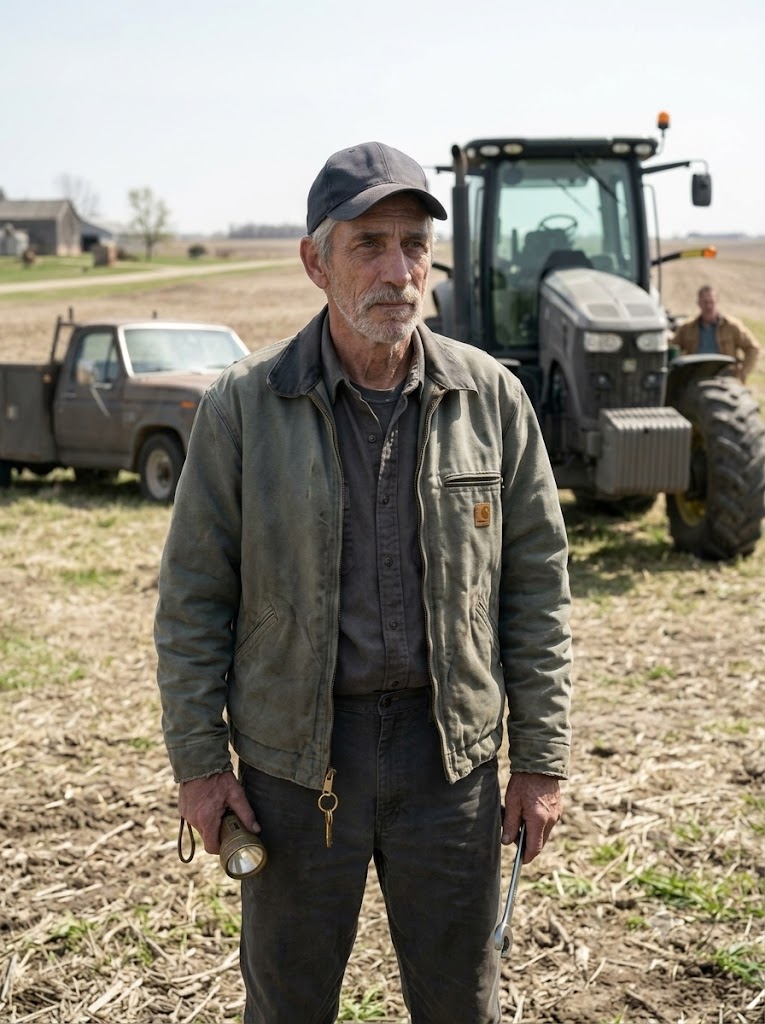
A fourth-generation family farmer is left completely baffled when three separate tractors—all different models, different ages, with full service records—break down one after another in the exact same 20-acre section of his corn field, throwing unrelated error codes with no obvious mechanical failure. When his longtime farm mechanic runs a full diagnostic and spots a strange metallic pattern embedded in the topsoil, they uncover a buried secret under the field no one in the county knew existed, one that could rewrite local history and change the fate of the farm forever.
Part 1: Three tractors fail on the same field It was late October, peak harvest season, the air crisp and smelling like turned earth and dried corn stalks, and I was running three combines back to back trying to beat the first forecast frost of the year. I’d been harvesting the west field for three hours when the first 2018 John Deere just sputtered, choked, and died mid-row, no warning lights, no strange noises, it just shut off completely like someone had pulled the plug. I climbed down, locked the cab, walked back to the barn, and hopped into the 2012 older work tractor we keep on standby, drove out to the same stretch of field, and got barely 100 yards past the spot the first machine died before it also stalled out completely, engine unresponsive. I thought I’d gotten bad gas from the delivery the week before, so I grabbed the brand new 2024 combine I’d bought that spring, drove straight out to the field, and it died cold 50 yards into the exact same patch of rows. I stood there staring at all three machines sitting idle in the same 50 yard stretch, confused out of my mind—all three had different engines, different fuel systems, full recent maintenance, no logical reason every single one would fail on the same 20 foot strip. I called Jake, my mechanic who’s worked on this farm for 22 years, and he showed up an hour later with his toolbox and diagnostic laptop, already laughing about how I must have cursed the field somehow. He spent two hours running tests on each machine, scratched his head, and told me he’d never seen anything like it in his entire career.
Part 2: Mechanic finds strange metal fragments Jake started pulling apart the fuel injectors on the first combine, and pulled out tiny, jagged little shards of dull gray metal, not regular farm dirt or rust, tiny sharp fragments that looked like they’d been sucked up into the engine from the field. He checked the other two tractors, and found the exact same type of metal shards lodged in every single fuel line and air filter, all three machines had ingested the same debris, from the exact same section of field. We grabbed a couple of sifters and a metal detector, walked out to the spot all the tractors died, and started sifting through the top inch of soil, pulling out more small metal bits, corroded screws, rusted shell casings, then a dented flat metal plate half buried in dirt, faded lettering barely visible across the surface. We ran the metal detector over the whole 20 acre section, and it screamed so loud the batteries almost died, pinging every three feet, the entire field was loaded with buried metal objects no one had ever noticed before. I pulled out the old property records going back to when my grandfather bought the farm in 1927, and there was no mention of any dumps, military sites, or construction ever on that west field, it had been planted as corn and soy continuously for almost 100 years. Jake wiped the dirt off a chunk of corroded metal he dug up, held it up to the sun, and it was stamped with a 1943 U.S. Army serial number, worn almost smooth from decades of dirt and rain. What would you do when you realize your family farm field might be sitting on top of an unrecorded military test site no one had documented in 80 years?
Part 3: Bomb squad confirms buried ordnance I called the county non-emergency line that afternoon, explained what we’d found, and the fire marshal showed up before sunset, cordoned off the entire west field, and told me no one was allowed within 100 yards of the perimeter until a bomb squad could come out and run a full sweep. The team showed up at 7 a.m. the next morning, brought in ground penetrating radar, and spent the whole day walking the field line by line, marking spots with little orange flags every few feet. By mid-afternoon they told us they’d found more than 120 pieces of unexploded World War II practice ordnance, leftover from a temporary military training camp that had operated on the farm for six months in 1943, when the army had leased the land from my great-uncle for infantry drills before deploying troops overseas. The lease agreement was only a handwritten note in a desk drawer somewhere, no one had ever filed a public record of the temporary camp, and my family had no idea the ordnance was still buried under the rows. The team explained all the small fragments we found were loose pieces of ordnance casing that had worked their way up to the topsoil over decades of tilling, and each tractor had sucked up those fragments into their engines as they drove over the patch, clogging filters and fuel lines until the machines shut down. They told us it was a miracle none of the tractors had driven directly over a live round, which could have detonated on impact and caused a catastrophic fire or injury.
Part 4: Government covers all damages and costs A team from the Army Corps of Engineers historical preservation department showed up three days later, pulling the original 1943 lease records from national archives, formally apologizing for the unrecorded leftover ordnance, and offered to cover 100% of all cleanup costs, full compensation for lost harvest revenue, repair costs for all three damaged tractors, and a long term easement payment for any future periodic testing they needed to run on the field. The cleanup crew spent 10 days carefully excavating every marked spot, removing every last piece of ordnance, testing the topsoil repeatedly to confirm no fragments were left, and cleared the field for full farming use earlier than anyone expected. They brought in a team of heavy equipment mechanics who fully repaired all three tractors for free, replacing every clogged fuel line and filter, and even gave all the machines a full complimentary tune up that would have cost me thousands of dollars out of pocket. We ended up harvesting the entire west field only a week behind our original schedule, and the compensation check we received was more than double the value of the lost harvest, enough to cover the cost of new upgraded harvest equipment we’d been saving up for for three years.
Part 5: The field becomes local historic site After the cleanup was fully complete, the county historical society added the old temporary camp site to the local historic registry, we installed a small informational sign at the edge of the field explaining the story of the 1943 training camp, and it became a small popular stop for local history buffs visiting the area on weekends. We never had any more mechanical issues with tractors on that field, the corn yields the next year were 15% higher than any other section of the farm, and we still have that first corroded metal plate we dug up hung on the wall above the desk in our farm office. People ask me all the time if I was frustrated or angry that harvest got delayed that week, and I tell them absolutely not. If those tractors hadn’t broken down exactly when they did, we would have kept driving heavy equipment back and forth across the field, and the odds of hitting a live piece of ordnance would have been dangerously high. What started as the most frustrating, confusing day of harvest season turned out to be the best thing that ever happened to our farm, we avoided a potentially deadly disaster, got all our equipment fixed for free, earned more in compensation than we would have from the harvest, and uncovered a cool piece of local history no one in the county knew existed for 80 years.
✓ Lynn R. Adams
A fourth-generation family farmer is left completely baffled when three separate tractors—all different models, different ages, with full service records—break down one after another in the exact same…