Wade Hollister spent eleven years restoring Margarite, a 1953 wooden yacht,
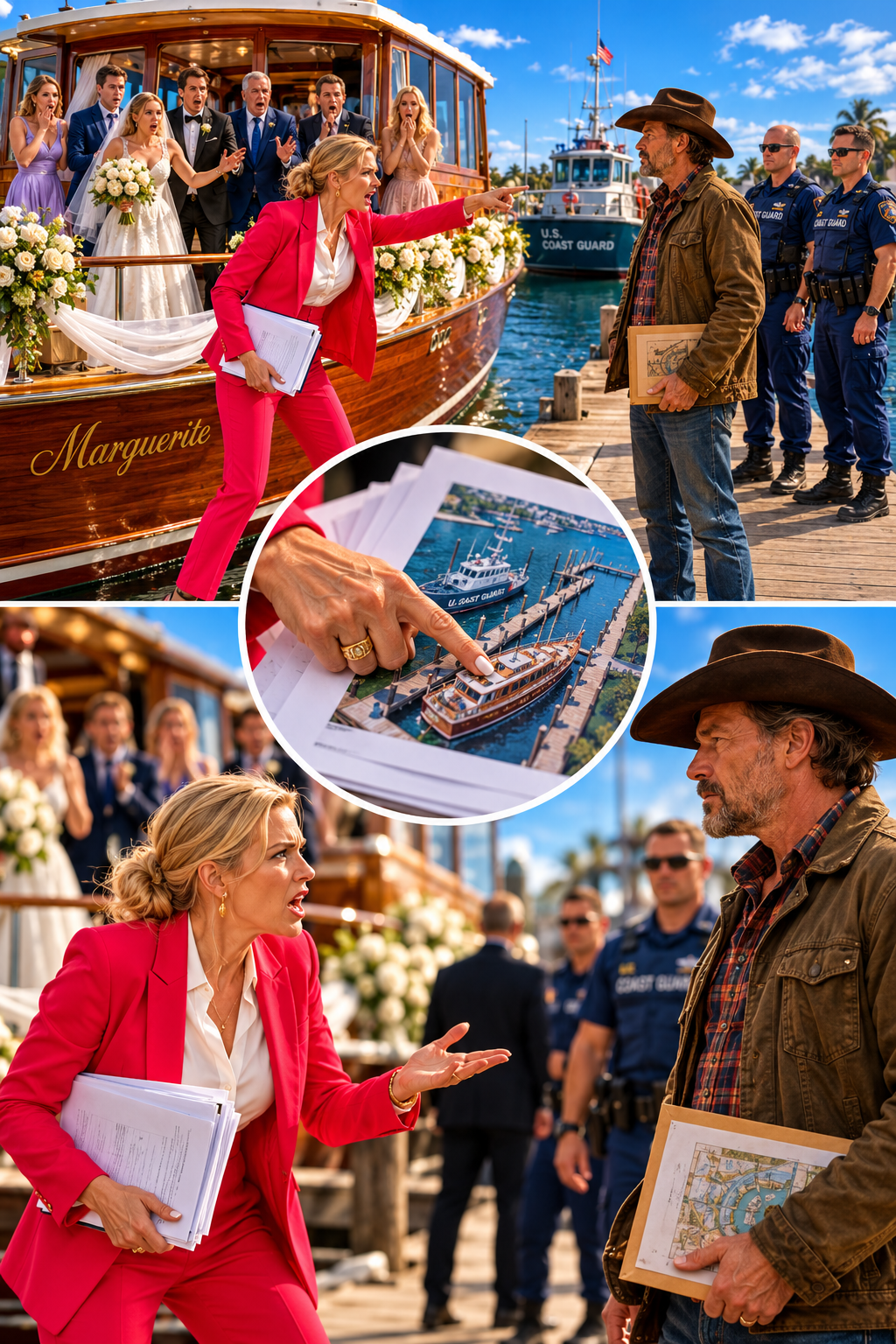
Part 2: A rule change targeted the boat that would not fit
Bayford Reach had ninety-four homes, sixty-one slips, and a dredged cove north of town. The neighborhood went up in 1998, when someone decided the Eastern Shore needed more vinyl siding. I had not bought my house for the house. I bought it because slip twelve had eight feet of water at mean low and a sixty-foot finger pier, while nearly every other slip was too shallow for Margarite.
The boat had to stay wet to stay healthy. Wood swells and shrinks; when a wooden hull dries, the planks pull apart and the seams open. Margarite ran a dehumidifier below deck year-round, with two bilge pumps connected to shore power. I checked the moisture meter as often as other men checked their blood pressure. In March, the overhead panels read fourteen percent, right where they needed to be.
Cheryl had been association president since 2019 and chaired a marina committee she had created. She carried a clipboard everywhere, even when nobody needed to write anything down. She also ran Reach Events by Cheryl, a small event-planning business above an insurance office in Chestertown. The marina bulkhead was failing, and an engineer had estimated replacement at $610,000. At a March meeting, Cheryl promised an “amenity revenue program” that could pay for it without a special assessment.
The first dispute seemed minor. I spent a Saturday sanding a customer’s fourteen-foot tender on the dock, a favor for a friend who had rebuilt my compressor. On Tuesday, a violation notice arrived: $150 for commercial activity at a residential slip. I wrote a polite letter explaining that the boat belonged to a friend, that I had charged nothing, and that the actual work happened at my shop on Sharp Street.
The board voided the fine by a four-to-one vote at its May meeting. Treasurer Naen Puit read my letter aloud and said, “This is a man sanding a rowboat.” A couple of residents laughed. Cheryl did not. She wrote “tabled” on her clipboard and underlined it twice. I thought the matter was finished. I was wrong in a way that would cost me nearly $70,000.
Eleven days later, a certified letter arrived announcing a fleet-standard proposal. Buried on page two was a forty-five-foot maximum for every vessel in the marina. Fifty-eight boats were under thirty-five feet, two were in the low forties, and mine was the only one over the proposed limit. I sat at the kitchen table and did the math twice, though it was obvious the first time.
At the June meeting, Cheryl said oversized vessels put too much strain on the pilings and bulkhead. She then announced that slip assignments would be adjusted, slip twelve reassigned to community use, and I would be moved to slip thirty-nine. I put down a tide chart and my moisture meter. “Slip thirty-nine has three feet two inches at mean low,” I said. “Margarite draws four feet one.”
Part 3: The association marketed my yacht and then cut its power
Cheryl smiled at the room. “The committee reviewed the depths.” I explained that the boat would sit on the bottom twice a day in slip thirty-nine, that its pedestal was only fifteen amps, and that the vessel required a dehumidifier and two bilge pumps. If the hull dried out, the seams would open. If the pumps stopped, the boat could take on water.
“Not everyone’s boat sinks,” Cheryl replied. The room shifted. Naen Puit, a retired accountant, asked to see the tide chart. She read the depth for the north row slowly, with one finger beneath the number. “Three feet two,” she said, looking at Cheryl over her glasses. Cheryl suggested the boat could be relocated seasonally. I asked her where.
There were perhaps four slips between Swan Point and Tolchester that could take a fifty-eight-foot boat with a four-foot draft. All were commercial and full during the season. The nearest place with space was in Georgetown, hours away by water. I reminded the board that my slip was attached to my lot by the recorded deed. The association could set reasonable use rules, but it could not vote away a recorded property right.
The motion failed three to two and was tabled for legal review. I felt good for about forty seconds. Cheryl closed her binder and said, “We’ll bring it back with counsel’s input.” In the parking lot, two men I barely knew shook my hand. One said she had been talking about slip twelve since February. That was the first time I understood the fight was about the slip, not about me.
Three weeks later, while I was sanding screw holes on Margarite’s foredeck, a thin, angry sound came from above. A drone hovered forty feet off the starboard bow, its camera aimed down the boat’s bright mahogany line. It slid along the hull, paused at the stern, then returned before flying toward the clubhouse. I watched it for a minute, then went back to my work.
In mid-June, a woman named Priscilla emailed me to ask what came with “the yacht” for an October wedding. She had found my address on the boatyard website. I searched Bayford Reach’s new waterfront-events page and saw Margarite in a full-width photograph, shot from the drone in afternoon light. The caption read, “Our community yacht.” Below it were six more photographs, a pricing block, and a booking form offering the premium package for $9,500.
I called Cheryl. “Take my boat off your website.” She said the images showed the marina, not the boat, and that “community yacht” was marketing language. I took screenshots of all seven images, the caption, and the prices, then saved an archived copy of the page with a timestamp. Ten days later, the caption changed to “historic vessels of Bayford Reach.” The photographs and pricing stayed.
That same week, the shore power stopped. I came down Friday evening to check the moisture level and immediately noticed the silence. A wooden boat on shore power has a familiar hum: the dehumidifier, then the bilge pump kicking in now and again. Inside the saloon, I smelled wet wool and pennies. The dehumidifier was dead, the bucket underneath it dry, and the moisture meter jumped from fourteen percent in March to seventy-eight.
Part 4: I found the wedding on my boat and called the Coast Guard
Black spots had started blooming across the forward cabin ceiling. I put a hand on the mahogany and felt warmth and softness, like a countertop left beneath a wet towel. In the bilge, water stood two inches above the limber holes. Margarite had been dry since 2019. I hurried to the shore-power pedestal and found the breaker off, with an orange inspection tag zip-tied to the handle.
Pedestals ten through fourteen had been tagged out, though three of those slips were empty. The other two held fiberglass boats with nothing to protect but battery chargers. I found Dale Kirby, the part-time harbor master, in his shack working a crossword beside a box fan. When I asked who had cut the power, he said a work order came in Tuesday morning. He could not tell me who issued it.
I photographed the tag, breaker, moisture readings, and water in the bilge. Then I called the marina electrician. He had not been there. I called the management company, which had no record of an inspection. My boat had been without power for three days in ninety-four-degree weather, and the association’s board members all knew my hull could not tolerate that.
An insurance letter followed in August. It came from my carrier, which had written my hull coverage since 2014. The underwriter intended to cancel the policy within thirty days while investigating “undisclosed commercial use.” Tom Wexler, my broker, said the HOA had sent a complaint claiming I ran commercial charters out of a residential slip. Their exhibit was the April violation notice for sanding a friend’s tender.
The board had voided that notice by a four-to-one vote, but Cheryl had sent the complaint without the minutes showing she had lost. Four days later, a county code-enforcement officer showed up at my Sharp Street shop to investigate a second complaint about spray operations and unpermitted marine business. He walked through the shop, checked the filters and zoning, and closed the file in nineteen minutes. I had a customer there watching the whole thing.
I was angry enough to say five ugly words to Cheryl over the phone. She hung up, and I did too. That night I sat on Margarite’s aft deck with an unopened beer, the cove still as oil around me. I went below and opened the ship’s papers drawer. The federal certificate said the vessel was endorsed for recreational use, not commercial carriage.
That distinction mattered. It was a federal violation to carry paying passengers on a recreationally endorsed vessel. Margarite had no Coast Guard certificate of inspection, and a boat of her age and construction could not easily obtain one without a near-total rebuild. I photographed the certificate, then pulled five years of tax returns. Each return showed zero charter income because I repaired boats; I did not run passengers around on them.
I emailed the documents to Tom at 11:40 that night. He called at the next morning and said he believed me, but the underwriter needed proof. The county closeout arrived September 3: no violation found, file closed. My coverage was reinstated on September 8 with no lapse. Tom called to tell me, then said quietly, “Wade, whoever’s doing this is going to keep doing it.”
Part 5: Her wedding plan depended on a key she had no right to use
The fines continued. By September, the association claimed I owed $2,850 for renewed commercial-activity violations and threatened to place a lien on my house. I did not pay. I added every notice to the folder. Later, I learned Cheryl had read the county closeout and the insurance reinstatement. She did not conclude that her allegations were wrong. She concluded that none of the systems she had contacted would stop her.
On August 29, Reach Events by Cheryl signed a $9,500 contract with Aubrey Pace and Tyler Machado for a sunset ceremony on September 20. The venue line read: “Bayford Reach Marina ceremony aboard MV Margarite.” I did not know about the contract. I told Dale on Thursday that I was driving to Annapolis for fasteners. I planned to leave at nine and return by four.
What happened that day later came out in discovery and in Dale’s account. At eleven, Cheryl went to the harbor master’s shack and asked for the key to slip twelve. Dale said no. The key and engine-start code existed only for emergency relocation ahead of a named storm. “There’s no storm,” he told her. Cheryl replied that the board had approved the amenity program and that the association had operational access to member vessels.
When Dale still hesitated, she said she would take the matter up with him on Monday. He handed over the key, then recorded the transaction in his spiral notebook. At 11:04 a.m., he wrote that Cheryl had signed out the key and code, claimed board approval, and that no named storm existed. He initialed and dated the entry in ink. Dale was seventy, worked part-time, and wrote things down because he did not trust office computers.
At one-thirty, a man named Denny Faucet arrived. He had found the job in a boating group and agreed to take $400 cash to captain the boat for four hours. Denny held an OUPV “six-pack” credential, but it had expired in 2023. Even when valid, that license allowed a captain to carry six passengers, not thirty-four. A paid voyage with that many guests required a certificate of inspection, which Margarite did not have.
At two, the caterer’s van blocked the ramp while forty white chairs, an arch, two coolers, and a string trio were carried down the dock. One musician struggled with a cello in dress shoes. By three, white organza was taped to my bow rail. At four-fifteen, Denny started the engines to warm them. Thirty-four guests, three vendors, Denny, and Cheryl made thirty-nine people aboard a vessel that carried twelve life jackets.
I returned at with a box of bronze screws under my arm. Cheryl was on the pier, directing the caterer. “Go home, Wade,” she called. I told her to kill the engines. She told me the association had operational authority. The lines came free, and Margarite backed out of slip twelve under a stranger’s hand.
Part 6: The storm key, wedding contract, and hidden texts exposed her plan
I called the Coast Guard instead of 911. I had kept the Sector Maryland NCR number in my phone since 2016, when I had found a swamped skiff off Eastern Neck with no one aboard. The watch stander answered quickly and sounded completely unimpressed, which was exactly what I wanted. I gave him Margarite’s documentation number, length, hull material, color, and the fact she had a canoe stern.
I told him there were more than thirty passengers aboard for a paid ceremony, that the operator was unknown to me, and that I was the documented owner and had not authorized the voyage. He asked whether I knew the captain’s credentials. I said I did not even know the man’s name. Then I gave him the sentence that mattered: “She’s a recreationally endorsed vessel carrying passengers for hire.”
His tone changed just enough. He told me to stay at the marina and asked whether I had the boat’s position. I could still see her, turning north toward Swan Point, moving perhaps eight knots into the orange evening light. I read her direction and position from the dock, then called Maryland Natural Resources Police. Afterward, I sat on a dock box because my legs had gone strange.
I learned what happened offshore from the people who filmed it. A Coast Guard small boat came alongside Margarite’s port quarter, with a Natural Resources Police boat behind it. The string music stopped mid-phrase. A boarding officer asked who was master of the vessel. Denny, standing at my helm, answered, “I’m just driving.” The officers counted thirty-nine people aboard and asked for the inspection certificate.
There was none. Denny produced an expired card, and Cheryl told the officers the association had operational authority over the yacht. The boarding team terminated the voyage because the vessel was operating in a hazardous, unlawful condition and had to return to the nearest safe mooring. Nobody was handcuffed. Nobody’s boat was seized. Margarite came back into the cove at four knots, escorted by a Coast Guard boat, while thirty-nine guests sat in silence.
I took the bow line from a groomsman who was holding it wrong and cleated it myself. The wedding party filed past me without looking up. The officers held the boat for two hours to take statements and document the deck. At , they released Margarite to me, the documented owner. The organza remained taped to the rail, rose petals clogged the scuppers, and spilled prosecco had run into a deck seam.
By Monday, a bridesmaid’s video had been watched by about 200,000 people. Its caption said the Coast Guard had seized the boat mid-wedding. I stood alone under the dock lights, feeling less like I had won than like someone had used my kitchen without permission. On Sunday morning, I swept petals from the teak for forty minutes. Then I sat on a dock box and began writing down what had happened.
Part 7: In court, her own signed words became evidence against her
For three weeks, I gathered evidence and backed up everything in three places. I saved my phone video, the HOA meeting recording, Dale’s notebook entry, the wedding guests’ videos, and the Coast Guard and police reports. The first week of October, I hauled Margarite at the yard next door for a survey. Rusty Delgraso, a careful shipwright, found the garboard seam open in two places and daylight visible through it.
The vessel had mildew in the forward cabin, sugar in a deck seam, and a heat ring on the mahogany combing. Rusty found fastenings in frames eighteen through twenty-six that had worked loose. His itemized estimate came to $71,400, about a third of it for refastening. I read the figure in my truck and had to sit down. Some years I did not clear that much in a full year.
I hired Ellen Fitz, a maritime attorney in Annapolis, at $425 an hour and a $7,500 retainer. She read the papers for nearly an hour before saying it was a good case, but it would take fourteen months and cost more than I expected. “Decide now if you can afford both,” she told me. “The worst outcome is running out of money in month nine and settling for a third of what you’re owed.”
Ellen identified three key issues. The slip-license clause allowed use of the key solely for emergency relocation ahead of a named storm, and there was no named storm on September 20. The $4,750 deposit had cleared into Reach Events by Cheryl LLC for a contract naming my boat as the venue. And the June amenity program had been approved by four people at a marina committee meeting, without notice, a board quorum, or later ratification.
The association’s own bylaws made that resolution void. That mattered because an officer acting within the scope of her role might be indemnified by the association and covered by its directors-and-officers policy. An officer acting under a void resolution and using private property for revenue routed through her own LLC might be on her own. Ellen’s strategy was to separate Cheryl from the association’s insurance and from the neighbors who had not signed up for this fight.
We filed suit against Cheryl, Reach Events by Cheryl LLC, and the Bayford Reach Community Association for conversion, trespass to chattels, negligence, and breach of covenants. The association’s negligence concerned the power cutoff, which had allowed moisture to damage a wooden hull. Separately, the Coast Guard opened a civil-penalty proceeding against Cheryl and Denny for carrying paying passengers on an uninspected vessel under an uncredentialed operator.
Aubrey and Tyler drove down one Sunday. They were upset, and Aubrey looked angry at herself for having cried. “We want you to know we didn’t know,” Tyler said. I told them no one thinks to ask a wedding planner whether she owns the boat. They had demanded their deposit back and received an offer of credit toward a future event. They handed me a thumb drive with the vendor file, emails, texts, invoices, and guests’ videos.
Cheryl denied everything through her attorney. She claimed the license granted operational access, the board approved the program, Dale gave the key voluntarily, and I had been cited for commercial activity myself. In discovery, the HOA’s own tape captured her interpretation of the license at the annual meeting. Dale’s notebook had the entry: “No-name storm.” And a saved email from the day before the wedding contract said, “Don’t CC Wade on this one. He’ll say no. Then we’d have to unbook them.”
Part 8: The verdict restored my boat, but it could not erase loss
At trial, Cheryl’s attorney argued that the license was broad, that Dale had willingly handed her the key, and that she had hired a man who said he was a captain. Cheryl had never touched the helm, he emphasized. She believed the association had authorized the program and that the community needed the money for its failing bulkhead. I think she believed much of what she said. That was not the same as having the authority to do it.
The judge watched the Coast Guard video twice. She heard the cello stop, then the officer ask, “Who’s the master of this vessel?” She saw the recreational endorsement on the certificate and heard a retired Coast Guard warrant officer explain that Margarite could not carry passengers for hire. The judge compared the weather report—clear skies and an eight-knot southwest wind—with the clause requiring a named storm.
Dale testified in a Navy windbreaker with hands shaped by decades on the water. He read his notebook entry aloud. Cheryl’s attorney asked whether he might have misremembered the conversation fourteen months earlier. “I wrote it down that morning,” Dale said. When asked why he handed her the key if he knew there was no storm, he replied, “I figured she’d find a way to get it anyhow. Then I wrote it down so somebody’d know.”
The contract showed a $9,500 package with Margarite listed as the venue. The bank statement showed the deposit clearing into Cheryl’s LLC. Beside those papers, Ellen placed Cheryl’s April violation notice, the one that had fined me for sanding a friend’s rowboat without charge. “The president fined my client $150 for sanding a rowboat,” Ellen said, “then sold tickets aboard it.” Her attorney objected, and the judge sustained the objection, but she had already read both documents.
The final evidence included the email telling the assistant not to copy me, then the videos from the dock and the Coast Guard boarding. Rusty testified about the damage and gave the court the moisture readings he had taken before the dispute began. Cheryl’s lawyer showed that an old wooden boat needed regular maintenance regardless, and that some refastening would eventually have been necessary. Rusty agreed, but said the heat and the passenger load were part of the same injury.
Cheryl testified that she believed the license gave access, the board had authorized the program, and Denny told her he was licensed. She said every dollar would have gone to the bulkhead. Near the end, her attorney asked why I had not let the wedding continue for twelve minutes instead of calling federal authorities. I thought of thirty-nine people on a vessel that was not approved to carry them, and I answered carefully.
The written ruling arrived three weeks later. The slip clause meant what it said: a named storm was a condition, not a suggestion. The June 3 committee resolution was void under the association’s own bylaws, and Cheryl had acted outside the scope of her office. Judgment was entered jointly against her and her LLC for $63,900, and against the association for $14,100 on the negligence claim. The judge also barred the association from using my boat or its images for commercial purposes.
The Coast Guard’s civil-penalty decision came four months later: $17,500 against Cheryl and $3,000 against Denny. I had no hard feelings toward Denny; he was thirty-one, took $400 cash to drive a beautiful boat, and failed to ask the one question that mattered. Cheryl lost the presidency after fifty-seven residents signed a petition. Reach Events by Cheryl dissolved the following spring, not by court order, but because no venue wanted its name connected to the boarding video.
Part 9: We gave the boat another wedding, this time by choice
The bulkhead was finally rebuilt, paid for by the special assessment the community had tried to avoid. The steel sheet piles came by barge, and the vibration hammer started at every morning, a concussion I felt in my back teeth. The price had always been the price. Every fine, letter, drone flight, power cutoff, and wedding had been one person trying not to send a bill the neighborhood would eventually have to pay.
Bayford Reach rewrote its slip license. Two signatures were required before any key could be released, written notice to the vessel owner was mandatory, and “named storm only” appeared in bold. Slip twelve was permanently recorded against my lot in the settlement paperwork. That cost about $900 in title work. It was the best $900 I ever spent.
Margarite went into a heated shed in March. I recaulked the garboard seam with cotton and compound, then refastened the starboard frames from eighteen through twenty-six, removing eleven planks and putting them back one at a time. The mildew required a remediation crew and a long weekend with vinegar, a shop vacuum, and a headlamp. Then came six coats of varnish, laid on in a heated shed with the doors shut.
By the fourth coat, the mahogany stopped looking like color and began looking like depth. Margarite went back into the water on May 22. Wooden boats weep at first; then the planks swell and the seams close. I sat on the dock most of that first night, watching the bilge pumps. By Saturday, the hull was dry again.
Aubrey and Tyler were married that October in her aunt’s backyard in Centreville. They sent me a photograph from the ceremony. The summer after Margarite’s refit, I offered them a vow renewal aboard her, making sure they understood I wanted nothing in return. Twenty-two people came aboard while the boat was tied securely to the dock. The engines stayed cold, and not an inch of the yacht moved.
Dale Kirby stood at the bow handling a line that did not need handling. By then he was seventy-two and wore a tie. Someone’s child touched the freshly varnished combing and left fingerprints. The child’s mother apologized six times. I told her the truth: fingerprints wipe off, and Margarite had been through worse.
When the officiant reached, “If anyone here objects,” there was a two-second pause. Everyone who knew the story looked at everyone else. Then the whole boat laughed, including me. It was the first time I had laughed about what happened without feeling the anger waiting underneath it.
The guests left around nine. I stayed behind with a rag in my back pocket and the dock lights on. The Chesapeake made its small slap against the transom, the sound it makes whether anyone is listening or not. There were rose petals in the scuppers again, in the same place they had collected during the first ceremony. This time, I let them sit there overnight because I was the one who had invited everyone aboard.
I still think about what happened whenever someone calls an association rule “ownership” or a private boat a “community amenity.” Read the documents that govern your property, especially the clauses that describe emergencies. Ask who has the key, when it can be used, and who benefits from the answer. Margarite is still in slip twelve, where her deed says she belongs. The water moves under her hull, and the lines are tied by choice.
✓ Lynn R. Adams
Part 2: A rule change targeted the boat that would not fit Bayford Reach had ninety-four homes, sixty-one slips, and a dredged cove north of town. The neighborhood went up in 1998, when someone decid…