The HOA Put My Private Ranch Overlook in Its Christmas Brochure—Then I Found Buyers Walking My Land
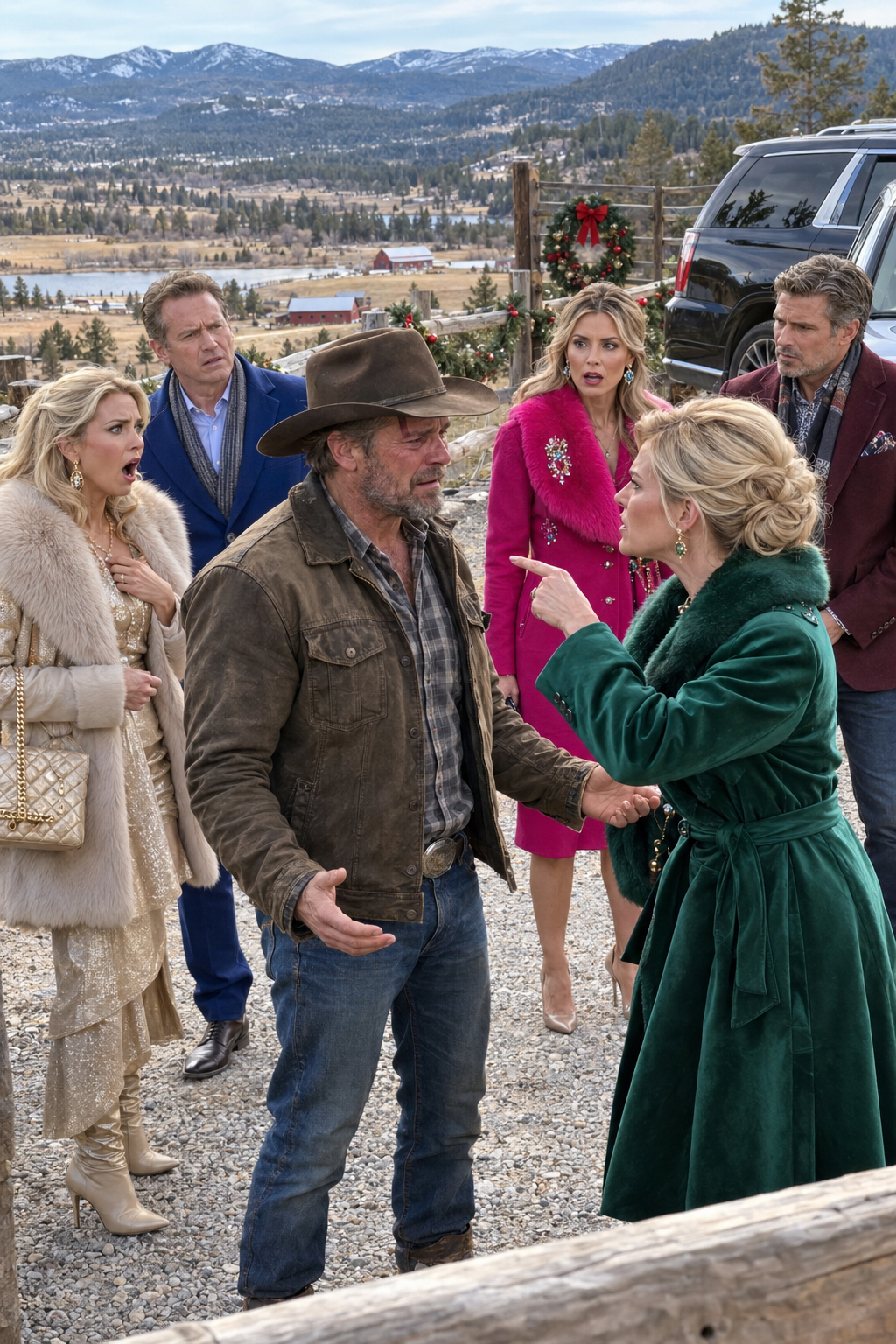
The HOA Put My Private Ranch Overlook in Its Christmas Brochure—Then I Found Buyers Walking My Land
The first stranger I caught trespassing on my ranch was standing six feet from a cliff with his eight-year-old daughter.
The second had a realtor.
The third looked me straight in the eye, pointed toward my house, and said, “The brochure says all of this becomes community property after Christmas.”
That was when I stopped thinking I had a trespassing problem.
I had a fraud problem.
My name is Claire Whitmore.
I was thirty-nine that December, and I owned 4,860 acres outside Silver Pine, Colorado, where the high desert climbed into ponderosa country and winter arrived hard enough to make the fence wire sing at night.
The land had been in my family since 1928.
My great-grandfather bought the first 640 acres after working rail crews through Wyoming.
My grandfather added cattle pasture.
My father bought neighboring parcels whenever drought, divorce, or bad luck forced another rancher to sell.
By the time Dad died, Whitmore Ranch stretched from County Road 18 on the east all the way to Granite Crown Ridge on the west.
Granite Crown was the reason strangers kept arriving.
The ridge rose nearly nine hundred feet above the valley.
From the overlook, you could see the snowpacked Sangre de Cristo Mountains, a silver ribbon of river, three distant lakes, and the lights of Silver Pine glowing in the valley after sunset.
Dad used to call it the closest thing Colorado had to standing on the edge of heaven.
We kept it private.
No tourist buses.
No weddings.
No corporate retreats.
No hiking influencers climbing over fences for sunrise videos.
It was where my father proposed to my mother.
It was where we scattered both their ashes.
And it was where I went every Christmas morning with coffee in one hand and their old yellow Lab’s collar in my coat pocket.
So when I drove up the ridge on December 6 and saw a black Lexus SUV parked beside my cattle gate, I knew something was wrong before I even killed the engine.
A man in a camel overcoat was taking photographs.
A woman in a cream puffer jacket was holding a glossy booklet.
Their little girl was leaning dangerously close to the drop.
I stepped out.
“Back away from the edge.”
The father turned.
He didn’t look frightened.
He looked annoyed.
“Excuse me?”
“Your daughter,” I said. “She needs to step back.”
The mother grabbed the girl’s sleeve.
The father frowned at me.
“We have permission to be here.”
“No, you don’t.”
He actually laughed.
“We’re prospective homeowners.”
I looked at the Lexus.
Then the booklet.
“You’re on Whitmore Ranch.”
He said it like that proved his point.
I walked closer.
The wind came over the ridge sharp enough to sting my eyes.
“Whitmore Ranch is private property.”
He opened the booklet.
“Not according to this.”
He handed it to me.
The cover showed a digitally enhanced photograph of Granite Crown.
Snow had been added to the pine branches.
Someone had brightened the sunset.
At the bottom stood a line of enormous gold letters.
CEDAR CREST ESTATES.
A COMMUNITY ABOVE THE ORDINARY.
I knew Cedar Crest.
Unfortunately.
It was a gated subdivision of 122 luxury homes built twelve years earlier against the eastern boundary of our ranch.
Homes started at $900,000.
The newest ones topped $2.5 million.
They had a clubhouse, indoor pool, tennis courts, artificial ponds, and an HOA whose board apparently believed county maps were polite suggestions.
I opened the brochure.
Page one showed the clubhouse.
Page two showed model homes.
Page three showed Granite Crown.
Except they didn’t call it Granite Crown.
They called it:
THE CEDAR CREST SUMMIT OVERLOOK.
Underneath the photo, small gold text read:
“Beginning Christmas Day, residents will enjoy exclusive access to our newly acquired 860-acre Western Preserve featuring private hiking trails, holiday sleigh routes, wildlife viewing, and the breathtaking Summit Overlook.”
I read it twice.
Then a third time.
My heart wasn’t pounding.
That surprised me.
Instead, everything inside me became very quiet.
“What’s your name?” I asked the man.
His expression changed.
Just slightly.
“Because somebody gave you fraudulent information, and I need to document who received it.”
The mother lowered the brochure.
“Fraudulent?”
The man’s annoyance faded.
He looked back toward the ridge.
“The sales office said the HOA acquired this land.”
“They lied.”
The mother stared at me.
“But our realtor said the preserve was included in the HOA expansion.”
“It isn’t.”
The father pointed toward the gate.
“The lock was open.”
That mattered.
I had locked that gate myself the night before.
It used a heavy brass Abloy padlock.
Now the chain hung loose.
The lock was gone.
“Who opened it?” I asked.
The couple exchanged glances.
“Our realtor gave us the gate code.”
“There is no gate code.”
Then the woman reached slowly into her purse and handed me a business card.
NATHAN ROTH.
LUXURY PROPERTY SPECIALIST.
CEDAR CREST PARTNERS.
That was my first real clue.
I photographed their license plate, brochure, and business card.
Then I escorted them out.
Before they drove away, the woman rolled down her window.
“I’m sorry.”
She hesitated.
“We almost put down a deposit this morning.”
“How much?”
“Seventy-five thousand.”
That was when the scope of it started becoming clear.
This wasn’t somebody putting the wrong photograph in a Christmas flyer.
Somebody was selling my ranch.
Not legally.
But they were selling the idea of it.
By that afternoon, I had found seven different versions of the brochure online.
One called the preserve 860 acres.
Another said 940.
A promotional email advertised “direct trail access to Granite Crown beginning December 25.”
A video from Cedar Crest Realty showed a drone flying across my western pasture.
My cattle were visible below.
My barn was visible in the distance.
At one point, the camera passed directly over my house.
Then I found the map.
That was the moment I stopped being irritated and started taking screenshots like evidence.
Because the map didn’t merely show hiking access.
It showed almost 900 acres of my ranch shaded green.
The color reached across two grazing fields, a spring-fed creek, three miles of private road, and Granite Crown itself.
There were proposed walking trails.
Picnic stations.
A “future residents’ pavilion.”
Even a little sleigh icon near my old equipment barn.
At the bottom of the map was a disclaimer.
“Conceptual amenities subject to acquisition and final approval.”
That sentence was doing a heroic amount of legal work.
I called my attorney.
Her name was Megan Price.
She had represented my father for sixteen years before representing me.
She was fifty-two, sharp-eyed, brutally organized, and one of the few people alive who could make me nervous by going silent.
I emailed her the brochure.
She called thirty seconds later.
“Where did you get this?”
“From a family standing on Granite Crown.”
“Do not call the HOA.”
“I wasn’t planning to.”
She paused.
“Claire, I want you to listen carefully.”
“I’m listening.”
“Do not confront the board. Do not threaten anybody. Do not post this online.”
“Because if this is what I think it is, I don’t want them changing a single document before we preserve everything.”
That night I slept with the property maps spread across my dining table.
At the next morning, my ranch foreman, Earl Jenkins, called.
Earl was sixty-one, bowlegged from a lifetime around horses, and had worked with my father before I was old enough to drive.
I heard an engine behind him.
“Where are you?”
“North pasture.”
“What happened?”
“Got visitors.”
“How many?”
“Four vehicles.”
I was already grabbing my boots.
“What are they doing?”
“Walking toward the ridge.”
“Stop them.”
Another pause.
“They showed me passes.”
“What passes?”
“Christmas Overlook Preview passes.”
I closed my eyes.
“I’m coming.”
By the time I reached the north pasture, Earl had parked his F-350 across the ranch road.
Behind it sat two Range Rovers, a Mercedes, and a white Cadillac Escalade.
Nine people stood outside.
Two carried cameras.
One carried a bottle of champagne.
Another man had unfolded what looked like a picnic blanket.
And at the center of it all stood a woman in a red wool coat.
She was about sixty.
Perfect silver-blonde hair.
Diamond earrings.
Black leather gloves.
If arrogance could wear perfume, it would have smelled exactly like her.
I knew her immediately.
Pamela Vance.
President of the Cedar Crest Homeowners Association.
She had been elected three years earlier after promising to “raise community standards.”
Apparently, those standards included taking other people’s land.
Pamela smiled when she saw me.
Not warmly.
Deliberately.
She gestured toward the people behind her.
“These are invited guests.”
“They’re trespassers.”
Her smile remained.
“We don’t need to make this unpleasant.”
I looked at Earl.
“Did you call the sheriff?”
“Deputy’s on his way.”
That finally changed Pamela’s expression.
“You’re calling law enforcement over a misunderstanding?”
“There’s no misunderstanding.”
I took one of the passes from a guest.
It was printed on thick cream cardstock.
CEDAR CREST CHRISTMAS SUMMIT PREVIEW.
PRIVATE ACCESS EVENT.
DECEMBER 7.
Then, beneath it:
HOSTED BY HOA PRESIDENT PAMELA VANCE.
I looked back at her.
“This has your name on it.”
“That doesn’t establish ownership.”
“No. It establishes knowledge.”
Her jaw tightened.
The guests began looking uncomfortable.
One man asked, “Pamela, is this not HOA property?”
She turned immediately.
“The acquisition is undergoing final procedural completion.”
I almost admired the phrase.
It was elegant nonsense.
I said, “There is no acquisition.”
Pamela looked at me.
Something cold appeared behind the polished smile.
“We should discuss this privately.”
“You don’t understand the long-term opportunity.”
“My land isn’t your opportunity.”
She lowered her voice.
“You own almost five thousand acres, Claire.”
There it was.
Not the whole motive.
But part of it.
“You use maybe a fraction of it.”
I said nothing.
“Cedar Crest needs western recreational access. Our residents have invested millions in this community.”
“And your ridge sits empty.”
“My cattle use it.”
She glanced toward Granite Crown.
“The overlook.”
“My family uses it.”
“For what?”
That question told me everything I needed to know about Pamela Vance.
Some people only understand land when it produces money.
If it doesn’t have a restaurant on it, a subdivision on it, a membership fee attached to it, they consider it wasted.
“My reasons aren’t your concern.”
Her smile returned.
“We offered you fair market value last year.”
“You offered me $1.1 million for 900 acres worth several times that.”
“The offer reflected access limitations.”
“No. The offer reflected your assumption that I was stupid.”
One of the guests made a quiet choking sound.
Pamela ignored him.
“This could benefit everyone.”
“It already benefits me.”
“By sitting empty?”
“By being mine.”
The deputy arrived ten minutes later.
Pamela left before he finished taking names.
She didn’t threaten me.
She didn’t confess anything.
She simply slid into her black Mercedes and said one sentence through the open window.
“You’re making this much harder than it needs to be.”
By noon, Megan had hired a digital evidence firm.
They preserved the HOA website.
The real estate pages.
The drone video.
PDF copies of the Christmas brochure.
Archived versions of pages that had apparently existed since October.
That date bothered me.
Because Pamela had last spoken to me about purchasing acreage in May.
I declined in writing.
There had been no negotiation since.
Yet by October, Cedar Crest was publicly advertising my property as a future amenity.
Not proposing it.
Advertising it.
I went through Dad’s files.
Every deed.
Every survey.
Every easement.
Every county filing.
I found nothing granting Cedar Crest rights to Granite Crown.
No purchase agreement.
No recreational easement.
Then Megan found something.
At that afternoon, she emailed me a county record.
I opened it on my laptop.
It was titled:
MEMORANDUM OF DEVELOPMENT UNDERSTANDING.
Recorded November 14.
The document referenced “Whitmore Western Holdings.”
It described a planned transfer of 863.4 acres adjoining Cedar Crest Estates.
It included a legal description.
My legal description.
And at the bottom, above the recording stamp, appeared a signature.
CLAIRE E. WHITMORE.
Except I had never signed it.
I stared at the screen for a long time.
Then I called Megan.
“That’s not my signature.”
“Because I have seventeen years of documents you signed.”
“Who notarized it?”
“A woman named Lisa Danner.”
“Do you know her?”
“Does she work for Cedar Crest?”
“I’m checking.”
I enlarged the signature.
It was good.
Someone had studied mine.
They had copied the long upward stroke of the W.
The open loop in the h.
Even the tiny slash I make through the final e.
But they made one mistake.
A stupid one.
My father taught me to sign ranch documents differently after someone forged his name on a cattle sale in 1999.
My ordinary signature was Claire E. Whitmore.
But for deeds, easements, loans, purchase agreements, and property documents, I always added a small dot under the second stroke of the W.
It was something Dad and Megan knew.
No one else should have.
This signature didn’t have the dot.
I sent Megan a close-up.
Her response came immediately.
That evening I drove every perimeter gate on the eastern boundary.
Three had been tampered with.
One chain was cut.
Two locks were missing.
At the south trailhead, I found fresh tire tracks.
Beside them lay an empty cardboard box.
Inside were twenty green plastic stakes.
PROPERTY TOUR.
I photographed everything.
Then I installed cellular trail cameras.
I didn’t put up angry signs.
I didn’t stand at the gate with a shotgun.
I didn’t start a social media war.
I started collecting.
Photographs.
Because anger feels powerful for ten minutes.
Evidence stays powerful in court.
On December 9, the cameras triggered nineteen times.
Twenty-seven people entered.
On December 10, thirty-four.
On December 11, fifty-two.
Some came alone.
Some came with agents.
One family brought Christmas cookies and sat on my stone wall for an hour.
Another couple walked through my hay barn.
Two teenagers climbed onto an old John Deere that had belonged to my father.
One man flew a drone directly beside my bedroom windows.
Earl wanted to lock every gate with logging chain.
I told him not yet.
“You’re letting them in?” he asked.
“Looks like it.”
“I’m letting the camera see them.”
His eyebrows rose.
Then he smiled.
“Your dad used to do that.”
“Get quiet when somebody was digging his own hole.”
By December 12, I understood the marketing strategy.
Cedar Crest was selling Phase Four.
Thirty-eight new luxury homes along the subdivision’s western edge.
Without Granite Crown access, those homes overlooked scrubland, fencing, and the backs of my cattle pastures.
With the “Western Preserve,” they were suddenly premium mountain properties.
The difference?
According to the sales listings, between $220,000 and $410,000 per home.
Thirty-eight homes.
Do the math.
My ridge wasn’t a brochure decoration.
It was the thing turning Phase Four into a multimillion-dollar premium.
That was Pamela’s motive.
But motive wasn’t proof of who forged the document.
Then I received the letter.
It arrived by certified mail on December 13.
Cedar Crest HOA letterhead.
Pamela’s signature at the bottom.
It stated that beginning December 20, my “continued interference with authorized property access” would constitute disruption of HOA-approved development activity.
I read the sentence twice.
Then laughed.
The letter demanded that I remove “unauthorized livestock barriers” blocking the preserve entrance.
Livestock barriers.
They meant my ranch gates.
It also warned me not to “harass residents, prospective purchasers, contractors, or HOA representatives using designated access corridors.”
They had forged something.
Recorded something.
Started selling something.
And now they were ordering me not to interfere with strangers trespassing on my own property.
I scanned the letter and sent it to Megan.
Five minutes later, she called.
“I love this woman.”
“You love Pamela?”
“Professionally.”
“She cannot stop creating exhibits.”
We filed suit the next morning.
No press release.
No Facebook rant.
No dramatic HOA meeting.
Petition for emergency injunctive relief.
Slander of title.
Civil trespass.
Request to invalidate the memorandum.
Preservation order for HOA records.
Megan also forwarded the suspected forged filing to the district attorney’s office.
That part wasn’t theatrical.
Forging a property document was potentially criminal.
By afternoon, the judge issued temporary restrictions prohibiting Cedar Crest from representing that it owned, controlled, or possessed recreational rights over any Whitmore Ranch acreage.
Pamela received the order at p.m.
At , the brochure vanished from the HOA website.
At , the drone video disappeared.
At , the phrase “Western Preserve” disappeared from six listings.
At , Nathan Roth, the realtor whose card I had received from the first couple, called me.
I put him on speaker with Megan silently listening.
“Ms. Whitmore?”
“This is Nathan Roth.”
“I think there may have been some confusion regarding the preserve.”
“Confusion?”
“We relied on information provided by the association.”
“What information?”
“I’m not comfortable discussing internal documentation.”
“Then you should talk to your attorney.”
Another silence.
He exhaled.
“Look, I want to be clear that our brokerage did not create the acquisition documents.”
There it was.
Megan wrote something on her legal pad and held it up.
ASK WHO DID.
I said, “Who created them?”
“I didn’t say I know.”
“You said your brokerage didn’t.”
“That’s different.”
“Who gave them to you?”
“I really need to speak with counsel.”
He hung up.
Megan looked delighted.
She tapped the recorder.
“He just told us there were acquisition documents plural.”
I leaned back.
The fraudulent county memorandum was one document.
What were the others?
That question carried me through the next two days.
I kept working the ranch.
Winter doesn’t care about lawsuits.
We had pregnant cows to check.
Water trough heaters to repair.
A half-mile of fencing to reinforce before the next snowstorm.
I tried to keep life normal.
But every hour brought another small piece.
A Cedar Crest resident emailed me anonymously.
She attached a September HOA newsletter.
One paragraph mentioned a “major western expansion announcement arriving this holiday season.”
Another resident sent meeting minutes from October.
The board had approved $184,000 in “recreational access improvements.”
No property name was listed.
A third resident sent a photograph taken from inside the clubhouse.
It showed a giant wall map.
My ranch appeared on it.
Eight hundred sixty-three acres were shaded green.
A dotted trail ran to Granite Crown.
At the bottom, red marker handwriting said:
TARGET OPENING: CHRISTMAS DAY.
Then came the anaphora I still remember more clearly than almost anything else from that week.
I had spent my entire life being told to be reasonable about land.
Be reasonable, because the subdivision needs room to grow.
Be reasonable, because wealthy buyers want mountain views.
Be reasonable, because cattle country is old-fashioned.
Be reasonable, because one woman doesn’t need thousands of acres.
Be reasonable, because everyone else can make more money if I surrender something my family refused to surrender for nearly a century.
That night, standing beneath the fluorescent lights of Dad’s old ranch office, I finally understood something.
“Reasonable” was the word people used when they wanted your consent cheaper than they could buy your property.
So I stopped worrying about whether Pamela thought I was reasonable.
I started wondering how far she had gone.
The answer came on December 16.
At a.m., my trail camera sent me a photograph of a bulldozer.
Not on Cedar Crest property.
I was in the truck before the second image loaded.
Earl called while I was driving.
“You seeing this?”
“I’m ten minutes out.”
“Call the sheriff.”
“Already did.”
The bulldozer was a yellow Caterpillar D5.
Behind it were two pickup trucks and a skid steer.
Three men in high-visibility jackets were unloading temporary fencing beside my south pasture.
I pulled across the road and blocked them.
A heavyset man with a gray beard walked toward me.
“You Claire?”
He held out a clipboard.
“We’re here for trail prep.”
“No, you’re not.”
He looked annoyed.
“Got a work order.”
“From whom?”
“Cedar Crest.”
“This is Whitmore Ranch.”
He stared at me.
Then down at his paperwork.
“Parcel 47B?”
He looked again.
His annoyance changed into concern.
“They told us they closed on this.”
“They didn’t.”
He swore under his breath.
“Can I see the work order?”
He hesitated.
Then handed it over.
Red Rock Earthworks.
Project: WESTERN PRESERVE TRAIL ACCESS.
Scope: clear twelve-foot corridor approximately 1.8 miles.
Remove fencing where indicated.
Grade roadbed.
Install drainage.
Remove fencing.
My fencing.
I photographed every page.
The foreman rubbed his beard.
“They paid thirty percent upfront.”
“How much?”
“Forty-two grand.”
“Who signed the work authorization?”
He flipped to the last page.
Pamela Vance.
Underneath her signature was another line.
PROPERTY OWNER AUTHORIZATION.
CLAIRE E. WHITMORE.
Forged again.
This one included the dot under the W.
My stomach went cold.
Someone had corrected the mistake.
That meant whoever forged the first signature had either seen one of my real property signatures afterward or been told exactly what was wrong with the first forgery.
That narrowed things.
And made everything worse.
I didn’t tell the contractor what I had noticed.
I simply photographed the signature.
The sheriff’s deputy arrived.
The equipment left.
No screaming.
No bulldozer dramatically seized.
Just paperwork, photographs, statements, and another piece of the trap closing.
Megan came to the ranch that afternoon.
I showed her the signature.
She put both versions beside each other.
The county filing without the dot.
The contractor authorization with it.
“You told anyone about the dot?”
“My parents knew.”
“Anyone at the HOA?”
She studied the second signature.
“Who has access to old documents with the property version?”
“The county recorder.”
“Public access?”
“Your bank?”
“Insurance.”
“Probably.”
“Accountant?”
Then she looked at me.
“Your previous attorney?”
“My father only used you after 2007.”
“Before that?”
“Harold Benton.”
Megan’s face changed.
“Harold Benton represented Cedar Crest’s developer.”
The room went silent.
“During the original subdivision approval.”
I stared at her.
“My father fired him.”
“He said Benton was pushing an easement too aggressively.”
“What easement?”
There was an old green filing cabinet against the back wall.
Dad never threw away anything involving land.
I opened the bottom drawer.
Files from the early 2000s.
Mineral rights.
Pipeline negotiations.
Then I found a folder.
CEDAR CREST.
Inside were letters from 2006.
The original developer wanted emergency access across 1.2 miles of our ranch.
Dad refused.
There was a proposed easement.
Another offer.
A third letter.
Then a handwritten note from my father.
BENTON SAYS SIGN LIMITED ACCESS.
LANGUAGE TOO BROAD.
Below that:
FIND NEW LAWYER.
I handed it to Megan.
She read without speaking.
Behind the note was a draft easement.
The language looked ordinary until Article Seven.
Future modification rights.
Successor beneficiaries.
Recreational improvements.
Transferable access.
It was breathtakingly broad.
Dad had been right.
If he had signed it, Cedar Crest might have claimed access rights over a significant part of our eastern acreage.
But he hadn’t.
At least the copy in my file wasn’t signed.
Megan looked at me.
“Is Benton alive?”
“Still practicing?”
“I think he retired.”
She checked her phone.
“He’s seventy-four. Lives in Arizona.”
“Would Pamela know him?”
“She might not need to.”
“What do you mean?”
“The original Cedar Crest corporate records would contain his firm.”
I looked down at the old draft.
There were only two reasons anyone would care about a twenty-year-old failed easement.
One, they thought it had been signed.
Or two, they wanted to make it look like it had.
On December 18, Cedar Crest’s attorneys finally responded in court.
Their argument changed everything.
They didn’t deny using my ranch in promotional materials.
They didn’t deny distributing preview passes.
They didn’t deny authorizing contractors.
Instead, they claimed Cedar Crest possessed longstanding contractual rights dating back to 2006.
Megan read the filing aloud in her office.
“Defendant contends that access rights across the disputed acreage derive from a predecessor easement agreement executed March 2, 2006.”
She stopped.
I stared at her.
“They’re claiming Dad signed it.”
“They have a copy?”
“They attached one.”
She turned the laptop toward me.
There it was.
The same document I had found in Dad’s file.
Same paragraphs.
Same broad language.
Except their version had signatures.
Harold Benton.
Thomas Whitmore.
And a notary stamp.
For several seconds, I couldn’t hear anything except the faint hum of Megan’s heater.
“That’s fake.”
“Are you sure?”
“How sure?”
“My father would never have signed that.”
“That’s not enough.”
I leaned closer.
Dad’s signature looked convincing.
Maybe too convincing.
“What else?”
Megan scrolled.
The document had supposedly been notarized by Marjorie Wells.
I recognized the name.
“She worked at First Mountain Bank.”
“Know her?”
“She notarized half the ranch documents in Silver Pine.”
“She died in 2019.”
That was convenient.
But dead witnesses didn’t automatically mean forged documents.
Megan pulled out my unsigned copy.
We compared them page by page.
Same spacing.
Same typographical error on page six.
Then I noticed something.
“Page three.”
She looked.
“Paragraph eleven.”
The unsigned version in Dad’s file contained a handwritten correction.
The typed sentence said:
“Access corridor shall not exceed thirty feet.”
Dad had crossed out thirty and written twenty.
The HOA’s supposedly signed copy showed the same handwritten correction.
Exactly the same.
Even the shape of Dad’s 2.
That didn’t prove forgery.
If he signed a corrected copy, it could match.
But something felt wrong.
I photographed both.
Then remembered Dad’s habit.
Whenever he made changes to a contract, he initialed the margin.
Every time.
I checked the rest of the document.
Three handwritten edits appeared.
None were initialed.
“Dad didn’t do this.”
Megan said, “We need stronger proof.”
We found it twenty minutes later.
On the last page.
The signature block identified Dad as:
THOMAS E. WHITMORE, TRUSTEE, WHITMORE LAND TRUST.
“My father wasn’t trustee in 2006.”
“When did he become trustee?”
“After Mom died.”
Megan froze.
Then reached for the trust records.
She found the formation date.
October 14, 2011.
Five years after the alleged easement was signed.
For the first time since the whole mess began, Megan smiled without restraint.
“They backdated a document using an entity that didn’t exist.”
That should have ended it.
It only told us the fraud was bigger than a Christmas brochure.
The judge set an emergency evidentiary hearing for December 21.
Three days before Christmas Eve.
Pamela arrived wearing an ivory coat over a navy suit.
She looked composed.
Nathan Roth sat behind Cedar Crest’s attorneys.
Two board members sat beside him.
One of them, Greg Holloway, avoided looking at me.
The courtroom wasn’t crowded.
Maybe thirty people.
But almost all of Cedar Crest seemed to be watching through rumors, group texts, and livestream notes passed by residents in the hallway.
Megan presented the timeline.
My ownership records.
The false county memorandum.
The promotional materials.
Trespass passes.
Contractor authorization.
The forged signatures.
Then she placed the alleged 2006 easement beside the 2011 trust certificate.
The judge looked at Cedar Crest’s attorney.
The attorney stood slowly.
“Your Honor, we received the historical easement from our client.”
“I understand where you received it. I’m asking how a person signed as trustee of an entity that did not exist for another five years.”
The attorney looked toward Pamela.
That tiny movement mattered.
Pamela’s face remained still.
The lawyer said, “We will need an opportunity to investigate the provenance.”
Megan stood.
“The defendant has been entering my client’s property, inviting prospective purchasers onto it, commissioning construction, and representing ownership rights based partly upon a facially impossible document.”
Cedar Crest’s lawyer said, “The association relied in good faith—”
The judge interrupted.
“Good faith did not drive a bulldozer onto somebody else’s ranch.”
The preliminary injunction was expanded.
Cedar Crest was prohibited from entering my property.
Advertising it.
Directing third parties onto it.
Using any claimed easement.
Representing any acquisition.
Or contracting for work involving the disputed acreage.
The judge also ordered preservation and production of board communications relating to Whitmore Ranch, Granite Crown, the Western Preserve, and Phase Four.
That was the mini-payoff I needed.
Not victory.
Because within forty-eight hours, their own communications began breaking them apart.
The first batch contained ordinary board emails.
Landscaping.
Holiday lighting.
Gate repairs.
Pool maintenance.
Then Megan found an email from Greg Holloway to Pamela dated August 28.
WESTERN LAND.
Greg wrote:
Are we certain Whitmore signed? Nathan is asking for something before they finalize December marketing.
Pamela replied:
Counsel has confirmed adequate historical rights. Stop creating unnecessary paper trails.
I read that sentence three times.
The second email arrived September 3.
Greg again:
Our title guy says the old easement doesn’t show in the searchable index.
It predates digital indexing. Benton file controls.
There was the name.
Harold Benton.
My father’s former lawyer.
Megan subpoenaed him.
His response came through an attorney.
He denied providing Cedar Crest any signed easement.
Then he produced a declaration.
He remembered the negotiation.
He remembered my father rejecting the proposed language.
And he remembered being fired afterward.
Most importantly, he stated:
“To my knowledge, Thomas Whitmore never executed the proposed Cedar Crest recreational access easement.”
The case shifted again.
Now Cedar Crest’s central document wasn’t merely suspicious.
The attorney who drafted it said it had never been executed.
December 22 brought the first public explosion.
Someone leaked the court filings to a Denver television station.
By breakfast, a reporter was standing outside the Cedar Crest gates.
By lunch, homeowners were demanding a special meeting.
By evening, Phase Four buyers were calling brokers.
Then the first cancellation came.
A couple from Texas withdrew from a $1.8 million home.
Then another.
The Western Preserve premium collapsed overnight because the Western Preserve belonged to me.
Cedar Crest’s board called an emergency residents’ meeting for December 23.
I wasn’t invited.
I went anyway.
Not inside.
I stood across the street on county property with Earl and watched residents pour into the clubhouse.
Cars lined both sides of the road.
Christmas lights blinked from the gatehouse.
A ten-foot wreath hung over the entrance.
It would have looked festive if the people going inside didn’t all look ready to conduct a public execution.
At p.m., shouting began.
At , a man walked outside and kicked a planter.
At , Greg Holloway emerged carrying a cardboard box.
Then crossed the street.
Earl stepped forward.
I raised one hand.
Greg approached slowly.
He was fifty-something, thin, gray at the temples.
I had met him twice before.
He looked ten years older than he had the previous week.
He glanced at Earl.
“I need to talk to you.”
“You have an attorney?”
“Then you should probably use him.”
“This isn’t about the lawsuit.”
“It’s all about the lawsuit.”
He looked back at the clubhouse.
His voice dropped.
“It’s about Pamela.”
He rubbed his hands together against the cold.
“She told us the land issue was settled.”
“Obviously.”
“She showed us documents.”
“Forged documents.”
“I know that now.”
“Did you know then?”
“Did you vote to approve the marketing?”
“Construction?”
“Buyer tours?”
He hesitated.
Earl shifted beside me.
I kept my voice calm.
“Why are you telling me this?”
Greg looked at me.
“Because the board just voted to suspend Pamela.”
That surprised me.
“Effective when?”
“Immediately.”
He shook his head.
“You don’t understand.”
“She wasn’t here.”
“Where is she?”
“No one knows.”
My phone buzzed.
A trail camera alert.
WEST RIDGE GATE.
I opened it.
The photograph loaded slowly.
Headlights.
A black Mercedes.
Pamela’s Mercedes.
I looked at Greg.
“Now I know.”
Earl was already moving toward the truck.
We reached the west ridge road thirteen minutes later.
Fresh tire tracks cut through three inches of snow.
The gate stood open.
The lock was broken.
We drove without headlights for the last quarter mile.
The Mercedes was parked near Dad’s old survey cabin.
The cabin hadn’t been used regularly in years.
It was a small cedar structure built near Granite Crown, mostly for storing maps, fencing supplies, and emergency gear.
A flashlight moved inside.
Earl whispered, “Call the sheriff?”
“Already did.”
“What do we do?”
He looked surprised.
“We stay here.”
For seven minutes, we watched.
Then Pamela came out carrying a banker’s box.
She put it in her trunk.
Went back inside.
Returned with another.
Then a third.
My phone recorded everything.
When she opened the rear door for a fourth box, I turned on the truck headlights.
The ridge exploded white.
Pamela froze.
For the first time since I had known her, she looked afraid.
Not irritated.
Not insulted.
I stepped out.
“Evening, Pamela.”
She slammed the car door.
“This isn’t what you think.”
“That sentence has a terrible success rate.”
She glanced toward the road.
I stayed ten feet away.
Earl remained by the truck.
“What’s in the boxes?”
“Association records.”
“Why are association records in my cabin?”
“They aren’t.”
I looked at the trunk.
“So those boxes came from somewhere else?”
“Interesting.”
Her eyes flicked toward my phone.
“You’re recording me.”
“You don’t have permission.”
“Colorado allows one-party consent.”
That seemed to irritate her more than being caught.
“I came here because someone told me documents had been stored on this property.”
“I’m not discussing that with you.”
“Then you can discuss it with the sheriff.”
Her face tightened.
“You have no idea what you’re involved in.”
“Then explain it.”
“You think this started with me?”
There it was.
The first crack.
I said nothing.
The worst mistake people make when someone begins talking is helping them.
I let the silence do the work.
Pamela looked toward Granite Crown.
The wind lifted strands of her silver hair.
“I inherited a problem.”
“From whom?”
She laughed once.
“You really think Cedar Crest became what it is because a few retirees planned pool parties?”
She stepped closer.
“Your father fought that development for years.”
“He protected his ranch.”
“He stopped something much bigger.”
She seemed ready to answer.
Then headlights appeared behind us.
Sheriff’s SUVs.
Pamela’s expression shut instantly.
Two deputies stepped out.
I pointed toward the cabin.
“She broke the lock and removed four boxes.”
Pamela said, “I have authority to retrieve association property.”
A deputy asked, “From her private building?”
Pamela opened her mouth.
Then closed it.
The boxes were secured pending the court’s preservation order.
The sheriff photographed the damaged lock.
Pamela left without being arrested that night.
A lot of people online later decided that was proof law enforcement was protecting her.
Real cases are slower and less satisfying than movies.
Police collect.
Attorneys argue.
Judges sign.
Chain of custody matters.
So does patience.
Christmas Eve morning, Megan called.
“We got permission to review the boxes.”
“What’s inside?”
“Mostly old records.”
“Some from the original Cedar Crest development.”
“Why were they in my cabin?”
“That is the interesting question.”
I drove to her office.
Four banker’s boxes sat on a conference table.
Pamela had apparently pulled them from a crawlspace under the cabin floor.
We didn’t even know the crawlspace contained records.
The first box held engineering studies from 2005.
The second contained environmental reports.
The third held title maps.
The fourth contained correspondence.
Most of it involved Cedar Crest’s original developer, Silver Peak Residential Partners.
Then I found my father’s name.
A letter dated January 12, 2006.
They are going to proceed whether you sign or not. If the county approves Phase II, the western road becomes essential. You should take the offer while leverage remains.
Harold Benton.
Dad had written across the bottom:
I kept reading.
Another letter.
Then another.
Different tone.
Increasing pressure.
The developer wanted access.
Dad refused.
Then one document stopped me.
A land-use feasibility study.
It didn’t show 122 homes.
It showed 847.
I looked at Megan.
“What is this?”
She came around the table.
The map covered nearly the entire valley.
Cedar Crest as it existed now occupied only the easternmost portion.
The original vision extended west.
Across my ranch.
A resort lodge.
Golf course.
Commercial village.
And Granite Crown at the center.
Megan whispered, “Oh my God.”
The old project had been enormous.
Bigger than anything Pamela could have created on her own.
Then we found the acquisition schedule.
Parcel owners.
Estimated values.
Negotiation strategy.
Most neighboring ranches had been marked:
One parcel stood alone.
Under status:
And under comments:
CONTROL ISSUE MUST BE RESOLVED BEFORE PHASE III FINANCING.
Control issue.
The next page was worse.
It listed options.
Condemnation attempt.
Utility pressure.
Access litigation.
Then a handwritten note:
If T.W. won’t cooperate, revisit trust structure.
The handwriting wasn’t Pamela’s.
It was much older.
I photographed it.
Megan pulled another folder.
Inside was a company name I didn’t recognize.
Granite Western Holdings LLC.
Formed in 2006.
Its business address was a Denver law firm.
That company appeared throughout the financing records.
Megan searched the Colorado corporate database.
“Dissolved in 2014.”
“Masked through another entity.”
“Can we find them?”
“With time.”
Then we reached the bottom of the box.
There was a sealed manila envelope.
On the front, my father had written my name.
Nothing else.
My hands stopped.
Megan looked at me.
“You okay?”
That was the only truthful answer.
Dad had been dead six years.
Finding his handwriting on something I had never seen felt like hearing a knock from inside a grave.
The envelope had already been opened once.
Old tape crossed the flap.
I slid out three items.
The first was a photograph.
Dad standing beside Granite Crown with another man.
The second was a flash drive.
The third was a note.
If you are reading this, someone came back for the west ridge.
Do not assume the HOA is the real buyer.
I stopped breathing.
Megan read over my shoulder.
Dad’s letter continued.
In 2006 I discovered Cedar Crest was being used to create access for a larger land assembly. I refused the easement because it was not about neighborhood trails. It was about controlling the only practical western corridor through the valley.
Benton told me I was paranoid.
He was wrong.
I found documents connecting Silver Peak Residential to Granite Western Holdings. I could never prove who stood behind Granite Western.
Then came the next line.
But someone inside the county helped them alter parcel records once before.
I looked at Megan.
She looked back at me.
The letter continued.
If they try again, check the original survey monuments before trusting county GIS.
My pulse finally accelerated.
Survey monuments.
Not brochures.
Physical markers.
Dad had taught me to locate the old iron survey pins when I was a teenager.
Some dated back decades.
Why would he specifically warn me to check them?
The rest of the letter was shorter.
The ridge matters because of what lies west of it, not because of the view.
Do not sell.
Do not grant access.
And if they ever claim I signed the Cedar Crest easement, they are lying.
Dad had known.
Twenty years earlier, he had anticipated the exact lie.
On Christmas morning, while Cedar Crest residents woke to lawyers’ emails and canceled Phase Four contracts, Earl and I rode snowmobiles to the western boundary.
Dad’s letter included hand-drawn coordinates.
The first survey monument stood exactly where it should.
WHITMORE 1964.
The second was buried beneath snow.
Correct location.
The third took an hour to find.
The fourth was missing.
Not difficult to locate.
Then Earl spotted disturbed soil thirty-two feet east.
We dug again.
There it was.
An iron pin.
Freshly placed.
Newer metal.
The boundary had been shifted.
Thirty-two feet didn’t sound like much.
But over distance, that change moved a strip of land running almost three miles.
More importantly, it shifted control of the western corridor.
I called Megan.
“Merry Christmas.”
She heard my tone.
“What did you find?”
“Dad was right.”
By December 26, a licensed survey crew was on the ranch.
They compared current county GIS data against historic surveys, monument records, and field markers.
The discrepancy widened.
Three monuments had been moved.
One was replaced.
Two coordinate references in the county system did not match archived plats.
Someone had tried to move a property boundary digitally and physically.
Not enough to steal hundreds of acres outright.
Enough to manufacture ambiguity.
Enough to support access claims.
Enough to complicate title.
Enough to give a developer leverage.
This wasn’t about tourists walking to an overlook anymore.
It might never have been.
That afternoon, I received a call from a number I didn’t recognize.
“Claire Whitmore?”
“My name is Daniel Mercer.”
The voice sounded older.
“I used to work for Silver Peak Residential.”
I sat down.
“What do you want?”
“To warn you.”
“About what?”
“The boxes Pamela removed.”
“How do you know about them?”
“Because I put them there.”
I looked through the office window toward the snowy yard.
“Twenty years ago?”
“Nineteen.”
“Your father asked me to.”
That landed hard.
“You knew my father?”
“Then why haven’t I heard your name?”
“Because Tom believed the fewer people who knew, the safer you were.”
I almost laughed.
“That strategy hasn’t aged well.”
He sounded tired.
“No, it hasn’t.”
“What was Silver Peak really trying to build?”
“Not what was in the brochures.”
“What was Granite Western?”
“The money.”
“That’s where things get dangerous.”
“I’m already finding forged deeds and moved survey markers.”
“That’s not the dangerous part.”
“Finding out why the corridor mattered.”
“Dad wrote that it was the only practical western corridor.”
“For what?”
Mercer didn’t answer immediately.
Then he asked, “Have you looked at your mineral rights records?”
My eyes went to the filing cabinet.
“Recently?”
“What am I looking for?”
“An exception recorded in 2004.”
“I was in college in 2004.”
“Your father didn’t know about it until 2007.”
“What exception?”
The line crackled.
Then he said something that made every brochure, every trespasser, every forged signature suddenly feel like the smallest part of the story.
“There’s a utility and extraction corridor under Granite Crown.”
“An old one.”
“For what?”
“Originally? Natural gas.”
“Originally?”
“What now?”
“I don’t know.”
“Who owns it?”
“That’s what your father spent years trying to find out.”
I gripped the phone.
“Daniel, who is Granite Western Holdings?”
He breathed out.
“I can’t say on the phone.”
“Then meet me.”
“Because I made the mistake of calling you.”
The line went dead.
He never answered when I called back.
Megan searched our mineral records.
Nothing obvious.
Then we went to the county archives.
Not the online database.
Old indexing books.
At p.m. on December 27, we found a 2004 filing referencing a subsurface infrastructure easement through three parcels later consolidated into Whitmore Ranch.
The document was strange.
It granted limited underground access rights to a company called Western Resource Transit.
The company no longer existed.
Its rights had apparently been transferred.
But the transfer page was missing from the digital record.
Megan requested the archived book.
The clerk brought it out.
Volume 441.
The relevant page had been cut out.
Clean rectangle near the binding.
The clerk stared at it.
“That shouldn’t be possible.”
Megan looked at her.
“Who has physical archive access?”
“Only staff?”
The woman hesitated.
“Researchers can request supervised access.”
“Is there a log?”
We requested it.
The page had last been accessed six months earlier.
Researcher name:
PAMELA VANCE.
I didn’t feel satisfaction.
I felt something colder.
Pamela hadn’t stumbled into Dad’s twenty-year-old fight.
She had been researching it before the Christmas brochure ever existed.
The HOA president who claimed she merely wanted hiking trails had gone into county archives looking for an underground easement.
The brochure was camouflage.
Or leverage.
That evening, Megan received an email from Pamela’s new attorney.
Pamela wanted to negotiate.
Not with Cedar Crest.
Personally.
We met the next morning in a conference room at Megan’s office.
Pamela looked different.
No diamond earrings.
No ivory coat.
No polished HOA-president smile.
Just a gray sweater and exhaustion.
Her attorney began.
“My client is prepared to provide information concerning the historical documents in exchange for appropriate consideration regarding civil claims.”
Megan said, “Your client may also have criminal exposure.”
“We’re aware.”
Pamela looked at me.
“I didn’t forge your father’s signature.”
I said nothing.
“I didn’t create the 2006 easement.”
Still nothing.
“I did use it.”
“That’s not much of a defense.”
“I believed it was genuine at first.”
“At first.”
Her eyes lowered.
“That changed.”
“When I found Benton’s letters.”
“Before or after you printed the brochure?”
She didn’t answer.
That was an answer.
Megan said, “Who created the forged county memorandum?”
Pamela shook her head.
“I don’t know.”
“Who gave it to you?”
“A consultant.”
“Richard Sloan.”
Megan wrote it down.
“What firm?”
“What did you pay him?”
“The association paid him $68,000.”
“Acquisition research.”
“Where did you find him?”
Pamela looked at me.
“He found me.”
Of course he did.
The same month she accessed the archive.
“What did he tell you?”
“That Cedar Crest had dormant rights to Whitmore acreage.”
“Did he mention Granite Western?”
Her head snapped up.
That name mattered.
Megan saw it too.
Pamela whispered, “How do you know that name?”
I leaned forward.
“My father knew it.”
For the first time, Pamela looked genuinely shaken.
“What did he leave you?”
Her attorney said, “Pamela.”
She ignored him.
“What did Thomas leave you?”
She leaned back slowly.
“This is bigger than Cedar Crest.”
“I’ve heard that before.”
“You think Phase Four was my big plan?”
“It was profitable.”
“It was useful.”
She rubbed both palms together.
“Richard told me if I reopened access to the ridge, investors would finance Phase Four.”
“What investors?”
“I never met them.”
“You accepted financing from people you never met?”
“It went through an investment group.”
She hesitated.
“Granite Western Capital.”
The room went silent.
Not Holdings.
Megan asked, “How much financing?”
“Twenty-two million.”
I stared at her.
Thirty-eight houses did not need an obscure twenty-two-million-dollar investment tied to my ridge unless something else was happening.
“What did they want from you?”
Pamela looked directly at me.
“Control of the access road.”
“Which road?”
“The proposed preserve trail.”
“That isn’t a road.”
“They wanted it widened.”
“How wide?”
“Initially twelve feet.”
“That’s what the bulldozer contract said.”
“Eventually?”
She swallowed.
Thirty feet.
Exactly the width in the old 2006 easement before Dad crossed it out.
I felt the room tilt in a way that had nothing to do with dizziness.
Someone was reusing a twenty-year-old plan.
Pamela continued.
“They said it was for emergency vehicles and future wildfire mitigation.”
“And you believed them?”
“Then why proceed?”
Her face hardened.
“Because Cedar Crest was in trouble.”
The part she had hidden.
“How much trouble?”
“Phase Three infrastructure debt. Insurance increases. Lawsuits over drainage. Reserve shortages.”
“How much?”
“Fourteen million.”
The proud, immaculate, luxury HOA was nearly buried.
“And Granite Western Capital offered rescue financing?”
“In exchange for access.”
That explained Pamela.
Not excused.
She wasn’t stealing my ridge because she wanted a prettier Christmas brochure.
She was trying to save Cedar Crest.
And somewhere along the way, she decided my property rights were an acceptable price.
Megan asked, “What did Richard Sloan say would happen if Claire refused?”
Pamela stared at the table.
“He said she already had.”
“He said Thomas refused too, and that refusal only delayed things.”
I felt my skin go cold.
“What things?”
Pamela looked up.
“I don’t know.”
“Then what exactly were you told?”
“That the western corridor would open eventually.”
“He said ownership was less important than control.”
The same word from Dad’s documents.
My phone buzzed.
A message from Earl.
CALL ME NOW.
I stepped into the hallway.
He answered immediately.
“Claire, where are you?”
“Denver. Why?”
“You need to get back.”
“What happened?”
“Survey crew found something.”
“Not sure.”
“What do you mean, not sure?”
“They were running ground radar near the fourth monument.”
I stopped walking.
“They hit something buried.”
“A concrete vault.”
I looked through the glass wall at Pamela.
She was watching me.
“What kind of vault?”
“Twenty feet long at least.”
I covered my other ear.
“Did they open it?”
Earl rarely sounded frightened.
Now he did.
“There’s federal lettering on the hatch.”
Every instinct in me tightened.
“Don’t touch anything.”
“Wasn’t planning to.”
“I’m coming.”
When I stepped back into the conference room, Pamela stared at my face.
“What happened?”
“Nothing you need to worry about.”
“What did they find?”
That question was too fast.
“How do you know someone found something?”
Pamela’s attorney said, “Sit down.”
She didn’t.
I moved closer.
“What’s under Granite Crown?”
“I don’t know.”
“You’re lying.”
“You reacted before I said anything.”
She looked toward the door.
Megan stepped between her and it.
Not blocking.
Just positioning.
Pamela’s voice dropped.
“Richard mentioned a site.”
“What site?”
“He called it Station Nine.”
My father’s letter had never mentioned Station Nine.
Neither had Mercer.
“What is Station Nine?”
“I asked him.”
“He said it was dead infrastructure.”
“Then why did they need access?”
“He said they needed to inspect it before financing could close.”
“Inspect what?”
Pamela shook her head.
“He wouldn’t tell me.”
I drove back to the ranch with Megan behind me.
Two sheriff’s vehicles were already there.
So was a county emergency-management truck.
Snow had started falling.
The survey team had marked an area near the old boundary with orange flags.
The disturbed earth formed an unnatural rectangle.
At the center was a steel hatch set into concrete.
Faded lettering crossed the top.
Not federal.
At least not exactly.
U.S. ENERGY RESERVE SYSTEM.
A county official photographed it.
“We’ve contacted the Department of Energy.”
I looked at him.
“Does anyone know what this is?”
Earl stood beside me.
“I’ve ridden over this spot five hundred times.”
“So have I.”
There had been no visible structure.
The hatch had been buried beneath nearly three feet of soil.
Around sunset, two federal vehicles arrived.
The men who stepped out did not look like people expecting to find an old gas valve.
They secured the immediate area.
Asked us to move back.
Asked who discovered it.
Asked who owned the land.
Asked who had disturbed the survey monuments.
That last question caught my attention.
“How do you know the monuments were disturbed?”
One of the men looked at me.
He had introduced himself as Special Agent Mark Ellison.
“We received information.”
“From whom?”
“I can’t discuss that.”
“Is this related to Granite Western Holdings?”
His expression didn’t change.
But he took half a second too long to answer.
“I’m not familiar with that entity.”
He was lying.
Or being careful.
Both looked the same.
They opened the hatch at p.m.
A steel ladder descended into darkness.
One agent went down.
Then another.
They remained below almost twenty minutes.
When Ellison climbed back out, he was carrying a sealed plastic evidence pouch.
Inside was a small metal plate.
I couldn’t read everything.
But I saw a date.
And a company name.
SILVER PEAK INFRASTRUCTURE.
The same corporate family that built Cedar Crest.
I stepped closer.
Ellison blocked my view.
“I need everyone away from this location tonight.”
“This is my ranch.”
“I understand.”
“No, I don’t think you do.”
“Ms. Whitmore—”
“Somebody forged my signature, forged my father’s signature, moved my boundary markers, cut a page from a county archive, and tried to build a thirty-foot road to this exact location.”
His eyes narrowed.
“You have documentation of that?”
He gave me a card.
“Send me everything.”
“What’s inside Station Nine?”
He looked toward the open hatch.
“I don’t know yet.”
“You expect me to believe that?”
“I expect you to believe I’m not going to speculate at an active site.”
Frustrating.
By 10:00 p.m., temporary federal fencing surrounded the vault.
I went home.
For the first time in weeks, my house felt less safe than the open range.
I locked every door.
Checked every window.
Then opened Dad’s flash drive.
Megan sat beside me at the kitchen table.
The drive contained scanned documents.
Photographs.
Audio recordings.
And one video.
The file was dated December 19, 2008.
Dad appeared on screen sitting in the same office where I had found his papers.
He was younger.
Hair still mostly brown.
He looked directly into the camera.
“If Claire is watching this, then I failed to make the problem disappear.”
My throat closed.
Megan put a hand on my shoulder.
Dad continued.
“Granite Crown sits over infrastructure built during the energy-security expansion after 2001. It was described to landowners as emergency natural-gas routing. I later learned that explanation was incomplete.”
He held up a document.
“I believe Station Nine connects to a network of underground right-of-way corridors running across three counties.”
Megan whispered, “Three counties?”
Dad continued.
“Silver Peak Residential was never just a housing developer. They acquired land along portions of that corridor through subsidiaries.”
He named three companies.
Granite Western Holdings was one.
“Why?” Dad said into the camera. “I still don’t know.”
Then he leaned closer.
“But they were willing to spend millions to secure road access to a buried facility that officially did not appear on our title reports.”
I watched my dead father describe the mystery I was standing inside eighteen years later.
Then he said something worse.
“Harold Benton eventually admitted he had been pressured to get my signature.”
Megan sat straighter.
“Pressured by whom?” I whispered.
Dad answered as if he had heard me.
“He would not name them.”
The video continued.
“I moved copies of the records out of the house. Daniel Mercer helped me. If anyone comes back for the ridge, Claire, don’t fight them over the view.”
My eyes burned.
“Fight them over the access.”
The video ended.
For several seconds, neither Megan nor I spoke.
Then the doorbell rang.
I looked toward the hallway.
Nobody visited Whitmore Ranch at 11:18 p.m.
Megan reached for her phone.
I checked the security camera.
A man stood on the porch.
Mid-sixties.
Brown coat.
Snow on his shoulders.
He looked directly at the camera.
Then held up both hands.
I turned on the intercom.
“Who are you?”
“Daniel Mercer.”
Megan and I looked at each other.
I opened the inner door but left the security screen locked.
“You said you wouldn’t meet me.”
“I changed my mind.”
“Because Station Nine was opened.”
“How do you know?”
“Claire, please.”
“Answer the question.”
He looked over his shoulder toward the dark driveway.
“Because people have been waiting for that vault to be found.”
“What people?”
“The ones your father was afraid of.”
Megan came beside me.
“I’m Claire’s attorney.”
Mercer nodded.
“Why are you here?”
He reached slowly inside his coat.
He removed a folded document.
Nothing else.
He held it toward the screen.
“Because Thomas missed one thing.”
“The corridor wasn’t built for gas.”
My skin prickled.
“What was it built for?”
Mercer stared at me.
“Storage transfer.”
“I don’t know.”
“That’s becoming a very popular answer.”
“I know what I saw.”
“Which was?”
“What trucks?”
“Government contractors. Night convoys. Silver Peak crews. Concrete pours. No utility equipment.”
“Why didn’t you tell Dad?”
“Then why isn’t it in his files?”
“He thought I was exaggerating until something happened.”
“What happened?”
Mercer swallowed.
“One of our survey engineers disappeared.”
The wind hissed against the porch.
“Disappeared how?”
“Stopped coming to work.”
“People quit.”
“His truck stayed in the employee lot.”
That was different.
“Anthony Reed.”
Megan typed it into her phone.
Mercer continued.
“Silver Peak told us he had taken another job.”
“Two weeks later his wife came looking for him.”
“She filed a missing-person report.”
“What happened?”
“The investigation died.”
He looked toward my driveway again.
“I quit six weeks later.”
“Why come back now?”
“Because Richard Sloan called me yesterday.”
That name again.
“What did he want?”
“To know what Thomas left behind.”
I gripped the metal frame.
“What did you tell him?”
“That Thomas left nothing.”
“Did he believe you?”
“How do you know?”
Mercer looked directly at me.
“Because he said your name.”
The porch suddenly felt exposed.
“What exactly did he say?”
Mercer’s voice became quiet.
“He said, ‘Then Claire will have it.’”
Megan whispered, “Come inside.”
I unlocked the screen.
Mercer stepped in.
We had barely closed the door when my security alarm chimed.
North driveway.
Another vehicle.
No headlights.
Megan called 911.
I watched the camera feed.
A dark pickup rolled slowly toward the house.
It stopped eighty yards away.
No one got out.
Thirty seconds passed.
Then sixty.
Mercer went pale.
“That’s them.”
“You recognize the truck?”
“Then how do you know?”
“Because this is what they did to Thomas.”
He stared at me.
“Before his accident.”
Every sound in the house disappeared.
Dad had died when his truck went off County Road 18 during an ice storm.
Everyone said he lost control.
Insurance adjuster.
State patrol.
“What are you saying?”
Mercer looked like he regretted the words as soon as they left him.
“I’m saying your father called me three days before he died.”
“What did he say?”
“He said someone had followed him home twice.”
My fingers went numb.
Megan said, “Do you have proof?”
I stepped closer.
“Why didn’t you tell me?”
“Because after he died, I was scared.”
“So you let me believe it was an accident for six years?”
“I didn’t know it wasn’t.”
“But you suspected.”
I wanted to hit him.
I wanted to throw him out.
Instead, I asked the only useful question.
“What else haven’t you told me?”
Before he could answer, red and blue lights appeared on the driveway camera.
The dark pickup reversed fast.
It turned before deputies reached the gate.
One patrol car followed.
The other stopped at the house.
Nobody caught the truck that night.
But the camera captured part of the plate.
And one detail.
A circular company decal on the rear window.
Megan enlarged the frame.
The logo was blurry.
But we could make out three letters.
Granite Western Capital.
At a.m., after deputies left, Mercer finally unfolded the paper he had brought.
It was a photocopied corporate directory from 2006.
Granite Western Holdings.
Officers and authorized agents.
Most names meant nothing to me.
Then I reached the bottom.
LEGAL LIAISON:
HAROLD BENTON.
Dad’s old lawyer.
Megan exhaled slowly.
“That explains how they knew the easement language.”
Mercer shook his head.
“Keep reading.”
Below Benton’s name was another.
COUNTY COORDINATION:
MARGARET WHITMORE.
My mother’s name was Margaret.
Megan looked at me.
“That could be another person.”
Middle initial R.
Margaret Ruth Whitmore.
My dead mother.
I read the line again.
Then again.
My father’s secret video had warned me about developers.
Forged easements.
Hidden corporations.
County records.
He had never once mentioned my mother.
“She was involved?” Megan asked.
“I don’t know.”
Mercer looked confused.
“I’ve never seen that page before.”
“You brought it here.”
“I got it from Anthony Reed’s files.”
“The missing engineer?”
“His wife gave me a box after he vanished.”
“And you waited twenty years to mention this?”
“I didn’t know what half of it meant.”
I looked at my mother’s name.
She had been an elementary-school librarian.
At least, that was the life I knew.
Christmas crafts.
Used paperbacks.
Community bake sales.
She hated computers.
She wore the same pearl earrings for twenty-five years.
County coordination?
For a secret development company?
It made no sense.
Unless the words I knew about her were as incomplete as everything else.
At the next morning, I searched Mom’s old belongings.
Boxes in the attic.
Desk drawers.
Photo albums.
Christmas ornaments.
Tax folders.
Then I remembered the cedar chest.
Dad had given it to her for their twentieth anniversary.
After she died, I moved it into the guest-room closet.
Blankets filled the top.
Old dresses beneath.
At the very bottom was a false panel.
I only discovered it because one corner lifted when I pulled out a quilt.
Under the panel sat a small steel cashbox.
I found the key taped beneath the chest.
Inside were passports.
Two thousand dollars in old hundred-dollar bills.
A disposable film camera.
And a yellow envelope marked:
TOM MUST NEVER SEE THIS.
My hands started shaking.
Megan stood beside me.
“You want me here?”
I opened it.
Inside was a photograph of my mother standing beside a younger Harold Benton.
Behind them was the entrance to Station Nine.
Not buried.
A date was stamped on the back.
MAY 4, 2005.
There was also a handwritten letter.
Not addressed to Dad.
Addressed to someone named Michael.
I read the first lines.
Thomas believes Silver Peak wants the ranch for residential expansion. We need him to keep believing that as long as possible.
The bedroom seemed to shrink.
Megan whispered, “Claire…”
I kept reading.
If Thomas learns why Granite Crown was selected, he will never sign. Benton thinks pressure through the easement is still possible, but Thomas is becoming suspicious.
My mother had known.
Not accidentally.
From the beginning.
The next paragraph was worse.
Station Nine cannot reopen without surface access. The old service entrance was sealed improperly, and Western needs a permanent thirty-foot corridor before the next phase can begin.
Thirty feet.
Every road led back to thirty feet.
The width in the forged easement.
The width Pamela said Granite Western wanted.
The width Dad had crossed out twenty years ago.
I reached the bottom of the letter.
There was no signature.
Just an initial.
Then one final sentence.
If necessary, I can handle Thomas.
I sat on the floor.
For the first time through the entire ordeal, my calm almost broke.
Not because of Pamela.
Not because of the HOA.
Not because strangers walked my ranch.
Because my mother had written that sentence about my father.
If necessary, I can handle Thomas.
Megan crouched beside me.
“We don’t know what ‘handle’ means.”
“Don’t assume.”
But my mind already had.
Dad died in a truck accident.
Mom died three years later from pancreatic cancer.
Whatever truth existed between them had been buried with both.
Or so I thought.
The disposable camera changed that.
We had the film developed that afternoon.
Twenty-one photographs survived.
Station Nine construction.
Silver Peak trucks.
Concrete tunnels.
Men in suits.
Survey maps pinned to folding tables.
My mother appeared in five pictures.
Harold Benton in three.
Daniel Mercer in one.
And Richard Sloan—twenty years younger—appeared in two.
He wasn’t a consultant who suddenly found Pamela in June.
He had been there from the beginning.
The final photograph made Megan sit down.
Dad was in it.
Standing twenty feet from my mother.
He was holding papers.
His face was furious.
The date stamp:
OCTOBER 17, 2007.
Two years after Mom’s secret letter.
Dad had found out.
Maybe not everything.
But something.
On December 30, federal agents returned.
This time there were six vehicles.
They closed the western portion of my ranch under a temporary safety order.
Agent Ellison came to the house himself.
“We identified material stored below Station Nine.”
“What material?”
“I’m not authorized to provide full details yet.”
“Is it dangerous?”
“Potentially.”
“That isn’t comforting.”
“It wasn’t nuclear.”
“That means something else was possible.”
He didn’t answer.
“What does Granite Western want with it?”
“We’re investigating.”
“Was Station Nine government?”
“Originally a public-private infrastructure project.”
“Government funding. Private contractors.”
“Silver Peak?”
“And Granite Western?”
A straight answer.
“Why was my mother listed as county coordination?”
His expression shifted.
“You found Margaret Whitmore’s name?”
“That isn’t an answer.”
“How did you find it?”
“Answer mine first.”
He looked toward the snow-covered ridge.
Then back at me.
“Your mother worked as a confidential land liaison.”
I laughed because the alternative was screaming.
“My mother was a librarian.”
“She worked for the county planning office from 1998 through 2005.”
I stared at him.
“No, she didn’t.”
“I would remember my mother working for the county.”
“You were away at college for some of that period.”
“She told me she worked part-time at the library.”
“And secretly coordinated land purchases?”
“We believe she acted as an intermediary for several infrastructure projects.”
“Investigators.”
“Because some acquisitions required privacy.”
“Is that legal?”
“It can be.”
“Was this?”
“That’s under review.”
I handed him a copy of her letter.
He read it once.
Then again.
His expression became unreadable.
“Where did you get this?”
“Her belongings.”
“Do you have the original?”
“We need it.”
“You can copy it.”
He studied me.
“Because every institution involved in this story has lost, altered, hidden, cut out, backdated, misplaced, or forged something.”
He couldn’t argue.
So he didn’t.
We arranged forensic imaging.
The original stayed with me.
By New Year’s Eve, Pamela resigned from the Cedar Crest board.
Greg Holloway became acting president.
Phase Four sales froze.
The HOA’s insurer opened a fraud investigation.
Nathan Roth’s brokerage suspended him.
Richard Sloan disappeared.
Harold Benton stopped answering subpoenas.
And Granite Western Capital’s Denver office turned out to be a mail drop.
From the outside, it looked like I had won.
That was the strange part.
The trespassing stopped.
The brochures disappeared.
The bulldozers were gone.
Cedar Crest residents sent apology emails.
A group of them even offered to pay for new ranch gates.
The whole valley seemed ready to wrap the story up neatly.
Greedy HOA tries to steal ranch.
Ranch owner fights back.
Fraud exposed.
Christmas miracle.
Except none of that was the real story.
On January 2, Daniel Mercer vanished.
His motel room was empty.
His car remained outside.
Just like Anthony Reed’s truck twenty years earlier.
Police found Mercer’s phone on the bed.
No struggle.
The last outgoing call on his phone had been to me.
Forty-three seconds.
At a.m.
I had slept through it.
He left a voicemail.
At first, there was only static.
Then breathing.
Then his voice.
“Claire, don’t trust the federal inventory.”
“They didn’t find everything.”
A sound in the background.
“Your father moved the ledger.”
The voicemail ended.
I called Megan immediately.
“What ledger?”
“I don’t know.”
“What federal inventory?”
“I don’t know.”
“What do we do?”
Her answer was immediate.
“We find what your father moved.”
We watched Dad’s video again.
Every second.
Every frame.
Then the other clips on the flash drive.
I searched his office.
Truck records.
Old saddle bags.
Then Earl remembered something.
“Your dad moved the old boundary stone.”
“What boundary stone?”
“Big granite marker by the family cemetery.”
“Couple months before he died.”
“He said frost shifted it.”
“Did you believe him?”
Earl shrugged.
“Your dad said a lot of things like he expected nobody to ask twice.”
The family cemetery sat on a low hill behind the original homestead.
My grandparents were buried there.
Mom and Dad had memorial stones there even though their ashes were scattered at Granite Crown.
Beside the iron fence stood an old granite survey marker.
Except Earl remembered it ten feet farther north.
We dug beneath it.
Then my shovel hit metal.
A waterproof ammunition can.
Inside were six notebooks.
Dad’s handwriting.
Dates spanning 2005 to 2019.
Not a financial ledger.
A contact ledger.
Parcel numbers.
Meeting dates.
Vehicle plates.
Copies of check numbers.
County staff.
Contractors.
Survey companies.
At least forty people.
Some marked with circles.
Some crossed out.
Some labeled PAID.
Some labeled PRESSURED.
And beside three names:
Anthony Reed was one.
Daniel Mercer was not.
Because Dad had stopped writing before Mercer disappeared.
Then Megan turned to the final page.
A list titled:
PEOPLE WHO KNOW WHY STATION 9 MATTERS.
Harold Benton.
Daniel Mercer.
Margaret Whitmore.
Richard Sloan.
One other name.
Megan stared at it.
Then at me.
She slowly turned the notebook.
The fifth name was mine.
CLAIRE WHITMORE.
Underneath, in Dad’s handwriting:
SHE DOESN’T KNOW YET.
My mouth went dry.
Below that was one final instruction.
IF THEY COME BACK THROUGH THE HOA, OPEN THE NORTH TUNNEL BEFORE THEY DO.
I looked at Earl.
“What north tunnel?”
His face had gone completely white.
“You don’t know?”
He sat down hard in Dad’s old desk chair.
He looked toward the window.
Toward Granite Crown.
“Your grandfather sealed an old livestock tunnel under the north bluff in 1978.”
“What does that have to do with Station Nine?”
“I always thought nothing.”
He rubbed a hand across his mouth.
“Now I’m remembering where it comes out.”
He looked at me.
“Under the ridge.”
Federal agents had fenced off Station Nine.
The obvious entrance.
Dad had hidden the ledger and left instructions pointing to another one.
We waited until daylight.
Not because I was afraid of tunnels.
Because I had finally learned that rushing was exactly what everyone who wanted my land expected me to do.
At a.m., I emailed scans of Dad’s ledger to Megan’s secure server.
At , copies went to two separate attorneys.
At , I gave a sealed copy to the sheriff.
At , Earl and I drove north.
The tunnel entrance was almost invisible.
A collapsed stone retaining wall.
Rusty fencing.
It took us two hours to expose a steel door behind the rocks.
Not livestock construction.
Industrial.
A faded stencil remained on the frame.
My pulse hammered.
Earl stared.
“Your granddad knew this was here.”
“Why call it a livestock tunnel?”
“To keep me from asking the same questions I’m asking now.”
The door had no external handle.
But beside it was an old mechanical access box.
Inside, unbelievably, was a keyhole.
Dad’s ledger contained six taped keys.
The fourth fit.
The lock turned.
We did not open it.
Not immediately.
I called Megan.
Then the sheriff.
Then Agent Ellison.
For once, everyone arrived before we touched the thing.
Ellison was furious.
“How did you find this?”
“My father left directions.”
“I need those directions.”
He stared at me.
The sheriff stepped between us.
“It’s her property.”
Ellison looked ready to argue.
Then stopped.
They opened the door.
Cold air moved out.
Meaning ventilation still worked somewhere.
The tunnel descended gradually.
Concrete walls.
Old wiring.
Rusting conduit.
After approximately two hundred feet, we reached a junction.
Dad’s ledger had one more note:
SECOND STEEL DOOR.
We followed it.
The second door looked newer.
Much newer.
Electronic lock.
Fresh cable.
Agent Ellison touched the panel.
“This has power.”
“From where?” I asked.
Nobody answered.
A technician opened it.
Beyond was a room.
Not abandoned.
Not really.
Dust covered some surfaces.
But not others.
Metal shelving lined the walls.
Most shelves were empty.
On one table sat a printer manufactured within the last five years.
Beside it were recent battery packs.
A folding chair.
Bottled water.
Someone had been using a facility underneath my ranch.
Then Earl pointed.
On the far wall hung a map.
Three counties.
A line ran through them.
Station Nine was one point.
There were eleven others.
Some crossed ranches.
Some crossed national forest.
Some crossed subdivisions.
At the bottom of the map:
WESTERN TRANSFER NETWORK.
Agent Ellison ordered everyone back.
Then I saw Cedar Crest.
A red box around Phase Four.
A red line through the proposed preserve.
Straight to Station Nine.
The Christmas brochure had disguised a service corridor as a hiking trail.
Pamela might not have understood the full reason.
Richard Sloan certainly had.
The federal team photographed everything.
Then a technician called Ellison to a small office.
They had found a computer.
The machine was disconnected from the network but not old.
Its internal drive contained encrypted directories.
One folder wasn’t encrypted.
HOMEOWNERS.
Inside were spreadsheets.
Cedar Crest residents.
Mortgage lenders.
Purchase prices.
Employment.
Debt estimates.
“Why would Station Nine have HOA financial data?”
Nobody answered.
Then Megan opened another spreadsheet.
Phase Four buyers.
Net worth estimates.
It wasn’t just land acquisition.
Someone was tracking people.
Selecting them.
Profiling them.
Maybe financing them.
Maybe leveraging them.
Then we found the document that tied everything together.
A PDF dated May 30.
Six months before the Christmas brochure.
PROJECT: CROWN ACCESS REACTIVATION.
Phase One: establish apparent community-use rationale.
Phase Two: normalize recurring public access.
Phase Three: formalize road maintenance and emergency corridor.
Phase Four: resolve title objections.
I read it again.
The trespassers weren’t a side effect.
They were part of the strategy.
If enough people regularly used the trail…
If the HOA maintained it…
If Cedar Crest treated it like an established amenity…
If years passed…
They could start building arguments around implied access, prescriptive rights, necessity, maintenance history, emergency usage, and title ambiguity.
Not strong arguments.
But expensive ones.
Enough to pressure an owner.
Enough to cloud a sale.
Enough to manufacture leverage.
My Christmas trespassers had been unwitting pawns.
The brochure was not merely marketing.
It was evidence being manufactured in real time.
Megan whispered, “That’s why they wanted crowds.”
“Usage history.”
Agent Ellison heard us.
He looked grim.
Then one of his technicians called from the computer.
“You need to see this.”
Another directory had unlocked.
Correspondence.
Hundreds of emails.
Most used code names.
But one sender appeared repeatedly.
Messages continued until 2008.
Three years after I thought she had left county planning work.
One message discussed Dad.
TOM WILL NEVER AGREE VOLUNTARILY.
BENTON HAS LOST HIS INFLUENCE.
WE NEED ANOTHER APPROACH TO CLAIRE.
My blood froze.
That email was dated 2007.
I was twenty.
“What approach?” I whispered.
Megan searched.
A later message appeared.
CLAIRE EXPECTED HOME DECEMBER 18.
DO NOT INVOLVE HER.
SHE MAY BE USEFUL LATER.
My stomach turned.
Then the technician found a photograph attachment.
Age twenty.
Walking across my college campus.
Taken from a distance.
Another photo.
Me at a gas station.
Me getting into Dad’s truck.
They had been watching me.
Long before I inherited anything.
Long before Cedar Crest’s HOA existed in its present form.
Long before Pamela Vance printed a Christmas brochure.
The room seemed suddenly too small.
Agent Ellison said, “Claire, you need to leave.”
“That wasn’t a suggestion.”
“This is under my ranch.”
“And the material we’re uncovering may involve a criminal investigation spanning decades.”
“Then start investigating.”
“Start with my mother.”
His expression hardened.
My phone rang.
Unknown number.
I ignored it.
It rang again.
Megan said, “Answer on speaker.”
Then a man spoke.
I didn’t recognize the voice.
“Who is this?”
“You opened the wrong door.”
Every person in the room froze.
Agent Ellison motioned for me to keep talking.
“Richard Sloan?”
A soft laugh.
“Harold Benton?”
Another pause.
“Your father asked better questions.”
My grip tightened.
“What do you want?”
“The ledger.”
Ellison’s face changed.
“What ledger?”
“Don’t insult both of us.”
“Who are you?”
“You’ve seen my name.”
“In the place Thomas told you not to look.”
My mind raced through documents.
Corporate directories.
“Granite Western?”
Then he said:
“Your mother’s letter.”
The blood drained from my face.
Only a few people knew about that letter.
Agent Ellison.
And whoever my mother had written it to.
“You’re Michael.”
Then a quiet response.
“Michael who?”
“Ask the federal agent standing beside you.”
I looked at Ellison.
His face had changed.
Not confusion.
Recognition.
That terrified me more than anything else.
“You know him,” I said.
Ellison didn’t answer.
The caller continued.
“Tell Agent Ellison I said hello.”
Ellison reached for the phone.
The man said quickly:
“And Claire?”
I held it tighter.
“Your father wasn’t killed because he discovered Station Nine.”
Everything inside me went still.
“Why was he killed?”
“Because he discovered what your mother put inside it.”
The call ended.
Nobody spoke.
I looked at Ellison.
“What did my mother put inside Station Nine?”
He stared at the dead phone.
“What did she put there?”
“I don’t know.”
“You knew Michael.”
His silence answered me.
“Who is he?”
Ellison looked at the other agents.
Then at Megan.
Then at the open steel door.
Finally, he said:
“Michael Rourke.”
The name meant nothing to me.
Megan searched it.
No immediate results.
“Who is Michael Rourke?”
Ellison rubbed his jaw.
“He was part of a federal-private continuity program.”
“What does that mean?”
“It means I need you out of this tunnel.”
“No more half-answers.”
His eyes met mine.
“Michael Rourke officially died in 2009.”
The room went silent.
I held up my phone.
“He called me thirty seconds ago.”
“So either your records are wrong…”
“…or a dead man just threatened me.”
Ellison didn’t smile.
A technician interrupted us.
Ellison turned.
The man held a portable drive.
“We found another directory.”
“What directory?”
“WHITMORE.”
My name again.
Inside were two folders.
And a third.
The CLAIRE folder contained a single video.
DECEMBER 31.
Two nights earlier.
Not twenty years ago.
Not six years ago.
Two nights ago.
My ranch house appeared on screen.
Filmed from the tree line.
Someone had been watching my house while Megan and I searched Dad’s records.
The video lasted seven minutes.
At minute six, a person walked into frame.
Face hidden.
They stood watching my bedroom window.
Then turned toward the camera.
The person removed the hat.
I stopped breathing.
Megan grabbed my arm.
Earl whispered, “Jesus Christ.”
The woman on the screen was old.
Maybe seventy.
Deep lines around her mouth.
But I knew the shape of that face.
I knew the eyes.
I knew the tiny scar beside the left eyebrow from the time she fell off a horse when she was twelve.
Because I had seen that face in hundreds of family photographs.
At graduations.
Thanksgiving dinners.
Christmas mornings.
My wedding.
My mother’s funeral.
Except the woman on the screen could not be my mother.
Margaret Whitmore died in 2013.
I held her hand in hospice.
I watched her stop breathing.
I signed the cremation paperwork.
I scattered her ashes beside Dad’s at Granite Crown.
And yet the woman in the video looked directly into the camera two nights ago.
Then she spoke.
The recording had no sound at first.
A technician increased the gain.
Her voice came through faintly.
But unmistakable.
My mother’s voice.
She said six words.
“Claire opened the tunnel too soon.”
Then someone off camera asked a question we couldn’t hear.
My mother—or a woman wearing my mother’s face—turned toward them.
Her next sentence came through clearly.
“Then Michael will have to tell her.”
The video ended.
Nobody moved.
Agent Ellison stared at the blank screen.
Megan stared at me.
Earl crossed himself.
And I stood underneath the ranch my family had owned for nearly a hundred years, surrounded by proof that almost everything I had believed about that land—and perhaps about my own parents—was wrong.
Then the computer chimed.
A new file had appeared.
Not recovered.
Not decrypted.
Right then.
Someone outside the tunnel was connected to the system.
The filename was only three words.
FOR CLAIRE ONLY.
Agent Ellison reached toward the keyboard.
I caught his wrist.
He looked at me.
“That file could contain malware.”
“Or the truth.”
“It has my name on it.”
A live video opened.
Granite Crown.
Snow blowing across the overlook.
A woman stood beside the cliff.
The same gray-haired woman.
Behind her were two men.
One was Richard Sloan.
The other was someone I didn’t recognize.
The woman stepped toward the camera.
Then she held up something small.
A yellow dog collar.
My father’s old Lab’s collar.
The collar I kept locked in my bedroom dresser.
The collar I had carried to Granite Crown every Christmas morning since Dad died.
I touched my coat pocket instinctively.
The woman smiled.
Then she spoke directly into the camera.
“Claire, sweetheart.”
My knees almost buckled.
Only one person had ever said those two words with exactly that cadence.
She lifted the collar.
“If you want to know who died in my hospice bed…”
Megan gasped.
“…come to Granite Crown alone.”
Behind her, headlights appeared through the snow.
Not one vehicle.
Heavy trucks climbing my private western road.
The road Pamela had tried to widen.
The road my father had spent twenty years protecting.
The woman looked over her shoulder at the approaching convoy.
Then back into the camera.
“And hurry.”
A massive drilling rig emerged from the darkness behind her.
She smiled again.
“Because the HOA was never trying to steal your overlook.”
The camera turned.
Beyond Granite Crown, floodlights suddenly ignited across hundreds of acres of my ranch.
Fresh survey stakes.
Excavators.
Steel pipe.
Construction trailers.
Men in reflective jackets.
A project hidden in darkness until that exact moment.
Then the camera returned to my mother’s face.
“They were trying to make sure you never discovered what was buried beneath it.”
The screen went black.
And somewhere far above us, through hundreds of feet of rock and frozen soil, I heard the first explosion shake Granite Crown.
✓ Lynn R. Adams
The HOA Put My Private Ranch Overlook in Its Christmas Brochure—Then I Found Buyers Walking My Land The first stranger I caught trespassing on my ranch was standing six feet from a cliff with his eig…