THE FOUNDATION HE STOLE: MY HUSBAND’S MISTRESS
Before Grant Whitmore became the man I feared, he had been the man I trusted more than anyone outside my family. We met at a Manhattan charity auction when I was twenty-seven, shortly after I had moved north to help oversee portions of our family’s property portfolio. He was charming without appearing desperate to impress, attentive without becoming intrusive, and ambitious in a way I initially admired because I had grown up around people who understood responsibility. His family operated several luxury hotels, but Grant spoke constantly about expanding beyond inherited properties and building something impressive enough to carry his own signature. I believed we understood each other because we both came from substantial wealth yet wanted to be recognized for what we created rather than what we received.
Our early marriage was filled with travel, expensive dinners, carefully planned weekends, and conversations about children we hoped to raise between New York and Charleston. Grant liked telling acquaintances that he married me because I did not care about his money, and I interpreted that statement as affectionate praise rather than a warning about how he evaluated relationships. Over time, however, he became increasingly interested in the resources managed by my mother and the Hart Family Trust. He asked about commercial properties, minority investments, and whether certain assets might be used to support hotel acquisitions, always framing his questions as opportunities for our families to prosper together. I answered openly because I believed marriage meant sharing information, although my mother remained considerably more cautious.
When I became pregnant, Grant appeared delighted during the first few months, purchasing nursery furniture and promising to reduce his international travel. We chose Juniper’s name after seeing her tiny profile during an ultrasound, and I began imagining Christmas mornings, family photographs, and the ordinary arguments parents have about bedtime. Then complications developed, and everything changed faster than my mind could follow. I spent long hours in medical appointments while Grant became increasingly distracted by an expansion project in Europe, reassuring me that excellent doctors were handling the situation. When I was admitted to the hospital, he insisted the Milan negotiations were impossible to postpone.
I remember the nurse asking whether someone could sit with me while the medical team explained what was happening. I remember saying my husband was on his way even though I had received no confirmation beyond a brief message that his phone might be unavailable. I remember the silence after the doctors delivered the news, and the dreadful moment when I understood that I would leave the hospital without the child whose movements I had already learned to recognize. My mother arrived that evening and stayed beside me, allowing me to cry without offering explanations about fate, strength, or reasons everything would eventually make sense. Grant returned two days later and behaved as though his physical presence should erase the significance of his absence.
For months afterward, he treated my grief like an illness with an inconveniently unpredictable recovery period. He wanted me to attend social events, compliment new acquisitions, entertain business partners, and smile in photographs when I could barely enter Juniper’s unfinished nursery. When I withdrew, he accused me of allowing tragedy to define our marriage and suggested that professional responsibilities might help restore my old personality. I eventually found a purpose by creating the foundation, something that belonged to Juniper’s memory rather than Grant’s expectations. Yet instead of supporting that purpose privately, my husband began using it as a prestigious extension of Whitmore Hospitality’s public image.
The first undeniable evidence of his affair appeared three months after Juniper died, when I found unfamiliar lipstick on a shirt collar and a hotel receipt inconsistent with his travel explanation. Grant dismissed my questions, insisting Chloe was merely a consultant who admired his experience and needed professional guidance. Later, he claimed she understood the pressure he faced better than I did because she had not allowed grief to become the center of her existence. That sentence changed something in me because it revealed that he considered my pain an inconvenience rather than a shared loss. I stopped asking whether he loved Chloe and began asking what else he had hidden.
My mother noticed the change before Grant did. During a quiet dinner in Charleston, she listened while I described the foundation’s accounts and unexplained consulting arrangements associated with my husband’s company. She suggested I hire independent professionals to review the records before assuming that every inconsistency came from an affair. I contacted Mara, who introduced me to forensic accountant Naomi Brooks, and together they helped me separate personal suspicions from financial questions that could be documented. What began as an attempt to understand my marriage gradually became an investigation into the use of charitable branding, corporate funds, and transactions benefiting Chloe’s business.
Six months before the gala, Naomi uncovered something that made me stop thinking only about infidelity. Whitmore Hospitality had been reporting substantial payments to Bloom & Bone for services described as maternal wellness programming, educational outreach, and community partnerships. Several projects were poorly documented, some deliverables appeared to overlap, and the payment totals were unusually high compared with the foundation’s actual operating budget. I asked Naomi to examine the records without drawing premature conclusions, because corporate expenditures and charitable donations are governed by different requirements. The truth would need to survive scrutiny from people who knew nothing about my marriage.
By the time Chloe received her invitation to speak at the gala, I had learned enough to understand that Grant’s betrayal might endanger far more than my dignity. It could threaten legitimate employees, donors, patients, and families who believed the names attached to our programs represented trustworthy organizations. I also discovered that Grant’s hotel empire was financially weaker than he admitted, and that the Hart Family Trust had become crucial to keeping his company afloat. He had spent months assuming I was too overwhelmed by grief to examine the numbers. He was about to discover how wrong he had been.
The investigation became serious when Naomi presented a consolidated schedule of payments totaling more than $1.8 million from Whitmore Hospitality’s charitable outreach and promotional accounts to entities associated with Bloom & Bone. That figure did not prove the entire amount had been stolen, and I refused to make that claim without evidence, but several contracts lacked clear documentation of services actually performed. Some invoices referred to workshops that could not be matched with attendance records, while others claimed marketing deliverables that appeared to consist primarily of photographs featuring Chloe beside my husband. Whitmore Hospitality had also promoted these activities as part of its support for the Juniper Foundation, creating confusion about whether donors were financing direct services or corporate publicity. Naomi warned that the distinction mattered both legally and ethically.
We examined invoices, approval records, vendor registrations, internal correspondence obtained through authorized company and foundation channels, and financial statements provided to the Hart Family Trust. I did not attempt to secretly access Grant’s private accounts or interfere with records to which I had no lawful entitlement. Instead, Mara arranged for the appropriate auditors and counsel to preserve information through established procedures, with additional review authorized by the investors who had rights to corporate financial reports. The process was slower than confronting Grant in our penthouse, but it created a reliable chronology. Each week another discrepancy appeared, and eventually the pattern became difficult to attribute to ordinary carelessness.
One document showed that Chloe’s company had been paid for a proposed hospital partnership that the hospital’s administration said had never progressed beyond preliminary conversations. Another listed a leadership retreat that appeared to have consisted largely of luxury lodging and personal entertainment. A third included extensive consulting fees approved through an executive office that had not independently confirmed the work. Naomi emphasized that some expenses might ultimately prove legitimate, but the explanations offered by Whitmore Hospitality were inconsistent. When the audit team requested supporting materials, several executives became evasive, and Grant dismissed the entire review as unnecessary bureaucracy.
The personal evidence was equally painful, although I kept it separate from the accounting investigation. Travel photographs and lawfully obtained records placed Grant and Chloe together on occasions when he had claimed to be working alone. Their relationship was no longer a suspicion, and the timing confirmed that it had overlapped with months when I was grieving Juniper. I also received anonymous messages suggesting that my inability to remain cheerful had driven my husband away, including one particularly cruel remark implying that some women were better suited to motherhood than others. Mara urged me to preserve the messages without assuming Chloe had sent them, because suspicion was not proof of authorship.
Then the Hart Family Trust’s independent investment committee discovered a far larger problem. Whitmore Hospitality had expanded aggressively through borrowed money, acquiring properties whose renovation costs and projected returns had deteriorated. Several lenders were becoming concerned about liquidity, and the company needed a substantial injection of new capital to avoid a damaging restructuring. Grant had told me his hotel group was performing exceptionally well, but the confidential financial records demonstrated that several locations were losing money. Investors were discussing emergency financing while my husband continued announcing glamorous new partnerships.
My family already held minority interests in parts of the hospitality group through longstanding investments, and a special-purpose entity called Blue Juniper Capital participated in a new financing round after detailed due diligence. Its investment provided additional capital under negotiated terms while granting significant governance rights and a controlling voting position once the transaction closed. The structure was reviewed by independent counsel, approved through the company’s governing procedures, and disclosed where legally required. Grant knew outside investors were providing rescue capital, but he had paid astonishingly little attention to the individuals behind Blue Juniper because his advisers handled the transaction. My mother had warned me that pride sometimes prevented powerful people from asking the most important questions.
I did not personally engineer an unlawful takeover or secretly transfer assets away from Grant. The restructuring occurred because Whitmore Hospitality needed money, and the investors who supplied it required formal protection against irresponsible management. Once Blue Juniper held controlling voting rights, the board gained mechanisms to replace executives if financial misconduct or serious governance failures were established. Julian Cross, an attorney and investment adviser who had known my family for years, assisted with aspects of the process under the appropriate confidentiality arrangements. I had not seen Julian socially in nearly a decade, but I trusted his reputation for careful judgment.
Three weeks before the gala, independent directors received the audit committee’s preliminary findings. They authorized further investigation into the questioned payments and began considering whether Grant should be placed on administrative leave while the records were examined. I remained outside decisions where my marital interests created conflicts and followed counsel’s advice about what could properly be disclosed. The board’s eventual action would need to rest on corporate evidence rather than my husband’s infidelity. Still, I knew that the decisions he had made to preserve his public image were now threatening the very company he cared about most.
The final irony arrived when I learned that Chloe had been selected to deliver the gala’s keynote address. The invitation came through the event committee after Whitmore Hospitality recommended her as a prominent advocate for women’s empowerment. Several foundation directors had not understood the personal connection, and the program was printed before the conflict reached the appropriate people. Mara asked whether I wanted to remove Chloe immediately, but I decided the board and auditors should complete their work without allowing a public argument to determine the outcome. I prepared a truthful statement about the foundation’s origins and waited for the appropriate moment to correct the record.
Grant believed I would sit quietly because he had spent years confusing privacy with helplessness. Chloe believed the ballroom belonged to her patron because his surname was carved into the hotel’s entrance. Neither seemed to realize that Juniper’s foundation had always existed independently of Whitmore Hospitality and that its charter gave them no automatic right to control its mission. They were preparing to applaud themselves beneath my daughter’s name. I was preparing to reclaim the truth without surrendering the families that depended on our work.
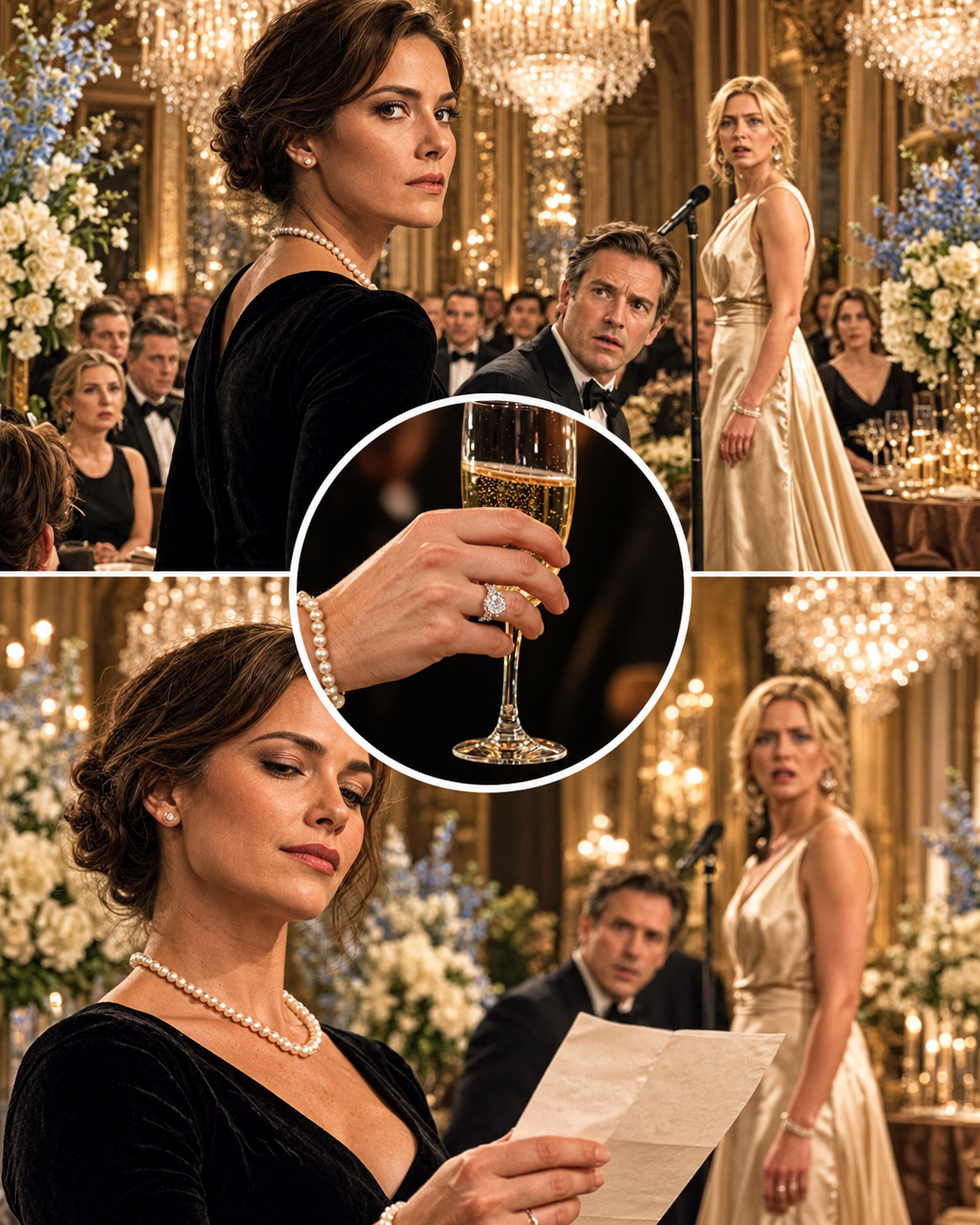
Standing on the gala stage, I could feel Grant’s anger moving through the room before he said another word. Chloe remained beside the podium, visibly uncomfortable as the foundation’s charter appeared behind us and guests began examining the information on their programs. I explained that the Juniper Foundation had been established through the Hart Family Trust after the loss of my daughter, with its original endowment coming from my own family rather than Whitmore Hospitality. The distinction mattered because my husband had increasingly allowed his company to present itself as the source and controlling force behind our programs. I wanted donors to understand that the foundation’s mission did not belong to a hotel chain or a man who happened to speak beautifully at fundraising dinners.
Grant stepped toward the stage and demanded that I stop turning a charitable event into a domestic dispute. I looked directly at him and said the foundation’s identity had become a governance issue when his company repeatedly blurred the line between charitable programs and promotional spending. Then I told the audience that independent professionals were reviewing certain financial arrangements and that details would be released through appropriate channels rather than through speculation. Chloe tried to interrupt, insisting that her organization had performed meaningful work and that I was misrepresenting its role. I told her any properly documented services would be recognized, but nobody could substitute celebrity photographs for records of actual assistance provided to women.
A murmur traveled across the tables as the audience realized the conflict extended beyond an affair. Some donors looked toward the foundation directors, while journalists began photographing the charter displayed behind me. I asked the technical team to return the screen to Juniper’s logo because I had no intention of publicly displaying confidential accounting records that investigators still needed to examine. The audience’s curiosity was undeniable, but the families who relied on our programs deserved a process based on evidence rather than entertainment. I told the guests that the foundation would commission an independent review of any arrangements that could compromise donor confidence.
Then I turned back toward Grant.
“For two years,” I said, “you have spoken about our shared tragedy as though Juniper’s memory were a branding opportunity.” His expression hardened, and I saw the familiar look he used whenever a conversation threatened to escape his control. I continued by explaining that my daughter had died while I waited for him to return from Europe, and that afterward I had created the foundation because I wanted other families to receive support I had desperately needed. Several people lowered their eyes, including a nurse from the hospital who had attended our first fundraiser. I could see tears in her eyes, and for a moment my own voice nearly failed.
Chloe whispered that she had not known the details of Juniper’s death.
I believed that Grant might have concealed parts of the story, but I also knew she had been involved with a married man whose wife was publicly associated with a maternal care foundation. I told her the circumstances of my loss did not excuse either of their choices, nor did they require me to compete for the affection of someone unwilling to honor his marriage. She looked toward Grant, apparently expecting him to defend her, but he was watching the foundation directors instead. His silence told me what mattered most to him that evening. It was not Chloe’s humiliation or my grief, but the possibility that corporate consequences were approaching.
Patricia Voss, chair of the foundation’s board, joined me onstage and confirmed that the organization would separate its branding and operational relationships from Whitmore Hospitality pending review. She explained that the board had already considered the matter through proper procedures and would publish relevant governance updates after its formal meeting. The announcement drew startled whispers, especially among corporate guests who assumed Grant’s influence over the foundation could not be challenged. I thanked Patricia and added that the Hart Family Trust would provide matching support for donations received that evening, ensuring that legitimate programs continued without interruption. The announcement redirected attention toward the work the gala was originally intended to fund.
Grant finally approached the microphone and accused me of deliberately humiliating him before his business partners. I refused to debate the marriage in public and told him that any personal legal matters would be handled separately from the foundation’s finances. Then I announced that Mara had begun preparing the necessary proceedings to end our marriage, a decision I had reached long before Chloe stepped onto the stage. The word divorce traveled through the ballroom with almost physical force. Grant stared at me as though he had imagined every possibility except the one where I chose to leave.
At that moment, a message arrived on Patricia’s phone from Whitmore Hospitality’s corporate secretary. The board had completed an emergency governance meeting earlier that afternoon following receipt of the audit committee’s findings and had approved Grant’s suspension from executive duties pending further investigation. A formal announcement was scheduled for the following morning, and company counsel would communicate the details to him directly. Patricia quietly confirmed that the information could be disclosed only within the limits authorized by corporate counsel. When Grant realized that Blue Juniper Capital held decisive voting authority behind the board’s restructuring, his expression changed completely.
He looked toward me and whispered, “Your family’s behind this?”
I answered that the investors who had provided rescue capital were entitled to protect their investment and that the board’s decision was based on documented concerns, not on our failed marriage. For years Grant had treated my family’s discretion as evidence that we would never interfere with his ambitions. Now he was discovering that financial support came with responsibilities he could not charm away. Chloe reached for his arm, apparently seeking reassurance, but he pulled away without looking at her. The gesture was small, yet it revealed more about their relationship than any speech either had delivered.
I stepped away from the microphone while the ballroom remained almost completely silent. Nobody had been arrested, no legal conclusion had been announced, and there was still much for investigators to establish. But the foundation’s origins were no longer hidden, my marriage was no longer protected by silence, and Grant’s company was beginning a process he could not simply dismiss. I had expected to feel triumphant when the truth finally became public. Instead, I felt the terrible exhaustion of a woman who had spent years preparing to stop protecting someone she once loved.
The hours after the gala moved with a speed that made the preceding two years feel impossibly slow. Whitmore Hospitality’s directors issued a formal statement confirming a leadership transition and the continuation of an independent review into financial controls, questionable expenditures, and corporate governance. Grant was placed on administrative leave, and an experienced interim executive assumed responsibility for hotel operations while the company evaluated the findings. Financial institutions requested additional information, and several business partners paused negotiations until they understood whether the reported problems affected their agreements. The consequences were serious, but the company did not collapse overnight, because thousands of employees and numerous investors had interests that deserved protection.
Grant reacted badly to losing control. He instructed attorneys to challenge the process, complained that the board had acted under pressure from my family, and insisted that his personal life had been improperly used against him. His lawyers were entitled to examine those concerns, and Blue Juniper’s counsel carefully documented the independent business grounds supporting the board’s decision. The financial review continued, identifying personal expenses charged through corporate accounts, consulting arrangements with inadequate support, and weaknesses in the authorization system that had allowed senior executives to approve questionable payments. Some findings suggested misconduct requiring further investigation, while others reflected poor management that still demanded correction.
Chloe disappeared from public events for several days. When she eventually issued a statement, she acknowledged her relationship with Grant and said she had believed his marriage was effectively over. She also maintained that Bloom & Bone had provided legitimate services, though she accepted that financial questions would need to be resolved through the review process. Her words did little to stop the public criticism, and strangers began attacking everything from her appearance to her family. I refused to participate because I had no interest in turning another woman’s humiliation into a campaign that would distract from the foundation’s responsibilities.
A handwritten letter arrived from Chloe two weeks later. She apologized for the relationship and admitted that she had allowed Grant to describe me as emotionally unavailable after Juniper’s death. She wrote that he told her our marriage existed only on paper and that he had stayed because leaving a grieving woman would damage his reputation. I read the letter once, then placed it in a drawer because understanding how Chloe had justified her behavior did not create an obligation to forgive her. She had known I existed, and she had accepted opportunities offered through an intimate relationship that she should have questioned.
Grant’s communications were more hostile. He accused me of destroying his reputation, undermining his company, and using family wealth to punish him for seeking happiness elsewhere. Mara handled the legal correspondence and reminded him that our divorce would involve financial disclosures independent of any corporate investigation. When he claimed I had no right to interfere with Whitmore Hospitality, his own advisers explained that duly authorized investors and directors had governance rights established by their agreements. His anger could not change documents he had accepted while seeking rescue financing.
As the audit continued, more troubling expenditures emerged. A luxury necklace purchased for Chloe had been charged to a renovation budget, and several personal travel expenses appeared under business development categories without adequate justification. Investigators also reviewed payments associated with private retreats that seemed unrelated to legitimate corporate purposes. The board pursued repayment and recovery where the evidence supported it, while outside professionals assessed whether any matters required referral to authorities. I avoided making public predictions about criminal charges because complicated financial cases demanded precision rather than revenge.
My personal life changed more quietly. I moved from our penthouse into a smaller apartment on the Upper East Side, taking clothing, family jewelry, photographs, and the little silver rattle my mother had bought before Juniper died. The nursery remained untouched until I felt ready to decide what to do with its contents, and I asked Mara to coordinate access so I did not have to negotiate every painful detail with Grant. My mother visited often, bringing food and insisting we walk outside even when I preferred to remain beneath a blanket. She never told me I should celebrate the end of my marriage.
One evening, Grant sent a message saying that whatever happened professionally, he hoped I understood he had once loved me. I stared at those words for a long time because I believed there had been genuine affection between us before ambition and avoidance hollowed out the marriage. But love that existed only during easy seasons could not repair what happened when I needed him most. I answered that I hoped he would eventually understand the difference between having feelings for someone and taking responsibility for how he treated them. Then I asked him to direct future communication through our attorneys.
The foundation’s board completed its own governance review and strengthened policies governing outside contracts, donor communications, conflicts of interest, and corporate sponsorships. Programs continued because the Hart Family Trust provided funding while financial questions were resolved. Staff members who had dedicated themselves to helping families did not deserve to lose their jobs because wealthy people had misused prestige. I visited the foundation’s small administrative office and thanked them personally for continuing their work during the scandal. For the first time since Juniper died, I felt that her name was being protected by something stronger than public appearances.
Then the board approved a plan to open a permanent maternal support center in Brooklyn. It would provide private counseling rooms, emergency assistance coordination, patient advocacy, childcare referrals, and a garden where people could sit without being required to explain their grief. The building was modest compared with the Whitmore Meridian, but it belonged to the mission rather than a hotel brand. I attended the first planning meeting with no photographers and no expensive speech prepared. Looking at the architectural drawings, I understood that the most important work of my life had barely begun.
Julian Cross returned to my life after the gala in a way that felt almost accidental, although our families had crossed paths for years. He had been my older brother’s college roommate and later became an attorney and investment adviser known for careful work on complex transactions. We had shared a memorable weekend in Charleston nearly a decade earlier, during a family wedding when we danced beneath magnolia trees and spoke about the lives we imagined building. Nothing romantic happened because we were moving in different directions, and within a few years I had married Grant. I had not expected to see Julian again except at occasional family gatherings.
He contacted me professionally after the board transition to clarify several matters involving Blue Juniper’s investment and the foundation’s separation from Whitmore Hospitality. His emails were concise, his explanations patient, and his manner entirely different from the people who had begun treating my public humiliation as an opportunity for attention. When we met at my attorney’s office, he asked about the foundation before asking anything about Grant. He wanted to know whether the Brooklyn center had adequate financial planning and whether the board had identified reliable partners for patient services. I was surprised by how much his questions mattered to me because he treated my work as real rather than decorative.
Several weeks later, Julian attended a meeting with potential donors and remained afterward to help review a complicated property agreement. We finished near sunset, and he asked whether I wanted coffee before returning home. I agreed because I was exhausted and because the conversation had been easier than most I had experienced since the gala. We sat in a quiet café discussing the challenges of nonprofit governance, childhood memories of Charleston, and the strange exhaustion that comes from being publicly discussed by people who know almost nothing about you. He never asked me to relive the scandal.
Eventually our conversations expanded beyond work. Julian told me about his mother’s cooking, his abandoned ambition to become a jazz pianist, and the books he collected despite having little time to read them. I admitted that I still rearranged shelves when anxious and occasionally drove through Manhattan simply to remind myself that the city contained more than my marriage. We laughed about ordinary things, and I began noticing how different that felt from the intense, calculated attention Grant had offered during our courtship. Julian listened without making every answer an opportunity to impress me.
I remained cautious because my divorce was unresolved and I had no desire to replace one dependency with another. Julian seemed to understand that without requiring me to explain it repeatedly. He made plans clearly, accepted cancellations without resentment, and never treated my emotional uncertainty as a challenge he needed to overcome. When I was overwhelmed by decisions about the old penthouse, he suggested I ask a trusted professional to manage the process instead of forcing myself to confront every detail personally. He did not offer to take control. He offered me room to choose.
One rainy afternoon, I visited the partially renovated Brooklyn support center and found a young woman waiting outside for information about counseling. She told me she had recently experienced a pregnancy loss and did not know whether she was ready to speak with anyone. I introduced her to a qualified staff member, then sat quietly in the garden while she decided whether to enter. The encounter reminded me of the person I had been when I first imagined creating a place where grief could be acknowledged without spectacle. I realized the center might help women precisely because it would not demand that they turn suffering into inspiration before receiving care.
Julian arrived later to drive me home after a long donor meeting. He stood near the entrance holding an umbrella, his dark coat damp from the rain, and asked whether the day had been difficult. I told him it had been important, which was not the same thing. He smiled and said that meaningful work often required more energy than dramatic victories, a distinction I had only recently begun to understand. We went to dinner at a small restaurant where nobody recognized me, and I felt the rare pleasure of being simply Evelyn.
Outside my apartment, he admitted that he had liked me during that weekend in Charleston years earlier. I laughed because I remembered the dance but had assumed he was merely being kind to his friend’s younger sister. He said he had respected the choices I was making then and had no interest in interrupting the life I was trying to build now. I told him that if anything developed between us, it would need to happen slowly and without confusing comfort with obligation. He agreed and asked permission before kissing me.
The kiss was gentle, brief, and unexpectedly emotional because I had forgotten what it felt like to be asked rather than assumed available. It did not erase Grant, repair Juniper’s loss, or suddenly make the future simple. Instead, it reminded me that affection could exist without becoming another demand on my identity. I went upstairs afterward feeling both hopeful and frightened, but neither emotion required an immediate decision. For the first time in years, I allowed something beautiful to remain unfinished.
The Juniper Center opened the following spring in a renovated brick building in Brooklyn, far from the chandeliers and marble floors associated with my husband’s hotel empire. Wide windows filled the counseling rooms with natural light, pale-blue doors made the entrance welcoming, and a small courtyard garden held young juniper shrubs planted by volunteers. We hired licensed professionals, patient advocates, and administrative staff who understood that families in crisis needed practical assistance as much as comforting words. Our programs included emergency support referrals, counseling, transportation assistance, hospital-navigation services, and connections to community resources for people experiencing pregnancy complications or loss. I insisted that no client be required to share personal photographs or emotional testimony for fundraising purposes.
The first months were difficult because demand exceeded our expectations. Families arrived carrying hospital discharge paperwork, confusing insurance correspondence, and questions they had not been able to ask during medical emergencies. Some needed short-term financial assistance, others wanted counseling, and many simply needed someone who would explain the next step without rushing them. Our staff developed clear referral procedures, privacy protections, and partnerships with hospitals that allowed us to help without replacing medical professionals. Every operational decision reminded me that compassion became meaningful only when supported by reliable systems.
I visited every Tuesday, usually without advance announcement to anyone beyond the center manager. I did not attempt to counsel patients myself because I lacked the necessary clinical training, but I could listen when someone chose to speak or help staff identify problems that needed resources. One young woman told me she had seen the gala footage and recognized herself in the loneliness I described after Juniper died. Her boyfriend had left while she was receiving emergency care, and she felt ashamed that part of her still missed him. I told her that grief rarely follows rules about who deserves our affection and encouraged her to discuss those feelings with the counselor she had chosen.
As spring became summer, the center’s work began receiving recognition independent of the scandal. Hospitals referred patients, community organizations offered partnerships, and several donors who had attended the disastrous gala returned because they admired the program’s measurable impact. Patricia Voss helped establish reporting standards that documented services without exposing private clients or turning their experiences into publicity. The board also commissioned periodic independent financial reviews, determined not to repeat the mistakes associated with our former corporate partnerships. I found satisfaction in reading reports showing completed referrals, counseling sessions, and families who had received timely assistance.
My divorce proceeded alongside the center’s growth. Grant’s attorneys negotiated property and financial issues while the corporate investigations continued through separate channels. The settlement took longer than I had hoped because certain assets required independent valuation and the parties disagreed about responsibility for expenses associated with our marriage. Eventually we reached terms that allowed both of us to move forward without tying the foundation’s future to Whitmore Hospitality. Grant remained removed from executive leadership while the company continued restructuring under professional management.
I did not celebrate his reduced status. The company supported thousands of employees who had never participated in his misconduct, and I wanted responsible leadership to preserve whatever value remained. Julian and the investment team worked with independent directors to strengthen controls, while I maintained appropriate distance from decisions involving my former husband’s professional future. I learned that justice did not require enjoying every consequence someone else experienced. Sometimes it meant refusing to prevent necessary accountability while also refusing to make punishment your life’s purpose.
Chloe’s organization underwent its own review of disputed consulting arrangements, and several contracts were terminated or revised. She eventually withdrew from the public wellness industry and took work away from the glamorous events where I had once encountered her beside Grant. I heard these developments through official updates when they affected the foundation or through mutual acquaintances who still followed her activities. I did not contact her, although I hoped she would eventually recognize that speaking about women’s empowerment meant little without respecting other women’s humanity. Whether she did was no longer something I needed to know.
Julian remained part of my life, but I was careful not to let romance become the conclusion to every painful chapter. We spent weekends cooking, visiting museums, walking through Central Park, and discussing disagreements without transforming them into battles for control. He met my mother several times, enduring her questions with good humor and eventually winning her affection by praising her cooking without exaggeration. Mara teased me about looking happier, but she also reminded me that happiness could include friendships, purpose, solitude, and ordinary independence. I agreed because I had spent too many years measuring my worth through one man’s attention.
On the anniversary of Juniper’s death, I visited the center before sunrise and placed a small arrangement of white flowers near the garden’s oldest shrub. I did not invite photographers or prepare a public statement. My mother joined me, and we sat quietly while the city slowly awakened around us. I told her that I sometimes feared turning Juniper’s name into an institution might eventually make strangers forget she had been a child I loved before she became a cause. My mother took my hand and reminded me that the center existed because I remembered her as a daughter first.
That morning, I allowed myself to cry without imagining the tears would be used against me. Grief remained part of my life, but it no longer occupied every room or determine every choice. I could love Julian, laugh with Mara, support families, and still miss Juniper with an intensity that surprised me. Those feelings did not cancel one another. They made room for a life that was larger than the night everything changed.
One year after the disastrous gala, the Juniper Foundation held its annual dinner at the Brooklyn Botanic Garden instead of any Whitmore property. The setting was deliberately different from the previous year’s spectacle, with living trees, simple flowers, and tables arranged to encourage conversation rather than impress photographers. Nurses, physicians, counselors, volunteers, donors, and families filled the room, many wearing comfortable clothes instead of elaborate evening gowns. I chose a soft blue dress and a small silver pin shaped like a juniper branch, an heirloom my mother had commissioned after our daughter’s loss. For the first time, the event felt like a gathering organized around the people we served rather than the reputations of those financing it.
Mara arrived early, carrying a folder of legal paperwork she promised not to discuss unless absolutely necessary. My mother inspected the flowers and declared that the arrangement was more tasteful than anything Whitmore Hospitality had ever produced. Julian brought me sparkling water and asked whether I was nervous about speaking, but I realized that I was not. I had already stood before cameras while my marriage disintegrated in public. Tonight, I could speak about something that mattered far more than the man I had once married.
The foundation’s director presented results from the center’s first year, including the number of families assisted, partnerships established, and financial commitments secured for future services. She explained how the organization had improved its procedures after reviewing previous sponsorship arrangements and thanked employees for preserving donor confidence during a difficult transition. I watched the staff applaud one another and felt proud of decisions that would never become dramatic headlines. Their work was often quiet, repetitive, and emotionally demanding. Yet it represented the kind of loyalty Chloe had described so beautifully without understanding its meaning.
When I approached the podium, I looked across the room and remembered the ballroom where my husband’s mistress had thanked him for believing in her. A year earlier, I had spoken because silence had become unbearable and because the foundation’s identity needed to be corrected. Tonight, I wanted to speak because Juniper’s name belonged to a living mission rather than a frozen memory of grief. I introduced myself simply as Evelyn Hart, founder of the Juniper Foundation, and thanked the professionals who had transformed an idea into a service families could trust. Then I told them that the center existed because no one should have to earn compassion by presenting their pain beautifully.
I described the loneliness of pregnancy loss without turning my own experience into a universal measure of suffering. Some families had supportive partners, others faced abandonment, and many endured complicated circumstances that did not fit simple stories about heroes and villains. Our responsibility was to make reliable help available without judging whether someone had grieved correctly or recovered quickly enough. I emphasized that the foundation would continue protecting patient privacy, paying qualified professionals, and ensuring charitable resources remained dedicated to their stated purpose. The applause that followed felt warm and human rather than theatrical.
After dinner, several families approached to speak with staff members about the programs that had helped them. A young mother told me the center’s advocate had assisted her in understanding discharge instructions during a frightening medical complication. Another woman said counseling had helped her return to work without feeling that moving forward meant forgetting the child she lost. I listened with gratitude, knowing their experiences belonged to them and did not need to become examples in someone else’s inspirational speech. They reminded me why the foundation’s work mattered long after the media attention faded.
Julian joined me near the garden doors after the final guests departed. He said he admired the way I had spoken about the future without pretending the past had become painless. I told him I had spent years believing healing would arrive when I stopped missing Juniper, stopped resenting Grant, or stopped remembering the hospital room. Now I understood that healing might be the freedom to remember those things without allowing them to determine every day that followed. He took my hand and suggested we walk through the garden before going home.
We passed the juniper shrubs planted the previous spring, their branches stronger and fuller than they had been when I first saw them. The garden was quiet except for distant city traffic and the sound of our footsteps along the path. I told Julian that my daughter’s name had once felt like a door I could not bear to open, but now it was written above a place where strangers received care. He stopped beside me and said the center would never replace her, but it could ensure that the love I felt for her continued making room for other people. I knew he was right.
That evening, I returned to my apartment and found an old photograph taken during my pregnancy. In it, I stood beside the nursery window holding a tiny yellow sweater, smiling with the unquestioning happiness of someone who believed the future had already been promised. For a long time, I had avoided that image because I could not bear the distance between the woman in the photograph and the life she eventually lived. Now I placed it beside the silver rattle in a small cabinet, allowing the memory to belong in my home without hiding it. I was no longer afraid that seeing my happiness before the loss would somehow diminish the happiness I had found afterward.
The following morning, I returned to work at the foundation and approved plans for an expanded family support program. There were budgets to review, staff positions to fill, and community partnerships requiring careful negotiation. Nothing about the day would interest strangers who had watched the gala footage, but every task mattered to someone whose name I might never know. I realized I had finally stopped asking whether Grant regretted losing me or whether Chloe understood what she had done. Their choices no longer provided the framework for mine.
My daughter would never grow up to see the foundation bearing her name, and that truth would remain painful for the rest of my life. But she had changed who I became, not because tragedy magically made me stronger, but because loving her taught me what I was willing to protect. I had reclaimed the foundation from people who viewed compassion as publicity, reclaimed my independence from a marriage built around appearances, and reclaimed the right to feel hopeful without apologizing for surviving. The life ahead of me was not the one I had planned. It was nevertheless mine.
Three years after the gala, people occasionally recognized me as the woman who had confronted her husband’s mistress at a charity event. Some wanted photographs, others wanted details about the divorce, and a few treated my life as though it were a dramatic story that should have ended the moment Grant lost his position. I learned to answer politely without allowing strangers to decide which parts of my experience deserved attention. The actual work of rebuilding my life had taken place far away from cameras, in therapy appointments, financial meetings, quiet dinners, and mornings when I chose to get dressed despite feeling exhausted. The confrontation had been an important moment, but it was not the achievement I valued most.
The Juniper Foundation expanded its Brooklyn programs and established partnerships with additional hospitals, including support for families facing complicated pregnancies, postpartum crises, and bereavement. Its board maintained strict financial controls, and annual reviews ensured that donors could understand how their contributions supported actual services. I remained involved in strategic decisions while giving qualified professionals the authority to manage daily operations. Staff members regularly reminded me that sustainable care required boundaries as well as compassion, a lesson I understood more deeply than I once had. The foundation became increasingly known for its programs rather than the scandal that briefly surrounded its founder.
Whitmore Hospitality survived its restructuring under new leadership, retaining several profitable properties while selling underperforming locations and improving financial oversight. Grant’s professional role diminished substantially, and the company pursued remedies related to documented improper expenditures. Some disputes were resolved through negotiated repayment and civil agreements, while others remained governed by confidential legal processes. I no longer followed each development because the relevant professionals handled matters requiring my attention. My former husband’s financial problems did not need to remain the center of my emotional life.
Chloe’s name eventually stopped appearing in my correspondence. Whatever she believed about herself, Grant, or the choices that brought her into my marriage had become questions only she could answer. I did not forgive her publicly, condemn her whenever an opportunity arose, or search for evidence that she was unhappy. The desire to monitor another person’s downfall had once felt like a natural consequence of betrayal, but it eventually became exhausting. I wanted freedom more than I wanted confirmation that someone else regretted losing access to my life.
Julian and I continued building our relationship with deliberate patience. We traveled to Charleston to visit my mother, spent weekends reading in the same room, and learned how to disagree without treating every difference as evidence that love might disappear. He supported the foundation without attempting to control it, and I respected his career without expecting him to prove devotion by abandoning his responsibilities. Sometimes we spoke about marriage, but neither of us treated a wedding as proof that our relationship was real. We understood that commitment lived in ordinary behavior long before anyone exchanged rings.
One winter evening, Julian asked whether I could imagine sharing a home with him. I considered the question carefully because the penthouse I once shared with Grant had taught me how easily an impressive residence could become emotionally empty. Julian explained that he wanted a place where our books could occupy the same shelves, where friends could visit without appointments, and where I would never feel obligated to perform happiness. He also understood that Juniper’s photographs and memories would remain part of my life without needing to be explained or hidden. I said yes to looking for a home together, not because I needed someone to rescue me, but because I wanted to build something with him.
We found a restored townhouse near a quiet street lined with trees, within reasonable distance of the foundation’s offices. The kitchen had large windows, the living room contained a fireplace, and a small garden offered space for juniper shrubs. I insisted on choosing the bedroom furniture together because I had spent too many years letting other people make decisions I believed were too small to matter. Julian laughed when I became unusually passionate about the color of the kitchen cabinets, but he listened and offered his own preferences. Our home developed slowly, filled with objects we selected because they meant something rather than because they impressed guests.
My mother visited one spring weekend and helped plant juniper bushes in the garden. As we worked, she told me that she had worried I would spend the rest of my life trying to punish Grant for missing the hospital and betraying my trust. I admitted there had been months when I imagined that only his complete downfall could make me feel whole again. Then I realized that no punishment could give Juniper back or restore the marriage I once believed existed. What mattered was building a life where his absence no longer determined the quality of my days.
That afternoon, we placed a small stone beneath the oldest shrub, engraved simply with Juniper’s name. There were no cameras, public announcements, or elaborate speeches. My mother touched the stone gently, and Julian stood beside us without attempting to fill the silence. For several minutes, I remembered the hospital room, my daughter’s tiny imagined future, and the woman I had been before learning how suddenly happiness could change. Then I looked around the garden and felt grateful that remembrance and joy could occupy the same place.
Later, when my mother returned to Charleston, Julian found me sitting beside the window with an old photograph of Juniper’s ultrasound. He asked whether I wanted company, and I told him I did. We sat together quietly while the evening light moved across the room, and I realized that the security I had searched for in Grant’s impressive promises now existed in ordinary gestures of respect. Julian did not need to understand every part of my grief to honor it. He only needed to listen when I chose to speak and remain present when silence was enough.
Years earlier, I had stood beneath twelve crystal chandeliers while another woman delivered a speech about loyalty on a stage associated with my daughter’s name. I believed that night would be remembered forever as the moment my marriage collapsed in front of three hundred strangers. Instead, it became the moment I stopped allowing the people who hurt me to define what Juniper’s memory represented. The foundation grew, families found support, and the work continued long after reporters lost interest in the scandal. That was the outcome I could finally call a victory.
I never stopped missing my daughter, and I never pretended that the life I built afterward erased the cruelty that came before it. But I no longer believed dignity required silence, that marriage required self-erasure, or that grief made a woman incapable of recognizing the truth. I had learned that money could finance beautiful rooms without creating love, that public praise could disguise selfishness, and that someone else’s betrayal did not determine the value of the person betrayed. Most importantly, I understood that a legacy was not something people could claim simply because their names appeared on a building.
The Juniper Foundation belonged to the purpose for which it was created and to the families whose lives it continued helping. My future belonged to me, whether I spent it working, loving, grieving, laughing, or doing nothing particularly impressive. Grant had once believed my quiet nature meant he could take credit for anything I created, while Chloe believed standing beside him would give her ownership of a story she had not lived. Both misunderstood the same essential truth. A woman’s willingness to remain private does not mean she has surrendered her identity.
On the anniversary of the night I confronted them, I did not watch the old footage or search for updates about their lives. I spent the afternoon at the foundation, returned home to dinner with Julian, and walked into the garden as the evening cooled. The juniper branches moved gently beneath the moonlight, and small lamps illuminated the path leading back to our house. I thought about the promise I had made in the hospital years earlier, when I was frightened, heartbroken, and uncertain whether I could survive the future. I had promised that my daughter’s name would become a reason another family received help instead of being left alone.
That promise had survived everything.
The affair had ended my marriage, the financial investigation had changed a hotel empire, and the gala had exposed the lies that once protected Grant’s reputation. But none of those events defined the woman standing in the garden now. I was a mother who had loved her daughter, a founder who had built something meaningful, and a woman who had learned to welcome happiness without surrendering truth. My husband had tried to turn my grief into a weakness he could exploit. Instead, it became the beginning of a legacy he could never own.
And when Julian came outside and asked what I was thinking, I took his hand and looked toward the softly illuminated garden.
“I was remembering how afraid I used to be of losing everything,” I told him.
He waited while I considered the life around us.
“Now I understand that the things worth keeping were never his to take.”
Together, we walked back toward the house, leaving the garden lights shining beneath the juniper trees.
My daughter’s name remained behind us, written in stone.
Her legacy was alive all around us.
And for the first time in years, the future no longer looked like something I needed to survive.
It looked like something I was finally free to live.
✓ Lynn R. Adams
Before Grant Whitmore became the man I feared, he had been the man I trusted more than anyone outside my family. We met at a Manhattan charity auction when I was twenty-seven, shortly after I had move…