Six Months Pregnant and Thrown Out by Her Own Family, She Turned Grandpa’s Rusted Key—and Inherited Their Worst Secret
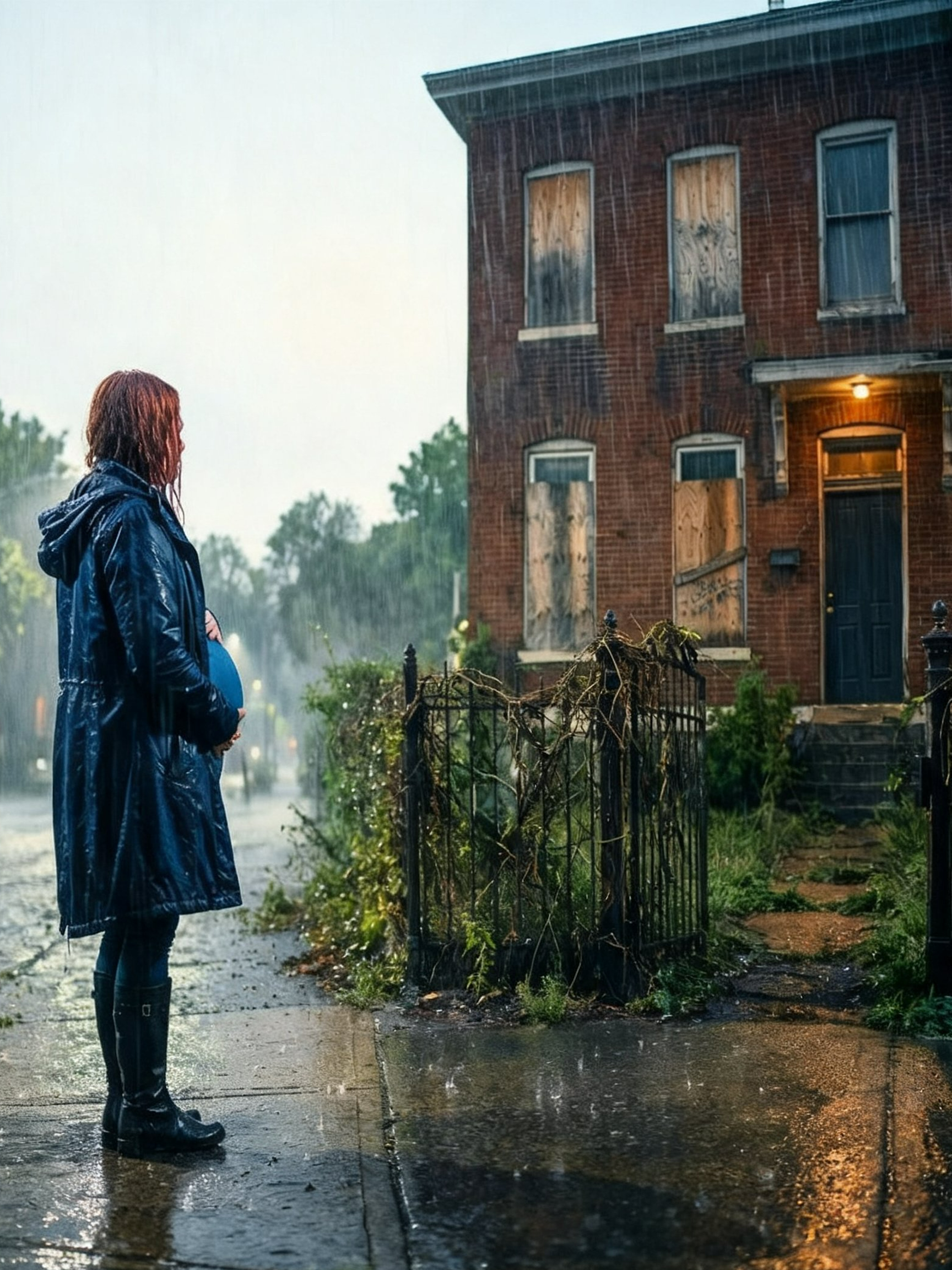
Six Months Pregnant and Thrown Out by Her Own Family, She Turned Grandpa’s Rusted Key—and Inherited Their Worst Secret
“Pregnancy doesn’t give you the right to turn my house into a shelter.”
My mother said it while my suitcase sat open on the front porch and cold March rain darkened the shoulders of my coat.
I was six months pregnant.
I had been living in her house for four days.
And behind her, my younger brother Brent stood in the hallway holding the brass deadbolt key like he was already waiting to lock the door after me.
“You heard Mom,” he said. “You need to figure your life out somewhere else.”
His wife, Kelsey, leaned against the staircase with one hand resting on her perfectly flat stomach and the other wrapped around a coffee mug that said BLESSED.
She smiled.
Not kindly.
“Some of us planned our lives responsibly, Claire.”
I looked at the three of them.
Then at the suitcase.
Then down at my swollen belly.
My daughter kicked hard enough that I felt it beneath my ribs.
I didn’t cry.
That seemed to disappoint them more than anything.
Four days earlier, I had shown up at the house where I grew up outside Columbus, Ohio, with two suitcases, a grocery bag of prenatal vitamins, and exactly $1,842.19 left in my checking account.
My husband, Evan, had emptied almost everything else.
Technically, he had not stolen it.
That was the cruel beauty of joint accounts.
He had transferred $43,600 to an account in his name, canceled the automatic payment on our apartment, and informed me by text that he “needed space to reconsider the marriage.”
Twenty minutes later, his attorney emailed divorce paperwork.
By dinner, my mother knew.
By midnight, Brent knew.
By sunrise, apparently half the family knew.
I had spent the previous eight years being the person they called whenever somebody else’s life caught fire.
When Dad died unexpectedly at fifty-nine, I covered three months of Mom’s mortgage until the life-insurance money came through.
When Brent dropped out of community college and wanted to become an HVAC technician, I paid $7,800 toward his certification because Mom said Dad would have wanted us to “keep family standing.”
When Kelsey’s boutique failed, I quietly loaned them twelve thousand dollars and never asked for it back.
When Uncle Russell had bypass surgery, I drove Grandpa Walter to the hospital every afternoon because nobody else wanted to deal with his wheelchair.
And when Grandpa’s kidneys began failing, I rearranged my entire work schedule so I could take him to dialysis on Tuesdays and Thursdays.
I never sent invoices.
I never reminded anyone.
I never used the word sacrifice.
Families weren’t supposed to keep score.
Apparently mine had.
They had simply waited until my column was empty.
My mother folded her arms.
“I’m not trying to be cruel.”
People often say that immediately before doing something cruel.
“Brent and Kelsey need the downstairs bedroom while their kitchen is being renovated,” she continued. “And frankly, Claire, this situation with Evan could drag on for months.”
“It’s been four days,” I said.
“I know how long it’s been.”
“Then why did you say months?”
Her face hardened.
“Because I know you.”
That was the moment something inside me went completely still.
Not shattered.
There is a difference.
Shattered people make noise.
Still people start noticing details.
I noticed Brent’s truck parked where Dad used to park.
I noticed Kelsey had replaced Grandma’s old framed family photograph in the hallway with a mirror.
I noticed my mother was wearing the pearl earrings I had bought her for her sixtieth birthday.
And I noticed the small cedar sewing box on the console table beside the front door.
Grandpa Walter’s box.
Mom had emptied his house after he died eleven months earlier.
Most of his belongings had been divided, donated, sold, or thrown away.
But the cedar box was still there.
And suddenly I remembered something I had not thought about in years.
I walked past my mother.
Brent stepped sideways.
“Where are you going?”
I opened the sewing box.
Old thread.
Two expired batteries.
And beneath a folded yellow measuring tape, exactly where Grandpa had once told me it would be, lay a long brass key stained nearly black with age.
A tiny metal tag was wired around it.
I picked it up.
Kelsey laughed.
“Seriously? You’re stealing junk now?”
I slid the key into my coat pocket.
Mom looked irritated rather than concerned.
“That was your grandfather’s.”
“What does it open?”
I looked at her.
For the first time that afternoon, nobody smiled.
“I don’t know yet.”
Brent snorted.
“Probably one of his old storage lockers full of mold.”
I closed the cedar box.
Then I picked up my suitcase.
Mom followed me onto the porch.
“Where are you going?”
It was almost funny.
Five minutes earlier she had told me to leave.
Now she wanted an itinerary.
“I’ll figure it out.”
“You can’t drive around pregnant in this weather.”
“I’m not driving around.”
“Then where are you staying?”
“I don’t know.”
My mother stared at me as if she couldn’t decide whether my calmness was stupidity or defiance.
Behind her, Brent said, “Claire.”
He lowered his voice.
“Don’t make this dramatic.”
That nearly made me laugh.
I was six months pregnant.
My husband had emptied our bank account.
My mother had expelled me from my childhood home after four days.
And my brother was worried I might make things dramatic.
So I gave him exactly what he wanted.
No screaming.
No accusation.
No desperate speech about everything I had done for him.
I dragged my suitcase through the rain toward my ten-year-old Honda.
Then my mother said something that made me stop.
“At least Grandpa isn’t here to see what you’ve made of your life.”
I didn’t turn around.
I only put one hand inside my pocket and wrapped my fingers around the old brass key.
Because eleven months earlier, three days before Grandpa Walter died, he had said something strange to me.
Something I had dismissed as medication and exhaustion.
We had been alone in his room at St. Catherine’s Hospice.
His hands were thin and spotted.
His voice barely carried over the oxygen machine.
He asked me if I still remembered Bellweather Station.
I thought he meant the abandoned freight depot near the old industrial district south of town.
Dad used to point it out when we drove past.
Grandpa had worked there as a young man.
“I remember,” I told him.
He squeezed my wrist.
“There’s a red door beneath the loading dock.”
“If the day ever comes when your own blood tells you there’s no room for you, go there.”
I smiled sadly.
Something in his voice stopped me.
“Take the B-17 key. Don’t ask Russell what it opens.”
Uncle Russell was Grandpa’s oldest son and executor of his will.
“Because Russell thinks possession and ownership are the same thing.”
I had assumed he was talking about family furniture.
Old machinery.
Maybe photographs.
Then Grandpa whispered the sentence I remembered now as clearly as if he were sitting beside me in the car.
“If they ever tell you Bellweather belongs to them, Claire, don’t argue.”
He closed his eyes.
“Let them sign first.”
At the time, I had no idea what he meant.
That night, parked beneath the yellow glow of a twenty-four-hour grocery store while rain streaked my windshield, I searched Bellweather Station on my phone.
The property appeared on an old county historical page.
Bellweather Freight & Grain Terminal.
Built 1928.
Closed 1989.
Private property.
No public access.
Most of the surrounding industrial land had been redeveloped over the years.
Warehouses.
Distribution centers.
A medical-supply company.
A truck depot.
But the old brick terminal still stood on seventeen weed-covered acres behind a rusting chain-link fence.
I drove there at the next morning.
I had slept in a roadside motel that smelled like bleach and cigarette smoke.
The baby had kept me awake for half the night.
I had eaten crackers for breakfast because everything else made me nauseous.
Yet as I stood outside that abandoned station beneath a pale Ohio sky, I felt strangely alert.
The place looked dead.
Broken windows.
Red brick stained black near the roofline.
Freight tracks swallowed by weeds.
A loading platform sagging at one end.
I walked around the building twice before I found a concrete stairway half hidden behind overgrown honeysuckle.
At the bottom was a steel door.
Faded red paint.
Only a brass lock.
My pulse quickened.
I took out the key.
It slid into the lock perfectly.
For the first time since Evan’s text, my hands trembled.
I turned it.
The lock clicked.
The room behind the door was not filled with mold.
It wasn’t even dusty.
Someone had been maintaining it.
There was a small office.
Metal shelving.
A dehumidifier.
Emergency lights.
Two gray filing cabinets.
A wall safe.
And on the desk, beneath a plastic cover, an envelope.
My legs weakened.
I sat in the chair before opening it.
The handwriting was Grandpa’s.
If you are reading this, then one of two things has happened.
Either I misjudged my family terribly.
Or I understood them exactly.
The room became silent except for the hum of the dehumidifier.
I continued.
The papers in this room will upset people you love.
That does not mean the papers are wrong.
Do not confuse peace with surrender.
Do not confuse family loyalty with permission to steal.
Most importantly, do not confront anyone until you understand what you have.
Call Abigail Reed.
Her number is in the blue folder.
Tell her Walter sent you after the signatures.
If there are no signatures yet, wait.
I know that sounds cruel.
Trust me once more.
I read it three times.
Then I found the blue folder.
Abigail Reed answered on the fourth ring.
“My name is Claire Bennett.”
I looked at the phone.
“I’m here.”
“My grandfather was Walter Bennett.”
Another silence.
Then the woman exhaled.
“Where are you?”
“Bellweather Station.”
“Did anyone follow you?”
The question made my stomach tighten.
“Is the door locked?”
“Good. Do not remove documents. Do not photograph anything yet. I’m forty-five minutes away.”
“Who are you?”
“I was your grandfather’s attorney before your uncle convinced everyone he no longer needed one.”
“What is this?”
“You’re standing inside the answer.”
She arrived fifty-two minutes later in a dark blue Volvo.
Abigail Reed was sixty-four, silver-haired, straight-backed, and dressed like someone who had never once in her life been intimidated by a conference table.
She hugged me before I expected it.
Then she looked at my stomach.
“Six months?”
“Twenty-six weeks.”
Her mouth tightened.
“Walter would be furious.”
“You knew him well?”
“Well enough to know he predicted almost every person in this mess correctly.”
That was the first moment I realized I had not stumbled into a forgotten family secret.
I had stepped into a war that had begun before I knew one existed.
For the next four hours, Abigail showed me what Grandpa had hidden.
Something far more dangerous.
Trust documents.
Tax records.
Recorded easements.
Corporate ledgers.
Canceled checks.
Copies of correspondence.
Original signatures.
And thirty-seven years of evidence showing that the Bennett family had been living inside a story that was not legally true.
Bellweather Station was only the beginning.
In 1998, Grandpa Walter had transferred the station, 1,146 surrounding acres, three agricultural parcels, water rights along North Creek, and a controlling interest in a small freight-access company into something called the Bellweather Land Preservation Trust.
The properties had originally been worth a few million dollars.
Then Interstate 71 expanded.
Then distribution centers came.
Then Columbus kept growing.
Then a technology company acquired nearby land.
By the time Grandpa died, the trust property had been privately appraised at more than $112 million.
But there was more.
A dormant freight easement ran across the eastern acreage.
A regional infrastructure firm had recently offered nearly $39 million for long-term access rights if a planned data campus was approved.
Combined estimated value?
Between $147 million and $176 million.
I stared at Abigail.
“My grandfather owned a hundred and seventy million dollars?”
She tapped the document.
“The trust owns it.”
“And who owns the trust?”
“Nobody. That’s the point.”
“Who controls it?”
She looked directly at me.
I actually laughed.
Not because it was funny.
Because my brain rejected the sentence.
“My uncle is executor.”
“Of Walter’s probate estate.”
“He said the family land was divided between him, Mom, and Aunt Teresa.”
“They received beneficial distributions from several operating companies. They did not receive title to Bellweather trust property.”
“But they’ve been acting like they own it for years.”
“Because Walter allowed family members to manage pieces of the land. Some collected rents. Some negotiated leases. Russell handled bookkeeping. Your mother had authority over two farm parcels. Your aunt managed the north warehouses. Authority slowly became entitlement.”
Abigail opened another file.
“Then Walter’s health declined.”
Inside was a photocopy of a document titled TERMINATION OF TRUST.
The signature looked like Grandpa’s.
Abigail put an original beside it.
Even I could see the differences.
“The termination was fraudulent?”
“We believe so.”
“The notary named on this document died nine months before the date she supposedly notarized it.”
I stared at her.
My skin went cold.
“Why wasn’t anyone arrested?”
“Because Walter discovered it quietly. He didn’t want his children prosecuted while he was alive. He revoked their administrative powers, moved originals here, recorded a protective memorandum with the county, and waited.”
“For what?”
“For them to try again.”
I remembered his words.
Let them sign first.
Abigail opened another folder.
My mother’s name.
Uncle Russell’s.
Aunt Teresa’s.
And one I did not expect.
Evan Miller.
My husband.
I felt the baby move.
“What is Evan doing in here?”
Abigail did not answer immediately.
Instead, she handed me a contract.
CONSULTING AND CONTINGENT COMPENSATION AGREEMENT.
Evan’s signature appeared on the last page.
So did Brent’s.
The agreement promised Evan two million dollars upon successful completion of “beneficiary consolidation documentation” and the sale or redevelopment of Bellweather industrial holdings.
I read the phrase again.
Then again.
“Beneficiary consolidation?”
“They needed your signature.”
“For what?”
“Walter named you successor trustee in 2019.”
My mouth went dry.
“Because you were the only one who never asked him what the land was worth.”
I looked away.
Abigail continued quietly.
“Your grandfather watched who visited him when he was sick. He watched who asked about his medication and who asked about deeds. He watched who brought groceries and who brought documents to sign.”
A memory surfaced.
Grandpa sitting in his kitchen.
Brent pacing near the window, talking about warehouse development.
Uncle Russell complaining about “dead acreage.”
Mom asking Grandpa whether he really needed so much land at his age.
And me at the sink washing dishes.
I had never thought I was being observed.
I had just been tired.
Abigail slid another document across the desk.
The date was three years earlier.
I recognized my own name.
“If Walter died or became incapacitated,” she said, “you became successor trustee. Russell knew that.”
“But nobody told me.”
“Is that legal?”
“The appointment was valid whether you knew about it or not. You simply hadn’t accepted the trusteeship. That’s one reason they wanted your signature. The document Evan kept pressuring you to sign during your so-called refinance?”
My stomach dropped.
Three weeks before Evan emptied our account, he had repeatedly asked me to sign a packet his “financial adviser” had prepared.
He said it was related to lowering our mortgage rate.
I had skimmed it.
One page bothered me because it contained language about relinquishing future beneficial interests, fiduciary appointments, and contingent inheritance claims.
Evan became furious.
He accused me of not trusting him.
We fought for two days.
A week later he began sleeping on the couch.
Then he left.
I whispered, “That wasn’t a refinance.”
“What was it?”
“A waiver.”
I sat back slowly.
Abigail watched me carefully.
“They were trying to remove me before selling the land.”
“And when I wouldn’t sign…”
“Your marriage suddenly collapsed.”
I closed my eyes.
For perhaps ten seconds, I let the pain reach me.
Not because I still loved Evan.
Maybe part of me did.
But betrayal has layers.
The first wound was discovering that my husband valued money more than our marriage.
The deeper wound was realizing people I had defended for years had been standing behind him.
Possibly my mother.
The pregnancy had not made them kinder.
It had made them impatient.
A woman six months pregnant, financially frightened, abandoned by her husband, and desperate for shelter might sign almost anything.
That was the plan.
Except I hadn’t signed.
And when I moved into Mom’s house, I had unknowingly moved directly into the pressure chamber.
Four days later, they pushed me out.
Perhaps they thought homelessness would finish the work.
I opened my eyes.
“What happens now?”
Abigail’s expression changed.
Something almost like approval.
“You sound like Walter.”
“That doesn’t answer the question.”
“No. It doesn’t.”
She pulled a second letter from a sealed envelope.
This one contained only three paragraphs.
If the signatures have happened, let the buyer believe the transaction is moving forward.
The truth is strongest when a liar has finished explaining himself.
Do not rescue people from representations they make under oath or contract.
And remember: the land was never meant to make our family rich. It was meant to keep powerful people from making everyone else poor.
I looked at Abigail.
“What does that last line mean?”
She opened a map.
The Bellweather trust was not just warehouses and vacant acreage.
It included a cluster of twenty-three small homes occupied by retired railroad workers and their families.
A twelve-acre community garden.
Two workshops leased to local mechanics.
An old veterans’ burial ground maintained by volunteers.
A church access road.
A low-cost daycare center operating out of a converted freight office.
And sixty-eight acres of farmland leased to three families under long-term contracts Grandpa had intentionally kept below market rate.
“Russell hates those leases,” Abigail said.
“Brent too?”
“Especially Brent.”
She showed me a proposed development map.
Most of those places were gone.
In their place: warehouses, parking lots, luxury townhomes, and an access boulevard.
“What happens to the families?”
“According to the development model? Relocation.”
“That means eviction.”
“And they think they can do that after the sale?”
I studied the map.
Suddenly the size of the secret mattered less than its purpose.
Grandpa had grown up poor.
His father had worked freight yards.
His mother cleaned offices at night.
Grandpa used to tell me that land was the one thing rich people understood before poor people did.
“You can lose a paycheck,” he once said. “But when you lose the ground under the paycheck, you lose choices.”
I had thought it was one of his old-man sayings.
It was the operating philosophy behind everything he built.
“What were the family distributions?” I asked.
Abigail smiled without humor.
“Substantial.”
“How substantial?”
“Russell received an average of four hundred twenty thousand dollars a year for the last nine years.”
I stared at her.
“My mother?”
“Between two hundred and three hundred thousand, depending on revenue.”
“She told me she couldn’t help with Dad’s mortgage after he died.”
Abigail said nothing.
“She let me pay it.”
Still nothing.
I looked at the records.
A payment dated ten days after Dad’s funeral.
Distribution to Diane Bennett.
I had been twenty-seven.
I was working sixty-hour weeks managing accounts for a medical supply company.
I had sold my Jeep and bought the used Honda I still drove because Mom told me the mortgage was behind and she was afraid of losing the house.
I gave her eleven thousand dollars over three months.
She had received almost a quarter-million dollars during the same period.
Something inside me shifted.
All those years, I had believed I was the strong one in a struggling family.
In reality, I had been the useful one in a wealthy family.
There is a special humiliation in learning that your sacrifices were accepted by people who never needed them.
They did not take because they were desperate.
They took because I offered.
And because saying thank you was cheaper than telling the truth.
Abigail closed the ledger.
“You can stop.”
“You’ve had enough for one day.”
“No. I want everything.”
So we kept going.
I learned Brent had been taking unauthorized “management fees” from warehouse leases.
I learned Uncle Russell had diverted maintenance reserves into a development company he owned.
I learned Aunt Teresa had pledged expected trust distributions as collateral for a vacation property in Florida.
I learned my mother had signed a preliminary consent to sell farmland she had no legal authority to sell.
And I learned Evan had met Brent privately nine times during the previous six months.
Two lunches.
Three dinners.
Four meetings at Brent’s office.
One of those meetings occurred the same afternoon Evan accompanied me to an ultrasound.
I remember him holding my hand while we listened to our daughter’s heartbeat.
Three hours later he was discussing how to remove me from a trust.
That night, I checked into a different motel under my maiden name.
Abigail paid for two weeks from a client emergency account despite my protests.
“Consider it an advance,” she said.
“Against what?”
“Your first lawful trustee distribution.”
“I don’t want their money.”
She looked at me.
“Claire, stop calling it their money.”
That sentence followed me upstairs.
Three days later, the Bennett family announced the sale.
They did it publicly.
That was the beautiful part.
Brent posted a photograph on LinkedIn from the conference room of Patterson Development Partners.
He stood beside Uncle Russell and three executives beneath a digital rendering of something called BELLWEATHER CROSSING.
The caption read:
Proud to announce a transformational 1,100+ acre mixed-use logistics and technology development creating jobs, housing, and unprecedented regional investment.
My mother shared it on Facebook.
Aunt Teresa added champagne emojis.
The local business journal published an article estimating the project at $186 million over multiple phases.
The initial land transaction alone was reportedly valued at $121 million.
Brent gave a quote about “unlocking underutilized family property for the next generation.”
The next generation.
I sat on a motel bed with one hand on my belly and read it twice.
Then my phone rang.
I let it ring.
She called again.
Then Brent.
Abigail had warned me not to discuss anything.
Finally Mom texted:
I know you’re angry, but disappearing is childish. Call me. There are documents that need to be resolved for everyone’s sake.
I stared at the screen.
Not How are you?
Not Where are you sleeping?
Not Is the baby okay?
I typed a reply.
What documents?
The three dots appeared immediately.
Your grandfather’s estate. Nothing dramatic. Russell will explain.
Do I need a lawyer?
She responded so fast I almost admired it.
Absolutely not. Bringing lawyers into family matters only makes people suspicious.
I showed Abigail.
She laughed for nearly a full minute.
“Your mother has terrible instincts.”
“They’ve worked on me for thirty-two years.”
“Not anymore.”
For ten days, I did almost nothing visible.
That drove them crazy.
I didn’t accuse.
I didn’t threaten.
I didn’t post anything.
I didn’t tell relatives what I knew.
I rented a furnished studio apartment near Grandview with money from a small emergency line Abigail helped arrange.
I attended my prenatal appointments.
I bought a secondhand crib.
I kept going to work remotely.
And every night, I sat with trust documents until I understood them well enough to explain them without Abigail.
The silence changed the balance.
Before, my family had always known what I felt because I told them.
They knew which buttons to push because I had spent my entire life labeling them.
Now they had nothing.
So they started pushing all of them.
Aunt Teresa called.
“Your mother is heartbroken.”
I said, “I’m sorry she feels that way.”
“She thinks you’re punishing her.”
“Then come to dinner Sunday.”
“Claire, family doesn’t abandon family.”
I almost admired the sentence.
Uncle Russell emailed.
He sounded professional.
There are routine estate matters requiring your signature. Nothing affects your immediate finances. Given your current personal stress, I suggest resolving these quickly so you can focus on your pregnancy.
Current personal stress.
As if my life were weather.
I forwarded the email to Abigail.
She replied with one sentence.
Let him keep writing.
Brent tried a different strategy.
He sent me $5,000 through a payment app.
Memo: BABY EXPENSES.
I returned it.
He called within thirty seconds.
“What the hell?”
“I don’t need it.”
“You’re staying in some apartment by yourself.”
“Pregnant.”
“You’re proving some point?”
“Then take the money.”
He breathed sharply.
“Mom says you took Grandpa’s old key.”
“What does it open?”
There it was.
I looked across the room at Grandpa’s letter.
“I’m asking.”
His voice changed.
“You need to be careful right now.”
“About what?”
“You’re vulnerable. Evan’s leaving you. You’re emotional.”
“I feel pretty calm.”
“That’s what worries me.”
I nearly smiled.
Then he said, “Did Grandpa leave you something?”
I answered truthfully.
“A warning.”
I ended the call.
Two weeks before the scheduled closing, Patterson Development wired a $6.5 million earnest-money deposit into escrow.
The Bennett sellers signed representations affirming they possessed lawful authority to sell the property.
Uncle Russell signed.
My mother signed.
Aunt Teresa signed.
Brent signed on behalf of Bennett Industrial Management.
Each certified that there were no undisclosed trusts, competing title claims, successor fiduciaries, or restrictions preventing conveyance.
Abigail called me that afternoon.
“They signed.”
I stared out my apartment window.
“So Grandpa was right.”
“What happens now?”
“Now we stop being quiet.”
The first filing hit Franklin County Probate Court at Monday morning.
Petition to Confirm Successor Trustee.
Request for Emergency Accounting.
Application for Temporary Restraining Order Against Unauthorized Transfer of Trust Property.
At , a separate title notice was filed with the county recorder.
At , Patterson Development received formal notice.
At , the title company suspended closing.
At 10:02, the escrow agent froze the $6.5 million deposit pending determination of seller representations.
At 10:14, my phone began ringing.
Uncle Russell.
Aunt Teresa.
Then numbers I didn’t recognize.
At 10:39, Brent left a voicemail.
“Claire, call me immediately. Whatever you think you’re doing, you don’t understand the consequences.”
At 10:51, my mother left one.
“I cannot believe you involved strangers in private family business.”
At 11:06, Uncle Russell finally stopped pretending.
“You vindictive little bitch.”
I saved that one.
At noon, Abigail and I ate turkey sandwiches in her office.
“How do you feel?” she asked.
She smiled.
“Walter definitely picked correctly.”
The emergency hearing was scheduled for Thursday.
My family arrived looking like people attending a corporate dispute.
I arrived looking like a pregnant woman who had slept badly.
Because I had.
That mattered less than I expected.
Brent wore a navy suit.
Russell had hired two attorneys from a large downtown firm.
Mom sat beside Aunt Teresa.
Evan appeared in the back row with his divorce lawyer.
Nobody looked at my stomach.
They looked at the document box beside Abigail.
Judge Marianne Keller entered at nine.
Within fifteen minutes, Uncle Russell’s version of reality began collapsing.
His attorney argued that Grandpa had terminated the Bellweather Trust years earlier.
Abigail produced the alleged termination.
Then she produced the death certificate of the notary.
Then she produced the recorded trust memorandum filed three months after the supposed termination, bearing Grandpa’s verified signature and an acknowledgment from a second attorney.
Then came bank records.
Then tax filings.
Then insurance policies naming the trust as property owner.
Then a 2023 letter Uncle Russell himself had sent to an insurer identifying Bellweather Land Preservation Trust as titleholder.
The judge looked over her glasses.
“Mr. Bennett, did you write this?”
Russell leaned toward his attorney.
His attorney looked unhappy.
“Then why did you represent to the buyer last month that no such trust existed?”
His lawyer stood.
“Your Honor, we would ask that Mr. Bennett not be required to answer questions that may—”
The judge’s expression changed.
“Counsel, this is not a criminal proceeding.”
“No, Your Honor.”
“But apparently everyone in this room is beginning to understand why you felt the need to say that.”
Mom looked at Russell.
For the first time, she appeared afraid.
The judge granted temporary relief.
No transfer.
No new leases beyond ordinary operations.
No destruction of records.
An independent forensic accountant would be appointed.
And pending a full hearing, I was recognized as acting successor trustee under Grandpa’s 2019 appointment.
Outside the courthouse, my mother caught my arm.
But hard enough.
“Do you understand what you’ve done?”
Reporters were gathered farther down the steps.
Brent stood near the doors.
Aunt Teresa was crying.
Russell had already disappeared.
“What have I done?”
“You’ve frozen everything.”
“You’re destroying this family.”
My voice stayed quiet.
“I froze a sale.”
“That sale was our future.”
“It wasn’t yours to sell.”
Her face changed.
For one second, the mask slipped.
“You think Grandpa wanted you to have all of this?”
There it was.
Not You’re wrong.
Not The trust is invalid.
Not We misunderstood.
Just outrage that Grandpa had chosen me.
“I don’t have all of it.”
“You control it.”
“Same thing.”
I pulled my arm free.
“That’s the mistake all of you made.”
Over the following six weeks, the accounting became uglier.
Three million dollars in questionable management fees.
Almost nine hundred thousand in unexplained consulting payments.
Improper loans.
Related-party leases.
Personal expenses charged to trust operations.
Unauthorized pledges.
Backdated approvals.
And the biggest problem of all: the development negotiations had begun before Grandpa died.
Brent and Russell had been planning the sale while telling him the property was being preserved.
My mother claimed ignorance.
Then investigators found her emails.
She had not designed the scheme.
She had simply chosen not to ask questions because the money was good.
That hurt more than I expected.
Evil is easy to hate when it looks like evil.
It is harder when it looks like your mother saying, I didn’t want to know.
My attorney deposed Evan in May.
He lasted two hours before turning on everybody.
He admitted Brent approached him the previous year.
He admitted the two-million-dollar agreement.
He admitted pressuring me to sign the waiver.
He admitted taking money from our joint account partly because Brent told him financial pressure would make me “more realistic.”
When Abigail asked whether he knew I was pregnant at the time, Evan stared at the table.
“Did you know your wife had nowhere permanent to stay?”
“Did you understand that removing forty-three thousand dollars from the joint account could impair her ability to obtain housing and medical care?”
His lawyer objected.
The court reporter waited.
Eventually Evan answered.
I listened to the recording once.
Then I deleted it from my phone.
I did not need to hear my marriage die twice.
The divorce became easy after that.
He wanted a settlement.
I wanted distance.
He signed away any claim connected to the trust, returned most of the transferred marital funds, and agreed not to contest paternity or custody.
When he asked through his attorney whether I would consider counseling after the baby was born, I gave Abigail my answer.
No revenge.
No explanation.
Evan had already been given years of explanation while we were married.
He had simply preferred two million dollars.
The larger fight lasted into summer.
The trust beneficiaries argued Grandpa had been manipulated.
They argued he was confused.
They argued Abigail had influenced him.
Then medical records showed repeated cognitive evaluations finding him competent.
Video surfaced from the day he signed the 2019 amendment.
Grandpa sat at his kitchen table wearing his brown cardigan.
He looked tired.
But his voice was clear.
Abigail asked why he was appointing me.
“Because Claire knows the difference between value and price.”
Then he looked toward the camera.
“If my children ever watch this, I hope they are angry enough to finally listen.”
The courtroom went still.
“I gave each of you opportunities. Education. Homes. Work. Income. Some of you mistook provision for surrender. Some mistook kindness for ignorance.”
He took a breath.
“The Bellweather land is not a family piggy bank. People live there. People work there. People are buried there. Promises were made there.”
Mom lowered her eyes.
Grandpa continued.
“Claire never asked me for acreage. She asked whether I had eaten.”
My vision blurred.
I hated that.
I had been proud of not crying.
Then Grandpa said the line that broke me.
“She was useful to everyone and protected by no one.”
I covered my mouth.
Beside me, Abigail put one hand over mine.
On the screen Grandpa leaned back.
“So I am protecting her now.”
The judge ultimately upheld the trust.
The attempted termination was declared invalid.
The successor appointment stood.
Russell was permanently removed from any management role.
Several family distributions were suspended pending restitution and accounting.
The court referred evidence concerning the forged trust termination and certain financial transactions to county prosecutors.
Civil claims followed.
I did not celebrate.
That surprised people.
Brent seemed to expect me to become cruel the moment I gained leverage.
Maybe because that is what he would have done.
Instead, I read every tenant lease Grandpa had written.
I visited the retired railroad families.
I met the farmers.
I walked the veterans’ cemetery with an eighty-one-year-old volunteer named Tom Mercer who had been mowing it himself since 2007.
I toured the daycare.
The director showed me a bathroom ceiling that leaked whenever storms came from the west.
“We reported it for three years,” she said.
“Your uncle.”
Within a month, the roof was replaced.
Not because I was generous.
Because the trust had been collecting their rent while neglecting the building.
That was not generosity.
That was paying a debt.
Patterson Development did not disappear.
Their executives had been deceived too.
Once the litigation stabilized, they returned with a revised proposal.
This time, they negotiated with the actual trustee.
Their original plan consumed nearly everything.
I rejected it.
Their second proposal was better.
Still too aggressive.
We spent four months redesigning.
In the final agreement, less than forty percent of the acreage would be developed.
The historic station would remain.
The veterans’ cemetery would receive a permanent access easement and maintenance endowment.
The twenty-three homes would be placed into an affordable housing subsidiary with long-term occupancy protections.
The farmers received thirty-year renewable agricultural leases.
The daycare got a new building.
The community garden doubled in size.
A public greenway followed North Creek.
And the infrastructure company signed a forty-year easement worth enough money to fund trust operations without needing to liquidate the heart of the property.
The total long-term value of the agreements was still enormous.
More than anyone in my family had expected.
But the money now had rules.
And memory.
And purpose.
I created one program that nobody expected.
The Walter Bennett Family Stability Fund.
It provided temporary housing grants, childcare help, and emergency legal assistance to pregnant women and parents facing sudden displacement.
Abigail read the proposal and looked at me.
“I’m not trying to be subtle.”
“You’re naming it after him?”
“He earned it.”
“What about you?”
“I didn’t.”
She smiled.
“Walter would disagree.”
My daughter, Emma Grace Bennett, was born on September 8 at in the morning.
Seven pounds, two ounces.
Serious eyes.
Loud lungs.
For the first hour of her life, she slept on my chest while rain tapped the hospital window.
My mother was not there.
Neither was Brent.
Neither was Evan.
Abigail waited outside with two coffees and cried harder than I did when she met Emma.
Three days later, flowers arrived from Mom.
I sent them to the nurses’ station.
Brent emailed two weeks after Emma’s birth.
Subject line:
WE NEED TO FIX THIS.
I didn’t answer.
Then Thanksgiving approached.
Mom called from a number I didn’t recognize.
I answered because I was feeding Emma and too tired to check the screen.
I almost hung up.
Instead I said, “What?”
Her voice sounded smaller than I remembered.
“I’d like to see my granddaughter.”
I looked at Emma.
She had fallen asleep against my shoulder.
“That’s not a small request.”
Then Mom said, “I made mistakes.”
“I should have helped you.”
“I should have asked more questions about Russell.”
“I should never have made you leave.”
She stopped.
“You didn’t make me leave.”
“You told me to leave. I chose to walk out.”
“That’s the same thing.”
“No, it isn’t.”
It had taken months for me to understand that difference.
Being rejected was something they did.
Leaving with my dignity was something I did.
Mom began crying.
Once, that sound could make me surrender anything.
Boundaries.
Now I listened without becoming cruel.
That was another thing Grandpa had taught me, though only after death.
You could refuse to rescue someone without enjoying their drowning.
“I miss you,” she said.
“I believe you.”
“Can we start over?”
Her breathing caught.
Then I added, “We can start differently.”
That became the rule.
Differently.
Not pretending.
Not erasing.
Not saying blood was blood as if biology were a pardon.
Mom met Emma three weeks later in a public café.
She held her for eleven minutes.
She cried quietly.
I did not tell her everything was okay.
Because it wasn’t.
But everything did not have to be okay for one decent moment to exist.
Brent took longer.
The forensic accounting required him to repay almost $480,000 in unauthorized compensation.
His development company collapsed after lenders discovered he had pledged rights he did not own.
Kelsey deleted the BLESSED photographs from social media and filed for divorce the following year.
Aunt Teresa settled her claims, repaid a portion of improper distributions, and moved to Florida.
Uncle Russell faced the worst consequences.
The forged termination became part of a criminal investigation.
I never asked prosecutors for leniency.
I never asked them for vengeance either.
For once, I let another system do its job.
Bellweather Station changed slowly.
We repaired the roof.
Restored the brick.
Saved the old freight scale.
Converted the upstairs offices into workspace for local businesses.
The room behind the red door stayed mostly the same.
I kept Grandpa’s desk.
The filing cabinets.
And the cedar box.
One year after the day my family threw me out, I stood there with Emma strapped against my chest while Abigail reviewed renovation plans.
Emma was six months old.
Exactly the same age inside my body she had been when Mom put my suitcase on the porch.
There was poetry in that.
Bitter poetry.
But still poetry.
Abigail found another envelope inside the wall safe that afternoon.
We thought we had opened everything.
The envelope had my name.
Inside was a photograph.
Grandpa and me beside Bellweather Station when I was eight years old.
I did not remember the picture being taken.
On the back, he had written:
Claire asks too many questions.
I hope she never stops.
There was also a final letter.
Shorter than the others.
By now you know the land was valuable.
I hope you also know that is the least important thing I left you.
Money can prove people right about themselves.
It can prove a generous person generous.
It can prove a greedy person greedy.
It can make a coward comfortable enough to stop pretending.
Do not let it decide who you are.
The Bennett name has spent too many years confusing ownership with worth.
Land is worth something because somebody can build on it.
A person is worth something before anyone builds anything.
Including you.
Especially you.
I sat at his desk and cried until Emma woke up.
Not because I had inherited one hundred million dollars’ worth of land.
Not because I had beaten my family.
Not because Evan had lost his two-million-dollar payday or Brent had lost his development company.
I cried because somewhere beneath all the contracts, all the lies, all the hearings, and all the numbers, an old man had noticed the one thing I had spent my whole life pretending did not hurt.
I had always been useful.
Reliable Claire.
Responsible Claire.
The one who paid.
The one who drove.
The one who covered shifts.
The one who loaned money.
The one who forgave.
The one who didn’t make trouble.
And because I made everything easier for everyone, they had slowly convinced themselves I required nothing in return.
Not protection.
Not gratitude.
Not honesty.
Not even a room for four days.
Grandpa had seen it.
Then he had done something extraordinary.
He had not simply left me wealth.
He had left me the authority to stop a pattern.
That was the inheritance.
The land only made the lesson impossible to ignore.
Two years later, Bellweather looked nothing like Brent’s glossy renderings.
And exactly like something Grandpa might have loved.
There were new warehouses on the eastern acreage, yes.
People needed jobs.
Development was not evil.
The community garden remained.
The farmers remained.
The old homes remained.
The cemetery had a stone entrance now.
The daycare served twice as many families.
A medical clinic occupied one restored wing of the station.
And upstairs, near the original freight office, a small legal clinic helped families understand deeds, leases, trusts, and probate documents before somebody with more money could confuse them into surrendering something they did not understand.
On the anniversary of Grandpa’s death, we held a small gathering at Bellweather.
No ribbon-cutting politicians.
No giant donor wall.
Just tenants, workers, families, attorneys, contractors, and people who had helped restore the property.
So did Aunt Teresa.
Brent did not.
I had not spoken to him in ten months.
Near sunset, I found Mom standing beside Grandpa’s old desk.
The B-17 key lay inside a glass case.
She stared at it.
“I used to see that key in Dad’s sewing box all the time,” she said.
“I never knew.”
She looked around the room.
“Do you think he hated us?”
“How can you know?”
“Because if he hated you, he wouldn’t have spent thirty years giving you chances.”
Mom lowered her eyes.
“I was jealous of you.”
That surprised me.
“Because he trusted you.”
“He trusted you once too.”
She nodded.
“That’s worse.”
For a while, neither of us spoke.
Then she asked, “Will Emma ever know what happened?”
Mom looked hurt.
I continued before she could speak.
“She’ll know I loved you.”
That made her look at me.
“She’ll know you hurt me too.”
Tears filled her eyes.
“But I’m not going to teach her that loving someone means lying about them.”
Mom wiped her cheek.
“You sound like him.”
“I hope so.”
Outside, Emma was chasing bubbles across the lawn with Abigail.
She was two years old.
Completely uninterested in adult tragedy.
I watched her fall.
Mom followed my gaze.
“What happens to all this when you’re gone?”
“The trust continues.”
“And Emma?”
“She’ll have opportunities.”
“Not ownership?”
“Not automatically.”
Mom looked confused.
“But she’s your daughter.”
“I’m not going to teach her that blood is a deed.”
That was when Brent finally appeared.
I saw him across the lawn before Mom did.
He looked older.
Not dramatically.
Just enough.
He had lost weight.
His expensive clothes were gone.
He wore jeans and a gray jacket.
For a second, I saw the little brother who once climbed into my bed during thunderstorms.
Then he walked toward me, and memory caught up.
Mom whispered, “I didn’t know he was coming.”
“I believe you.”
Brent stopped about six feet away.
His eyes moved around the restored office.
“You did a lot.”
“I heard about the housing fund.”
“And the clinic.”
I could see frustration enter his face.
My calmness still bothered him.
“Can we talk somewhere private?”
“This is private enough.”
Mom started toward the door.
I touched her arm.
“You can stay.”
Brent looked embarrassed.
Some conversations improve with witnesses.
He shoved his hands into his pockets.
“I’m not here asking for money.”
“I didn’t say you were.”
“I know what you think of me.”
“I doubt that.”
He looked at me sharply.
“What’s that supposed to mean?”
“It means I don’t spend much time thinking about you anymore.”
That hurt him.
I could tell.
Oddly, I felt no pleasure.
He looked toward the glass case containing Grandpa’s key.
“I screwed up.”
“I believed Russell.”
“I thought Grandpa’s system was outdated.”
“That wasn’t the problem.”
“You thought anything standing between you and money was outdated.”
He flinched.
Mom stayed silent.
Brent nodded slowly.
“That’s fair.”
“I lost almost everything.”
“My company.”
Still I waited.
He gave a bitter laugh.
“You’re not going to tell me I deserved it?”
“Because you already know what I think.”
He stared at me.
Then finally said the thing I had expected from him for two years.
“I need help.”
There it was.
The old pattern standing at the door.
Claire helps.
Claire fixes.
Claire pays.
Claire absorbs consequences until everyone else can sleep.
Mom looked at me.
Brent looked at me.
Even Grandpa’s photograph seemed to look at me.
My brother swallowed.
“I’m not asking for much. Just enough to get back on my feet.”
I thought about the day I paid his HVAC tuition.
The failed boutique.
My unborn daughter kicking beneath my coat while he stood behind Mom holding the house key.
I could have humiliated him.
I had the material.
I could have said, Pregnancy doesn’t give you the right to turn my house into a shelter.
I could have repeated his own cruelty perfectly.
That would have been satisfying for ten seconds.
Then I would have had to live with becoming him.
So I opened a drawer in Grandpa’s desk.
I took out a card.
Bellweather Workforce Cooperative.
The trust had started it eight months earlier.
Small-business mentoring.
No family preference.
No special treatment.
I handed Brent the card.
“They have an industrial maintenance program starting next month.”
He stared at it.
“You want me to apply for a job?”
His face reddened.
“I ran a development company.”
“And you’re asking me for help.”
His jaw tightened.
Mom whispered, “Claire…”
I lifted one hand.
Not angrily.
Just enough.
Brent looked at the card again.
“What if they don’t accept me?”
“Then apply somewhere else.”
“You could make one call.”
“But you won’t.”
“Because Grandpa left me a trust, Brent. Not a throne.”
His eyes filled.
He looked away.
For the first time, I believed he was truly ashamed.
Not because he had lost money.
Because he finally understood that I could rescue him and was choosing instead to let him stand.
He slipped the card into his pocket.
Then he turned toward the door.
Before leaving, he stopped.
“I really am sorry.”
Maybe for forgiveness.
Maybe for absolution.
Maybe for the old Claire to rush across the distance and make his apology easier.
Some things can be forgiven without being restored.
Some doors can be reopened without removing the lock.
Brent left.
Mom looked at me.
“You could have destroyed him.”
“You had every reason.”
She frowned.
“What do you mean?”
“I had every reason to stop him.”
I looked toward the red steel door Grandpa had sent me through.
“That’s different.”
Outside, the sun was dropping behind the warehouses.
Emma ran toward me carrying a yellow flower crushed in one small fist.
I crouched carefully and caught her.
She smelled like grass and sunscreen.
She pushed the flower against my nose.
“It’s beautiful.”
“Grandpa flower.”
She had seen Grandpa’s photographs so many times she believed every old thing at Bellweather belonged to him.
Maybe, in a way, it did.
I carried her back toward the gathering.
Behind us stood a station everyone once believed was worthless.
Around us stretched land my family once believed they owned.
Ahead of us were people Grandpa had spent decades quietly protecting.
And in my pocket was the same old brass key I had carried out of my mother’s house while six months pregnant and unwanted.
The key had not opened a treasure chest.
It had opened evidence.
Responsibility.
It had opened the difference between inheritance and entitlement.
Between family and access.
Between being needed and being loved.
Months after the gathering, the final civil settlement with Uncle Russell was approved.
He surrendered his remaining trust distributions and several personal assets toward restitution.
Mom asked me whether I felt victorious.
I told her no.
Victory implies you wanted the war.
I had wanted a husband who loved me.
A mother who made room.
A brother who remembered what I had done without needing an accountant to calculate it.
A family that did not see kindness as an unlocked door.
I did not get those things.
What I got instead was truth.
Truth is less comforting than love.
But unlike false love, truth can hold weight.
On Emma’s fourth birthday, she asked me why the brass key at Bellweather was so important.
I took it out of the glass case and placed it in her palm.
She frowned.
“It’s old.”
“It’s ugly.”
“A little.”
“What does it open?”
“That depends.”
“On whether you’re ready to see what’s behind the door.”
She thought about this with the seriousness only a four-year-old can possess.
Then she handed it back.
“Good answer.”
That night, after the guests left, I stood alone in the restored freight office.
Rain tapped softly against the windows.
Almost the same kind of rain that had fallen the day Mom put my suitcase outside.
For years I had imagined justice as something loud.
A judge slamming a gavel.
An enemy exposed.
A fortune recovered.
An apology delivered in tears.
But justice had turned out quieter.
It was a repaired roof over children who had been ignored.
It was an elderly couple keeping the home they had lived in for forty years.
It was farmers signing leases their grandchildren might one day renew.
It was my daughter sleeping safely upstairs while no one could threaten her mother with homelessness to obtain a signature.
It was my brother applying for an ordinary job instead of receiving extraordinary rescue.
It was my mother learning that forgiveness did not mean unrestricted access.
It was me learning that being a good person did not require volunteering to be an easy victim.
On Grandpa’s desk sat one final copy of his letter.
Do not confuse peace with surrender.
For most of my life, I had.
I thought staying quiet made me kind.
I thought accommodating people made me loyal.
I thought asking for nothing made me strong.
But silence is only weakness when fear creates it.
The silence I learned after that rainy afternoon was different.
It was the silence of reading before signing.
Of listening before trusting.
Of waiting while dishonest people finished telling their stories.
Of understanding that sometimes the most powerful thing you can do is step backward and let someone confidently walk into the consequences they built for themselves.
Grandpa had known that.
That was why he hid the documents.
That was why he kept the key.
That was why he told me not to stop the signatures.
And maybe that was why, in the end, he chose the one person everyone else had mistaken for weak.
I switched off the office lamp.
The old station settled around me with familiar creaks.
From upstairs, Emma murmured in her sleep.
I slipped the brass key into my pocket.
Then I looked once more at the framed photograph of my grandfather.
I had spent years wondering why people I loved had found it so easy to take from me.
Forgiveness.
Even my dignity, whenever I offered it cheaply enough.
Now I understood the better question.
The question Grandpa had spent years preparing me to ask.
The question my mother, my brother, my uncle, and even my husband had never imagined I would become strong enough to say.
And if I had spent my whole life making everything easier for them…
why did they ever assume I would keep doing it after I finally learned I could say no?
✓ Lynn R. Adams
Six Months Pregnant and Thrown Out by Her Own Family, She Turned Grandpa’s Rusted Key—and Inherited Their Worst Secret “Pregnancy doesn’t give you the right to turn my house into a shelter.” My moth…