PART 6 (THE END): The Secret Lily Had Kept 057
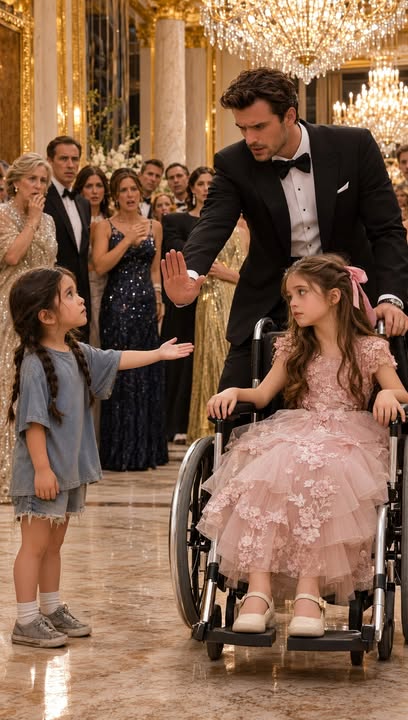
Part 6 – A Step at Her Own Pace
“The office says there’s a second page,” Elena replied.
“And it has your name on it.”
For a moment, Daniel could hear only the faint rustle of leaves overhead.
His name sat between them, connected to a promise made before he had known the garden, before he had understood what his family’s decisions meant beyond their tidy reports.
“What does it say?” he asked.
“They’re sending a copy,” Elena said. “They didn’t want to read it over the phone.”
Daniel nodded, grateful for the care in that choice.
“Would you like me to come with you when you look at it?”
Elena’s eyes searched his face.
“I don’t know yet.”
“That’s all right.”
“I want to read it first.”
“Of course.”
Near the fence, Lily called out that the bird had flown away.
Sofie said it might come back tomorrow.
Lily answered that it might come back in five minutes, because birds did not always follow anyone’s plans.
Daniel looked at them and felt the tightness in his chest ease just enough for him to breathe.
Whatever the second page contained, it would not change that small, bright exchange.
Elena slipped her phone into her bag.
“I’ll call you when I’ve seen the file.”
“Thank you.”
She gave a brief nod and returned to the girls.
No one asked Daniel to explain the look on his face.
The therapist helped Lily turn toward the garden path, and the visit continued at the girls’ pace, with the unknown bird’s absence becoming as interesting as its arrival had been.
Two days later, Elena called.
“I read the second page,” she said.
Daniel stopped what he was doing.
“What did it say?”
“It was a note Mara wrote to your father, with a copy of an investment proposal attached.”
He lowered himself into the chair beside his desk.
“Was the investment real?”
“Yes. A local group of former managers and community lenders had offered to keep part of the factory operating as a worker-owned workshop.”
Daniel closed his eyes briefly.
He knew the phrase worker-owned, but not the details.
“The proposal was still being reviewed when the closure went through,” Elena continued. “Your father had written that he would reconsider the decision if the investment was approved.”
“What happened?”
“The investment came through three weeks after the factory had already closed.”
Daniel looked toward the window.
Three weeks.
A decision that had once seemed final had been followed by an opportunity that came too late to save the old factory, but not necessarily too late to preserve some of its work.
“Did the workshop open?” he asked.
“Not in the factory building. The property had already been sold. A smaller workshop opened elsewhere, but only some of the workers were able to join it.”
“Do you know why my father’s note had my name?”
“Your father wrote that the company’s next generation should know the investment existed, even if the board decided not to pursue it.”
Daniel pressed his fingers together.
“Did he mean me?”
“Apparently.”
He heard paper move on Elena’s end of the line.
“The final sentence is in Mara’s handwriting,” she said. “She wrote that your father wanted the choice placed in your hands when you were ready to understand what it meant.”
Daniel’s throat tightened.
“Did she write anything else?”
“She said the investment would not restore every job, and it would not undo the way the closure had been handled. But it offered a chance to keep skills, work, and relationships in the neighborhood.”
He could picture Mara writing those words, careful and plain.
She had never believed that one act of help could settle every debt.
“What did you think when you read it?” he asked.
Elena was quiet for a moment.
“I thought about how close we came to having a different future.”
“I’m sorry.”
“I know you are.”
“And I know that isn’t enough.”
“No,” she said. “It isn’t.”
He waited, letting the silence belong to her.
“I also thought about how your father didn’t want the promise to disappear,” she added. “Even if the chance came too late for most of us.”
Daniel looked at the old folder on his desk.
“Would you be willing to help me understand what became of the workshop?”
“I can look into it.”
“Only if you want to.”
“I do,” Elena said. “Not for you. I want to know what happened to the people who went there.”
“Then I’d be glad to support the research, through the community office.”
“Support it by giving them the records they need and letting them decide what to do with them.”
“Yes.”
“And don’t turn Mara’s note into a promise the company can claim it kept.”
“I won’t.”
Elena exhaled.
“Good.”
They spoke a little longer about the records, then about the girls’ next garden visit.
When the call ended, Daniel sat with Mara’s letter beside him and the old investment proposal on his screen.
The documents did not offer a clean ending.
They showed that his father had been worried about the workers, that Mara had tried to keep a possibility alive, and that a promising alternative had arrived too late for many of the people who needed it.
They also showed how much could be lost when decisions were made from a distance, even by people who believed they were acting responsibly.
Daniel sent the records to the independent community board and asked them to decide whether the workshop history should become part of the rehabilitation program’s archive.
He did not attach a press statement.
He did not ask for his father’s name to be included in any public display.
Some stories, he was beginning to understand, were not his to arrange for an audience.
The program moved forward through spring and into summer.
Its board included therapists, local residents, families, and representatives from several community organizations.
Elena accepted a paid adviser position after reviewing the terms and changing two sections she believed were too vague.
She was not asked to tell her story at publicity events.
She did not have to praise Daniel or Mercer Group.
Instead, she helped review the intake process, the family support plan, and the way the program explained its services.
At their first official meeting, she sat across from Daniel at a long table and opened a binder full of notes.
“I’ve marked the places where families might not understand what happens next,” she said.
Daniel looked through the pages.
“Thank you.”
“Don’t thank me yet. There are a lot of marks.”
“I’m glad you found them.”
She studied him, then gave the smallest smile.
“You’re getting better at hearing criticism.”
“I’m trying not to treat it like a verdict.”
“That helps.”
The program’s funding was placed under the board’s control, with public accounts and clear rules about how decisions would be made.
Daniel stayed involved, but he did not direct the therapists or choose which families received help.
He attended meetings when invited and listened when the board asked him to answer for the company’s history.
Some days, he found that harder than signing checks.
He learned to stay in the room anyway.
Lily and Sofie continued meeting in the garden, sometimes with the therapist and sometimes with Elena nearby.
Their friendship grew through ordinary things.
They invented names for birds they could not identify.
They disagreed about whether the maple tree looked more beautiful in spring or autumn.
They shared a favorite bench, then decided that the whole garden belonged to no one and therefore could be shared by everyone.
Daniel kept learning when to offer help and when to wait.
Once, when Lily asked him to move her chair closer to the flower bed, he reached for the handles before she had finished speaking.
She rested her hand on his wrist.
“Dad.”
He stopped.
“Sorry,” he said. “Tell me where.”
She pointed to the patch of yellow flowers on the left.
“Just there.”
He guided the chair to the place she had chosen and stepped back.
“Thank you,” she said.
“You’re welcome.”
The therapist built Lily’s rehabilitation plan around small, supervised steps.
Some sessions involved strengthening exercises.
Some focused on balance and posture.
On other days, Lily chose to rest and listen to music instead.
The therapist never called a difficult day a failure.
Daniel tried not to do so either.
There were mornings when he wanted to ask whether Lily would stand again.
He learned to ask instead whether she wanted company, whether she felt comfortable, and what she hoped to do that day.
Sometimes she wanted to practice.
Sometimes she did not.
Both answers belonged to her.
As summer faded, the garden changed.
The flowers grew taller, then began to bow beneath the cooler nights.
The sparrows remained.
The unknown bird returned once, though no one could agree whether it was the same one.
Sofie’s notebook filled with sketches, questions, and Lily’s careful corrections.
On the first cool Saturday of autumn, the rehabilitation program opened its doors in a renovated community space a short walk from the garden.
There were bright rooms for therapy, a quiet corner for children, and wide pathways that connected the equipment without making the space feel like a clinic alone.
The board had chosen the name together.
It was called the Open Path Center.
No family name appeared over the entrance.
Elena stood beside the front desk with a stack of welcome cards.
“You’ve checked the access route?” she asked one of the coordinators.
“Twice,” the coordinator replied.
“And the sign-in sheet doesn’t ask for details people don’t need to give?”
“It asks only what the board approved.”
Elena nodded.
Satisfied, she returned to the entrance.
Daniel stood nearby, watching families arrive.
He felt proud of what the center might become, but careful not to mistake a beginning for a solution.
The program would not erase the factory’s closure.
It would not cure every illness or give every family the time and money they needed.
But it could offer people a place to ask questions, to receive help, and to be treated as more than a set of difficulties.
Elena came to stand beside him.
“The first day is always the easiest to make look good,” she said.
“I know.”
“The hard part is keeping the doors open and listening when people tell us what’s not working.”
“I know that too.”
She looked at him.
“Good.”
Across the room, Lily sat with Sofie near the window.
Sofie had brought the green notebook.
Lily had brought a new one of her own, with the first page labeled Birds We’re Still Learning.
Daniel caught Lily’s eye.
She smiled and lifted the notebook.
For a moment, he saw Mara in the bright window behind her, not as a ghost or an answer to every question, but as part of the life that had led Lily to this place.
He kept Mara’s letter at home, protected in its folder beside a new photograph of Lily and Sofie in the garden.
It remained a private reminder of the person Mara had been: thoughtful, determined, imperfect, and unwilling to confuse a good intention with a complete repair.
The autumn months brought steady progress.
Lily’s therapist adjusted the exercises as her strength and confidence changed.
Lily celebrated the things that mattered to her: learning to hold her balance a little longer, telling Sofie the name of a bird, and deciding for herself when she needed a break.
No one called those small victories a promise of what would come next.
They were simply hers.
One bright morning, Lily arrived at the garden for a scheduled session with her therapist.
The air smelled of damp leaves and the last flowers of the season.
Sofie was there with Elena, waiting beneath the maple tree.
Daniel carried the small support frame from the center, but Lily’s therapist checked every part of it before setting it in place.
The plan had been discussed with Lily, her doctor, and the therapist.
They had chosen the garden because Lily wanted to try there, where the ground, the air, and the people felt familiar.
She would not stand without support.
She could stop at any moment.
There was no audience beyond the people she had invited.
Elena stood near the bench.
Daniel stayed beside Lily, close enough to help if asked, far enough not to crowd her.
The therapist explained the steps once more.
“Are you comfortable trying today?” she asked.
Lily took a slow breath.
“Yes.”
“Do you want Sofie close?”
Lily looked at her friend.
“Will you hold my hand?”
Sofie came forward, then waited for Lily to reach first.
Lily extended her hand.
Sofie held it gently, the way she had in the ballroom, without pulling or urging.
The therapist positioned the support frame and checked Lily’s footing.
Daniel’s hands were clenched at his sides.
He opened them.
He reminded himself that this was not his moment to control.
It belonged to Lily.
“Whenever you’re ready,” the therapist said.
Lily shifted forward in her chair.
She pressed down through her arms, paused, and looked at the therapist.
“Is this okay?”
“Yes,” the therapist said. “Keep breathing, and tell me if anything feels wrong.”
Lily nodded.
Then, slowly and with careful support, she rose.
Her legs trembled.
Sofie’s hand remained steady in hers.
The therapist supported Lily at the agreed points, guiding her posture without taking over.
Daniel’s breath caught, but he did not move.
Lily stood.
Not because a ballroom had gone silent around her.
Not because a stranger had made a promise.
Not because anyone expected her to prove anything.
She stood because she had chosen the moment, and because the people around her had helped make it safe.
For several seconds, she remained upright.
Then she glanced at Sofie.
“I did it.”
“You did,” Sofie said, her smile shining.
The therapist watched Lily closely.
“How are you feeling?”
“Tired,” Lily replied. “But good.”
“Would you like to keep standing, or sit?”
“Sit now.”
The therapist helped her lower herself safely back into the wheelchair.
Daniel crouched beside her only after she was settled.
“Are you all right?”
Lily nodded.
“I’m all right.”
He did not ask whether she could do it again.
He did not ask how many seconds she had stood.
He waited until she reached for his hand.
She did.
“I’m proud of you,” he said.
“I’m proud of me too.”
Daniel smiled.
“That’s the part I like best.”
Sofie sat beside Lily on the bench.
They began talking about a sparrow near the flower bed, as if standing had been one part of the morning and not the whole of it.
Elena watched them for a while before joining Daniel.
“I’m glad we came,” she said.
“Me too.”
“And I’m glad you didn’t tell Lily what it had to mean.”
“I almost did.”
“I know.”
He glanced at her.
“How?”
“You had the look of someone preparing to remember every detail forever.”
“I probably will.”
“You can remember it,” Elena said. “Just don’t make her carry it as a promise.”
Daniel looked toward Lily, who was telling Sofie that the sparrow was probably searching for crumbs.
“I won’t.”
Elena rested her hand on the back of the bench.
“I’ve decided to keep advising the center,” she said. “At least through the next year.”
“I’m glad.”
“I’m doing it because the work matters, and because I think the board is listening.”
“I’m glad for that too.”
“Not because of Mara’s letter.”
“I know.”
“Or your family’s name.”
“I know.”
She nodded, accepting his answer.
They stood together without pretending that the past had been repaired.
Some harms remained.
Some choices could not be remade.
But there was also the work they were doing now, and the friendship between their daughters, and the trust that had grown not from one grand gesture but from many smaller ones kept patiently.
A breeze moved through the maple leaves.
Lily pointed up at the branches.
“Look,” she said. “The sparrow is back.”
Sofie leaned closer.
“Is it the same one?”
“We’re not sure yet,” Lily replied.
Sofie opened the notebook to a clean page.
“Then we’ll keep watching.”
Daniel looked at the girls beneath the autumn tree.
He thought of Mara’s letter beside the photograph at home, of Elena’s careful questions, of his father’s hidden contribution and the opportunity that had arrived too late to save the factory as it had been.
He could not change the choices made before him.
He could choose what he did with the truth they had left behind.
He could listen when Lily asked to try.
He could offer help without demanding gratitude.
He could let a community be more than a place he passed on the way to somewhere important.
Lily reached toward Sofie.
“Will you help me get closer to the flowers?”
“Do you want me to push your chair?” Daniel asked.
“I’d like you to, Dad.”
He moved behind her.
At the edge of the flower bed, Lily asked him to stop.
Then she turned to Sofie and reached for her hand again.
This time, she did not rise.
She simply held it while they watched the sparrow together.
Daniel stood behind them, close but not crowding, his daughter’s choice clear in the space she had made for everyone beside her.
He understood at last that hope was not the promise that nothing would go wrong, or that every old hurt would find its perfect repair.
Hope was a hand offered without pulling, a door left open without insistence, and the courage to let someone you loved decide when to take the next step.
**–THE END–PLEASE
Share your thoughts or feedback to motivate us to create more stories ♥️
* * *
[PREVIOUS: PART 5](https://storyly.idolsgift.com/blog/part-5-the-secret-lily-had-kept-057)
✓ Lynn R. Adams
Part 6 – A Step at Her Own Pace “The office says there’s a second page,” Elena replied. “And it has your name on it.” For a moment, Daniel could hear only the faint rustle of leaves overhead. His …