PART 6: The Barefoot Dance That Uncovered Isabella’s Mother’s Hidden Royal Legacy-060
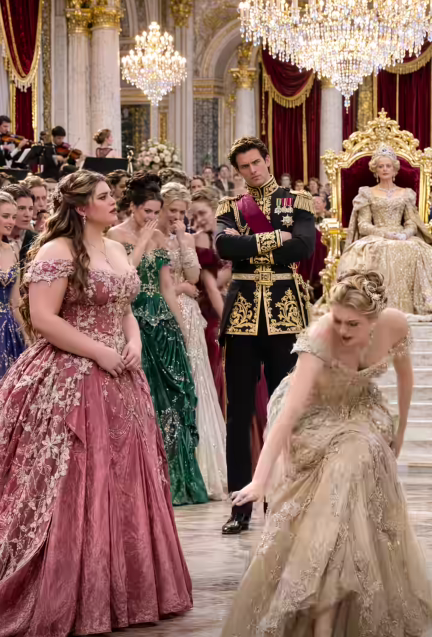
## PART 6 – The Name Hidden Before Margaret (THE END)
Isabella did not sleep that night.
Beatrice Vale’s letter lay open on the table while the palace beyond her windows settled into silence.
The name written in the final paragraph seemed impossible each time she looked at it.
Arthur Harrow.
She had read it six times before finally turning toward Edmund.
He had not moved.
The senior royal adviser stood beside the fireplace with one hand resting against the mantel, his face utterly drained of color.
“Arthur Harrow,” Isabella repeated.
Edmund closed his eyes.
“My grandfather.”
The answer came almost inaudibly.
Isabella looked from him to the letter.
“Beatrice says her first child with King Robert was a son.”
“Yes.”
“She says he was removed from her immediately after birth.”
Edmund swallowed.
“My grandfather was adopted.”
“Did you know?”
“No.”
“Nothing?”
“I knew the official story.”
“What story?”
“That Arthur had been the orphaned son of distant family friends.”
Harrow sat slowly.
“My grandmother used to say he had arrived in their household as a newborn with documents already prepared.”
“I thought she meant adoption papers.”
Isabella handed him Beatrice’s letter.
He read the final paragraph.
His hands began to shake.
If the child I bore before Margaret survives, he will be known as Arthur Harrow.
The arrangement was made because Robert’s advisers believed the existence of a son would make it impossible to separate us without scandal.
I agreed only because they promised he would be protected.
I have regretted that agreement every day since.
If his descendants are ever found, tell them I did not surrender him because I did not love him.
I surrendered him because I was twenty years old and surrounded by men who told me resistance would destroy everyone I loved.
Edmund lowered the letter.
For perhaps the first time in his life, the famously composed adviser appeared entirely without defense.
“My grandfather.”
Isabella sat opposite him.
“Did he ever know?”
“I don’t think so.”
“Did your father?”
“No.”
“Then this secret survived three generations.”
Harrow laughed once, but there was no amusement in it.
“This family appears determined to make ordinary genealogy impossible.”
Isabella smiled faintly.
“Christopher said something similar.”
Then the implication returned.
“If Arthur was older than Margaret…”
Harrow looked toward her.
“Then his line would precede hers.”
“And yours would precede mine.”
The words hung between them.
Edmund stood abruptly.
“No.”
Isabella blinked.
“No?”
“I do not want the throne.”
“I did not say you did.”
“I have spent forty years working inside this palace.”
“I know precisely enough about crowns to have no desire whatsoever to wear one.”
Despite herself, Isabella laughed.
Harrow stared at her.
Then he began laughing too.
Not loudly.
Not happily exactly.
But with the exhausted disbelief of two people who had spent days discovering that every answer contained another hidden door.
When the laughter faded, Isabella became serious.
“We still have to verify it.”
“Yes.”
“Quietly.”
“Very quietly.”
By sunrise, Eleanor had been told.
Her reaction was not shock.
It was something closer to surrender.
“Of course there is another heir,” she said.
Adrian looked at her.
“Mother.”
“I mean no disrespect to history.”
She poured herself tea.
“But history has been behaving like an inconsiderate guest for a week.”
Christopher laughed.
Even Adrian smiled.
Eleanor looked toward Harrow.
“How do you feel?”
“Unqualified.”
“That has never stopped anyone in royal history.”
“Comforting.”
She softened.
“I am serious, Edmund.”
Harrow looked toward the window.
“I spent decades helping maintain an institution that concealed the truth about my own grandfather.”
“You did not know.”
“No.”
“But perhaps ignorance is another family inheritance.”
Eleanor shook her head.
“Do not turn guilt into a form of vanity.”
He looked at her.
She continued.
“Not every secret in this palace belongs to you simply because you worked here.”
“Some were created before you were born.”
The words reached him.
He nodded slowly.
The investigation began again.
This time the evidence lay outside royal archives.
The Holloway family in Willowmere possessed baptismal records, adoption papers, private correspondence, and a miniature portrait of Beatrice painted shortly after Arthur’s birth.
A notation on the back named the child.
Arthur Robert Vale.
Transferred by private guardianship into the Harrow household.
The date preceded Margaret’s birth by eleven months.
DNA evidence offered another layer of confirmation.
Christopher provided a sample as a known Vale descendant.
Isabella provided one through Margaret’s line.
Edmund provided one through Arthur’s.
The results showed exactly what the documents suggested.
Edmund Harrow belonged to the same direct family branch.
The newspapers learned nothing until Eleanor decided the secrecy had gone far enough.
“No more hidden files,” she told the council.
“No more private arrangements.”
“If Ashford is going to survive its history, it must survive the truth.”
A national address was scheduled.
Before it took place, Isabella traveled alone to the old cottage in Willowmere.
The house had been empty for years.
A local family had purchased the property but kept the original structure after learning who Isabella had been.
They gave her permission to enter.
The front door still stuck near the bottom.
The kitchen remained small.
The fireplace looked even smaller than she remembered.
She stood where her mother used to knead bread.
For several minutes, Isabella allowed herself to be nine years old again.
Margaret humming.
Rain striking the roof.
A stew simmering.
Her mother laughing because Isabella had stepped on her foot during the dance.
She walked into the bedroom.
The floorboards creaked beneath her.
The space beneath Margaret’s old bed was empty.
Then Isabella noticed a mark carved into the wooden frame.
Two swallows.
The Bellhaven crest.
She sat on the floor.
“I found you,” she whispered.
Her voice trembled.
“I wish you had made it easier.”
Tears came.
Not violent grief.
Not even sadness alone.
Something gentler.
The ache of finally understanding a person after losing the chance to tell them so.
“You were trying to protect me.”
She touched the carved birds.
“But I think you were protecting yourself too.”
The admission felt important.
Margaret had been loving.
Brave.
Proud.
Afraid.
Imperfect.
A mother rather than a legend.
Isabella smiled through her tears.
“I think I prefer you this way.”
A voice sounded from the doorway.
“So would she.”
Isabella turned.
Mrs. Bell stood there holding a basket.
“I’m sorry.”
“I didn’t mean to intrude.”
“You didn’t.”
The older woman entered.
“I brought bread.”
“You always bring bread.”
“People complicate their lives unnecessarily.”
Mrs. Bell handed her the basket.
“Bread solves many things.”
Isabella laughed.
They sat together in the little kitchen.
Mrs. Bell remembered Margaret differently from Eleanor.
Not as a duchess.
Not as a lost royal heir.
As the woman who repaired fences for neighbors.
The woman who once argued with a butcher over dishonest scales.
The woman who sang terribly while washing clothes.
“Did she seem unhappy?” Isabella asked.
Mrs. Bell considered.
“Sometimes.”
“About what?”
“The past, I suppose.”
“But she never seemed sorry about you.”
The answer struck Isabella deeply.
Mrs. Bell continued.
“She used to say you were the one decision in her life she never questioned.”
Isabella lowered her eyes.
“Thank you.”
Before leaving, Mrs. Bell touched her hand.
“Whatever they decide you are at that palace, don’t let it make you forget who danced in this kitchen.”
“I won’t.”
The national address took place two days later.
Eleanor stood before Parliament.
Isabella sat beside Adrian.
Edmund Harrow sat several seats away.
Christopher watched from the public gallery.
The prime minister presented the evidence.
King Robert’s lawful marriage to Beatrice Vale.
Their son Arthur.
Their daughter Margaret.
The concealment of both children.
The later invalid marriage from which Eleanor’s legal claim had originally been derived.
The legal consequences were extraordinary.
Constitutional scholars spent days arguing over doctrine, precedent, legitimacy, settled sovereignty, parliamentary authority, and public recognition.
Eventually, one principle achieved broad agreement.
The past could be acknowledged without dismantling the entire present.
Eleanor’s reign would remain lawful under the doctrine of settled sovereignty.
Her acts as queen would not be disturbed.
The historical record would be corrected.
Arthur Harrow would be recognized posthumously as King Robert’s eldest lawful child.
His living descendant, Edmund, would possess the strongest hereditary claim.
And Parliament would ask him a simple question.
Would he accept a place in the succession?
Edmund stood.
He had spent a lifetime speaking in formal chambers.
Yet when the moment came, his voice was quiet.
“No.”
A murmur passed through Parliament.
Edmund continued.
“My grandfather lived his entire life without knowing the name under which he was born.”
“My father lived without knowing it.”
“I have spent most of my own life believing service matters more than position.”
“I see no reason to abandon that belief now.”
He looked toward Isabella.
“My cousin Margaret chose anonymity.”
“Her daughter chose truth.”
“I choose service.”
Then he smiled faintly.
“Also, I am seventy-one years old, and I have no intention of beginning a new career.”
Laughter moved through the chamber.
The tension broke.
Edmund formally renounced any personal hereditary claim for himself.
His only daughter, who lived abroad and had never shown interest in royal life, submitted a renunciation of her own.
With the senior Harrow branch removed by lawful choice, the succession moved to Margaret’s line.
To Isabella.
Parliament offered her recognition as heir presumptive to Eleanor.
She asked for twenty-four hours.
That evening, she walked with Adrian through the palace gardens.
Spring had begun touching the trees.
Tiny green leaves appeared along the branches.
“You already know what you’re going to do,” he said.
“Do I?”
“Yes.”
“You sound confident.”
“I am trying to limit that habit.”
She smiled.
They reached the fountain.
The same fountain beside which Eleanor and Margaret had once been photographed barefoot.
Isabella sat on the stone edge.
Adrian remained standing.
“What happens if I accept?”
“To us?”
“To everything.”
“I don’t know.”
She looked at him.
“Still learning not to control the answer?”
“Painfully.”
She studied his face.
The man before her was not transformed.
That mattered.
Real change had not made Adrian suddenly gentle, patient, or wise.
He still interrupted too quickly.
Still disliked losing arguments.
Still became tense when plans shifted.
But now he noticed.
Sometimes he stopped himself.
Sometimes he apologized before being confronted.
Sometimes he failed.
Then tried again.
For the first time, Isabella understood that forgiveness did not require forgetting who someone had been.
It required deciding whether who they were becoming deserved room to continue.
“I am not ready to return to the marriage we had,” she said.
“I don’t want that marriage back.”
“What do you want?”
“A different one.”
She looked toward the fountain.
“And if I cannot give you that?”
Adrian’s voice softened.
“Then I will respect that too.”
The answer brought tears unexpectedly close.
She nodded.
“I need more time.”
“You have it.”
He began to leave.
“Adrian.”
He turned.
Isabella stood.
Then she crossed the distance between them and took his hand.
Not because everything was repaired.
Because something might be.
The next morning, she accepted.
Not the crown.
Not yet.
The role of heir.
Her announcement was brief.
“I spent much of my life believing belonging was something other people granted.”
“I no longer believe that.”
“I accept this responsibility not because blood makes me better suited to serve than anyone else, but because history has placed a choice before me.”
“I choose to serve.”
Eleanor remained queen.
Isabella became heir.
Adrian formally stepped behind her in the line of succession.
To the surprise of many, he accepted the change without protest.
To the greater surprise of those who knew him well, he refused every opportunity to present himself as noble for doing so.
“Basic decency should not receive a medal,” he told one journalist.
Isabella heard about the remark later.
She smiled for the rest of the morning.
Bellhaven changed slowly.
That was intentional.
The first tenant ownership program began six months later.
Samuel Price became the legal owner of the eighty acres his family had worked for five generations.
He cried when he signed the deed.
Then denied it.
Lena Brooks received approval to expand her dairy barn under conservation guidelines she helped design.
The southern forest became a protected preserve managed jointly by local families, environmental experts, and the Bellhaven Trust.
Christopher became its first director.
He complained that Isabella had given him too much work.
She reminded him that he had suggested the trust.
He called that an unfortunate youthful mistake.
Bellhaven House reopened three years later.
Not as a private royal residence.
Its eastern wing became a legal aid center for rural communities.
The western wing became an educational institute.
The old gallery became a museum telling the full history of Bellhaven, including the forged documents, land scheme, royal concealment, Margaret’s disappearance, and Isabella’s childhood.
Eleanor insisted the exhibition include her own failure to trust Margaret.
A curator hesitated.
“Your Majesty, the wording is rather direct.”
“Good.”
“It may reflect poorly on you.”
“History is not obliged to flatter me.”
The curator included it.
Edmund Harrow retired one year later.
He lasted three months before becoming unbearable.
Eleanor eventually appointed him chairman of the Royal Archives Reform Commission simply to give everyone else peace.
He accepted immediately.
Christopher claimed this proved retirement was a fictional concept.
Eleanor visited Willowmere often.
At first, villagers treated her with nervous formality.
Then Mrs. Bell invited her inside for tea.
Within six months, the queen was regularly losing card games to three elderly women who showed no respect whatsoever for royal status.
She loved it.
Isabella and Adrian lived separately for nearly a year.
They met by choice.
Sometimes for dinner.
Sometimes for walks.
Sometimes not at all for several days.
They learned each other again.
Adrian attended counseling with a royal adviser who specialized in family dynamics.
He hated the first session.
He returned to the second.
Then the third.
Isabella watched not what he promised but what he practiced.
One evening, nearly eighteen months after the winter ball, they stood in the restored ballroom at Bellhaven.
Workers had cleared the space for an upcoming charity celebration.
There was no orchestra.
No guests.
Only late sunlight crossing the wooden floor.
Adrian looked around.
“Your mother danced here?”
“When she was young.”
“Will you teach me?”
Isabella stared at him.
“The dance?”
“Yes.”
“You mocked it.”
“I know.”
“You called it humiliating.”
“I know.”
“You almost ruined the last memory I believed I had of her.”
His face tightened.
“I know.”
She remained silent.
Adrian did not defend himself.
Finally, Isabella removed her shoes.
“So should you.”
He looked down.
“These socks are expensive.”
“Then try not to destroy them.”
He laughed.
They stood facing each other.
Isabella raised her arms.
“One step.”
Adrian followed.
Badly.
She frowned.
“That was terrible.”
“I am a prince.”
“That does not appear to help.”
They tried again.
He stepped on her foot.
She yelped.
He apologized.
Then they both laughed.
Something in Isabella loosened.
Not because the past had disappeared.
Because it no longer controlled every moment that came after it.
She showed him the turn.
He attempted it.
Failed.
Tried again.
Eventually, when evening filled the windows, Adrian managed the first sequence without error.
Isabella smiled.
“There.”
“You recognized me.”
The words stopped her.
Whenever you feel lost or alone, dance.
Someday, someone will recognize you.
She looked at Adrian.
Then toward the empty ballroom.
Perhaps she had misunderstood Margaret all along.
Recognition was not only about someone identifying her bloodline.
It was about being seen without disguise.
Without title.
Without shame.
Without being reduced to where she had come from or what others expected her to become.
Years later, when Eleanor finally stepped down from the throne by choice, Isabella was crowned queen.
The ceremony was magnificent.
Bells rang throughout Ashford.
Crowds filled the capital.
Foreign dignitaries gathered beneath vaulted ceilings.
But Isabella remembered almost none of it as clearly as what happened afterward.
That evening, she returned to her private rooms.
She removed the crown.
Then the earrings.
Then the formal shoes.
Adrian stood near the window.
He was older now.
So was she.
Their marriage had survived not because either of them had forgotten its failures, but because they had built something new where the old version had broken.
“You’re staring,” Isabella said.
“I am.”
“Why?”
“I was thinking about the first time you danced barefoot in a royal ballroom.”
She smiled.
“That evening nearly destroyed us.”
“Yes.”
“And somehow it also changed everything.”
Adrian walked toward her.
“Do you regret it?”
“The dance?”
“Any of it.”
Isabella thought.
She regretted pain.
Lost years.
Margaret’s isolation.
Eleanor’s guilt.
Frederick’s silence.
Adrian’s cruelty.
Her own long habit of making herself smaller.
But regret was not the same as wishing life erased.
“No,” she said.
“Not anymore.”
They walked together to the balcony.
Below them, Ashford glowed beneath thousands of lights.
A little girl stood among the crowd holding her mother’s hand.
Music began somewhere in the square.
The child removed her shoes.
Then she started dancing.
Isabella laughed softly.
Adrian noticed.
“What?”
“Nothing.”
But it was not nothing.
Some stories ended when secrets were revealed.
Others began there.
Isabella touched the silver pendant at her throat.
Margaret’s pendant.
Beatrice’s crest.
Her own history.
Then she looked toward the kingdom she had once believed belonged to people unlike her.
She no longer thought of belonging that way.
A crown did not make a person worthy.
Poverty did not make a person lesser.
A name could be hidden.
A record could be altered.
A title could disappear.
But the choices people made when given the chance to repair old wrongs could outlive all of them.
Below, the little girl completed an awkward turn and nearly fell.
Her mother caught her.
Both began laughing.
Isabella closed her eyes for one moment.
She could almost feel Margaret’s hands around hers.
One step.
Then another.
Turn.
Glide.
Spin.
And somewhere between memory and music, the lost little girl from Willowmere understood at last what her mother had been trying to give her.
Not a path to a throne.
A way home to herself.
**–THE END–PLEASE
✓ Lynn R. Adams
## PART 6 – The Name Hidden Before Margaret (THE END) Isabella did not sleep that night. Beatrice Vale’s letter lay open on the table while the palace beyond her windows settled into silence. The n…