PART 5: The Messages He Never Saw 027
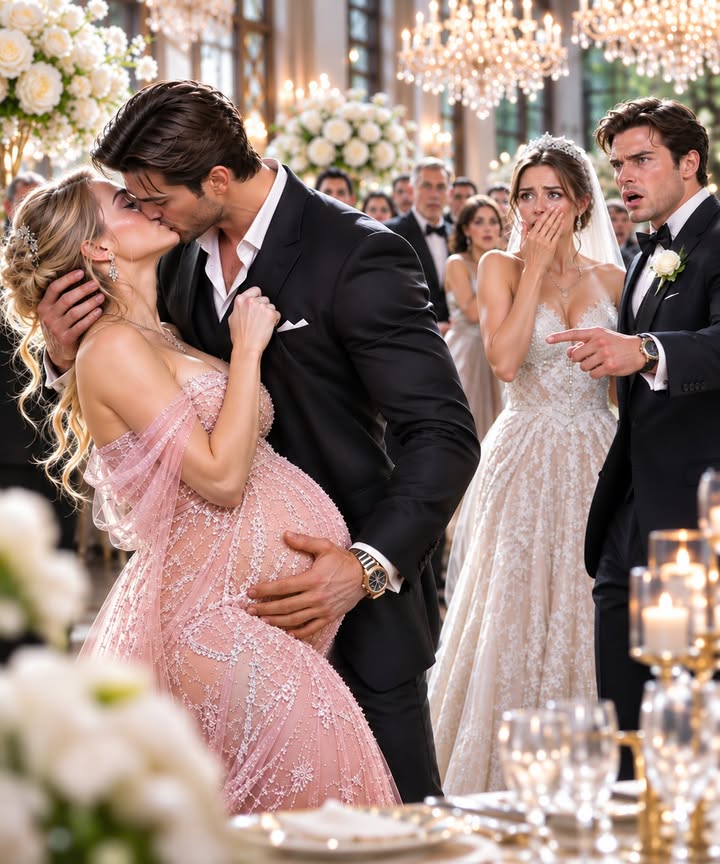
Part 5 – The Cost of Being Seen
“That doesn’t make sense,” I said.
“I know,” Matteo replied. “I’m waiting for the original file before I draw any conclusions.”
I set the dish towel down, though my fingers still held its shape.
“Tell me when you know.”
“I will.”
The call ended without either of us saying goodnight.
I stayed in the kitchen for a long time, watching rain blur the lights beyond my window.
I had believed the truth would arrive like a key, turning cleanly in a lock and opening the way forward.
Instead, every answer seemed to reveal another door.
The next morning, Matteo sent a message saying Gianni had received the original document and was reviewing it.
He did not call to explain before he knew what it meant.
I appreciated that restraint, even as the uncertainty gnawed at me.
I went to my prenatal appointment alone, as I had planned.
The nurse asked how I was feeling, and I told her the truth: tired, a little anxious, but otherwise well.
The baby’s heartbeat filled the exam room, steady and quick.
I closed my eyes and listened until the sound softened into the ordinary rhythm of the appointment.
For a few minutes, there was no Matteo, no office memo, no question of who had signed what.
There was only the life moving inside me.
Afterward, I sat in my car with the appointment notes resting on my lap and called Emily.
“How did it go?” she asked.
“Everything looked good.”
“I’m glad.”
“I keep thinking I should feel relieved.”
“You can be relieved about the baby and still feel unsettled about everything else.”
“I know.”
“Do you want me to come over?”
“Not yet.”
“Then I’ll be here when you do.”
I drove home slowly, letting the rain-washed streets pass by.
Matteo called just after I had changed out of my coat.
“Gianni has the document,” he said. “Would you be willing to meet this afternoon?”
“Is the signature yours?”
“It appears to be.”
My stomach tightened.
“And the wording?”
“He hasn’t finished reviewing the file history. There are two versions of the policy.”
“Then I don’t want to meet until you know what the differences are.”
“That’s reasonable.”
“Did you sign a document that allowed your office to hold personal messages?”
“I signed a broad communications policy when I became chief executive. The signature may have been attached to an amendment later.”
“Do you remember the policy?”
“I remember approving rules about confidential business correspondence and the way incoming requests were handled. I don’t remember approving a rule that let anyone hold personal messages without notifying me.”
“Could you have signed it without reading every line?”
A pause followed.
“Yes,” he said. “I signed a great many documents during that period. That doesn’t make it acceptable, but it is possible.”
I leaned against the counter.
“You’re saying you might have approved it without realizing what it allowed.”
“I’m saying I need to know whether the document is authentic, whether it was altered, and what I actually approved.”
“And if you did approve it?”
“Then I have to own that.”
I had spent so long imagining Matteo as a man who could bend every circumstance to his will that it was difficult to hear him admit that he had not understood what his own signature had done.
It did not make the question easier.
“I don’t want to be asked to reassure you,” I said.
“I won’t ask that.”
“Good.”
“I’ll send you the document once Gianni has confirmed which version was filed.”
“Send it to me directly. No one else.”
“I will.”
“And Matteo?”
“Yes?”
“If you discover that you signed something careless, I need you to say that plainly.”
“I will.”
We ended the call.
That afternoon, the file arrived in a secure message from Gianni.
It contained the original policy, a later amendment, and the record of the approvals.
I opened the documents at my kitchen table, with my tea cooling beside me.
The first page was routine language about confidential correspondence and administrative coverage.
The amendment was dated a week after the policy had been signed.
It gave the chief of staff authority to hold messages categorized as “personal or non-urgent” during periods when Matteo was traveling or engaged in sensitive negotiations.
The stated purpose was to reduce interruptions and protect the privacy of the executive office.
Matteo’s signature appeared beneath the original policy, not the amendment.
The amendment had been approved by Luca alone.
I read the pages once, then again, searching for some hidden clause or altered line that I might have missed.
There was no second signature.
No evidence that Matteo had approved the rule that held my messages.
The question had been frightening enough that I had braced myself to find him inside the decision.
Instead, the record showed something quieter and more complicated.
He had signed a broad policy that gave his staff a wide measure of discretion.
Luca had later used that discretion to create the rule that kept my message from him.
Matteo’s name had helped build the office.
It had not authorized the specific silence.
Gianni’s note at the end confirmed the dates and explained that the amendment had not been circulated to the company’s legal team.
I called Matteo.
“It was Luca’s amendment,” I said when he answered. “Your signature was on the original policy.”
“Yes. Gianni sent me the same documents.”
“You didn’t approve the rule about holding personal messages.”
“No.”
“But you approved a policy broad enough for him to create it.”
“Yes.”
His answer contained no defense.
I looked down at the first page.
“You trusted him with a lot.”
“I did.”
“Did you ever ask what the office was doing in your name?”
“Not enough,” he said. “I thought the procedures were ordinary. I thought the people I trusted would bring me anything that mattered.”
“Didn’t you ever wonder who decided what mattered?”
“I should have.”
The admission settled into the kitchen with the rain-muted quiet.
“I believe you didn’t choose to block me,” I said.
“I’m grateful you believe that.”
“But I don’t want that to become a way of saying you had no part in what happened.”
“I don’t want it to.”
“I’m not accusing you of lying to me. I’m telling you that the world around you had a hand in my life before I even knew its name.”
“I understand.”
“You keep saying that.”
“You’re right.” He paused. “I’m trying to listen without claiming I understand more than I do.”
That answer made me look up from the paper.
“I can accept that.”
“Thank you.”
I held the phone a little closer.
“What are you going to do about the policy?”
“Gianni has already suspended it. We’re reviewing every message that was held under the amendment and contacting the people who were left without a response.”
“Were there others?”
“We’ve found several messages and calls that weren’t properly routed. None involved the same circumstances as yours, but that doesn’t make the failures less serious.”
“Are you going to tell them what happened?”
“Yes.”
“Even if it reflects badly on you?”
“Yes.”
I heard the choice in that word, and its cost.
Not a grand gesture, not a promise made for my benefit.
A willingness to let the truth be inconvenient.
“I have another question,” I said.
“Ask me.”
“What do you want people to know about me and the baby?”
His breathing changed slightly.
“I want them to know only what you want them to know.”
“That’s not the answer I’m asking for.”
“Then I want to acknowledge that I’m the father and that I should have been there sooner.”
“Even if it means people ask how you didn’t know?”
“Yes.”
“Even if the company is uncomfortable?”
“Yes.”
The answer came quickly, but I knew he had not yet faced the full price of it.
“Matteo, this isn’t a conversation we can keep having privately if reporters already know there’s a pregnant woman at the wedding.”
“I know.”
“Your attorney is going to tell you to stay silent.”
“He already has.”
“And what did you tell him?”
“That I wouldn’t discuss your pregnancy without your permission.”
“That’s not the same as deciding what you’ll say if they ask about being a father.”
“No,” he said. “It isn’t.”
The next call came that evening.
I was in Emily’s living room when my phone rang.
Matteo sounded more restrained than he had earlier.
“Gianni wants to speak with both of us,” he said. “A reporter has contacted the company with questions about the wedding.”
“What kind of questions?”
“They want to know if I’m expecting a child with you.”
I sat straighter.
“Did they name me?”
“They mentioned your first name, but they haven’t identified you publicly.”
“Who told them?”
“We don’t know yet.”
“Are they asking about the paternity test?”
“No. They only know you’re pregnant and that we were seen together.”
Emily had gone quiet beside me.
“What does Gianni recommend?” I asked.
“He recommends that I say nothing until the company completes its review of the message records.”
“That could take weeks.”
“Yes.”
“And the deal?”
There was a silence.
“What deal?” I asked.
“Matteo, don’t make me draw the answer out of you.”
“Gianni mentioned that the company is finalizing a major partnership. The other side is sensitive to public attention around the negotiations.”
“What does that have to do with our daughter?”
“It doesn’t change the truth,” he said. “But the attorney thinks a public statement could turn the story into a business issue before the agreement is signed.”
“And what do you think?”
“I think our daughter is not a business issue.”
“Then why are we talking about the deal?”
“Because it may affect the people who work for the company, not only me.”
I heard the conflict in his voice, and I knew this was not a simple choice between selfishness and courage.
It was a choice with consequences for people who had nothing to do with his past.
Still, I would not let myself become another private matter waiting for a convenient time.
“I don’t want you to announce me as a way of getting ahead of the story,” I said.
“I wouldn’t.”
“I don’t want my pregnancy presented as proof that you’re a good man.”
“I understand.”
“I don’t want you to say you’ll be there for everything and make promises you can’t keep.”
“I won’t.”
“I need you to decide what you’re willing to own, even if no one applauds you for it.”
He was quiet.
When he spoke, his voice had lost the careful finish of a business conversation.
“I know.”
“No,” I said gently. “You don’t get to say that until you decide.”
“I’m trying to.”
“Then take the time you need. But don’t ask me to help you protect your reputation.”
“I wouldn’t ask that of you.”
“Good.”
We ended the call, and I set the phone down.
Emily watched me.
“Did he ask you to keep quiet?”
“No.”
“Did he ask you to save the company deal?”
“No.”
“Then what are you worried about?”
“That he’ll make a choice because he’s afraid of what people will think, and call it protecting everyone.”
Emily gave my hand a squeeze.
“You can’t make the choice for him.”
“I know.”
“But you can tell him what you will and won’t accept.”
“I have.”
“That’s all you can do.”
I leaned back, weary from holding the same thought in so many shapes.
“Do you think he’ll acknowledge her?”
Emily considered her answer.
“I think he wants to.”
“That isn’t what I asked.”
“I think he’ll have to decide whether wanting to is enough.”
The next morning, I received an email from Gianni asking whether I would join a private call with Matteo and the company’s communications adviser.
I declined.
I did not want to be invited into a room where people discussed how much of my life could be revealed without disrupting a deal.
Matteo called an hour later.
“Gianni told me you declined the call.”
“Yes.”
“I understand.”
“Do you?”
“I think you didn’t want to be treated as a communications problem.”
“That’s right.”
“You shouldn’t have to sit through that.”
“I appreciate you saying so.”
“I asked Gianni to speak with me alone.”
“Are they advising you to deny being the father?”
“They advised me not to confirm anything publicly until the partnership is signed.”
“Do they want you to lie?”
“No. They want me to say I don’t discuss private matters.”
“Which would let people assume whatever they want.”
“Yes.”
The plainness of his answer carried more weight than a defense.
“Are you going to say it?”
“I don’t know yet.”
“Then you’re not ready.”
“I want to be honest with you about that.”
“Thank you.”
“I’m not asking you to wait while I decide.”
“You already know I won’t.”
“I do.”
I closed my eyes.
There was a part of me that wanted to offer him an easier way out.
I could tell him to protect the company, say nothing, and let the story fade.
I could tell myself that private acknowledgment was enough and that public silence had no effect on our daughter.
But the people around him had already decided once that I was not important enough to interrupt his work.
I could not help him repeat that decision and pretend it was harmless.
“I won’t be hidden,” I said.
“I know.”
“And I won’t let you use me to repair your image either.”
“I don’t want that.”
“Then be clear about what you’re choosing, and why.”
“I will.”
We ended the call with no decision made.
That afternoon, a small envelope arrived at my apartment.
It was addressed in Matteo’s handwriting.
Inside was a short note.
I have asked the company to pause public comment until I can speak with you about what you want protected.
I have not agreed to conceal that I am the baby’s father.
I will not say anything that identifies you without your permission.
The note did not tell me what he would do next.
It told me he had not yet chosen silence as the easier answer.
I placed it beside the clinic report.
A few hours later, Matteo called again.
“Gianni has received another message from the reporter,” he said. “They have a photograph from the wedding.”
“Of me?”
“Of us, on the terrace. It doesn’t show your face clearly, but it shows your pregnancy.”
I looked toward the window.
The evening light had faded to a thin gray strip between the buildings.
“Are they planning to publish it?”
“They haven’t said.”
“What does Gianni recommend now?”
“He wants to issue a statement saying I don’t discuss private family matters.”
“And you?”
“I’ve asked him to prepare a statement that confirms I’m the father.”
My heart gave a hard, uneven beat.
“You’ve decided?”
“I’m close.”
“That isn’t the same thing.”
“No,” he said. “It isn’t.”
“Why call me before you decide?”
“Because I don’t want you learning about my choice from a headline.”
“I asked you not to make me part of your strategy.”
“I’m not asking you to approve the wording. I’m telling you what’s happening.”
“What will the statement say about me?”
“Nothing you haven’t agreed to.”
“And about the baby?”
“That she is my daughter, and that I take responsibility for not knowing about her sooner.”
The words moved through me with a force I had not expected.
“Do you mean that?”
“Yes.”
“Then say it because it’s true, not because a photograph might appear.”
“I will.”
“And if the company deal falls apart?”
He took a breath.
“I’m still deciding how much risk I can ask other people to bear for a choice that is mine.”
That was the first answer that made me understand the weight he was carrying.
I pictured the employees whose names I would never know, the people whose work was tied to decisions made in rooms they would never enter.
I also pictured my own months of waiting, the clinic report folded inside my clutch, and the knowledge that Matteo’s silence had been built from procedures he had failed to question.
“Then don’t ask me to rescue you from the choice,” I said.
“I won’t.”
“I can’t tell you what to sacrifice.”
“I know.”
“Whatever you choose, I need to be able to respect that you chose it freely.”
“I understand.”
The word no longer sounded like a promise that he knew my heart.
It sounded like a promise to hear what I was saying.
That evening, Emily came over after work.
She brought soup and a small bag of baby clothes she had found at a local shop, soft cotton sleepsuits in pale yellow and green.
“I know we don’t need more clothes,” she said. “But these were too small and sweet not to bring home.”
I ran my thumb over the tiny folded sleeve.
“Thank you.”
Emily watched my face.
“Matteo’s deciding whether to speak publicly.”
“He is.”
“And you don’t know what he’ll do.”
“No.”
“Do you want him to?”
I looked down at the little clothes.
“I want him to be honest. I don’t know what honesty will cost him.”
“Neither does he, probably.”
“I don’t want him choosing me because he thinks the world expects it.”
“You don’t want him choosing silence because the world expects that either.”
“No.”
“Then you’ve told him what matters.”
I folded the sleepsuit carefully and placed it in the basket by the couch.
“What if the right choice still hurts people?”
“Then he’ll have to live with the choice and take responsibility for the hurt,” Emily said. “You can’t make the outcome painless for him.”
Her words stayed with me long after she left.
I thought of all the times I had tried to prevent other people’s discomfort by swallowing my own.
I would not do that here.
Not for Matteo.
Not for his company.
Not for the neat story people might prefer.
The following morning, Matteo asked if I would meet him at the hotel where Emily’s wedding had taken place.
I hesitated before agreeing.
When I arrived, he was waiting in the same private terrace where I had shown him the clinic report.
The city lay below us, bright with cold morning light.
He stood beside the railing, his hands resting on the stone.
“I thought we should talk somewhere quiet,” he said.
“Have you decided?”
“Almost.”
“That still isn’t an answer.”
“No.”
He looked at me.
“Gianni says the reporters may publish the photograph this afternoon. The partnership announcement is scheduled for tomorrow.”
“And if you speak before it’s signed, the other company could delay.”
“Yes.”
“Could people lose their jobs?”
“It’s possible the agreement could be postponed. The company would remain stable, but the delay would create problems for the teams involved.”
“Then it isn’t only your reputation.”
“No.”
“Do you know what you want to say?”
“I want to say that I’m the father, that I should have known sooner, and that I’ll respect your privacy.”
“What about the fact that your office held my messages?”
“I’ll acknowledge that my systems failed and that I’m changing them. I won’t disclose your private details.”
“Are you going to blame Luca?”
“No. I’ll explain what the review established, but I won’t use him to make myself sound innocent.”
I studied his face.
There was no polished certainty in it.
Only a man standing at the edge of a decision he could no longer make privately.
“What does the attorney say?”
“He says I should wait.”
“What do you say?”
“I say waiting has already asked too much of you.”
My eyes stung, though I refused to let the tears fall.
“That doesn’t mean I’m asking you to speak today.”
“I know.”
“I’m not asking you to fix what happened by making a public gesture.”
“I know.”
“I’m asking you not to make me invisible because visibility is inconvenient.”
“I won’t.”
“You can’t know what I’ll decide about us.”
“I don’t.”
“You can’t promise I’ll trust you.”
“I can’t.”
“You can’t promise we’ll become a family.”
“I won’t.”
His voice remained steady, though his hands had tightened on the railing.
“I can only tell you what I choose to do now,” he said. “I choose not to deny our daughter. I choose to take responsibility for the time I missed. And I choose to change the way my office works, whether or not anyone ever writes about it.”
I searched his face for the part that wanted me to make the decision easier.
He did not ask me to.
“Then do it for the reasons you just gave,” I said.
“I will.”
“Don’t make me stand beside you.”
“I won’t.”
“Don’t use my name.”
“I won’t.”
“And don’t turn the baby into proof that you’ve become a better man.”
“I won’t.”
He looked down at the city.
“I don’t expect you to forgive me.”
“I’m not ready to.”
“I understand.”
The wind lifted the edge of my coat.
I rested a hand over my belly, feeling the baby shift beneath my palm.
“She’s going to have her own life,” I said. “She isn’t a second chance for either of us.”
“No,” Matteo replied. “She isn’t.”
“She deserves parents who can tell the truth without asking her to carry the consequences for them.”
“Yes.”
“Then start there.”
He turned back to me.
“I will.”
For a moment, neither of us moved.
Then his phone rang.
He looked at the screen and answered.
“Gianni.”
He listened without speaking.
I watched his expression become still.
“Has it been signed?” he asked.
Another pause.
“When?”
His eyes lifted to mine.
“Send me the final copy,” he said.
He ended the call.
“What happened?” I asked.
“The partnership agreement has been postponed.”
“Because of the photograph?”
“No. The other company asked for additional time after its board reviewed the market conditions.”
“Does that change your decision?”
“It means the deal is already delayed, but that doesn’t make the choice easier.”
“Why not?”
“Because there are still people counting on it.”
I nodded.
“I’m sorry.”
“So am I.”
He lowered his phone.
“Gianni wants to prepare a short statement now, before anything is published.”
“And what do you want?”
“I want to say the truth.”
“Then say it.”
“I will.”
He looked at me as if he wanted to add something, but the words did not come.
The terrace door opened behind us.
Gianni stepped outside, carrying a document folder.
“Matteo,” he said, “the reporter has called again.”
“What did she say?”
“She has a second photograph, taken before you and Natalie went to the terrace.”
Matteo’s face tightened.
“What does it show?”
Gianni looked at me, then back to him.
“It shows Luca Moretti speaking with Natalie’s sister at the wedding.”
Emily’s name seemed to ring through the quiet.
“What was he doing there?” I asked.
Gianni opened the folder and pulled out a printed image.
Emily stood near the entrance to the ballroom, her wedding bouquet in one hand.
A man in a dark suit faced her, his features turned partly away from the camera.
I recognized him from the name on the file.
Luca.
The photograph was grainy, but the moment was clear: Emily’s expression was tense, and Luca was holding out a small envelope.
Matteo looked from the picture to me.
“Did you know he was at the wedding?”
“No.”
The terrace seemed to lose its warmth.
“Did Emily tell you she spoke with him?” Matteo asked.
“No.”
I took the photograph from Gianni.
The envelope in Luca’s hand was pale blue, with a narrow silver border.
I had seen it before.
Emily had used the same kind of stationery for the wedding invitations, and after the reception she had carried the leftover envelopes in a box to our apartment.
But the envelope in the photograph had been sealed.
“Why would Luca approach Emily?” I asked.
Gianni’s expression had grown grave.
“The reporter says she was given the photograph by someone who claims Luca was trying to reach Matteo through the family.”
“That’s not an answer.”
“No,” Matteo said. “It isn’t.”
I turned the photograph over, though there was nothing on the back.
“Did Emily tell you anything about it?”
“She mentioned that someone had asked her to pass along a message,” Gianni said. “She didn’t say who.”
My throat tightened.
“What message?”
“I don’t know.”
Matteo’s phone rang again.
He glanced at the screen, then answered.
“Emily?”
He listened, his gaze fixed on me.
“Did Luca give you something at the wedding?” he asked.
The silence on the line seemed to travel across the terrace.
Matteo’s face changed.
“Why didn’t you tell Natalie?”
Another pause.
He looked at me, then at the sealed envelope in the photograph.
“All right,” he said quietly. “We’re here. Bring it.”
When he ended the call, I could no longer hear the city below us.
“What did she say?”
Matteo looked at the image in my hand.
“She kept the envelope,” he said. “She thought it was meant for me.”
“Why didn’t she give it to you?”
“She says she never opened it.”
The terrace door moved in the wind.
I stared at the small silver edge of the envelope printed in the photograph, wondering what someone had tried to send us—and why it had waited until now to arrive.
**–END OF PART 5–CLICK “NEXT” AT THE BOTTOM OF THE PAGE TO CONTINUE READING**
* * *
[PREVIOUS: PART 4](https://puretales.idolsgift.com/blog/part-4-the-messages-he-never-saw-027) | [NEXT: PART 6(THE END)](https://puretales.idolsgift.com/blog/part-6-the-end-the-messages-he-never-saw-027)
✓ Lynn R. Adams
Part 5 – The Cost of Being Seen “That doesn’t make sense,” I said. “I know,” Matteo replied. “I’m waiting for the original file before I draw any conclusions.” I set the dish towel down, though my …