PART 4: The Name Ryan Put Forward 035
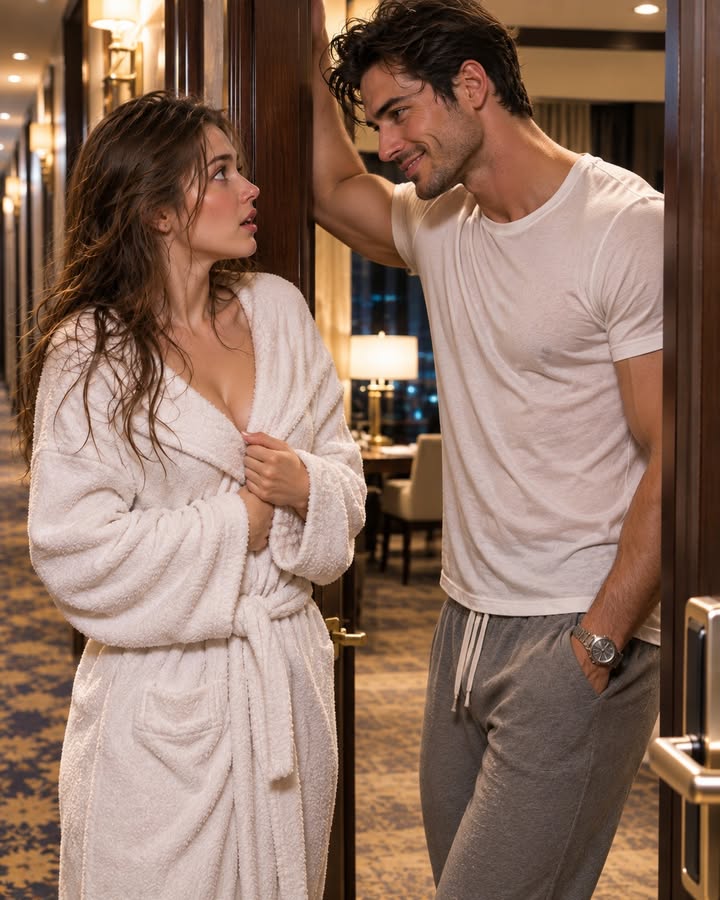
Part 4 – The Version They Buried
The following morning, Emma arrived carrying a small, faded notebook whose corners had softened from years of being handled and put away.
She placed it on my desk without opening it.
“I found it in a box with old tax papers,” she said. “I almost threw it out twice.”
“Thank you for bringing it.”
“I’m not sure yet whether I’m glad I did.”
“I understand.”
Emma sat down, and I turned my monitor so she could see the two spreadsheets I had found the night before.
She leaned closer when the file names appeared.
“That’s the one,” she said, pointing to the later copy. “I remember the color of the header.”
I opened the cell comment.
Her initials sat beside the words: Confirm against original before circulation.
Emma read the note in silence.
“I wrote that,” she said finally.
“You remember writing it?”
“I remember noticing that the number didn’t match the supporting file, and I remember leaving this comment because I didn’t want anyone to rely on it until I checked.”
“Did you get a chance to check?”
“I thought I had.”
She opened her notebook and began turning its pages.
The handwriting was neat at the beginning, crowded at the end, as if the notes had been added in haste.
She stopped at a page marked with the month and year of the old forecast.
“This was the day before the executive review,” she said.
I moved my chair beside hers.
A list of file names ran down the page, followed by brief reminders and times.
Near the bottom, one entry had been underlined twice.
Original model received from R. Calloway — p.m.
“Ryan sent you the original?” I asked.
Emma’s eyes remained on the line.
“He was responsible for the project by then, though he’d only recently taken over.”
“What happened after that?”
“I don’t remember every detail, but I remember checking the figures against the original model.”
She ran a finger along the note.
“The original value was the one in my working file. It matched the source data.”
“Then the later copy was changed after you checked it.”
“It looks that way.”
The words sounded almost too small for what they meant.
I opened the file history again and enlarged the section showing the manual edit.
The time stamp was after the time written in Emma’s notebook.
“Do you remember telling anyone?”
“I sent a message to my manager. I also called Ryan.”
“Do you remember what he said?”
Emma closed her eyes, searching through the past.
“He told me not to circulate the revised file until he could verify the change.”
My pulse quickened.
“That isn’t in the official summary.”
“No.”
“Did he verify it?”
“He said he was going to.”
She looked at the screen again.
“The next morning, the review happened. I was told my working file had been the problem, and that the final numbers had already been corrected.”
“Did you tell them you had checked the original?”
“I did.”
“What did they say?”
“That I must have misunderstood which version I’d checked.”
Emma’s voice stayed even, but her hands had tightened around the edges of the notebook.
“I asked them to look at my note. They said the comment had been added after the file had been circulated.”
“But the time stamp—”
“Was missing from the copy they reviewed.”
I stared at the spreadsheet.
The archive had preserved more than the internal review had.
Not enough to establish the whole story, but enough to show that Emma had raised a concern before the file was circulated.
“Can I include your notebook in the project record?” I asked.
Emma looked at me.
“Will it become part of an official review?”
“It should, if it’s relevant to the source of the discrepancy.”
“And if it isn’t?”
“Then we’ll know that too.”
She let the notebook rest beneath her palms.
“I don’t want this to become a story about me being right.”
“I don’t think it has to be.”
“I want the record to say what happened. Not what people assumed happened.”
“That’s what I want too.”
For a moment, she studied my face, perhaps looking for the same impatience that had once made her keep quiet.
Then she nodded.
“You can scan it.”
I brought the notebook to the office scanner and made a copy of the relevant pages.
Before uploading them, I checked that Emma was comfortable with the material being shared with the project team.
She confirmed that it was.
I added the scans and spreadsheets to the restricted project folder, then sent a message to Ryan and the finance lead requesting a review of the conflicting records.
His reply came within minutes.
I’ve seen the update.
Please come to my office with Emma when you’re available.
Emma read the message over my shoulder.
“I’m available now,” she said.
We found Ryan standing near the window of his office, a paper folder open on his desk.
He looked first at Emma, then at me.
“Thank you for coming,” he said.
Emma kept her notebook close to her side.
“I want to hear what you remember,” she said. “Not what the summary says I should remember.”
Ryan took a breath.
“That’s fair.”
He turned the folder toward us.
“I’ve been reviewing the old records since Lauren found the archive.”
“You knew it was there,” I said.
“I knew some material had been retained in a restricted directory. I didn’t know the full version history had survived.”
“Why did you say you’d check the access list instead of telling me?”
“I thought the archive might contain duplicates, and I didn’t want to create expectations before I confirmed what was there.”
“Or you didn’t want me looking,” Emma said.
Ryan met her eyes.
“I was worried about what the files might show before I knew whether they were complete.”
“That sounds more honest.”
“It is.”
The admission seemed to loosen something in his shoulders.
He looked down at the folder.
“I’m sorry I didn’t tell you sooner that the review left questions unanswered.”
Emma did not respond immediately.
“I spent years believing I had failed at the one thing I was supposed to be good at,” she said. “An apology now doesn’t give me those years back.”
“I know.”
“Do you?”
“I know I can’t restore them,” Ryan said. “And I don’t expect you to accept what I say just because I’m saying it.”
Emma’s fingers pressed into the notebook’s cover.
“Then tell me what you found.”
Ryan turned the folder so we could see the documents inside.
The first was a copy of the original forecast.
The second was a later version, marked with the same figures I had found in the archive.
Beside them sat a printed email chain.
“I found a preserved copy in the old project correspondence,” he said. “The system had stored it under a departmental address rather than the project folder.”
“Who sent it?” I asked.
Ryan glanced at Emma.
“The first message came from her.”
Emma’s brow furrowed.
“What did it say?”
Ryan slid the page across the desk.
Emma read the message once, then began again more slowly.
It was brief and careful.
She had written that one of the figures in the revised forecast did not match the original model and had asked for confirmation before the report was circulated.
The message was time-stamped the evening before the executive review.
Beneath it was a reply from Ryan.
I’m checking this against the original.
Please don’t circulate the revised version until I confirm the source.
Emma looked up.
“You told me you would check.”
“I did.”
“And then?”
Ryan lowered his gaze to the next page.
“The file was changed again.”
I leaned over the desk.
“What does the history show?”
“The revised number was entered under an executive account.”
“Which executive?”
He turned the page.
The name appeared beside the time stamp.
Martin Hale.
For a moment, none of us spoke.
Martin had been at the project meeting the day before, dismissing the possibility that old records mattered.
“He altered the forecast?” I asked.
“The version history shows that his account changed the figure,” Ryan said. “The original value was replaced after Emma flagged the discrepancy.”
“Does that prove why he changed it?”
“No.”
He spoke with care, unwilling to turn a record into a conclusion before the facts were complete.
“But there’s more,” he continued. “The email chain shows that the change was questioned before the report went out.”
Emma looked at the page again.
“Did Martin reply?”
“Not in this chain.”
“What happened at the review?”
Ryan’s face settled into a tired stillness.
“I was new in the role. Martin had been leading the division’s financial reporting for years. He told me the figure had been updated after a data source changed, and that Emma’s file was an obsolete draft.”
“You didn’t believe him,” I said.
“I asked to see the supporting data.”
“And?”
“He said it had already been reconciled.”
Emma’s voice was quiet.
“Did you look?”
“I tried.”
“Did you find it?”
“No.”
Ryan’s hands rested on the edge of the folder.
“By the time I understood that the support file was missing, the review had already taken place. Martin said the discrepancy came from Emma working from an old version. He presented the revised forecast as the corrected one.”
“And you let that explanation stand,” Emma said.
“I challenged it.”
“Privately?”
“At first.”
The answer left a weight in the room.
Ryan seemed to feel it too.
“I should have done more,” he said. “I had enough to know that Emma’s work might not be the source of the error. I didn’t have enough to prove who changed the numbers or why.”
“So you stayed quiet,” I said.
“I tried to keep the issue open without making an accusation I couldn’t support.”
“Was the official review really an investigation?” Emma asked.
“No.”
“Then what was it?”
“A short internal review. It documented the explanation leadership was given and the correction that was made. It did not examine the change history.”
The distinction was clean, and the truth beneath it was not.
Emma looked down at her notebook.
“They told me the review had confirmed it was my mistake.”
“I know.”
“Did you know they were saying that?”
“Yes.”
She closed the notebook.
“Why didn’t you tell me that the records were still incomplete?”
Ryan’s expression changed.
“I did tell you that I couldn’t prove what happened.”
“You told me there wasn’t enough evidence to clear my name.”
“There wasn’t.”
“There was enough to know you weren’t sure.”
“Yes.”
“And you let me leave with everyone thinking I had made the mistake.”
Ryan did not look away.
“Yes.”
Emma sat very still.
I felt an urge to intervene, but this was not my conversation to steer away from its hardest point.
Ryan’s voice remained low.
“I thought I was protecting the company from an unsupported accusation and protecting the employees who depended on the division. I also thought I could find proof later.”
“You thought time would make this easier?”
“No.”
“What did you think?”
“That the issue could be corrected without turning one unanswered discrepancy into a crisis that endangered the entire operation.”
Emma’s eyes glistened, but her voice stayed level.
“And I was the part you decided could be left unanswered.”
Ryan absorbed the words without defending himself.
“Yes.”
That answer hurt more than an excuse would have.
I looked from Emma to the records on the desk.
The careful note she had written, the preserved email, and the manual changes formed a trail that had been hidden in different places for years.
The company’s explanation had not been based on a complete review.
It had been based on the word of the person who controlled the reporting and the absence of records that might have contradicted him.
“Why did you ask me to lead the follow-up?” I asked Ryan.
His eyes lifted to mine.
“I asked you because your work deserved the responsibility.”
“That’s what you told me.”
“It’s still true.”
“But you also knew the new project would bring us back to these records.”
“I knew the historical assumptions might matter. I didn’t know the archive would contain the original file history.”
“Did you hope I’d find something?”
He was silent for a moment.
“I hoped the review would establish a reliable foundation for the current forecast,” he said. “And, yes, I hoped that if the old records offered a way to correct the record, someone would take the time to look.”
“Someone,” I repeated.
“I should have told you that possibility before you accepted the assignment.”
“Yes.”
“I’m sorry.”
It was not the first apology he had offered, but this one reached further than the careless joke in the hotel hallway.
That apology had been about a moment.
This one was about years.
Emma leaned back in her chair.
“Did you protect my work because you believed me,” she asked, “or because you wanted to repair something you couldn’t fix at the time?”
“Both,” Ryan said. “I believed your work was careful. I also knew I had failed to protect you when it mattered.”
“That doesn’t make the opportunity you gave Lauren less deserved,” Emma said, turning to me.
“I know,” Ryan replied. “But I understand why she would question it.”
I felt my face warm, not from embarrassment this time, but from the difficulty of holding two truths at once.
Ryan had put my name forward because of my work.
He had also seen the assignment as a possible path toward answers he had been unable to reach.
Those things could exist together without canceling each other.
But I wished he had trusted me enough to say so.
“I need you to understand something,” I said. “If I continue leading this project, I can’t do it as a favor to you or Emma. I have to follow the evidence wherever it goes.”
“That’s what I want,” Ryan said.
“What you want may not be what the company wants.”
“No,” he said. “It may not.”
Emma looked at the papers.
“If this becomes an official review, who will oversee it?”
“I’ve contacted the compliance office,” Ryan said. “They’ll determine the appropriate process.”
“Have they seen the files?”
“Not yet. I wanted to make sure the copies were complete and properly documented before sending them.”
“Is that why you waited?”
“Partly. I didn’t want the records moved or altered while I was still trying to verify them.”
“Could they have been altered?”
“I don’t know.”
His answer did not sound evasive.
It sounded like a man who had learned to distrust the comfort of certainty.
I looked at the printed email chain again.
The dates were clear.
The first version had contained one figure.
Emma had warned that the revised version did not match the original.
Ryan had told her to wait while he checked.
Then Martin’s account had changed the number.
The official summary had later blamed an outdated file without mentioning any of those details.
“Why was the final number changed?” I asked.
Ryan rested one hand on the folder.
“I don’t know.”
“Did it make the project look better?”
“Yes.”
The answer came quietly.
That was enough to make the room feel colder.
Emma’s gaze shifted toward the window.
“So the forecast was changed to make the project look stronger.”
“The file was changed,” Ryan said. “We still need to determine why and what Martin believed he was correcting.”
“Do you believe he had data to support it?”
“I don’t know.”
“Did you ever ask him?”
“I did. He told me the supporting file was unavailable because the source data had been replaced.”
“Convenient,” I said.
“Possibly,” Ryan replied. “But possibility isn’t proof.”
The old lesson again.
The records mattered.
So did the care we took in interpreting them.
Emma opened her notebook to the page with the underlined entry.
“I remember calling Ryan that evening,” she said. “I remember him telling me not to send the revised version.”
She looked at him.
“Did you ever tell anyone that?”
“I told my manager that you had raised the concern.”
“Did the manager put it in the review?”
“No.”
“Why?”
“I don’t know.”
“Did you ask?”
“I did.”
“And?”
“He said the review had closed, and reopening it without more evidence would distract from the work the division needed to do.”
Emma’s mouth tightened.
“Everyone was very concerned about distractions.”
Ryan lowered his eyes.
“I was.”
That honesty did not comfort her.
“I was concerned about the people whose jobs depended on the division,” he continued. “I thought we could keep the company stable and continue looking for the missing records.”
“You kept the company stable,” Emma said. “And I carried the blame.”
“Yes.”
The room fell silent again.
I saw the cost of his decision in the way he held himself: not a man seeking sympathy, but someone who had come to understand that a reasonable fear could still lead to an unjust choice.
“Emma,” he said, “I’m not asking you to forgive me.”
“Good.”
“I want the records reviewed independently.”
“They should be.”
“I also want your account included, if you’re willing.”
“I’m willing to tell what I remember. I won’t say I remember things I don’t.”
“Neither should you.”
She gave him a long look.
For the first time, I noticed a trace of something other than hurt in her face.
Not forgiveness.
Perhaps recognition that he was no longer trying to persuade her with the same partial explanation.
“Then I’ll cooperate with the review,” she said. “But I want copies of everything you have.”
“You’ll have them.”
“And I want my name corrected if the evidence supports it.”
“It should be corrected regardless of whether it proves who changed the file,” I said. “The old review said the discrepancy was yours. The records show that conclusion wasn’t established.”
Emma turned to me.
“You’re right.”
Ryan nodded.
“I agree.”
A soft chime sounded from his computer.
He glanced at the screen, then frowned.
“What is it?” I asked.
“Compliance is asking for the source documents.”
“Send them,” Emma said.
“I will.”
He began attaching the files, selecting the archived spreadsheets and the email chain.
The meeting had gone longer than any of us expected, and the day’s current analysis remained unfinished.
Still, I could not bring myself to think of the old records as a distraction.
They were part of the work now.
When Ryan finished sending the package, he turned back to us.
“Until compliance responds, please keep the review within the project group.”
“I can do that,” I said.
“So can I,” Emma replied.
Ryan looked at her.
“I know I haven’t earned your trust.”
“No,” she said. “You haven’t.”
He accepted the answer without flinching.
I gathered the copies from the desk.
As Emma and I reached the door, Ryan spoke again.
“There’s one more document I found.”
I stopped.
“What document?”
He reached into the folder and removed a thin, folded sheet.
“It was attached to the original review request, but it wasn’t included in the final archive.”
Emma stepped back toward the desk.
“Why not?”
“I don’t know.”
“Who wrote it?”
Ryan unfolded the page and laid it between us.
The heading identified it as a note from the division’s former finance director, prepared the morning after the forecast was presented.
At the bottom, one sentence had been underlined.
The source file was consistent with Emma Mitchell’s working model; the revised figure was not supported by the data provided.
Emma went pale.
I read the sentence twice, feeling my understanding of the past shift again.
“This says the finance director confirmed Emma’s version,” I said.
“Yes.”
“Why wasn’t it in the review?”
“I don’t know.”
“Was it ever sent to anyone?”
“The metadata shows it was addressed to the executive review group.”
Emma’s hand hovered above the page but did not touch it.
“Then they knew.”
Ryan looked at the document.
“Someone in the review group received it.”
“But the report still blamed me.”
“Yes.”
The truth had been hiding in plain sight, not in one dramatic confession but in the spaces between records, in the things people chose to keep and the things they allowed to disappear.
I had thought the central question was whether Emma had made a mistake.
Now I understood the more troubling question was who had seen the evidence and decided the company could live without correcting the story.
Ryan glanced at the old document again.
“I should have found this sooner,” he said.
“Maybe you couldn’t,” Emma replied. “Or maybe you didn’t look in the right place.”
He accepted that too.
My phone vibrated against the papers in my hand.
A message from the compliance office appeared on the screen.
We have reviewed the materials submitted. Please preserve all copies and suspend further circulation until we contact you.
I showed it to Ryan.
He read the message, his expression tightening.
“Understood,” he said.
The instruction seemed ordinary, but it changed the air in the room.
Whatever came next would no longer be ours to control.
Emma closed her notebook.
“Will they contact me?”
“They should,” I said. “We’ll make sure they do.”
She nodded, then looked once more at the sentence that cleared her working model of the mistake.
“After all this time,” she murmured.
Ryan’s voice was gentle.
“I’m sorry.”
Emma did not answer, but she did not turn away either.
We left his office with copies secured in the project folder and the original papers still on his desk.
In the corridor, Emma walked beside me without speaking.
At the elevator, she finally said, “I used to think the worst part was that nobody believed me.”
“What do you think now?”
She looked at the closed doors.
“I think the worst part may be that somebody did.”
The elevator arrived, and neither of us stepped forward at once.
Behind us, Ryan’s office door remained open, a strip of light reaching across the floor.
Then his phone rang inside the room.
Through the doorway, I heard him answer.
“Calloway.”
A pause followed.
His voice changed.
“Martin, I was about to call you.”
Emma and I looked at each other.
Ryan listened in silence, his face turning unreadable.
Then he said, “No. The record is incomplete.”
Another pause.
“Because the missing document changes what we thought happened.”
The line went quiet, but Ryan did not hang up.
He glanced toward the corridor and saw us standing there.
“Martin,” he said, more slowly, “you need to tell me why the finance director’s note was removed from the review file.”
The elevator doors began to close between us and his office.
Just before they met, I heard Martin answer.
“Because Ryan, you were the one who told me to take it out.”
**–END OF PART 4–CLICK “NEXT” AT THE BOTTOM OF THE PAGE TO CONTINUE READING**
* * *
[PREVIOUS: PART 3](https://puretales.idolsgift.com/blog/part-3-the-name-ryan-put-forward-035) | [NEXT: PART 5](https://puretales.idolsgift.com/blog/part-5-the-name-ryan-put-forward-035)
✓ Lynn R. Adams
Part 4 – The Version They Buried The following morning, Emma arrived carrying a small, faded notebook whose corners had softened from years of being handled and put away. She placed it on my desk wi…