PART 4: The Name on the Sealed File 035
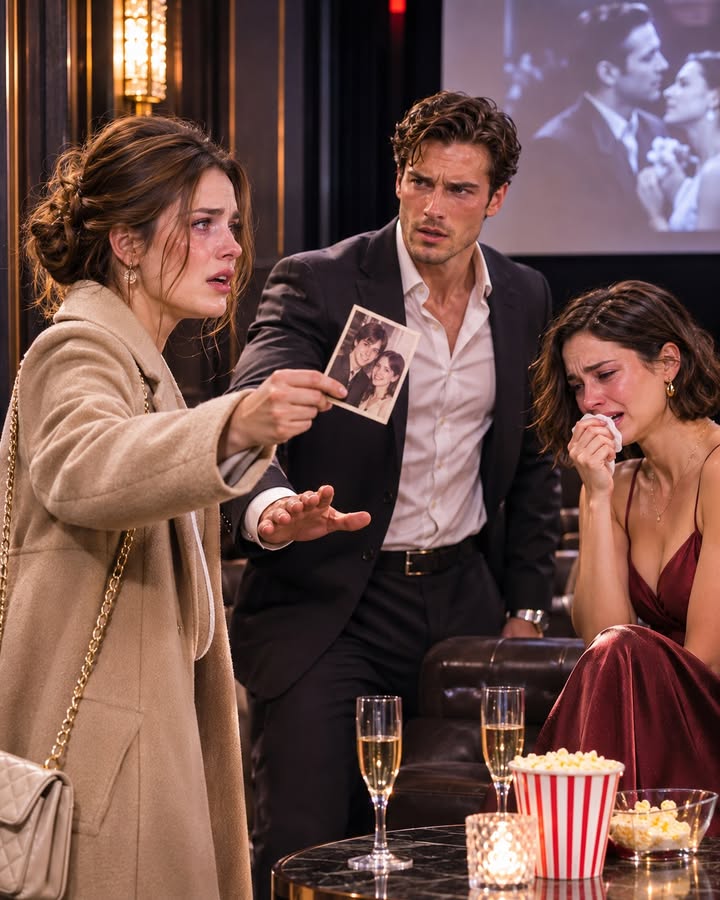
Part 4 – The Day the Photograph Was Taken
My birth mother’s letter had mentioned his name, written decades before we met.
It said that Ryan and Lauren had been there when the accident happened.
Ryan went very still.
Lauren’s hand rose to her mouth, and my parents exchanged a look that seemed to hold years of questions neither had known how to ask.
“What does it say?” Ryan asked.
I looked down at the page, my fingers unsteady against the thin paper.
The letter was brief, but Marian’s careful handwriting made each line feel deliberate.
She had written to Elise that the accident had happened on a rain-dark road after a school event, and that two students had stayed nearby until help arrived.
Ryan and Lauren.
My gaze lifted from the page.
“You were there,” I said.
Ryan’s face had gone pale.
“I didn’t know it was your birth mother.”
“You said you remembered a family in trouble.”
“I did.”
“You said you didn’t think you saw the accident.”
“I was wrong.”
He sounded stunned, as if the memory had opened beneath him rather than returned by choice.
Lauren had sat down again.
“My mother never told me I was there,” she said.
“Maybe she thought you were too young to remember.”
“We were seventeen,” Ryan said quietly.
“Not toddlers.”
The date on the letter was nearly thirty years old.
I read it once more, trying to make sense of the names and the distance between the words.
“Why would my birth mother write to Marian about you?”
“I don’t know,” Ryan said.
“Maybe we helped after the crash.”
“Then why didn’t you tell me?”
“I didn’t remember the people involved.”
He looked at the photograph on the table.
“I remembered the rain, and the road, and the fundraiser afterward.”
“Not the woman?”
“No.”
His answer was simple, not defensive.
That made it harder to doubt him and harder to understand how a memory so consequential could have faded into something he carried without knowing its shape.
My father leaned forward, careful not to touch the letter.
“Does it say what happened?”
I scanned the page.
“It says Elise was alive and that the baby was safe.”
The word baby seemed to settle over the room.
I was that baby.
My mother pressed her hands together in her lap.
“Marian never told us Ryan was involved,” she said.
“Maybe she didn’t know his full name then,” Lauren replied.
“Or perhaps she didn’t think it mattered.”
“But she wrote it down,” I said.
The letter named Ryan and Lauren as the students who had stayed.
Below that, Marian had written that they had helped bring blankets from the school bus and waited with Elise until the ambulance arrived.
Ryan rubbed his forehead.
“I remember a woman sitting on the roadside,” he said.
“She was holding her coat around herself, and she kept asking if the baby was all right.”
My breath caught.
“Did you see me?”
“I don’t know.”
He paused, searching his memory.
“I remember Marian telling us to stay back from the car and keep people from crowding around.”
Lauren looked at him.
“I remember the ambulance lights,” she said.
“And my mother’s voice.”
“You were there too?” I asked.
She nodded slowly.
“I must have been, but I don’t remember the woman’s face.”
“Why didn’t either of you recognize the story?”
“Because I didn’t know your birth mother’s name,” Ryan said.
“And the accident happened before you and I knew each other,” Lauren added.
“We only connected the pieces after I found the letters.”
My mother’s eyes were fixed on the page.
“Marian told us she had been called to help after an accident,” she said.
“She never mentioned the students.”
“What exactly did she tell you?” I asked.
“She said a young woman had been injured and needed someone to help her make arrangements for her child.”
“Did she say Elise wanted me adopted?”
“She said Elise wanted time to recover and think through what was best.”
My father’s voice was low.
“We met you through the agency later. We were told the plan had been made carefully.”
I looked at the letter again.
There was no accusation in it, no sign that Elise had been forced into anything.
Marian’s words were gentle, and the details she included were practical: that Elise was frightened, that she had asked about me repeatedly, and that she wanted me to be safe.
“Did she ever say she wanted to meet me?” I asked.
My mother hesitated.
“She asked that we let the agency handle any contact.”
“That’s not the same as saying she never wanted to see me.”
“No,” my mother said.
“It isn’t.”
The admission left a quiet ache in the room.
For years, I had imagined my birth mother as a closed door.
Now I could see that perhaps she had been a person standing on the other side, unsure whether opening it would help or hurt the child she had placed in someone else’s care.
Ryan reached toward the photograph, then stopped before touching it.
“This was taken at the fundraiser,” he said.
“What fundraiser?” I asked.
“The one for your family.”
He seemed more certain now, though sadness tightened the corners of his eyes.
“I remember the picture being taken after we finished collecting donations.”
“Why did you keep it?”
“Because that night changed what I thought I understood about people.”
He glanced at Lauren.
“She and I had spent a week making posters. We thought we were helping with a school project.”
“We didn’t know who the money was for,” Lauren said.
“My mother told me it was for a family dealing with medical bills, but she wouldn’t share their names.”
Ryan nodded.
“After the accident, I saw Marian sit with Elise while everyone else stood around not knowing what to do.”
He swallowed.
“I was seventeen, and I thought being useful meant doing something impressive.”
“What did you do?”
“Mostly carried boxes and followed directions.”
“Then why did it matter so much?”
“Because Marian stayed.”
His eyes went to the old photograph.
“She didn’t know if Elise would be okay. She didn’t know what would happen to the baby. She just stayed there, talking to her like she was a person and not a problem to solve.”
Lauren’s voice softened.
“My mother believed that being present was a kind of help.”
“I know,” I said.
The words came before I had time to decide whether they belonged to me.
I had seen that same steadiness in the way Lauren had sat on the lobby bench and let me ask the questions she could not answer.
The photograph showed two teenagers smiling at the school gym, unaware of the weight the image would carry years later.
It was not a picture of a secret romance.
It was a picture of two young people who had stood nearby on a difficult night and done what they could.
The fact did not erase Ryan’s lie.
It did change the meaning of what he had hidden.
“Why keep it in your wallet?” I asked.
He took a breath.
“After the fundraiser, I kept thinking about the way Marian had treated Elise.”
“That’s all?”
“No.”
He studied the photograph, then looked back at me.
“I also thought about how quickly people can disappear from your life without you realizing you’ve been changed by them.”
The words landed between us.
“I don’t think I understood why I kept it,” he said.
“Maybe I told myself it was nostalgia.”
“Did Lauren know you had it?”
“Not for a long time.”
Lauren shook her head.
“I didn’t know until I saw him take it out tonight.”
“And when you asked whether he’d thrown it away?”
“I was surprised he still had it,” she said.
“I wasn’t asking because I thought it meant he wanted me.”
Ryan lowered his eyes.
“I should have told you about it, Emily.”
“Yes.”
“I thought it was a small thing.”
“It wasn’t small to me.”
“I understand that now.”
His apology was not a cure.
It was simply the first time he had understood the difference between what the photograph meant to him and what hiding it had meant to me.
My father looked at the letter.
“Does it say anything about the adoption?”
I turned the page over, though I knew there was nothing on the back.
“Not in this letter.”
“Are there others?” my mother asked Lauren.
“Several.”
“Could one of them explain why Marian kept the clinic file?” I asked.
“Possibly,” Lauren said.
“I haven’t read all of them closely. Some are addressed to my mother, some to Elise, and some don’t have names.”
“Why didn’t you tell me about the letter addressed to Elise?”
“I found it only after I called Ryan,” Lauren said.
“Then why not say you had it?”
“I was afraid of giving you something that might feel like a promise when I didn’t know what it contained.”
I looked at the folded letter.
“That was my decision to make.”
“Yes,” Lauren said.
“I see that now.”
She did not argue or try to excuse herself.
Instead, she slid the remaining letters toward me, letting me choose whether to touch them.
I looked over the bundle.
A few envelopes were sealed.
Others had been opened and placed back together.
The handwriting was all Marian’s, though the dates spanned several years.
“Do you know which one talks about the accident?” I asked.
“The one you just read is the only one I’ve found that names Ryan and me.”
“Is there anything from Elise?”
“There are two letters in her handwriting.”
My heart began to beat faster.
“Can I read them?”
“Of course.”
Lauren chose a small, unsealed envelope and handed it to me.
My mother shifted in her chair, but she did not interrupt.
I unfolded the page.
The letter was addressed to Marian and dated several months after the accident.
Elise thanked her for staying at the hospital and said she was grateful the baby had a family ready to love her.
She wrote that making the adoption plan had been painful, but that she did not want her daughter to grow up feeling responsible for the choices adults had made.
I read the line twice.
My daughter should know that she was wanted, even if I could not be the one to raise her.
My throat tightened until I could hardly breathe.
My mother reached toward me, then let her hand rest on the table instead.
“I’m sorry we didn’t tell you,” she whispered.
I could hear the love in her voice, but for the first time I could also hear how fear had shaped it.
“You did love me,” I said.
“Every day,” my father answered.
“I know.”
The certainty came slowly, but it was real.
The room did not become simple again.
It only became more honest.
I read the rest of Elise’s letter.
She had asked Marian to keep the adoption agency’s information private unless I ever wanted to search.
She did not ask for a promise that I would never be told.
She asked that no one make me feel I had to choose between the family who raised me and the woman who gave birth to me.
I lowered the page.
“She wanted me to know I was wanted.”
My mother’s eyes filled again.
“Yes.”
“Did you know that?”
“We were told she cared deeply about you,” my father said.
“Why didn’t you tell me?”
“We thought it would make you wonder whether we were enough,” my mother said.
“I did wonder that anyway.”
“I know.”
She did not reach for a defense.
Her sorrow seemed to have worn through the explanations she might once have used.
For a while, none of us spoke.
The morning light spread across the table, revealing a faint water ring beneath the cream envelope and the tiny cracks in the old photograph.
Outside, traffic had grown louder.
The city was fully awake, though our lives had become unfamiliar in the space of a few hours.
Lauren gathered the letters into a neat stack.
“I can leave them with you,” she said.
“I don’t want to take them away from you.”
“They’re yours if you want them.”
“They belonged to your mother.”
“My mother kept them because she believed they should reach you when you were ready.”
“I don’t know if I’m ready.”
“You don’t have to know today.”
I looked at Ryan.
He was quiet, his hands folded loosely in front of him.
There was no demand in his expression, no attempt to make his part in the story redeem the lie he had told.
“I need time,” I said.
“Take all the time you need,” he replied.
It was the first thing he had said that sounded like an offer rather than an explanation.
I picked up the old photograph again.
Its surface had begun to curl at the corners.
The teenage Ryan and Lauren looked impossibly young, their smiles bright with the confidence of people who had no idea what they would remember years later.
“I don’t want either of you to decide what this means for me,” I said.
“Neither of us will,” Lauren said.
Ryan nodded.
“I won’t.”
My parents agreed, though my mother’s voice shook when she said it.
“I don’t know what I believe yet,” I told them.
“You don’t have to,” my father replied.
I set the photograph down beside the letters.
The past had not become clearer so much as larger.
The accident, the fundraiser, Marian’s care, the adoption plan, and the silence my parents had built around it all belonged to the same story.
I had once thought the blank spaces were evidence that I had no history there.
Now I wondered whether they had been left blank so I could decide how to fill them.
My mother glanced at the letter from Elise.
“Would you like us to leave you and Ryan alone?”
I considered the question.
“I’d like everyone to stay for a little while,” I said.
“Then I’d like to talk to Ryan privately.”
My mother nodded.
She and my father went into the living room, where they sat close together without pretending not to be afraid.
Lauren remained by the table.
“I can go,” she said.
I looked at her.
“Not yet.”
She sat down again.
Ryan came to the other side of the table, careful to leave space between us.
“You said the fundraiser changed how you thought about people,” I said.
“Yes.”
“Did it change how you thought about me?”
“I didn’t know you then.”
“I know.”
He seemed to understand that I was asking something else.
“When I learned the truth from Lauren’s letters,” he said, “I realized the picture had been connected to your life all along.”
“Then why didn’t you tell me?”
“I wanted to know enough to tell you properly.”
“You could have told me you didn’t know enough.”
“I should have.”
“What were you afraid would happen?”
“That you’d hear Lauren’s name and think I’d kept a connection with her because I wanted to.”
“You did keep a connection with her.”
“Not intentionally, not in the way you mean.”
“I don’t know what I mean.”
“I understand.”
I looked at the photograph again.
“Did you keep it because of the accident?”
“I think so, though I didn’t know that was the reason.”
“How can you keep something for a reason you don’t remember?”
“Maybe it was the feeling more than the facts.”
He paused.
“I remembered that someone had needed help, and that a group of us had tried to give it.”
I wanted to believe him.
I also wanted to be angry without having to measure the truth of every word.
Both feelings could exist together, and I was beginning to understand that they would have to.
“I’m not ready to forgive you,” I said.
“I know.”
“But I’m not asking you to leave.”
“I’m glad.”
“That doesn’t mean we’re all right.”
“I know that too.”
We sat in silence while the radiator clicked.
Lauren watched us with quiet concern, then looked down at her hands, allowing the conversation to belong to us.
My parents spoke softly in the next room.
The letter from Elise lay open before me.
She had written that I was wanted.
For the first time, that word no longer felt like a kindness someone had offered to soften the truth.
It felt like the truth itself.
I folded the letter and placed it back in its envelope.
Then I picked up the clinic form and examined the faded date again.
The page had been filed months after my adoption.
Someone had typed my name, but the handwritten warning had been added later.
Beneath the sentence about not contacting me, I noticed a second line, almost hidden where the paper had been folded.
I tilted it toward the window.
The faint writing became clearer.
It was not another warning.
It was a note in Marian’s hand.
Elise has asked that Emily be told the truth when she is old enough to ask for it herself.
I read the sentence aloud.
My mother covered her mouth.
My father closed his eyes.
Lauren’s face softened with grief.
The note did not say when I would be ready.
It only said I had the right to ask.
I had asked now.
I placed the form beside the letter from Elise and looked at the remaining envelopes.
One bore Marian’s name, written in a hand different from the others.
Another was addressed to my birth mother, but the paper inside had never been sealed.
The last envelope was small and pale, with my name written across it in Marian’s careful script.
Emily, when she asks.
I stared at it, unable to move.
Lauren leaned forward but did not touch the envelope.
“That wasn’t there before,” she said.
“It was in the box,” I replied.
“I thought it was empty.”
“Why?”
“Because the flap was already open.”
I turned it over.
The envelope was empty, but a line of writing showed faintly through the paper, impressed by a page that had once rested inside.
I held it up to the light.
The words were difficult to make out.
Only the last line was clear.
If you are reading this, the choice is no longer mine to make.
And beneath it, in the same handwriting, Marian had written the name of the adoption agency that had handled my placement.
**–END OF PART 4–CLICK “NEXT” AT THE BOTTOM OF THE PAGE TO CONTINUE READING**
* * *
[PREVIOUS: PART 3](https://puretales.idolsgift.com/blog/part-3-the-name-on-the-sealed-file-035) | [NEXT: PART 5](https://puretales.idolsgift.com/blog/part-5-the-name-on-the-sealed-file-035)
✓ Lynn R. Adams
Part 4 – The Day the Photograph Was Taken My birth mother’s letter had mentioned his name, written decades before we met. It said that Ryan and Lauren had been there when the accident happened. Rya…