PART 4: The Marker in His Blood 008
Part 4 – The Pages That Never Arrived
The date in the report belonged to the year Noah was born.
For a moment, I couldn’t make the numbers mean anything.
The specialist had said the sample might have been taken before his leukemia diagnosis, but neither Alexander nor I remembered arranging a test.
“What clinic was it from?” I asked.
“We’re waiting for the complete file,” she replied. “The record transferred from a community practice, and some of the original pages weren’t included.”
Alexander’s gaze stayed on the date.
“Could the sample have been mislabeled?”
“It’s possible,” the specialist said. “It could also be a routine newborn test that wasn’t explained clearly in the records. We won’t know until we review the source documents.”
I looked at the report again.
The word inherited seemed to darken on the page.
“Does this change what you’ll do for Noah?” I asked.
“Not today,” she said gently. “His leukemia treatment continues as planned. The donor search also continues. This may help us understand the marker, but it won’t delay his care.”
Alexander leaned back in his chair, his hands folded tightly together.
“Can you get the full record today?”
“We’ve already requested it. I’ll let you know as soon as it arrives.”
After she left, we stood in the corridor without speaking.
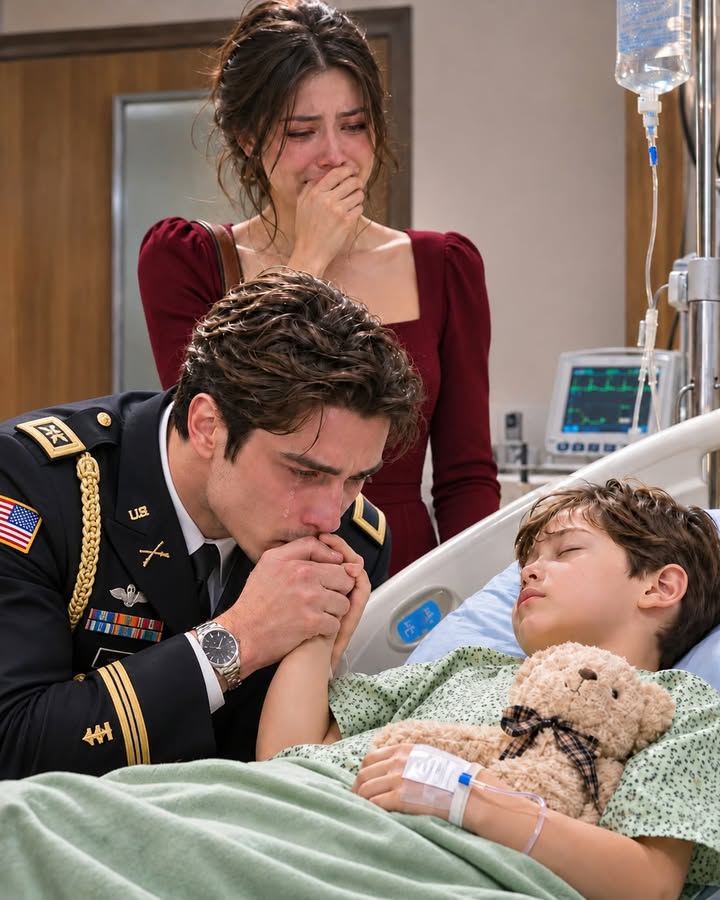
Through the glass door, I could see Noah lying in his bed with his rabbit tucked beneath his chin.
He looked peaceful, unaware that a date in an old file had opened another question between us.
“Do you remember being tested?” I asked Alexander.
“No.”
“Not even as part of the arrangement?”
“No. There were medical checks before some of the events, but nothing like this.”
I looked down at the report in my hands.
“I had prenatal appointments after I moved.”
His face shifted.
“You did?”
“I had to. I was pregnant, and I was scared, but I went.”
“Where?”
“A clinic in the coastal town. I don’t remember if they ran anything unusual. I was only there a few times before Noah was born.”
“Did you ever receive results?”
“Not for an immune marker.”
I could hear my voice growing thin.
“I would have remembered.”
Alexander nodded, but I couldn’t tell if he was agreeing with me or simply letting me speak.
The specialist had told us not to draw conclusions.
Still, the report had put a thought in my mind that I didn’t want to follow.
“What if they made a mistake?” I asked.
“Then we’ll find out.”
“And if they didn’t?”
“Then we’ll find out that too.”
His calmness might once have sounded like certainty.
Now I understood it as an effort to give me something steady to hold.
I returned to Noah’s room while Alexander stayed behind to speak with the specialist.
Noah was awake and coloring on a pad the nurse had left at his bedside.
He had drawn a blue house with a crooked chimney and two stick figures in front.
“Who are they?” I asked, sitting beside him.
“That’s you,” he said, pointing to the taller figure. “And me.”
He pointed to the other one.
“That’s Alexander.”
“Why is he so tall?”
“Because he’s a grown-up.”
I laughed quietly.
Noah added a yellow sun above the house.
“Is Alexander coming back in?”
“He’ll be here soon.”
“Good.”
He reached for another crayon.
I watched him color the roof, his small fingers working carefully around the edges.
The report had changed nothing about the boy in front of me.
It had changed the way I saw the years behind him.
When Alexander returned, Noah asked him to help finish the picture.
Alexander took the blue crayon and filled in the sea beneath the house.
“You’ve made it an island,” Noah said.
“I thought the house needed a view.”
“It already has one.”
“Then I’ve made the water bigger.”
Noah accepted this explanation and added a little boat.
For a while, the three of us sat around the drawing as if it were an ordinary afternoon at home.
Then the nurse came to prepare Noah for his next treatment.
Alexander stood to give her room, and I helped Noah settle back against his pillow.
The day continued in the language of hospital life: measurements, soft footsteps, clipped conversations, and patient instructions.
The marker report remained in my mind, but I tried not to let it crowd out everything else.
Noah needed me to notice when he was tired.
He needed Alexander to remember which cup he liked.
He needed us to ask the doctor whether the medicine might make his stomach hurt.
Those were things we could do now.
Near the end of visiting hours, a social worker named Marta came to speak with me.
She had met us once before, when Noah was first admitted, and carried a folder of forms tucked beneath her arm.
“Ms. Donovan, I heard the team is trying to locate some older records,” she said. “I may be able to help with that.”
“What kind of help?”
“If you remember the clinic where you received prenatal care, we can request those records directly. The hospital may also have the transfer details from Noah’s earlier appointments.”
I glanced at Alexander.
He had stepped outside to answer a call, but he returned as Marta pulled a chair near the window.
“I went to a small clinic called Harbor Family Health,” I said. “It was in Marwick.”
Marta wrote it down.
“Do you remember the street?”
“Not exactly. It was near the library, above a pharmacy.”
“That should be enough to start.”
She explained that old records could take time to retrieve, especially if the clinic had closed or changed ownership.
“If the file was transferred, there may be a place to look for it,” she said. “Would you like me to help contact them?”
“Yes,” I replied. “Please.”
Marta turned to Alexander.
“Mr. Sterling, the team may also need any records you have from that period, particularly if you had testing connected to your medical history.”
“I can have my office search,” he said.
“Your personal medical records, not your business files.”
“I understand.”
The social worker gave us a small, reassuring smile.
“You don’t have to solve the whole past tonight. We’ll take it one step at a time.”
After she left, Alexander sat at the foot of the bed.
“Did you ever write to me after you left?” he asked.
The question seemed to come from nowhere, but his eyes were fixed on the report.
“I thought about it.”
“That isn’t what I asked.”
“No,” I said. “I never sent a letter.”
I had once written one, but I had never mailed it.
It had stayed folded in a box for years, softened along the creases from being handled and put away again.
I hadn’t told him about it because the words in it had been written by a version of me who still believed the right explanation could make him choose me.
“Did you?” I asked.
Alexander’s mouth tightened.
“I sent messages.”
“I saw them.”
“I sent a letter too.”
My chest went still.
“When?”
“A few weeks after you left. I didn’t know where you were, so I mailed it to the address I had for you.”
“What address?”
“The apartment you used before the arrangement.”
“I had moved out of there months earlier.”
“I know that now.”
“Did it come back?”
“I don’t remember seeing it.”
He looked at me with a sudden, uncertain expression.
“I assumed you had received it.”
“I never did.”
“Then where did it go?”
Neither of us had an answer.
The silence that followed felt different from the silences we had shared before.
It wasn’t an accusation.
It was a gap with something missing from it.
The next morning, Marta came back with a list of clinics and records departments she had contacted.
Harbor Family Health had closed years earlier, but its files had been transferred to a regional medical archive.
“They found an index entry for you,” she said. “They’ll send the full record once they confirm your identity.”
She also had a request form for the hospital’s older chart.
Noah’s earliest records, she explained, had been scanned from paper files when the clinic transferred them.
Some pages might have been out of order or separated from the original record.
“Could that explain the sample date?” I asked.
“It could,” she said. “Or it could simply be the date the sample was entered, rather than collected.”
Alexander looked at the form.
“How long will it take?”
“They’ve marked it urgent, but I can’t promise more than that.”
He signed the authorization and handed the form back.
I signed mine after him.
Marta gathered the papers.
“While we wait, I’ll see if the records office can locate the original prenatal appointment log.”
After she left, I found Alexander standing in the corridor with his phone in his hand.
He looked unsettled.
“What happened?” I asked.
“My office found an old box of mail from when I was away.”
“What kind of mail?”
“Personal correspondence from the months after you left.”
“Why was it in your office?”
“My assistant handled my mail while I was traveling. She put some things aside for me.”
“Why?”
“She said the apartment had been under renovation and she was sorting everything that came in.”
I tried to fit that explanation beside his earlier claim.
“You said you never saw my letter.”
“I did.”
“Did you see mine?”
“I told you, I never received one from you.”
“I’m not asking whether I sent one. I’m asking whether something addressed to me came back.”
He lowered the phone.
“I don’t know.”
“Can you check?”
“Yes.”
He made a call to his office and asked someone to search the old box.
His voice remained controlled, but I saw the tension in his free hand.
When he ended the call, he looked at me.
“I should have checked years ago.”
“So should I.”
That was the trouble with our past.
It was full of things we should have done, words we should have said, and questions neither of us had thought to ask until the silence had become a life of its own.
Noah woke just then and asked for the sailboat blanket.
I brought it from the chair and tucked it around his feet.
“Is Alexander going home?” he asked.
“Not yet.”
“Good.”
Alexander pulled the chair closer.
Noah held out his drawing from the day before.
“Can you finish the boat?”
Alexander accepted the page.
“I can try.”
“You have to make the sail triangle.”
“I remember.”
He took a pencil and added the sail.
Noah inspected his work.
“It needs a flag.”
Alexander drew a tiny flag at the top.
Noah smiled and laid the picture beside his pillow.
I felt the tension in my chest loosen, though only a little.
After lunch, the specialist returned with an update.
The unrelated donor search had identified several possible candidates, but none had been confirmed.
The team would continue evaluating them while Alexander’s testing proceeded.
His preliminary results remained encouraging, but the full comparison would take longer.
“Could we use a donor who doesn’t share the unusual marker?” I asked.
“Potentially,” she said. “The marker helps us understand the match, but it isn’t the only factor. We consider the whole picture.”
Alexander asked about the process if he proved suitable.
The specialist outlined the additional assessments, the possible donation methods, and the time required.
I watched him take notes, his expression intent.
“How long before we know?” he asked.
“I don’t want to promise a date. We should have the next set of results soon, but compatibility review can require more analysis.”
He nodded.
“Thank you.”
When the specialist left, I felt the old fear pressing at me again.
“What if your tests come back negative?” I asked.
“Then the team keeps looking.”
“What if there’s no one else?”
“We’ll talk about the options.”
“You make it sound simple.”
“It isn’t simple.”
“You don’t get to act as if determination can change the results.”
“I’m not.”
He put the notebook aside.
“I’m trying not to let the fear make every decision before the doctors have all the information.”
I looked at him.
That was something I had done for years without realizing it: decide what would hurt before anyone else could decide it for me.
“I’m afraid too,” I said.
“I know.”
“You don’t know what it’s like to watch him go through this.”
“No,” he said. “I don’t.”
The admission held no self-pity.
It was simply true.
“I can’t make up for missing those years,” he continued. “But I can stay for this.”
I looked at Noah, who had closed his eyes again.
“Staying is more than showing up for a few days.”
“I know.”
“And it can’t depend on whether you’re a match.”
“It doesn’t.”
He spoke so quietly that I believed he meant it, though I didn’t yet know whether meaning it would be enough.
That evening, he helped Noah eat a few bites of soup.
He made a small story out of the spoon, pretending it was a boat sailing toward the island on Noah’s drawing.
Noah laughed once, then grew tired.
Alexander lowered his voice and read from the picture book the nurse had brought.
I sat near the window and listened.
The scene was so ordinary that it hurt.
For five years, I had told myself I was protecting Noah from a father who would never choose us.
I had not considered that Alexander might have tried to find us and failed.
Or that his efforts might have stopped too soon.
Or that my own fear had made silence feel safer than the truth.
The next morning, the hospital records office called Marta.
She came to us with a thick envelope and a careful look.
“The first set of documents from Harbor Family Health has arrived,” she said. “They’re still reviewing the older hospital file, but this includes Claire’s prenatal appointments.”
My hands went cold.
“Can I see them?”
“Of course.”
Marta placed the envelope on the table and gave me a moment before opening it.
The papers inside were arranged by date.
I recognized the clinic letterhead, the faded blue ink, and my name written in a nurse’s neat hand.
I had not seen those records since I moved away.
“You came in for prenatal care less than a month after leaving the city,” Marta said.
“I remember the appointment.”
I traced the date with one finger.
“I was alone. I didn’t know anyone there.”
Alexander stood close enough to read the page but did not touch it.
“Did they find anything unusual?” he asked.
“I don’t remember.”
Marta turned to the next sheet.
“There’s a note here that a blood sample was sent to the regional lab.”
My eyes moved to the line beneath it.
The sample date matched the date in the hospital report.
“I did have a test,” I whispered.
“Do you remember them explaining the result?” Marta asked.
“No.”
I looked again, searching my memory for a nurse, a phone call, a letter.
Nothing came.
“There’s a notation beside the result,” Marta said. “It appears to say that follow-up was recommended.”
My stomach tightened.
“Recommended for what?”
“The handwriting is difficult to read. We should ask the records specialist to review it.”
“Did I go back?”
Marta checked the appointment sheet.
“There’s a second visit about six weeks later, but I don’t see a note about this result.”
“I remember going in. I had a question about a prescription.”
“What happened after that?”
“I moved again after Noah was born. I kept the papers I thought I needed and left the rest behind.”
Alexander studied the page.
“Could this be the sample they’re reviewing now?”
“It could be,” Marta said. “The date and clinic match.”
“But it doesn’t show whether the result belongs to me,” I said.
“No. The original sample label may still be in the archive.”
Marta took notes and said she would ask the hospital’s record team to look for the laboratory page.
As she gathered the documents, a loose sheet slipped from the back of the folder.
It was a photocopy of a returned envelope.
My name was written across the front.
The address was the old apartment I had shared before entering Alexander’s mansion.
A red stamp crossed the corner.
RETURNED TO SENDER.
I stared at the envelope.
Alexander leaned closer.
“That’s the letter I told you about,” he said.
“You mailed it to my old apartment?”
“I thought you might still be there.”
“I hadn’t been there for years.”
“I know.”
Marta looked from the envelope to us.
“Is this part of the clinic file?”
“It seems to have been included with the transferred documents,” she said. “There are several pages attached behind it.”
The letter had never been opened.
Its paper was creased where the post office had folded it for return.
My name appeared in the address line in Alexander’s handwriting.
“Why is it here?” I asked.
“I don’t know,” he said. “I never saw it.”
I looked at the envelope again.
“You said you thought I’d received it.”
“I did. I assumed it had reached you and you chose not to answer.”
“But it came back.”
“Apparently.”
The paper felt light in my hands, but the years folded inside it seemed heavy enough to bend the room.
Marta asked if we wanted her to read the other documents with us.
I nodded.
She turned to the pages clipped behind the envelope.
The first was a short note from Alexander, dated a few weeks after I left.
He had written that he did not understand why I had gone, that the arrangement was over, and that he had wanted to ask me to stay before I disappeared.
He had written that he was sorry for letting me believe I was replaceable.
Near the bottom, he had added one more line.
If you’re pregnant, or if there’s anything you haven’t told me, please let me hear it from you.
My breath caught.
I had been pregnant when he wrote it.
He had asked the question, and I had never seen it.
Alexander did not reach for the letter.
He stood perfectly still, as if afraid that touching the paper would make the moment worse.
“I wrote that before I knew,” he said.
“I know.”
“I didn’t know about Noah.”
“I know.”
“I didn’t know you were carrying him.”
The words came out rougher than the others.
I pressed my lips together, trying to hold back the grief rising in me.
For years, I had wondered whether I would have told him if I’d believed he wanted me to stay.
The answer had never been certain.
Now I knew he had asked, but the question had never reached me.
Marta gently placed the papers back in order.
“This doesn’t explain why the envelope was filed with the prenatal records,” she said. “The archive may have combined documents when the clinic transferred its files.”
“Could the letter have been delivered to the clinic by mistake?” Alexander asked.
“It may have been sent to another address after it was returned. We’ll need the mailing history.”
He looked at the return stamp.
“I never saw this.”
“Your assistant handled your mail,” I said.
The understanding came slowly, and then all at once.
Alexander’s expression changed.
“She may have collected the returned letters while I was away.”
“Or placed them with my papers,” I said.
“I’ll ask her.”
“Don’t ask her to fix this.”
“I’m not.”
“Don’t turn it into something she did to us.”
He looked at me.
“I won’t.”
The words mattered because I had been afraid he would choose a person to blame rather than face the years in which neither of us had asked the right question.
The old letter had been returned.
My prenatal result had never been clearly explained.
Somewhere in the transfer between clinics, a sample had become a puzzle that belonged to both of us.
The truth did not arrive as one clean answer.
It came in pages, dates, and silences that had each seemed small when they happened.
Marta left us with copies of the records and promised to keep tracing the original lab documents.
I sat beside the window, holding the photocopy of Alexander’s letter.
“I would have answered,” I said.
He lowered his eyes.
“I know.”
“No, you don’t.”
“You’re right,” he said. “I don’t.”
The admission steadied me more than reassurance would have.
“I might have been angry,” I continued. “I might have asked you why the contract ended without you telling me. I might have asked if you wanted me or just wanted me to stay in the house.”
“I would have answered.”
“Would you?”
“I should have.”
“That isn’t the same thing.”
“No.”
His voice held no attempt to escape the difference.
I folded the letter along its old crease.
“I wanted to believe you had chosen Vanessa because it made leaving feel like a decision I could survive.”
Alexander’s gaze stayed on me.
“And I wanted to believe you had chosen to leave because it meant I didn’t have to wonder what I’d failed to say.”
For a moment, the room seemed to contain both versions of the past: the one we had each built in the other’s absence, and the one now emerging from a returned envelope.
Neither version gave us back the years.
But the truth had begun to make room for something besides blame.
The specialist arrived just after midday with a new report.
She apologized for interrupting, then asked us to join her in the consultation room.
I folded Alexander’s letter and placed it inside my bag.
The report contained the results from his latest compatibility test.
“I have good news,” she said. “The more detailed comparison is encouraging.”
Alexander went very still.
“What does that mean?” I asked.
“It means the pattern of your shared markers is closer than the first test suggested. Mr. Sterling is likely to be a sufficiently close match for Noah, pending the final donor evaluation.”
A sharp breath left me.
“Likely?” Alexander asked.
“We still need to complete the remaining checks. But we now have a strong potential donor option.”
I turned to him.
He did not smile.
His eyes had gone to the paper in the specialist’s hands, where his name appeared beside Noah’s.
“What happens next?” I asked.
“The transplant team will meet with you both to discuss the risks, timing, and procedure. We’ll also continue the unrelated donor search until the final decision is made.”
Alexander nodded.
“Schedule whatever you need.”
The specialist glanced at me.
“We’ll discuss everything before moving forward. No one will pressure you into a decision today.”
I appreciated that she said it.
The result offered hope, but it also made the next choice feel closer.
When we returned to Noah’s room, he was watching the doorway.
“Did they say you can help me?” he asked.
Alexander pulled the chair beside the bed.
“They said I might be able to,” he replied. “They need to finish a few more tests.”
Noah’s face brightened, then sobered.
“Will it hurt?”
“I don’t know yet,” Alexander said. “The doctors will explain everything.”
“Are you scared?”
Alexander paused.
“Yes,” he said. “A little.”
Noah reached for his hand.
“I’m scared too.”
Alexander closed his fingers gently around Noah’s.
“I know.”
Noah leaned back against his pillow.
“Can you stay while they explain it?”
“I can.”
I watched them together, father and son, linked by a hand, a marker in the blood, and a truth that had waited years to be found.
The specialist’s report promised a path forward, but I could feel the shape of the choice ahead.
A close match was not yet a decision.
A donation was not a cure without risk.
And the letter in my bag could not tell us what either of us would have said if it had arrived.
That evening, the hospital records office called Marta with an update.
The original lab sheet from my prenatal clinic had been found.
Marta returned to Noah’s room carrying a single page in a clear sleeve.
“The archive located the source document,” she said. “The hospital’s medical team asked us to bring it directly to them.”
I stood.
“What does it say?”
Marta looked at the page, then at me.
“It confirms the sample was collected from you during your prenatal appointment.”
Alexander rose beside me.
“And the result?”
Marta’s expression turned careful.
“The marker was noted as uncommon. The clinic recommended a follow-up consultation, but the chart says the letter was returned because the address on file was no longer valid.”
I felt the floor shift beneath me.
“I moved before they could reach me.”
“It appears so,” Marta said.
The specialist joined us and examined the page.
“This explains why the marker appears in your sample,” she said. “We still need to verify the details with the lab, but it looks like you were the first person in Noah’s family to have it identified.”
“I didn’t know,” I whispered.
“I believe you,” she said.
Alexander’s hand rested on the chair beside him, his knuckles pale.
“So the result came from Claire,” he said. “And Noah inherited the marker from both of us?”
“That is what the current comparison suggests,” the specialist replied. “The marker has a different expression in each parent, and Noah’s combination is what made it stand out.”
I looked at the page.
My name was at the top.
The date was beside it.
Beneath the result, in faint type, was the recommendation for follow-up that had never reached me.
“I thought I had done everything I could,” I said.
“You did what you knew to do,” the specialist replied.
The words were kind, but they did not take away the sudden guilt of imagining all the missing information.
Alexander moved closer, though he stopped before touching me.
“This isn’t something you caused,” he said.
“I know what the doctor said.”
“Then believe her.”
“I’m trying.”
The specialist explained that the marker did not mean I had endangered Noah or caused his leukemia.
It was an inherited characteristic that had complicated the donor search, not an illness Claire had passed to him.
She repeated that treatment remained on schedule, and Alexander’s closer match gave the team an encouraging option.
The medical facts were clear.
My feelings were not.
When the specialist left, I sat beside Noah and held his hand.
Alexander stayed near the window, giving me room.
Noah stirred and opened his eyes.
“Did they find out something?”
I brushed his hair back from his forehead.
“They found an old test that helps the doctors understand your blood better.”
“Is it bad?”
“No,” I said, choosing each word carefully.
**–END OF PART 4–CLICK “NEXT” AT THE BOTTOM OF THE PAGE TO CONTINUE READING**
* * *
[PREVIOUS: PART 3](https://puretales.idolsgift.com/blog/part-3-the-marker-in-his-blood-008-1) | [NEXT: PART 5](https://puretales.idolsgift.com/blog/part-5-the-marker-in-his-blood-008)
✓ Lynn R. Adams
Part 4 – The Pages That Never Arrived The date in the report belonged to the year Noah was born. For a moment, I couldn’t make the numbers mean anything. The specialist had said the sample might ha…