PART 3: The Secret Lily Had Kept 057
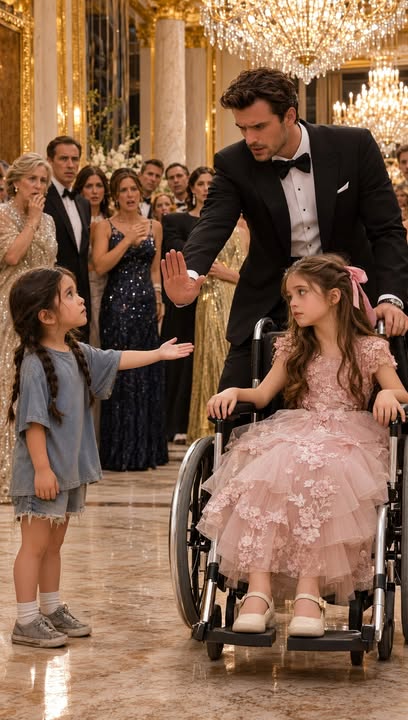
Part 3 – The Name on the Gate
“I lost that job while I was pregnant with Sofie.”
Elena spoke without raising her voice, yet Daniel felt the words settle between them with the weight of something long carried.
He looked past her to the girls.
Lily had found a place for the yellow flower on the edge of her lap, and Sofie was explaining that it would look better near the blue ones.
Neither child seemed to notice that the adults’ conversation had changed.
“I’m sorry,” Daniel said.
Elena’s gaze stayed on him.
“I’m not telling you because I expect an apology.”
“I understand.”
“I’m not sure you do.”
Daniel accepted the correction without looking away.
The garden was small enough that the city seemed to press against it from every side, but for a moment he felt as if the space between him and Elena had become wider than the street beyond the fence.
“What happened?” he asked.
Elena tightened her fingers around the strap of her canvas bag.
“The factory was closed. The company said it wasn’t profitable anymore.”
Daniel knew the outline of the story.
He had inherited Mercer Group years after the closure, and by then the factory had become a line item in an old report, a property sold, a workforce reduced to figures and dates.
He had read the acquisition documents.
He did not remember reading the names of the people who had lost their jobs.
“You worked there long?” he asked.
“Almost six years.”
“That must have been difficult.”
“It was frightening,” she said. “I was expecting Sofie. My partner had left by then, and the factory insurance was the only coverage I had.”
Daniel’s face tightened.
“Did you find another job?”
“Eventually. Not right away.”
The plainness of her answer made it harder to hide behind generalities.
He wanted to tell her that the company had changed since then, that he had tried to make it more responsible, that he had not been the one who signed the closure order.
Each thought came with its own reason for being true.
Each also sounded like a defense offered too early.
“I’m sorry the company put you in that position,” he said instead.
Elena’s expression did not soften, though something in her shoulders eased.
“That’s closer.”
Daniel nodded.
For several seconds, neither of them spoke.
From the bench, Lily called, “Sofie says the flowers don’t mind being moved.”
“I didn’t say that,” Sofie replied. “I said I think they might not.”
Lily smiled at her.
“See? You said it.”
The small exchange drew Daniel’s eyes back to them.
Lily was laughing softly, her attention fixed on Sofie, not on the adults or the old trouble stirred by a name.
He wondered how many times a conversation like this might have prevented that laughter from ever beginning.
“I didn’t know you were at the factory,” he said.
“You wouldn’t have,” Elena replied. “You didn’t work there.”
“No.”
“And I don’t blame you personally for a decision made before you took over.”
There was no comfort in the words.
They were simply a distinction Elena had made carefully, as though she did not want him to mistake her distrust for an accusation.
“But,” she continued, “I also don’t want Lily and Sofie’s friendship turned into a way for your family to feel better about what happened.”
Daniel drew a slow breath.
“I wouldn’t ask that of them.”
“I hope not.”
“May I ask what you do now?”
“Why?”
The question came without anger, but it was direct enough to make him pause.
“I want to know you better, since our daughters are becoming friends.”
“Or do you want to know how much help we need?”
“That isn’t what I meant.”
“Perhaps not.” Elena glanced toward the girls. “People with money often mean well. Sometimes they still make other people feel like a problem to solve.”
Daniel had no answer ready.
He had helped families before, though usually through a foundation or a staff member who handled the details.
He had thought of those arrangements as practical and discreet.
He had not often considered what it felt like to be the person receiving the offer.
“I’ll try to be careful,” he said.
“Careful is not the same as understanding.”
“No,” Daniel agreed. “It isn’t.”
Elena studied him for a moment, then looked toward Sofie.
“Come on, sweetheart. We should head home.”
Sofie’s face fell just enough for Lily to see.
“Do you have to go now?”
“We do,” Elena said gently.
Lily looked at Daniel.
“Could they come again?”
Daniel wanted to answer immediately, but he remembered what he had promised.
He turned toward the therapist, who had remained close by, observing without intruding.
“If everyone is comfortable, we can make another short visit.”
The therapist nodded.
“That would be fine. We’ll keep it relaxed, and Lily can decide whether she wants to sit, talk, or do something else.”
Lily considered this.
“Could we look for birds again?”
“Absolutely,” the therapist said.
Sofie turned to her mother.
Elena’s eyes rested on Lily, then on Daniel.
“We’ll check our calendar,” she said.
Sofie smiled, careful not to celebrate too soon.
Daniel understood that the answer contained no promise.
“Thank you for coming today,” he said.
Elena gave a brief nod.
“I came for Sofie.”
“I know.”
“And I’ll decide what’s right for her.”
“I know that too.”
The words sounded simple.
Daniel meant them as a beginning.
Elena seemed to hear them only as a boundary he would have to respect.
She guided Sofie toward the gate.
At the path, Sofie turned back.
“Lily, I’ll tell you if I see a bird I don’t know.”
“I’ll be ready.”
Their farewell was small and tender, made of two waves and one shared smile.
Daniel watched them leave, then looked down at Lily.
She had kept the flower on her lap.
“Are you disappointed?” he asked.
“Because they’re going?”
“Because your visit is over.”
“I wish it were longer,” Lily said. “But I’m still glad they came.”
Daniel nodded.
He had expected her to ask for certainty, for an exact day, perhaps for reassurance that Sofie would not disappear.
Instead she was allowing the afternoon to be what it was.
He wondered whether he could learn to do the same.
On the ride home, the therapist sat beside Lily, and Daniel drove.
The two of them discussed the garden in quiet bursts: the sparrow near the fence, the flowers, Sofie’s belief that the birds might recognize familiar faces.
Daniel listened without turning around.
When Lily asked if they could return the following week, he said he would speak with the therapist and Elena first.
“That means you don’t know,” Lily said.
“That’s right.”
“Thank you for saying that.”
At home, Daniel helped her remove her coat and settle in the living room.
He did not ask her to describe the moment she stood in the ballroom.
He did not ask whether she thought she could do it again.
He asked whether she wanted tea or water.
“Water,” Lily said. “And I’d like to keep the flower.”
“Of course.”
He found a small glass, filled it halfway, and placed the yellow flower inside.
Lily watched him set it on the table beside her chair.
“It looks lonely there,” she said.
“Would you like another flower beside it?”
“No. It can be by itself for a while.”
Daniel sat on the edge of the sofa.
The phrase stirred something he did not know what to do with.
The next morning, he called Elena.
He had rehearsed a careful opening, then abandoned it when she answered.
“Hello, Elena. It’s Daniel.”
“I know.”
“I wanted to ask whether you and Sofie might be free to visit the garden again next week.”
There was a pause.
“Lily asked you to call?”
“She did.”
“And you’re inviting us because she asked.”
“Yes.”
“Not because you think you owe us something.”
“No.”
“Not because you want to make a gesture about the factory.”
“No,” Daniel said. “I want Lily and Sofie to spend time together, if you’re comfortable with it.”
Elena took a breath.
“I appreciate the distinction.”
“I can’t promise I’ll always get it right.”
“That’s honest.”
“I’d rather you tell me if I don’t.”
“I might.”
He heard the faintest trace of dry humor in her voice.
“Would Saturday afternoon work?” he asked.
“I’ll check with Sofie and call you back.”
“Thank you.”
When they ended the call, Daniel remained seated at his desk, looking at the muted city beyond the glass.
He had thought that a simple invitation would be simple.
Now he understood that every offer carried the history of the person making it and the person hearing it.
Elena called him back that evening.
Saturday would work, she said, for an hour.
They met again in the garden, with the therapist present.
This time, Daniel brought no assistant and no car service.
He had considered asking the building’s caretaker to unlock the side entrance so Lily could avoid the uneven path, but Lily had said she wanted to go the same way Sofie did.
So they went slowly, taking the path as it was.
Elena and Sofie were waiting near the flower beds.
Sofie held a small notebook with a green cover.
“I wrote down the birds I know,” she told Lily.
Lily took it with both hands.
“Can I see?”
“Of course.”
The pages contained three careful drawings and a list of names, some spelled correctly and some written phonetically.
Lily examined each one with intense seriousness.
“This one is a sparrow.”
“I thought it might be.”
“And this is a pigeon.”
“I know that one.”
“Then you have two birds you know.”
“I have three,” Sofie said. “That’s a blackbird.”
Lily studied the drawing.
“It might be.”
“Could you teach me how to tell?”
Lily’s face brightened.
For the next half hour, she became the expert.
She told Sofie how to notice the shape of a beak, the way a bird hopped, and the difference between a bird that seemed curious and one that merely wanted crumbs.
Daniel sat a short distance away, near the therapist.
Elena remained on the other side of the bench.
The grown-ups spoke occasionally, mostly about ordinary things: the weather turning warmer, the flower beds needing more water, the construction work on the street nearby.
It felt almost peaceful.
Then Sofie asked, “Lily, do you want to stand again?”
The air changed.
Daniel was on his feet before he could stop himself.
Lily’s gaze moved from Sofie to him.
Sofie’s face turned pale.
“I’m not saying right now,” she added quickly. “I just wondered.”
The therapist came closer.
“We can talk about standing with your care team,” she said, addressing Lily. “We don’t need to decide anything today.”
Lily’s hands rested on the wheelchair’s armrests.
“I know.”
Daniel felt the old fear rise, swift and familiar.
He wanted to say no.
He wanted to remind everyone of the trembling in Lily’s legs, of how close she had come to tipping forward in the ballroom.
He also remembered the therapist’s words: Lily made the choice herself.
“What do you want?” he asked.
Lily looked at him with cautious surprise.
“I want to ask the doctor if we can practice.”
The answer was not a demand.
It was a request, made in a steady voice.
The therapist nodded.
“That’s a good thing to ask. We’ll make sure your doctor knows what happened and discuss what kind of support would be safe.”
Daniel sat back down, though his body remained tense.
Sofie looked at Lily.
“I can come watch if you want.”
“If I want,” Lily repeated.
“If you want,” Sofie agreed.
Lily’s smile returned, small but certain.
Elena watched the exchange.
There was pride in her face, but also a wariness Daniel had begun to recognize.
He could not decide whether it came from the company’s history or from the more ordinary caution of a mother who did not know him well.
Perhaps it came from both.
When the visit ended, Elena helped Sofie pack away the notebook.
Daniel asked if they would like to come again the next Saturday.
Elena did not answer right away.
“I’ll see,” she said.
Sofie’s smile faded, but she did not argue.
Lily turned her attention to the garden gate, as if she were giving them all room to leave without having to watch one another’s disappointment.
After they had gone, the therapist stayed with Daniel and Lily for a few minutes.
“Do you think she’s worried about Sofie being around me?” Lily asked.
“Perhaps,” Daniel said.
“Because I’m in a wheelchair?”
“Maybe because we’re new to each other.”
Lily turned the flower in the glass at home, though it had begun to droop.
“Or because of what happened at the factory?”
Daniel looked at her.
“You heard us.”
“Some of it.”
He chose his words with care.
“Elena worked for a company my family owned. The factory closed, and she lost her job.”
“Did you close it?”
“No. It happened before I took over.”
“But it was still your family’s company.”
“Yes.”
Lily looked toward the window.
“Does she think we did it on purpose?”
“I don’t know.”
“Did we?”
The question was quiet and clear.
Daniel had no way to soften it without making it dishonest.
“I don’t know all the reasons they made that decision,” he said. “But I know people lost their jobs, and the fact that I wasn’t there doesn’t make that hurt disappear.”
Lily considered this.
“Can people be sorry if they weren’t the ones who did it?”
“I think they can be sorry for what happened.”
“Is that the same as fixing it?”
“No.”
She nodded as if she had expected that answer.
“Will you tell her you’re sorry again?”
“If she wants to hear it.”
“And if she doesn’t?”
“Then I’ll try to listen anyway.”
Lily rested her hands in her lap.
“I don’t want her to stop letting Sofie come.”
“I don’t either.”
“But you can’t make her.”
“No.”
Lily looked up at him.
“You’re learning.”
Daniel laughed softly, though there was a tightness in his chest.
“I hope so.”
That evening, he called his company’s records office.
He did not ask for Elena’s employment file.
He asked for public records about the factory’s closure, including the date, the board decision, and any information on severance or community support offered at the time.
The records officer promised to send what she could locate.
Two days later, a folder arrived.
The closure report was concise.
It described declining orders, rising costs, and a planned transfer of production.
It said the company had provided notice and standard severance.
The names of the workers appeared only in an appendix.
Daniel found Elena’s name near the middle.
He closed the folder.
The report offered the facts the company had recorded.
It did not offer the lives those facts had interrupted.
At the bottom of the file, a note mentioned an emergency community fund that had operated during the transition.
The entry was brief, and the amount did not appear in the summary.
Daniel read it twice.
He had never heard of the fund.
He called the records office again.
“Can you tell me who established it?”
“I’ll have to check the archived files,” the officer replied. “The reference is incomplete.”
“Please do.”
He hung up and sat back.
A fund.
He wondered whether it had been created by the company, the local council, or some outside charity.
He wondered whether Elena had ever heard of it.
He did not call her to ask.
He could already imagine how a question about emergency aid might sound to someone who had lost her livelihood.
The following Saturday, Elena did not bring Sofie to the garden.
Daniel received a message that morning saying Sofie had come down with a cold and they would have to postpone.
He read it twice, then showed Lily.
“Is she very sick?” Lily asked.
“Elena says it’s a cold.”
“Can I call her?”
“I’ll ask Elena.”
He sent a short message.
Elena replied that a brief call would be fine.
When Sofie’s face appeared on the screen, she looked tired but cheerful.
“I’m sorry I can’t come,” she said.
“It’s okay,” Lily replied. “You should rest.”
“I wanted to show you the new bird page.”
“Next time.”
Sofie nodded.
“Next time.”
After the call ended, Lily stared at the dark screen.
Daniel sat beside her.
“Are you worried she won’t come back?”
“A little.”
“Do you want me to ask Elena when?”
Lily thought for a moment.
“No. She’ll tell us.”
Daniel put an arm around her, but did not pull her closer.
Lily leaned against him on her own.
In the days that followed, he heard nothing from Elena.
He did not want to send another message too soon.
He did not want Lily to think that a friendship could be arranged by persistence.
Then, on Thursday afternoon, a letter arrived at the apartment.
It had been forwarded from the Mercer Group’s old mailroom and addressed to Daniel’s late wife, Mara.
The envelope was yellowed, its edges softened with age.
The return address was the local community office.
Daniel stood still in the entryway, his thumb resting on the faded handwriting.
He had not seen Mara’s name on an envelope in years.
The letter had been misplaced in the company’s archives after the factory closure, then forwarded during the records review.
On the front, beneath Mara’s name, someone had written a date from the year Lily was born.
Daniel carried it to his study.
He did not open it.
For a long time, he simply held the envelope and remembered the last months of Mara’s life, when she had been tired but still curious about every ordinary thing—the neighbors, the garden, the people who lived beyond the walls of their carefully managed home.
He had kept many of her letters.
Some were tucked into albums.
Some remained in drawers he had not opened.
This one seemed to belong to a time before everything changed, and he was not ready to know what it contained.
That night, Lily asked whether Sofie had called.
“Not yet,” Daniel said.
“Do you think Elena changed her mind?”
“I don’t know.”
Lily looked down at her hands.
“Did we do something wrong?”
“No,” Daniel said. “You didn’t.”
“Did you?”
“I don’t think so.”
“But you’re not sure.”
Daniel looked at the envelope on his desk, hidden beneath a stack of papers.
“No,” he admitted. “I’m not sure.”
The next morning, Elena called.
Her voice sounded different from the last time, less guarded but more unsettled.
“Daniel, I’m sorry we haven’t called back. Sofie is better now.”
“I’m glad.”
“She wants to see Lily.”
“Lily will be glad to hear that.”
There was a pause.
“I also wanted to tell you something about the factory,” Elena said.
Daniel sat down.
“All right.”
“When the factory closed, some of us were in a bad position. A few families had nowhere to go for a while. I was pregnant, and the rent was overdue.”
He listened without interrupting.
“A local community fund helped with housing and medical bills,” she continued. “I didn’t know who had paid for it at the time. We were told it was anonymous.”
Daniel glanced toward the study desk.
“Do you know who it was?”
“I found out later.”
Her breath caught faintly.
“It was Mara.”
Daniel rose from his chair.
“What?”
“Your wife,” Elena said. “Mara Mercer. She paid for the fund herself.”
The old envelope seemed to grow heavier in his mind.
Elena continued, her voice low.
“I never told you because I didn’t know how to bring it up. And I didn’t want you to think it erased anything.”
“It doesn’t,” Daniel said.
“No. It doesn’t.”
He looked through the open doorway toward his study, where Mara’s letter waited unopened.
“How did you find out?”
“I’ll tell you when we see you.”
“When?”
“Tomorrow, if that’s all right.”
Daniel’s hand closed around the phone.
“Of course.”
After they ended the call, he stood for a long time without moving.
Then he went to his study and lifted the envelope from beneath the papers.
The handwriting on the front was Mara’s.
His fingers rested along the sealed edge.
For the first time since it arrived, he wondered whether the letter might explain not only the fund, but why she had never told him about it.
He turned it over.
The back bore a small handwritten note:
“Daniel—please read this when you’re ready.”
He had spent years believing there was nothing left to discover about the woman he had loved.
Now he held a letter that had waited for him longer than he had known it existed.
**–END OF PART 3–CLICK “NEXT” AT THE BOTTOM OF THE PAGE TO CONTINUE READING**
* * *
[PREVIOUS: PART 2](https://storyly.idolsgift.com/blog/part-2-the-secret-lily-had-kept-057) | [NEXT: PART 4](https://storyly.idolsgift.com/blog/part-4-the-secret-lily-had-kept-057)
✓ Lynn R. Adams
Part 3 – The Name on the Gate “I lost that job while I was pregnant with Sofie.” Elena spoke without raising her voice, yet Daniel felt the words settle between them with the weight of something lon…