PART 3: The Name on the Sealed File 035
Part 3 – The Blank Spaces
The page trembled between my fingers.
Do not contact her until she is ready to know what happened to her mother.
I read the sentence again, hoping the words might rearrange themselves into something less frightening.
Behind me, Lauren said, “Emily, I’m sorry.”
I turned the paper over.
The back was blank except for a faint blue line and a date written in the corner, nearly worn away.
“What does this mean?” I asked.
“I don’t know,” Lauren said.
“Is that your mother’s handwriting?”
“I think so, but I can’t be certain.”
I looked toward Ryan, who had come down the stairs at last.
“Did you know my mother was connected to this?”
“No,” he said.
“Did you know about that note?”
“No.”
“You’ve been talking to Lauren for three weeks.”
“And I still didn’t know what was in the file.”
His voice sounded strained, but not angry.
“I should have told you as soon as she called.”
“Yes,” I said.
The word came out quieter than before, and somehow that made it heavier.
Ryan stopped a few feet away.
“I was afraid you’d think I was hiding something from you.”
“You were hiding something from me.”
“I know.”
“Then what were you afraid of?”
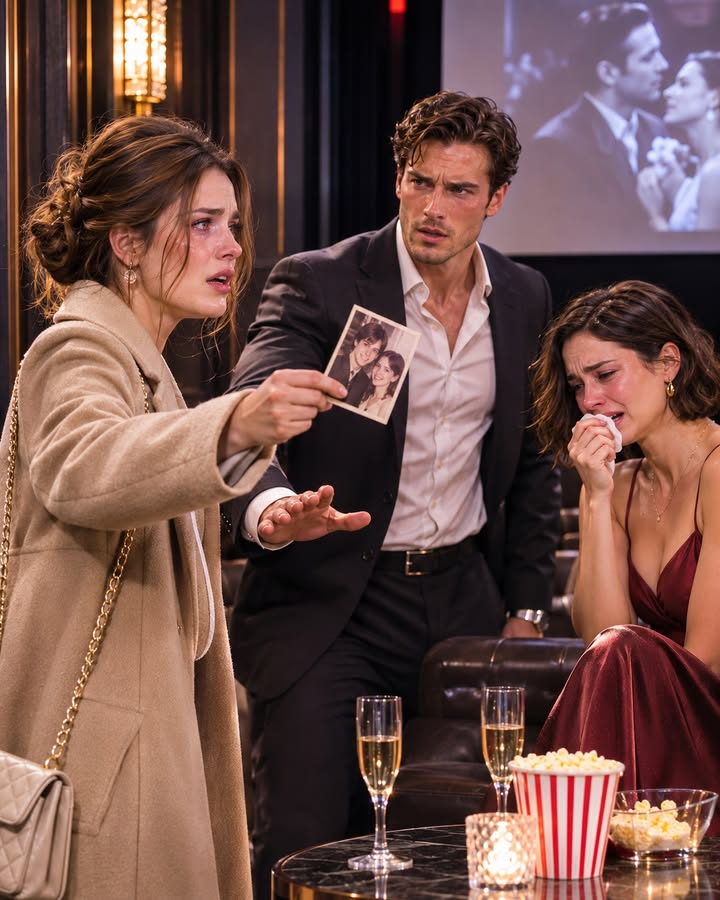
He glanced down at the old photograph, still in his hand.
“That I wouldn’t be able to explain it.”
“That’s not the same as being honest.”
“No,” he said.
“It isn’t.”
The lobby clerk had turned away, giving us the privacy he could without leaving the desk.
Outside, an early bus rolled through the empty street, its windows glowing pale against the dark.
I felt as if I had been awake for days, though dawn had not yet come.
Lauren eased herself back onto the bench.
“My mother kept that page with the letters,” she said.
“I don’t know whether she wrote the note herself or copied it from someone else.”
“Why would she keep it if she didn’t want me contacted?”
“She may have been preserving it, not making the decision.”
“You said she kept records because she hoped someone would know what to do with them.”
“I know.”
“And now you’re asking me to trust a guess.”
“No,” Lauren said.
“I’m asking you to let me help find out what it means.”
I looked at the page again.
The phrase what happened to her mother seemed to move beneath the ink, as if the words had been waiting for me to see them.
All my life, I had understood my mother to be my mother.
The woman who had made my lunches, sat beside my bed when I was sick, and taught me to drive in an empty school parking lot was the only mother I had ever known.
But the note did not say what happened to your family.
It said what happened to your mother.
A cold, small doubt opened inside me.
I folded the page along its old crease.
“I need to call my parents.”
Ryan nodded.
“Of course.”
“Not from here.”
“I can drive you home.”
“I’ll take a car.”
He didn’t argue.
That, too, was a kind of answer.
Lauren gave me the envelope, the letters, and the photograph Ryan had been carrying.
When he reached for the photograph, I held it a moment longer.
The paper was worn thin at the edges, softened by years of handling.
The teenage girl in the picture had her head tilted toward Ryan, and his smile looked unguarded.
“What does this have to do with me?” I asked him.
His eyes met mine.
“I think the fundraiser was for your family.”
The statement was quiet, but it seemed to change the room around us.
“How would you know that?”
“I remember the night we organized it.”
“Then tell me.”
Ryan took a breath.
“I remember there was a family in trouble after an accident.”
“What kind of accident?”
“I don’t remember all the details.”
“Did you see it happen?”
“I don’t think so.”
“Did Lauren?”
He looked at her.
Lauren shook her head slightly.
“I was there afterward,” she said.
“Not at the accident itself.”
“What did your mother tell you?”
“She said she helped someone. She didn’t tell me much more than that.”
“Why not?”
“She believed some things weren’t hers to explain.”
I stared at the two of them.
Everyone seemed to have learned the same lesson about keeping quiet, and somehow I was the only person left to live with the silence.
I put the photograph into the envelope.
“Who raised the money?”
“Students, teachers, and a few families from school,” Ryan said.
“What did you do?”
“Lauren and I made posters and helped collect donations.”
“What did the money pay for?”
“I don’t know.”
“You don’t remember?”
“I was seventeen, Emily.”
“So was Lauren.”
“I’m not saying it didn’t matter.”
His voice softened.
“I’m saying I didn’t understand the full situation then.”
That sounded believable.
It also sounded like another piece of the truth arriving too late.
I called a car and waited outside the theater with the envelope held close against my coat.
Ryan stood beside me beneath the awning, close enough that I could feel his warmth, but he did not touch me.
The driver arrived in a gray sedan.
“Emily,” he said, “can we talk when you get home?”
“We can talk when there’s something you’re willing to tell me.”
He accepted the answer without trying to soften it.
“I’m sorry I lied.”
“I hear you.”
“I know that doesn’t fix it.”
“No.”
His eyes glistened, though the cold wind might have been partly to blame.
“I’m not asking you to forgive me tonight.”
I opened the car door.
“Good.”
I got in, keeping the envelope on my lap.
As the driver pulled away, I looked back once.
Ryan was still beneath the awning, hands in his pockets, watching the taillights disappear.
I wondered whether the image would stay with me the way the photograph had stayed with him.
By the time I reached our apartment, a thin line of gray had appeared between the buildings.
I set the envelope on the kitchen table and called my mother.
She answered on the fourth ring, her voice rough with sleep.
“Emily?”
“Mom, I need to ask you something.”
A pause.
“Is everything all right?”
“I don’t know.”
I heard her sit up.
“What happened?”
“I found an old clinic form with my name on it.”
The line went quiet.
“Mom?”
“Where did you find it?”
“At a theater.”
“That doesn’t make sense.”
“It’s connected to Lauren Mitchell and her mother, Marian.”
A longer silence followed.
I could hear my mother breathing, slow and shallow.
“Did you know Marian Mitchell?”
“I knew of her.”
“What does that mean?”
“She was a nurse who helped our family years ago.”
“What happened?”
“I thought you knew.”
“Knew what?”
My mother made a small sound, not quite a sigh.
“Emily, your father and I wanted to tell you when you were old enough.”
“I’m thirty-one.”
“I know.”
“You said I was safe, and I believed you.”
“You were safe.”
“Then why does an old form say no one should contact me until I’m ready to know what happened to my mother?”
The silence returned.
This time, I could hear the television in the background, muted or turned down low.
“Mom, what happened to my mother?”
“Oh, sweetheart,” she said.
The tenderness in her voice made the question feel more dangerous.
“Your mother is your mother.”
“Then tell me what the note means.”
“I don’t know what was written on that form.”
“Do you know who wrote it?”
“I don’t.”
“Did you know there was a clinic file under Lauren’s name?”
“No.”
“Did you know Lauren’s mother kept letters connected to me?”
My mother’s breath caught.
That was enough of an answer.
“You knew about the letters?”
“No.”
“But you knew about her.”
“I knew Marian helped us after the accident.”
“What accident?”
My mother was quiet for so long that I thought the call had dropped.
“Your father should be here for this,” she said at last.
“Why?”
“Because we both made decisions about what to tell you.”
“What decision?”
“Emily, please.”
“Please what?”
“Let me speak to your father first.”
“I’m not going to wait while you decide what I’m allowed to know.”
“I’m not trying to decide that.”
“Then tell me.”
A soft rustle came from her end of the line.
“Your father is asleep,” she said.
“Then wake him.”
“I don’t want to do this over the phone.”
“You’ve had thirty-one years not to do it over the phone.”
She made a hurt sound, and shame pricked at me.
I did not take back the words.
“I love you,” she said.
“I know.”
“Nothing about this changes that.”
“I want to believe you.”
“You can.”
“Then help me understand.”
“I will,” she promised.
“Just not while you’re alone and exhausted.”
I looked at the envelope on the table.
“I’m not alone. Ryan’s coming home.”
There was a pause.
“Ryan knows?”
“He was there when I found it.”
“Was he there with Lauren?”
I closed my eyes.
“Yes.”
“Is that why you’re calling?”
“I’m calling because I found a note that says I’m not ready to know what happened to my mother.”
My mother exhaled shakily.
“Give me until morning,” she said.
“Until morning?”
“Your father and I will come over. We’ll explain what we can.”
“And what you can’t?”
“I don’t know yet.”
The honesty in that answer unsettled me.
“Fine,” I said.
“But no more waiting.”
“I promise.”
When we hung up, I stood by the window, watching the neighborhood wake.
A delivery truck stopped at the curb.
Someone walked a dog beneath the bare branches.
The ordinary world kept moving as if my own history had not just opened a door.
Ryan came home just after seven.
He looked as though he had spent the night in the same clothes, which he had.
He paused when he saw the envelope on the table.
“Did you talk to your mother?”
“She says she knew Marian.”
Ryan took off his coat and draped it over a chair.
“She told you that?”
“She says Marian helped our family after an accident.”
He sat down across from me.
“Your family?”
“That’s what she said.”
“Did she say what kind?”
“No.”
The old photograph lay on the table beside the letters.
Ryan looked at it but did not reach for it.
“I’m sorry,” he said.
“You’ve said that.”
“I know.”
“Do you have anything else to say?”
He rubbed his palms together, a habit he had when he was trying to choose his words.
“I should have told you Lauren contacted me.”
“Yes.”
“I should have told you I still had the picture.”
“Yes.”
“I was afraid you’d see it as proof I’d kept something from you because I still had feelings for her.”
“Did you?”
“No.”
He answered without hesitation.
“That’s the truth.”
I studied his face, trying to separate the man I knew from the stranger who had lied to me in a movie theater.
“Why did you keep it?”
“I think you deserve to know, but I can’t explain it properly until I understand what the fundraiser meant.”
“You remember enough to tell me it was for my family.”
“I remember there was a family in crisis. I don’t know that it was yours for certain.”
“You just said you thought it was.”
“I do.”
“So why can’t you tell me?”
“Because the details are tangled up with things I only heard secondhand.”
“That hasn’t stopped anyone else from making decisions about what I can know.”
Ryan’s gaze dropped.
“You’re right.”
I waited for him to defend himself, but he didn’t.
Instead, he said, “I was selfish about the photo.”
The admission surprised me.
“I didn’t keep it because I wanted Lauren back,” he continued.
“I kept it because I was afraid of forgetting something important, even though I couldn’t have told you what that thing was.”
“Then why did you hide it?”
“Because I knew you’d ask.”
“That’s not a reason.”
“No,” he said.
“It’s an explanation, and not a good one.”
His openness did not undo my hurt, but it gave the hurt somewhere to rest.
I looked down at my hands.
“I don’t know what I’m supposed to do with this.”
“You don’t have to decide today.”
“You and Lauren have both said that.”
“I’m not trying to manage what you do.”
“Then don’t.”
He nodded.
The quiet between us filled with the small sounds of the apartment: the radiator ticking, a car passing outside, the kettle settling on its base.
After a while, I asked, “What exactly did Lauren say when she first contacted you?”
Ryan looked toward the window.
“She found the note with my name on it among her mother’s letters.”
“What did it say?”
“That I might remember the photograph.”
“And you didn’t ask what else was in the box?”
“I did.”
“What did she tell you?”
“Not much. She said there were letters about an incident involving a family from our school.”
“A family from our school?”
“Not exactly. A family connected to our school.”
“That distinction matters?”
“I don’t know.”
He looked back at me.
“I should have asked you to meet with us.”
“Yes.”
“I thought I could find out what the photo meant first, then bring it to you with an explanation.”
“That wasn’t your choice to make.”
“No.”
The doorbell rang before either of us could say more.
My parents stood in the hallway, my father holding a paper bag from the bakery and my mother looking as though she had not slept.
I let them in.
My father greeted me with a hug, then held me at arm’s length.
“You look exhausted.”
“I am.”
He glanced at Ryan, and some understanding passed between them.
“Your mother said you found something,” he said.
I placed the clinic form on the table.
My mother stared at the typed name and the handwritten sentence.
She did not look surprised.
She looked afraid of having to speak.
“Did you know this existed?” I asked.
“Not this particular page,” she said.
“But you knew someone had asked that I not be contacted.”
My father pulled out a chair.
“Marian believed it was best to let you grow up without carrying the weight of what happened before you could understand it.”
“Before I could understand what?”
He looked at my mother.
She sat beside him, hands folded tightly in her lap.
“Emily,” she said, “there are parts of your early life you don’t remember.”
“I know that.”
“We thought that was because you were very young.”
“Was I?”
My parents exchanged a look.
The hesitation was brief, but I saw it.
“How old was I?” I asked.
My father leaned forward.
“You were still a toddler when the accident happened.”
The word accident carried a faint echo of Lauren’s explanation.
“Whose accident?”
My mother’s eyes filled.
“Your birth mother’s.”
The room seemed to go still.
I looked at Ryan, then at the old photograph, then back at my parents.
“What do you mean, my birth mother?”
My father reached for my hand across the table.
“You were adopted, Emily.”
I pulled my hand back.
The movement was small, but all three of them noticed.
“I was told I was adopted.”
My mother nodded, crying silently now.
“I know.”
“You told me my parents couldn’t take care of me.”
“We said your first family faced difficult circumstances.”
“You said my birth mother was gone.”
“We didn’t say she was dead.”
“You let me believe she was.”
“We thought it was kinder.”
The words were familiar, spoken in softer versions across years of childhood.
I had asked questions, and they had given me careful answers that never quite said enough.
I had assumed the missing pieces were ordinary.
Now I understood that the gaps had been shaped.
“Was she hurt in the accident?” I asked.
“Yes,” my father said.
“But she survived.”
My mother reached for a tissue.
“She was frightened, overwhelmed, and dealing with more than we understood. Marian helped her, and later helped us arrange the adoption.”
“You knew my birth mother was alive?”
“We knew she survived at the time,” my mother said.
“After the adoption, we respected the boundaries she asked for.”
“What boundaries?”
“She wanted you to have a stable childhood without feeling that you had to wait for her or choose between families.”
My throat tightened.
“Did she ask you to tell me she was gone?”
“No,” my father said quickly.
“We never said that.”
“You knew what I thought.”
“We should have corrected it,” my mother whispered.
“But we were afraid that the truth would make you feel abandoned.”
“So you let me believe something worse?”
“We made a mistake,” my father said.
Neither parent tried to turn the confession into an excuse.
That almost made it harder.
I stood and walked to the window, needing to see something beyond their faces.
The city was brighter now, the winter sky washed in pale silver.
For years I had thought of my adoption as a story with a beginning I could not remember and an ending I had been lucky enough to reach.
Now the beginning had become a series of people making choices around me.
My birth mother.
Marian.
My parents.
Lauren.
Ryan, carrying a photograph he could not explain.
I turned back.
“Why did the clinic file have Lauren’s name on it?”
My father frowned.
“I don’t know.”
“Was Marian the person who helped arrange the adoption?”
“She helped with the medical care and connected your birth mother with the agency.”
“And Lauren’s name was on the file?”
“Maybe she was listed as Marian’s contact.”
“But the note is about me.”
My mother looked down.
“Marian may have kept the records together because she was trying to protect your birth mother’s privacy.”
“Why would she write that I wasn’t ready to know what happened to my mother?”
“She may have meant your birth mother,” my father said.
I flinched at the phrase.
It was the first time either of them had used it while speaking about a woman who was still alive.
“Do you know her name?” I asked.
My mother shook her head.
“Your records were handled through the agency.”
“You don’t know?”
“We were given identifying information that was meant to remain private.”
“Did you ever try to find her?”
“No,” my father said.
“She asked that we not.”
“And you respected that.”
“Yes.”
“Even when I was old enough to ask?”
“We were afraid of hurting you.”
“You keep saying you were afraid.”
“We were,” my mother said.
“I’m sorry.”
I believed she was.
I also understood that love could protect someone and still leave them lonely.
Lauren had remained quiet throughout the conversation.
When I looked at her, she seemed almost embarrassed to be present for a truth that did not belong to her.
“My mother must have kept the letters because she hoped I’d find them,” she said.
“You said she never told you about me.”
“She didn’t.”
“Then why did she keep the note?”
“I don’t know.”
“Why did she write my name?”
“I don’t know.”
“Why did she tell someone not to contact me?”
“I don’t know.”
Her answers were not helpful, but they were honest.
Ryan rose from his chair.
“I should give you some space.”
I turned to him.
“Don’t leave because you think that’s what I want.”
“I don’t know what you want.”
“Neither do I.”
He stayed where he was.
That did not mean I had forgiven him.
It meant I could not bear one more person leaving the room before I understood what was happening.
Lauren untied the ribbon around the letters again.
“My mother wrote some of these after the accident,” she said.
“Maybe there’s something in them that can answer your questions.”
“Will you let me read them?”
“Of course.”
She placed the bundle in front of me, but my mother reached toward it before I could.
“Perhaps it would be better to read them slowly.”
I looked at her.
“Why?”
“I don’t know what they say.”
“Then why do you want to decide how I read them?”
My mother withdrew her hand.
“You’re right.”
I opened the first envelope.
The paper inside was a letter written in neat, slanted handwriting.
It began with the date and a salutation to someone named Elise.
I recognized the name.
My birth mother’s first name was listed in the sealed adoption papers I had once seen as a child, before my parents gently suggested I put them away.
I looked at Lauren.
“Is there another letter addressed to her?”
She searched the bundle and found one near the bottom.
It was sealed, its flap browned at the edges.
On the front, Marian had written: For Elise, if she asks.
My parents looked at each other.
Neither of them seemed to have known the letter existed.
“Can I open it?” I asked.
Lauren hesitated, then nodded.
“It’s yours to decide.”
I lifted the flap carefully.
Inside was a single sheet folded in half.
The first lines were not a letter to me.
They were a message from Marian to Elise, written shortly after the accident.
She described the night in careful, restrained language, saying that Elise was alive, that the baby was safe, and that no one would force her to make a decision before she was ready.
Then I reached the last paragraph.
My eyes stopped on a name.
Ryan.
I read the line twice, certain I had misunderstood.
“What is it?” Ryan asked.
I looked up at him.
My birth mother’s letter had mentioned his name, written decades before we met.
It said that Ryan and Lauren had been there when the accident happened.
**–END OF PART 3–CLICK “NEXT” AT THE BOTTOM OF THE PAGE TO CONTINUE READING**
* * *
[PREVIOUS: PART 2](https://puretales.idolsgift.com/blog/part-2-the-name-on-the-sealed-file-035) | [NEXT: PART 4](https://puretales.idolsgift.com/blog/part-4-the-name-on-the-sealed-file-035)
✓ Lynn R. Adams
Part 3 – The Blank Spaces The page trembled between my fingers. Do not contact her until she is ready to know what happened to her mother. I read the sentence again, hoping the words might rearrang…