PART 3: The Marker in His Blood 008
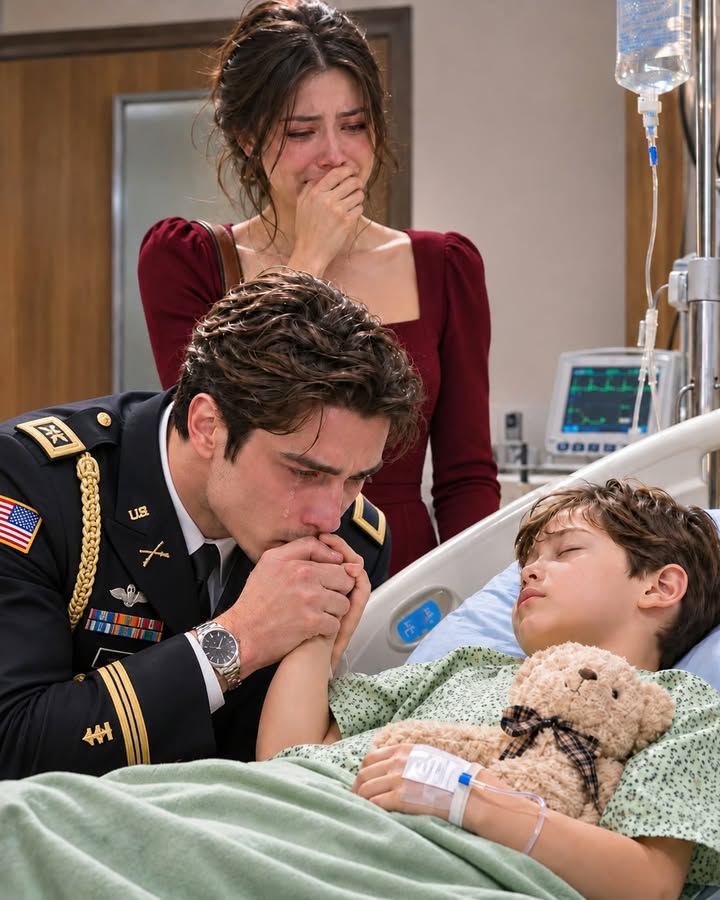
Part 3 – The Names on the List
The specialist returned with the second report held carefully between her hands.
Alexander stood straighter, but I saw the tension gather in his shoulders.
“What does it say?” he asked.
“It confirms that you share several of Noah’s markers,” she said. “That makes you a partial match, but we need additional testing before we can determine whether you’re suitable to donate.”
“Can you do the tests now?” Alexander asked.
“We’ve sent the next samples to the lab. We also need to continue searching the unrelated donor registry while we wait.”
I looked through the open doorway at Noah, who had fallen asleep again.
“So even if Alexander is a partial match, we might still need someone else?”
“That’s possible,” the specialist said. “We want every option available. The unusual inherited marker makes careful matching especially important.”
Alexander glanced at me, then back at her.
“Whatever tests you need, do them.”
“I will,” she said. “But I want both of you to understand that a partial match is not the same as a confirmed donor.”
“I understand,” he replied.
The specialist explained what would happen next, then left us in the corridor with the report tucked beneath her arm.
For a moment, neither of us spoke.
The word partial seemed to hang between us, carrying more weight than a laboratory result ought to.
“Is that good news?” Alexander asked quietly.
“It’s a reason to hope,” I said. “It isn’t an answer.”
He nodded as if he understood the difference, although I suspected he wanted something more definite to hold on to.
When we went back into the room, Noah was awake.
He looked at Alexander first.
“Did the doctor say you’re a match?”
“She said I might be able to help,” Alexander answered, drawing the chair closer. “They need to do more tests.”
Noah’s face brightened.
“You can help me?”
“I’m going to try.”
“Does that mean you have to get a needle again?”
“Probably.”
Noah looked troubled.
“Then I’m sorry.”
Alexander’s expression softened.
“You don’t have to be sorry. I’m glad I can do something.”
Noah turned his attention to the rabbit tucked beneath his arm.
“I don’t like when they put needles in me.”
“I don’t like it either,” Alexander said.
Noah glanced up, checking whether he meant it.
Alexander held out his bandaged arm as proof.
“I think you were braver than I was.”
A small smile crossed Noah’s face.
“Maybe.”
It was the sort of small exchange that should have meant nothing.
Instead, I felt it settle somewhere tender in me, because Alexander was not trying to impress him or turn a frightening day into a grand promise.
He was simply there.
The next morning, he was there again.
I woke in the recliner beside Noah’s bed to the sound of a paper cup being placed gently on the side table.
Alexander stood near the window with coffee in one hand and a second cup in the other.
“You didn’t have to bring me anything,” I whispered, careful not to wake Noah.
“I know,” he said. “I remembered how you take it.”
I stared at the cup.
It was plain coffee with a little milk, exactly as I used to drink it when I lived in his house.
The memory came back with such clarity that I almost reached for it as if the years between us were only a thin curtain.
“Thank you,” I said.
He took the chair across from me rather than sitting at my side.
“I thought you might need it.”
Noah stirred, and both of us fell quiet.
The morning nurse came in to check his temperature and review the treatment schedule.
Afterward, a doctor explained the next stage of Noah’s care, making clear that treatment would begin as planned while the donor search continued.
Alexander listened closely and wrote down each instruction.
When the doctor asked if we had questions, I asked about nausea, appetite, and what would happen if Noah’s energy dropped further.
Alexander asked how the team would contact us when the next donor results came in.
He didn’t speak over me.
He didn’t look at the staff as if they were there to serve him.
For all his money and influence, he seemed to understand that, in this room, the only thing that mattered was Noah.
That afternoon, he left briefly to take a call from his office.
He kept his voice low in the corridor, but I still heard the end of the conversation when he returned.
“Move the meeting,” he said. “No, I don’t care who is attending. I’ll call them later.”
He slipped the phone into his pocket.
“You don’t have to rearrange your whole life,” I told him.
“I’m not.”
“You have a company to run.”
“I have people who can handle it.”
I looked at the small notebook in his hand, the pages filling with Noah’s medication times and questions for the doctors.
“You can’t solve this by reorganizing a schedule.”
“I know.”
“Do you?”
He studied me, then sat down.
“I’m trying to learn what being here means,” he said. “I’ve had one day with him. You’ve had years.”
The honesty in that answer made my next words harder to find.
Before I could reply, Noah woke and asked for water.
Alexander poured it carefully, tested the temperature against his wrist, and held the cup while Noah took a few sips.
Noah looked up at him.
“Are you coming tomorrow too?”
“Yes.”
“After the needle?”
“Yes.”
“And if the doctor says you can’t help?”
Alexander paused, choosing his answer with care.
“Then I’ll still come.”
Noah seemed satisfied.
He let his eyes close again, his hand resting loosely over the sailboat blanket.
I looked away before Alexander could see what the moment had done to me.
The donor team called late that afternoon.
They wanted to schedule more blood work and a detailed comparison of Alexander’s results with Noah’s unusual marker.
The specialist stressed again that nothing was certain.
Alexander agreed to come in whenever they needed him.
I listened to the call from beside Noah’s bed and heard the professional calm in his voice, but his fingers had tightened around the phone.
When he ended the call, I asked, “Are you all right?”
“I’m fine.”
“You don’t have to pretend you aren’t scared.”
He looked at me, surprised.
“I’m not trying to pretend.”
“Then what are you doing?”
“Trying not to make this harder for you.”
For a moment, I didn’t know what to say.
I had spent years imagining that Alexander never showed fear because he never felt it.
Now I wondered whether I had simply mistaken silence for certainty.
The next day passed in a blur of tests and waiting.
The hospital moved at its own careful pace, but time inside Noah’s room seemed to stretch and fold around every small change in his expression.
Alexander stayed through the morning appointment, then went downstairs to speak with the specialist.
He returned with a folder and a guarded look.
“What did they say?” I asked.
“They’re sending my samples for a more detailed analysis.”
“Is that good?”
“It means they need more information.”
His answer was measured, but I could tell he was holding something back.
“Did they tell you something they haven’t told me?”
“No,” he said quickly. “They were still reviewing the report.”
I wanted to believe him.
I also knew that five years of silence had taught me to notice what a person didn’t say.
Before I could ask again, Noah woke and asked if he could have the blue blanket folded beneath his feet.
Alexander adjusted it for him.
The conversation ended there, but the unease remained.
Late that evening, I stepped into the corridor to call the café where I worked.
My manager had offered to cover my shifts for a few days, but I needed to tell her I didn’t know when I would be back.
I was just finishing the call when I heard a familiar voice near the nurses’ station.
“I’m looking for Claire Donovan,” the woman said. “And Noah.”
My hand tightened around the phone.
I knew that voice.
When I turned, Vanessa stood beneath the corridor lights with a soft overnight bag over one shoulder.
Her hair was shorter than I remembered, and her clothes were simple, but the years had not changed the bright certainty in her expression.
She saw me and smiled with a gentleness I hadn’t expected.
“Claire.”
For a second, I was back in Alexander’s mansion, watching him come through the front door with peach lipstick on his collar.
Then I was looking at the photographs online, the two of them side by side beneath the lights of a party.
I ended the call without finishing my goodbye.
“What are you doing here?” I asked.
The question came out sharper than I intended.
Vanessa’s smile faded.
“Alexander called me.”
My stomach tightened.
“He told you about Noah?”
“He did. He asked if I’d come by.”
“Why?”
“He thought I might want to meet him.”
I looked past her, toward the far end of the corridor.
Alexander was speaking with a nurse outside Noah’s room.
He turned when he noticed us and stopped moving.
“Claire,” Vanessa said quietly, “I’m not here to make anything more difficult.”
“You’ve already done that.”
Her eyes lowered.
“I know.”
The answer was so calm that it knocked the anger from my voice.
“I didn’t know you were coming.”
“I asked Alexander not to surprise you. He said he’d speak to you first.”
She glanced toward him.
“So he didn’t.”
“No,” I said. “He didn’t.”
Vanessa gave a small, tired sigh.
“I’m sorry.”
Alexander came toward us.
“I should have told you,” he said.
“Yes, you should have.”
“I thought it would be better if you heard it from me.”
“You could have started by telling me she was coming.”
“I know.”
His apology did not change how it felt to see Vanessa standing in the hospital where our son was being treated.
Still, Noah was inside the room, and this was not the place for an argument that had begun five years ago.
“Why did you call her?” I asked.
“Because she’s part of the past we were talking about,” he said. “And I thought she might be able to explain what happened at the party.”
I looked at Vanessa.
Her expression was composed, but her hands had clasped tightly around the strap of her bag.
“I can leave,” she said. “If you don’t want me here.”
I should have said yes.
Instead, I looked through the doorway at Noah, who was awake and watching us.
He had heard our voices.
“Is someone there?” he called.
I opened the door.
“Your dad’s friend came to visit,” I said.
Noah looked at Alexander.
“Is it the lady from the picture?”
Vanessa went very still.
Alexander glanced at her, then at me.
“Yes,” I said. “This is Vanessa.”
Vanessa stepped inside slowly, leaving the overnight bag by the door.
“Hello, Noah,” she said. “I’m glad to meet you.”
Noah studied her with the seriousness he had given Alexander.
“Mommy said you sing.”
“I do.”
“Are you famous?”
Vanessa laughed softly.
“Some people know my songs.”
“Can you sing one now?”
“Not unless your mom says it’s all right.”
Noah looked at me.
I nodded.
“If it doesn’t make your throat hurt,” he said.
Vanessa chose a quiet song and sang only a few lines, softly enough that her voice blended with the low hum of the hospital room.
It was a melody I vaguely remembered from years ago, though I could not recall where I had heard it.
Noah listened with one hand wrapped around his rabbit.
When she finished, he smiled.
“I like that one.”
“So do I,” Vanessa said.
The ease between them made me feel both grateful and uneasy.
Noah had no reason to carry my old suspicions.
He deserved to meet the people connected to his father without being asked to take sides.
Vanessa sat in the chair near the window.
Alexander stood a few steps away, leaving enough room between them that I noticed it.
“How long are you in town?” I asked.
“I arrived yesterday,” she said. “I have a performance here this weekend.”
“You’re still touring?”
“I’m recording more than touring these days. My life is quieter than it used to be.”
Her gaze flicked to Alexander.
“We haven’t seen each other often.”
The careful wording made me think of the years I had spent imagining a different answer.
Noah began to tire, and I adjusted his pillows.
Vanessa rose.
“I should let him rest.”
“Will you come back?” Noah asked.
“If your parents are comfortable with it.”
The word parents seemed to surprise her as much as it did me.
Alexander looked at me, leaving the choice to me.
“I’ll ask Noah tomorrow,” I said.
Vanessa nodded.
Before she left, she turned toward me.
“Could we talk privately for a few minutes?”
I glanced at Noah.
He was already drifting toward sleep.
“I’ll be right outside,” I told him.
Alexander stayed by the bed as I followed Vanessa into the corridor.
She stopped near the windows overlooking the hospital entrance.
For a moment, she seemed unsure where to begin.
“I owe you an explanation,” she said.
“You don’t owe me anything.”
“I do. You spent years believing I came back to take Alexander from you.”
I looked at her, startled by how directly she had named it.
“I never said that.”
“You didn’t have to.”
She rested her hands on the windowsill.
“Alexander and I were never in love. Not the way people assumed.”
“I know you had an arrangement before me.”
“An arrangement that ended long before you left.”
Her words hit me with a quiet, disorienting force.
“He told me that.”
“Did he tell you why he didn’t say it sooner?”
“He said he didn’t know how to tell me he wanted me to stay.”
Vanessa’s expression softened.
“That sounds like him.”
I frowned.
“You knew?”
“I knew he cared about you. I knew he was terrified of what that meant.”
“Then why did you let me believe the photographs were real?”
Her face changed, the small trace of warmth giving way to regret.
“I didn’t know what you believed. I hadn’t seen you before the party, and I didn’t know you were going to leave.”
“You were standing beside him.”
“I was. I had just returned to the city, and he came to the party because he’d promised a friend he would. We talked for a few minutes. I kissed his cheek when I greeted him, and my lipstick transferred to his collar.”
“Why didn’t he tell me?”
“Because he had spent the evening thinking about telling you something else.”
I held still.
“What?”
“That he’d ended the arrangement between us years earlier.”
“I thought he said he ended it before the party.”
“He did. I’m saying it happened long before then.”
She gave me a sad, knowing look.
“He had asked me to stay in touch after I moved overseas. We had been close, and he thought he owed me an explanation before he began a new life with someone else.”
“Someone else.”
“You.”
The corridor seemed to narrow around us.
“I wasn’t sure he was going to say that,” she continued. “He never said it directly to me. But he looked at you when you were across the room, and I understood.”
I looked through the glass toward the hospital room.
Alexander was sitting beside Noah, speaking quietly to him.
It was impossible to place that man beside the one I had left, the man whose collar carried another woman’s lipstick while I stood alone in his house with a positive pregnancy test hidden in my suitcase.
“Why are you telling me this now?” I asked.
“Because Noah deserves for the adults around him to be honest.”
She hesitated.
“And because I spent too long letting people assume I had been part of something I wasn’t.”
I searched her face.
“Were you ever in love with him?”
“Not in the way you were.”
The answer was simple, but it carried no triumph.
“Alexander and I had history,” she said. “We had an arrangement when we were younger, before I left. We cared about each other. But it wasn’t the kind of love that could survive being honest.”
I remembered the contract, the secrecy, and the rules Alexander had placed between us.
“That sounds familiar.”
Vanessa accepted the sting of my words without protest.
“I’m sorry for the part I played in making you think you were replaceable.”
“You didn’t make me think that.”
“No,” she said. “Alexander did.”
Her bluntness surprised me.
“He let you believe the terms of your life with him mattered more than you did. That was his failure, not yours.”
For a moment, I could not speak.
Then I asked, “Why did he invite you here?”
“Because he wanted me to tell you the truth, I think.”
“You could have told me five years ago.”
“I could have. But I didn’t know you were leaving, and after you disappeared, I assumed you didn’t want to hear from either of us.”
“That assumption sounds familiar.”
She lowered her eyes.
“I know.”
We stood in silence, looking out at the small courtyard where a nurse pushed a cart beneath the trees.
“Does he still care about you?” I asked.
Vanessa turned toward me.
“He cares about me as a friend. I care about him the same way.”
“And you’re certain there was never anything more after you came back?”
“Yes.”
There was no hesitation in her answer.
I wanted to reject it because accepting it meant revisiting a choice I had made with the best information I had.
It did not mean that choice had been foolish.
It meant that some of the certainty I had built my life around was incomplete.
“Thank you for telling me,” I said.
Vanessa nodded.
“I hope he earns your trust. I don’t expect you to give it to him just because I’m here.”
She picked up her bag.
“I’m going to leave you both alone tonight.”
“Thank you.”
She started down the corridor, then turned back.
“Claire?”
“Yes?”
“I’m glad you kept Noah.”
The words found a place in me I had been protecting for years.
“I’m glad too.”
After she left, I returned to Noah’s room.
Alexander looked up from the chair.
“Did she tell you what happened?”
“Yes.”
He searched my expression.
“And?”
“And she told me you’d ended the arrangement long before that party.”
His eyes closed briefly.
“I should have explained.”
“Why didn’t you?”
“I thought if I told you, it would sound like I was asking you to choose me.”
“You were.”
“I know that now.”
“You knew it then.”
He looked down at his hands.
“I knew I wanted you to stay. I didn’t know how to say it without making you feel trapped by the contract.”
“You could have told me the contract was over.”
“Yes.”
The simplicity of his answer left me with nowhere to put my anger except inside the old wound.
“I saw you with her,” I said. “I saw the photographs. I saw the lipstick.”
“I know.”
“You let me think you had chosen her.”
“I did.”
“Why?”
“I was afraid that if I asked you to stay, you’d say no.”
“That wasn’t a reason to leave me guessing.”
“No,” he said. “It wasn’t.”
He didn’t offer a defense or try to soften the truth.
I had expected his apology to make me feel better.
Instead, it made me understand how much could have changed if either of us had been brave enough to say one clear sentence.
Noah shifted in his sleep.
Alexander rose and adjusted the blanket around his shoulders.
When he sat down again, I noticed the notebook in his lap was open to a page of questions about the donor tests.
“You’ve been writing everything down,” I said.
“I don’t want to forget anything.”
“You don’t have to carry all of it.”
“I know. I’m trying to make sure you don’t have to carry it alone.”
I looked at him.
“I’ve been carrying it alone for five years.”
“I know.”
“I don’t know how to stop.”
“Then don’t stop all at once,” he said. “Just let me take one thing when you’re ready.”
The words unsettled me because they asked for nothing.
That night, Alexander kept his promise to Noah and stayed until the nurse asked us to let him sleep.
The following morning, he arrived before visiting hours with a paper bag of breakfast.
He had brought plain toast for Noah, who managed a few bites, and a second coffee for me.
He did not mention Vanessa.
Neither did I.
The quiet between us was easier, though not yet comfortable.
A few hours later, the specialist came to discuss the donor search.
She explained that Alexander’s partial match was encouraging but could not be relied on until the full compatibility tests were complete.
The unrelated donor registry had been contacted, and the team would keep searching while Noah began treatment.
“What happens if the registry doesn’t find someone?” I asked.
“We have time to continue testing Mr. Sterling,” she said. “There are several factors to evaluate, including the unusual inherited marker.”
Alexander leaned forward.
“Could that marker make me a better match?”
“It could help us understand the relationship between your immune-system markers and Noah’s,” the specialist said. “But it would not guarantee compatibility. We need the completed analysis.”
“And if the marker is a poor match?”
“Then we’ll continue looking at other options.”
The answer was honest, but it left us with no easy reassurance.
After she left, Alexander sat beside the window.
“I’m sorry I didn’t tell you Vanessa was coming,” he said.
“Were you hoping she’d convince me you were innocent?”
“No.”
“Then what were you hoping for?”
“I thought hearing it from her might help you understand what I should have explained years ago.”
“You should have explained it yourself.”
“I know.”
He looked out at the courtyard.
“I also thought Noah might like meeting someone who knew me before he was born.”
“You don’t get to use him to repair things between us.”
“I’m not trying to.”
“Then don’t make decisions about who he meets without talking to me.”
“I won’t.”
The answer came without resistance.
That mattered, though it did not erase the mistake.
In the afternoon, Noah asked if Vanessa would sing to him again.
I looked at Alexander before answering.
“She said she might come by,” he told Noah. “But your mom will decide whether today is a good day.”
Noah’s gaze found mine.
“Could she come tomorrow?”
“If you’re feeling well and the doctor says it’s all right.”
“Okay.”
He settled back against his pillow, apparently satisfied.
I watched Alexander’s face as Noah spoke.
There was no jealousy in it, no claim of ownership over our son’s attention.
Only a quiet gratitude that Noah had asked.
By the time visiting hours ended, I had begun to believe that Alexander could learn to be present without taking over.
It was a small belief, fragile as the sailboat blanket folded at Noah’s feet.
The next morning, the specialist called us into a consultation room.
She placed two reports on the table, one bearing Alexander’s name and one bearing mine.
A nurse closed the door behind us.
“What is this?” I asked.
“We’ve completed the first comparative review,” the specialist said. “We still need more testing before making any donor decision, but the results have raised a question about Noah’s family history.”
Alexander looked at the reports.
“What kind of question?”
“The marker we found in Noah appears in both parental samples, though in different forms.”
I looked from my report to his.
“Is that unusual?”
“It can be. It doesn’t change what we know about Noah’s diagnosis, and it doesn’t tell us whether either of you is a suitable donor. But we’d like to review the older records connected to the original tests.”
“What records?” Alexander asked.
“Some of Noah’s early medical notes were transferred from another clinic when he was first diagnosed. We’re requesting the complete file.”
My pulse began to quicken.
“Why would his early records matter?”
The specialist turned one page around so we could see a list of dates and test results.
“Because one of the samples in that file appears to have been taken before the leukemia diagnosis,” she said. “And the date suggests Noah’s immune marker may have been identified much earlier than either of you realized.”
Alexander looked at me.
I stared at the date printed on the page.
It was from the year Noah was born.
“I never had that test,” I said.
“Neither did I,” Alexander replied.
The specialist’s expression remained careful.
“Then we need to find out whose records were used and how the sample was labeled.”
Outside the consultation room, a phone began to ring at the nurses’ station.
The specialist glanced toward the door.
“We’ll follow up as soon as we have the full file.”
When we stepped back into the corridor, Alexander was quiet.
I could still see the date in my mind, printed beside the result that had brought us together in the most frightening way imaginable.
If neither of us remembered that test, whose sample had the hospital been examining?
**–END OF PART 3–CLICK “NEXT” AT THE BOTTOM OF THE PAGE TO CONTINUE READING**
* * *
[PREVIOUS: PART 2](https://puretales.idolsgift.com/blog/part-2-the-marker-in-his-blood-008-1) | [NEXT: PART 4](https://puretales.idolsgift.com/blog/part-4-the-marker-in-his-blood-008)
✓ Lynn R. Adams
Part 3 – The Names on the List The specialist returned with the second report held carefully between her hands. Alexander stood straighter, but I saw the tension gather in his shoulders. “What does…