PART 2: The Woman Who Knew 047
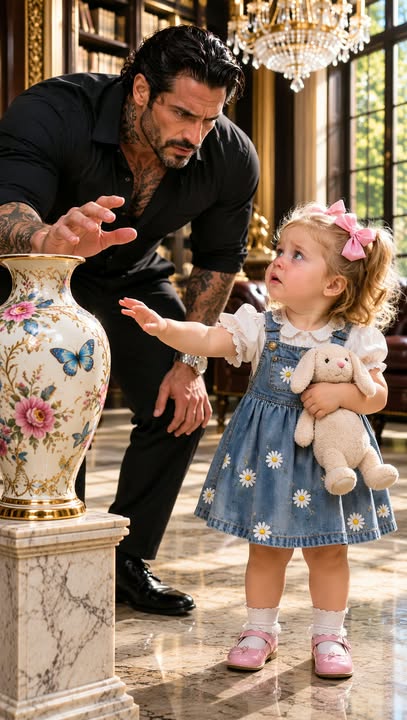
Part 2 – The Woman Who Knew
The woman in the doorway was Elena Rossi, the housekeeper who had served the Moretti family for nearly thirty years.
For most of Vincent’s life, she had been the one steady presence in a home where grief had silenced every room.
She had cooked for him when he was too young to understand why his mother was gone, and sat beside him through the long nights when his father’s temper made the mansion feel colder than its marble floors.
Now she stood with one hand against the doorframe, her gaze fixed on the letter in Vincent’s trembling fingers.
“Put it down, Vincent,” she said again, quieter this time.
The command in her voice was not anger.
It was fear.
Vincent looked from her to the paper, then back again.
“You knew about this?”
Elena’s face seemed to lose its color.
“I know nothing about what that letter says.”
“Then why are you asking me to put it down?”
“Because Isabella was ill,” Elena replied, and the words came too quickly. “She was exhausted and grieving. She said things she didn’t understand.”
Vincent tightened his grip on the letter.
“She wrote my name.”
“She wrote many things in those last days.”
“You told me she was confused.”
“I told you what I believed.”
His eyes narrowed.
“Did you?”
Behind him, Daisy made a small, uncertain sound.
The child had crept close enough to rest one hand against Vincent’s trouser leg, her stuffed bunny tucked beneath her other arm.
Emily hurried into the room, breathless, and stopped when she saw the shattered vase.
“Daisy!”
She crossed the room in two quick steps and scooped her daughter up, checking her hands and knees with practiced tenderness.
“Are you hurt, sweetheart?”
Daisy shook her head, but her eyes stayed on Vincent.
“Mista Boss sad.”
Emily glanced toward him, then toward the silver cylinder lying open beside his shoe.
Her expression changed when she saw the old photograph and the hospital bracelet.
“What happened?”
“She broke the vase,” Vincent said.
Emily held Daisy closer.
“I’m sorry, Mr. Moretti. I’ll pay for the damage if I can. I didn’t know she had wandered in here.”
“There’s nothing you could have paid that would replace it.”
The sharpness in his voice made Daisy flinch.
Emily turned slightly, placing herself between her daughter and the room.
“Then tell me what you need me to do.”
For a moment, Vincent could not answer.
The letter had altered the air around him, making every familiar object seem uncertain.
His wife’s handwriting.
A bracelet bearing a name he had never seen.
A sentence accusing someone beneath his roof of taking their child.
And Elena, who had raised him, begging him to stop reading.
He looked again at the last line.
The person who stole our daughter is still living under your roof.
“Take Daisy somewhere safe,” he said at last.
Emily’s brows drew together.
“Safe from what?”
“I don’t know.”
The honesty startled her more than a threat would have.
Vincent lowered his voice.
“Please, Emily. Take her upstairs, or outside the house. Stay with her until I send for you.”
“I’m not leaving her alone with anyone.”
“You won’t.”
“Then I’ll stay where I can see her.”
Elena stepped forward.
“Emily, there’s no need to make a scene.”
Emily turned to face her.
“I’m not making a scene. I’m keeping my daughter close.”
The firmness in her voice was quiet but unmistakable.
Vincent had spent years surrounded by people who obeyed because they were afraid of what might happen if they did not.
Emily’s refusal carried no performance and no calculation.
She was simply a mother protecting her child.
“Take her to the sunroom,” he said. “One of my men will wait outside the door, and no one will come in without your permission.”
Emily searched his face, looking for the hidden condition.
When she found none, she gave a small nod.
“Daisy, sweetheart, let’s go.”
Daisy reached toward Vincent before Emily could turn away.
Her little fingers brushed his hand.
“You cwying,” she murmured.
“I’m not crying.”
Daisy studied him with the grave attention of a child who knew nothing about pride.
Then she offered him the stuffed bunny.
Vincent stared at the worn toy.
Its one black button eye had been replaced with a blue thread, and one of its ears bent permanently forward.
“Bunny help,” Daisy said.
Emily gave an apologetic smile.
“She thinks everyone needs Bunny when they’re upset.”
Vincent hesitated, then touched the toy’s soft head.
“Thank you, Daisy.”
Her smile appeared, small and uncertain, and for one brief moment the room felt less like a mausoleum.
Emily carried her daughter toward the door.
At the threshold, she looked back.
“I truly didn’t know there was anything inside the vase.”
“I believe you,” Vincent said.
It was the first time he had trusted someone’s word without proof in years.
Emily seemed to hear the weight of it, but she did not answer.
She left with Daisy tucked against her shoulder, the child’s pink shoes dangling above the polished floor.
Elena waited until their footsteps faded before she spoke.
“You shouldn’t have brought a child into this house.”
Vincent turned toward her.
“Emily needed work. She needed a safe place to live.”
“And you thought this was the place to give her one?”
“I thought the staff quarters were secure.”
“Security is not the same as safety.”
The words landed between them with an intimacy that made him pause.
Elena had once spoken to him that way when he was a boy, before he learned to mistake caution for weakness.
He placed Isabella’s letter on the desk, but kept one hand resting on it.
“What does the bracelet mean?”
“I don’t know.”
“Read it.”
Elena did not move.
“Baby Girl Moretti,” Vincent said. “Alive. It has a date and a hospital seal.”
The name of the hospital was printed faintly beneath the clasp.
St. Agnes.
Elena’s gaze dropped to the bracelet.
It was only a flicker, but Vincent saw it.
“You recognize it.”
“I recognize the hospital name.”
“Why?”
“I’ve lived in this city my whole life.”
“That isn’t an answer.”
“I don’t have one you’ll accept.”
“Try me.”
Elena folded her hands, a familiar gesture she used whenever she was trying to keep them from shaking.
“Isabella was very sick after the birth. She was given strong medicine. She couldn’t sleep. She was heartbroken over the baby.”
“The baby she was told had died.”
Elena’s eyes lifted to his.
“That is what the doctors told us.”
“Did you believe them?”
“I believed what the hospital records said.”
Vincent drew the letter toward himself.
“You just said she was confused.”
“I said she had been exhausted and grieving.”
“You’re changing your story.”
“I’m trying to keep you from tearing apart your life over a scrap of paper.”
“It’s my wife’s handwriting.”
“And grief can make a person say things they don’t mean.”
“Is that what you told yourself when you hid this in my vase?”
“I didn’t hide it.”
“Then who did?”
Elena’s silence answered nothing, yet seemed to hold more than words could bear.
Vincent stood and walked to the window.
Beyond the glass, the garden was dark with the first rain of evening.
Isabella had loved that garden.
She used to walk its gravel paths with one hand resting over her stomach, telling him what kind of parents they would be.
He had been twenty-eight then, newly married and convinced that if he earned enough, built enough, controlled enough, he could keep every promise he made.
When the doctor told him the baby had not survived, Vincent had watched Isabella close her eyes and turn her face to the wall.
He had never asked to see the child.
The hospital had said there was nothing to see.
For years, he had blamed himself for not demanding more, until the blame grew so familiar that he mistook it for mourning.
“You were there that night,” he said.
Elena’s face tightened.
“I was with Isabella for most of her pregnancy.”
“That wasn’t my question.”
“I know.”
“Were you at St. Agnes when she gave birth?”
Elena turned toward the broken vase.
“I was there.”
The room seemed to shrink around him.
“You were there, and you let me believe our daughter died.”
“I did not know what had happened to her.”
“But you were there.”
“Yes.”
“Why didn’t you tell me?”
“I didn’t know what to tell you.”
“You could have told me you were there.”
“I thought it would only reopen a wound.”
“It was my wound.”
Elena lowered her eyes.
“I know.”
Vincent wanted to be angry.
Anger had always been easier to carry than grief.
But the sight of Elena standing before him, diminished by a guilt she seemed to have guarded for two decades, left his anger without a clean place to land.
“Why did Isabella write this?” he asked.
“I don’t know.”
“Did she give you the letter?”
“No.”
“Did she tell you our daughter was alive?”
Elena’s lips parted, then closed.
“Not in those words.”
Vincent felt the room tilt.
“What words did she use?”
“I can’t remember.”
“You raised me.”
“I did.”
“You sat beside me when I was alone. You told me the truth when no one else would.”
“I tried to.”
“Then don’t ask me to trust you while you hide behind what you can’t remember.”
Elena looked older than she had that morning.
“I’m not asking you to trust me,” she said. “I’m asking you not to decide what happened before you know.”
Vincent looked down at the bracelet.
The metal had darkened with age, but the clasp was intact.
A tiny date was stamped beside the hospital name.
He read it once.
Then again.
It was the night Isabella had given birth.
He had never forgotten that date.
For twenty years, it had marked the day his daughter died.
Now the bracelet claimed she had lived.
Vincent lifted the old photograph from the cylinder.
Isabella stood in a hospital bed, pale and smiling faintly, her hair loose around her shoulders.
A blanket rested across her lap.
The lower corner of the image had been torn away, as though someone had once removed part of the picture.
On the back, in Isabella’s unmistakable handwriting, were three words.
For the one who found her.
Vincent pressed the photograph flat against his palm.
“What did she want someone to find?”
Elena shook her head.
“I don’t know.”
“Did she say anything to you before she died?”
“She asked me to stay with her.”
“And?”
“She was frightened.”
“Of what?”
Elena’s gaze remained on the picture.
“She thought someone was listening.”
The answer cut through the room more sharply than a raised voice.
“Who?”
“I don’t know.”
“You’re telling me my wife believed someone was watching her, and you didn’t say anything?”
“She was ill, Vincent. She had lost a child. She was taking medicine and barely sleeping.”
“That doesn’t mean she was wrong.”
“No,” Elena whispered. “It doesn’t.”
The admission left them both silent.
Rain tapped against the windows, soft and steady.
From somewhere down the hall came the muffled sound of Daisy laughing.
The ordinary sound of it seemed almost impossible beside the letter.
Vincent closed the cylinder and turned the bracelet over in his hand.
“Why was this inside the vase?”
“I don’t know.”
“Who had access to my study?”
“More people than you think.”
“I keep my private things under lock.”
“You kept the vase in plain sight.”
It was a sharp answer, but Elena’s voice held no satisfaction.
Vincent looked at the scattered porcelain.
The vase had stood beneath the eastern window for twenty years, untouched because everyone knew what it meant to him.
He had guarded it as if its beauty could keep Isabella near.
Perhaps someone had placed the cylinder there because they believed he would never let anyone break it.
Perhaps they had been right.
Until Daisy’s small hand touched the painted butterfly.
He glanced toward the hallway.
“Was Isabella afraid of me?”
Elena’s head lifted in surprise.
“Never.”
“Then why did she leave a message for someone else to find?”
“Maybe she believed you were not the person who needed to find it.”
“Who did she believe needed to?”
“I don’t know.”
“You keep saying that.”
“Because it’s the truth.”
“Or because it’s safer than the truth.”
Elena took a breath that trembled near the end.
“I loved Isabella, too.”
Vincent’s face softened despite himself.
He remembered Elena sitting on the edge of his mother’s bed after the funeral, holding a glass of water while he refused to drink.
He remembered her bringing him soup when grief turned food into a task.
He remembered her staying long after her workday ended because no one else in the house knew how to speak to a boy who had lost both parents.
“You were the only person who stayed,” he said.
“And I have never stopped being grateful you let me.”
“Then help me understand.”
“I’m trying.”
“Start with the hospital.”
Elena’s hand moved to her throat.
“I can’t tell you more here.”
“Why not?”
“Because I need to be certain of what I remember.”
“You remember being there.”
“I do.”
“And you remember Isabella was frightened.”
“Yes.”
“What else?”
Elena glanced toward the open doorway.
For the first time, Vincent understood that her fear might not be about him.
“After the baby was born,” she said, “Isabella asked me to protect her.”
Vincent’s fingers tightened around the bracelet.
“Protect whom?”
Elena’s eyes shone, but she did not look away.
“The baby.”
The words entered him slowly, like cold water filling a room.
“You just said you didn’t know what happened.”
“I said I didn’t know what happened after that night.”
“Did Isabella believe the baby was alive?”
“She believed someone had taken her.”
Vincent’s breath caught.
“And you let me think she was delusional.”
“I let you believe the hospital’s account because I didn’t know how to tell you she might be right.”
“Might be?”
“I had no proof.”
“You could have told me.”
“I was afraid.”
“Of what?”
Elena looked toward the hall again, where Daisy’s laughter had faded into a lullaby Emily was softly humming.
“Of the people who were watching the house,” she said.
Vincent set the bracelet on the desk.
“Who was watching?”
“I don’t know their names.”
“Did you see them?”
“Not clearly.”
“Why did you never tell me any of this?”
“Because you were young, and Isabella was gone, and your father had just died. You had inherited a family full of secrets before you were old enough to understand them.”
“I was old enough to be her husband.”
“I know.”
“Did you help someone take my child?”
Elena flinched.
“I helped hide her.”
Vincent went still.
The rain continued to tap at the windows.
He heard the clock on the mantel tick once, then again.
“You hid our daughter?”
“I thought I was keeping her alive.”
“Where is she?”
“I don’t know.”
The answer broke through the little hope that had begun to rise.
Elena reached for the edge of the desk, steadying herself.
“I was told to take her somewhere safe. I did what Isabella asked. I left her with people who had promised to care for her.”
“Who?”
“I was never given a name I could trust.”
“Where?”
“I don’t know.”
“You expect me to believe you carried my child away and now have no idea where she is?”
“I expect nothing from you.”
“Then why tell me now?”
“Because you deserve to know that Isabella was not confused.”
The confession settled over the room.
For the first time since opening the cylinder, Vincent felt something stronger than shock.
He felt the shape of the grief he had carried for twenty years begin to change.
His daughter might not be dead.
She might have grown up somewhere without knowing his name.
She might have lived a life beyond the reach of the Moretti family, never knowing that a father had spent half his life mourning her.
The possibility was almost too large to hold.
“Did you see her after you left the hospital?” he asked.
Elena closed her eyes.
“Once.”
“When?”
“A few weeks later.”
“Where?”
“A children’s home across town.”
“Which one?”
“It closed years ago. The building was sold.”
“Did you visit her?”
“I brought money. Food. Clothes when I could.”
“Why?”
“Because I had promised Isabella I would protect her.”
“Did you know she was alive?”
“I knew there was a little girl there.”
“Was she our daughter?”
“I believed she was.”
Vincent gripped the back of the chair.
“Why didn’t you bring her to me?”
“I thought someone would find her if I did.”
“Who?”
“I don’t know.”
“You keep protecting me from names you won’t say.”
“I was protecting the child.”
“And where is she now?”
“I lost contact with the home. The records disappeared when it closed.”
Elena’s voice cracked on the last word.
Vincent looked toward the hallway again.
Emily had been hired only a few weeks earlier.
She had come with a single suitcase, a modest reference, and a toddler who liked to carry a stuffed bunny everywhere.
She had asked for steady work, not favors.
She had never asked about the vase.
She had never asked about Isabella.
He had chosen her because she seemed honest and because Daisy’s presence had made the vast, silent house feel less empty.
Now his mind, trained to search every detail for hidden meaning, tried to connect the child in the blue dress to the child Isabella had lost.
He forced himself to stop.
Daisy was eighteen months old.
She could not be the baby born twenty years ago.
Emily was the one whose past he did not know.
But suspicion was not proof, and he would not turn a mother’s need for work into an accusation.
He looked at Elena.
“Does Emily have anything to do with this?”
“I don’t know.”
“Have you seen her before?”
“No.”
“You’re sure?”
Elena’s eyes met his.
“I have never met her before she came to this house.”
He believed the words, though the belief did not soothe him.
Footsteps approached the study.
Emily paused at the doorway, Daisy resting against her shoulder.
The little girl had grown sleepy, her curls mussed and one pink bow hanging loose.
“Is everything all right?” Emily asked.
“No,” Vincent said, then softened his voice. “But Daisy is all right.”
Emily glanced at Elena.
“What was in the vase?”
Vincent looked down at the old photograph and the bracelet.
“A letter from my wife.”
“Your wife who died twenty years ago?”
“Yes.”
Emily’s expression changed, her sympathy immediate and unguarded.
“I’m sorry.”
“Thank you.”
Daisy lifted her head from Emily’s shoulder.
“Bunny help?”
Vincent realized he still held the stuffed rabbit.
He handed it back, and Daisy took it with a sleepy smile.
Emily noticed the bracelet on the desk.
“Is that from the hospital?”
“It is.”
“Do you know what the date means?”
“It’s the night my wife gave birth.”
Emily looked at the name stamped across the band.
“Baby Girl Moretti.”
Vincent nodded.
“Alive.”
Emily’s hand tightened gently around Daisy’s back.
“Does that mean she survived?”
“It means someone wanted me to believe she did.”
Elena gave a quiet, pained breath.
“Vincent.”
He turned to her.
“You told me the hospital said the baby died.”
“They did.”
“And you helped Isabella hide her.”
“I did.”
Emily stared at Elena, then at Vincent.
The knowledge seemed to place a new weight on the room, one she had never expected to encounter when she accepted a housekeeping job.
“I’m going to take Daisy to our room,” she said.
“No,” Vincent replied, then caught himself. “Yes. Please. You should both rest.”
Emily studied him.
“I won’t let Daisy be questioned or blamed for what happened.”
“She won’t be.”
“And I won’t let anyone use her to punish me for taking this job.”
“I won’t allow that.”
“You can’t promise what other people will do.”
The words were not an accusation.
They were the kind of truth spoken by someone who had learned that a promise was only as strong as the person willing to keep it.
Vincent lowered his eyes.
“You’re right. I can promise that I will do everything I can to keep both of you safe.”
Emily held his gaze for a long moment.
“That’s all I’m asking.”
She turned toward the hall, but Daisy reached one small hand back toward him.
“Night, Mista Boss.”
“It isn’t night yet,” he said.
Daisy’s eyes were already closing.
“Night anyway.”
A faint smile touched Emily’s face.
“Good night, Mr. Moretti.”
“Good night, Emily.”
When they were gone, Vincent returned to the desk.
The photograph lay beside the hospital bracelet, its torn corner pointing toward the window.
He lifted it once more.
On the back, beneath Isabella’s three words, he noticed a faint line that had been obscured by the cylinder’s tarnish.
He tilted the photograph toward the lamp.
A second message appeared in faded ink.
St. Agnes. Ask for Dr. Bellini.
Vincent read it aloud.
Elena’s shoulders fell.
“You know that name,” he said.
“I remember a doctor by that name.”
“Was he there the night Isabella gave birth?”
“Yes.”
“Is he alive?”
“I don’t know.”
“Then we’ll find out.”
Elena did not argue.
But when Vincent looked at her, he saw that the fear in her face had changed into something deeper and far more painful.
“Tell me what Isabella asked you to do,” he said.
Elena took a long, unsteady breath.
“She held my hand and told me there was a baby girl who needed a chance to live without being hunted.”
“Who would hunt her?”
“I never knew for certain.”
“Did Isabella name anyone?”
Elena’s gaze dropped to the bracelet.
“She named your uncle.”
Vincent’s hand went cold around the photograph.
His uncle had not lived beneath Vincent’s roof, but for years he had held influence over the family’s business and the decisions made in its name.
The man had always insisted the Moretti line must remain strong, uninterrupted, and under his control.
Vincent had not spoken to him in months.
“Why would he care about my child?”
“Isabella believed your daughter would change who controlled the family.”
“She was a baby.”
“Your uncle did not see her as a baby.”
The words carried no threat, only the sorrow of someone remembering a fear she had once failed to prevent.
Vincent looked at the open cylinder, at the letter that had accused someone beneath his roof, then at the hospital bracelet that might lead him to the truth.
Outside the study, Daisy began humming the little tune Emily had used to calm her.
It was soft and familiar, though Vincent could not remember where he had heard it before.
He turned toward Elena.
“What did you do after Isabella asked you to protect the baby?”
Elena closed her eyes.
“I went to the hospital nursery,” she said. “And when I came out, I was carrying someone else’s child.”
**–END OF PART 2–CLICK “NEXT” AT THE BOTTOM OF THE PAGE TO CONTINUE READING**
* * *
[NEXT: PART 3](https://echoesofstories.idolsgift.com/blog/part-3-the-woman-who-knew-047)
✓ Lynn R. Adams
Part 2 – The Woman Who Knew The woman in the doorway was Elena Rossi, the housekeeper who had served the Moretti family for nearly thirty years. For most of Vincent’s life, she had been the one stea…