On Divorce Day, the Billionaire Smirked at His Pregnant Wife—Until Her Secret Will Took His Empire Away in Minutes
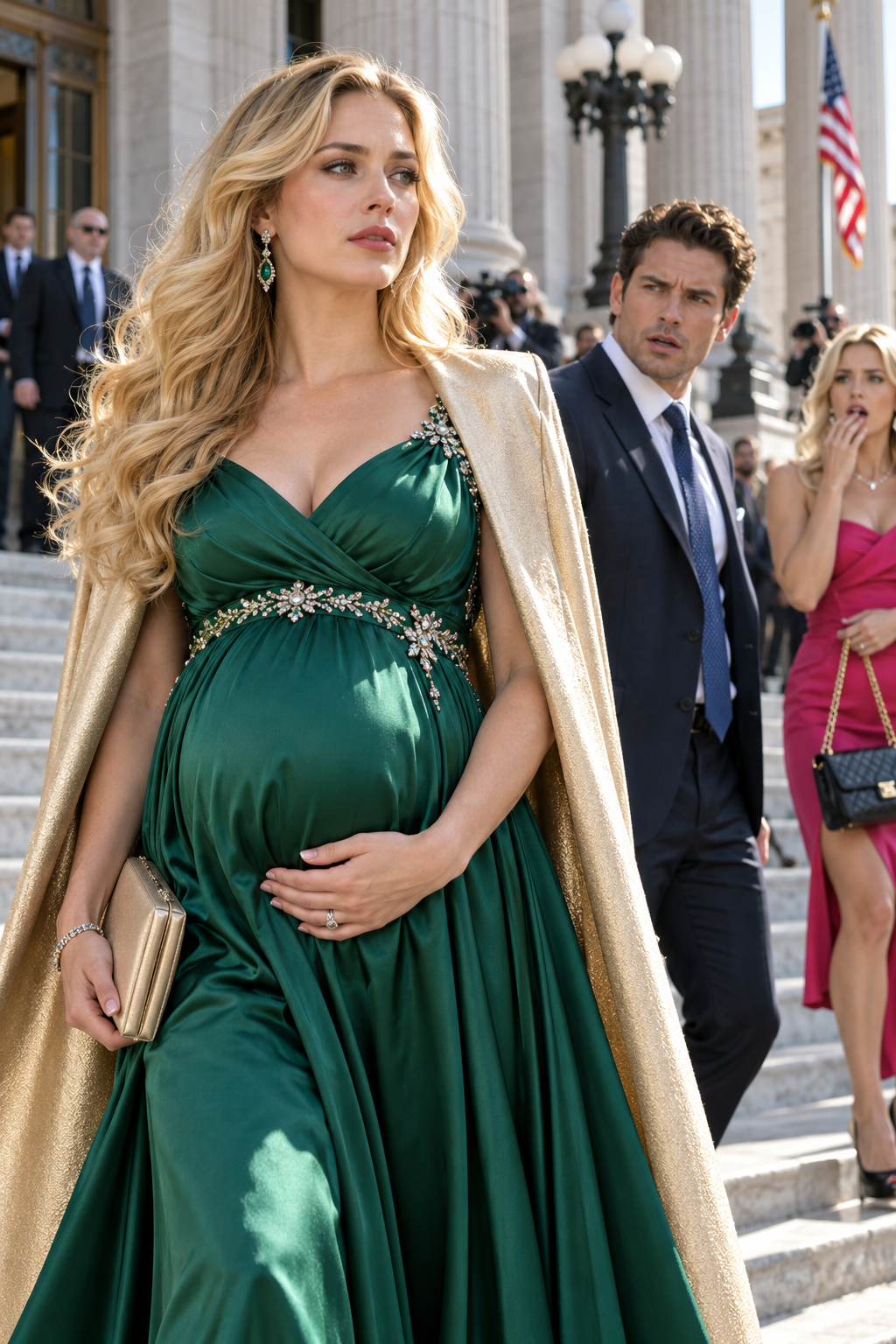
On Divorce Day, the Billionaire Smirked at His Pregnant Wife—Until Her Secret Will Took His Empire Away in Minutes
When billionaire Grant Whitmore walked into the Manhattan courthouse, he was smiling.
His pregnant wife was supposed to leave that building with a divorce decree, a modest settlement, and nothing else.
Instead, Evelyn Whitmore arrived carrying a sealed black folder containing a dead man’s signature—and twenty-three minutes later, Grant discovered that the skyscraper bearing his name, the company he controlled, and much of the fortune he had bragged about owning had never truly belonged to him.
They belonged to her.
And the man who had made certain of it had been dead for almost a year.
At on a cold Tuesday morning, Grant Whitmore stepped from the rear seat of a black Bentley outside the New York County Supreme Court.
Cameras immediately turned toward him.
Grant knew how to perform for cameras.
At forty-one, he had spent almost half his life becoming the kind of businessman financial magazines described with words like relentless, visionary, and untouchable.
Whitmore Holdings controlled luxury hotels, commercial buildings, private clubs, and high-end residential developments across seven states.
Grant’s personal fortune was estimated at $2.3 billion.
Or at least that was what everyone believed.
He adjusted the cuff of his charcoal suit and glanced at the reporters gathering behind the barricade.
Beside him stood his attorney, Martin Kessler.
And three steps behind them stood Vanessa Pierce.
Grant’s mistress.
Vanessa wore a champagne-colored designer coat and enormous sunglasses despite the cloudy morning.
She wasn’t supposed to attend the hearing.
Grant had brought her anyway.
It was deliberate.
He wanted Evelyn to see her.
For six months, Grant had been dismantling his marriage with the same cold precision he used when acquiring a struggling company.
First came the late-night meetings.
Then the private hotel suites.
Then the photographs Evelyn discovered accidentally on a shared cloud account.
After that, Grant stopped pretending.
He moved into the Whitmore penthouse on Park Avenue with Vanessa while Evelyn remained in their Connecticut estate.
When Evelyn announced she was pregnant, Grant’s response had been eight words.
“We’ll handle the child through the appropriate attorneys.”
Not our child.
Not our baby.
By then, Evelyn had already understood what kind of man she had married.
What Grant didn’t understand was what kind of woman he was divorcing.
“Still nothing from her lawyers?” Grant asked.
Martin checked his phone.
“Nothing unusual.”
Grant smiled.
The divorce seemed simple.
Their prenuptial agreement was brutal.
Evelyn would receive $4 million, ownership of a smaller house in Connecticut, and child support determined after the birth.
Grant retained everything connected to Whitmore Holdings.
At least, according to the documents Grant knew about.
Vanessa stepped closer.
“So after today?”
Grant glanced at her.
“After today, it’s finished.”
“The house too?”
“The main estate stays with me.”
Vanessa smiled.
“I always hated her decorating.”
Martin looked uncomfortable.
Grant noticed.
Martin hesitated.
“Don’t antagonize Evelyn inside the courthouse.”
Grant laughed.
“She signed the prenup.”
“That doesn’t mean—”
“It means exactly what it means.”
Grant entered the building.
He had no idea that Martin had been trying to warn him for weeks.
Something didn’t feel right.
Evelyn’s attorneys had stopped negotiating.
They had stopped objecting.
They had stopped fighting over properties.
Usually, that meant surrender.
But Martin Kessler had practiced matrimonial and corporate law for thirty-two years.
People rarely became quiet when billions of dollars were involved.
Not unless they knew something.
Evelyn arrived eleven minutes later.
No Bentley.
No entourage.
A dark Lincoln stopped at the curb.
The door opened.
Evelyn stepped out wearing a deep emerald-green maternity dress beneath a cream wool coat.
At thirty-three weeks pregnant, her belly was impossible to hide.
Her long blonde hair fell loosely over her shoulders.
She looked calm.
That surprised the reporters more than anything.
For months, tabloids had described her as the abandoned billionaire’s wife.
Humiliated.
Some photographers had expected tears.
Evelyn gave them none.
Beside her walked attorney Rebecca Sloan, one of New York’s most respected estate litigators.
Not a divorce lawyer.
An estate litigator.
That was the first detail Martin noticed.
The second was the man walking behind them.
Thomas Caldwell.
Former general counsel of Whitmore Holdings.
Grant hadn’t seen Caldwell since his grandfather’s funeral.
Martin froze.
Grant didn’t.
Vanessa leaned toward him.
“Who’s the older man?”
Grant’s smile disappeared slightly.
“My grandfather’s lawyer.”
Thomas Caldwell carried an old leather briefcase.
Evelyn carried nothing except a black document folder against her chest.
Grant watched them approach.
Something uncomfortable moved through his stomach.
Evelyn stopped ten feet away.
Their eyes met.
For the first time in months, Grant truly looked at his wife.
She wasn’t angry.
That bothered him.
Anger he understood.
Crying he understood.
Begging he understood.
Calmness was different.
“Nice dress,” Vanessa said.
Martin closed his eyes briefly.
Evelyn looked at Vanessa.
Then she looked back at Grant.
“You brought her to our divorce hearing.”
Grant shrugged.
“I don’t see any reason to pretend anymore.”
“Neither do I.”
Something about those words made Martin look sharply at Evelyn.
Grant smiled again.
“You finally decided to be reasonable?”
Evelyn placed one hand over her belly.
“I finally decided to stop protecting you.”
The smile vanished from Grant’s face.
Before he could answer, a court officer opened the doors.
“Whitmore matter.”
Rebecca Sloan gestured toward the courtroom.
“Shall we?”
Evelyn walked inside without looking back.
Thomas Caldwell followed.
Grant remained in the hallway for two seconds longer than everyone else.
Martin leaned toward him.
“You never told me Caldwell was involved.”
“I didn’t know.”
“Why is your grandfather’s estate lawyer at a divorce hearing?”
Grant stared through the open doorway.
“I don’t know.”
Martin’s expression hardened.
“Then stop smiling.”
Judge Helen Morrison entered at .
Everyone rose.
Vanessa was forced to sit in the rear gallery.
Grant sat beside Martin at one table.
Evelyn sat across the aisle beside Rebecca Sloan.
Thomas Caldwell sat directly behind them.
The hearing was supposed to be procedural.
The financial terms had largely been agreed upon.
Signatures.
Confirmation.
Judicial approval.
Judge Morrison reviewed several documents.
“Mr. Whitmore, you understand that by proceeding today, the court expects complete and accurate financial disclosure.”
“Yes, Your Honor.”
“And Mrs. Whitmore?”
“I understand.”
The judge turned a page.
“Counsel, are there outstanding financial issues?”
Martin stood.
“None that should prevent entry of the decree, Your Honor.”
Rebecca remained seated.
“Actually, there is one.”
Grant looked across the room.
Martin slowly sat down.
Judge Morrison removed her glasses.
“Go ahead, Ms. Sloan.”
Rebecca stood.
“We became aware of additional estate documents approximately three weeks ago. Those documents substantially affect representations made by Mr. Whitmore regarding ownership of several assets listed in the marital disclosures.”
Grant whispered, “What the hell is she talking about?”
Martin didn’t answer.
Judge Morrison frowned.
“What kind of estate documents?”
Rebecca turned.
Thomas Caldwell opened his briefcase.
He removed a sealed envelope.
Then Evelyn placed the black folder on the table.
“A will, Your Honor,” Rebecca said.
Grant nearly laughed.
“My grandfather had a will.”
Judge Morrison looked at him.
“Mr. Whitmore, your attorney will speak for you.”
Martin leaned closer.
Rebecca continued.
“The will publicly submitted to probate was valid. However, it was accompanied by a separate testamentary trust instrument and codicil executed eight months later.”
Martin went completely still.
Grant stared at Caldwell.
“That’s impossible.”
Judge Morrison looked at Martin.
Martin stood.
“We request a moment, Your Honor.”
“You’ll have one after Ms. Sloan finishes.”
Rebecca handed copies to the clerk.
“The document was held under a confidentiality provision by Mr. Caldwell because certain triggering conditions had not yet occurred.”
Judge Morrison began reading.
“What conditions?”
Rebecca looked directly at Grant.
Silence filled the courtroom.
Even Vanessa stopped moving.
Grant stared at Evelyn.
Rebecca continued.
“Specifically, the voluntary initiation of divorce proceedings by Grant Whitmore following substantiated marital infidelity while Evelyn Whitmore was carrying his biological child.”
Grant’s face changed.
Martin whispered one word.
Grant turned on him.
“You knew?”
Rebecca continued.
“Upon satisfaction of those conditions, control of the Whitmore Family Preservation Trust transfers immediately from Grant Whitmore to Evelyn Whitmore for the benefit of her unborn child.”
Grant shook his head.
Evelyn remained perfectly still.
Judge Morrison read another page.
Rebecca spoke slowly.
“The trust includes the controlling voting shares of Whitmore Holdings.”
Martin stopped breathing for a moment.
Grant stared at him.
“How many?”
Martin didn’t answer.
“How many shares?”
Thomas Caldwell finally spoke.
“Fifty-two percent.”
Grant shot to his feet.
“That’s a lie!”
The judge slammed her gavel.
“Sit down.”
Grant didn’t move.
“Those shares are mine.”
Caldwell looked at him.
“No, Grant.”
Grant’s voice cracked.
“My grandfather gave me the company.”
“He gave you operational control.”
“He gave me everything!”
Caldwell’s expression remained calm.
“That is what you chose to believe.”
The courtroom seemed to shrink around Grant.
Evelyn watched him.
For years, Grant had spoken about Whitmore Holdings as if the corporation existed because of him.
His empire.
His buildings.
His hotels.
His legacy.
But the foundation of that empire had belonged to Charles Whitmore, Grant’s grandfather.
Charles had built his first hotel after returning from military service at twenty-eight.
One hotel became six.
Six became twenty.
By the time Grant joined the company, the Whitmore name was already worth hundreds of millions.
Grant had expanded it dramatically.
But expansion wasn’t ownership.
Martin grabbed Grant’s sleeve.
“Sit down.”
Grant finally did.
Rebecca turned another page.
“The transfer was activated twelve days ago after Mr. Caldwell’s office verified the relevant conditions.”
Grant stared at Evelyn.
“Twelve days?”
She nodded.
“You knew.”
“And you said nothing?”
“You stopped asking me anything months ago.”
Grant’s jaw tightened.
Judge Morrison continued reading.
“According to this document, Mrs. Whitmore now exercises controlling voting authority?”
“Correct,” Caldwell said.
Grant laughed once.
It sounded almost desperate.
“Voting authority isn’t ownership of my assets.”
Rebecca looked at him.
Then she opened the second section of the folder.
“But that isn’t the only document.”
Martin leaned back in his chair.
Grant looked at him.
“What now?”
Martin whispered, “I don’t know.”
Rebecca placed three deeds on the table.
“Three major properties Mr. Whitmore listed as individually owned were purchased through subsidiaries controlled by the trust.”
Grant’s eyes narrowed.
“Which properties?”
Rebecca read the names.
“Whitmore Tower in Manhattan.”
Grant’s face drained slightly.
“The Connecticut estate.”
Vanessa removed her sunglasses.
“And the Whitmore Grand Hotel in Miami.”
Grant stared at the papers.
Rebecca nodded.
His attorney reached for the documents.
Grant’s hands began trembling.
Not noticeably.
But Evelyn noticed.
She had seen those hands sign billion-dollar deals without hesitation.
She had seen them gripping champagne glasses at charity galas.
She had seen them resting on Vanessa’s waist in photographs Grant thought she would never find.
Now they were trembling.
And Evelyn felt no satisfaction.
Only relief.
Because for the first time, Grant was seeing the truth.
Money could disappear.
Power could disappear.
Names carved into marble could disappear.
Character remained.
And Grant had traded his away long before that morning.
Evelyn hadn’t known about the secret documents until three weeks earlier.
The discovery began with a phone call at on a Sunday evening.
She had been sitting in the kitchen of the Connecticut house, eating sliced apples because almost everything else made her nauseous.
Her phone rang.
Unknown number.
She almost ignored it.
“Mrs. Whitmore?”
“My name is Thomas Caldwell.”
She recognized the name immediately.
Charles Whitmore’s attorney.
“I’d like to discuss a matter concerning your grandfather-in-law’s estate.”
“Grant handles that.”
There was a pause.
“Actually, Mrs. Whitmore, this matter concerns you.”
The following morning, Evelyn entered Caldwell’s office in Midtown Manhattan.
He asked whether Grant had initiated the divorce.
Whether the pregnancy had been medically confirmed.
Whether Grant’s relationship with Vanessa Pierce predated the divorce filing.
Evelyn hesitated.
Then she placed her phone on his desk.
Photographs.
Hotel reservations.
A credit-card statement Grant hadn’t realized was connected to a household account.
Caldwell stared at the evidence.
Then he opened a safe.
What he removed changed everything.
Charles Whitmore had never trusted his grandson completely.
He loved Grant.
But love and trust were not the same thing.
Charles had watched Grant grow increasingly obsessed with status.
Private planes.
Magazine covers.
Celebrity friends.
Young executives who agreed with everything he said.
One evening, six months before Charles died, the old man had visited Evelyn unexpectedly.
Grant was overseas.
Charles and Evelyn ate dinner alone.
Afterward, Charles sat beside the fireplace.
“Do you love my grandson?”
Evelyn smiled.
“Of course.”
“He loves winning.”
She didn’t know how to respond.
Charles looked toward the photographs lining the mantel.
“That isn’t the same thing as loving people.”
Evelyn defended Grant that evening.
She told Charles that Grant worked too much because he felt responsible for the company.
Charles listened.
Then he said something Evelyn never forgot.
“Don’t confuse a man’s ambition with his character.”
At the time, she thought he was being unfair.
Months later, Charles died.
And the warning began to make sense.
The secret codicil wasn’t designed simply to punish adultery.
It was designed to protect the family company from what Charles called in one handwritten letter “Grant’s worst instincts.”
Grant could continue controlling the company as long as he remained married or divorced under ordinary circumstances.
But if he abandoned a pregnant spouse after documented infidelity, control shifted away from him.
Not permanently to Evelyn personally.
To a trust benefiting Charles’s future great-grandchild.
Evelyn became trustee.
The company would one day belong largely to her baby.
Charles had placed another safeguard inside the trust.
Grant could regain limited board involvement eventually—but only with approval from a majority of independent trustees.
He couldn’t sell the controlling shares.
He couldn’t borrow against them.
He couldn’t transfer them.
He couldn’t bully Evelyn into surrendering them.
For twelve days, Evelyn told no one except her attorneys.
Grant continued sending aggressive settlement proposals.
He demanded the main house.
He insisted Evelyn move out within thirty days after giving birth.
He even requested reimbursement for the household staff she continued employing.
Evelyn read each demand quietly.
Then she signed the documents necessary to finalize the divorce.
Rebecca Sloan thought she was being too calm.
“You’re allowed to be angry.”
“I am angry.”
“You don’t look angry.”
Evelyn looked down at her pregnant belly.
“I don’t want my daughter learning that anger is the only way a woman can prove she was hurt.”
Rebecca smiled slightly.
“You’re having a girl?”
Evelyn nodded.
Grant didn’t know.
He had never asked.
Back in the courtroom, Grant was learning exactly what his grandfather had done.
Martin spent ten minutes reading the trust documents.
Then another five.
The longer he read, the paler Grant became.
Finally, Grant whispered, “Find a loophole.”
Martin didn’t look up.
“Find one.”
“We need an estate litigation team.”
“I already have one.”
“No. You had corporate attorneys. This is different.”
Grant leaned closer.
“Can they take my company?”
Martin lowered his voice.
“If these documents are valid, it was never entirely your company.”
Grant stared at him.
“I built it.”
“You expanded it.”
“I tripled its value!”
“I’m not arguing with you.”
“Then fix it.”
Martin finally looked at him.
“I can’t fix a legal document your grandfather executed before his death because you dislike the consequences.”
Across the aisle, Evelyn heard almost every word.
Grant noticed.
His embarrassment turned instantly into anger.
“This was your plan.”
Evelyn shook her head.
“I didn’t know the document existed.”
“You’re lying.”
“You manipulated him.”
“Your grandfather signed it before I was pregnant.”
That stopped him.
Caldwell added quietly, “And without Evelyn’s knowledge.”
Grant turned toward him.
“You helped him do this.”
“I followed my client’s instructions.”
“He was sick.”
Caldwell’s eyes hardened.
“He was eighty-two. He was not incompetent.”
“He was dying.”
“The codicil was signed seven months before his terminal diagnosis.”
Grant said nothing.
Caldwell continued.
“Two physicians evaluated his capacity. The execution was videotaped. Three witnesses were present.”
Martin rubbed his forehead.
Grant looked at him.
“You can challenge it.”
“Anyone can file a challenge.”
“Then challenge it.”
Martin’s voice dropped.
“Winning is another question.”
For the first time that morning, fear appeared clearly in Grant’s eyes.
Vanessa saw it too.
From the gallery, she checked her phone.
Then she began typing rapidly.
The hearing should have ended there.
Because Rebecca Sloan wasn’t finished.
“Your Honor, there is another issue.”
Grant closed his eyes.
Judge Morrison looked almost tired.
“What now?”
“Mr. Whitmore’s financial disclosure identifies several accounts as personal assets.”
“We believe some contain funds improperly distributed from trust-owned subsidiaries after the triggering event.”
Martin immediately stood.
“We dispute any characterization of impropriety.”
Rebecca nodded.
“And that dispute can be handled separately. However, yesterday afternoon, the Whitmore Holdings board received notice of the trust transfer.”
Grant turned sharply.
“You contacted my board?”
Evelyn finally answered.
His phone began vibrating on the table.
Three times.
Martin looked at the screen.
BOARD CHAIRMAN.
Grant ignored it.
Another call arrived.
CHIEF FINANCIAL OFFICER.
Then another.
GENERAL COUNSEL.
Grant grabbed the phone.
Judge Morrison said, “Mr. Whitmore, turn that off.”
He stared at the screen.
Then silenced it.
Thirty seconds later, Martin’s phone vibrated.
He read the message.
His face changed.
Martin didn’t answer.
“What happened?”
The judge glared.
Martin stood.
“May I request five minutes, Your Honor? A corporate matter appears to have developed that may affect our representations.”
Judge Morrison looked at the clock.
“Five minutes.”
Grant practically dragged Martin into the hallway.
“What happened?”
Martin held up his phone.
“Emergency board meeting.”
“Ten minutes ago.”
“Without me?”
“The trust called it.”
Grant looked through the courtroom doors toward Evelyn.
“What did they do?”
Martin hesitated.
“They’ve suspended you as CEO pending an independent financial review.”
Grant laughed.
“It’s temporary.”
“They can’t.”
“The controlling shareholder can call for board action.”
“I appointed half that board.”
“And apparently seven members voted for suspension.”
Grant stared at him.
Martin nodded.
“Two abstained.”
“Who voted against it?”
“Your cousin Daniel.”
Grant walked away three steps.
Then came back.
Vanessa emerged from the courtroom.
“What does this mean?”
Grant ignored her.
“Go back inside.”
“Do we still have the Miami hotel?”
Martin looked away.
Grant slowly turned toward Vanessa.
“Did you seriously just ask me that?”
She blinked.
“I was asking because you said we were spending January there.”
Martin almost laughed, then stopped himself.
Grant stepped closer to her.
“My company just suspended me.”
Vanessa folded her arms.
“And I’m trying to understand what that actually means.”
“It means nothing.”
Martin looked at Grant.
Grant snapped, “It means nothing.”
But they all knew that wasn’t true.
Grant’s phone buzzed again.
This time it was his private banker.
Then his head of security.
Then the manager of the Manhattan penthouse.
Grant answered that call.
The manager spoke for less than thirty seconds.
Grant said nothing.
Then slowly ended the call.
Martin studied him.
“What happened?”
Grant looked at Evelyn through the courtroom doorway.
“The penthouse.”
“What about it?”
“It’s company-owned.”
Martin sighed.
Of course it was.
Grant had used a Whitmore Holdings subsidiary to purchase it because of tax and liability advantages.
A clever financial structure when he controlled the corporation.
A disastrous one when he didn’t.
“What did they say?”
Grant’s voice became quiet.
“My access privileges are being reviewed.”
Vanessa stared.
“Access privileges?”
Grant turned away.
The billionaire who had walked into the courthouse less than an hour earlier believing he controlled everything suddenly didn’t know whether he could legally enter his own home.
Court resumed at 10:31.
Grant no longer smiled.
His expensive suit hadn’t changed.
His watch was still worth more than most houses.
His name still appeared on buildings.
But something invisible had been stripped away.
Judge Morrison addressed both parties.
“The court is not deciding the validity of corporate actions taken this morning. Those issues belong in the appropriate forum. My concern is whether the financial information presented in this divorce remains accurate.”
Rebecca nodded.
“It does not.”
Martin couldn’t disagree.
The hearing was postponed to allow revised disclosures.
Grant should have welcomed the delay.
Instead, it felt like another defeat.
As Judge Morrison prepared to leave, Grant stood.
“Your Honor.”
Martin whispered, “Don’t.”
But Grant continued.
“My wife is using my unborn child to steal my grandfather’s company.”
The courtroom froze.
Evelyn’s expression finally changed.
Judge Morrison looked at Grant for several seconds.
“Mr. Whitmore, I strongly advise you to let your counsel speak.”
Grant pointed toward Evelyn.
“She knew exactly what she was doing.”
Evelyn stood.
Rebecca reached toward her.
Evelyn gently shook her head.
“I’d like to answer.”
Judge Morrison considered it.
Evelyn looked at her husband.
“You think I wanted this?”
Grant laughed bitterly.
“You walked in here prepared.”
“Because your grandfather prepared.”
“You could refuse the trust.”
“And give control back to you?”
Evelyn stared at him.
Grant seemed genuinely confused by the question.
“Because it’s mine.”
“No, Grant.”
Her voice remained quiet.
“Why would I trust you with our daughter’s inheritance?”
Several reporters outside would later hear about that moment.
But inside the courtroom, no one moved.
Grant stared at her.
“Daughter?”
Evelyn placed both hands over her belly.
Grant’s mouth opened.
Then closed.
He had missed three prenatal appointments.
He had stopped answering pregnancy updates because his attorney advised keeping communication “structured.”
Now, at thirty-three weeks, he was learning the sex of his own child in divorce court.
Evelyn continued.
“She’s healthy.”
Grant’s expression changed for half a second.
Something human appeared.
Then pride returned.
“You didn’t tell me.”
“August 14.”
Grant looked confused.
“I sent you the ultrasound.”
His eyes shifted.
Evelyn knew immediately.
“You never opened it.”
Grant said nothing.
“August 21, I asked if you wanted to attend the anatomy scan.”
“I was in London.”
“You were in the Hamptons.”
Vanessa looked down.
Grant’s face hardened.
Evelyn continued.
“September 2, I asked if you wanted to discuss names.”
“You replied through your assistant.”
Martin lowered his eyes.
“I stopped asking after that.”
Grant stared at her.
For months, he had told himself Evelyn was dramatic.
He had repeated those descriptions so often they became truth inside his own head.
Now the timeline sat between them.
Missed appointments.
No emotion required.
Just evidence.
Evelyn nodded toward the folder.
“Your grandfather didn’t take your company away because you cheated.”
Grant’s jaw tightened.
“He took it because he believed there might come a day when you valued power more than family.”
She paused.
“You proved him right.”
Grant looked as if she had slapped him.
Judge Morrison rose.
“This hearing is adjourned.”
The gavel fell.
Outside the courtroom, chaos erupted.
Reporters had received news about the board suspension.
“Mr. Whitmore!”
“Is it true you’ve been removed as CEO?”
“Mrs. Whitmore, do you now control the company?”
“Is the trust worth over a billion dollars?”
“Mr. Whitmore, did your grandfather anticipate the divorce?”
Grant’s security team tried creating a path.
Vanessa moved toward him.
One reporter shouted, “Ms. Pierce, are you and Mr. Whitmore engaged?”
Vanessa stopped.
Grant kept walking.
Another reporter asked, “Will you stay with him if he loses control of Whitmore Holdings?”
Vanessa’s face tightened.
That video would later be viewed more than six million times.
Because she didn’t answer.
Grant heard the silence.
He stopped.
Looked at her.
Vanessa immediately said, “Of course.”
But the delay had already said more.
Evelyn emerged several minutes later through a separate entrance.
Thomas Caldwell walked beside her.
“How are you feeling?”
“Any contractions?”
Rebecca looked concerned.
“We can get you out through the underground parking garage.”
Evelyn nodded.
Before they reached the elevator, someone called her name.
Only a few people called her that.
Grant stood at the end of the hallway.
Vanessa was gone.
For a moment they simply looked at each other.
Caldwell asked, “Do you want us to stay?”
Evelyn considered it.
Rebecca hesitated.
“I’ll be near the elevators.”
Grant approached slowly.
His anger had disappeared.
“What happens now?”
“The company.”
“The board appointed an interim CEO.”
“They’ll conduct the audit.”
“I’m trustee.”
“You don’t know how to run Whitmore Holdings.”
Grant almost smiled.
“Then you need me.”
Evelyn shook her head.
“I need people who know how to run Whitmore Holdings.”
His expression hardened.
“I built that company into what it is.”
“And I’m not denying that.”
“Then reinstate me.”
The answer came so quickly that Grant looked stunned.
“It’s our daughter’s future.”
“Nobody understands the business like I do.”
“Then what are you doing?”
“Protecting it from someone who believes understanding a business means owning everyone inside it.”
Grant stared at her.
“You sound like my grandfather.”
“Maybe he was worth listening to.”
Grant looked away.
For the first time all morning, he seemed older than forty-one.
“What about us?”
Evelyn almost laughed.
But there was nothing funny about it.
“There is no us.”
“I mean the divorce.”
“We finish it.”
“You still want it?”
She stared at him.
“You filed.”
“You moved another woman into our penthouse.”
“You sent me settlement papers while I was throwing up every morning carrying your daughter.”
“You told your attorneys to demand the house because you said Vanessa wanted more privacy.”
Grant closed his eyes.
Her voice wasn’t loud.
That made it stronger.
“You don’t get to destroy a marriage and then become nostalgic because losing money made you afraid.”
Grant said nothing.
She stepped toward the elevator.
He spoke again.
“I did love you.”
Evelyn stopped.
This time her voice softened.
“I think you did.”
Grant looked hopeful.
Then she finished.
“But you loved being Grant Whitmore more.”
The elevator doors opened.
Evelyn stepped inside.
Grant remained in the hallway.
For once, nobody followed him.
The collapse wasn’t immediate.
That was what the headlines got wrong.
Grant didn’t become poor overnight.
He still personally owned millions in investments.
He still had properties untouched by the trust.
He still possessed more wealth than almost anyone would earn in several lifetimes.
But Grant had never cared about being merely rich.
He cared about control.
And control disappeared piece by piece.
The board’s investigation lasted six weeks.
Auditors discovered no massive embezzlement.
Grant wasn’t a thief.
The truth was more complicated.
For years, he had blurred boundaries between personal luxury and corporate benefit.
Private flights classified as business travel.
Company security used for Vanessa’s vacations.
A corporate residence treated as his personal property.
Consulting agreements awarded to friends.
A $1.8 million renovation of the Park Avenue penthouse approved through a subsidiary.
Individually, many of the expenditures could be defended.
Collectively, they demonstrated exactly what Charles Whitmore had feared.
Grant had stopped distinguishing between the company and himself.
The board made his suspension permanent.
The announcement sent Whitmore Holdings shares temporarily downward.
Grant blamed Evelyn publicly.
That lasted two days.
Then Thomas Caldwell released a statement confirming that the trust transfer had been arranged by Charles before his death.
Public opinion changed.
Grant’s grandfather hadn’t been manipulated by a scheming wife.
He had anticipated his grandson’s behavior.
Vanessa disappeared from Grant’s life twelve days after the courthouse hearing.
The final argument happened at Grant’s privately owned townhouse.
Not the penthouse.
The penthouse had been reclaimed by the company.
Vanessa stood in the living room beside two suitcases.
“You’re leaving.”
She folded her arms.
“I need space.”
Grant laughed.
“Everything is toxic right now.”
“You liked toxic when it came with a private jet.”
“That’s unfair.”
“The jet belonged to the company, by the way.”
Vanessa winced.
Grant walked toward the window.
“Was any of it real?”
She looked at him.
Her silence lasted too long.
Eventually she said, “I cared about you.”
“You were married.”
“You told me that didn’t matter.”
“I was stupid.”
Grant turned.
“No. I was.”
Vanessa picked up her bag.
At the door, she stopped.
“For what it’s worth, Evelyn deserved better.”
Grant stared at her.
Vanessa almost looked embarrassed.
“So did I.”
Then she left.
Grant stood alone in a $14 million townhouse and realized it was the loneliest room he had ever entered.
Evelyn gave birth on December 18.
Seven pounds, two ounces.
Strong lungs.
Blonde fuzz on her head.
She named her Charlotte Rose Whitmore.
Grant learned about the birth through Martin Kessler.
He was sitting alone in his office—his new office, occupying one floor of a building that did not carry his name.
Martin nodded.
Grant looked toward the window.
“Does she look like me?”
Martin’s expression softened.
“I haven’t seen her.”
Grant nodded.
Martin prepared to leave.
“Do you think Evelyn will let me see her?”
Martin leaned against the door.
“Do you want the lawyer answer or the human answer?”
“Ask Evelyn.”
“I have attorneys for that.”
“That’s your problem.”
Grant frowned.
Martin continued.
“You’ve had attorneys talking for you for nearly a year.”
“What should I say?”
“I can’t tell you.”
“You’re my lawyer.”
“Not for this.”
Martin left.
Grant sat alone for almost an hour.
Then he picked up his phone.
He opened his old messages with Evelyn.
For the first time, he scrolled backward.
September 2.
Would you like to talk about names tonight?
His assistant had replied from his phone.
Mr. Whitmore requests that pregnancy-related matters be routed through counsel while divorce negotiations remain active.
Grant stared at the words.
The anatomy scan is Thursday at 11. You can come if you’d like.
No response.
An unopened image.
Grant tapped it.
An ultrasound appeared.
Beneath it, Evelyn had written:
She’s a girl.
Grant’s throat tightened.
The answer had been sitting inside his phone for four months.
He simply hadn’t cared enough to open it.
He started typing.
Deleted it.
Typed again.
Deleted that too.
Eventually he wrote eight words.
Is Charlotte healthy? I would like to meet her.
He sent it.
Evelyn answered forty-seven minutes later.
She’s healthy.
Then another message appeared.
You can visit Saturday at 2.
No lawyers.
No negotiations.
No accusations.
Grant stared at the screen until the words blurred.
Saturday afternoon, Grant arrived at Evelyn’s house carrying a diamond bracelet.
He made it halfway to the front door before stopping.
He looked at the box in his hand.
Then he returned to his car and left it inside.
For once, he arrived with nothing.
Evelyn opened the door.
She looked exhausted.
Beautiful, but exhausted.
Grant had seen Evelyn in gowns worth $30,000.
He had watched her walk red carpets.
He had seen her photographed beside senators, actors, and CEOs.
Nothing had ever affected him the way she did standing there in sweatpants, holding their daughter.
“Hi,” she said.
Grant looked at the baby.
Everything he planned to say disappeared.
Charlotte’s eyes were closed.
One tiny fist rested against Evelyn’s chest.
Evelyn hesitated.
Then nodded.
Grant sat on the couch.
She carefully placed Charlotte in his arms.
Grant froze.
“Support her head.”
He adjusted his hand.
“Like this?”
Charlotte moved slightly.
Grant stared down.
“She’s tiny.”
Evelyn almost smiled.
“Babies generally are.”
Grant looked at his daughter’s face.
Her tiny fingers.
Then something happened that Evelyn had never seen in twelve years.
Grant cried.
Not loudly.
No dramatic sobs.
One tear fell.
Then another.
He tried looking away.
Evelyn pretended not to notice.
After several minutes, Grant whispered, “I missed everything.”
Evelyn sat across from him.
“You missed a lot.”
“I can fix it.”
Grant looked up.
She continued gently.
“You can do better going forward. That’s different from fixing the past.”
Grant looked back at Charlotte.
“I don’t know how.”
“Start by showing up.”
For once, Grant Whitmore didn’t negotiate.
The divorce became final four months later.
There were no cameras inside the courtroom.
No mistress.
No victory smile.
Grant signed first.
Evelyn signed second.
The financial settlement became almost irrelevant compared with the trust.
Evelyn kept the Connecticut home.
Grant retained his separate assets.
Charlotte remained the primary beneficiary of the Whitmore Family Preservation Trust.
Evelyn would serve as trustee until Charlotte reached thirty.
The board appointed a respected hospitality executive named Caroline Mercer as permanent CEO.
Evelyn surprised everyone by supporting her.
Especially Grant.
“You could run it yourself,” he told Evelyn after one board meeting.
“I don’t want to.”
“You control the votes.”
“Control isn’t the same thing as competence.”
Grant looked at her.
The words landed.
She knew it.
He knew it.
Neither mentioned his past.
Under Caroline’s leadership, Whitmore Holdings recovered.
Evelyn pushed for stronger independent oversight.
Executive perks were reduced.
Corporate residences were sold.
A new employee profit-sharing program was created.
And the massive gold letters spelling WHITMORE TOWER remained exactly where they had always been.
Evelyn never removed Grant’s family name.
Because revenge had never been the point.
Preservation was.
Grant spent the next two years rebuilding something no balance sheet measured.
He didn’t regain his CEO position.
He didn’t challenge the will.
After initially threatening litigation, he withdrew the case.
He sold two luxury cars.
Not because he needed money.
Because he no longer cared about them.
He rented a smaller office.
He started a private investment firm.
Sometimes he succeeded.
Sometimes he didn’t.
More importantly, every Wednesday evening and every other weekend, he saw Charlotte.
At first, he brought gifts.
Too many gifts.
Evelyn stopped him.
“She doesn’t need another stuffed elephant.”
“She likes elephants.”
“She’s six months old. She likes ceiling fans.”
Eventually Grant understood.
He stopped bringing things.
He brought himself.
When Charlotte had a fever, he stayed awake beside her crib until a.m.
When she took her first steps, Grant was there.
When she said “Dada” for the first time, he called Evelyn immediately even though she was standing ten feet away.
When Charlotte turned two, they held her birthday party together.
Not as husband and wife.
Not as people trying to repair a marriage that had ended.
As parents.
And strangely, that became healthier than anything they had been during their final years together.
On the third anniversary of Charles Whitmore’s death, Thomas Caldwell asked Evelyn and Grant to meet him at the old Whitmore estate in Westchester.
Charles’s study had remained almost untouched.
Dark oak shelves.
A green leather chair.
A photograph of Charles standing beside the first hotel he ever purchased.
Caldwell placed an envelope on the desk.
“There’s one final instruction.”
Grant frowned.
“Another one?”
Caldwell smiled faintly.
“This one is personal.”
The envelope had two names written across it.
GRANT AND EVELYN.
Caldwell left them alone.
Grant looked at Evelyn.
“You open it.”
Grant broke the seal.
Inside was a handwritten letter.
Charles’s handwriting was shaky but readable.
Grant began reading silently.
Then stopped.
He handed the letter to Evelyn.
Charles had written it shortly before his death.
He explained that wealth had nearly destroyed his own father.
That it had damaged his first marriage.
That he feared Grant was repeating the pattern.
Then came the final paragraph.
If you are reading this together, then either my precautions were never needed, or they were needed very badly.
Evelyn glanced at Grant.
He gave a humorless laugh.
“Very badly.”
She continued.
Grant, losing control of the company may feel like losing everything. If that happens, I hope time teaches you that a company was never everything.
Grant looked away.
Evelyn kept reading.
Evelyn, if circumstances place power in your hands, do not let bitterness turn you into the thing you despise. Protect the family, protect the employees, and protect the child if there is one.
Then the final lines.
Money reveals character more often than it creates it.
Whatever happens between you, remember this: winning against someone you once loved is not the same as building a good life after them.
Evelyn slowly lowered the letter.
Neither spoke for a while.
Grant walked toward the window.
Outside, autumn leaves covered the lawn.
“I hated him for what he did.”
“I hated you too.”
“For months, I kept thinking you took everything from me.”
Evelyn said nothing.
Grant continued.
“But you didn’t.”
“I threw most of it away before you ever opened that folder.”
Evelyn studied him.
Three years earlier, she might have waited desperately for those words.
Now she didn’t need them.
That was why they mattered.
Grant looked toward the photograph of his grandfather.
“I thought losing the company was punishment.”
“What do you think now?”
“A warning.”
Evelyn nodded.
Grant smiled slightly.
“Still not giving it back?”
She laughed.
“Absolutely not.”
He laughed too.
It was the first time they had laughed together in years without something painful hiding underneath it.
When they walked outside, Charlotte was waiting with Evelyn’s mother near the garden.
The three-year-old spotted Grant.
She ran toward him.
Grant crouched.
Charlotte launched herself into his arms.
He lifted her high.
Evelyn watched.
Three years earlier, Grant had walked into a courthouse convinced that losing control of Whitmore Holdings would mean losing everything.
He had been wrong.
The skyscrapers had never been everything.
The hotels had never been everything.
The magazine covers, the private planes, the penthouses, the billion-dollar valuation—none of them were everything.
Everything was the little girl laughing in his arms.
Everything was being present when no camera was watching.
Everything was learning too late that a family couldn’t be managed like a corporation—and then deciding that late was still better than never.
Grant never remarried Evelyn.
Evelyn never returned to him.
That wasn’t the ending either of them needed.
She eventually built a life independent of the Whitmore name, creating a foundation that funded housing and legal assistance for pregnant women facing financial abandonment during divorce.
Grant remained involved with Charlotte and slowly repaired relationships he had neglected for years.
At fifty, he eventually returned to Whitmore Holdings.
Not as CEO.
Not as chairman.
As a non-voting strategic adviser approved unanimously by the independent trustees.
His office was modest.
His name wasn’t on the door.
And for the first time in his career, that didn’t bother him.
One afternoon, Charlotte—now nine—visited headquarters after school.
She stood beside the enormous windows overlooking Manhattan.
“Is this company yours, Dad?”
Years earlier, Grant would have answered before she finished asking.
Instead, he smiled.
Charlotte looked confused.
“Not exactly.”
“Then whose is it?”
Grant walked beside her.
“One day, a lot of it will be yours.”
Her eyes widened.
Charlotte looked over the city for several seconds.
Then asked the question Charles Whitmore had spent years trying to teach his grandson to answer.
“Does that mean I can do whatever I want?”
Grant smiled.
“No, sweetheart.”
He crouched beside her.
“It means you have to take care of something bigger than yourself.”
Charlotte considered that seriously.
Then nodded.
She took his hand.
“Daddy, can we get ice cream?”
Grant laughed.
“That I can authorize.”
They walked toward the elevator together.
Behind them, the late-afternoon sun reflected off the windows of Whitmore Tower.
The same tower Grant once believed proved how powerful he was.
The same tower he nearly destroyed his family trying to possess.
And the same tower that eventually taught him the lesson his grandfather had hidden inside a secret will:
A fortune could be inherited.
An empire could be transferred.
A title could disappear in minutes.
But becoming a man worthy of leaving something behind took years.
And on the day Grant Whitmore thought he had lost everything, he had actually been given his last chance to discover what was worth keeping.
✓ Lynn R. Adams
On Divorce Day, the Billionaire Smirked at His Pregnant Wife—Until Her Secret Will Took His Empire Away in Minutes When billionaire Grant Whitmore walked into the Manhattan courthouse, he was smiling…