My Millionaire Husband Abandoned Me in Labor for His Best Friend—Then Discovered Our Baby Was the Heir to a Billion-Dollar Fortune
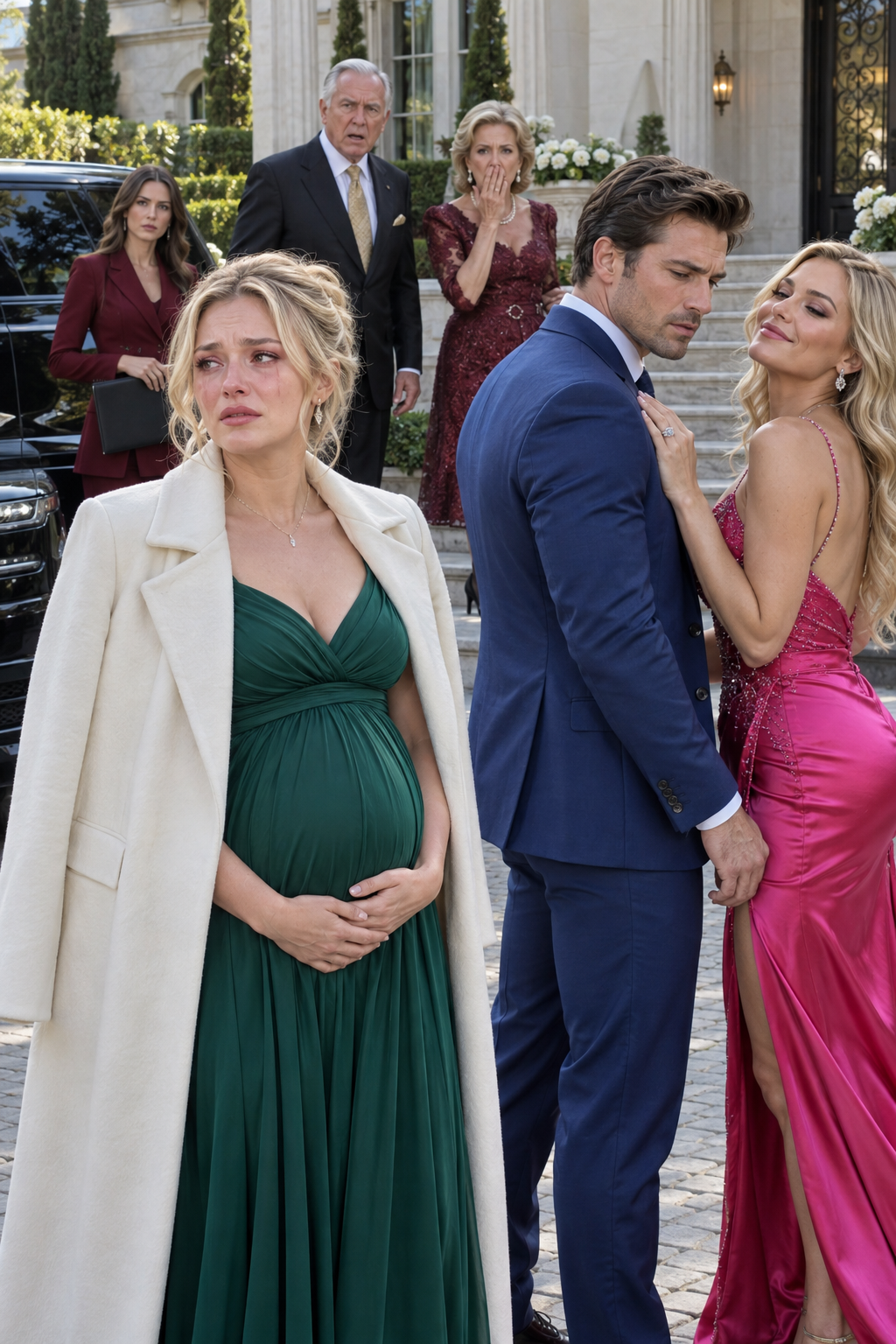
The night I went into labor, my millionaire husband told the hospital to stop calling him because his female best friend needed him more.
“Vanessa is having a crisis, Claire. You’re having a baby. Women do that every day.”
Then he hung up.
Twenty-three minutes later, a nurse rushed into my room and told me my unborn son’s heartbeat was dropping.
I was thirty-seven weeks pregnant.
My blood pressure had climbed to 181 over 112.
And the man who had promised to hold my hand when our child entered the world was sitting beside another woman in a luxury hotel suite.
What Graham Ellis didn’t know was that I had one more number saved in my phone.
A number I had refused to call for almost eleven years.
And the man who answered that call would eventually make my husband understand the difference between being a millionaire and having real power.
But that wasn’t the worst part.
The worst part was discovering that Graham’s decision to abandon me hadn’t started that night.
Someone had been preparing for it for months.
And my baby was the reason.
My name is Claire Hart Ellis.
I was thirty-two years old, married for six years, and eight months into a pregnancy when I finally understood that my husband had stopped seeing me as a person.
To Graham, I had become an obligation.
An appointment on his calendar.
A growing stomach attached to a woman who no longer fit the polished image he wanted to present to the world.
Vanessa Price, on the other hand, fit perfectly.
She was beautiful, confident, and always available.
She knew which investors preferred bourbon, which journalists could be persuaded with exclusive invitations, and which expensive restaurants made people feel important.
She also knew exactly how to look helpless whenever Graham needed a reason to choose her.
For years, I had told myself their relationship was harmless.
They had known each other since college.
They had survived the difficult early days of his company together.
She was his closest friend, his business partner, and the person he trusted with nearly every important decision.
I never asked him to stop being her friend.
I only asked him to remember that I was his wife.
He remembered when it was convenient.
He remembered when investors praised my architectural work.
He remembered when the house needed decorating for a charity fundraiser.
He remembered when his mother needed someone to organize Thanksgiving for twenty-eight relatives.
He remembered when he wanted me smiling beside him in photographs.
He forgot when I needed something in return.
And that night, while my unborn child struggled inside me, he forgot completely.
Three years earlier, Graham had still been the man I thought I had married.
We lived in a modest townhouse in Lincoln Park.
He drove a used BMW with a broken cup holder.
I worked as an architectural preservation consultant, restoring historic buildings and turning neglected properties into places people actually wanted to live.
Our evenings were ordinary.
We ate pasta on the couch.
We argued about whether the kitchen cabinets should be white or dark green.
Sometimes Graham would fall asleep with his head in my lap while I studied renovation drawings.
Back then, he used to say that everything good in his life had begun when he met me.
I believed him.
I helped him evaluate his first serious real estate investment.
An abandoned warehouse near the Chicago River.
Everyone else saw cracked brick, leaking pipes, and a building nobody wanted.
I saw twelve apartments, three commercial spaces, and a courtyard that could become the heart of an entire neighborhood.
Graham borrowed money.
I invested my savings.
We worked weekends stripping old paint and measuring rooms.
Vanessa joined the company as his marketing director.
The first year was difficult.
The second year nearly ruined us.
By the third, the building sold for enough money to turn Graham’s small development business into something investors noticed.
He called me from the closing attorney’s office.
“Baby, we did it.”
I kept that voicemail for years.
Eventually, Parkline Properties grew into a company worth tens of millions.
Graham became a millionaire before his thirty-fifth birthday.
We moved into a limestone mansion in Winnetka, with a heated driveway, a swimming pool, and a kitchen larger than our first apartment.
He bought tailored suits.
He joined private clubs.
He began attending charity dinners where the flowers cost more than our old monthly rent.
Vanessa changed, too.
She started wearing designer clothing, driving a white Porsche, and introducing herself as Parkline’s executive vice president.
She also began treating me like an inconvenient employee.
At first, it was subtle.
She ordered dinner for the three of us without asking what I wanted.
She rearranged seating plans so I ended up beside strangers.
She called Graham after midnight to discuss things that could easily have waited until morning.
Whenever I objected, she smiled.
“Oh, Claire. You know how demanding the business is.”
Graham always defended her.
“She’s under tremendous pressure.”
“She’s been with me since the beginning.”
“Don’t make everything personal.”
But I had been there since the beginning, too.
Apparently, that part was becoming difficult for him to remember.
When I became pregnant, I thought things might change.
We had tried for nearly two years.
There had been fertility appointments, disappointing tests, and one early miscarriage that Graham barely discussed.
When the pregnancy finally continued beyond the first trimester, I cried in the ultrasound room.
Graham kissed my forehead and promised he would never miss another important moment.
For a while, he kept that promise.
He came to appointments.
He assembled the crib.
He spent an entire Sunday arguing with me about whether our son’s room needed dinosaur wallpaper.
Then Vanessa announced that Parkline had an opportunity to acquire a major waterfront development.
The proposed project was called Harbor Point.
Forty-eight luxury residences.
Retail space.
A private marina.
A rooftop restaurant.
The kind of development that could make Graham famous among Chicago’s wealthiest property investors.
There was one problem.
The project required access through a small historic commercial property I owned personally.
A brick building on Weller Street.
My mother had left it to me when she died.
The property wasn’t large, but its existing access rights and position along the proposed development boundary made it valuable.
I had spent years restoring it.
Six small businesses operated there.
A bookstore.
A watch repair shop.
A framing studio.
And an elderly man named Mr. Reynolds who repaired antique radios.
Graham’s investors wanted the building cleared and incorporated into the project.
Not because I wanted to hurt his business.
Because the tenants had long-term leases, the structure was protected by a preservation agreement, and Graham’s proposal would have destroyed everything my mother had worked to keep alive.
“We can design around it,” I told him.
Vanessa laughed during the meeting.
“Design around it? Claire, this is a forty-million-dollar development, not a community art project.”
I looked at the drawings spread across the conference table.
“You can relocate the parking entrance thirty feet east.”
“That would cost another two million.”
“It would preserve the historic structure.”
Graham rubbed his forehead.
“We’ll discuss it at home.”
But at home, he didn’t want to discuss it.
He wanted me to sign.
“It’s just one building, Claire.”
“It isn’t just one building.”
“People are depending on this deal.”
“People are depending on the leases I signed, too.”
His expression hardened.
“Sometimes I wonder whether you actually want me to succeed.”
That was the first time I realized he had begun treating my independence as betrayal.
By my seventh month of pregnancy, Vanessa had become almost a permanent presence in our house.
She arrived without calling.
She used our kitchen.
She borrowed Graham’s car.
She helped herself to the wine cellar.
Once, I came downstairs at eleven at night and found her sitting on the couch with her feet tucked beneath Graham’s thigh.
They were laughing at something on his phone.
When she noticed me, she didn’t move.
“Couldn’t sleep?” she asked.
“Pregnancy must be exhausting.”
“It can be.”
She looked at Graham.
“You really should hire someone to help her. She seems overwhelmed lately.”
I stood there in my robe, one hand supporting my belly.
I wasn’t overwhelmed.
I was watching another woman become comfortable in my marriage.
Graham didn’t notice the difference.
Or he didn’t care.
The final weeks were worse.
Vanessa organized a corporate celebration for the preliminary approval of Harbor Point.
She selected the venue, sent the invitations, arranged the press coverage, and told Graham I shouldn’t attend because standing too long might be uncomfortable.
I went anyway.
Not to prove anything.
I had prepared the original feasibility analysis, and several investors had asked to meet the architect behind Parkline’s early projects.
The event took place in a private ballroom overlooking Lake Michigan.
Gold lighting washed across the ceiling.
Waiters carried champagne.
A string quartet played beside a wall of white roses.
I wore an emerald-green maternity dress and comfortable black shoes.
Graham looked handsome in a navy tuxedo.
For the first twenty minutes, he barely spoke to me.
Then a photographer approached.
“Mr. Ellis, could we get a picture of you and your wife?”
Graham turned.
Before I could step forward, Vanessa slid beside him.
“Oh, we need one of the executive team first.”
She placed her hand on his arm.
The photographer raised the camera.
Graham smiled.
I stood beside an empty chair holding a glass of sparkling water.
A woman I had never met touched my elbow.
“Are you part of the event staff?”
I looked at her.
Then at my husband.
Then back at her.
“No,” I said. “I’m his wife.”
Her face flushed.
“Oh my goodness. I’m sorry.”
I wasn’t angry with her.
She had simply described what the room was showing her.
Later, during dinner, Vanessa approached our table with a stack of papers.
“Graham, I need your signature before tomorrow.”
He signed without reading them.
Then she placed another document in front of me.
“And Claire, this is the access agreement we discussed.”
I recognized the property description immediately.
Weller Street.
My building.
I laid my napkin beside my plate.
“We haven’t reached an agreement.”
Vanessa’s smile tightened.
“Your husband said the issue was settled.”
“He was mistaken.”
Several people at our table became quiet.
Graham leaned toward me.
“Can we not do this tonight?”
“You brought me a legal document during dinner.”
“It’s a simple signature.”
“It transfers permanent development rights.”
Vanessa folded her arms.
“Honestly, Claire, nobody is trying to steal your precious little building.”
I looked directly at her.
“Then nobody should have trouble waiting for my attorney to review it.”
Graham’s jaw tightened.
Vanessa picked up the papers.
“Fine. We’ll handle it another way.”
At the time, I thought she meant negotiating with the city.
I would remember those words later.
Two nights after that dinner, my obstetrician warned me that my blood pressure had risen.
She ordered additional monitoring and told me to go directly to the hospital if I developed severe symptoms.
I wrote down the instructions.
Graham promised to attend the next appointment.
He missed it because Vanessa needed him at a lender meeting.
The following week, I prepared a hospital bag.
Inside were two cotton gowns, a toothbrush, slippers, a phone charger, and a tiny blue outfit with wooden buttons.
I placed the bag beside our bedroom door.
Graham stepped over it three times without asking what it was.
On Thursday evening, I found him getting dressed.
“Where are you going?”
“With whom?”
“Vanessa. A potential investor might join us.”
“Graham, my doctor wants me resting. Could you stay tonight?”
He adjusted his cuff links in the mirror.
“I can’t cancel every business meeting because you’re pregnant.”
“I’ve been having contractions.”
“They’re probably those practice contractions.”
“They’ve been getting stronger.”
He turned toward me.
“Claire, you’re not the first woman to have a baby.”
He picked up his watch.
“Call me if it’s serious.”
Then he left.
At 10:47 p.m., I felt a sharp tightening across my abdomen.
At 11:02, another.
At 11:18, I stood from the bed and felt warm fluid running down my legs.
My water had broken.
I called Graham.
I called again.
I texted him.
My water broke. I’m going to the hospital. Please call me.
Then I called my neighbor, Margaret Lawson.
Margaret was sixty-eight, widowed, and a retired emergency-room nurse.
She arrived in seven minutes wearing sweatpants, a winter coat, and gardening clogs.
She took one look at me and stopped asking questions.
“Where’s the bag?”
“By the stairs.”
“Good. We’re going.”
She drove while I breathed through contractions.
The streets were wet from an earlier rain.
Red traffic lights reflected on the windshield.
My phone sat in my lap.
Graham finally called when we were five minutes from the hospital.
“Claire, what is going on? You sent six messages.”
“My water broke.”
There was a pause.
“Yes, Graham. Now.”
“I’m with Vanessa.”
“She’s having a really difficult night.”
My contraction began before he finished speaking.
I closed my eyes.
When I could breathe again, I asked, “Are you coming?”
He exhaled.
“Can you give me an hour?”
“The contractions are four minutes apart.”
“Vanessa is dealing with something serious.”
“She might have a panic attack.”
I stared at the rain sliding down Margaret’s windshield.
“Graham. Our son is coming.”
“Don’t make me choose.”
Those four words changed something inside me.
Not because I hadn’t suspected what his answer would be.
Because he had finally admitted there was a choice.
And somehow, our child was not the obvious one.
I spoke quietly.
“I’m not making you choose. I’m telling you where your wife is.”
He said nothing.
Then Vanessa’s voice came through the background.
“Graham? Please don’t leave me alone.”
He lowered his voice.
“Claire, I have to go.”
I ended the call.
Margaret reached across the console and squeezed my wrist.
She didn’t tell me everything would be fine.
She didn’t criticize my husband.
She just said, “You’re not alone.”
At the hospital, everything happened quickly.
The admitting nurse took my blood pressure twice.
Her expression changed.
She called another nurse.
A doctor arrived.
Monitors were attached to my belly.
The bright room filled with the soft, repetitive sounds of medical equipment.
I heard my son’s heartbeat.
Then slower.
Then faster again.
A nurse named Sofia adjusted the monitor.
“Claire, we’re going to keep a close eye on both of you.”
I asked whether something was wrong.
She answered carefully.
“Your blood pressure is dangerously high, and your baby’s heart rate has shown some changes. We want to move quickly and safely.”
I signed consent forms.
I called Graham once more.
He answered on the fourth ring.
“What’s wrong now?”
“They’re talking about an emergency C-section.”
“Claire, I’m trying to deal with Vanessa.”
I could hear music behind him.
Not ambulance sirens.
Not hospital sounds.
“What kind of emergency is she having?” I asked.
“She doesn’t want me discussing her private situation.”
“Is she in a hospital?”
“Has she seen a doctor?”
“Claire, stop interrogating me.”
The doctor entered.
My blood pressure monitor beeped.
I looked at the phone.
“Graham, they think the baby may be in trouble.”
He sounded irritated.
“Then listen to the doctors.”
Then the sentence I would never forget.
“Vanessa needs me. You have an entire hospital taking care of you.”
He hung up.
I looked at the dark screen.
Something inside me became very still.
I had spent years trying to explain why his behavior hurt me.
Trying to find the perfect words.
Trying to become easier to love.
Now there was nothing left to explain.
I opened my contacts.
Scrolled past Graham.
Past our family attorney.
Past several names I hadn’t used in years.
Then stopped at one.
Daniel Whitmore.
The man whose name appeared on skyscrapers, medical research centers, and financial publications across America.
The man who had spent decades building a fortune measured in billions.
And the man I had deliberately kept outside my marriage.
My thumb hovered over the number.
For eleven years, I had refused his attempts to become part of my life.
Not because he had been cruel to me.
Because he had been absent when it mattered.
My mother, Eleanor Hart, had raised me in a small apartment above a bookstore.
She worked as an art conservator.
We didn’t have much money.
But there were always fresh flowers in a chipped ceramic pitcher on the kitchen table.
There were always books.
There was always enough food.
And there was always my mother telling me that dignity was something nobody could buy for me.
She never spoke bitterly about my father.
She told me he had made complicated choices when I was young.
She told me that whatever happened between adults was not a child’s responsibility.
When I was seventeen, she died in a highway accident.
Daniel appeared at her funeral.
He wore a dark coat and stood beneath an umbrella near the cemetery gate.
I recognized him immediately.
His face had been on magazine covers.
I walked past him.
He said my name.
I kept walking.
Later, he sent letters.
I returned most of them unopened.
He offered to pay for college.
He offered me a job.
I refused that, too.
Over the years, his assistants occasionally contacted me.
I never asked for money.
I never mentioned him to reporters.
I built my own career.
When I married Graham, I told him my father had never been part of my life.
That was true.
He didn’t ask for a name.
At that point, Graham loved the woman I was, not the family I came from.
Or so I believed.
Six months before the baby was born, Daniel sent another letter.
This time, he wrote it himself.
His handwriting was uneven.
He told me he had undergone heart surgery.
He wasn’t asking for forgiveness.
He simply wanted to meet his grandchild someday, if I was willing.
I read that letter three times.
Then I called him.
We met privately at a small restaurant in downtown Chicago.
He looked older than I remembered.
His hair was almost entirely silver.
He asked about my mother.
He listened while I explained how much his absence had cost us.
He didn’t interrupt.
And for the first time, he didn’t defend himself.
“I failed you,” he said.
I had spent years imagining that conversation.
When it finally happened, I didn’t feel victorious.
I felt tired.
But I agreed to meet him again.
Twice more.
Graham knew I had been reconnecting with my estranged father.
He never asked much about it.
By then, anything that didn’t involve Harbor Point seemed unimportant to him.
I looked at Daniel’s number on my hospital screen.
Then I called.
He answered after two rings.
His voice was alert.
That single word nearly broke me.
I hadn’t used it in years.
“Claire, what’s happened?”
“I’m at Lakeshore Women’s Hospital.”
“Are you hurt?”
“I’m having the baby.”
A chair scraped in the background.
“Where’s Graham?”
I swallowed.
“He isn’t coming.”
Then my father said, “What room are you in?”
I told him.
“I’ll be there.”
“Dad, they’re taking me into surgery.”
His breathing changed.
“Listen to me, sweetheart. You listen to your doctors. I’ll come as fast as I can.”
I closed my eyes.
“I’m scared.”
His voice softened.
There was a pause.
Then he said, “I missed too many moments of your life. I’m not missing this one.”
The nurse returned.
I handed her my phone.
“Please tell him which entrance to use.”
Then she helped me prepare for surgery.
I remember the cold operating room.
The gentle pressure of someone’s hand against my shoulder.
A masked anesthesiologist asking me to take slow breaths.
I remember thinking about the tiny blue outfit waiting in my hospital bag.
I remember wondering whether my son would ever know how much I had wanted him.
Then I heard someone say my name.
Sofia was beside me.
“We’re almost ready.”
“Is my baby okay?”
“We’re doing everything we can.”
The minutes became strange.
I could hear voices, but they sounded far away.
Someone asked for an instrument.
Someone checked a monitor.
I concentrated on breathing.
Then, suddenly, I heard a cry.
I started crying before anyone told me he was safe.
A doctor leaned toward me.
“Claire, you have a beautiful baby boy.”
I tried to speak.
No sound came out.
“He needs some monitoring, but he’s breathing on his own.”
A nurse brought him close enough for me to see his face.
Red cheeks.
Tiny closed fists.
He looked furious at the entire world.
I smiled through my tears.
“Hi, sweetheart.”
His mouth opened.
He made the smallest sound.
And in that moment, nothing Graham had done could take away what I felt.
My son was here.
Mine to love.
They took him for observation.
I drifted between exhaustion and relief.
When I woke again, I was in recovery.
The clock read a.m.
A nurse stood near the doorway.
And sitting in the chair beside my bed was Daniel Whitmore.
He wore dark trousers, a wrinkled white shirt, and a charcoal overcoat thrown across his knees.
His tie was missing.
His silver hair looked as if he had run his hands through it a hundred times.
He stood the moment he saw my eyes open.
I tried to smile.
“You came.”
He looked at me with an expression I had never seen on his face.
Something almost like disbelief.
“Of course I came.”
He took my hand.
His fingers were warm.
“How’s the baby?” I whispered.
“Beautiful. The nurses say he’s doing well, though they want to keep watching him.”
I let out a slow breath.
“Did you see him?”
Daniel nodded.
“Through the nursery window.”
His voice shook.
“He has your mother’s nose.”
I closed my eyes.
For a moment, I could almost smell my mother’s lavender hand cream.
“What time did you get here?”
“Before three.”
“You didn’t have to stay awake.”
He shook his head.
“Claire, there is nowhere else on earth I would rather be.”
I turned my face toward the window.
The sky outside was beginning to lighten.
My husband hadn’t come.
But my father had.
And somehow, the man I had spent eleven years refusing to trust was sitting exactly where my husband should have been.
At that morning, Graham finally texted.
How did everything go?
I read the message twice.
Not Are you okay?
Not Is the baby alive?
Not I’m sorry I wasn’t there.
How did everything go?
I placed the phone facedown.
Daniel noticed.
“Do you want me to call him?”
He studied my face.
“Are you sure?”
“I’m sure.”
That surprised him.
It surprised me a little, too.
But somewhere between the operating room and the recovery ward, I had stopped waiting for Graham to become the person I needed.
At nine, a nurse brought my son to my room.
His blood sugar had stabilized.
His breathing was normal.
They would continue monitoring him, but he could stay beside me for a while.
I held him carefully.
He weighed six pounds, eight ounces.
His fingers curled around mine.
A soft blue hospital cap covered his hair.
Daniel stood near the window, giving us space.
“Would you like to hold him?” I asked.
For the first time since arriving, he looked genuinely uncertain.
“He’s your grandson.”
Daniel approached as if someone had handed him a priceless painting.
I showed him how to support the baby’s head.
He sat in the chair.
For several seconds, he simply stared.
Then he whispered, “Hello, little man.”
My son opened one eye.
Daniel laughed softly.
“Already suspicious of me. Runs in the family.”
I couldn’t help smiling.
“What are you naming him?” Daniel asked.
I looked at the little face resting against his chest.
Daniel repeated it.
“My mother always loved that name.”
He grew quiet.
I studied him.
“You remember?”
“She told me once, a very long time ago.”
He looked down at the baby.
“Noah Hart Ellis?”
I hesitated.
“Just Noah Hart, for now. I haven’t submitted the final birth certificate information.”
Daniel didn’t ask why.
He didn’t try to persuade me.
He simply touched Noah’s tiny hand.
“You have time to decide.”
At eleven thirty, Graham walked into my room carrying an expensive stuffed bear.
He wore the same suit from the night before.
His hair was perfectly styled.
He smelled faintly of cologne and hotel soap.
He paused in the doorway when he saw Daniel.
I looked up.
“Hello, Graham.”
He glanced at the bassinet.
Then at my father.
Then back at me.
“Who is this?”
Daniel stood.
“Daniel Whitmore.”
Graham stared.
For a moment, his face went blank.
Then his eyes widened.
“Daniel Whitmore?”
My father extended his hand.
Graham shook it automatically.
The color drained from his face.
“As in Whitmore Global?”
“The Whitmore Foundation?”
Graham looked at me.
“Claire, what’s going on?”
I adjusted the blanket around Noah.
“This is my father.”
The silence that followed was almost physical.
Graham opened his mouth.
Then laughed once.
Not because something was funny.
Because his mind couldn’t accept what he had heard.
“Your father?”
He looked at Daniel again.
“You’re telling me that Daniel Whitmore is your father?”
“That’s what I said.”
“But your last name is Hart.”
“My mother’s name was Hart.”
“Claire, you told me your father was gone.”
“I told you he wasn’t part of my life.”
Graham stared at me.
Then at Daniel’s watch.
Then at the newborn beside my bed.
I knew exactly when the calculation began.
Daniel Whitmore was worth an estimated eight billion dollars.
He owned investment firms, infrastructure companies, technology holdings, and private real estate funds across three continents.
His charitable foundation funded hospitals and medical research.
His name opened doors Graham had spent years trying to enter.
And his only known living child was lying in a hospital bed recovering from surgery.
With a newborn son.
Graham slowly lowered the stuffed bear.
“Why didn’t you tell me?”
I looked at him.
“Why weren’t you here?”
His face tightened.
“Claire, don’t do that.”
“Turn this into an argument.”
I looked at the bassinet.
“Our son was born at this morning.”
“No. You didn’t know. You didn’t ask until almost four hours later.”
“I had a situation.”
“How is she?”
He blinked.
“You missed your son’s birth because Vanessa needed you. I’m asking whether she’s okay.”
He glanced at Daniel.
“She had a serious emotional episode.”
“Did she go to the hospital?”
“Did she need emergency treatment?”
“Not exactly.”
“Then I’m glad she’s all right.”
He stared at me.
I could tell he didn’t know how to respond to calmness.
He had prepared himself for tears.
Accusations.
A scene he could describe later as postpartum hormones.
Instead, I reached for a glass of water.
Graham stepped closer.
“Claire, I didn’t realize things were that serious.”
“I told you the doctor was preparing for emergency surgery.”
“You were upset.”
“I was in labor.”
“You have to understand—”
“No,” I said quietly. “I don’t.”
Daniel remained near the window.
He didn’t interrupt.
Graham looked at him.
“Mr. Whitmore, I’m sure this sounds worse than it was.”
My father studied him.
“Your wife underwent emergency surgery while you were elsewhere?”
Graham cleared his throat.
“Yes, but—”
“And your son required immediate medical monitoring?”
“And you were aware she was at the hospital?”
Graham swallowed.
Daniel nodded once.
“Then I understand the situation.”
His voice was so quiet that Graham seemed almost relieved.
Until my father added, “I simply don’t understand your decision.”
Graham’s expression changed.
“Sir, I have enormous respect for you, but this is between my wife and me.”
“Then perhaps you should speak to your wife.”
I almost smiled.
Graham turned to me.
“Can we talk privately?”
I looked at Daniel.
“Dad, would you mind stepping outside for a few minutes?”
“Of course.”
He kissed my forehead.
Then he left.
Graham waited until the door closed.
His entire manner changed.
He pulled a chair beside the bed.
“Claire, why didn’t you tell me you were Daniel Whitmore’s daughter?”
I stared at him.
“That is your first question?”
“It’s a pretty significant detail.”
“Our baby was born twelve hours ago.”
“I know, and I’m thrilled.”
He leaned forward.
“Of course I am.”
“Then ask me about him.”
His mouth tightened.
“Ask me whether he’s healthy. Ask me how much he weighs. Ask me whether he has all his fingers and toes.”
Graham looked toward the bassinet.
“Is he healthy?”
I felt something break inside me.
Not loudly.
Not dramatically.
Just a clean, final crack.
“He is now.”
Graham reached toward the blanket.
I didn’t stop him.
Noah was his son.
Whatever happened between us, that fact mattered.
But when Graham lifted the baby, his phone vibrated.
He glanced at the screen.
He turned the phone over.
Then it vibrated again.
“She doesn’t know what’s happening.”
I looked at him.
“What is happening?”
“Your father being here. This changes things.”
“What things?”
“The company. Harbor Point. Our future.”
There it was.
Not even twenty-four hours after abandoning me in labor, my husband had discovered my connection to billions of dollars.
And the first future he imagined involved his business.
Not our child.
I held out my arms.
“Give me Noah.”
Graham hesitated.
He handed me the baby.
Then he said something I would remember for the rest of my life.
“You should have trusted me with this.”
I looked down at Noah’s sleeping face.
“Trust isn’t information, Graham. It’s behavior.”
“Are you saying you don’t trust me?”
I raised my eyes.
“I’m saying last night answered that question.”
He left twenty minutes later.
He said he needed to make some calls.
I didn’t ask whom.
I already knew.
That afternoon, my attorney arrived.
Rebecca Shaw had been my friend since graduate school.
She was forty-one, practical, and one of the best real estate attorneys I knew.
She wore a charcoal suit and carried a leather briefcase that looked older than most of Graham’s employees.
When she entered, she hugged me carefully.
“First, congratulations.”
“Thank you.”
She studied Noah.
“He looks like he’s already disappointed in everyone.”
“He gets that from me.”
Rebecca smiled.
Then she closed the door.
“Now tell me why you asked me to bring the corporate files.”
I handed her my phone.
On the screen was an email Graham had sent while I was sleeping.
Subject: Harbor Point Access Authorization.
Attached was a revised agreement.
The message read:
Claire, given the change in circumstances, we need to stop fighting over Weller Street. I’ve told Vanessa to move forward with the investor package. Please confirm your approval by Friday. Dad can probably help us resolve the financing issue now.
Rebecca read it.
Then read it again.
“Did you authorize any transfer?”
“Did you sign an agreement?”
“Did you authorize Graham to tell investors he controlled the property?”
She opened her laptop.
“Why good?”
“Because yesterday, Parkline’s outside counsel requested a title review that described your property as a committed development asset.”
I stared at her.
“Committed?”
“That’s the word they used.”
I adjusted Noah against my shoulder.
“But they don’t own it.”
“Then how can they say that?”
Rebecca looked at me.
“That’s what we’re going to find out.”
I explained the gala.
Vanessa’s papers.
Graham’s insistence.
The comments about my building.
Rebecca wrote everything down.
Then she asked, “Does Graham still have access to your personal email?”
I thought for a moment.
“We used to share an iPad.”
“Where is it?”
“At the house.”
“Does it have your saved passwords?”
“Possibly.”
Rebecca’s pen stopped.
“Claire, I want you to change every password connected to your property holdings. Email, document storage, digital signatures, banking access. Everything.”
Before sunset, we had also sent written notice to Parkline’s attorney and the relevant title company that I had not approved the proposed transfer and that no one had authority to sign for me.
Rebecca contacted my insurance company and the property manager.
She arranged for a record review to identify any unexpected filings.
No dramatic speeches.
No threats.
Just documents.
And a clear paper trail.
By evening, I felt more in control than I had in months.
Then Graham called.
“Claire, what did you do?”
I looked at the baby sleeping beside me.
“What do you mean?”
“Vanessa says someone sent our attorney a legal notice.”
“Rebecca sent a letter confirming that I haven’t authorized the Weller Street transfer.”
“Do you realize how bad that looks?”
“Better than a false representation to investors.”
He went silent.
Then he lowered his voice.
“Are you trying to embarrass me in front of your father?”
“My father had nothing to do with it.”
“Come on, Claire. I’m not stupid.”
I looked out at the hospital parking lot.
“No, Graham. You’re not.”
That was the problem.
He knew exactly what he was doing.
He simply hadn’t expected me to stop cooperating.
Two days later, a small envelope arrived at the hospital.
There was no return address.
Inside was a printed photograph.
Graham and Vanessa sat at a candlelit restaurant table.
Her hand rested against his cheek.
He was leaning toward her.
The photograph carried a timestamp.
The same hour I had been begging him to come to the hospital.
On the back, someone had written:
Ask him what emergency required a bottle of champagne.
I studied the image.
Vanessa wore a black evening dress.
Her hair fell over one shoulder.
A silver ice bucket stood beside the table.
There was no medical equipment.
No sign of distress.
Just two people smiling across an expensive dinner.
I didn’t cry.
I placed the photograph in a folder and called Rebecca.
“Can you find out where this came from?”
“I can try. Don’t assume the timestamp or circumstances are authentic until we verify them.”
“Do you want to confront him?”
“Because he’s had enough opportunities to tell me the truth.”
Rebecca was quiet.
Then she said, “I’ll come by this afternoon.”
That evening, Graham appeared again.
He brought flowers.
White roses.
Vanessa’s favorite.
I looked at them.
“Thank you.”
He seemed encouraged.
“I thought we could start over.”
“Start what over?”
He placed the flowers beside the window.
“Claire, the last few days have been emotional.”
“For me, certainly.”
He pulled up a chair.
“I’ve been thinking.”
“We have a son now. We can’t keep fighting.”
Relief spread across his face.
“So you’ll come home?”
“Noah and I won’t be returning to the house right now.”
“Where are you going?”
“I’ve arranged somewhere safe to recover.”
“With your father?”
His eyes narrowed.
“You’re planning to take my son away from me?”
“No. I’m arranging my recovery after surgery. Your relationship with Noah is a separate matter, and we’ll make appropriate arrangements.”
Graham rubbed his jaw.
“Claire, this is ridiculous.”
I reached into the bedside drawer and removed the photograph.
Then I placed it on the table.
His eyes dropped.
For a second, he didn’t move.
“Where did you get that?”
“Does it matter?”
He picked it up.
“That isn’t what it looks like.”
“What does it look like?”
He studied the photograph.
“Vanessa was having a terrible night.”
“At a restaurant?”
“We went there because she needed privacy.”
“With champagne?”
“She wasn’t drinking.”
“Was she having a medical emergency?”
“Was she in danger?”
“She was upset.”
“Did you know I was being prepared for surgery?”
He looked away.
“Did you know?”
“Then we’re finished discussing that night.”
He leaned forward.
“You can’t just throw away six years of marriage over one mistake.”
I studied his face.
“One mistake?”
“Fine. Several mistakes.”
I almost laughed.
He hadn’t apologized for abandoning me.
He hadn’t acknowledged the months of humiliation.
He hadn’t even asked whether the surgery had left me in pain.
He wanted the problem resolved because he had suddenly discovered my father’s last name.
“Graham, I’m going to ask you one question.”
“If my father were a retired schoolteacher with twenty thousand dollars in savings, would you be sitting here asking me to come home?”
His expression changed.
“That’s insulting.”
“Answer it.”
“Of course I would.”
I watched him.
He glanced toward my phone.
Then the flowers.
Then the photograph.
“Claire, you’re not thinking clearly.”
There it was again.
The explanation he used whenever my decisions inconvenienced him.
Pregnancy hormones.
Exhaustion.
He had spent months training everyone around us to believe that my judgment was unreliable.
Now he wanted to use the same explanation to bring me back.
I reached for the call button.
Graham stood.
“You’re seriously asking me to leave?”
“I’m your husband.”
“And I’m recovering from major surgery.”
His face reddened.
“You’re making a huge mistake.”
I looked at him.
“No, Graham. I think I’ve finally stopped making the same one.”
After he left, Sofia returned.
She noticed the untouched flowers.
“Would you like me to put those somewhere?”
“Yes, please.”
I smiled faintly.
“Anywhere I don’t have to look at them.”
Three days after Noah’s birth, Daniel invited me to breakfast in a private hospital family room.
He arrived carrying two paper bags.
One contained oatmeal, fruit, and a warm cinnamon roll from a bakery I loved.
The other held a small wooden music box.
It was old.
The varnish had worn away along the corners.
I recognized it immediately.
“My mother’s?”
Daniel nodded.
“She left it with me years ago. I should have given it to you sooner.”
I opened the lid.
A delicate melody began playing.
I remembered the music from childhood.
My mother used to wind the box while I sat beside her at the kitchen table.
I touched the faded wood.
“Why do you still have it?”
Daniel looked down.
“Because I couldn’t keep much of what mattered.”
We sat quietly.
Finally, he said, “Claire, I need to tell you something.”
I closed the lid.
“I’ve revised my estate planning.”
“Please hear me out.”
“Before you contacted me, I had already established a family trust for you. You refused financial assistance when you were younger, and I respected that. The trust remained in place, but nothing required you to accept distributions.”
“I know you mentioned something about that.”
He looked toward Noah sleeping in his portable bassinet.
“When you told me you were pregnant, I asked my attorneys to prepare provisions for any future grandchildren.”
“Dad, I don’t want—”
“This isn’t about buying your affection.”
His voice was gentle but firm.
“It’s about acknowledging my family.”
I studied him.
He continued.
“The trust now includes a separate irrevocable fund for Noah. It will be administered by independent trustees, with protections while he’s a minor. You’ll receive the details, and your own attorney can review everything before you agree to any role.”
I looked down at my son.
“How much?”
Daniel hesitated.
“Initially, one hundred and twenty million dollars in assets. There will also be a defined future inheritance interest under my estate plan.”
My hand tightened around the music box.
“One hundred and twenty million?”
“His welfare and education are fully provided for. The rest is structured for adulthood, with safeguards.”
I stared at him.
“Dad, he’s four days old.”
“He doesn’t even know how to hold his head up.”
Daniel smiled.
“Then he has plenty of time to learn.”
I didn’t smile back.
“Do you understand what this could do to his life?”
My father grew serious.
“Yes. That’s why the trust isn’t supposed to become public.”
I thought of Graham.
The people who suddenly wanted to know my father’s name.
“Money changes people,” I said.
Daniel looked at me.
“It reveals some of them.”
I let that settle.
Then I asked, “Does Graham know?”
My father watched me.
“Claire, I have no intention of interfering with your decisions about your marriage. But I need you to understand that you and Noah are not dependent on that man.”
I ran my thumb across the worn edge of the music box.
“I was never dependent on him.”
Daniel nodded.
“I know. I think he’s the one who forgot.”
A week later, the story became public.
Not because I wanted publicity.
Because someone sent an anonymous tip to a celebrity gossip website.
The headline appeared at on a Tuesday morning.
CHICAGO DEVELOPER’S WIFE REVEALED AS SECRET DAUGHTER OF BILLIONAIRE DANIEL WHITMORE.
The article included photographs from our wedding.
A picture of Graham at a charity event.
An old image of Daniel beside a private jet.
It described me as a previously unknown Whitmore heiress.
It speculated about my marriage.
It mentioned our newborn child.
By lunchtime, Graham had received more than forty messages from investors, acquaintances, and people who had never shown the slightest interest in our lives.
He called me eleven times.
I answered the twelfth.
“Claire, this is unbelievable.”
I shifted Noah against my shoulder.
“Your father is worth billions, and we’ve been married for six years.”
“Do you understand what people are saying?”
“No. And I don’t intend to read it.”
“Somebody leaked it.”
“I assumed so.”
He lowered his voice.
“Was it your father?”
“Then who?”
“I don’t know.”
Then he said, “Vanessa thinks it could actually help us.”
I closed my eyes.
Of course she did.
“Help us how?”
“The Harbor Point financing. Investors are suddenly calling back.”
“My father’s finances have nothing to do with your company.”
“Claire, don’t be naive.”
I adjusted the phone.
“Graham, I’m going to say this once. Neither my father nor Noah’s trust is available to finance Harbor Point.”
He went quiet.
“What trust?”
I stopped moving.
“You said Noah’s trust.”
I looked toward the kitchen doorway.
Rebecca was sitting at the table reviewing documents.
She raised her eyes.
I took a breath.
“That’s private family business.”
Graham’s voice changed.
“Claire. What trust?”
“I won’t discuss it over the phone.”
“Is your father leaving money to our son?”
“His estate planning is his business.”
“Our son,” Graham repeated.
I felt something cold move through my chest.
He wasn’t asking because he was concerned about Noah’s future.
He was asking because he had heard a word that sounded like access.
“Graham, I need to feed the baby.”
I ended the call.
Rebecca watched me.
“He heard about the trust?”
She closed the file.
“Then we should prepare for him to become interested in more than visitation.”
She was right.
By Friday, Graham had requested copies of every financial document connected to my family.
His attorney sent Rebecca a letter asking whether any trusts established during the marriage might constitute marital property.
Rebecca responded with the applicable legal distinctions and requested an explanation for the unusually broad demand.
Graham’s attorney narrowed the request.
Then Graham called again.
This time, his voice was gentle.
“Claire, I’m worried you’re letting your father turn us against each other.”
I stared at the phone.
“My father wasn’t in the hotel suite, Graham.”
“He doesn’t understand what Vanessa means to me.”
“I understand perfectly.”
“No, you don’t. She’s been my best friend for fifteen years.”
“And I’ve been your wife for six.”
“Friendships matter, too.”
“Of course they do.”
“Then why are you acting like I committed some unforgivable crime?”
I looked at Noah sleeping in my arms.
“Because when our son entered the world, you were somewhere else by choice.”
There was a long silence.
Finally, Graham said, “You don’t know how hard that night was for Vanessa.”
I almost asked him whether he knew how hard that night had been for me.
But there was no point.
Instead, I said, “I hope she’s getting the help she needs.”
Then I hung up.
The following Monday, Rebecca came to my rented townhouse with an expression that made me set down my coffee.
We had moved into a quiet furnished property overlooking a small park.
Daniel had offered me one of his homes.
I declined.
I wanted somewhere that belonged to my decisions.
The townhouse wasn’t glamorous.
The kitchen was narrow.
The living room had ordinary furniture.
But the windows faced morning sunlight, and nobody entered without being invited.
Rebecca placed a folder on the table.
“We found something.”
I handed Noah to Margaret, who had agreed to help me during recovery, and sat down.
Rebecca opened the folder.
Inside was a copy of a document titled:
Weller Street Property Development Authorization.
My name appeared on the final page.
Claire Hart Ellis.
Beneath it was a digital signature.
“I didn’t sign that.”
“Where did you get it?”
“From the title company’s production of records after we challenged the transaction.”
I looked at the date.
Three weeks before Noah’s birth.
The night Vanessa had attended dinner at our house.
The night Graham and I had argued about the building.
The night I had gone upstairs early because my feet were swollen.
“The signature was applied electronically,” Rebecca said. “The audit trail shows it came from an authenticated session associated with your old tablet.”
I felt the blood drain from my face.
“The iPad at the house.”
I looked closer.
There was a second name in the document history.
Vanessa Price.
Not as a signer.
As the person who uploaded the document for processing.
I sat back.
“Can she claim I authorized it?”
“She can claim a lot of things. But she has to support them.”
“What do we do?”
“We preserve the evidence. We notify the appropriate parties. And we keep your statements factual.”
I studied the signature.
It looked like mine.
The curve of the C.
The long line beneath the last name.
But something was wrong.
I enlarged the image.
The signature appeared slightly compressed.
Then I recognized it.
“That came from my old design contract.”
Rebecca leaned closer.
“Four years ago, I signed a licensing agreement for the Riverstone restoration project. Graham asked me to send him a scanned copy because he wanted to show investors.”
I pulled up an archived folder on my laptop.
Found the document.
There it was.
The same signature.
Even the tiny break in the final stroke caused by a pen running out of ink.
Rebecca stared at both screens.
I looked at her.
“They copied it.”
She nodded slowly.
I felt strangely calm.
For weeks, Graham had accused me of being emotional.
Distrustful.
Now I was looking at evidence that someone had tried to authorize the use of my property without my consent.
There was nothing emotional about that.
Rebecca began making copies.
I looked down at the date again.
Then another thought occurred to me.
“Rebecca, why did they need the agreement so quickly?”
She looked up.
“Because the investors were preparing to close the next financing round.”
I shook my head.
“Why that night?”
She waited.
“Graham had told me the Harbor Point agreement could wait until after the baby was born. He said there was no immediate deadline.”
Rebecca glanced at the document.
“Perhaps there was one he didn’t tell you about.”
I opened my email.
Found an older message from Vanessa.
Subject: Preliminary Closing Timeline.
Attached was a spreadsheet.
I searched for the date.
Then I found it.
A financing milestone.
Thirty days before the expected delivery date.
Failure to confirm site control would require Parkline to return several million dollars in investor deposits or obtain an extension.
I looked at Rebecca.
“They were running out of time.”
She nodded.
“And someone decided your consent was easier to manufacture than obtain.”
The immediate legal consequences were not cinematic.
No police cars arrived at Vanessa’s office that afternoon.
No billionaire security team stormed Parkline’s headquarters.
Rebecca did something more useful.
She filed the necessary civil papers challenging the authorization.
She notified the lender and title insurer.
She submitted evidence preserving the original signature source and the digital audit records.
And she made it clear that any attempt to rely on the disputed agreement would be contested.
Within forty-eight hours, the lender suspended the relevant portion of the financing review.
Graham called me at a.m.
“What have you done?”
I was feeding Noah.
“Good morning.”
“Don’t play games, Claire.”
“The bank has frozen our development funds.”
“The bank is reviewing a disputed authorization.”
“You know what this could cost?”
“You could destroy the company.”
I burped Noah gently.
“Then perhaps the company shouldn’t have used a signature I never gave.”
Then Graham said, “Vanessa told me you approved it verbally.”
I closed my eyes.
“Did you hear me approve it?”
“Did I sign anything in front of you?”
“Did I email you approval?”
“Then why did you tell the bank I had agreed?”
His breathing grew louder.
“Because she’s never lied to me.”
I looked down at our son.
“There is a first time for everything.”
He didn’t answer.
I ended the call.
That afternoon, Vanessa arrived at my townhouse.
She wore a cream-colored pantsuit, oversized sunglasses, and a handbag worth more than my first car.
She rang the doorbell three times.
Margaret opened it.
Vanessa looked past her.
“I’m here to see Claire.”
Margaret didn’t move.
“Does she know you’re coming?”
“Of course.”
I stepped into the hallway.
“No, I don’t.”
Vanessa smiled.
“Claire. There you are.”
“What do you want?”
She glanced at Margaret.
“Can we talk privately?”
Her smile disappeared.
“This is between us.”
“Then you can say it in front of a witness.”
She removed her sunglasses.
For a moment, neither of us spoke.
Then Vanessa sighed.
“Look, Graham is devastated.”
“The bank is threatening to pull funding. His employees could lose their jobs. People have mortgages, Claire.”
I folded my arms.
“Then whoever submitted that document should explain what happened.”
Vanessa looked at me.
“You’re making accusations.”
“I haven’t accused you of anything. I asked a question.”
She laughed without humor.
“God, you’ve always been like this.”
“Like what?”
“Quiet. Judgmental. Acting as if you’re better than everyone else.”
I studied her.
She stepped closer.
“Graham built something extraordinary. And you sit there in your little moral universe, refusing to help because you don’t like the way things turned out.”
“My property isn’t your financing solution.”
Her jaw tightened.
“You think your father’s money makes you untouchable now?”
“Then why are you behaving like it?”
I looked directly into her eyes.
“Because I don’t need your permission to protect what belongs to me.”
She stared.
The expression she wore wasn’t anger exactly.
It was the look of someone discovering that a door she had always pushed open was suddenly locked.
Then she changed tactics.
“Claire, I know what you think about Graham and me.”
“You think I want your husband.”
I said nothing.
She smiled faintly.
“That’s almost flattering.”
“Graham and I have been through things you wouldn’t understand. We built this company together. We survived nights when we didn’t know whether payroll would clear. We worked while you were busy saving old buildings and playing house.”
Her voice sharpened.
“I know him better than you do.”
I looked at her for a long moment.
Then I said, “That may be true.”
She blinked.
I continued.
“You know which buttons to push. You know what makes him feel important. You know how to turn his insecurities into decisions that benefit you.”
Her face hardened.
“But you made one mistake, Vanessa.”
She tilted her head.
“What mistake?”
“You thought knowing his weaknesses meant you understood mine.”
For the first time, she had no immediate answer.
I stepped toward the door.
“This conversation is over.”
She lowered her voice.
“You have no idea what you’re risking.”
“Is that a threat?”
Her expression changed.
“It’s a warning about the business.”
“Then put it in writing.”
Margaret opened the door wider.
Vanessa stared at me.
Then she left.
I watched her white Porsche disappear around the corner.
My hands were steady.
But I felt a familiar instinct urging me to call Graham and explain everything.
To make sure he understood.
To prevent Vanessa from telling him another version.
I resisted.
For six years, I had spent too much time defending myself against conversations I hadn’t been allowed to hear.
I wasn’t doing it anymore.
Two days later, Daniel visited the townhouse.
He brought groceries instead of gifts.
Fresh peaches.
A bag of coffee from the little shop my mother loved.
He stood awkwardly in the kitchen while Margaret showed him where to put everything.
Then he washed his hands and asked whether he could hold Noah.
I watched them from the doorway.
Daniel sat on the sofa.
Noah slept against his chest.
For nearly an hour, my father spoke quietly to him about ordinary things.
The first snowfall.
How to tell whether peaches were ripe.
I listened from the kitchen.
This was a man who could buy entire companies before lunch.
Yet he looked happiest explaining to a sleeping newborn why the Chicago Cubs were worth supporting even when they broke your heart.
Later, while Noah napped, Daniel asked about Graham.
I explained the disputed documents.
The visit from Vanessa.
His face grew serious.
“Do you want my attorneys involved?”
“Rebecca is handling it.”
“I know she’s excellent.”
“Then let her work.”
I expected him to push.
Instead, he said, “All right.”
I poured tea.
My father watched me.
“Your mother would have been proud of how you’re handling this.”
I looked down.
“You don’t know that.”
“No,” he admitted. “I don’t.”
He took a slow breath.
“But I know she never let anyone frighten her into surrendering something she believed was right.”
I smiled sadly.
“That part sounds like her.”
Daniel studied his cup.
“I wish I’d been better to her.”
I didn’t answer.
After a while, he said, “There is something I never explained about why I wasn’t there.”
I looked at him.
He shook his head.
“Not today. I don’t want to put that weight on you while you’re recovering.”
I considered pressing him.
But Noah began crying upstairs.
The moment passed.
I didn’t know then how much I would regret letting it pass.
Three weeks after the birth, Graham’s mother called.
Patricia Ellis was the kind of woman who wrote handwritten thank-you cards and remembered everyone’s birthday.
She had never been unkind to me.
But she had spent Graham’s entire life excusing his behavior.
“Sweetheart,” she began, “I’m worried about the family.”
“Graham is miserable.”
I looked toward the bassinet.
“Has he told you why?”
“He says your father has become involved.”
“My father helped me while I was in the hospital.”
“Yes, but now lawyers are involved, and the business is suffering.”
“The business is suffering because someone submitted a disputed property authorization.”
She sighed.
“Claire, marriages require forgiveness.”
“They also require honesty.”
“Of course.”
“And responsibility.”
“And showing up when your wife is having emergency surgery.”
Patricia went quiet.
After a moment, she said, “Graham made a terrible mistake.”
I looked at the ceiling.
“He made a decision.”
“He loves you.”
“Then he needs to learn that love is something you do.”
She began crying softly.
I hated hearing it.
I had loved Patricia.
But I couldn’t rescue her from her son’s choices any more than I could rescue him.
“I hope he gets the help he needs,” I said.
She sniffed.
“What about Noah?”
“Graham can arrange appropriate visits. I’ve never said otherwise.”
Patricia sounded relieved.
“Could I see him?”
“Of course.”
She arrived the following Sunday.
I expected judgment.
Instead, she stood in the doorway holding a tiny knitted blanket.
Her eyes filled when she saw Noah.
“He looks just like Graham did as a baby.”
“He has Graham’s chin.”
She held him for nearly forty minutes.
Then she looked at me.
“Claire, I owe you an apology.”
I raised my eyes.
“For what?”
“For the things I ignored.”
I said nothing.
Patricia stroked Noah’s back.
“Vanessa has always made me uncomfortable. But whenever I brought it up, Graham accused me of being old-fashioned.”
She paused.
“I told myself it wasn’t my business.”
I watched her.
She continued.
“Last Christmas, I saw her wearing your grandmother’s bracelet.”
My breath caught.
“The little gold one with the blue stone.”
I knew exactly which bracelet she meant.
It had belonged to my mother’s mother.
I had kept it in a jewelry box in our bedroom.
I hadn’t worn it in months because the clasp was delicate.
“When?” I asked.
“Christmas Eve. At the party.”
I remembered that evening.
Vanessa had arrived late.
Graham had greeted her at the door.
I had been upstairs lying down because my ankles were swollen.
Patricia looked ashamed.
“I assumed you’d lent it to her.”
I set down my coffee.
“I didn’t.”
Patricia closed her eyes.
“Oh, Claire.”
I didn’t accuse her.
I didn’t ask why she hadn’t said anything sooner.
Instead, I walked to the closet and retrieved a photograph of the bracelet.
Patricia examined it.
“Yes. That’s the one.”
After she left, I called Rebecca.
Another missing piece.
Not proof of a larger crime.
But one more reason to stop assuming Vanessa’s access to my home had been harmless.
Rebecca advised me to inventory the belongings still at the mansion.
We arranged a supervised collection.
Two days later, I entered my old bedroom for the first time since Noah’s birth.
Graham wasn’t home.
His attorney had agreed to the arrangement.
A professional inventory service documented everything removed.
The mansion smelled like expensive candles and fresh flowers.
Nothing looked different.
The pale curtains.
The polished wood floors.
The cream-colored sofa.
The framed wedding photograph above the fireplace.
It was strange to realize a house could remain so beautiful after the life inside it had collapsed.
I walked into the bedroom.
My jewelry box sat on the dresser.
I opened it.
The bracelet was gone.
So were a pair of pearl earrings and a small gold pendant from my mother.
I looked at the inventory coordinator.
“Please photograph this.”
Then I checked the nursery.
The crib was still assembled.
The dinosaur wallpaper Graham had finally agreed to buy covered one wall.
A rocking chair stood beside the window.
On the shelf were six stuffed animals and a silver picture frame.
I picked it up.
Inside was our first ultrasound photograph.
Graham had written beneath it:
Can’t wait to meet you, little man. Love, Dad.
I stared at the words.
For a moment, I remembered the man who had kissed that photograph when we learned the pregnancy was progressing normally.
I wondered where he had gone.
Then I heard voices downstairs.
And Vanessa.
I stepped into the hallway.
Their conversation floated upward.
“I’m telling you, she’s deliberately trying to ruin everything,” Vanessa said.
Graham sounded exhausted.
“The bank won’t return my calls.”
“Because she’s made them think you committed fraud.”
“I didn’t sign the document.”
“You approved the transaction.”
“I approved a draft.”
“Graham, don’t start.”
I stood still.
His voice lowered.
“Why was her signature on it?”
Vanessa didn’t answer immediately.
Then she said, “Because your wife is manipulating everyone. She’s pretending she doesn’t remember approving it.”
My stomach tightened.
Graham was quiet.
Vanessa continued.
“She’s using the baby. That’s what she’s doing. She knows you can’t fight her without looking like a monster.”
I stepped onto the staircase.
“Then perhaps you should stop discussing my son as if he’s a business strategy.”
They both looked up.
Vanessa’s face changed.
Graham stared.
I walked down slowly.
The inventory coordinator followed at a respectful distance.
“I was collecting my personal belongings.”
Graham looked at the woman behind me.
“Who is that?”
“A professional inventory coordinator.”
He rubbed his forehead.
“Seriously?”
Vanessa folded her arms.
“This is ridiculous.”
I looked at her wrist.
She wore a diamond tennis bracelet.
But I wondered how many of the things missing from my bedroom had found their way into her closet.
“Vanessa,” I said, “did you borrow my grandmother’s bracelet last Christmas?”
Her eyes flickered.
“The gold bracelet with the blue stone.”
She laughed.
“I have no idea what you’re talking about.”
“Patricia saw you wearing it.”
Graham turned.
Vanessa rolled her eyes.
“Your mother sees things that aren’t there.”
I watched her.
“Then I assume you won’t mind checking whether you accidentally took it home.”
Her expression hardened.
“Are you accusing me of stealing?”
“I’m asking about missing property.”
Graham stepped between us.
“Claire, this is getting out of hand.”
I looked at him.
“Do you know where my bracelet is?”
“Do you know whether Vanessa had access to my jewelry box?”
He hesitated.
Vanessa turned toward him.
That one word carried a command.
I saw his shoulders tighten.
Then he looked at me.
“Let’s not do this.”
“All right.”
I turned toward the stairs.
Graham caught my arm lightly.
“Claire, please.”
I looked down at his hand.
“I don’t want things to be like this,” he said.
“Neither do I.”
“Then come home.”
I studied him.
He looked tired.
For the first time, there were shadows beneath his eyes.
His expensive suit hung slightly loose around his shoulders.
Part of me remembered loving him.
Part of me still grieved the man I thought he was.
But grief wasn’t permission to repeat a mistake.
“Graham, home is where people are safe.”
He glanced toward Vanessa.
I saw the smallest flicker of doubt.
Then she said, “You don’t have to tolerate this emotional blackmail.”
His expression closed again.
I continued upstairs.
And for the first time, I knew I wasn’t competing with Vanessa for my husband’s affection.
I was watching him repeatedly surrender his judgment to her.
The distinction mattered.
Because one day, he might finally understand what she was doing.
And it would still not excuse what he had done.
A month after Noah was born, the first formal settlement meeting took place.
Rebecca represented me.
Graham arrived with his attorney, Michael Trent.
Vanessa wasn’t invited.
She came anyway.
She walked into the conference room carrying a laptop and a stack of documents.
Rebecca looked up.
“Ms. Price, this meeting concerns personal property rights and a disputed authorization. Are you attending as a party or a witness?”
Vanessa smiled.
“I’m here on behalf of Parkline.”
“Then your counsel can explain your role.”
Michael looked uncomfortable.
“Vanessa, perhaps you could wait outside.”
She stared at him.
“Excuse me?”
Graham shifted.
“It’s fine. She knows the project.”
Rebecca closed her notebook.
“Then let’s establish that we’re discussing a transaction involving a document Ms. Price uploaded, whose authenticity my client disputes.”
The room became quiet.
Vanessa slowly sat down.
Michael cleared his throat.
“Perhaps we should begin with the proposed resolution.”
He slid a packet across the table.
I opened it.
The first page offered me a payment of nine hundred thousand dollars in exchange for permanent access rights across Weller Street.
The second required me to release all claims connected to the disputed authorization.
The third contained a broad confidentiality provision.
I read every page.
Then I looked at Graham.
“Did you approve this?”
“It’s a fair offer.”
I looked back at the document.
“The building was appraised for more than three million dollars last year.”
Vanessa leaned forward.
“You’re not selling the building. You’re granting access.”
“And allowing demolition of the rear annex, relocation of utilities, and construction traffic across an easement used by existing tenants.”
She smiled tightly.
“Those are temporary inconveniences.”
“Not to the businesses whose leases depend on access.”
Graham sighed.
“Claire, we’re trying to compromise.”
I turned to Rebecca.
“Can we discuss the release provision?”
She nodded.
“Of course.”
I looked at Michael.
“Why does the settlement require me to waive claims relating to a document your client says I signed legitimately?”
Michael hesitated.
Vanessa answered.
“Because we want to move forward without endless accusations.”
Rebecca’s voice remained calm.
“That’s not an answer to the legal question.”
Vanessa’s smile disappeared.
Graham leaned back.
“What do you want, Claire?”
I looked at him.
“The truth.”
He shook his head.
“That’s not a business term.”
“No,” I said. “But it’s a useful place to begin.”
I closed the packet.
“I won’t sign.”
Vanessa pushed back her chair.
“You’re going to destroy a forty-million-dollar project over pride?”
I met her eyes.
“No. I’m refusing a settlement that requires me to surrender rights while pretending nothing improper happened.”
Graham stood.
“Claire, you’re forcing my hand.”
I looked up at him.
“Then be careful what you do with it.”
The meeting ended eleven minutes later.
Rebecca and I walked into the elevator.
She pressed the lobby button.
Then she looked at me.
“You handled that well.”
I leaned against the wall.
“My hands are shaking.”
She smiled.
“Courage doesn’t require steady hands.”
The elevator descended.
I thought about Graham’s expression when I refused the agreement.
He had looked almost offended.
As though my property, my signature, and my future were things I had been temporarily allowed to hold until he needed them.
I was beginning to understand how thoroughly money had distorted him.
Not because he wanted to be wealthy.
There was nothing wrong with ambition.
But because he had started believing that success entitled him to obedience.
Two weeks later, the lender requested an independent forensic review of the disputed document.
Rebecca called me with the news while I was walking Noah through the park.
“They’ve agreed to examine the audit trail and the source files.”
I stopped beside a bench.
“Will that prove who signed it?”
“Not necessarily who was physically using the device. But it may tell us how the document was prepared.”
I looked at Noah.
He slept beneath a knitted blanket.
“What happens to Harbor Point?”
“The disputed site control remains unresolved.”
I breathed out.
Rebecca paused.
“Claire, there’s something else.”
“Graham has retained a family-law attorney.”
I looked up.
A little girl on a scooter rolled past us.
Her father jogged behind her carrying a pink helmet.
“Has he filed anything?”
“Not yet. But his new attorney requested preliminary information about parenting arrangements.”
I thought about Graham holding Noah for less than five minutes at the hospital.
About the two visits he had canceled.
About the afternoon he had arrived forty minutes late because Vanessa needed him at a meeting.
“Then we’ll handle it properly,” I said.
Rebecca’s voice softened.
“I know you will.”
That evening, Graham sent me a message.
I don’t want a divorce. But I won’t let your father buy my son away from me.
I read it while rocking Noah.
Then I typed:
No one is buying anyone. You are Noah’s father. You can be involved in his life. But you need to separate being his parent from controlling me.
He replied immediately.
You sound like your lawyers.
I sound like myself.
Then I put the phone away.
The next Sunday, Graham arrived for a scheduled visit.
He brought a miniature Chicago Bears jersey and a box of expensive toys intended for children much older than Noah.
Margaret let him in.
I had already prepared bottles and a written summary of Noah’s routine.
Graham looked around the living room.
“Nice place.”
“Thank you.”
“Your father paying for it?”
He looked surprised.
He set down the toys.
“I thought you’d move into one of his mansions.”
I adjusted the blanket in Noah’s bassinet.
“Because you can.”
I looked at him.
“That isn’t how I make decisions.”
He didn’t answer.
For the next forty minutes, I watched Graham hold our son.
He was awkward at first.
Then Noah opened his eyes.
Graham smiled.
“Hey, little guy.”
Noah moved his mouth.
Graham laughed softly.
“Look at you.”
For a few minutes, I saw a different man.
Not the developer.
Not the millionaire.
Not Vanessa’s protector.
Just a father holding his child.
I wished that man had come to the hospital.
I wished he had stayed.
But wishing couldn’t change the past.
Graham looked at me.
“He’s perfect.”
His expression softened.
“Claire, I really am sorry I missed it.”
That was the first genuine acknowledgment he’d offered.
I let him continue.
“I should have come.”
“I don’t know why I thought Vanessa needed me more.”
I studied him.
“Do you want an answer?”
He looked down.
“Not from you, probably.”
I didn’t respond.
He rocked Noah gently.
“I made the wrong choice.”
I felt tears sting my eyes.
Not because I wanted him back.
Because those words had come too late.
And yet they mattered.
Not enough to restore a marriage.
Enough to tell me he might still become a better father.
Then his phone vibrated.
He looked at the screen.
I watched the change happen.
His shoulders tightened.
His eyes moved toward the door.
He turned the phone over.
It vibrated again.
“Vanessa?” I asked.
He looked embarrassed.
“Are you going to answer?”
It rang a third time.
Graham stood carefully and handed Noah back to me.
“I should probably check whether it’s something serious.”
I took our son.
For a moment, he looked at me with an expression I couldn’t read.
Then he said, “I’ll be right back.”
He stepped outside.
Through the window, I watched him pace beside his car.
His voice grew louder.
His free hand cut through the air.
The call lasted fifteen minutes.
When he returned, his face was pale.
“I have to go.”
“Something happened at the office.”
He looked at Noah.
“I’ll make up the time.”
“Please coordinate with Rebecca so we can adjust the schedule.”
He hesitated.
“You’re not upset?”
I looked at him.
“Graham, I won’t spend Noah’s childhood teaching him to beg people to stay.”
He lowered his eyes.
Then he left.
The following morning, Parkline’s chief financial officer resigned.
By afternoon, two senior managers had requested independent review of the company’s books.
By Friday, the board had called an emergency meeting.
I learned about it from Rebecca, who had received a request for additional records related to Weller Street.
The company was in trouble.
Not because I had refused to sign.
Because its financing depended on representations that were now under scrutiny, and the disputed document was only one part of a much larger problem.
Investors wanted answers.
The lender wanted revised guarantees.
Several contracts had been signed before required property rights were secured.
And Parkline’s cash reserves were thinner than Graham had admitted.
I didn’t celebrate.
Hundreds of people depended on that business.
I had helped build it.
I knew what it meant to miss payroll.
But I also knew that pretending a problem didn’t exist wouldn’t save anyone.
Graham called me on Saturday evening.
His voice was hoarse.
“Vanessa says the bank is overreacting.”
I was folding baby clothes.
“What do you think?”
He was quiet.
Then he said, “I don’t know anymore.”
I stopped folding.
He continued.
“I’ve been going through the financing files. There are commitments I don’t remember approving.”
“Then you should have your attorney and accountants review them.”
“Vanessa says I’m losing my nerve.”
I looked at Noah sleeping in his crib.
“Graham, I’m not going to tell you what to think about your best friend.”
“But I will tell you something.”
“A person who cares about you should be willing to answer difficult questions.”
He didn’t speak.
I continued.
“And if asking those questions makes you afraid of losing the relationship, that should tell you something.”
Then Graham whispered, “How did I not see this?”
I closed my eyes.
Because you didn’t want to.
Because she made you feel powerful.
Because I was the one asking you to be accountable.
But I didn’t say any of those things.
He had to reach his own conclusions.
“Good night, Graham.”
“Is Noah asleep?”
“Can you kiss him for me?”
I looked at our son.
For the first time, Graham ended the call without mentioning Harbor Point.
Three days later, Rebecca received the preliminary forensic report.
She arrived at my townhouse shortly after lunch.
Her expression was controlled, but I knew her well enough to recognize concern.
“Claire, sit down.”
I placed Noah in his bassinet.
“What happened?”
She opened her laptop.
“The review recovered the document preparation history.”
I leaned forward.
“The forged agreement?”
She turned the screen toward me.
Several files appeared in a list.
Different versions of the authorization.
Different dates.
Different access permissions.
The final version carried my copied signature.
The metadata connected its preparation to an account assigned to Vanessa Price.
My stomach tightened.
“Can they prove she personally created it?”
“They can prove the relevant account was used, and they’re continuing to examine device records and witness testimony. It’s strong evidence, but we shouldn’t jump beyond what it establishes.”
Rebecca scrolled.
“There’s more.”
Another document appeared.
A spreadsheet.
It listed properties, financing commitments, investor distributions, and a column marked Contingency Control.
My name appeared beside Weller Street.
Then another entry caught my eye.
Whitmore Family Trust.
“What is that doing there?”
Rebecca’s face tightened.
“That’s exactly my question.”
I leaned closer.
The spreadsheet had been created months earlier.
Before Noah was born.
Before Daniel appeared at the hospital.
Before the public knew I was connected to him.
I felt a chill spread across my skin.
“Rebecca, Graham didn’t know who my father was.”
She nodded.
“That’s my understanding.”
“Then why does Vanessa have a reference to a Whitmore trust in her files?”
Rebecca didn’t answer immediately.
She clicked another worksheet.
It contained projected investment sources.
Several were ordinary institutions.
Private equity firms.
Family offices.
But one line stood out.
WHITMORE RELATED LIQUIDITY — PENDING FAMILY EVENT.
I read it twice.
“What family event?”
Rebecca shook her head.
“We don’t know.”
I looked at the date again.
Seven weeks before my due date.
Seven weeks before the night Graham abandoned me.
My heartbeat quickened.
“That can’t be about Noah.”
Rebecca looked at me carefully.
“It might not be.”
“But they didn’t know.”
“Someone apparently knew something.”
I stood and walked toward the window.
Outside, the park was full of children.
A boy chased a yellow ball.
Two mothers pushed strollers side by side.
Everything looked ordinary.
I felt as though the floor beneath my life had quietly shifted.
For weeks, I’d believed Vanessa discovered my father’s wealth after the hospital.
Now a document suggested someone at Parkline had known before I ever called Daniel.
And had connected that information to a future financial event.
My son’s birth.
Rebecca joined me.
“Claire, we need to be careful. It could be a reference to a potential investor, or the Whitmore name might have been entered for another reason.”
She continued.
“But it is enough to justify asking more questions.”
I looked at Noah.
He was sleeping peacefully.
One little hand rested beside his cheek.
I had spent months protecting him from stress.
From conflict.
From a marriage unraveling around us.
Now I wondered whether someone had been planning to use his existence before he was even born.
“Does my father know?” I asked.
“Call him.”
Rebecca hesitated.
“Are you sure?”
I turned toward her.
“If his family trust appears in a document prepared by a woman who had no business knowing about it, he needs to see it.”
Daniel arrived an hour later.
He came alone.
No assistants.
No security detail inside the house.
He sat across from Rebecca at the kitchen table.
She explained the evidence carefully.
The metadata.
The spreadsheet entries.
The unanswered questions.
My father listened without interrupting.
At first, his expression showed only concentration.
Then Rebecca displayed the Whitmore Family Trust entry.
His face changed.
Not dramatically.
His jaw tightened.
He leaned closer.
“Where did this come from?”
Rebecca explained.
Daniel studied the date.
Then he asked, “May I see the complete workbook?”
She opened it.
He scrolled slowly.
Looked again.
I watched his hands.
The same hands that had trembled when he first held Noah were now perfectly still.
He didn’t answer.
“Do you recognize something?”
He looked at Rebecca.
“Who else has seen this?”
“The forensic examiner, relevant counsel, and a limited group involved in the review. We don’t yet know whether copies exist elsewhere.”
Daniel nodded.
Then he asked, “Can I have a secure copy for my attorney?”
Rebecca agreed, subject to preserving the evidence and respecting the review process.
Daniel closed the laptop.
For several seconds, nobody spoke.
Finally, I asked, “Dad, what’s wrong?”
He looked at me.
“Claire, I need to make a call.”
“My general counsel.”
He glanced toward Noah.
Then back at me.
“Because the name of that trust shouldn’t be in a Parkline document.”
“It’s your trust.”
“So how could Vanessa know about it?”
His expression darkened.
“That is what I intend to find out.”
He stepped into the hallway and made a call.
I could hear his voice.
Controlled.
Nothing like the warm grandfather who sat on my sofa talking about baseball.
“Eleanor’s file,” he said.
My mother’s name.
There was a pause.
Then Daniel continued.
“Everything. The old agreements. The correspondence. The original trust amendments.”
Another pause.
“And I want to know who accessed those records during the past year.”
He ended the call.
When he returned, I was standing beside the table.
“Why did you mention Mom?”
He stopped.
He looked suddenly older.
“Because some of the provisions in that trust originated when your mother was still alive.”
I stared at him.
“You said you created it for me.”
“I did. But the original structure was established much earlier.”
“How much earlier?”
He hesitated.
“Before you were born.”
The room went quiet.
I felt a strange pressure in my chest.
“Dad, what aren’t you telling me?”
He looked at Noah.
Then at Rebecca.
“I need to verify something before I answer that.”
I shook my head.
He met my eyes.
“No more decisions made over my head.”
His expression tightened.
“Claire, I am trying to protect you.”
“I know. But that’s what everyone says when they don’t want me asking questions.”
He flinched.
I stepped closer.
“My mother died when I was seventeen. I spent years trying to understand why you weren’t there. I have a child now. If something from the past affects him, I need the truth.”
Daniel stared at me.
For a moment, I thought he would finally tell me.
Then his phone rang.
He glanced at the screen.
His face went pale.
He answered.
“Daniel Whitmore.”
A man’s voice spoke.
I couldn’t hear the words.
But I watched my father’s expression change from concern to something much worse.
He gripped the phone.
“Are you certain?”
Another pause.
“No. Don’t notify anyone outside the legal team yet. Preserve the original records.”
He ended the call.
I had never seen my father frightened before.
He looked at Rebecca.
“We need to secure every document connected to Eleanor Hart’s estate.”
Rebecca sat straighter.
Daniel swallowed.
“Because someone accessed a sealed archive.”
My stomach tightened.
“What archive?”
He looked at me.
“The records your mother asked me never to release.”
“My mother?”
“She left instructions.”
I heard Noah move in his bassinet.
A tiny sigh.
A soft rustle of fabric.
The most ordinary sound in the world.
And suddenly I had the terrible feeling that everything I knew about my family was incomplete.
“Why would Mom leave sealed instructions with you?”
Daniel opened his mouth.
Then stopped.
Rebecca closed her laptop.
“Mr. Whitmore, if there are documents relevant to Claire’s legal rights or her child’s security, we need to understand what they contain.”
He looked at her.
Then at me.
His voice was barely audible.
“I should have told her years ago.”
Before I could answer, my phone rang.
I almost ignored it.
Then I saw the message beneath the incoming call.
Claire, please answer. It’s about Vanessa.
I looked at Daniel.
His expression hardened.
“Put it on speaker.”
I answered.
His breathing was fast.
“Claire, where are you?”
“Is Noah with you?”
“Is your father there?”
I looked at Daniel.
Graham exhaled sharply.
“Listen carefully. I went to Vanessa’s office.”
“Because the accountants found another payment authorization. I wanted her to explain it.”
I felt Rebecca move beside me.
“What happened?”
“She wasn’t there.”
“Then talk to your attorney.”
“Claire, her office was empty.”
I stared at the phone.
“What do you mean?”
“I mean her computer was gone. The filing cabinets were empty. Her assistant said she left early this morning and told everyone she was taking personal leave.”
I looked at Rebecca.
She opened her laptop again.
Graham continued.
“I went to her apartment. Nobody answered. Her car is gone.”
“Have you contacted the police?”
“Not yet. Claire, I found something in a locked drawer at the office. I know I shouldn’t have opened it, but I thought she might have taken company records.”
“What did you find?”
He hesitated.
Then his voice cracked.
“Your mother’s name.”
The room went silent.
I slowly lowered myself into the nearest chair.
“There was a file.”
“What kind of file?”
“A paper file, Claire. Old. With copies of legal documents.”
I looked at Daniel.
His expression had become rigid.
Graham continued.
“Your mother’s name was on the cover. Eleanor Hart.”
Rebecca leaned toward the phone.
“Graham, this is Rebecca Shaw. Don’t alter, discard, or circulate anything. Your attorney should arrange for the documents to be preserved.”
“I haven’t touched anything else.”
I looked at my father.
He stood motionless.
“Graham,” I said, “what was inside?”
He breathed unevenly.
“Some old trust paperwork. A photograph of a woman who I think was your mother. And a letter.”
My heart began pounding.
“What letter?”
“I don’t understand it.”
“Read the letter.”
Paper rustled.
Graham swallowed.
Then he began.
“Daniel, if anything happens to me, you must make sure Claire never becomes collateral in their dispute. They have already shown what they are willing to do. Keep the original documents away from anyone connected to—”
He stopped.
I gripped the edge of the table.
“Connected to whom?”
Graham’s voice shook.
“The last name is blacked out.”
I looked at Daniel.
His face had drained of color.
He didn’t answer.
Graham continued.
“Claire, there’s another page.”
“What page?”
“A list of names. And dates. Your name is on it.”
I closed my eyes.
“Who else?”
There was a long silence.
Then Graham said, “Vanessa.”
Rebecca went still.
I stared at the phone.
“Vanessa Price. Her name appears next to a payment record from nineteen years ago.”
Nineteen years.
I had been thirteen.
My mother had still been alive.
Vanessa would have been a teenager.
It made no sense.
“Graham, are you sure it’s the same person?”
“I don’t know.”
I looked at Daniel.
He had taken one slow step backward.
“Dad, do you know anything about this?”
His eyes filled with something I couldn’t identify.
Recognition.
He whispered, “Claire, please give me the phone.”
But Graham was still speaking.
“There’s something else.”
My throat tightened.
“A photograph.”
I could barely breathe.
“I think it’s your mother.”
“That doesn’t make sense.”
“She looks younger. She’s standing outside a hospital with a man.”
“What man?”
Graham hesitated.
Then he said the words that made my father close his eyes.
“Daniel Whitmore.”
I looked at Dad.
He didn’t deny it.
Graham’s voice dropped.
“And Claire, she’s holding a baby.”
For one terrible second, I couldn’t hear anything except my own heartbeat.
My fingers went numb.
“What do you mean, no?”
Graham took a ragged breath.
“The photograph has a date written on the back.”
I stared at my father.
“May 14, 1995.”
I shook my head.
“That was before I was born.”
The room felt suddenly too small.
My father reached for the back of a chair.
Rebecca stood.
I looked from one to the other.
Daniel’s voice came out as a whisper.
“Oh, Eleanor. What have they done?”
Before I could ask what he meant, Graham spoke again.
“Claire, there’s a name written beneath the baby.”
I could hear the paper shaking in his hands.
“What name?”
He hesitated.
Then said, “Vanessa.”
I stared at the phone.
That couldn’t be right.
Vanessa had told everyone she grew up in Milwaukee.
She claimed her parents owned a small insurance agency.
She said she met Graham at Northwestern.
She had spent fifteen years calling herself his closest friend.
And now my husband was telling me that her name appeared beneath a photograph of my mother holding a baby more than thirty years ago.
I looked at Daniel.
His lips moved.
No sound came out.
Then he whispered something that made my blood run cold.
“That’s not possible.”
He looked toward Noah.
Then back at me.
“Because that child was supposed to be dead.”
At that exact moment, the townhouse doorbell rang.
Three times.
Margaret appeared in the hallway holding the baby monitor.
She looked frightened.
“There’s a woman outside.”
My stomach tightened.
Margaret swallowed.
“She says her name is Vanessa Price.”
I stared at her.
Then Margaret added the words that stopped my heart.
“And she says she’s here to collect the Whitmore baby.”
✓ Lynn R. Adams
The night I went into labor, my millionaire husband told the hospital to stop calling him because his female best friend needed him more. “Vanessa is having a crisis, Claire. You’re having a baby. Wo…