My Grandmother Left Me a Worthless Field and One Locked Shed—Three Days Later, My Family Threw Me Out
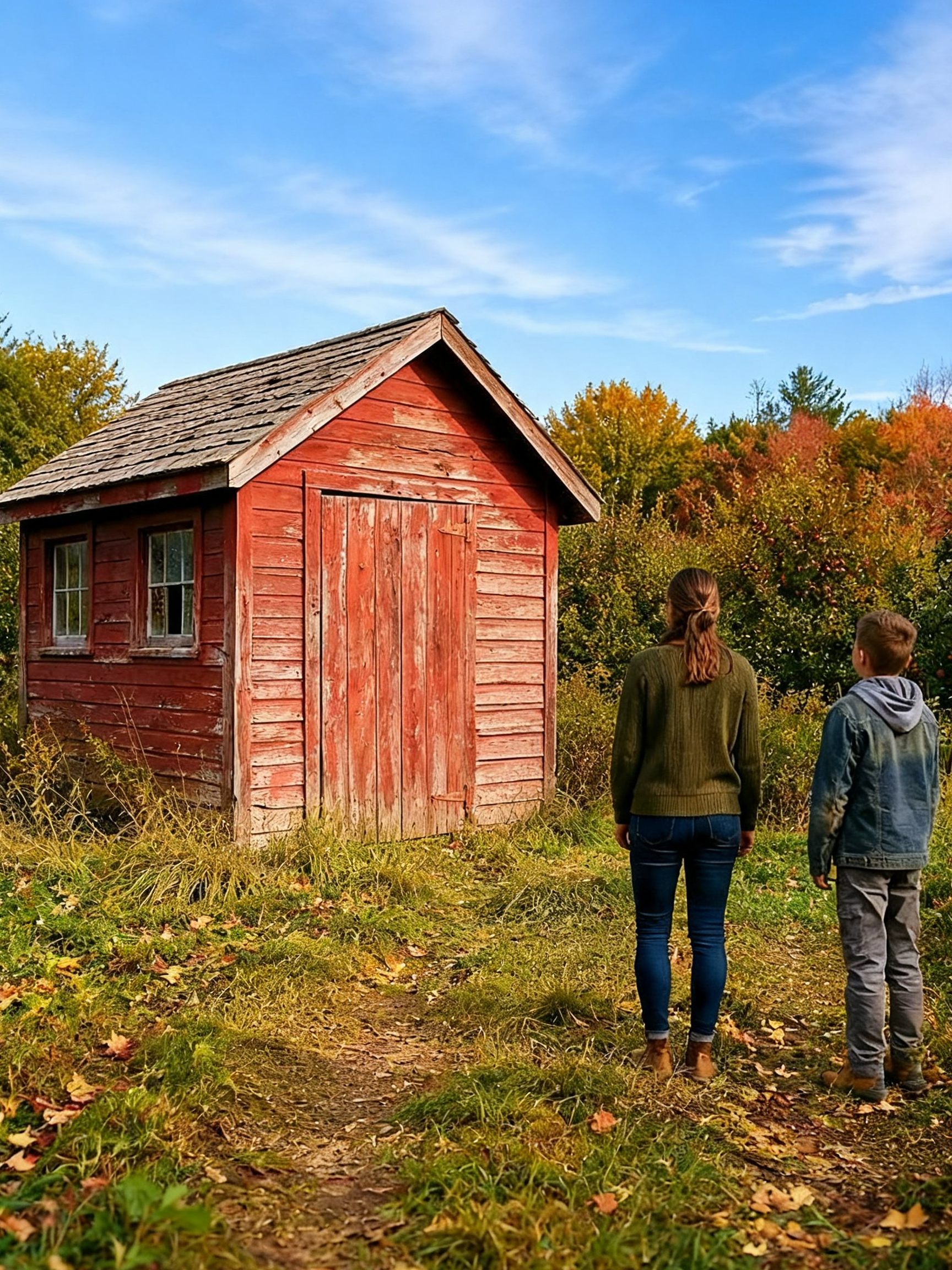
My Grandmother Left Me a Worthless Field and One Locked Shed—Three Days Later, My Family Threw Me Out
My uncle waited until the dirt from my grandmother’s grave was still fresh before telling me I had three days to leave her house.
Then my cousin slid a cardboard box across Grandma Ruth’s kitchen table and smiled.
“Pack whatever junk she left you, Claire. The house belongs to us now.”
I looked at him.
I looked at the coffee ring on the table where Grandma had eaten breakfast every morning for thirty-seven years.
Then I looked at the three people standing behind him like they had rehearsed the scene.
Uncle Dennis, my mother’s older brother.
His wife, Carol.
Their son, Brent.
And beside them, wearing a navy suit too expensive for a man who claimed the family farm had been “barely surviving,” stood Thomas Bell, the attorney who had handled Grandma’s estate papers for the last decade.
Nobody looked embarrassed.
That told me everything.
I was thirty-two years old.
I had spent the last eight years helping Grandma Ruth stay on that property outside Ashford, Missouri, while everybody else sent birthday cards and excuses.
I had driven her to oncology appointments.
I had replaced the water heater.
I had slept on a folding chair beside her hospital bed after her first stroke.
I had learned which pills made her nauseous.
I had cut her toenails when her hands shook too badly to hold the clippers.
I had missed promotions.
I had canceled vacations.
I had paid the electric bill twice when Dennis said his check was “coming next week.”
And now, seventy-two hours after we buried her, Dennis stood in her kitchen and told me I was trespassing.
I didn’t cry.
That bothered them.
I could see it.
Carol had prepared for tears.
She had tissues sitting beside her handbag.
Brent had prepared for rage.
His phone was angled downward in one hand, camera probably running.
Dennis had prepared for begging.
He kept his shoulders loose and his expression magnanimous, like a king ready to forgive a peasant.
Instead, I asked, “When did probate close?”
Thomas Bell’s smile tightened.
“It hasn’t.”
“Then who transferred title to the house?”
No one answered immediately.
I reached for Grandma’s old ceramic sugar bowl.
Not because I wanted sugar.
Because under it was a tiny crescent-shaped burn mark I had stared at since childhood, and for one strange second, I needed to look at something in that kitchen that hadn’t changed.
Dennis cleared his throat.
“The house is being handled separately.”
“Separately from what?”
“The land your grandmother left you.”
Brent laughed.
That laugh mattered.
It was too quick.
Too pleased.
Like he had been waiting days to use it.
“Oh, yeah,” he said. “Your inheritance.”
Carol’s lips curled.
“Don’t make it sound cruel.”
“I didn’t say anything.”
“That’s what I mean,” she replied.
Dennis stepped forward and placed a yellow legal envelope on the table.
My name was written across it in Grandma Ruth’s handwriting.
Not copied.
Her handwriting.
CLAIRE ELLISON.
The letters leaned slightly to the right.
The C had that little hook she always made.
My chest tightened for the first time.
Dennis tapped the envelope.
“Mom left you eleven acres on the north end.”
Brent laughed again.
“The mud patch.”
“Brent,” Carol said, though she was smiling too.
Dennis gave me the expression people use when they want cruelty to look practical.
“It has no road frontage. No utility connection. Half of it floods in spring. There’s an old equipment shed on it that should probably be condemned.”
“And the house?”
“Left to the family trust.”
“Which you control.”
“As executor.”
Thomas Bell finally spoke.
“Co-trustee.”
I looked at him.
He looked away first.
That mattered too.
Dennis pushed the yellow envelope toward me.
“You were always close to Mom. She wanted you to have something sentimental.”
Eleven worthless acres.
One collapsing shed.
And a handwritten envelope.
That was what eight years of my life had become.
I remembered taking Grandma Ruth to chemotherapy in February while Brent posted pictures from Cabo.
I remembered Dennis telling me he couldn’t visit because his back hurt, then seeing him at a golf tournament two days later.
I remembered Carol telling Grandma, “Claire doesn’t have children anyway, so she has more free time.”
I remembered Thomas Bell coming to the house six months before Grandma died and shutting the den door behind him.
I remembered Grandma emerging forty minutes later with red eyes and a strange calm on her face.
I remembered asking if everything was all right.
She had squeezed my wrist.
“Paper is patient,” she said.
At the time, I thought she was confused.
Now I wasn’t so sure.
I opened the yellow envelope.
Inside was a deed.
Eleven acres.
Parcel 14B.
North boundary against County Drainage Reserve.
West boundary against the old Miller easement.
One structure identified only as agricultural storage.
No mineral rights listed separately.
No improvements assigned value.
Appraised value: $18,600.
Brent whistled.
“Don’t spend it all in one place.”
I kept reading.
There was a second page.
Handwritten.
Not notarized.
Not formal.
Just Grandma.
If they are standing together when you read this, do not argue with them.
If they are rushing you, let them rush.
If they say the shed is worthless, agree.
If they tell you I was confused, do not defend me.
Go there alone.
Take the brass key.
Do not use the front door.
And before you sign anything, ask yourself why a worthless shed needed two locks.
Love, Grandma
I read the note twice.
Then I folded it.
Dennis studied my face.
“What does it say?”
“Nothing important.”
Brent leaned forward.
“Can I see?”
His smile disappeared.
That was the first moment I knew the note had value before I knew what it meant.
I had seen greedy people before.
Greedy people don’t care about worthless paper.
They care about paper they cannot read.
Carol reached for the envelope.
I placed my hand over it.
Not sharply.
Not dramatically.
Just enough.
“Grandma wrote my name on this.”
Carol pulled back.
“Oh, don’t start.”
“I haven’t started anything.”
And I hadn’t.
That was what made them nervous.
I didn’t shout when they gave me three days.
I didn’t protest when Dennis said I had no right to stay in Grandma’s bedroom.
I didn’t accuse Thomas Bell of hiding documents.
I didn’t ask Brent why he had spent the week before the funeral measuring the backyard with a contractor.
I didn’t tell them I had overheard Carol discussing “Phase Two” with someone on the phone.
I didn’t tell them Grandma had once made me promise never to trust a clean signature on dirty business.
I didn’t tell them anything.
I folded Grandma’s old flannel robe and left it in the dresser because it still smelled faintly like lavender soap.
I took three framed photographs.
One cookbook.
Her red enamel Dutch oven.
A chipped blue coffee mug.
And from the bottom drawer of her sewing cabinet, hidden beneath thirty years of buttons and thread, I found a brass key taped to an index card.
On the card were four words.
NOT THE FRONT DOOR.
That night, I slept on the floor of my friend Melissa’s spare room.
By sunrise, Dennis had changed the locks on Grandma’s house.
By noon, Brent posted a photograph online standing on the front porch with a caption about “protecting family legacy.”
By two, a white survey truck was parked near the property line.
By four, an orange sign appeared at the entrance to the driveway.
COMING SOON — PRAIRIE CREST ESTATES.
Forty-two luxury homes.
Starting in the low $600s.
I sat in my Honda across the county road and read that sign three times.
Then I smiled.
Not because it was funny.
Because suddenly eleven worthless acres sounded extremely interesting.
The next morning, I drove north.
Grandma’s eleven acres sat beyond a line of walnut trees, separated from the main farm by a shallow creek and an abandoned tractor path that had nearly disappeared under weeds.
The land looked exactly as Brent described it.
The eastern corner sagged into a patch of cattails.
A drainage ditch cut through the lower field.
There were no utility poles.
No driveway.
No obvious development value.
And at the center, half-hidden behind wild grapevine and cedar, stood the shed.
It was larger than I remembered.
As a kid, I had been told never to go near it because the roof was unstable.
Grandma called it Grandpa’s machine shed, though my grandfather died when I was six and I never once saw a tractor inside.
The building was fifty feet long.
Maybe twenty-five wide.
Gray boards.
Rusted corrugated roof.
One front door hanging crooked on enormous iron hinges.
A faded chain passed through two handles.
There were, just as Grandma had written, two locks.
One was new.
One was ancient.
The brass key fit neither.
I walked around the building.
The back wall was nearly swallowed by brush.
Halfway along it, beneath a sagging rain gutter, I found a narrow wooden door painted the same gray as the siding.
Only a circular brass keyhole.
My pulse changed.
The key slid in.
The door opened inward.
Cold air touched my face.
Not shed air.
Basement air.
The room beyond was dark, so I used my phone flashlight.
At first, I saw shelves.
Hundreds of mason jars.
Old canning equipment.
Broken chairs.
A rolled rug.
Nothing worth throwing a family war over.
Then I saw the floor.
The shed had been built on packed dirt.
At least, that was what I had always assumed.
But beneath the dust was concrete.
And cut into the concrete was a rectangle about six feet long and three feet wide.
Steel hinges.
Recessed handle.
A trapdoor.
I stood completely still.
There was a line scratched into the concrete beside it.
Three letters.
Ruth Evelyn Sanders.
Grandma’s maiden name.
I pulled the handle.
The door barely moved.
I put both hands on it and lifted.
Below was a staircase.
Concrete walls.
Metal handrail.
A faint amber light glowed somewhere underground.
My grandmother had maintained electricity to a hidden room beneath a condemned shed.
And my family had just spent three days convincing me the land was worthless.
I descended.
Eleven steps.
Then a landing.
At the bottom was a steel door.
Beside it hung another index card in a plastic sleeve.
IF YOU ARE CLAIRE, OPEN IT.
IF YOU ARE NOT CLAIRE, YOU HAVE ALREADY MADE A VERY EXPENSIVE MISTAKE.
I stared at Grandma’s handwriting.
Then I laughed once.
Grandma Ruth had been five foot two.
She wore cardigans in July.
She collected church cookbooks.
She apologized to furniture when she bumped into it.
And apparently, she had spent her final months designing legal ambushes under a shed.
The steel door wasn’t locked.
Inside was a room about the size of a two-car garage.
Fluorescent lights.
Metal filing cabinets.
Two fireproof safes.
A wall map.
A video camera mounted on a tripod.
And shelves filled with banker’s boxes.
Every box had a date.
On the desk sat a manila folder.
CLAIRE — START HERE.
My hands felt cold.
Inside was a notarized letter.
A list of names.
Copies of deeds.
County plats.
Tax statements.
Easement agreements.
And a photograph of Grandma Ruth standing beside a much younger Thomas Bell.
On the back, she had written:
Before he learned which side paid better.
I sat down.
For the next three hours, my understanding of my family changed.
Not cracked.
The eleven acres were not valuable because of what sat on them.
They were valuable because of what ran through them.
In 1978, Grandma and Grandpa had granted the county a narrow drainage easement along the north boundary.
In 1989, they had granted the local electric cooperative a buried service corridor.
In 1996, Grandpa had negotiated a private access easement through the north parcel that connected three larger tracts to County Road 9.
The language was dry.
The effect was not.
The main farm—the one Dennis now planned to carve into forty-two luxury lots—could not legally reach the public road on its northern side without crossing my parcel.
The southern driveway was Grandma’s private residential access.
It was too narrow for subdivision approval.
The creek bridge did not meet current weight standards for construction equipment.
The utility corridor for Prairie Crest Estates crossed my land.
The stormwater plan crossed my land.
The emergency access route crossed my land.
And the proposed sewer connection?
Also my land.
I found the developer’s preliminary plan in a box labeled BRENT.
My cousin had known.
Maybe not everything.
But enough.
Prairie Crest’s site map showed a thick green strip crossing Parcel 14B.
UTILITY AND ACCESS — EXISTING RIGHTS.
Existing rights.
Except the binder beside it contained a recorded amendment from 2018.
Signed by Grandma.
The access easement could not be expanded, transferred, commercialized, or used for subdivision construction without written permission from the owner of Parcel 14B.
My grandmother hadn’t left me a muddy field.
She had left me the throat through which the entire development had to breathe.
That was the first twist.
The second was worse.
In the safe, I found a flash drive taped beneath a handwritten note.
Play alone.
The video opened with Grandma sitting in her den.
She looked thinner than I remembered.
Gray hair pinned back.
Blue cardigan.
Hands folded.
No softness in her eyes.
“Claire,” she began, “if you’re watching this, Dennis moved quickly.”
I covered my mouth.
Her voice almost broke me.
Then she continued.
“I hope you understand why I did not tell you sooner. You would have tried to fix everyone. That is your weakness.”
I smiled through the sting behind my eyes.
Classic Grandma.
“In this family,” she said, “kindness has been treated like permission.”
She took a breath.
“Your grandfather and I built that farm when there was nothing there except clay, debt, and three dead apple trees. Dennis believes he inherited it because he is my son. Brent believes he deserves it because Dennis told him so. Carol believes whatever increases the square footage of her kitchen.”
I laughed again.
Then Grandma’s face changed.
“The truth is more serious.”
She reached toward something off camera.
A document appeared in her hands.
“Dennis did not merely wait for me to die.”
My skin prickled.
“He borrowed against land he did not own.”
I paused the video.
Then restarted it.
“He and Brent entered a development agreement with Sterling Ridge Partners. They represented that all necessary easements were controlled by the family trust. They were not. They represented that the trust had authority over Parcel 14B. It did not. They used a draft power of attorney I never executed.”
Grandma’s mouth tightened.
“I discovered this because the bank mailed a notice to the wrong address.”
I looked at the banker’s boxes.
There was one labeled STERLING RIDGE.
Inside were copies of loan documents totaling $4.8 million.
Some signed by Dennis.
Some by Brent.
One containing a signature that looked like Grandma’s.
The R leaned wrong.
Grandma’s R always had a little tail.
This one didn’t.
I returned to the video.
“I confronted Dennis privately. He said he was protecting the family.”
Grandma looked directly into the camera.
“That phrase has excused more theft than any weapon ever could.”
My throat tightened.
“He said the project would be worth twenty million dollars. He said I was old. He said Claire had wasted enough years taking care of me and would be grateful for whatever I left her.”
My chair creaked beneath my hand.
“He said that?”
The screen, of course, did not answer.
Grandma did.
“That was the day I changed my estate plan.”
I leaned closer.
“I could have called the sheriff immediately. I could have destroyed Dennis. But I wanted to know who was involved.”
She named them.
Thomas Bell.
The estate attorney.
Gordon Pike, a loan officer at First County Bank.
Lyle Mercer, a planning consultant who sat on the county development advisory board.
A survey company owned by Carol’s brother.
A title agent who had quietly insured documents Grandma claimed she never signed.
Not one villain.
A family network.
People who assumed an old widow would never notice ink moving across paper.
People who assumed a caregiver granddaughter had no money for lawyers.
People who assumed grief would make me obedient.
Grandma had let them believe it.
She had continued smiling at Thanksgiving.
Continued writing checks to church.
Continued playing cards with Carol.
Continued letting Dennis tell everyone he was “taking over responsibilities.”
And while they congratulated themselves, she moved the one parcel they needed most into an irrevocable transfer-on-death deed naming me.
She recorded restrictions.
She created automatic notification triggers.
She mailed copies to two separate law firms.
She deposited evidence with a retired judge in Jefferson City.
She even recorded a statement with a forensic document examiner.
Then she waited.
There was one final instruction.
“If they ask you to sign a boundary adjustment, access agreement, land swap, temporary construction license, utility consent, or quitclaim deed, do not refuse immediately.”
Grandma smiled.
Actually smiled.
“Ask how much they are offering.”
I sat back.
“You were terrifying,” I whispered.
The video continued.
“Let them believe you are considering it. Their desperation will tell you what they have already promised.”
Then her expression softened.
“Claire, this is not revenge.”
She paused.
“It will feel like revenge.”
Another pause.
“But that land is not a lottery ticket. Your grandfather and I worked forty-six years for it. You gave me eight years nobody saw. You changed dressings. You cleaned floors. You listened when I repeated myself. You protected my dignity when I could not protect my balance.”
My vision blurred.
I did not look away.
“People who benefit from quiet sacrifice eventually start calling it useless. Do not let them.”
She leaned toward the camera.
“And remember something else. The shed contains proof. But proof only matters if they commit themselves after they know the truth.”
The video ended.
I sat underground until after sunset.
When I finally climbed out, there was a truck parked beside my Honda.
Black Ford F-250.
He was leaning against the hood.
Arms crossed.
Smile gone.
“What are you doing here?”
I closed the hidden door behind me.
“My property.”
He glanced toward the shed.
“You went inside?”
“The shed Grandma left me?”
“It’s unsafe.”
“You seem worried about my safety.”
“Don’t be a smart-ass.”
I locked the rear door.
Brent walked closer.
“We need to talk.”
“We’re talking.”
He lowered his voice.
“Dad says you’re upset.”
“About what?”
“All of this.”
He waved at the field.
I looked around like I was confused.
“Wet grass?”
“You know what I mean.”
“No. Explain.”
His jaw moved.
Brent had never liked explaining.
He preferred announcing.
“We’re trying to create something good here. Homes. Jobs. Tax revenue. Grandma understood that.”
“Then why did she give me this parcel?”
“Because she felt sorry for you.”
That landed exactly where he wanted it to.
He watched my face.
I gave him nothing.
He tried again.
“She knew you gave up a lot taking care of her.”
“I didn’t give it up.”
“She needed help. I helped.”
“You always do that.”
“Make yourself sound noble.”
That nearly made me laugh.
I had never posted a single photo from Grandma’s hospital room.
Never told relatives when she fell.
Never mentioned the adult diapers.
Never mentioned the nights she woke at two in the morning convinced Grandpa was still alive.
But Brent, who had visited six times in three years, believed my silence was performance.
I stepped past him.
He caught my arm.
But enough.
I looked down at his hand.
Then up at him.
He released me.
Good choice.
“Dad wants to buy your parcel.”
“How much?”
He blinked.
That was not the answer he expected.
I opened my car door.
“How much, Brent?”
“Twenty-five thousand.”
I looked across the field.
“Appraised value is eighteen-six.”
“So you’re offering thirty-four percent above appraisal.”
“You’re family.”
There it was.
The word thieves prefer when contracts become inconvenient.
“I’ll think about it.”
His relief was immediate.
Too immediate.
He stepped back.
“Send me the offer in writing.”
The relief faded.
“Because I like reading.”
Then I drove away.
The written offer arrived by email at the next morning.
Twenty-five thousand dollars.
In exchange for Parcel 14B and all associated access, utility, drainage, ingress, egress, mineral, subsurface, water, development, and future rights.
The language was twelve pages.
The price was twenty-five thousand.
They wanted me to sign within forty-eight hours.
I forwarded it to an attorney named Miriam Sloan.
I had found her business card in Grandma’s underground room.
Below her name, Grandma had written:
Trust her before you trust Bell.
Miriam called me fourteen minutes later.
“Where did you get this?”
“From my family.”
“Do not sign anything.”
“I wasn’t planning to.”
“Good. Second question. Where are you?”
“At a diner.”
I looked toward the window.
“Because if Dennis sent this agreement, they know you’ve seen enough to matter.”
I paid my bill.
Miriam met me two hours later in a conference room above an insurance agency in Jefferson City.
She was sixty-one, silver-haired, and direct.
Grandma had retained her eighteen months before dying.
Miriam already had copies of half the documents from the shed.
She also had something I did not.
A sealed amendment to Grandma’s trust.
“When did this become effective?”
“Upon Ruth’s death.”
“And what does it do?”
“It freezes distributions from the family trust if any trustee has materially misrepresented ownership, pledged trust assets without authority, or attempted to interfere with Parcel 14B.”
I stared at her.
“So Dennis can’t sell the house?”
“Not if I file.”
“I already did.”
That was the first mini-payoff.
At that afternoon, Dennis called me seventeen times.
I answered the eighteenth.
“What did you do?”
His voice was so loud I held the phone away from my ear.
“I drove to Jefferson City.”
“You froze the trust?”
“Don’t lie to me.”
“I didn’t freeze anything. Grandma did.”
Beautiful silence.
Then: “Who have you been talking to?”
“Miriam Sloan.”
Another silence.
That name hurt.
I could hear it.
His voice changed.
“You have no idea what you’re getting involved in.”
“That sounds serious.”
“This development isn’t some game.”
“I never said it was.”
“People have invested money.”
“How much?”
“None of your business.”
“Then why are you calling?”
His breath scraped through the speaker.
“Come home.”
The same house he threw me out of.
“We need to sit down as a family.”
“We already did that.”
“That was different.”
I looked at the written purchase offer on my laptop.
“You thought you’d won then.”
He hung up.
The next morning, Prairie Crest Estates removed its roadside sign.
By noon, another appeared.
PRIVATE PROPERTY — NO TRESPASSING.
On my eleven acres.
The sign had been placed by Brent.
I knew because Melissa had driven past and sent me a photo of him hammering it into the ground.
I did not remove it.
I photographed it.
So did the county recorder’s investigator two days later.
Then came the pressure.
Carol called my mother’s cousins.
Brent called family friends.
Dennis told people I was trying to “extort the estate.”
Someone told our church pastor I had become obsessed with inheritance.
A cousin in Kansas texted me:
Grandma would hate what you’re doing.
Which document did you read?
He never answered.
Then Thomas Bell sent me a certified letter accusing me of possessing confidential estate records.
Miriam smiled when she read it.
“He wants you to confirm what you have.”
That afternoon, First County Bank requested an emergency meeting with the trust.
The development loan had a problem.
Without access rights, the collateral value had dropped.
Without collateral value, Dennis faced default.
Without the development deal, he owed Sterling Ridge Partners penalties.
The entire machine had been built on the assumption that Grandma’s quiet granddaughter would sign whatever family placed in front of her.
They had mistaken courtesy for surrender.
And now interest was accumulating.
Three days later, Dennis came to Melissa’s house.
No attorney.
He looked older.
That surprised me.
I met him on the porch.
He didn’t ask to come inside.
“You embarrassed me.”
“Good afternoon to you too.”
“You froze your grandmother’s house.”
“Grandma froze it.”
“Stop saying that.”
“Then stop blaming me for her documents.”
He rubbed his face.
“For God’s sake, Claire, we’re talking about paperwork.”
“No. We’re talking about signatures.”
His hand dropped.
That got him.
I continued.
“Some real. Some apparently not.”
“You don’t understand financing.”
“Probably not.”
“You don’t understand development.”
“Probably not.”
“You don’t understand what it takes to keep property like that in a family.”
That one almost deserved applause.
I leaned against the porch railing.
“Tell me what it takes.”
“You want to know what it takes? Fine. Taxes. Insurance. Equipment. Payroll. Lawyers. Repairs. Your grandmother was sitting on seven million dollars of land and living like it was 1985.”
“She liked that house.”
“She was wasting it.”
The words came out before he could stop them.
The truth usually arrives tired.
He looked away.
“I didn’t mean—”
He tried another direction.
“We were going to take care of her.”
“You mean after the sale?”
“She was eighty-four and dying.”
His eyes hardened.
“That’s cheap.”
“No. What was cheap was twenty-five thousand dollars for the parcel your whole project needs.”
He went still.
I had not told him how much I knew.
Until then.
Dennis stared at me for a long time.
Then he smiled.
Not warmly.
Not kindly.
It was the smile of a man who had finally stopped pretending.
“So you found the files.”
I said nothing.
“How much do you want?”
There it was.
Not Are they real?
Not What files?
I lowered my eyes as if thinking.
Grandma’s instruction echoed.
Ask how much they are offering.
Dennis stepped closer.
“Fifty thousand.”
I looked at him.
“Yesterday it was twenty-five.”
“Seventy-five.”
I shook my head.
“One hundred.”
I almost smiled.
The parcel was worth eighteen-six, remember?
“Two hundred thousand.”
“For eleven flooded acres?”
His nostrils flared.
“You know damn well it’s not about the dirt.”
I tilted my head.
“What is it about?”
He realized too late.
His mouth closed.
I let the silence sit between us.
Then I asked the weak question.
The one Grandma had trained me to ask.
“Uncle Dennis, if my land is so worthless, why are you offering me two hundred thousand dollars for it?”
He left without answering.
That night, Miriam filed his statement in an affidavit.
Not because an offer proved fraud.
But because Dennis had just demonstrated knowledge of the parcel’s strategic value after weeks of representing elsewhere that the family trust already controlled it.
Two days later, the county suspended preliminary approval for Prairie Crest Estates pending title clarification.
Mini-payoff number two.
The next blow came from Brent.
He arrived at the shed with two contractors and a skid-steer.
I was already there.
So was a sheriff’s deputy.
Grandma’s cameras had caught Brent cutting the front chain the previous night.
He had entered through the front.
Just as Grandma expected someone might.
The front door led only into the visible shed.
Not the underground archive.
But trespassing was trespassing.
Brent climbed out of his truck and saw the deputy.
His face changed.
“This is family property.”
The deputy looked at the deed I had provided.
“Not according to the recorder.”
“My grandmother owned it.”
“She’s deceased.”
“My father’s executor.”
“That doesn’t make him owner of this parcel.”
Brent pointed at me.
“She’s manipulating this.”
I remained beside my car.
“You brought machinery onto my land.”
“We’re clearing brush.”
“For access.”
He looked toward the contractors.
Neither would meet his eye.
Brent said, “Temporary construction access.”
I pulled a folded document from my bag.
“Grandma’s 2018 restriction prohibits commercial construction access without written consent from the owner.”
He stared at the paper.
“You think you’re a lawyer now?”
I looked at the deputy.
“That’s why I brought documents.”
The skid-steer left ten minutes later.
The contractors left three minutes after that.
Brent stayed.
He waited until the deputy drove away.
Then he walked toward me.
His face was red.
“You always thought Grandma loved you more.”
I opened my car door.
Brent’s voice cracked around the edges.
“You were there every day. You made the rest of us look bad.”
“I never talked about you.”
“That was worse.”
That surprised me.
He laughed once, bitterly.
“You know what it’s like? Every Christmas, she asked if I was visiting enough. Every Thanksgiving, she thanked you in front of everybody. Every hospital thing, there you were.”
“She was sick.”
“She wasn’t your mother.”
I faced him.
“She was your grandmother too.”
His eyes dropped.
For one second, I saw the thirteen-year-old boy who used to build forts with me behind the barn.
Then it vanished.
“My dad says you’re going to destroy everything.”
“Did he tell you about the forged signature?”
Brent looked up too quickly.
There it was.
Not surprise.
“Get off my property,” I said.
The next week, Thomas Bell resigned as co-trustee.
He claimed a conflict of interest.
Three hours later, an investigator from the Missouri Attorney General’s office contacted Miriam.
Grandma had sent them a packet before her death.
Not an accusation.
A preservation request.
Copies of deeds.
Signature specimens.
Correspondence.
Bank notices.
A handwritten timeline.
She had not asked them to act while she was alive.
She had asked them to act if specific post-death events occurred.
One of those events was an attempt to pressure me into signing away Parcel 14B within ninety days.
Dennis had made the first offer seventy-two hours after the funeral.
Twenty-five thousand dollars.
Then two hundred thousand.
He had sprung Grandma’s trap himself.
That should have felt good.
Not completely.
Because the deeper I went into the archive, the more I understood why Grandma had built it.
She had not spent eighteen months planning punishment.
She had spent eighteen months documenting a lifetime of being underestimated.
There were letters from 1992 showing Dennis borrowing money and promising repayment.
Canceled checks.
Mortgage payments Grandma quietly covered after his first business collapsed.
A college tuition payment for Brent.
Carol’s medical bills after surgery.
A down payment on Dennis’s lake house.
Forty thousand dollars toward Brent’s failed gym.
Twenty-six thousand to settle an IRS lien.
Every family story I grew up hearing about Dennis “building himself from nothing” had Grandma’s handwriting hidden beneath it.
She never corrected anyone.
Never demanded credit.
Never humiliated him.
The cruelty of that realization was almost worse than fraud.
Dennis hadn’t stolen from a cold mother who hoarded wealth.
He had stolen from the woman who repeatedly rescued him.
That was why I stopped thinking about what I could make.
And started thinking about what had to be protected.
The farm included a creek where Grandpa taught local kids to fish.
A twelve-acre grove of black walnut.
A cemetery on the eastern rise where four generations of Sanders were buried.
A tenant house where Mr. Alvarez, seventy-three, had lived for twenty-six years at below-market rent.
Dennis’s development plan removed the grove.
Rerouted the creek.
Placed a cul-de-sac forty yards from the cemetery.
And converted the tenant house into a sales office.
Mr. Alvarez had already received a notice to vacate.
He brought it to me in a trembling hand.
“I thought Ruth said I could stay.”
“Dennis says that wasn’t written.”
I had found the lease.
Grandma had written it.
Lifetime occupancy.
One dollar per year.
Dennis either hadn’t found it or thought nobody else would.
I gave Miriam a copy.
The eviction notice died that afternoon.
Mini-payoff number three.
Then the tide shifted.
Family stopped calling.
Not because they believed me.
Because they became afraid of being asked what they knew.
The bank hired outside counsel.
Sterling Ridge Partners suspended funding.
The county planning board canceled its vote.
Thomas Bell’s law firm placed him on leave.
Gordon Pike, the loan officer, suddenly took an “extended medical absence.”
Carol deleted social media posts about Prairie Crest.
And Dennis stopped speaking publicly.
For the first time, I understood how systems like his survive.
Not because everybody is evil.
Because everybody believes somebody else will absorb the consequence.
The banker thinks the attorney checked.
The attorney thinks the title agent checked.
The title agent thinks the executor has authority.
The executor thinks the old woman won’t fight.
The son thinks the granddaughter will fold.
And the granddaughter?
She is supposed to be too tired from years of caregiving to read twelve pages of legal language.
They were almost right.
I was tired.
I was so tired.
But tired is not stupid.
Quiet is not weak.
Kindness is not consent.
And grief is not surrender.
I remembered every night Grandma called my name because she was scared.
I remembered every morning she apologized for needing help.
I remembered every time Dennis said he was “too busy.”
I remembered every check Grandma wrote without telling anyone.
I remembered every room she allowed them to enter.
I remembered every insult she swallowed because peace mattered more to her than pride.
And I remembered the underground room.
Not a vault of cash.
A vault of memory.
A woman’s entire defense against being rewritten after death.
That was the true inheritance.
Not eleven acres.
The hearing was scheduled for a rainy Monday in November.
Dennis petitioned to unfreeze the trust and invalidate Grandma’s amendment.
His argument was simple.
Grandma had been medically compromised.
Unduly influenced.
And who had allegedly influenced her?
He accused me of isolating her.
Manipulating her.
Convincing her to punish the family.
For the first time, his strategy genuinely hurt.
Not because it was strong.
Because it weaponized everything I had done for her.
Every ride to the doctor became control.
Every grocery trip became isolation.
Every night I stayed over became opportunity.
Every private conversation became suspicion.
Carol testified that Grandma had become “dependent” on me.
Brent said I “managed who could see her.”
Thomas Bell, through his attorney, claimed he had concerns about Grandma’s capacity in her final year.
That one nearly made Miriam stand up before her turn.
But we waited.
Dennis’s attorney showed photographs of me helping Grandma into my car.
Me holding her arm.
Me carrying her purse.
Me sitting beside her in the hospital.
Acts of care transformed into exhibits.
I stared at the photographs.
My face looked exhausted.
Grandma looked small.
Dennis looked pleased.
He thought he had found the moral wound.
Then Miriam rose.
She called Dr. Helen Morris.
Grandma’s neurologist.
No dementia diagnosis.
She called Nora Jenkins.
Grandma’s visiting nurse.
Grandma scheduled her own medications until the final six weeks.
Managed conversations.
Signed care plans.
Asked detailed questions.
She called Reverend Paul Avery.
Grandma drove herself to church until five months before her death and chaired the building fund committee until seven months before.
Then Miriam played a video.
Not the one I saw underground.
Grandma sat at Miriam’s office table.
Two independent witnesses beside her.
A clock visible.
A newspaper showing the date.
Miriam asked questions.
Who is president?
Grandma answered.
What year is it?
What assets do you own?
Grandma listed every parcel.
Why are you changing your estate plan?
Grandma looked directly at the camera.
“Because my son has mistaken my age for permission.”
The courtroom went still.
Dennis did not move.
Grandma continued.
“I love Dennis.”
That hurt more.
“I love Brent.”
She folded her hands.
“But love does not require blindness.”
Miriam asked, “Are you changing your plan because Claire asked you to?”
“Did Claire know you were meeting with me?”
“Because Claire would have tried to make me forgive them before I had finished protecting myself.”
A few people laughed softly.
Even the judge smiled.
Dennis did not.
Miriam asked the final question.
“Why leave Parcel 14B to Claire?”
Grandma took a long breath.
“Because it is the only piece they cannot build without.”
Dennis’s attorney objected to the video despite it already being admitted.
Grandma was still speaking.
“They believe value is measured by what can be sold. Claire does not. That is why she is the only one I trust not to sell too cheaply.”
I looked down.
For the first time since the funeral, I cried.
Then another.
I wiped them before they reached my jaw.
The judge upheld the trust freeze.
He ordered an independent fiduciary review.
He referred disputed signatures to forensic examination.
And he prohibited sale or encumbrance of trust property pending investigation.
Mini-payoff number four.
Outside the courthouse, reporters waited.
Dennis walked past them.
Carol covered her face.
Brent stopped beside me.
For a second, I expected an insult.
Instead he whispered, “You don’t know everything.”
I looked at him.
“What does that mean?”
He shook his head.
Then followed his parents.
That sentence stayed with me.
You don’t know everything.
Two days later, the forensic report came back.
Three signatures attributed to Grandma were probably not hers.
One was inconclusive.
One had been digitally reproduced.
The bank’s counsel notified law enforcement.
Thomas Bell stopped answering calls.
Gordon Pike resigned.
Dennis’s attorney withdrew.
Sterling Ridge Partners sued Dennis and Brent for misrepresentation.
The Prairie Crest website disappeared.
And then, in a move nobody expected, Dennis asked to meet me at the farm.
No lawyers.
Miriam told me not to go alone.
I went with her sitting in a car fifty yards away.
Dennis waited beside the old barn.
He looked terrible.
Work boots.
Grandpa’s brown jacket.
For the first time in my life, he looked like Grandma’s son.
Not the executor.
Not the businessman.
Just the boy who had grown up there.
“You got what you wanted,” he said.
“You shut down the project.”
“Grandma shut down the project.”
He gave me a tired look.
“Still saying that?”
“It keeps being true.”
He stared toward the walnut grove.
“I was going to save this place.”
“By turning it into forty-two houses?”
“By making it worth something.”
“It was worth something.”
“That’s not enough.”
There it was again.
His religion.
I said, “Mr. Alvarez gets to stay.”
Dennis scoffed.
“That house loses money.”
“He paid Grandma one dollar a year.”
“He fixed her tractors for twenty years.”
“That’s not a business model.”
“No. It’s a promise.”
He looked at me.
And suddenly I understood why he hated me.
Not because Grandma loved me more.
Because I recognized currencies he could not measure.
None of them appeared cleanly on a balance sheet.
But Grandma had built her life on them.
Dennis had spent years converting all of them into numbers.
And now the numbers were killing him.
He reached into his jacket.
Miriam’s car door opened.
I lifted one hand without looking back.
Dennis removed an envelope.
He held it out.
“What is it?”
“Something Mom didn’t want you to have.”
I did not take it.
“That’s strange.”
“You spent a month arguing she wanted me to have nothing.”
His face twisted.
“Just take it.”
Inside was a photocopy of a deed.
Dated 1974.
Grandpa’s name.
Grandma’s name.
And another name.
Eleanor Sanders.
I looked up.
Dennis was watching me.
“What is this?”
“The north land wasn’t originally Mom’s.”
I read again.
The deed described 146 acres.
Not eleven.
My heartbeat changed.
Dennis spoke quietly.
“Your mother owned part of this farm.”
My mother had died when I was fourteen.
Car accident.
She had never talked about land.
Never inherited anything that I knew of.
Dennis continued.
“She transferred it back before she died.”
“To Grandma?”
“So we thought.”
I looked at the photocopy.
The transfer notation was unclear.
“This doesn’t prove anything.”
“Then why show me?”
“Because Brent found the original two years ago.”
I stopped breathing for a second.
“In the old courthouse archive.”
“And Mom took it from him.”
Dennis looked toward the field.
“She said some things should stay buried until people show you who they are.”
That sounded exactly like her.
“What happened to the original?”
“I don’t know.”
“You expect me to believe that?”
Finally, an honest answer.
Dennis pointed toward the north ridge.
“The shed isn’t the only old structure out there.”
I stared at him.
“There was a survey cabin near the county reserve. Grandpa tore it down in the eighties.”
“So he didn’t tear down the foundation.”
I folded the photocopy.
“Why are you helping me?”
He laughed.
It sounded broken.
He looked at me.
“I’m trying to stop Brent.”
Cold moved through me.
“What did he do?”
Dennis stepped back.
“Ask him why he was at your property last night.”
I turned toward Miriam.
She was already out of the car.
“What happened last night?” she called.
I looked at Dennis.
He was walking away.
He stopped.
“You said I don’t know everything.”
He looked over his shoulder.
“I didn’t say that.”
My stomach dropped.
Dennis saw it happen.
For one second, fear crossed his face.
Then he said, “Claire, lock the shed.”
We drove to Parcel 14B immediately.
The rear door was locked.
The hidden stairwell untouched.
The underground room looked normal.
Until Miriam noticed the banker’s boxes.
One was missing.
The most recent.
I checked the safes.
The flash drive was still in my bag.
The video camera was there.
But the file inventory showed a gap.
Box 2025 contained documents I had only skimmed.
Medical receipts.
Late trust amendments.
Correspondence.
And one red folder I remembered seeing but had never opened.
Just a red folder.
“Call the sheriff,” Miriam said.
Then I walked outside.
Rain had softened the ground.
Behind the shed, tire tracks cut through the mud.
Not truck tires.
Brent owned one.
The tracks led north.
Toward the county reserve.
Toward the ridge Dennis had mentioned.
The sheriff arrived within twenty minutes.
We followed the tracks with two deputies.
Through cedar.
Across wet grass.
Along a collapsed fence.
Then we found the old foundation.
Four concrete walls no higher than my knees.
Rotten boards scattered inside.
Nothing else.
One deputy kicked leaves aside.
Metal scraped concrete.
Smaller than the shed hatch.
New padlock.
I recognized it.
Same model Brent had used on the front shed door.
The deputy cut it.
Under the hatch was a narrow cavity.
Just a box.
Military surplus style.
We lifted it out.
Inside were rolled plats.
A cloth pouch.
Three envelopes.
And the original deed.
My mother’s name was real.
So was the acreage.
The transfer everyone believed had returned her interest to Grandma?
Never recorded.
Instead, attached to the deed was a notarized document dated eleven months before my mother died.
A survivorship transfer.
Her interest passed to her child.
At age eighteen.
The document had been signed.
But apparently never filed.
Miriam read it twice.
“This changes everything.”
“How much?”
“If valid? Potentially most of the north tract.”
“Prairie Crest?”
“More than Prairie Crest.”
One deputy looked at the plat.
He pointed.
The old boundary crossed land Dennis had assumed belonged to the trust.
It crossed the proposed subdivision.
The walnut grove.
The tenant house.
The north pasture.
And then continued farther west.
Farther than any current farm map.
“What’s there?” I asked.
Miriam zoomed in on the county GIS map on her tablet.
Her face changed.
She turned the screen.
The old boundary extended beneath a commercial parcel developed in 2008.
A distribution center.
Two warehouses.
A fuel station.
And part of a retail complex.
Current combined assessed value: over $18 million.
“That can’t be right.”
“It might not be.”
“But if it is?”
Miriam looked at the original deed again.
“Then somebody has been collecting rent, taxes, lease payments, or sale proceeds on land that may not have legally belonged to them.”
The deputy whistled.
Because beneath the deed was the ledger.
Grandma’s handwriting filled the first half.
Grandpa’s filled the older pages.
Years of entries.
Parcel numbers.
Some I recognized.
Most I didn’t.
Then, twenty pages from the back, the handwriting changed.
My mother’s.
I knew it instantly from birthday cards I still kept.
There were six entries.
The final one was dated nine days before her car accident.
I read it once.
Then again.
Dennis knows about the north title.
Tom says filing it now will ruin everything.
I told them Claire will own it when she turns eighteen.
Dennis said she’ll never understand what she has.
The next line made my hands go numb.
If anything happens to me, Ruth knows where the proof is.
Miriam read over my shoulder.
Neither of us spoke.
Then a deputy reached deeper into the metal box.
“There’s another envelope.”
He handed it to me.
My name was written across the front.
Not in Grandma’s handwriting.
My mother’s.
CLAIRE — WHEN YOU ARE OLD ENOUGH TO ASK WHY.
My knees nearly gave.
I sat on the concrete foundation.
For eighteen years, I believed my mother died because she hit black ice on Route 6.
A freak accident.
A guardrail.
A rainy night.
That was the story.
That had always been the story.
My fingers shook as I opened the envelope.
Inside was one photograph.
My mother standing beside Dennis.
Thomas Bell was there too.
And a fourth man I did not recognize.
On the back, Mom had written:
He says the land is worth more if nobody knows who owns it.
Under that was one sentence.
If Dennis tells you my crash was an accident, ask him why Brent’s father was driving behind me.
Read it again.
Brent’s father.
Dennis was Brent’s father.
At least, that was what the whole family had always said.
I looked up at Miriam.
She had gone pale.
She pointed at the photograph.
At the fourth man.
“I know him.”
The air felt suddenly too cold.
“Who is he?”
She looked at me.
“That’s Gordon Pike.”
The banker.
The man who had approved Dennis’s development loan.
The man who had taken medical leave the moment investigators arrived.
I stared at his younger face in the photograph.
Then at my mother’s warning.
Brent’s father was driving behind me.
My phone vibrated.
Unknown number.
NO CALLER ID.
A photograph loaded.
It showed me kneeling beside the open metal box.
Taken moments ago.
From somewhere in the trees.
Below the photograph were nine words.
You found Eleanor’s deed. Now ask Dennis who Brent’s father is.
Miriam whispered, “Don’t move.”
The deputies reached for their radios.
I looked toward the cedar line.
Only branches.
Only the darkening ridge where someone had just stood close enough to photograph us.
Then another message arrived.
This one contained no photograph.
Just a question.
The same kind Grandma had taught me to fear.
The kind that sounded weak.
The kind that was really a trap.
If your family stole land from you, Claire, what else do you think they stole from your mother?
✓ Lynn R. Adams
My Grandmother Left Me a Worthless Field and One Locked Shed—Three Days Later, My Family Threw Me Out My uncle waited until the dirt from my grandmother’s grave was still fresh before telling me I ha…