My Ex-Husband Took Our House, Our Savings, and My Future—Then Grandma’s Forgotten Coastal Cottage Revealed the Secret He Feared Most
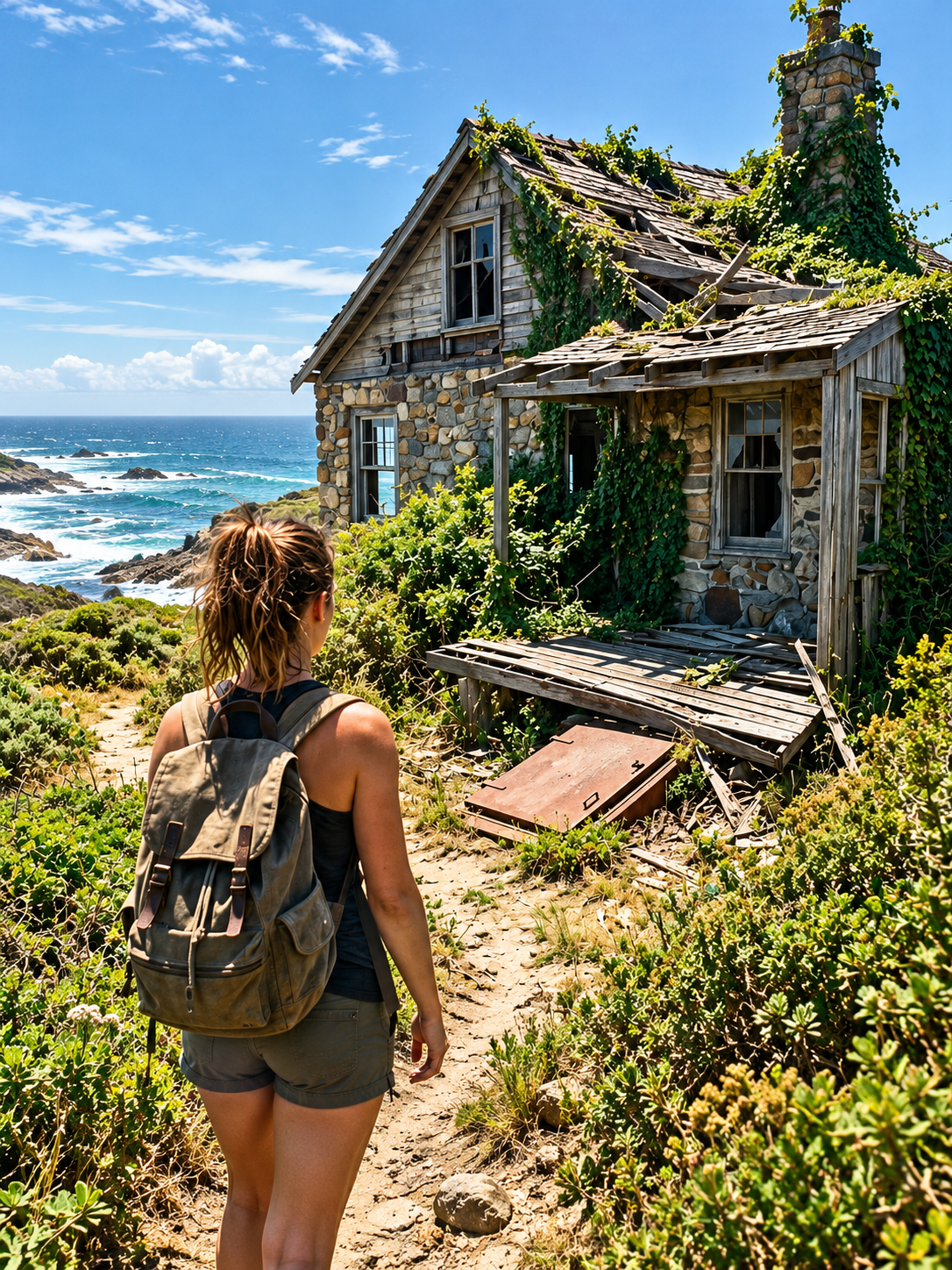
My Ex-Husband Took Our House, Our Savings, and My Future—Then Grandma’s Forgotten Coastal Cottage Revealed the Secret He Feared Most My ex-husband took our house, emptied our savings, and handed me the keys to a fifteen-year-old car while his pregnant mistress watched from my kitchen. Then he laughed and told me that at forty-seven, I was too old to start over. Seventeen days later, I unlocked my dead grandmother’s forgotten cottage on the North Carolina coast—and discovered a sealed letter warning me that my husband had spent three years trying to steal something he never knew belonged to my family. The strangest part wasn’t the letter. It was the photograph tucked inside. My ex-husband stood beside my grandmother, smiling beneath the shade of her porch. The photograph was dated eleven months before she died. And he had told me he’d never met her. My name is Caroline Mitchell. For twenty-three years, I believed I was married to a hardworking, ambitious man named Daniel Mitchell. I thought we were building a life together. A comfortable home in Raleigh. Two cars. Retirement savings. A future that included traveling after our daughter finished college and maybe buying a small place near the ocean. Instead, I discovered that Daniel had been building a life for someone else. Her name was Brooke Lawson. She was twenty-eight, worked in his company’s marketing department, and had a habit of referring to other women’s marriages as situations that had already run their course. She was standing beside my refrigerator when Daniel told me he wanted a divorce. Her hand rested protectively on her stomach. She wore an expensive cream-colored dress and a diamond bracelet I recognized. I had seen the receipt for that bracelet. Daniel had told me it was a gift for a corporate client. I had believed him. That was the humiliating part. Not that another woman was standing in my kitchen. Not even that she was pregnant with my husband’s child. It was remembering how many times I had helped Daniel explain away things that should never have required explanations. He slid a folder across the granite countertop. “Caroline, the paperwork is straightforward.” I glanced at Brooke. She was studying the room as though deciding where to place her furniture. “Straightforward?” I repeated. Daniel sighed. “There’s no reason to make this unpleasant.” I looked down at the documents. Our house was held through a company he controlled. Our joint savings account contained $814. Our retirement investments had been pledged against business debts. My name appeared on several loan documents. His attorney claimed that the remaining marital assets would be consumed by liabilities. And Daniel had already arranged for me to move out. Thirty days. That was what twenty-three years of marriage had become. Thirty days to disappear from a house where I had chosen every tile, painted every bedroom, and planted the magnolia tree beside the driveway. Brooke shifted her weight. “Daniel, maybe we should give her some privacy.” It was the first decent thing she’d said. Then she ruined it. “She’ll probably need time to process everything.” I looked at her. “How far along are you?” Her face brightened. “Twenty weeks.” I nodded. “Then you’ve had more time to process this than I have.” Daniel frowned. “Don’t start.” I turned toward him. “Start what?” “Making Brooke uncomfortable.” For several seconds, I simply studied his face. The face I had kissed goodnight thousands of times. The face I had searched for in hospital waiting rooms. The face that had smiled at me across a courthouse lawn when we were twenty-four and believed love was enough to survive anything. I realized I no longer recognized the man standing in front of me. And perhaps I hadn’t for years. What should a woman do when her husband steals the life she helped build—and the only place she has left is a forgotten cottage that might contain the one truth capable of destroying him? I didn’t throw the folder. I didn’t slap him. I didn’t scream at Brooke. I picked up the documents and placed them neatly inside my purse. Then I asked Daniel one question. “How long have you been planning this?” He looked irritated. “That’s not productive.” “How long?” He glanced at Brooke. Then he said, “The marriage has been over for years, Caroline. You just didn’t want to see it.” I stared at him. There it was. The final cruelty. Not simply leaving. Not simply betraying me. But insisting that I should share responsibility for a deception he had carefully maintained. I looked around the kitchen. At the copper pots above the stove. At the photograph of our daughter, Sophie, on the refrigerator. At the little ceramic bowl my mother had given us for our tenth anniversary. And I understood that I had spent half my life confusing endurance with security. I had given him my twenties. I had given him my thirties. I had given him the years when we had nothing but borrowed furniture and a secondhand mattress. I had given him every holiday when his clients mattered more than my family. I had given him every quiet sacrifice he had learned to mistake for permission. But I would not give him the rest of my life. I closed my purse. “All right.” Daniel blinked. “All right?” “I heard you.” He looked suspicious. “You’re not going to argue?” “Not here.” Brooke visibly relaxed. I walked toward the stairs. Daniel called after me. “Caroline, we need to discuss the car.” I stopped. “What about it?” “You can keep the Subaru.” I turned. “How generous.” His jaw tightened. “It’s worth at least six thousand dollars.” I looked at the man who had purchased a $94,000 Mercedes three months earlier. Then I smiled. “Then I suppose I’ll be leaving with something valuable after all.” I went upstairs. Closed the bedroom door. And called a lawyer. Her name was Rebecca Stone. She had handled my mother’s estate several years earlier. She was fifty-two, direct, and had the kind of calm voice that made panicked people remember how to breathe. I explained what had happened. She asked me not to sign anything and to preserve whatever financial records I could lawfully access. Then she told me something I desperately needed to hear. “A proposed agreement is not the same as a final judgment, Caroline.” I sat on the edge of the bed. “He says there’s nothing left.” “Then we’ll verify that.” “He says the house belongs to his company.” “We’ll examine the ownership and the transfers.” “He says I’m responsible for debts.” “That doesn’t mean his interpretation is correct.” I closed my eyes. “What if I can’t afford to fight him?” Rebecca paused. “Then we’ll make decisions based on facts and resources, not on what Daniel tells you to fear.” I looked toward the window. Outside, Daniel’s Mercedes gleamed in the driveway. “I don’t have anywhere to go.” “Are you sure?” The question caught me off guard. I thought of my daughter. Sophie was twenty-one and finishing college in Virginia. I would not disrupt her final semester by asking her to become my caretaker. My mother had died four years earlier. My father had died when I was seventeen. My closest friend, Ellen, had offered her guest room, but she had three children and a husband recovering from surgery. Then I remembered something. A key. Small. Brass. Attached to a faded blue ribbon. It had been sitting in the bottom of my jewelry box for almost two years. My grandmother’s key. I stood so quickly that Rebecca stopped speaking. “Caroline?” “Wait.” I opened the jewelry box. Moved aside an old watch. Two pairs of earrings. A silver necklace Sophie had made me in elementary school. And there it was. The key. I held it in my palm. “Rebecca, I might have somewhere.” “Where?” “My grandmother left me a cottage.” There was a pause. “Where?” “Near the coast. A place called Gull Point.” “Do you own it?” “I think so.” “Think?” I sat down again. “Grandma left it to me in her will. Daniel handled most of the paperwork. He said it was practically worthless.” Rebecca’s voice changed. “What paperwork?” “The estate transfer.” “Do you have copies?” “Somewhere.” “Find them.” I looked at the key. Grandma Ruth’s cottage. I had not visited since I was sixteen. I remembered salt air. A porch swing. The smell of cinnamon toast. And a narrow path leading through sea oats toward the beach. The cottage had been old even then. I remembered my grandmother calling it Sea Glass House. She said the ocean had a habit of returning things people thought they had lost forever. I had always assumed she meant shells. Now I wondered whether she had meant something else. That evening, I told Daniel I was leaving. He looked surprised. “Already?” “Yes.” “Where are you going?” “Somewhere I can think.” He leaned against the kitchen island. “Caroline, don’t make a dramatic scene.” I almost laughed. “I packed two suitcases.” “That’s not what I mean.” Brooke appeared behind him. She had changed into leggings and one of my husband’s shirts. Seeing her dressed like that in my house should have hurt. Instead, I felt an unexpected clarity. She wasn’t standing in the life I wanted. She was standing in the life I had finally learned to stop protecting. Daniel handed me a small envelope. “Your car registration and the gas card.” I opened it. The registration was there. The gas card wasn’t. “What happened to the card?” “I canceled it.” I looked at him. “Of course you did.” He shifted. “Expenses need to be separated.” I nodded. “Then we should be very thorough about separating them.” Something in my tone bothered him. He straightened. “What does that mean?” “It means I’ll let the attorneys handle the accounts.” His face hardened. “Caroline, lawyers will only waste money.” “Then you should stop paying yours.” Brooke looked down. Daniel took a step toward me. “You have no idea how the real world works.” I met his eyes. “I’ve been living in it longer than Brooke has.” He looked ready to say something ugly. Instead, he stepped aside. I rolled my suitcases toward the front door. At the threshold, I stopped. Twenty-three years. One daughter. Thousands of dinners. Countless ordinary mornings. And now a door closing. I placed my hand on the brass knob. Then I walked outside. I did not look back. The Subaru started on the second try. The gas gauge showed half a tank. My checking account held $2,183 after legal expenses. I had $240 in cash. And somewhere along the North Carolina coast stood a cottage nobody in my husband’s world considered worth keeping. I drove east. Past office parks. Past neighborhoods with identical mailboxes. Past highways I had traveled hundreds of times without ever noticing how the sky seemed to widen as the land flattened. By the time I crossed into Carteret County, the afternoon light had turned gold. The air smelled different. Saltier. Damp. Alive. I lowered the window. The wind tangled my hair. For the first time in weeks, I took a full breath. Gull Point was smaller than I remembered. A narrow coastal community tucked between marshland and a quiet stretch of Atlantic shoreline. There was a seafood market, a small church, a bait shop, and a diner with faded red booths. New luxury houses had appeared near the waterfront. Large glass windows. Elevated foundations. Private decks. The kind of properties Daniel’s company loved to develop. But farther down the road, the town still looked old. Weathered cottages stood among live oaks. Fishing boats rested beside wooden docks. Wind-bent pines leaned toward the water. I followed the directions printed on my grandmother’s old Christmas card. Harbor Road. Past the church. Left at the abandoned gas station. Then down a sandy lane. The cottage appeared behind a curtain of tangled vines. I stopped the car. For a moment, I couldn’t move. Sea Glass House was still standing. Barely. Its pale-blue siding had faded almost gray. The porch railing sagged. Several shingles were missing. One shutter hung crooked beside a boarded window. The front steps looked unsafe. Weeds had swallowed the garden. But the roofline was familiar. So was the enormous live oak beside the porch. And beneath its branches, hanging from two rusted chains, was the old wooden swing. I remembered sitting there at sixteen. Grandma Ruth beside me. A glass of lemonade in each of our hands. She had pointed toward the ocean and said, “Caroline, never trust anyone who tells you the tide belongs to them.” I hadn’t understood. Now I smiled faintly. “Well, Grandma,” I whispered, “I’m back.” I took the brass key from my purse. Walked up the path. And tried the front door. The lock resisted. I pushed gently. Turned the key. Heard a click. The door opened with a long wooden groan. Dust floated through a shaft of sunlight. The cottage smelled of cedar, old paper, and the sea. A small living room opened before me. Faded floral wallpaper. A brick fireplace. A narrow staircase. A round wooden table beneath the window. White sheets covered most of the furniture. Grandma’s seashell collection still sat on the mantel. I stepped inside. Closed the door. And stood completely still. I had expected sadness. Perhaps disappointment. Instead, I felt something settle inside my chest. Recognition. This place had known me before I became Daniel’s wife. Before I learned how to make myself smaller to keep someone else comfortable. Before I confused the size of a house with the security of a home. I touched the wall. “Hello again.” Then I heard a noise behind me. A truck engine. I turned toward the window. An old green pickup stopped near the driveway. A man climbed out. He was tall, broad-shouldered, and perhaps sixty. He wore faded jeans, work boots, and a baseball cap. He approached the porch cautiously. “Hello?” I opened the door. “Can I help you?” He looked at me for a long moment. Then his expression changed. “Caroline?” I froze. “Yes?” He removed his cap. “Well, I’ll be.” He smiled. “You’re Ruth Bennett’s granddaughter.” I stared at him. Then recognition came. “Thomas?” He laughed. “Tom Walker. I lived three houses down when you used to visit.” I remembered a teenage boy who repaired bicycles and spent every summer fishing. Of course, that boy had been older than me. Now he had gray hair. Lines around his eyes. And the same friendly smile. “Tom!” He climbed the steps carefully. “I saw a car down here and figured someone was trespassing. Never thought it’d be you.” I smiled. “Surprise.” He looked over my shoulder. “Planning to stay?” “I’m hoping to.” His smile faded slightly. “At the cottage?” “Yes.” He glanced at the sagging porch. “You’re going to need some work done.” “I noticed.” He chuckled. “That’s putting it kindly.” I stepped outside. “Is the foundation sound?” “Mostly. Roof needs attention. Porch should be rebuilt. The electrical system hasn’t been inspected in years.” “What about water?” “There’s a well. Can’t promise what shape it’s in.” I nodded. “Anything else?” He hesitated. “Caroline, did your husband send you?” The question struck me like a slap. “What?” Tom looked uncomfortable. “Daniel Mitchell.” I felt my stomach tighten. “You know him?” “Met him.” “When?” He glanced toward the road. “Three years ago.” I stared. Daniel had told me he had never been to Gull Point. He had certainly never mentioned visiting my grandmother’s cottage. “What was he doing here?” Tom studied my face. “You really don’t know?” “Know what?” He rubbed his jaw. “Daniel came down asking questions about the property.” I felt cold. “What kind of questions?” “Boundaries. Ownership. Whether Ruth had ever agreed to sell.” I looked toward the cottage. “Grandma died almost two years ago.” “I know.” “So he came before she died.” Tom nodded. “More than once.” I swallowed. “What did she tell him?” Tom looked at me carefully. “Ruth told him to get off her porch.” Despite everything, I almost laughed. That sounded exactly like my grandmother. “Why?” He hesitated. Then said, “Because Daniel wanted something she refused to give him.” I stood very still. “What?” Tom looked toward the ocean. Then back at me. “Her signature.” I stared at him. “On what?” “A land agreement.” My heart began pounding. “What land?” He glanced toward the marsh beyond the trees. “Caroline, your grandmother owned more than this cottage.” I looked at the old house. The narrow yard. The sandy lane. “What do you mean?” Tom took a slow breath. “The cottage sits on the high ground. But the Bennett property used to extend all the way along the marsh.” I frowned. “How much land?” He hesitated. “Depends which map you believe.” “What does that mean?” He looked at me. “Your grandmother spent the last ten years of her life arguing with developers about the shoreline.” I felt a cold sensation spread through my chest. “Developers?” Tom nodded. “One of them worked with your husband.” For several seconds, I couldn’t speak. Then I asked, “Why didn’t she tell me?” Tom’s expression softened. “Maybe she tried.” I looked away. Grandma Ruth had called often during the last years of her life. I had missed some calls. Answered others while cooking. Promised to visit. Then canceled because Daniel had business dinners. I remembered her saying, “Caroline, there’s something important I need to show you.” I had told her we’d talk at Christmas. But Christmas never came. She died in October. I looked down at my hands. Tom said gently, “She loved you, Caroline.” I swallowed. “I know.” “She talked about you all the time.” I looked toward the cottage. “Then why would Daniel want her land?” Tom glanced down the road. A black SUV had slowed near the entrance to the lane. It continued past. His expression tightened. “Because the land became valuable.” “How valuable?” He hesitated. Then said something that changed the direction of my life. “About forty million dollars, last I heard.” I stared at him. “Forty million?” “That’s what the resort developers were projecting for the assembled coastal tract. Doesn’t mean your grandmother’s piece alone is worth that.” I barely heard the qualification. Forty million dollars. I had arrived with two suitcases and a car that needed new tires. My husband had told me I owned nothing. And now an old neighbor was telling me the land surrounding Grandma’s collapsing cottage was part of a multimillion-dollar development plan. I looked toward the marsh. Beyond the live oaks, sunlight shimmered on the water. For the first time, I wondered what Daniel had really taken. And what he had failed to get. Tom leaned against the porch railing. “Caroline, there’s something else.” I turned. “What?” “Your grandmother left instructions.” My heart quickened. “Where?” He looked toward the front door. “Inside.” I stepped back. “Show me.” He shook his head. “I can’t. Ruth made me promise not to.” I stared at him. “Not to what?” “Not to tell anyone where she put them.” “Then why mention them?” His expression grew serious. “Because she told me if you ever came back, you’d know where to look.” I felt a chill. “Tom, I haven’t been here in thirty-one years.” He nodded. “I know.” “How could she possibly expect me to know?” He smiled sadly. “Because she said some things children remember better than adults.” Then he put his cap back on. “Start with the room where she taught you to count the waves.” And he walked toward his truck. I stood on the porch, staring after him. Count the waves. I remembered that. Of course I did. Grandma Ruth used to take me upstairs during storms. We would sit at the little round window overlooking the ocean. She would ask me to count the waves between flashes of lightning. Not because the count mattered. But because concentrating kept me from being afraid. Her bedroom. The upstairs room. I turned toward the staircase. The wooden steps creaked beneath my shoes. At the top, a narrow hallway led to two bedrooms. The smaller one had been mine. The larger room belonged to Grandma. I pushed open the door. Dust covered the dresser. The bed remained beneath a white quilt. A faded painting of a lighthouse hung above the headboard. And there, overlooking the ocean, was the round window. I walked toward it. The glass was cloudy. The frame was cracked. But beyond it, I could see the Atlantic. Gray-blue water. White foam. A line of distant clouds. I rested my hand against the sill. “One,” I whispered. “Two.” “Three.” I almost smiled. Then I noticed something. A small brass screw protruded from the wooden frame. It looked newer than the surrounding hardware. I touched it. The screw moved slightly. I examined the sill. A narrow seam ran along its edge. I remembered Grandma Ruth keeping tiny treasures inside old cigar boxes. Buttons. Coins. Letters. She loved compartments. Hidden drawers. Secret places. I knelt. Carefully loosened the screw. Then lifted the wooden panel. Beneath it was a shallow space. Inside lay a rectangular tin box. Dark blue. Decorated with faded white flowers. My hands trembled. I lifted it out. Set it on the bed. And opened the lid. Inside were three things. An envelope addressed to me. A small leather notebook. And a photograph. I picked up the photograph first. It showed Grandma Ruth standing on her porch. Beside her stood Daniel. My husband. He looked younger. His hair was darker. He wore a navy polo shirt and expensive sunglasses. His arm rested along the porch railing. Grandma Ruth was not smiling. On the back, someone had written: Daniel Mitchell. June 14. Offered $75,000. Refused. I stared at the photograph. Daniel had come here. He had offered money. He had lied to me. I looked at the envelope. My name was written across the front in Grandma’s familiar handwriting. Caroline. For when you finally come home. I sat on the edge of the bed. And opened it. My darling Caroline, If you’re reading this, then you found your way back to Sea Glass House. I hope you came because you wanted peace. But knowing what I know, I’m afraid you may have come because someone has taken it from you. I wish I could explain everything in person. There are things I should have told you sooner. Things I kept quiet because I thought silence would protect you. I was wrong. Your husband came to see me. More than once. He wanted me to sign papers concerning the marshland. He told me the land was useless. He told me the county would eventually take it. He told me he could save me the trouble. But I knew what he was trying to do. And I knew he wasn’t telling you. Caroline, the cottage is yours. The land is yours, subject to the old trust provisions and the rights written into the original deeds. Do not let anyone convince you otherwise without seeing the records. There is a blue ledger in this box. Read it carefully. Then find the brass compass your grandfather gave me. Remember what I used to tell you. The truth is where the tide cannot reach. I love you more than all the waves in the world. Grandma Ruth. I lowered the letter. For a long time, I couldn’t move. The truth is where the tide cannot reach. I looked toward the ocean. Then back at the notebook. Its cover was cracked blue leather. The first page contained property descriptions. Dates. Survey references. Names of neighbors. Notes about drainage channels and easements. Some entries were decades old. Others had been written in Grandma’s increasingly shaky handwriting. Near the middle, I found a page dated three years earlier. Daniel Mitchell visited again. Offered $150,000. Claimed the state would condemn the marsh. Refused to provide documents. Asked about Caroline’s inheritance. Told him no. I stared at the words. Daniel had been trying to buy Grandma’s property while we were still married. He had offered money without telling me. He had asked about my inheritance. Then, after she died, he had handled the estate paperwork. I closed the ledger. A single thought had taken hold. What exactly had Daniel done after Grandma Ruth died? I searched the box again. There were photocopies of old deeds. A map. A letter from a coastal surveyor. And one document stamped with the name of a development company. ATLANTIC HARBOR RESORT PARTNERS. The date was two years earlier. I recognized the name. Daniel had mentioned Atlantic Harbor several times during business dinners. He said it was a major potential partnership. A luxury resort. Private villas. A marina. A conference center. He had claimed the project could transform his company. I remembered him coming home one evening with champagne. “Caroline, if this deal happens, we’ll never have to worry about money again.” I had kissed him. Congratulated him. Asked whether we could finally take a vacation. He had laughed. “Let’s get the deal done first.” Now I looked at the development company’s name and felt sick. Had his success depended on stealing my grandmother’s land? I took photographs of every document. Then called Rebecca. She answered immediately. “Caroline?” “I found something.” “What?” “Grandma left me records about the cottage and the surrounding land.” “Good. What kind?” “Deeds, maps, notes. And evidence Daniel tried to get her to sell.” There was silence. “Daniel?” “Yes.” “Your Daniel?” “My soon-to-be ex-husband.” Rebecca exhaled. “Send me copies.” “I will.” “And Caroline?” “Yes?” “Don’t confront him.” I looked at the photograph. Daniel smiling beside Grandma’s porch. “I wasn’t planning to.” “Good.” “But Rebecca?” “Yes?” “He told me the cottage was worthless.” She paused. “Then perhaps we should find out what it’s actually worth.” I smiled for the first time in days. “That’s exactly what I was thinking.” The next morning, I woke to sunlight moving across Grandma’s old quilt. For a moment, I forgot where I was. Then I heard the ocean. A low, steady sound. Like someone breathing beyond the walls. The cottage was cold. The power had been disconnected. I had slept in my coat beneath two blankets. My back ached. My stomach growled. But when I opened the window, salty air filled the room. And I felt more alive than I had in years. I went downstairs. Made coffee using a small camping stove. Ate crackers and peanut butter. Then began inspecting the cottage. The kitchen cabinets were intact. The old cast-iron sink needed cleaning. The water lines required professional inspection. Several windows had broken seals. But the floorboards were mostly sound. I made a list. Roof. Electrical. Water. Porch. Mold assessment. Storm protection. I had helped Daniel manage renovation budgets for years. I knew how quickly an attractive old property could become a financial nightmare. And I wasn’t foolish enough to believe a letter from Grandma magically made the cottage habitable. But I also knew something else. A damaged house could be repaired. A stolen life required a different kind of work. I started with the porch. Around ten, Tom arrived carrying two cups of coffee and a paper bag. “Breakfast.” I opened it. Biscuits. Eggs. Bacon. I nearly cried from gratitude. “Tom, you didn’t have to.” “I know.” He looked at the cottage. “Sleep all right?” “Cold.” He laughed. “That’s the ocean for you.” I told him about the letter. Not every detail. Just enough. He nodded. “Ruth knew what she was doing.” “You knew she was keeping records?” “Some of them.” “Why didn’t you tell me?” He looked toward the marsh. “Because she asked me not to.” I studied him. “Tom, Grandma’s dead.” “I know.” “Daniel lied to me.” “I gathered.” “And someone may have tried to take property she left me.” He turned toward me. “Then we’re going to find out what happened.” I looked at him. “We?” He smiled. “Unless you’ve suddenly learned how to repair a roof by yourself.” I laughed. A real laugh. It surprised both of us. Then Tom pointed toward the marsh. “Before you spend money fixing the cottage, you need to know where your boundaries are.” I nodded. “That’s next.” He took a sip of coffee. “And Caroline?” “Yes?” “Don’t trust the survey stakes down by the water.” I frowned. “Why?” “Because some of them appeared after your grandmother died.” My smile disappeared. I looked toward the grass. Beyond the trees, bright orange survey flags fluttered near the edge of the marsh. I hadn’t noticed them the day before. “Who put them there?” Tom shook his head. “That’s what I’d like to know.” We walked toward the marsh. The ground became softer beneath our boots. Sea oats brushed against my jeans. Beyond the reeds, shallow water glittered beneath the morning sun. Several orange flags marked a line across the property. A wooden stake stood near an old cedar post. I crouched. Fresh paint. New plastic ribbon. The stake was not old. A number had been written on it. I photographed it. Then looked toward the water. “What does this line mean?” Tom pointed. “If it’s supposed to be a property line, it’s a strange one.” “Why?” “Because it cuts straight through the old Bennett parcel.” I stared at him. “You’re sure?” He nodded. “My father helped Ruth’s husband repair the boundary fence back in the seventies. It ran farther east.” “How much farther?” He pointed toward a cluster of pines. “About two hundred yards.” I looked back at the stake. That was not a small discrepancy. Not on waterfront property. Not where developers were planning a luxury resort. I took another photograph. Then another. Tom watched. “You’re thorough.” “I lived with Daniel for twenty-three years. Somebody had to keep receipts.” He smiled. “Ruth would’ve liked that.” I looked toward the cottage. “She taught me.” By afternoon, Rebecca had arranged for a local real estate attorney to review the estate documents. His name was Samuel Brooks. He had practiced in coastal North Carolina for thirty years. He spoke slowly, asked precise questions, and seemed entirely unimpressed by expensive developers. We met in his office above a bait shop. I brought the ledger. The copies. The photographs. And Grandma’s letter. Samuel read for nearly an hour. Then he took off his glasses. “Mrs. Mitchell, did anyone ever tell you your grandmother’s property was part of a family trust?” I frowned. “No.” He turned a page toward me. “Her father established a trust arrangement decades ago concerning the coastal parcel. The cottage itself passed through her estate, but certain adjoining lands were subject to restrictions.” “What kind of restrictions?” “Transfer provisions. Beneficiary interests. Conservation-related conditions. We’d need a complete title examination to determine the current legal effect.” I looked at him. “Does that mean Daniel couldn’t sell the land?” “It means we shouldn’t assume he had authority to sell it.” My heart quickened. “Did he try?” Samuel hesitated. “I found a recorded document that concerns me.” He turned his computer monitor. A scanned deed appeared. It purported to transfer certain development rights associated with the Bennett coastal parcel to Atlantic Harbor Resort Partners. The document bore a signature. Ruth Bennett. My grandmother. I leaned closer. The signature looked familiar. But something was wrong. Grandma always made the capital R with a large curved loop. This signature was narrow. Angular. Almost mechanical. I looked at the date. Three weeks after she had been admitted to hospice care. I sat back. “That’s impossible.” Samuel looked at me. “Why?” “Grandma couldn’t hold a pen then.” “Are you certain?” “I was there. I visited her in hospice. Her hands shook so badly she couldn’t lift a cup.” Samuel nodded. “That may be significant.” I stared at the document. Then noticed the notary information. The notary’s address was in Raleigh. Near Daniel’s office. My stomach tightened. “Who submitted this?” Samuel clicked through the filing details. “The preparer was listed as an attorney associated with Mitchell Coastal Holdings.” I closed my eyes. Daniel’s company. Of course. I opened them again. “Samuel, what happens if this signature isn’t hers?” He folded his hands. “Then we may be dealing with an invalid instrument and possibly serious misconduct. But we need proper evidence before making that claim.” I nodded. “What do you need?” “Medical records, if lawfully available. Authentic signatures for comparison. Estate documents. Notary records. And a full chain-of-title review.” I took out my notebook. “Write it down.” He looked surprised. I smiled faintly. “I’m not leaving here without a plan.” For the first time, Samuel smiled. “Your grandmother would have approved.” I looked at him. “You knew her?” He nodded. “Ruth Bennett was one of the most stubborn clients I ever had.” I laughed softly. “That sounds right.” He leaned back. “She came into this office six years ago with a stack of maps and told me someone was trying to move the shoreline on paper.” I stared at him. “What did you tell her?” “That shorelines can move physically, but property rights don’t change merely because someone draws a convenient line.” I nodded. “And?” “She hired me to review an old survey.” “What happened?” He hesitated. “She stopped returning my calls.” I felt a chill. “When?” “About three years ago.” The same period Daniel had started visiting her. I looked down at Grandma’s ledger. “Maybe someone made her afraid.” Samuel’s expression grew serious. “Maybe.” I closed the notebook. “Then let’s find out.” That evening, I returned to Sea Glass House with more questions than answers. The sun was setting. The marsh glowed copper. A flock of pelicans crossed the sky. I parked beside the porch. Then noticed something. The front door was slightly open. I stopped. I was certain I had locked it. I stayed in the car. Looked around. No vehicles. No people. The windows were dark. I called Tom. He answered immediately. “Everything all right?” “Maybe not.” I explained. He told me to remain outside and call the sheriff’s office. I did. A deputy arrived twenty minutes later. His name was Jason Reed. He was in his thirties, polite, and careful. He checked the exterior. Then entered the cottage after determining it was safe to proceed. I waited on the porch. When he emerged, his expression was serious. “Ma’am, somebody’s been inside.” My stomach tightened. “What did they take?” “Hard to say. Some drawers are open. Papers scattered.” I stepped into the doorway. The living room had been disturbed. The sheets were pulled from furniture. A cabinet stood open. Upstairs, Grandma’s bedroom had been searched. The mattress was shifted. The dresser drawers were overturned. But the blue tin box was gone. My heart sank. Grandma’s letter. The ledger. The old photograph. Everything. Except I had photographed the documents and given copies to Rebecca and Samuel. And the originals weren’t all in the tin. I had moved most of them to a secure location earlier that afternoon. Whoever had entered the cottage had stolen an almost empty box. I looked at the deputy. “Someone was looking for documents.” He nodded. “Looks that way.” I showed him photographs of how the room had looked before. He took my statement. Documented the damage. And asked whether I suspected anyone. I gave him Daniel’s name. Explained the property dispute. Showed him the recorded deed. I did not claim Daniel had entered the house. I couldn’t prove that. But I told the deputy why I was concerned. He listened carefully. Then said, “We’ll investigate. In the meantime, I recommend you stay somewhere else tonight.” I nodded. That was reasonable. I had no intention of sleeping alone in a building someone had just entered. Tom offered his guest room. I accepted. But before leaving, I walked once through the living room. Someone had knocked Grandma’s seashell collection from the mantel. Broken shells covered the floor. I crouched. Picked up a small white scallop shell. And held it in my palm. Grandma Ruth had collected these on walks with me. She used to say no two shells were alike. Even when they looked identical from a distance. I put the shell in my pocket. Then stood. “Whoever did this,” I said quietly, “doesn’t know what they’re looking for.” Deputy Reed glanced at me. “What makes you say that?” I looked at the empty blue tin. “Because they took the wrong thing.” The next morning, Daniel called. His name appeared on my phone at . I was sitting at Tom’s kitchen table, drinking coffee. Tom was outside feeding his dogs. I answered. “Daniel.” “Caroline.” His voice was unusually pleasant. “How are you?” I looked at the empty chair across from me. “Fine.” “Where are you staying?” “Why?” “Just checking.” I said nothing. He continued. “I heard you’re down at Ruth’s old place.” I kept my voice calm. “That’s right.” He sighed. “Caroline, that cottage is a disaster.” “Needs some work.” “It’s not safe.” “Funny you should mention that.” A pause. “What does that mean?” “Someone broke in last night.” Silence. Then he said, “That’s terrible.” I listened. His tone was perfectly measured. Too measured. “Are you all right?” he asked. “Yes.” “Did they steal anything?” I looked toward the window. “A box.” “What box?” I smiled faintly. “You seem very interested.” “Caroline, I’m concerned.” “Of course.” He exhaled sharply. “Look, I know things ended badly.” “That’s one way to describe it.” “But you don’t need to punish yourself by living in that dump.” I said nothing. He continued. “I could arrange a small apartment for you.” “With what money?” Another pause. “I’d make it work.” “How generous.” “Caroline, stop being difficult.” There he was. The familiar Daniel. The one who offered help only when refusing it allowed him to call me unreasonable. I leaned back. “Why do you want me away from the cottage?” His voice hardened. “Because it’s worthless.” I looked at Grandma’s blue ledger, now safely copied and reviewed by counsel. “Then why did you offer Grandma $150,000 for it?” Silence. Complete. I waited. Daniel said, “What?” “June fourteenth. Three years ago. You came down here and offered her money.” He cleared his throat. “You’re confused.” “No.” “Your grandmother was elderly. She misunderstood things.” I felt a cold anger rise. I kept my voice steady. “Grandma understood you perfectly.” He laughed once. “Caroline, don’t embarrass yourself.” I looked at the notes on the table. “Then answer one question.” “What?” “Why did you file a transfer document bearing her signature while she was in hospice?” The silence lasted so long I checked whether the call had disconnected. Finally, Daniel spoke. “Where did you get that?” My heart quickened. Not a denial. A question about access. I smiled. “Public records.” His breathing changed. “Caroline, you need to listen to me.” “I’m listening.” “Those transactions were legitimate.” “Then you won’t mind the attorneys reviewing them.” “Don’t involve lawyers who don’t understand coastal development.” I looked toward Tom’s yard. “Daniel, I married you when you were driving a truck with a broken air conditioner.” He said nothing. “I supported you when your first business failed.” Silence. “I managed your accounts when you couldn’t afford a bookkeeper.” Still nothing. “And now you’re telling me I shouldn’t ask questions about documents involving my own grandmother?” His voice dropped. “You have no idea what you’re getting into.” I felt my pulse quicken. “Then perhaps you should explain.” He hesitated. Then said something unexpected. “Sell the cottage to me.” I sat straighter. “What?” “I’ll give you $300,000.” I stared at the wall. Three hundred thousand dollars. For a cottage he had called worthless. “Daniel.” “Yes?” “Yesterday you told me it was worth nothing.” “It’s a complicated property.” “Then why do you want it?” “Investment.” I smiled. “That’s a phrase, not an explanation.” His voice hardened. “Take the money, Caroline.” I thought of Grandma Ruth. Her porch swing. Her letter. The broken shells. And the years she had spent refusing to sell. “No.” He inhaled. “Don’t be stupid.” I looked down at my wedding ring. I had taken it off the night before. It lay beside my coffee mug. “Daniel, you spent twenty-three years assuming I’d eventually agree with you if you kept talking long enough.” He said nothing. “That stopped working.” I ended the call. Then I wrote down the time. The offer. His exact words. And the question he hadn’t answered. Where did you get that? By noon, Rebecca had received my notes. Samuel had ordered additional title records. A licensed surveyor had scheduled an inspection. And Tom had arranged for a contractor to assess the cottage’s roof. I wasn’t suddenly wealthy. I wasn’t suddenly safe. The legal dispute might take months or years. The land might be subject to restrictions that reduced its market value. And repairing Sea Glass House could cost more than I had. But one thing had changed. I was no longer negotiating from Daniel’s version of reality. I was gathering my own facts. That afternoon, I drove into Gull Point to buy groceries. At the diner, a woman named June Holloway recognized me. She was in her seventies, wore silver earrings shaped like sand dollars, and had known Grandma Ruth for decades. “Caroline Bennett?” I turned. “Yes?” She smiled. “Goodness gracious. You’ve got Ruth’s eyes.” I laughed. “Everyone says that.” “Because it’s true.” She invited me to sit. We drank coffee. Talked about the town. The changing coastline. The expensive new houses. The fishing families who had moved inland because property taxes had risen. Then June asked, “Are you keeping Sea Glass House?” I nodded. “That’s the plan.” Her eyes filled slightly. “Ruth would be happy.” I smiled. “I hope so.” June looked toward the window. “She was worried about that land.” “I know.” “Did she tell you why?” I shook my head. “Not everything.” June hesitated. Then leaned forward. “Caroline, do you remember the old lighthouse?” I frowned. “The one near the marsh?” She nodded. “Blackwater Light.” I remembered a white tower with a black railing. It stood on a narrow strip of land beyond the inlet. As a child, I had thought it looked lonely. “Yes.” June lowered her voice. “Your grandfather helped restore it in the seventies.” “I didn’t know that.” “Your grandmother kept the records.” I felt a small chill. “What records?” June looked around. Then said, “The old property maps. The lighthouse stood on land connected to the Bennett family.” I stared at her. “The lighthouse belongs to the state.” “Now, yes. Different rights can exist in the same area. Ruth knew that better than anybody.” I thought of Grandma’s letter. The truth is where the tide cannot reach. “Did she ever mention a compass?” June’s eyes widened. “What compass?” “A brass one. Grandpa gave it to her.” June sat back. “Oh, honey.” My heart quickened. “What?” “That compass was special.” “How?” She hesitated. “Your grandfather carried it when he worked on the lighthouse.” I leaned forward. “Where did Grandma keep it?” June smiled sadly. “She used to say it was the only thing in the house that always pointed home.” I stared at her. “That doesn’t tell me where it is.” “No,” June said gently. “I suppose it doesn’t.” Then she reached across the table and squeezed my hand. “But Ruth believed you’d remember.” That evening, I returned to the cottage with Tom. The deputy had completed the initial scene documentation. The doors had been secured. And Tom had brought a battery-powered work light. We walked through the rooms carefully. Someone had searched the dresser. The kitchen cabinets. The old trunk at the foot of Grandma’s bed. But they had overlooked the little things. The framed photographs. The old books. The jars of buttons. The wooden toys. I stood in the living room. “The compass always pointed home.” Tom looked at me. “What?” “Grandma used to say that about Grandpa’s compass.” He smiled. “I remember.” “Where would she keep it?” He considered. “Maybe in the old cabinet.” We searched. Nothing. Then I remembered something from childhood. Grandma Ruth had a small wooden boat on her mantel. A model fishing boat. My grandfather had carved it. The sails were made of linen. The hull was painted white. As a little girl, I used to play with it. Grandma would always tell me to put it back in the same place. “Never let it lose its way,” she’d say. I looked toward the fireplace. The model boat was gone. My stomach tightened. “Tom.” “Yeah?” “Where’s Grandpa’s boat?” He frowned. “What boat?” “The little wooden fishing boat.” He looked at the mantel. “Used to sit right there.” I crouched. Someone had searched the shelves. Moved the shells. Broken the ceramic lamp. But perhaps the boat had been stored elsewhere. I opened the old cedar cabinet beside the fireplace. Inside were blankets. A stack of magazines. And a long wooden box. I lifted it out. The lid was secured with a small brass clasp. I opened it. There was the boat. Its white paint had yellowed. One sail was torn. But the tiny wooden hull was intact. I held it in my hands. And remembered Grandma’s voice. Never let it lose its way. I examined the hull. A small brass screw held the bottom plate. I looked at Tom. “Do you have a screwdriver?” He grinned. “Caroline, I’ve been waiting thirty years for you to ask me that.” He handed me one. I loosened the screw. The bottom plate shifted. Inside was a narrow compartment. And there, wrapped in dark blue cloth, lay a brass compass. My heart quickened. I lifted it out. It was heavy. Old. The lid was engraved with a small lighthouse. On the back, scratched into the metal, were four words. WHERE THE TIDE STOPS. I stared. Tom leaned closer. “Well, I’ll be.” I opened the compass. The needle moved. Settled. North. At first, nothing seemed unusual. Then I noticed a narrow ring around the face. Tiny numbers had been engraved along its edge. Not ordinary compass bearings. Coordinates. I looked at Tom. “These aren’t standard markings.” He studied them. “No.” “What are they?” He took the compass gently. Turned it toward the light. Then frowned. “Caroline, these look like latitude and longitude.” I felt a chill. “Coordinates for what?” He looked toward the window. Beyond the live oaks, the last light of sunset glimmered over the marsh. Then he whispered, “Blackwater Light.” The next morning, Samuel helped us identify the coordinates. They pointed to an area near the old lighthouse, inland of the current shoreline but close to the historic access route. Not open ocean. Not a random point. A small strip of high ground near the abandoned lighthouse keeper’s storage building. The property was now subject to public ownership and access rules, so we made no plans to dig or disturb anything. Instead, Samuel began checking historic records. The results surprised him. The storage building had been leased to the Bennett family for maintenance use during a long-ago restoration project. The lease had expired decades earlier. But the associated maps contained handwritten references to a document vault. A document vault. I stared at Samuel. “Do you think Grandma hid something there?” “Maybe. Or the inscription could refer to a place she wanted someone to investigate.” I nodded. “Then how do we find out?” “Legally. We’ll contact the relevant property authority and request access to the archival material.” I smiled faintly. “Grandma would approve.” Samuel chuckled. “She certainly would.” Two days later, we received permission to review certain historical storage records. The old lighthouse keeper’s building had been emptied years earlier. Most equipment had been moved to a county facility. But an inventory listed a sealed metal chest among materials collected during restoration. It had been transferred to archival storage. No one had claimed it. No one had examined it in detail. And the label attached to the chest contained a name. Ruth Bennett. I sat back in Samuel’s office. For a moment, the room seemed to move. Grandma had not hidden treasure beneath the floorboards. She had preserved something in a place connected to her family’s history. A place she trusted would survive storms. A place beyond the reach of developers searching her cottage. I looked at Samuel. “Can we see it?” He nodded. “I’ve requested an appointment.” I smiled. “Then let’s go.” The archive was housed in a low brick building near Beaufort. Inside, the air smelled of paper and climate-controlled storage. A staff member led us to a reading room. On the table sat a metal chest. Dark gray. Rusted along the edges. About two feet long. A label on top read: BENNETT FAMILY MATERIALS — BLACKWATER LIGHT. My hands trembled slightly. Not from fear. From anticipation. The archivist explained the handling procedures. Samuel confirmed the authorization. Then the chest was opened. Inside were rolled survey maps. A thick packet of correspondence. Several photographs. And a leather-bound record book. I looked at the first map. The Bennett coastal parcel appeared in green ink. The marsh. The old inlet. The lighthouse access route. The cottage. Then I saw a red line. A proposed road. It cut across the property toward the new resort development. I looked at Samuel. “What’s this?” He examined the legend. “Looks like a planned private access road.” “Across Grandma’s land?” “Across land identified here as part of the Bennett trust holdings.” My pulse quickened. I turned another map. The road connected to a proposed marina basin. Then to a large coastal development site. I recognized the name. Atlantic Harbor Resort Partners. I stared at the documents. Daniel wasn’t simply trying to buy a cottage. He was trying to secure access through land that might be essential to the resort project. Without a lawful right to cross, the development could face expensive redesigns, delays, or even failure. Suddenly, his $300,000 offer made sense. So did his visits to Grandma. His interest in the estate. His insistence that the cottage was worthless. He had wanted the property because it gave him something he couldn’t easily obtain elsewhere. A way through. A way to the water. A way to make the resort possible. I looked at Samuel. “How valuable could this access be?” He studied the map. “Potentially very valuable. But we’d need current engineering plans, permits, title records, and appraisals to know exactly how much.” I nodded. For once, I wasn’t interested in a dramatic number. I was interested in the truth. Then the archivist handed me a photograph. It showed Grandma Ruth standing beside two men outside the lighthouse storage building. One was Tom’s father. The other was my grandfather. Behind them, a wooden sign read: BENNETT COASTAL PRESERVATION PROJECT. I smiled. Grandma looked young. Happy. Strong. Then I turned the photograph over. Written in blue ink were the words: For Caroline, when she’s ready to understand why we kept the shore. I stared at the sentence. My throat tightened. They hadn’t kept the land simply because it was valuable. They had kept it for a reason. I opened the leather-bound book. The first pages contained notes about erosion. Storm damage. Wildlife. Fishing access. Then I found a section describing a promise my grandparents had made to local families. The Bennett land would not be used to block traditional access to certain parts of the shoreline. The old paths were to remain available according to their legal rights. The marsh was to be protected. And any future development was to respect the community that had lived there for generations. I looked at Samuel. “Grandma wasn’t trying to become rich.” He smiled gently. “No.” “She was trying to protect the coast.” He nodded. “That’s what it looks like.” I sat back. For years, Daniel had treated land as something to acquire, divide, and sell. Grandma had treated it as something to care for. And now I understood why she had refused him. He wasn’t offering her a future. He was asking her to surrender the one she wanted preserved. I closed the book. And made a decision. Whatever happened with the property, I would not sign away my grandmother’s promises merely because Daniel offered money. I would examine the rights. Understand the restrictions. Protect the community access that was legally established. And preserve what could reasonably be preserved. I wasn’t going to become wealthy by betraying the woman who had given me a home. That afternoon, Rebecca called. Her voice was serious. “Caroline, I have news about the divorce.” I sat beside the archive window. “Tell me.” “We’ve obtained records that raise questions about several asset transfers Daniel made before filing.” My heart quickened. “What kind of transfers?” “Funds moved through related companies. Some transactions need explanation. We’re pursuing appropriate financial disclosures.” I nodded. “And the house?” “We’re examining the ownership and financing. Daniel’s original claim that you had no marital interest may not hold up.” I closed my eyes. For weeks, I’d believed everything was gone. Now pieces of my life were beginning to return. Not magically. Not easily. But through records. Questions. And people willing to do their jobs. Rebecca continued. “There’s something else.” “What?” “Daniel’s attorney contacted us.” I almost laughed. “Let me guess. Another offer.” “Yes.” “How much?” “Seven hundred and fifty thousand dollars.” I stared at the ocean beyond the window. For a moment, I heard nothing but the hum of the archive ventilation system. Seven hundred and fifty thousand. For a property Daniel had called worthless. “What’s the condition?” “He wants you to transfer your interest in the Bennett land and agree to a broad settlement of related claims.” I looked at Grandma’s photograph. Her determined face. Her hands resting on the old lighthouse railing. Then I smiled. “Tell him I’m not selling.” Rebecca hesitated. “Caroline, that’s substantial money.” “I know.” “And you need financial security.” “I know that too.” “Then I want you to think carefully.” I looked at the leather-bound book. “Rebecca, I am thinking carefully.” She waited. “Daniel spent three years trying to get my grandmother’s signature. Then he spent months convincing me I had nothing.” I paused. “Now he’s offering three-quarters of a million dollars because I found out he was lying.” Rebecca said nothing. I continued. “That tells me I haven’t finished asking questions.” A small smile entered her voice. “All right.” “And Rebecca?” “Yes?” “Please ask for the complete development plans.” “I was already going to.” I laughed. “That’s why I hired you.” The following week changed everything. The licensed surveyor completed his initial fieldwork. The title search uncovered discrepancies between older boundary descriptions and a recent development map. Samuel identified several recorded instruments requiring closer examination. Rebecca’s financial investigator flagged transfers that appeared timed around the breakdown of my marriage. None of it meant we had already won. But every document brought us closer to understanding what Daniel had done. And every day, the cottage began to feel more like home. Tom repaired the worst section of the porch. A local electrician inspected the wiring. A plumber evaluated the well and pipes. June brought casseroles. Neighbors stopped by with stories about Grandma Ruth. I cleaned the kitchen. Repainted the front door. Trimmed the vines from the windows. And hung a small wreath made from dried sea oats. The house slowly emerged from beneath the neglect. One afternoon, Sophie called. “Mom?” “Hi, sweetheart.” Her voice sounded hesitant. “Can I ask you something?” “Anything.” “Are you really living at Grandma Ruth’s cottage?” I smiled. “Trying to.” “Dad says it’s dangerous.” “Some repairs are needed.” “He says you’ve become obsessed with some land dispute.” I sat on the porch steps. “What do you think?” She was quiet. “I think Dad isn’t telling me everything.” I swallowed. “That’s something you’ll have to discuss with him.” “Mom.” “Yes?” “Did he really leave you for Brooke?” I closed my eyes. I had wanted to protect my daughter from the ugliest parts of the divorce. But she was twenty-one. She deserved honesty. “Yes.” Sophie inhaled sharply. “He told me you’d been separated emotionally for years.” I looked toward the ocean. “That’s how he described it.” “Was it true?” I considered the question. Then answered carefully. “We had problems. Some serious ones. But I didn’t know he was planning to end our marriage until he handed me the papers.” Sophie was silent. Then she whispered, “I’m sorry.” I felt my throat tighten. “You don’t have to apologize for your father.” “I know.” Another pause. “Can I come see you?” I smiled. “Of course.” “Even if I just want to sit on the beach and not talk?” “Especially then.” She laughed softly. “I love you, Mom.” “I love you too.” When the call ended, I sat on the porch for a long time. The wind moved through the sea oats. A gull cried overhead. And for the first time since Daniel had handed me the divorce papers, I felt something I’d been missing. Not victory. Not revenge. Peace. It was small. Temporary. But real. Then my phone vibrated. A message from Daniel. WE NEED TO TALK BEFORE YOU MAKE A HUGE MISTAKE. I stared at the screen. I didn’t respond. A second message appeared. YOU DON’T UNDERSTAND WHAT YOU’RE PUTTING AT RISK. I took screenshots. Forwarded them to Rebecca. Then placed the phone facedown. I had spent twenty-three years responding whenever Daniel demanded my attention. I was learning that silence could also be a boundary. That evening, Tom came by with fresh shrimp from a local fisherman. We cooked dinner on the portable stove while the kitchen repairs continued. He told me stories about Grandma Ruth. How she’d argued with county officials over beach access. How she’d organized neighbors after hurricanes. How she’d once stood in front of a bulldozer until a contractor produced the proper permits. I laughed so hard I nearly dropped the pan. “She did not.” Tom grinned. “She absolutely did.” I looked toward the porch. “I wish I’d known her better as an adult.” His smile softened. “She knew you loved her.” I swallowed. “I should’ve visited more.” “Maybe.” He didn’t offer false comfort. I appreciated that. Then he added, “But you’re here now.” I looked around the cottage. The freshly cleaned windows. The new porch boards. The little lamp glowing beside Grandma’s chair. “Yes,” I said. “I am.” Three days later, Daniel came to Gull Point. Not alone. Brooke was with him. I was standing in the yard, marking an area for drainage repairs, when his silver Mercedes appeared at the end of the sandy lane. The car looked ridiculous among the potholes. Daniel climbed out wearing a white linen shirt and sunglasses. Brooke stepped out carefully. Her pregnancy was more visible now. She looked tired. For a moment, I felt a strange sympathy. Not because I’d forgiven her. But because she was about to have a child with a man who treated relationships like business arrangements. Daniel looked around. “Good God, Caroline.” I set down the measuring tape. “Hello, Daniel.” He examined the cottage. “You actually spent money fixing this place?” “Some.” “You’re wasting resources.” I smiled. “I’ll put that in the suggestion box.” Brooke glanced at the house. “It’s kind of charming.” Daniel ignored her. “We need to talk.” “Then talk.” He looked toward Tom’s truck parked near the road. “Privately.” “No.” His jaw tightened. “Caroline, stop being ridiculous.” I folded my arms. “You’re on my property.” He stared. For a moment, I could see him struggling with the unfamiliar arrangement. He was used to walking into rooms he controlled. Used to determining when conversations began and ended. Used to people making themselves smaller when he grew impatient. Now he was standing in my yard. And I was not moving. He removed his sunglasses. “I’ve made you an extremely generous offer.” “I received it.” “Then why haven’t you accepted?” “Because I don’t want to sell.” He laughed. “You don’t understand what you’re refusing.” I looked at him. “Then explain it.” He glanced toward Brooke. She shifted uncomfortably. Daniel lowered his voice. “Atlantic Harbor is a major project. Hundreds of jobs. Millions in investment.” “Then it deserves a lawful foundation.” His eyes narrowed. “What does that mean?” “It means the development should rely on valid property rights.” He stepped closer. “Caroline, you’re playing with things you don’t understand.” I met his gaze. “That’s becoming your favorite sentence.” He looked toward the cottage. “Your grandmother was an unreasonable old woman.” The words landed heavily. I felt anger rise. But I kept my voice calm. “She was honest.” Daniel scoffed. “She stood in the way of progress.” “She stood in the way of your plans.” He said nothing. I continued. “She had every right to refuse you.” His face darkened. “Caroline, that land could’ve made everyone wealthy.” “Everyone?” “Yes.” I looked at Brooke. She was staring at the ground. Then I turned back. “Did you tell Grandma that when you offered her seventy-five thousand dollars?” Daniel went still. I continued. “Or when you offered her one hundred and fifty thousand?” His jaw tightened. “Those were legitimate negotiations.” “Then why did you tell me you’d never met her?” He opened his mouth. Closed it. For once, he had no answer ready. I stepped closer. “Why did you hide those visits from your wife?” He looked away. Brooke turned toward him. “Daniel?” He ignored her. I continued. “And why does a recorded transfer document carry Grandma’s signature from a time when she could barely hold a pen?” His face lost color. Brooke looked between us. “What document?” Daniel snapped, “Stay out of this.” She recoiled. I saw it. The quick flinch. The way her hand moved toward her stomach. I recognized that gesture. The instinctive shrinking. The silent calculation. The beginning of a woman learning how dangerous it was to ask the wrong question. For a moment, I saw myself twenty years earlier. And I felt something other than anger. Pity. Not for Daniel. For the woman who thought she’d won him. I looked back at my ex-husband. “My attorneys are reviewing the documents.” He stepped forward. “You cannot destroy years of work because you’re bitter about our marriage.” I held my ground. “This isn’t about our marriage.” “Of course it is.” “No.” I pointed toward the marsh. “It’s about that land.” He stared. “About Grandma’s signature.” Silence. “About the people whose access rights might be affected.” His jaw tightened. “And about whether you were willing to mislead your own wife to get something you wanted.” Brooke looked at him. “Daniel, is that true?” He turned sharply. “Get in the car.” She didn’t move. “I asked you a question.” For a brief moment, I watched the man I had lived with for twenty-three years struggle to maintain control of two women at once. Then he looked at me. “This isn’t over.” I nodded. “I know.” He pointed toward the cottage. “You’ll regret this.” I stepped toward the porch. “Daniel, the only thing I regret is waiting so long to come home.” He stared at me. Then turned and walked toward the Mercedes. Brooke hesitated. For a second, she looked as though she wanted to say something. Instead, she followed him. The car backed down the lane. Its tires spun in the sand. I watched until it disappeared. Then I exhaled. Tom emerged from behind the cottage. He had heard enough. “Well,” he said. I turned. “Well what?” He grinned. “Ruth would’ve been proud.” I laughed. Then bent to pick up the measuring tape. “Good.” Because I wasn’t finished. Not nearly. The next month brought lawyers, documents, surveys, and enough coffee to keep the entire coast awake. The title review established that the Bennett family’s interest in the coastal property was more complicated than Daniel had represented. The questionable transfer document became the subject of formal legal proceedings. Rebecca pursued disclosure of Daniel’s financial records in the divorce. Samuel worked with the trust beneficiaries and appropriate authorities to clarify the land rights. I attended every meeting. Took notes. Asked questions. And refused to sign anything I didn’t understand. For the first time in years, my ability to organize, document, and manage details was being used for my own future. Not Daniel’s company. Not his clients. Not his ambitions. Mine. One afternoon, Samuel called me into his office. He had a large map spread across the table. “Caroline, I think we finally understand why the resort partners were so interested in your grandmother’s land.” I sat down. “Tell me.” He pointed to the development plan. The proposed resort occupied several hundred acres along the coast. Luxury villas lined the shore. A marina basin sat near the inlet. A conference center rose behind the dunes. And a single access route connected several key facilities to the main road. The route crossed the Bennett trust parcel. I leaned closer. “That’s the road.” Samuel nodded. “One of the proposed access corridors. There’s another possibility, but it would require major redesign and additional approvals.” I stared. “And Daniel knew?” “We can’t establish what he knew from this plan alone. But his company was involved in preparing documents that relied on this route.” I looked at the map. “Without the road?” “The project becomes more difficult and potentially much more expensive.” I sat back. At last, the motive had shape. Daniel hadn’t been after Grandma’s cottage because it was picturesque. He hadn’t been interested in a quiet home by the water. He wanted the corridor. The access. The opportunity to turn old family land into leverage for a development deal. I looked at Samuel. “Then I want the project to use the legal process like everyone else.” He nodded. “That’s exactly what it should do.” “And the marsh?” “We’ll examine the conservation restrictions and the rights of the relevant owners.” I smiled. “Good.” Samuel watched me. “Caroline, I have to ask. Are you prepared for a long fight?” I thought about the cottage. The porch. Sophie. Grandma’s letter. And Daniel standing in my yard, telling me I’d regret refusing him. “Yes.” He nodded. “Then let’s proceed carefully.” By early spring, the cottage was beginning to look like a home again. The roof had been repaired. The wiring replaced where necessary. The well tested. The front porch rebuilt. A small white fence stood beside the garden. I planted rosemary and lavender near the steps. Tom helped me restore the old porch swing. June donated a table. A neighbor brought two wicker chairs. Sophie visited during spring break and spent three days helping me paint the kitchen. One evening, we sat together on the porch. The air smelled of salt and fresh wood. Sophie rested her head on my shoulder. “Mom?” “Yes?” “Are you happy?” I considered the question. Not everything was settled. The divorce litigation continued. The land dispute remained unresolved. Money was tight. The future was uncertain. But the ocean stretched beyond the dunes. My daughter was beside me. And the house beneath us belonged to a story Daniel had not written. “Yes,” I said. Sophie lifted her head. “Really?” I smiled. “Really.” She studied me. Then laughed softly. “You seem different.” “Do I?” “Yeah.” “How?” She thought for a moment. “Like you’re not waiting for someone to tell you what happens next.” I felt my throat tighten. I looked toward the horizon. “Maybe I’m not.” Sophie squeezed my hand. We sat quietly. Then she said, “Grandma Ruth would’ve loved this.” I smiled. “She would’ve complained about the paint color.” Sophie laughed. “What was her favorite?” “Blue.” “Then why did you paint the kitchen yellow?” I looked toward the cottage. “Because it’s my kitchen.” Sophie laughed harder. And for the first time in a very long time, laughter filled Sea Glass House. Three weeks later, Rebecca called with news. The court had ordered additional financial disclosures in the divorce. Daniel’s initial presentation of the marital assets had been challenged. Several transactions were under closer examination. And the parties were preparing for further hearings. It wasn’t a final victory. But it meant I would have a chance to establish what I had contributed and what I was legally entitled to receive. I sat on the porch steps after the call. Looked at Grandma’s compass. And smiled. The needle still pointed north. It had always pointed north. Even when I had forgotten where home was. That evening, Tom brought dinner. We ate at the little wooden table near the window. He asked whether I ever planned to sell the cottage. I looked around. The restored fireplace. The clean windows. The photographs. The seashells. “No.” He smiled. “Good.” I looked at him. “Why?” He shrugged. “Some places should have somebody who loves them.” I laughed softly. “That’s a very sentimental thing for a man who fixes boat engines.” He grinned. “Don’t tell anybody.” We finished dinner. Then sat on the porch watching the tide. The stars appeared one by one. The ocean turned dark. For a moment, everything felt peaceful. Then my phone rang. Samuel Brooks. I answered. “Samuel?” “Caroline, I’m sorry to call so late.” My stomach tightened. “What’s wrong?” He hesitated. “I’ve received something unusual.” “What?” “A packet of records.” “From whom?” “An anonymous sender.” I sat straighter. “What kind of records?” “Copies of correspondence involving Atlantic Harbor Resort Partners.” My heart quickened. “And?” He paused. “Caroline, I think you need to come to my office tomorrow.” I looked at Tom. His smile faded. “Samuel, tell me what’s in the packet.” There was a long silence. Then he said, “It suggests Daniel wasn’t the only person interested in your grandmother’s property.” I felt cold. “Who else?” “I can’t establish that yet.” “Samuel.” He exhaled. “There’s a letter signed by someone associated with the resort project. It refers to the Bennett trust and says the remaining obstacle must be removed before financing closes.” I stared into the darkness. “The remaining obstacle?” “Yes.” I looked toward the cottage. Grandma had died two years earlier. Daniel had tried to buy the property. Someone had filed a questionable transfer. Someone had broken into the cottage. And now an anonymous packet referred to removing an obstacle. “Does the letter say who the obstacle was?” Samuel hesitated. Then answered. “Ruth Bennett.” My heart stopped. I gripped the phone. “What?” “The letter is dated six weeks before your grandmother died.” I felt the porch shift beneath me. Grandma had died in hospice. Her doctors had said her heart was failing. She had been eighty-four. I had accepted it. Everyone had. But now there was a letter describing her as an obstacle. And someone had used language that sounded disturbingly deliberate. I forced myself to breathe. “Samuel, a business letter doesn’t prove anyone harmed her.” “I know.” “Do not make assumptions.” “I won’t.” I closed my eyes. “Preserve the packet. Document when and how you received it.” “Already done.” “And call Rebecca.” “I have.” I nodded. “Good.” Then Samuel said something that made my blood run cold. “Caroline, there’s one more page.” “What?” “A list of people who attended a private meeting about the land.” I stared toward the ocean. “Who?” “Daniel Mitchell.” I swallowed. “Who else?” “Two representatives from Atlantic Harbor.” I waited. “And a woman.” My heart began pounding. “What woman?” Samuel’s voice became very quiet. “Your mother.” I stopped breathing. “My mother died four years ago.” “I know.” “She was never involved in Daniel’s company.” “That’s what concerns me.” I stared at Tom. He was watching my face. “Samuel, what exactly does the document say?” He hesitated. Then whispered: “It says your mother approved the plan.” For several seconds, I couldn’t move. My mother. The woman who had taught me to bake bread. The woman who had spent every Christmas with Grandma Ruth. The woman who had held my hand when my father died. I looked toward the cottage. “That’s impossible.” Samuel said nothing. I shook my head. “She would’ve told me.” A pause. Then he said, “Caroline, the document may be inaccurate, forged, or referring to something we don’t yet understand.” I nodded. He was right. I needed facts. Not fear. But one terrible thought had already entered my mind. What if the family history I had been protecting was more complicated than Grandma had told me? What if the person who tried to take the land wasn’t only my husband? And what if Grandma had hidden the truth because it involved someone I loved? I looked at the brass compass resting on the table. The needle pointed north. Steady. Certain. Then my phone vibrated. An unknown number. A photograph appeared. It showed Grandma Ruth standing beside my mother. They were outside Sea Glass House. Both looked younger. Both were smiling. On the back of the photograph, written in red ink, were seven words. SHE DIDN’T DIE THE WAY YOU THINK. I stared at the screen. Then another message appeared. ASK TOM WHAT HE SAW THAT NIGHT. My entire body went cold. I slowly turned toward Tom. He was sitting beside me. His face had gone pale. He had seen the message over my shoulder. For a long moment, neither of us spoke. Then I asked quietly, “Tom?” He didn’t answer. I set the phone on the table. “Who was here the night Grandma died?” He looked toward the ocean. The wind moved through the sea oats. At last, he whispered: “Caroline, there’s something I’ve been trying to find the courage to tell you.” My heart began pounding. “What?” He closed his eyes. Then said: “Your grandmother called me that night.” I stared. “From hospice?” He shook his head. “No.” My throat tightened. “Then where?” He looked toward the cottage. And whispered: “From this house.” I stopped breathing. Grandma Ruth had supposedly spent her final three days in hospice. I had seen her there. I had spoken to the nurses. I had attended her funeral. Now Tom was telling me she’d called him from the cottage on the night she died. “That’s impossible,” I whispered. Tom looked at me. “I know what the records say.” I gripped the edge of the table. “Then explain.” He looked toward the dark windows. “She told me someone had come for the documents.” My pulse hammered. “Who?” He swallowed. “She wouldn’t say.” I stared at him. “And then?” Tom’s face tightened. “She said if anything happened to her, I was to make sure you got the cottage.” I looked at the porch. The swing. The brass compass. The ocean beyond the dunes. “And what happened?” He hesitated. Then whispered: “Someone arrived while we were on the phone.” My stomach dropped. “Who?” Tom looked at me. His eyes were wet. “She said one name before the call ended.” I could barely breathe. “What name?” He lowered his head. Then answered. “Caroline.” My heart stopped. “Me?” He shook his head quickly. “No. She wasn’t talking about you.” I stared at him. “Then what did she say?” Tom raised his eyes. And whispered: “She said, ‘Caroline’s mother is here.’” For a moment, there was no sound. No wind. No ocean. No crickets. Only the beating of my heart. My mother had died four years earlier. Grandma Ruth had died two years earlier. And yet Tom was telling me that on the night Grandma died, she had claimed my dead mother was standing inside the cottage. I looked toward the dark front door. Then at the compass. Then at Tom. Before I could speak, a sharp knock sounded from inside the house. Three times. Slow. Deliberate. Tom stood so quickly his chair scraped across the porch. I turned toward the door. The cottage had been locked. We were both outside. No one else was supposed to be inside. Another knock. This time from the other side of the front door. Then a woman’s voice called softly. “Caroline?” I froze. The voice was familiar. Impossible. A voice I had not heard in four years. My mother’s voice. I gripped the porch railing. Tom stared at the door, his face white. The voice came again. “Sweetheart, don’t be afraid.” My knees nearly gave way. Then she said the words that turned everything I believed about my life into a lie. “Your grandmother didn’t leave you that cottage to protect you from Daniel.” A pause. Then: “She left it to protect you from me.” THE END
✓ Lynn R. Adams
My Ex-Husband Took Our House, Our Savings, and My Future—Then Grandma’s Forgotten Coastal Cottage Revealed the Secret He Feared Most My ex-husband took our house, emptied our savings, and handed me th…