Kicked Out at Eighteen, She Bought a $1 Gold Assay Office—Then Her Family Came for the Vault
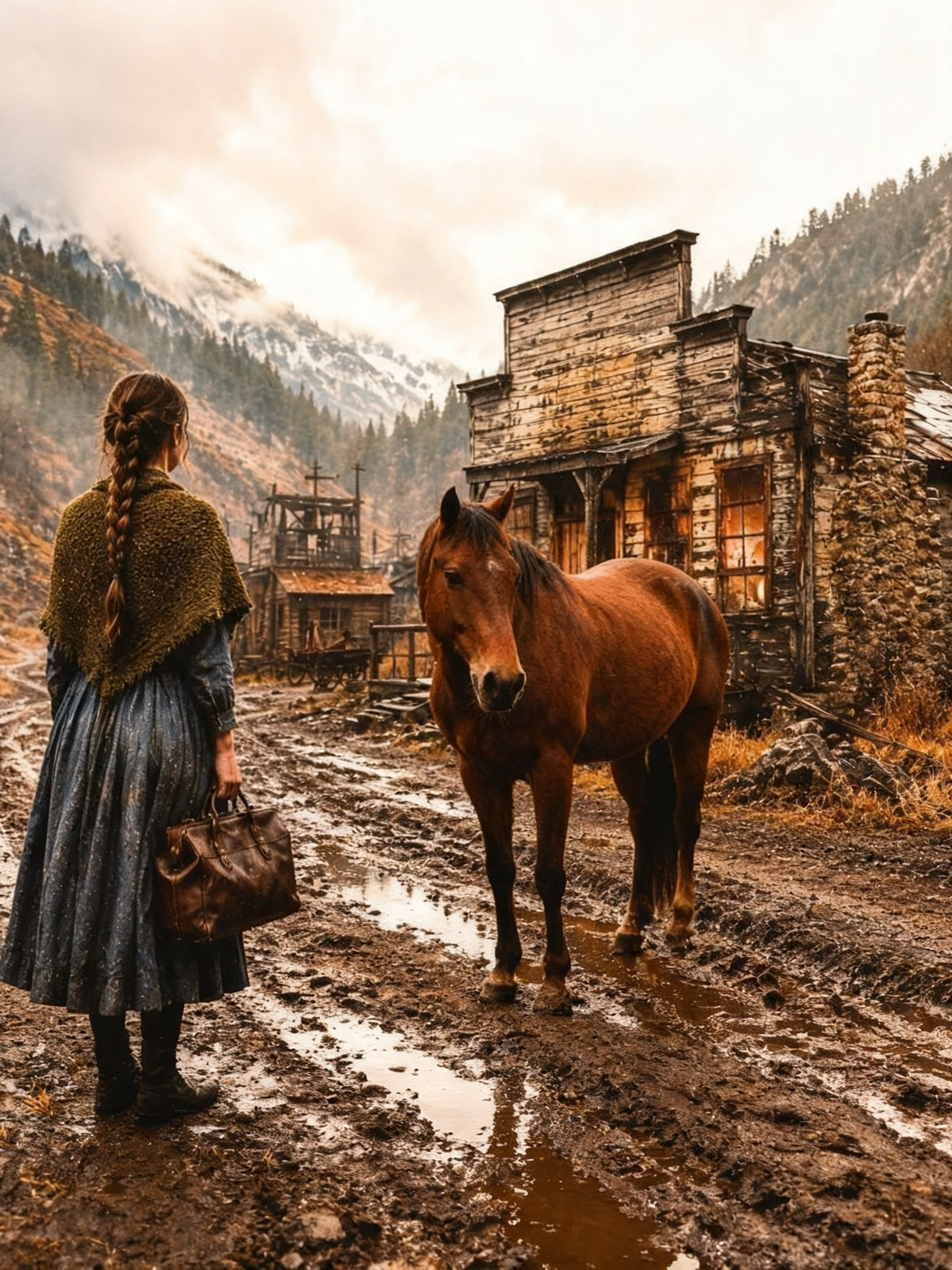
Kicked Out at Eighteen, She Bought a $1 Gold Assay Office—Then Her Family Came for the Vault
Three days after my eighteenth birthday, my aunt put my clothes in black trash bags, set them on the porch, and told me the locks would be changed before sunset.
My uncle stood behind her holding my late mother’s silver bracelet in one hand and a cup of coffee in the other.
“You’ve cost this family enough,” Aunt Denise said. “Now you can learn what the real world does with girls who have nothing.”
I looked at the bracelet.
Then at her.
Then at the four garbage bags lined neatly beside the porch rail.
I did not cry.
That seemed to bother her more than anything.
My cousin Melissa leaned against the doorframe in the cream sweater my mother had bought me the Christmas before she died.
She smiled when she noticed me looking.
“What?” she said. “You weren’t going to need it.”
Behind her, Uncle Ray laughed softly.
That was the moment I understood something I should have understood years earlier.
They had never considered me family.
They had considered me inventory.
My mother, Caroline Mercer, died when I was sixteen after an eight-month fight with pancreatic cancer.
Before she got sick, she worked two jobs.
Bookkeeper at the county equipment dealership from eight to four.
Waitress at Cora’s Diner from six until closing.
She did not work that hard because she enjoyed exhaustion.
She worked because my father disappeared when I was nine and because my mother had one religion above all others:
Bills got paid.
She kept our rent current.
She kept food in the refrigerator.
She saved enough for my braces.
She bought used textbooks instead of letting me pretend I did not need them.
When her hands began shaking from chemo, she still sat at our kitchen table every Sunday night with a yellow legal pad and balanced every dollar.
Then she died.
And the relatives who had barely visited suddenly became deeply interested in helping.
Aunt Denise said I should stay with her and Uncle Ray “until I got on my feet.”
At sixteen, I did not have feet.
I had grief.
I had a backpack.
I had thirty-eight dollars.
And I had a mother-shaped hole in every room I entered.
So I moved into their house outside Silver Junction, Nevada.
For twenty-one months, I cleaned.
I watched their eight-year-old son after school.
I helped Melissa with college applications even though I was the one getting straight A’s.
I gave Uncle Ray the $312 monthly survivor benefit that came in my name because he said it was only fair.
I worked weekends at a grocery store.
And every time I asked about the small life insurance policy my mother had once mentioned, Denise’s mouth tightened.
“There wasn’t anything left.”
That was always the answer.
Nothing left.
Nothing left after medical bills.
Nothing left after funeral costs.
Nothing left after debts.
Nothing left except the few boxes they had taken from my mother’s apartment.
And according to Denise, most of that was junk too.
She said it so often I started hearing it in my sleep.
Nothing left.
Nothing left.
Nothing left.
Then I turned eighteen.
And three days later, suddenly I was too expensive to keep.
Denise folded her arms as I stood on the porch.
“You have until five to get this mess off my property.”
I glanced at my mother’s bracelet again.
“I’ll take that too.”
Uncle Ray frowned.
“The bracelet.”
His face changed.
But enough.
“It was your grandmother’s.”
“No. Grandma gave it to Mom on her twenty-fifth birthday. There’s a C engraved inside the clasp.”
Melissa rolled her eyes.
“Oh my God.”
I extended my hand.
For a long second, no one moved.
Then Uncle Ray dropped the bracelet into my palm.
It was still warm from his hand.
I put it into my jeans pocket.
Denise leaned toward me.
“You think being quiet makes you intimidating?”
“What does it make you?”
Her eyebrows pulled together.
“Certain of what?”
I lifted one garbage bag.
“That leaving is probably the nicest thing you’ve ever done for me.”
Melissa laughed.
Ray did not.
Neither did Denise.
I carried the bags to the curb one by one.
I did not ask where I was supposed to sleep.
I did not ask for money.
I did not remind them that I had babysat their son for free for nearly two years.
I did not demand repayment of my survivor checks.
I did not beg for my mother’s dishes, her old photographs, or the cedar chest Denise claimed had been donated.
I did not cry on their lawn.
I did not give them the satisfaction of watching me break.
I did not tell them about the brass key in my pocket.
That key was the first thing my mother had managed to hide from them.
Two weeks before she died, she had asked the hospital nurse to send Denise out of the room.
My mother weighed ninety-four pounds.
Her hair had fallen out.
Her lips were cracked.
But when the door closed, her eyes sharpened in a way I still remembered.
She reached beneath her pillow.
I moved closer.
She pressed a brass key into my hand.
Attached to it was a stamped metal tag.
“What is it?”
“Something boring.”
I almost smiled.
My mother coughed.
Then she whispered, “Boring things keep you alive.”
I stared at the key.
“If anybody asks, you lost it.”
“Lost what?”
She smiled.
That was the last joke we shared.
Two days later she slipped into a coma.
She never woke up.
I kept the key inside the hem of an old winter coat.
Aunt Denise searched most of my belongings after the funeral.
She never found it.
Now, standing beside four garbage bags at the curb, I felt its weight in my pocket beside the bracelet.
A bus stopped at the end of the road at .
I boarded with two bags.
The driver looked at the other two sitting alone by the mailbox.
“You coming back for those?”
He looked at me in the mirror.
“You sure?”
I looked through the window at Aunt Denise’s house.
Melissa was already taking pictures of the abandoned bags.
Probably for Instagram.
Probably with a caption about clutter.
“I’m sure.”
The bus took me downtown.
Silver Junction had been built around a mine that stopped mattering before most people in town were born.
The old brick buildings remained.
So did the faded signs.
HARDING SUPPLY.
NEVADA WESTERN FREIGHT.
CROWN ASSAY & MINERAL.
The mine offices became boutiques.
The miners’ boardinghouse became short-term rentals.
Everything historic eventually became either decorative or expensive.
Everything except Crown Assay.
That building sat three blocks behind Main Street, boarded up behind a rusted fence.
I had passed it a hundred times.
I knew almost nothing about it.
Except one thing.
County Surplus was auctioning it that afternoon.
I knew because I had seen the notice taped to the library bulletin board.
CITY OF SILVER JUNCTION.
ABANDONED PROPERTY LIQUIDATION.
OPENING BID: $1.
Most people assumed the one-dollar opening bid was a gimmick.
It was not.
The city had acquired the property after thirty-two years of unpaid back taxes, then failed twice to attract a developer because environmental remediation estimates were ugly and the building was considered structurally questionable.
I knew all that because the library computer was free.
And because I had spent the previous month researching every option available to someone about to become legally homeless.
I arrived at the municipal annex twelve minutes before bidding closed.
A woman with tortoiseshell glasses sat behind a folding table.
“Property auction?”
She looked behind me.
“Parent coming?”
She studied my face.
“How old are you?”
“Eighteen.”
“Identification?”
I gave it to her.
Five minutes later, I was registered as Bidder 14.
Only six people attended.
Two wanted old city vehicles.
One wanted a storage lot.
A contractor named Earl Denton bid on three condemned houses.
Nobody raised a paddle when Crown Assay was announced.
The clerk read the parcel number.
“Opening bid one dollar.”
I raised my hand.
Someone laughed.
The auctioneer looked surprised.
“One dollar from fourteen. Do I hear ten?”
Earl Denton turned around and looked at me.
He knew me from the grocery store.
His face said I had lost my mind.
“Two dollars?”
Still nothing.
The auctioneer sighed.
“Sold. One dollar.”
The room chuckled.
I signed fourteen pages.
I agreed that the city made no warranty about habitability.
I accepted liens associated with future remediation.
I acknowledged the building might contain asbestos, lead paint, unstable masonry, rodent contamination, industrial residue, or “unknown hazards consistent with historical mineral testing.”
The clerk slid the final paper toward me.
“You understand you can’t legally occupy it until inspection?”
“You understand the vault is sealed?”
That got my attention.
“The vault?”
She pointed to an old photocopied floor plan.
Near the back of the building was a square room labeled SECURE SAMPLE STORAGE.
“There’s an old walk-in assay vault. Door’s rusted shut. City never opened it.”
She shrugged.
“Nothing worth opening.”
There it was again.
One dollar.
Plus recording fees.
Plus future problems I could not afford.
But at that afternoon, while Aunt Denise was changing the locks on a house that had never been mine, I owned a 112-year-old brick building with a cracked roof, boarded windows, two chimneys, one condemned staircase, and a sealed vault.
I spent the night at a women’s shelter.
The next morning, I walked to Crown Assay.
Someone had spray-painted GHOST OFFICE across the plywood covering the front window.
The city had given me a ring with eight keys.
Only three worked.
The front door opened after I kicked the frame twice.
Dust drifted through my phone flashlight.
There were long counters.
Broken scales.
Wooden drawers labeled SILVER, GOLD, COPPER, LEAD.
A porcelain sink stained dark gray.
An ancient ventilation hood hung over a furnace alcove.
In the back room stood the vault.
Six feet tall.
Four feet wide.
Its wheel handle was locked beneath decades of reddish corrosion.
I stood in front of it for a long time.
Then I noticed something.
One of the old brass labels on the wall beside it had been polished recently.
Just cleaner than everything around it.
B17 SAMPLE INDEX.
My hand went to my pocket.
I pulled it out.
There was no visible keyhole on the vault.
I searched the wall.
I searched the cabinets.
Then I opened drawer B beneath the old assay counter.
Seventeen narrow sample slots.
Slot seventeen contained a small metal box.
The brass key fit.
Inside were three things.
A photograph.
A handwritten note.
And a folded county tax map.
The photograph showed my mother.
She looked about twenty-five.
Long brown hair.
Denim jacket.
Standing in front of Crown Assay.
Beside her was a man I recognized immediately.
Not because I knew him.
Because everybody in Silver Junction knew his face.
Arthur Crown.
The last owner of Crown Assay.
Mining engineer.
Local eccentric.
Dead fourteen years.
The town history display at the library called him “the final independent mineral assessor of the Silver Junction district.”
In the picture, Arthur had one arm around my mother’s shoulders.
On the back, someone had written:
Caroline, 2008.
Truth weighs more than gold.
My fingers went cold.
I unfolded the note.
If you are reading this, either I waited too long or somebody else moved first.
Do not open the vault alone.
Do not sell the building.
Do not trust anyone who tells you Crown Assay is worthless.
Most important: if Denise says she knows nothing about Arthur Crown, she is lying.
Below that was my mother’s signature.
And one final line.
Before you touch the wall, ask who benefits if you disappear.
I read it three times.
Then I locked the building and went to the library.
Arthur Crown had no children.
His wife died in 1999.
His obituary listed no surviving relatives.
He owned Crown Assay until his death in 2012.
The property entered probate.
Then something strange happened.
The estate remained unresolved for almost twelve years.
Unpaid taxes accumulated.
Claims were filed.
Claims were withdrawn.
Eventually the city foreclosed.
The newspaper archive gave me one more detail.
For nine years before his death, Arthur Crown’s bookkeeper had been my mother.
Caroline Mercer.
I sat staring at the screen until the words blurred.
She had never told me.
I searched her name with his.
A single article appeared from 2010.
LOCAL ASSAYER CHALLENGES LAND CONSOLIDATION DEAL.
Arthur Crown had accused Silver Ridge Development Group of using questionable mineral valuations to acquire old family mining claims for pennies on the dollar.
Silver Ridge Development.
My stomach tightened.
Uncle Ray worked for them.
Not in 2010.
He had been their regional property manager for six years.
Their current project involved more than 8,000 acres outside Silver Junction, where they planned a luxury desert resort, private solar complex, and data-storage campus.
The county called it the largest development agreement in its history.
I had heard Uncle Ray brag about it at dinner.
“This town will be unrecognizable.”
He was right.
I just had not understood why.
I printed everything.
Then I walked to the only person in town whose name appeared repeatedly beside Arthur Crown’s in old legal notices.
Harold Pike.
His office had become a tax preparation business, but the woman inside told me Harold lived three streets over.
He was eighty-one.
He answered the door carrying an oxygen tube and wearing suspenders over a white undershirt.
I showed him the photograph.
He invited me inside without asking my name.
That scared me more than if he had slammed the door.
“You’re Caroline’s girl.”
He closed his eyes.
“You knew her?”
“I represented Arthur.”
He sat slowly.
His living room smelled like peppermint and old paper.
“Your mother came to me once after Arthur died.”
“About six months later.”
“What did she want?”
“To know whether an unrecorded custodial trust could survive probate fraud.”
That was not the answer I expected.
“What fraud?”
Harold looked at me.
“You should probably stop asking questions.”
He studied me longer.
“You sound like her.”
“People keep saying things about my mother as if I knew the same woman they did.”
“You didn’t.”
The words hurt.
“That came out wrong.”
“Then say it right.”
His mouth twitched.
“Caroline protected you from adult problems.”
“What problems?”
Harold tapped the photograph.
“Arthur discovered that several mining families around Silver Junction had been cheated out of mineral rights. Not by one man. By a network. Appraisers. Title agents. County people. Developers. Lawyers.”
“Silver Ridge?”
“That company came later. Same bloodline.”
“What does my aunt have to do with it?”
“I don’t know.”
“That’s not true.”
Harold did not answer.
I placed my mother’s note on his coffee table.
He read the line about Denise.
His face changed.
That was enough.
“Your mother believed Denise copied something from her house shortly before she died.”
“What records?”
“Whatever Arthur left Caroline.”
“Why would he leave her anything?”
Harold looked toward the window.
“Because she caught him cheating.”
“On taxes?”
He laughed so suddenly he began coughing.
“No. On sample classifications.”
He caught his breath.
“Arthur had started altering assay results.”
“To protect landowners.”
“That sounds illegal.”
Harold leaned forward.
“But imagine you’re an elderly rancher sitting on land your family has owned since 1914. A company wants to buy it for $220,000. Arthur tests the rock and discovers a mineral seam that could make the property worth twenty times that.”
“So he hid the result?”
“For a while. Long enough for the owner to get independent counsel.”
“And my mother found out.”
“What did she do?”
“She told him if he ever altered another client record without consent, she’d report him.”
“That sounds like Mom.”
“He hired her full-time the next morning.”
For the first time since I arrived, Harold smiled.
“Arthur said Caroline Mercer was the first person he’d met in thirty years who was more stubborn than greed.”
I looked at the picture again.
“Did he leave her the building?”
“What did he leave?”
Harold’s smile vanished.
“I never saw the final inventory.”
“You were his lawyer.”
“I prepared an earlier trust. He replaced portions of it shortly before his death.”
“Who prepared the replacement?”
“Someone I recommended.”
Harold stared at my mother’s note.
Then he said, “Denise’s former husband.”
I felt something cold move through me.
“Aunt Denise was married before Ray?”
“Martin Vale.”
I knew that name too.
Everyone did.
Martin Vale was general counsel for Silver Ridge Development.
I walked back to the assay office before dark.
I did not tell Harold.
I did not tell the shelter.
I did not tell anyone.
Because my mother’s warning had stopped feeling dramatic.
It felt procedural.
Do not open the vault alone.
Do not trust Denise.
Ask who benefits if you disappear.
At the building, I photographed every document I had found.
I uploaded copies to a cloud account.
Then I emailed them to myself.
Then to Harold.
Then I created a scheduled message to send them to a local reporter if I failed to cancel it every twenty-four hours.
I had learned something from my mother.
Fear was most useful when converted into paperwork.
The next morning Aunt Denise called.
I almost ignored it.
“Where are you?” she asked.
“Don’t be stupid.”
“About which part?”
“We heard about the building.”
Of course they had.
Silver Junction was the kind of town where a teenager could not buy a condemned historic property without the story reaching every diner table by breakfast.
Denise sounded almost amused.
“You actually spent money on that death trap?”
“One dollar.”
“You inherited your mother’s judgment.”
That was meant to hurt.
“Then I got a good deal.”
She exhaled sharply.
“Ray says the city will probably condemn it again.”
“Then he won’t need to worry.”
She changed direction.
“You left two bags here.”
“Throw them away.”
“Your birth certificate is in one.”
That was a lie.
My birth certificate was in my backpack.
Another silence.
Then the real reason for the call arrived.
“There’s apparently an old steel vault inside the property.”
I sat very still.
“Is there?”
“Ray remembers hearing about it.”
“Years ago.”
“I lived in your house for twenty-one months and nobody ever mentioned Crown Assay.”
Her voice hardened.
“Don’t play games with adults, Emma.”
“I’m eighteen. That was the theme of your porch speech.”
She hung up.
By noon, Uncle Ray arrived at the building.
He brought Earl Denton, the contractor who had been at the auction.
I met them outside.
Ray smiled like nothing had happened.
I stared at him.
He stopped smiling.
“Look, Denise got emotional.”
“She packed my underwear in lawn bags.”
He cleared his throat.
“We’re worried about you.”
“No, you’re worried about the vault.”
Earl looked away.
Ray’s jaw tightened.
“Who told you there’s anything in the vault?”
“You did. Yesterday. Through Denise.”
He stared at me.
I smiled slightly.
He hated that.
“Earl says this whole rear wall could collapse.”
“Then you probably shouldn’t stand here.”
“We can help you.”
“With what?”
“There it is.”
He stepped closer.
“You think owning something makes you smart?”
“You got lucky.”
“Silver Ridge has already been approached about acquiring this block.”
That was news.
He realized it a fraction too late.
I said nothing.
He continued anyway.
“The entire corridor is scheduled for redevelopment.”
“Then why didn’t Silver Ridge bid one dollar yesterday?”
His nostrils flared.
“Because nobody knew the city was stupid enough to sell it outright.”
“That information was public for forty-five days.”
Earl coughed into his fist.
Ray looked at him.
Then back at me.
“I can get you fifty thousand dollars.”
I nearly laughed.
“For a building worth nothing?”
“You’d be paid for convenience.”
“Convenience for who?”
“Fifty thousand.”
“I paid one.”
“You see why this is a gift?”
I opened the front door.
His expression changed.
“Don’t get greedy.”
“I haven’t asked you for anything.”
“You think this town owes you?”
“You think because Caroline filled your head with stories—”
“What stories?”
Ray went quiet.
Earl looked from him to me.
I stepped closer.
“What stories did my mother tell me?”
Ray recovered.
“About being cheated. About people taking advantage of her. She always thought somebody was against her.”
“My mother never said that.”
“Well, she did to Denise.”
I watched his face.
He wanted me angry.
Anger makes people reveal things.
My mother had taught me that too.
So I simply asked, “Was Denise worried about what was behind the vault wall before Mom died, or only afterward?”
Ray’s face emptied.
One second.
That was all.
Then he laughed.
But it came late.
“I don’t know what you’re talking about.”
He stepped toward me.
“Fifty thousand disappears at five.”
I unlocked the door.
“That sounds like your emergency.”
“Your mother would’ve taken it.”
I looked at him.
“My mother would’ve asked why you were offering it.”
That evening, someone broke into the building.
They did not take the copper pipes.
They did not take the old brass scale.
They did not take my tools.
They went straight to drawer B.
Slot seventeen had been pulled out.
The empty metal box was gone.
So was the original note from my mother.
That should have terrified me.
Instead, it gave me the first mini-payoff I needed.
Because I had moved the originals.
The box they stole contained photocopies.
And taped beneath it was a cheap motion camera I had bought that afternoon.
The footage showed Earl Denton entering at a.m.
At , Uncle Ray entered behind him.
At , a third person appeared.
A man in a dark coat.
I could not see his face.
But I recognized the watch.
Black leather band.
I had seen it in every Silver Ridge promotional video.
Martin Vale.
Denise’s first husband.
By sunrise, I had copies of the footage in three places.
At nine, I walked into the sheriff’s office.
Deputy Linda Perez watched the video twice.
“Why would a development company’s general counsel be breaking into a condemned assay office?”
“That’s what I’d like to know.”
“You sure it’s Vale?”
“Can you prove it?”
“Ray Mercer?”
She paused the video.
“You know Ray’s brother is on the county commission.”
“I do now.”
She looked at me.
“That doesn’t mean anything.”
“I didn’t say it did.”
“You’re careful.”
“I’m learning.”
Perez studied me.
Then she printed an incident report.
“I’ll file this.”
“Will anyone investigate?”
Her answer came too fast.
So did she.
“You don’t trust me.”
“I don’t know you.”
She slid the report number across the desk.
“Then trust the number.”
Outside, I received a text from Denise.
WE NEED TO TALK AS A FAMILY.
YOU ENDED THAT MEMBERSHIP THREE DAYS AGO.
She called immediately.
I declined.
She called again.
Then a text.
YOUR MOTHER OWED US.
That was new.
I answered.
No response.
Ten minutes later:
MORE THAN YOU UNDERSTAND.
SEND RECORDS.
That was when I knew the debt was imaginary.
People who have proof love paperwork.
People who have stories love phone calls.
By Friday, Silver Ridge formally offered me $175,000 for Crown Assay.
The letter came from Martin Vale.
The same man whose watch I had seen on my break-in video.
I read the offer at the library.
Then I searched the parcel map my mother had left.
The assay property looked tiny.
Less than half an acre.
But the old county tax map included a hand-drawn red boundary extending behind the building beneath an abandoned rail spur.
I compared it to modern GIS records.
Something did not match.
The modern parcel ended at the rear brick wall.
The old map extended another 142 feet.
I brought both maps to Harold.
He studied them for twenty minutes.
Then asked for a magnifier.
“This rear strip was severed.”
“Looks like 2013.”
“After Arthur died.”
“Who owns it now?”
He looked at the modern parcel number.
“Silver Ridge Land Holdings.”
Harold pulled his phone closer.
“Quitclaim deed.”
“From who?”
He searched.
Then stopped.
“Caroline Mercer.”
My stomach dropped.
“My mother sold it?”
Harold zoomed in on the scanned deed.
“How do you know?”
“Because Caroline never signed her middle initial like that.”
“You remember her signature?”
“I notarized it twenty years.”
He turned the screen toward me.
“Your mother always wrote Caroline E. Mercer with the E open. This is closed.”
“That seems small.”
“In forgery cases, small is useful.”
I stared at the deed.
“Who notarized this one?”
Harold enlarged the block.
Neither of us spoke.
The notary was Denise Vale.
The room felt suddenly too narrow.
I looked at Harold.
“Can a notary certify her own sister’s forged signature?”
“Legally? No.”
“Can it be undone?”
“That depends.”
“Whether the underlying title was Caroline’s.”
“What do you mean?”
Harold sat back.
“If Arthur’s later trust granted her beneficial control, maybe.”
I hated that word.
“Where’s the trust?”
“I don’t know.”
“Behind the vault wall?”
“I don’t know.”
“Did my mother?”
“Probably.”
I thought about her warning.
Do not open the vault alone.
The vault itself opened two days later.
Not with force.
With vinegar.
Penetrating oil.
And a locksmith named Sam Avery who had serviced bank vaults for forty-one years.
Deputy Perez stood beside us because I had asked for a witness.
Harold came too.
Sam worked three hours.
At p.m., the wheel moved.
Dust shook loose.
The steel bolts retracted.
The vault opened six inches.
Cold stale air rolled out.
Inside were metal shelves.
Most were empty.
A few held old assay crucibles.
Paper packets.
Ore samples.
One wooden chair.
Nothing worth $175,000.
Ray had been right.
At least for the first four minutes.
Then Harold tapped the back wall with his cane.
The vault was twelve feet deep.
The exterior building plan showed seventeen.
Five feet missing.
Sam knocked along the steel rear panel.
Then hollow.
A false wall.
Deputy Perez stared at me.
“Your mother said behind the wall.”
Sam found four recessed bolts painted over.
We removed them.
The steel panel did not swing.
Behind it was a narrow cavity.
And inside that cavity sat twenty-six gray archival boxes.
Thousands of pages.
Assay reports.
Original land surveys.
Correspondence.
Trust documents.
Photographs.
Bank records.
Notarized affidavits.
And a handwritten ledger with Arthur Crown’s name embossed in the leather.
Harold sat down on the vault floor.
“Oh, Arthur.”
I opened the first box.
MORROW FAMILY CLAIM.
The second.
NAVARRO RANCH.
PIKE CREEK MINERAL.
Each contained paired assay reports.
One legitimate.
One altered.
Some differences were enormous.
0.04 ounces per ton versus 0.81.
Trace lithium versus commercially significant concentrations.
No rare-earth concentration versus high-grade zones.
Every altered report appeared to have been used in land transactions.
Every buyer was a shell company.
Many eventually transferred property to the same three corporate networks.
One of them became Silver Ridge.
My mother had not hidden treasure.
She had hidden a crime scene.
Harold picked up Arthur’s ledger with both hands.
His voice shook.
“This could unwind half the valley.”
Deputy Perez looked at me.
“Do not take these home.”
“I don’t have one.”
She winced.
“I’m sorry.”
“Don’t be.”
She looked around.
“You need outside counsel.”
Harold shook his head.
“I’m too old and too connected.”
“Connected how?”
“I represented Arthur.”
“That helps.”
“It also makes me a witness.”
Perez nodded.
“State attorney general.”
Harold looked worried.
“Maybe federal.”
That was when we heard a car door outside.
Then another.
Then another.
Perez drew her sidearm.
“Stay here.”
She stepped out.
A minute later she returned.
“Silver Ridge.”
Martin Vale entered with two attorneys.
Behind them came Uncle Ray.
And County Commissioner David Mercer.
Ray’s older brother.
One company.
One elected official.
One family.
Martin Vale did not look at me first.
He looked directly at the open vault.
Then the boxes.
Then Harold.
Only after that did he smile at me.
“Emma Mercer.”
“You know who I am.”
“Of course.”
“No. You knew before the auction.”
That made his smile thinner.
“We’re here because this property contains records belonging to clients of a predecessor entity.”
Deputy Perez stepped between us.
“You’re here because I allowed you through the door.”
Martin did not look at her.
“Our attorneys have reason to believe proprietary materials were improperly retained.”
Harold laughed from inside the vault.
“Proprietary fraud?”
Martin’s expression sharpened.
“Mr. Pike.”
“You should be careful.”
“I’m eighty-one and carrying oxygen. Be specific.”
Ray stepped toward me.
“This is exactly why we told you to sell.”
“You never told me why.”
“We were trying to protect you.”
“By breaking in?”
Martin looked at Ray.
Ray looked at the floor.
Mini-payoff.
I pulled out my phone.
“Mr. Vale, before you say anything else, you should know the building has cameras.”
His face did not move.
But Commissioner Mercer’s did.
I continued.
“The sheriff’s office has copies.”
Perez said nothing.
Martin adjusted his cuff.
“Then there’s no need for theatrics.”
I looked at the boxes.
“There really isn’t.”
He handed me a document.
“This is a preservation notice.”
Harold took it before I could.
Martin ignored him.
“Emma, you are eighteen years old.”
“So everyone keeps reminding me.”
“You don’t understand the scope of what you’ve found.”
“I understand someone forged my mother’s signature.”
Ray snapped, “Watch yourself.”
The room went silent.
I looked at him.
He realized his mistake.
He did not answer.
I asked again.
“Why should I watch myself?”
Martin stepped in.
“Ray means accusations carry consequences.”
I held his gaze.
“Then consequences won’t bother innocent people.”
That afternoon, three state investigators arrived.
Perez had made the call before Martin even entered the building.
By sunset, the vault was sealed again.
Not because Silver Ridge wanted it.
Because the Nevada Attorney General’s financial crimes unit placed evidence tape across the opening.
I thought that meant I had won something.
I was wrong.
The next morning, Denise appeared at the shelter.
She wore a navy coat.
Pearl earrings.
Hair perfect.
She looked like she was attending a church committee meeting, not visiting the niece she had thrown into the street.
The shelter director asked if I wanted her removed.
We sat in the courtyard.
Denise placed a folder between us.
“Your mother didn’t tell you everything.”
“That appears to be a family tradition.”
“Caroline stole those records.”
“Then why did you forge her name on a land deed?”
For the first time, she lost color.
Only briefly.
Then she recovered.
“I don’t know what you’re talking about.”
“I have the deed.”
“It was notarized years ago.”
“I notarized hundreds of documents.”
“You don’t remember your own sister?”
Her mouth tightened.
“You think this is simple because you’re young.”
“You keep using my age as evidence.”
“It is evidence.”
“That you don’t understand how badly your mother hurt people.”
There it was.
The moral inversion.
The thing bad people do when facts become inconvenient.
They borrow the language of injury.
“Arthur Crown made promises he couldn’t keep. Caroline helped him hide assets. Families lost money because of them.”
“Which families?”
“People you don’t know.”
“It doesn’t matter.”
“It matters if you’re accusing my dead mother.”
Denise leaned closer.
“Your mother took something that did not belong to her.”
She looked at me for a long time.
Then smiled faintly.
“You really don’t know.”
That sentence was designed to destabilize me.
It almost worked.
Instead I asked, “Did Mom ever tell you what the B-17 key opened?”
Denise froze.
Another mini-payoff.
Another buried wire pulled tight.
I leaned back.
“You really don’t know.”
Her face changed.
That was the first time I saw fear.
Not irritation.
“Sell the property.”
“Take the offer.”
“You think those documents make you powerful.”
“What do you think they make you?”
“Difficult to erase.”
She stared at me.
Then lowered her voice.
“Caroline thought the same thing.”
She walked away before I could answer.
I called Perez.
I repeated the exact words.
She told me to stay inside.
By noon, state investigators moved me temporarily into a hotel under a victim assistance program.
I hated it.
Not because I was afraid.
Because I had spent two years being dependent on relatives who charged me emotionally for every meal.
Dependence felt dangerous.
Even kindness made my shoulders tighten.
I insisted on paying what I could.
The case grew faster than anyone expected.
Arthur Crown’s records implicated seventeen land transactions.
Then twenty-six.
Then forty-three.
Families who had sold acreage for almost nothing learned their original assay values had been falsified.
Several sellers were dead.
Some had lost ranches their grandparents homesteaded.
One widow, Joan Navarro, had sold 900 acres after being told the mineral rights were worthless.
Silver Ridge later leased the same underground rights for $11.8 million.
Joan was seventy-four.
She drove six hours to Silver Junction after investigators called.
I met her in the state field office.
She held a copy of Arthur’s original report.
Her hands shook.
“My husband said something was wrong.”
I did not know what to say.
She touched the page.
“He died thinking he failed us.”
That was the moment the building stopped being mine in my mind.
Not legally.
Crown Assay was evidence for people who had spent years blaming themselves.
That was bigger than money.
Bigger than revenge.
Bigger than anything Denise could understand.
My mother had known that.
Arthur had known it.
And someone had spent fourteen years making sure those families never found out.
The state froze several Silver Ridge land transfers.
Share prices of its parent company fell.
The county commission scheduled an emergency hearing.
Ray stopped going to work.
Martin Vale issued a public statement describing the investigation as “historical record irregularities lacking modern relevance.”
Then the second layer opened.
Harold called me late one night.
“Come tomorrow morning.”
“To your house?”
He gave me the address of a bank.
First Nevada Trust.
I arrived at nine.
Harold sat beside a woman named Grace Bell, senior trust officer.
She placed a sealed envelope on the table.
“This package has been in institutional custody since 2012.”
“Why wasn’t I told?”
“Because the release conditions were not met.”
“What conditions?”
She slid the envelope toward me.
“Acquisition of Crown Assay by the named contingent beneficiary.”
I stared at her.
Harold smiled sadly.
“Arthur planned farther ahead than I knew.”
Inside was a trust amendment.
Signed by Arthur Crown.
Witnessed by two people.
Filed privately with the bank.
The amendment granted beneficial rights to Crown Assay and certain associated mineral interests first to Caroline Mercer.
If Caroline died before taking possession, rights passed to her biological child, Emma Caroline Mercer.
But only if that child independently acquired Crown Assay through a lawful arm’s-length transaction.
One dollar counted.
My skin prickled.
“This was designed.”
“Yes,” Grace said.
“Why would he make me buy it?”
Harold answered.
“Because inheritance can be challenged.”
I looked at him.
“Purchase is harder.”
Grace nodded.
“The trust states Arthur believed multiple parties would attempt to suppress or intercept any direct transfer to your mother.”
I read further.
Then found the sentence.
No relative, guardian, spouse, creditor, custodian, fiduciary, or domestic household member of Caroline Mercer shall possess authority to acquire, assign, disclaim, encumber, settle, or transfer said contingent interest on behalf of Emma Mercer.
I thought about Denise.
The survivor benefits.
The missing life insurance.
The forged deed.
The trash bags on the porch.
Arthur had built a wall around a child he had never met.
“Did my mother know this?”
“Yes,” Grace said.
“Why didn’t she tell me?”
“Because another condition prohibited disclosure before your eighteenth birthday.”
I laughed once.
Not because it was funny.
Because the alternative was shaking.
“She died when I was sixteen.”
“What exactly did I inherit?”
Grace opened another file.
“Not the assay building alone.”
The building was the lock.
The one-dollar auction had been the key.
Arthur’s trust held residual mineral royalty interests dating back decades.
Most were tiny.
Some nearly worthless.
Some had expired.
But eleven were still producing.
Industrial borates.
Rare-earth extraction leases.
The current estimated trust value was $18.6 million.
I stared at the number.
It did not feel real.
Grace continued.
“There is also an unresolved claim associated with the rear parcel behind Crown Assay.”
“The forged deed.”
“If restored, its importance may be substantial.”
“How substantial?”
Harold looked at Grace.
Grace looked at the folder.
“The rear strip contains the only legally recorded access easement linking Silver Ridge’s current development corridor to the historic freight route.”
I understood slowly.
“They need that strip.”
“For the project.”
“How badly?”
Grace took a breath.
“The alternative access plan has been estimated at between twenty-two and thirty-one million dollars, assuming approval.”
I laughed again.
This time it was colder.
One dollar.
They had watched an eighteen-year-old girl buy the one property they could not afford for her to own.
No wonder Ray offered fifty thousand.
No wonder Martin broke in.
No wonder Denise suddenly wanted family conversations.
That afternoon, Silver Ridge raised its offer.
$2.4 million.
I declined.
The next day:
$4 million.
Three days later, Martin’s lawyers proposed $7.5 million plus a confidentiality agreement.
Ray texted me:
YOU’RE DESTROYING PEOPLE’S LIVELIHOODS.
WHICH PEOPLE?
Denise sent:
YOUR MOTHER WOULD BE ASHAMED OF WHAT YOU’RE DOING TO THIS FAMILY.
WHICH FAMILY?
Commissioner Mercer went on local radio and complained that “outside investigators and emotionally involved private parties” threatened economic development.
Two hours later, the attorney general confirmed his office was examining the commission’s land approvals.
He stopped giving interviews.
The people who had seemed untouchable did not collapse all at once.
That would have been too easy.
They cracked in small ways.
Earl Denton accepted an immunity agreement.
Then a title clerk resigned.
Then a retired county records employee admitted certain deeds had been backdated.
Then investigators found emails between Martin Vale and Denise.
Not recent.
One email mentioned “Caroline’s signature issue.”
Another said, “If the girl reaches majority without transfer, Crown mechanism becomes unpredictable.”
They had known.
Aunt Denise had not taken me in because she loved my mother.
She had taken me in because keeping me close was easier than wondering what I might inherit.
Suddenly every year made sense.
Every question about my mail.
Every missing document.
Every time Denise insisted on driving me to the bank.
Every time she opened letters “by accident.”
Every time Ray asked whether my mother ever talked about “old mining junk.”
They had not been raising me.
They had been monitoring me.
That hurt more than being kicked out.
The expulsion was honest.
The kindness had been surveillance.
I sat alone in the hotel room with my mother’s bracelet in my palm.
For the first time since this began, I cried.
Not loudly.
Not dramatically.
I let six tears fall.
Then I washed my face.
Called Grace Bell.
And asked for a complete accounting of every dollar that should have reached me after my mother died.
The answer came four days later.
My survivor benefits had been legal household support.
But there had been a $74,000 life insurance policy.
It had not disappeared into medical bills.
It had been paid to a custodial account.
Denise had controlled it.
The account was empty.
Payments included a kitchen remodel.
Melissa’s car.
A Caribbean vacation.
Credit card balances.
And a $19,500 transfer to Ray.
Grace looked almost embarrassed while explaining it.
I was finished being embarrassed by crimes committed against me.
We added it to the civil case.
The attorney general added it to theirs.
Melissa called me that night.
For the first time.
“You’re seriously going after Mom?”
“I’m seriously requesting my money.”
“She raised you.”
“She housed me.”
“For two years!”
“With my monthly checks.”
“You ate our food.”
“I cooked most of it.”
“She drove you places.”
“Usually because she wouldn’t let me keep my own documents.”
“You’re twisting everything.”
I looked out the hotel window.
“I’m untwisting it.”
Melissa’s voice cracked.
“Dad could lose his job.”
“He broke into my property.”
“Because you were acting crazy!”
“I bought a building.”
“You’re trying to ruin all of us over money.”
That almost made me laugh.
“It stopped being about money when I met Joan Navarro.”
She went silent.
I continued.
“Your parents helped cover up records that took land from families. My mother protected evidence. Your mother forged her signature. Your father broke into the building. And somehow I’m ruining you?”
“You don’t know what they went through.”
“Then tell them to explain it under oath.”
She hung up.
Two weeks later, Denise was charged with felony misappropriation related to my custodial account and referred for investigation on the notarized deed.
Ray was charged with burglary and evidence tampering.
Earl testified.
Martin Vale resigned from Silver Ridge.
He was not arrested.
That bothered me.
Harold said large systems sacrifice outer pieces first.
“Ray’s outer?”
“Who’s inside?”
Harold looked tired.
“That’s the right question.”
The civil court hearing to restore the rear parcel drew half the town.
Silver Ridge argued the 2013 deed had been relied upon for years and that undoing it would cause enormous economic harm.
My attorney, Rachel Kim, stood and said, “Fraud does not mature into legitimacy merely because it becomes convenient.”
The judge ordered the deed suspended pending a full title trial.
Outside the courthouse, cameras waited.
I hated them.
One reporter shouted, “Emma, are you going to block the Silver Ridge project?”
Another asked, “How does it feel to become a multimillionaire at eighteen?”
That question made me stop.
“Do you know who Joan Navarro is?”
The reporter blinked.
“Then that’s the story you should be asking about.”
I walked away.
The clip went everywhere.
For three days, strangers called me brave.
For three days, strangers called me greedy.
Both were useless.
I did not feel brave.
I felt busy.
Crown Assay needed a new roof.
The trust needed forensic accounting.
Forty-three families needed lawyers.
The state investigation widened.
The county opened an ethics review.
And my high school guidance counselor called to ask if I still planned to attend college.
I had forgotten I had been accepted.
I said yes.
Because my mother had worked two jobs for years so I would have choices.
I was not going to turn tragedy into my only identity.
Three months after Denise threw me out, the assay building passed structural stabilization.
I stood inside with a contractor while sunlight came through repaired windows.
The original counters remained.
So did the drawers.
So did the vault.
I decided the front half would become a small public archive and legal resource center for historic land records.
The back would remain controlled evidence storage until the cases ended.
Harold cried when I told him.
Then pretended he had dust in his eye.
Joan Navarro donated the first framed photograph.
Her husband.
Standing beside a fence line.
The caption read:
HE WAS RIGHT.
That mattered more to me than the millions.
Because money could restore land.
Money could pay lawyers.
Money could fix roofs.
But proof could return dignity to someone who died believing he had failed.
That was the inheritance.
Not the trust account.
Not the mineral royalties.
Not the easement.
The truth that somebody had preserved long enough for the powerless to use it.
Five months after the auction, Silver Ridge settled with nine families.
Sixteen more claims went into mediation.
The state filed charges involving fraudulent conveyances and conspiracy.
Ray pleaded guilty to trespass and evidence tampering in exchange for cooperation.
Denise did not.
She fought everything.
Of course she did.
Her attorney portrayed her as a stressed caregiver who “made imperfect financial decisions” while supporting an orphaned niece.
Rachel handed him bank records from the Caribbean vacation.
That line of defense died quickly.
Melissa moved out of state.
She never apologized.
I stopped needing her to.
Martin Vale disappeared from public view.
No charges.
No interviews.
No resignation statement beyond “personal reasons.”
That bothered me more every month.
Because Martin knew about the trust.
He knew about the vault.
He knew about the forged deed.
He knew about the “Crown mechanism.”
And yet when everyone around him began falling, he walked away clean.
Harold noticed my frustration.
“You think justice means catching everyone at once.”
“What do you think it means now?”
I looked through the assay office window at families gathering for the opening of the archive room.
“It means making sure they can’t bury it again.”
“Better answer.”
The public opening took place on a cold Saturday in November.
More than two hundred people came.
Some curious.
Some grateful.
Some angry.
Some ashamed.
Children of miners.
Grandchildren of ranchers.
People carrying yellowed deeds and family stories they had been told were useless.
I placed my mother’s photograph behind glass near the original assay counter.
Caroline, 2008.
Truth weighs more than gold.
Beneath it, I added one sentence.
She kept the records when keeping them was dangerous.
That was enough.
No dramatic plaque.
My mother would have hated attention anyway.
At four that afternoon, as the crowd thinned, a courier entered.
“Emma Mercer?”
“Certified delivery.”
He handed me a padded envelope.
No sender name.
Only a return address.
Harold was across the room speaking with Joan.
Rachel Kim stood near the front desk.
I opened the envelope.
Inside was a small cassette tape.
An old microcassette.
And a note.
The handwriting stopped my breathing.
My mother’s.
If Martin Vale is still free when you receive this, they found the records but not the reason Arthur made them.
Do not play this in Crown Assay.
Take Harold somewhere private.
Ask him why Arthur never reported the first falsified sample.
My skin went cold.
There was one more line.
And this one was not in my mother’s handwriting.
It was typed.
CAROLINE THOUGHT ARTHUR WAS PROTECTING LANDOWNERS.
SHE WAS WRONG.
I looked across the room.
Harold was laughing at something Joan said.
Then his eyes met mine.
His smile disappeared.
Maybe he recognized the tape.
Maybe he recognized my face.
Maybe both.
I walked toward him.
He glanced at the envelope.
Then at the door.
“Emma,” he said quietly. “Where did you get that?”
“A courier.”
His skin turned gray.
“Who sent it?”
“I don’t know.”
He reached for the tape.
I pulled it back.
My mother’s final warning moved through my mind.
Do not open the vault alone.
Do not trust anyone who says Crown Assay is worthless.
Ask who benefits if you disappear.
Ask Harold why Arthur never reported the first falsified sample.
People were still talking around us.
Coffee cups clicked.
Chairs scraped.
Someone laughed near the entrance.
Outside, winter sunlight hit the old brick wall in a strip of gold.
Harold lowered his voice.
“You need to close the building.”
“Because if that tape is what I think it is, the land fraud wasn’t the reason Arthur built the vault.”
My hand tightened around the cassette.
“What was?”
Harold looked toward the photograph of my mother.
For the first time since I had met him, I saw the same fear I had seen in Denise.
Not fear for himself.
Fear for me.
He whispered, “Your mother found out where the missing assay samples actually went.”
“What missing samples?”
Harold did not answer.
I looked toward the vault.
Then back at him.
And I asked the quietest question I had asked since the day my aunt put my life into trash bags.
“If everyone was so desperate to own this building… why did they let the city sell it for one dollar?”
✓ Lynn R. Adams
Kicked Out at Eighteen, She Bought a $1 Gold Assay Office—Then Her Family Came for the Vault Three days after my eighteenth birthday, my aunt put my clothes in black trash bags, set them on the porch…