Karen’s HOA Took Over My 1,000 Acres for 20 Years and Threatened to Arrest Me—Until I Revealed Who Owned Everything
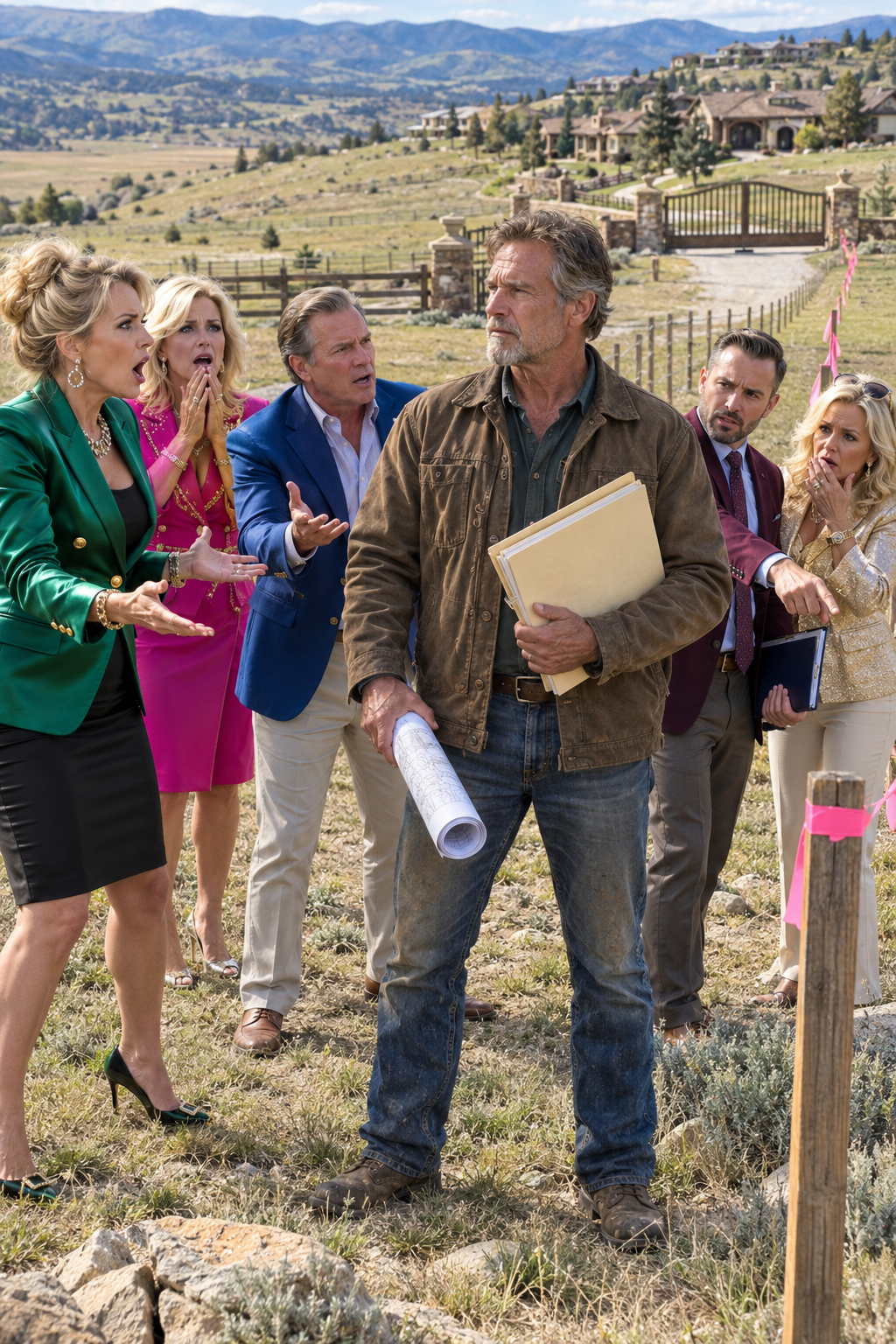
Karen’s HOA Took Over My 1,000 Acres for 20 Years and Threatened to Arrest Me—Until I Revealed Who Owned Everything
The woman who had been collecting millions of dollars from my family’s land for twenty years pointed a perfectly manicured finger at my face and ordered the sheriff’s deputy to arrest me for trespassing.
Then she handed me a bill for $184,600.
And when I told her she was standing on property I legally owned, she laughed so hard that the thirty-seven people gathered behind her started laughing, too.
“You people always have a story,” Karen Whitfield said, adjusting the diamond bracelet on her wrist. “But stories don’t beat property records, sweetheart.”
I looked at the gold-lettered sign behind her.
WELCOME TO CEDAR HOLLOW ESTATES.
PRIVATE PROPERTY OF THE CEDAR HOLLOW HOMEOWNERS ASSOCIATION.
Beyond the sign stretched a beautiful valley in the Missouri Ozarks.
Rolling hills.
A sparkling private lake.
Miles of paved walking trails.
A luxurious clubhouse with white columns.
Tennis courts.
A wedding pavilion overlooking the water.
And nearly a thousand acres of forests, meadows, and streams that had belonged to my family since 1948.
Karen stood there in a $3,000 cream-colored pantsuit, surrounded by security guards and HOA board members, looking at me as though I were a homeless stranger who had wandered into her backyard.
She had no idea that the land beneath her expensive heels was part of the Mercer Family Land Trust.
She had no idea that I had become the successor trustee after my father’s death.
And she certainly had no idea what I had discovered inside an old metal filing cabinet three nights earlier.
I didn’t argue.
I didn’t threaten her.
I didn’t tell her what my attorney had already found.
I didn’t mention the county records that had kept me awake until four in the morning.
I didn’t even ask her to remove the security guard who was gripping my elbow.
Instead, I opened my purse, took out a small notebook, and wrote down the exact time.
Then I smiled.
“Karen,” I said, “before you have me arrested, could you answer one question?”
She folded her arms.
“Make it quick.”
“When was the last time anyone on your board actually looked at the deed to these thousand acres?”
For a moment, her smile tightened.
Then she waved toward the deputy.
“Get her out of here.”
And that was the moment I knew I had found the right place to start.
My name is Caroline Mercer.
I’m forty-three years old, divorced, and the last surviving child of Daniel Mercer, a quiet Missouri farmer who believed a handshake should mean something and a signed contract should mean even more.
My father died three years ago.
He left me his farmhouse, a collection of antique tractors, forty-seven boxes of paperwork, and a family trust that held 1,000 acres of some of the most beautiful land in southern Missouri.
At least, that was what the estate inventory said.
For most of my adult life, I had lived in St. Louis.
I worked as a civil engineering consultant, specializing in land development and infrastructure planning.
That meant I understood surveys.
I understood property boundaries.
I understood the difference between a parcel number on a marketing brochure and an actual recorded deed.
And, perhaps most importantly, I understood that people who built expensive things on land they didn’t own could make extraordinarily expensive mistakes.
But none of that prepared me for what I found when I returned to my father’s property.
The trouble began with a rusty gate.
It was a narrow farm entrance along County Road 17, almost completely hidden by honeysuckle and wild grapevines.
As a child, I had ridden through that gate on horseback with my father.
He used to stop beside the enormous white oak just inside the property line, take off his hat, and tell me to listen.
Not to the birds.
Not to the wind.
To the water.
There was a spring farther down the valley, and on quiet mornings you could hear it moving over limestone.
“Land talks, Carrie,” he used to say. “Most people just don’t stay quiet long enough to hear it.”
The last time I had visited that gate, the wooden posts were leaning and the gravel road had almost disappeared beneath the grass.
Now the entrance was paved.
A black steel barrier stretched across it.
A security camera watched from a concrete pillar.
And a polished metal sign announced that the road belonged to Cedar Hollow Estates.
I parked my dusty silver pickup on the shoulder and stepped out.
I had barely reached the gate when a security guard emerged from a small stone booth.
He was a broad-shouldered man in his fifties, with a shaved head and a radio clipped to his belt.
“Residents only,” he said.
“I’m not a resident.”
“Then you’ll need to turn around.”
“I’m here to inspect my property.”
He looked at my boots, my faded denim jacket, and the old pickup.
Then he laughed.
“Lady, this is Cedar Hollow. These places start at eight hundred grand.”
I studied him for a moment.
“What’s your name?”
“Last name?”
“Dalton. Why?”
I wrote it down.
“Rick, who’s your employer?”
“Cedar Hollow HOA.”
“And who told you this land belongs to Cedar Hollow?”
He frowned.
“Everybody knows it does.”
“That’s interesting.”
I walked back to my truck, opened the glove compartment, and took out a photocopy of an old survey.
Rick’s expression changed when he saw the large red boundary drawn around the valley.
“What’s that supposed to be?”
“A question your employer needs to answer.”
He reached for his radio.
Within fifteen minutes, a white Mercedes SUV came racing down the private road.
Karen Whitfield stepped out.
She was fifty-six, blonde, perfectly dressed, and carrying the kind of expensive leather handbag that cost more than my first car.
Two other women followed her.
One wore an emerald-green blazer. The other had a pink silk scarf tied around her neck.
Karen looked me up and down.
“Are you the trespasser?”
“I’m Caroline Mercer.”
She didn’t recognize the name.
That told me more than she realized.
“I’m the president of this association,” she announced. “This is private property.”
“Yes,” I answered. “It is.”
She smiled.
“Good. Then we understand each other.”
“Not quite.”
I pointed toward the valley.
“Who owns the land?”
“The association.”
“Which parcel numbers?”
Karen blinked.
“The parcel numbers. There should be separate tax identification numbers for the residential subdivision and the surrounding acreage.”
The woman in the emerald blazer looked uncomfortable.
Karen did not.
“You’re not going to intimidate me with technical nonsense.”
“I’m asking a straightforward question.”
“And I’m telling you to leave.”
Then she made a phone call.
Twenty minutes later, a sheriff’s deputy arrived.
His name was Andrew Collins.
He listened while Karen accused me of trespassing, harassment, and attempted interference with HOA operations.
She also claimed I had damaged the gate.
I had not even touched it.
The deputy examined the undamaged gate, looked at my truck, and turned toward me.
“Ma’am, do you have any identification?”
I handed him my driver’s license.
Then I gave him a copy of the recorded trust certificate and the original boundary survey.
He studied them for several seconds.
Karen made a loud, impatient sound.
“Officer, these people print fake documents all the time.”
“Ma’am,” he replied, “I’m going to need you to let me finish.”
I liked him immediately.
He asked whether I had tried to force entry.
He asked whether I had threatened anyone.
Then he asked me something Karen apparently hadn’t considered.
“Are you claiming legal ownership of the land behind this gate?”
“Yes. The thousand-acre tract surrounding the residential subdivision. I’m the successor trustee of the family trust that holds title.”
Karen gave a short, ugly laugh.
“That’s ridiculous. We’ve been here twenty years.”
The deputy looked between us.
“Then this appears to involve a disputed property interest. I’m not going to decide ownership on the side of a road.”
Karen’s cheeks reddened.
“But you can arrest her!”
“Not based on what you’ve shown me.”
That was the first time I saw real irritation break through her polished smile.
And it was a useful thing to see.
Because people like Karen could maintain control when everyone around them was frightened.
They were much less comfortable when someone refused to be frightened.
I agreed to leave the gate area while the ownership question was reviewed.
Before I returned to my pickup, Karen stepped close enough that I could smell her perfume.
“You picked the wrong community to bother,” she whispered.
I looked at her.
“We have lawyers, money, and connections. Whatever little piece of farmland you think your daddy left you, I suggest you forget it.”
Her eyes flickered toward my survey.
Then she added something strange.
“Especially the south ridge.”
I hadn’t mentioned the south ridge.
I watched her walk away.
And I wrote that down, too.
The next morning, I received an email from Cedar Hollow’s management office.
It contained an official-looking notice accusing me of unauthorized entry, disruption of community security, intimidation of board members, and interference with private facilities.
The total amount allegedly due was $184,600.
Most of it was labeled “anticipated legal remediation and security assessment.”
One line charged me $12,500 for “emergency gate inspection.”
Another charged $31,000 for “reputational damage.”
A final paragraph offered to waive the charges if I signed an attached agreement recognizing the HOA’s exclusive authority over the property.
I read the agreement twice.
Then a third time.
On page seven, buried beneath several paragraphs of meaningless legal language, I found the sentence that explained everything.
The agreement would release any claims I might have concerning the ownership, use, or disposition of the surrounding 1,000-acre recreational tract.
I sat back in my father’s old kitchen chair.
Outside the window, an aging windmill turned slowly above the barn.
“Well,” I said to the empty room. “There you are.”
Karen wasn’t merely trying to keep me away.
She wanted my signature.
And she wanted it badly enough to threaten me with a bill larger than most people’s annual salaries.
I didn’t respond to the email.
I called my attorney.
His name was Michael Reeves.
He was fifty-one, had spent twenty-six years practicing property law, and possessed the unusual ability to sound mildly bored while discussing financial disasters.
He had helped settle my father’s estate.
When I told him about the HOA, he went quiet.
“Caroline,” he finally said, “did they send you anything to sign?”
“Seven pages.”
“Don’t sign it.”
“I wasn’t planning to.”
“Send it to me.”
Eleven minutes later, he called back.
His voice was no longer bored.
“Where did they get this description?”
“What description?”
“The legal description of the thousand-acre tract.”
“From my survey, probably.”
“No. This is an older description. It includes the eastern creek boundary before the county realigned the parcels.”
I stood up.
“At least twenty years.”
“Michael, my father signed some kind of agreement with Cedar Hollow when the development started. I haven’t finished going through his files.”
Something about the way he said those two words made me leave my coffee untouched.
For the next six hours, I worked through my father’s paperwork.
He was meticulous in ways that drove my mother crazy.
He kept receipts for fence posts purchased in 1987.
He kept every vehicle registration he’d ever received.
He even kept a handwritten record of rainfall for thirty-two consecutive years.
But the land records were different.
They were stored in a locked gray filing cabinet at the rear of his workshop.
I remembered that cabinet from childhood.
My father never let anyone use it.
The key had been hanging on a nail inside his bedroom closet.
When I opened the top drawer, I found folders labeled with dates, names, and numbers.
At the very back was a thick blue binder.
Written across the cover in my father’s careful handwriting were four words.
CEDAR HOLLOW — ORIGINAL AGREEMENT.
I carried it into the kitchen.
There were seventy-three pages.
The first twenty described the land.
The next eighteen contained maps.
The remaining pages were contracts, correspondence, receipts, and annual acknowledgments.
And when I reached page forty-one, I understood why Karen’s threat had sounded so desperate.
In 2006, a developer named Howard Baines had approached my father with a proposal.
He owned approximately 640 acres adjoining our family’s property.
He wanted to build a gated residential community.
Expensive homes.
A golf-style country club atmosphere.
Walking trails.
Lake access.
Quiet roads.
The problem was simple.
His 640 acres weren’t nearly enough to create the sprawling luxury environment he advertised.
He needed the beautiful land surrounding his subdivision.
My father refused to sell.
But Howard was persuasive, and my father was generous.
He believed allowing local families to enjoy the woods, meadows, and lake would be good for the community.
So he signed a twenty-year recreational stewardship license.
Under that agreement, the HOA could maintain approved trails, operate specified recreational amenities, and allow residents limited access to designated portions of the Mercer property.
In return, the association had to protect the land, maintain insurance, preserve the waterways, and obtain written permission before making significant changes.
The agreement explicitly stated that the HOA received no ownership interest.
No right to sell the land.
No authority to mortgage it.
No permission to transfer control to another developer.
And no right to construct permanent facilities outside the approved areas.
The agreement began on October 1, 2006.
Its original term ended on September 30, 2026.
Renewal required a new written agreement signed by the lawful property owner or trustee.
I checked the date on my phone.
The license had expired eight days earlier.
I turned to the final page.
There was my father’s signature.
Daniel Thomas Mercer.
Next to it was Howard Baines’s signature.
Both were notarized.
Then I found something even more important.
A stack of annual acknowledgment letters.
Every year, the HOA had signed a document confirming that its use of the Mercer land was permissive and did not establish ownership.
The last acknowledgment my father had signed was dated 2022.
After his death, the trust’s administrative attorney had issued notices reminding the association that the license remained in effect until its scheduled expiration.
There was no executed renewal.
No transfer.
And no signed agreement giving Karen’s board ownership of anything beyond the subdivision’s actual boundaries.
My father’s land hadn’t disappeared.
It had been covered with someone else’s expensive imagination.
I called Michael again.
“I found it.”
He listened while I explained.
Then he said, “Caroline, don’t go back to Cedar Hollow alone.”
“Because if the board has been operating under the impression that it owns this property, somebody is about to discover a very serious problem.”
I looked down at Karen’s demand for $184,600.
“I think somebody already has.”
Michael arrived the next morning carrying his own copy of the county records.
He spread them across my kitchen table while I made coffee.
On one side was a recorded plat showing Cedar Hollow’s residential lots.
On the other was my family’s thousand-acre tract.
The boundary was unmistakable.
Cedar Hollow owned roads and common areas within its original subdivision.
The family trust owned the surrounding woods, lake, meadowland, and hills.
The HOA had been allowed to use portions of that land under the license.
It had never bought it.
Michael traced the boundary with his finger.
“Here’s where things become interesting.”
“Interesting good or interesting expensive?”
He pointed toward a cluster of buildings near the lake.
“These weren’t on the approved improvements list.”
I leaned closer.
He was right.
The original license allowed a small wooden picnic shelter and two simple fishing docks.
But Cedar Hollow now had a massive stone clubhouse overlooking the water.
A lakeside restaurant.
A commercial wedding pavilion.
A boat rental office.
Three tennis courts.
And what appeared in recent aerial photographs to be a row of luxury vacation cabins.
All sitting outside the HOA’s recorded property boundaries.
“How much do you think they spent?” I asked.
Michael studied the photographs.
“Several million dollars.”
I stared at the page.
“On my land.”
“Apparently.”
I thought about the security guard laughing at my pickup.
Karen waving her diamond bracelet.
The ridiculous $184,600 demand.
For twenty years, people had been paying assessments to an association that claimed to control a thousand acres it did not own.
And somewhere along the way, that association had begun treating permission as a property deed.
Michael slid another document toward me.
It was a real estate listing.
CEDAR HOLLOW PRIVATE RECREATIONAL RESERVE.
1,000 ACRES OF EXCLUSIVE DEVELOPMENT OPPORTUNITY.
PRICE AVAILABLE UPON REQUEST.
I read the description twice.
Then I looked at the photographs.
My father’s lake.
My grandfather’s woods.
The spring-fed meadow where I had learned to ride horses.
All being advertised as part of a development opportunity.
“Who listed this?”
Michael pointed to the bottom of the page.
WHITFIELD PROPERTY HOLDINGS.
Karen’s husband’s company.
For a few seconds, neither of us spoke.
Then I felt something cold settle in my stomach.
This wasn’t a misunderstanding.
Somebody was preparing to make an enormous amount of money from property that wasn’t theirs.
And they needed me to disappear before anyone asked too many questions.
“How long has that listing been active?” I asked.
“At least six weeks.”
“And the asking price?”
“Not public. But I made a call.”
Michael opened his briefcase and removed another sheet of paper.
“A broker familiar with the transaction says a development group has offered eighteen million, six hundred thousand dollars for the recreational tract.”
I looked at him.
“$18.6 million?”
“Subject to verification of title and approval of development rights.”
I stared across the kitchen at my father’s photograph.
He was standing beside an old red tractor, one hand resting on the steering wheel, smiling into the afternoon sun.
He had worked that land for fifty years.
He had fixed broken fences in freezing rain.
He had carried injured animals out of the woods.
He had refused offers from developers who promised him enough money to retire anywhere in America.
And now a woman who couldn’t identify the boundaries of the property was apparently trying to sell it for almost nineteen million dollars.
“Michael,” I said, “why would Karen send me a settlement agreement if she’s already selling the land?”
“Because a title company will eventually ask who owns it.”
“And when they find the trust?”
“She’ll need something bearing your signature.”
I looked again at page seven of her proposed agreement.
A release of ownership claims.
I had nearly been charged $184,600 for the privilege of signing away a property worth millions.
“Can we stop the sale?”
“We can put everyone involved on formal notice immediately. And if someone is preparing unauthorized construction or transferring rights they don’t possess, we can ask a court to intervene.”
“How long?”
“That depends on what we can prove and how quickly the court can hear us.”
I folded the listing.
“Then we’d better prove it.”
For the next three days, I became the most boring person in Cedar Hollow.
At least, that was probably how Karen would have described me.
I didn’t drive around shouting at security guards.
I didn’t post angry videos on Facebook.
I didn’t call the board members thieves.
I went to the county recorder’s office.
I requested certified copies of every deed, plat, easement, and recorded instrument involving the property.
I paid for an updated title examination.
I hired a licensed surveyor named Thomas Grady, who had spent thirty years untangling property disputes across the Ozarks.
And I asked Michael to preserve every email, , and recorded statement we could legally obtain.
The county records revealed something fascinating.
Cedar Hollow’s original developer had accurately described the family trust’s ownership in early planning documents.
In fact, the subdivision’s first sales brochure included a small paragraph explaining that residents would enjoy recreational access to neighboring private land under a long-term agreement.
But the wording changed over the years.
In 2010, it became “our private recreational reserve.”
In 2014, “our exclusive 1,000-acre nature preserve.”
By 2019, three years after Karen first joined the board, the marketing material described the entire area as “HOA-owned property.”
The photographs never changed.
Only the ownership language did.
And the financial statements told an equally interesting story.
Cedar Hollow charged residents a monthly assessment of $475.
Some of that money supported the legitimate residential roads, landscaping, and community security.
But residents also paid additional assessments to maintain the lake, clubhouse, trails, and other amenities on the Mercer property.
There were 312 homes.
The recreational operations alone generated hundreds of thousands of dollars annually through weddings, events, marina rentals, cabin stays, and membership privileges.
I wasn’t automatically entitled to every dollar the HOA had ever collected.
Michael made that very clear.
The original license had authorized some activities, and determining which revenues or improvements were lawful would require detailed accounting and legal review.
But there was an obvious difference between using someone’s land with permission and claiming ownership while trying to sell it.
And Karen had crossed that line in a very public way.
I was leaving the recorder’s office when an elderly woman stopped me in the parking lot.
“Excuse me,” she said. “Are you Daniel Mercer’s daughter?”
She was small, perhaps seventy-five, with silver hair tucked beneath a blue baseball cap.
She held a grocery bag in one hand and a leather purse in the other.
Her eyes filled immediately.
“I knew your father.”
“Most people around here did.”
“My name is Evelyn Parker. I live in Cedar Hollow.”
That got my attention.
She noticed.
“Please don’t think we’re all like Karen.”
She glanced around the parking lot.
“Could we talk somewhere private?”
We sat at a little diner across from the courthouse.
Evelyn ordered iced tea.
I ordered coffee.
Before I had finished removing my jacket, she reached into her purse and took out a faded photograph.
It showed my father standing beside a group of children near the lake.
He was wearing his old straw hat.
One hand rested on the shoulder of a little boy holding a fishing rod.
“My grandson,” Evelyn said, tapping the picture. “Your father taught him how to fish.”
I recognized the place instantly.
It was the old wooden dock my grandfather had built.
“What’s his name?”
“Matthew. He’s twenty-six now. Works as a firefighter in Springfield.”
She smiled for a moment.
Then her expression hardened.
“Your father was a good man, Caroline. And what they’re telling people about him isn’t right.”
I set down my coffee.
“What are they saying?”
Evelyn opened her purse again.
This time she handed me a printed email.
It had been sent to Cedar Hollow residents that morning.
The subject line read:
IMPORTANT COMMUNITY SECURITY NOTICE.
It described me as a disgruntled relative attempting to interfere with neighborhood property rights.
It suggested that my father’s old paperwork was unreliable.
It warned residents not to share information with me.
Then came the sentence that made my hands go still.
“The former Mercer family has no legitimate ownership interest in Cedar Hollow’s recreational properties.”
Former Mercer family.
I read those words twice.
My father was buried eight miles away.
My grandfather was buried beside him.
My mother was buried beneath the maple tree she had planted outside our family church.
And Karen Whitfield had decided that a few years of expensive parties and monthly HOA meetings entitled her to erase eighty years of our family history.
I folded the email carefully.
“Do you mind if my attorney keeps a copy?”
“That’s why I brought it.”
“Thank you.”
Evelyn leaned forward.
“There’s something else.”
“Karen has been asking residents to vote on something called the Community Enhancement Initiative.”
“What does it do?”
“She says it will protect our property values by expanding the lake resort.”
“Expanding how?”
“A luxury hotel. More cabins. A private event center. Maybe a spa.”
She pulled out a brochure.
My stomach tightened.
The proposed hotel sat directly on the south ridge.
The same ridge Karen had warned me to avoid.
I studied the rendering.
Six stories.
Glass balconies.
A stone entrance.
An infinity pool overlooking the valley.
And beneath it, a caption promising Cedar Hollow residents exclusive financial benefits from a new commercial development partnership.
“Did she tell homeowners who owns the ridge?” I asked.
Evelyn shook her head.
“She told us the HOA bought it years ago.”
“Do you believe her?”
For a long moment, Evelyn stared into her iced tea.
“When we bought our house in 2007, your father came to our neighborhood picnic. He gave a speech about sharing the land.”
She smiled sadly.
“I remember his exact words. He said, ‘I’m happy to let good neighbors enjoy what God put here, but please remember that you’re visitors. Take care of it like it belongs to your children.’”
She looked up.
“Visitors, Caroline. He didn’t say owners.”
I swallowed.
That sounded exactly like my father.
Evelyn reached across the table.
“I’m not here because I want anyone punished. I’m here because I think people have been lied to.”
I put my hand over hers.
“Then let’s give them the truth.”
The next morning, Thomas Grady began his survey.
He arrived with two assistants, a truck full of equipment, and absolutely no interest in neighborhood politics.
Thomas was sixty-two, with sunburned cheeks, heavy work boots, and a mustache that looked as though it had survived several decades of Missouri winters.
He studied the original survey and the modern county data.
Then he walked the property boundary.
By noon, he had placed bright orange markers along several sections where the HOA’s fencing and decorative walls extended onto trust land.
At p.m., Karen appeared.
I wasn’t there.
Thomas called me afterward and described what happened.
According to him, Karen arrived with three security guards and an HOA board member named Denise Warren.
She demanded to know who had authorized the survey.
Thomas showed her his professional credentials and explained that he was working for the titleholder of record.
Karen insisted the titleholder was the HOA.
Thomas reportedly replied, “Then your board should have no trouble showing me a deed.”
She ordered the survey stopped.
He refused.
Then one of the security guards pulled an orange boundary marker out of the ground and threw it into the weeds.
Thomas photographed him doing it.
He also photographed the vehicle, the license plate, and the damaged marker.
By the time the deputy arrived, Karen was accusing Thomas of vandalism.
The deputy listened.
He looked at the survey equipment.
He reviewed the photographs.
Then he asked Karen a question.
“Ma’am, why did your employee remove that survey marker?”
Karen said it was unauthorized.
“Whether the underlying survey is disputed is something the parties can address through the proper process,” the deputy answered. “But destroying someone else’s equipment isn’t going to help.”
Thomas called me from the roadside.
“Your neighbor is a real piece of work.”
“Did she stop you?”
He chuckled.
“Caroline, I surveyed a property line between two brothers who hadn’t spoken for thirty-eight years. One chased the other with a riding mower. This lady doesn’t scare me.”
But then his voice changed.
“There’s something you ought to see.”
“The western section of the creek.”
“What’s wrong with it?”
“It’s not where your father’s maps say it should be.”
“How far off?”
“In places? Nearly eighty feet.”
I looked toward the window.
The old windmill stood motionless.
“Thomas, are you telling me somebody moved the creek?”
“I’m telling you someone has filled and graded sections of its original channel. Whether it was authorized is another question.”
I remembered summers spent wading through cold water with my father.
The smooth stones.
The little waterfall.
The sycamores bending over the bank.
“How much was changed?”
“Enough that I’d recommend an environmental assessment.”
That evening, I drove to the old farmhouse and stood at the kitchen sink for a long time.
I wasn’t crying.
I was angry.
Not the loud kind of anger that made people throw things.
The quiet kind.
The kind that sharpened every thought.
My father had allowed the community to enjoy his land because he wanted people to appreciate it.
Somebody had apparently rewarded that generosity by bulldozing part of the creek.
I called an environmental consultant I trusted.
Then I called Michael.
“Add the creek to the list.”
“The list is getting expensive.”
“For whom?”
There was a pause.
Then he laughed.
“That’s a very good question.”
Two days later, Cedar Hollow’s official Facebook page posted a photograph of me sitting in my truck outside the gate.
The caption accused me of attempting a hostile takeover of the neighborhood.
Within hours, the post had hundreds of comments.
Some were cruel.
One woman wrote that I probably wanted money because I couldn’t afford a house in the subdivision.
Another called me a scam artist.
A man named Brad suggested the HOA should tow my truck and charge me for storage.
Karen personally responded to several comments.
She assured everyone that the association’s ownership was “fully documented.”
Then she announced an emergency members’ meeting for Friday evening.
The purpose was to approve legal action against me and ratify the Community Enhancement Initiative.
That was when I made my first public move.
Michael drafted a formal notice.
It identified the Mercer Family Land Trust as the record owner of the thousand-acre tract.
It included certified deed references, the original stewardship license, the expiration date, and the survey information.
It disputed the HOA’s claimed authority to sell or encumber the property.
And it demanded preservation of all relevant records.
Copies went to Cedar Hollow’s board.
Its management company.
Its attorney.
Its insurance carrier.
The prospective developer.
And the title company named in the transaction materials we had obtained.
We also filed a civil action requesting a declaration of the parties’ rights, protection against unauthorized development, and appropriate relief for any proven damage.
Michael sought temporary court orders to prevent new construction, destruction of evidence, or disposition of disputed property rights while the case proceeded.
We did not ask the court to throw innocent homeowners out of their houses.
Their homes stood on the subdivision’s separate parcels.
I had no desire to punish families who had purchased in good faith.
I wanted Karen to stop pretending she could sell what my father had never sold.
By Wednesday afternoon, the private development group had suspended negotiations pending verification of title.
By Thursday morning, Cedar Hollow’s insurance carrier was asking the board for copies of the original land agreement.
And by Thursday evening, Karen had stopped smiling in public.
At p.m., she called my cell phone.
I let it ring once before answering.
“Caroline.”
Her voice sounded different.
No audience.
No security guards.
No sheriff’s deputy to impress.
“We need to clear up this misunderstanding.”
“Which misunderstanding?”
“You know very well.”
She exhaled sharply.
“This whole thing has gotten out of hand.”
“Then stop it.”
“We can make an arrangement.”
“What kind?”
“Your family has no practical use for a thousand acres. You’re one person. The association has hundreds of families depending on it.”
“We’re prepared to offer you a generous settlement.”
“How generous?”
“Half a million dollars.”
I looked at the photograph of my father above the fireplace.
“For what?”
“For a complete release of any historical claims.”
“That sounds like the agreement you sent me with the $184,600 bill.”
“That assessment can disappear.”
I almost smiled.
“How thoughtful.”
“Caroline, I’m trying to be reasonable.”
Then Karen’s voice dropped.
“Do you have any idea what happens to our property values if you keep pushing this?”
“Do you have any idea what happens to your board if the residents discover it tried to sell land it didn’t own?”
Her breathing changed.
“You don’t understand the commitments we’ve already made.”
“Then perhaps you should explain them to the people whose money you’re using.”
“We’ve invested millions in those facilities.”
“On whose authority?”
“Don’t be naive.”
Another silence.
Then she said something I would remember for a very long time.
“Your father understood that progress requires sacrifices.”
I looked down at the binder on my desk.
“No, Karen. My father understood that a promise requires honesty.”
She hung up.
Twenty minutes later, I received another call.
This one was from a number I didn’t recognize.
A man introduced himself as Peter Lawson.
He said he was Cedar Hollow’s former maintenance supervisor.
He had worked there from 2011 until the previous summer.
“Ms. Mercer,” he said, “I heard you’re asking questions about the land.”
“Are you really Daniel’s daughter?”
He was quiet.
Then he said, “Your father used to bring me coffee when I was clearing fallen trees. He was a decent man.”
“Thank you.”
“I don’t want trouble.”
“Then don’t do anything you’re uncomfortable with.”
He breathed heavily.
“There’s a folder you should see.”
“What kind of folder?”
“Work orders. Contractor invoices. Some survey reports.”
“About what?”
He hesitated.
Then he answered.
“The south ridge.”
I looked at the clock.
“Peter, why does everybody keep talking about the south ridge?”
He didn’t respond immediately.
When he did, his voice was barely audible.
“Because that’s where Mrs. Whitfield told us not to dig.”
I gripped the phone.
“Back when they were building the new maintenance road. She had the contractor stop halfway through. Said there were old utility lines.”
“Were there?”
“Not that I ever saw.”
“Then why stop?”
Peter took a breath.
“Because the excavator bucket hit something under the limestone fill. Something metal.”
“I never found out. They brought in another crew after dark and wouldn’t let us near the site.”
I stared at my father’s old survey hanging above the desk.
“When was this?”
“About seven years ago.”
“What happened afterward?”
“They poured a concrete slab, covered everything with gravel, and put up a security fence.”
I wrote down every word.
“Do you still have those records?”
There was a pause.
“Meet me tomorrow morning at the old gas station on Highway 63. Seven-thirty. I’ll bring what I have.”
“Peter, if you’re worried about retaliation, my attorney can—”
He interrupted me.
“That’s not why I’m worried.”
“Then why?”
He hesitated for so long I thought the call had dropped.
Finally, he said, “Because your father came looking for those same records two weeks before he died.”
And then he ended the call.
I didn’t sleep much that night.
At six-thirty the next morning, I was already sitting in my truck outside the gas station on Highway 63.
The parking lot was almost empty.
A delivery driver was unloading crates of bottled water.
An elderly man was drinking coffee beside a newspaper rack.
The fluorescent lights hummed above the entrance.
At seven twenty-eight, a faded blue Ford pulled into the lot.
Peter Lawson stepped out.
He was a thin man in his early sixties, with gray hair, tired eyes, and work clothes that had clearly seen better days.
He carried a battered brown envelope.
When he spotted my truck, he looked over his shoulder before walking toward me.
“Ms. Mercer?”
“Caroline is fine.”
He climbed into the passenger seat but left the door slightly open.
For a few seconds, he simply stared at the envelope in his lap.
“Your father was worried,” he finally said.
“About Karen?”
“About what people were doing up there.”
He handed me the envelope.
Inside were work orders, inspection photographs, copies of contractor invoices, and several pages from an engineering report.
The oldest document was dated 2019.
One work order authorized excavation near the southern maintenance road.
The description was ordinary enough.
Drainage improvements.
Stormwater control.
Subgrade stabilization.
But the next document was different.
It instructed workers to discontinue excavation at a specified location and immediately backfill any exposed materials.
The order had been approved by Karen Whitfield.
There was another signature beneath hers.
Robert Whitfield.
Her husband.
His company had completed the work.
“Why did you keep these?” I asked.
Peter rubbed his hands together.
“Because they told me to destroy the originals.”
I looked up.
“I shredded what they gave me. But I’d already made copies for my maintenance files.”
He pointed toward an invoice.
“Look at the concrete work.”
There was a $326,000 charge for something described as “specialized subsurface stabilization.”
No engineering details.
No inspection number.
No location beyond an internal project code.
“Three hundred twenty-six thousand dollars for a concrete slab?” I asked.
Peter nodded.
“And they did it at night.”
“What was under it?”
“I don’t know.”
“Did you ask?”
“What did Karen say?”
Peter looked out through the windshield.
“She told me that employees who couldn’t follow instructions didn’t belong in Cedar Hollow.”
I studied the paperwork.
“Did you ever tell my father?”
“Not until the summer he died.”
“Why then?”
Peter’s face tightened.
“Because your father showed up one morning carrying old survey maps. He said the south ridge had a natural drainage channel that wasn’t supposed to be blocked.”
I remembered my father’s notes.
He had written down rainfall, stream levels, and spring conditions for decades.
“Did he ask about the concrete?”
“What did you tell him?”
“Everything I knew.”
Peter swallowed.
“He asked me if anyone had taken water samples.”
My skin prickled.
“From where?”
“The spring below the ridge.”
Peter shook his head.
“He didn’t say. But he was upset.”
“Was my father sick?”
“No. He was angry. I’d never seen him like that.”
My father had died of a heart attack.
That was what the hospital told us.
He had been seventy-four, and although he still worked outside almost every day, his doctor had warned him about his blood pressure.
I had never questioned his death.
And I wasn’t about to accuse anyone of causing it without evidence.
But I couldn’t ignore the fact that he had been investigating the south ridge shortly before he died.
“Peter, did my father give you anything?”
“A business card. Said to call him if anything changed.”
“Did anything change?”
Peter looked down.
“After he died, they installed another gate. Changed the locks. Even the maintenance crews couldn’t get near the place without permission.”
He pulled a photograph from the bottom of the envelope.
It showed a tall chain-link fence surrounding a flat section of gravel.
Beyond it stood a small concrete utility structure.
There were no windows.
Just a steel door and a heavy padlock.
“That’s what’s there now,” he said.
I studied the photograph.
“Who has the key?”
“Karen. Maybe her husband.”
I handed the photograph back.
“Peter, I appreciate what you’re doing. My attorney may need a statement from you.”
“I figured.”
“Are you willing?”
He looked at me.
“Your father was the only person who treated me like I mattered when I worked there. The board talked to us like we were furniture.”
His eyes reddened.
“I’m not going to lie for them anymore.”
At eight fifteen, I met Michael at his office.
By nine, he had reviewed Peter’s documents.
By ten, he was on the phone with the court clerk about supplementing our request for emergency relief.
The evidence didn’t prove exactly what was beneath the south ridge.
But it strengthened our argument that the land was being altered without proper authorization and that more disturbance could destroy evidence.
Before lunch, Michael received a response from the developer’s attorney.
The company was suspending all work related to the proposed hotel until ownership and environmental concerns could be resolved.
That was our first real victory.
Not because Karen had admitted anything.
She hadn’t.
Not because the dispute was over.
But because the money was beginning to stop moving.
And I suspected Karen feared that more than anything else.
Friday morning, we appeared before a judge for an emergency hearing.
Karen attended with two attorneys.
She wore a dark blue suit and a string of pearls.
Her husband sat behind her, staring at his phone.
Their attorney argued that Cedar Hollow had operated the recreational facilities for decades and that suddenly restricting access would harm residents.
Michael agreed with one part of that statement.
The residents deserved protection from unnecessary disruption.
Then he presented the recorded deed.
The stewardship license.
The annual acknowledgments.
The expired term.
The questionable development materials.
And the evidence of unauthorized construction.
He explained that our immediate request wasn’t to shut down every walking trail or forbid a grandfather from taking his grandchildren fishing.
We wanted to prevent additional construction, excavation, transfer attempts, and destruction of relevant property or records while the parties’ rights were examined.
The judge reviewed the documents.
Karen sat perfectly still.
When her attorney suggested that twenty years of occupation created an ownership claim, the judge asked whether that position had been reconciled with the written license acknowledging the trust’s title.
Her attorney requested additional time to address that question.
The judge granted temporary protective relief against new work and material disturbance in the disputed areas, pending a further hearing.
He also ordered the parties to preserve relevant records.
Existing ordinary residential access arrangements were not summarily terminated.
Nothing in the order decided the entire ownership dispute.
Nothing awarded me eighteen million dollars.
Nothing declared Karen a criminal.
But the proposed development was stopped for the moment.
And the court had made one thing unmistakably clear.
Karen could no longer behave as though my family trust’s ownership claim didn’t exist.
Outside the courthouse, she marched toward me.
Her attorney hurried after her.
“This is outrageous,” she snapped.
I said nothing.
“You are destroying a community.”
I looked at her.
“No, Karen. I’m asking you to show the documents you should have had before spending millions of dollars.”
“You think you’ve won?”
That answer seemed to surprise her.
“I think the people who live in Cedar Hollow deserve to know what’s happening.”
She stepped closer.
“You don’t understand what you’re doing.”
“Then explain it.”
Her eyes narrowed.
For one brief second, I thought she might say something useful.
Instead, she turned sharply and walked away.
Her husband followed without looking at me.
Michael watched them disappear around the corner.
“That went well,” he said.
“It went legally.”
“From you, I’ll take that as a compliment.”
The emergency HOA meeting began at seven that evening.
I had never seen so many luxury SUVs packed into one parking lot.
The Cedar Hollow clubhouse glowed beneath hundreds of warm lights.
Inside, rows of folding chairs filled the main ballroom.
Residents crowded along the walls.
Others stood near the doors.
A large screen displayed the association’s logo.
At the front sat Karen, three board members, and the HOA’s attorney.
Evelyn Parker had invited me as her guest.
Michael came with me.
We entered quietly.
A few people stared.
Someone whispered my name.
A middle-aged man near the refreshment table shook his head.
“That’s the woman trying to take our lake.”
I turned toward him.
“I’m not trying to take your lake.”
He blinked.
“Then what are you doing?”
“I’m trying to make sure nobody sells land without permission from its owner.”
Before he could reply, Evelyn appeared beside me.
“Come on, Caroline. I saved you a seat.”
We sat in the third row.
Karen noticed immediately.
Her mouth tightened.
At seven ten, she called the meeting to order.
She began with a prepared speech about outside threats, community values, and protecting property investments.
Then she displayed a photograph of my father’s land.
“Some individuals,” she announced, “are attempting to exploit outdated historical documents to undermine everything we’ve built.”
Several residents applauded.
Karen smiled.
“The board has been advised that Cedar Hollow has strong rights based on decades of investment, maintenance, and possession.”
She paused dramatically.
“We will not be bullied.”
More applause.
I sat with my hands folded.
Then Karen introduced the Community Enhancement Initiative.
She showed glossy renderings of the proposed hotel.
There were promises of increased property values, new restaurants, upgraded marina facilities, and expanded recreational services.
A beautiful presentation.
Beautiful enough that several residents leaned forward.
Beautiful enough that a young couple near me whispered about how much their house might appreciate.
Beautiful enough to distract people from the question nobody had answered.
Who owned the land?
Karen finally opened the floor for questions.
Evelyn stood.
“Madam President, I’d like to ask about the property deed.”
Karen’s smile weakened.
“All ownership matters are being handled by our legal team.”
“That isn’t what I asked.”
“Evelyn, please.”
“Does the HOA own the thousand acres, or does the Mercer family trust own them?”
The room went quiet.
Karen gripped the microphone.
“The association has established property rights.”
“That’s not the same answer.”
Someone laughed nervously.
Karen looked irritated.
“This is not the place to debate technicalities.”
Evelyn raised her voice.
“I’ve lived here nineteen years. My husband and I paid every assessment you sent us. I think we’ve earned the right to know whose land we’re standing on.”
Applause broke out.
Not from everyone.
But enough.
A younger woman near the aisle stood next.
“My family paid an $18,000 special assessment two years ago for the lakeside improvements. Are you saying we don’t own the lake?”
Karen opened her mouth.
Before she could answer, another man rose.
“Did you sign a contract to sell the property?”
He repeated the question.
“Karen, did you sign a contract to sell our recreational reserve to a private developer?”
She glanced at the association attorney.
He leaned toward her and whispered something.
Then Karen announced that the board would not discuss confidential negotiations.
The room erupted.
“What negotiations?”
“Where’s our money going?”
“Why didn’t we vote on a sale?”
“Did we even have something to sell?”
Karen struck the table with her gavel.
Nobody listened.
I looked at Michael.
The room gradually settled.
“My name is Caroline Mercer,” I said.
A few people booed.
“My grandfather bought the surrounding land in 1948. My father inherited responsibility for it. In 2006, he gave this association permission to use portions of it for recreational purposes.”
I held up a certified copy of the agreement.
“He wanted your families to enjoy the same woods and water that ours had enjoyed for generations.”
An older gentleman near the front nodded slowly.
I continued.
“He did not sell the thousand acres. He did not donate them. And he did not authorize the association to transfer ownership.”
Karen rose abruptly.
“She’s not a member! She doesn’t have permission to address this meeting!”
Evelyn stood beside me.
“She’s my invited guest, and I asked her to answer my question.”
Other residents began calling for Karen to let me speak.
One board member leaned toward the president.
After a tense exchange, Karen sat down.
I continued.
“The recorded deed identifies the Mercer Family Land Trust as the owner. The original agreement expired eight days ago. The trust has not signed a renewal.”
I passed copies of the deed and boundary map to the residents nearest me.
Michael had brought dozens.
They moved from hand to hand.
Then I said something that changed the mood of the room.
“I am not here to take your homes.”
The whispers stopped.
“Your residential subdivision is separately owned. I’m not claiming those 312 houses. I have no intention of shutting off emergency access or punishing children who swim in the lake.”
A woman near the back covered her mouth.
I looked around the ballroom.
“But I cannot allow someone to sell my father’s land while pretending it belongs to an association that never purchased it.”
A man in the front row raised his hand.
“Then why have we been paying assessments for the recreational land all these years?”
“Some activities were permitted under the original agreement,” I answered. “Others may not have been. The accounting needs to be examined before anyone can give you an honest answer.”
I looked toward Karen.
“That’s a question your board should help answer.”
Karen’s face had turned pale.
The man continued.
“My wife and I put our retirement savings into our home because the sales materials said the community owned the preserve.”
“Then you deserve to know who made that representation and on what authority.”
Another resident stood.
Then another.
Questions came from everywhere.
What happened to the renewal agreement?
Who approved the hotel negotiations?
Who benefited from the commercial bookings?
Why had the HOA continued describing the land as owned property?
What would happen to the clubhouse?
What would happen to their money?
Karen tried to regain control.
But the room had changed.
These weren’t frightened residents listening to an all-powerful president.
These were homeowners who had just realized they might have been paying for promises their association couldn’t legally keep.
Then a woman stood near the back.
I recognized her from the gate.
Emerald-green blazer.
Denise Warren.
The board’s treasurer.
Her hands were shaking.
“There’s another issue,” she said.
Karen’s head snapped toward her.
“Denise, sit down.”
Denise didn’t move.
“I’ve been asking for a full accounting of the development expenses for six months.”
Karen gripped the edge of the table.
“This is not appropriate.”
Denise opened a folder.
“I received the bank reconciliation this morning.”
The room became silent again.
She looked directly at Karen.
“There were substantial payments to Whitfield Property Holdings.”
Karen stood so quickly her chair scraped against the floor.
“Those are legitimate consulting expenses!”
“Then why weren’t they fully disclosed to the membership before the development vote?”
Karen’s husband rose from the front row.
“That’s enough.”
Denise swallowed.
“The payments total more than seven hundred thousand dollars.”
Someone gasped.
Another person cursed under his breath.
Karen moved toward the microphone.
But Denise wasn’t finished.
“Some expenses were approved as preliminary development costs. Others require additional documentation. I’m asking for an independent audit.”
I watched Karen’s face.
For the first time since meeting her, I didn’t see arrogance.
I saw calculation.
She was looking at the doors.
The board’s attorney stood and urged everyone to stop making accusations until the transactions could be reviewed.
He was right about that part.
Payments to a related company deserved investigation, not instant conclusions.
But there was no putting the questions back into the folder.
Within minutes, residents were demanding an independent audit and a special election.
Two board members publicly supported suspending further discretionary spending on the proposed development.
Denise announced that she would request an outside review of the financial records.
The president tried to continue the scheduled vote on the hotel project.
Nobody wanted to vote for it anymore.
A motion to postpone the initiative passed overwhelmingly.
Then residents began signing a petition to call a separate meeting to consider removing Karen from the board.
Evelyn turned toward me.
Her eyes were wet.
“Your daddy would be proud.”
I felt my throat tighten.
“He’d mostly be upset they ruined his creek.”
She laughed through her tears.
For a moment, I allowed myself to feel something I hadn’t felt since coming home.
Not because the land dispute was finished.
The courts would still need to decide important questions.
The HOA’s insurance company would have its own concerns.
The unauthorized improvements would have to be assessed.
Survey boundaries would need confirmation.
And those 312 families deserved a fair process for protecting their access to the recreational areas they had relied on for years.
But the lie that nobody could question Karen had finally broken.
People were asking for deeds.
For receipts.
For invoices.
For signatures.
And Karen could no longer silence them by raising her voice.
As the meeting ended, a young couple approached me.
The woman held a little girl wearing a pink jacket.
Her husband looked nervous.
“Ms. Mercer?” he asked.
“I’m Jason Mitchell. This is my wife, Amy. We bought here eighteen months ago.”
I shook their hands.
Jason glanced toward the lake through the clubhouse windows.
“Our daughter loves feeding the ducks down by the old dock.”
The little girl smiled.
“They come when I whistle.”
I crouched slightly.
She nodded seriously.
“Especially the big one. He bites.”
“My grandfather used to complain about a duck exactly like that.”
Amy looked embarrassed.
“Karen told us you were going to fence off everything.”
I shook my head.
“I don’t want your daughter to lose her favorite place.”
Jason exhaled.
“Thank you.”
Then he asked a question that surprised me.
“Would you ever consider making a new agreement with the residents?”
I glanced toward Michael.
He smiled faintly.
“That’s something we can discuss,” I answered. “But this time, everyone needs to understand exactly what they’re agreeing to.”
Jason nodded.
“Fair enough.”
As they walked away, I watched the little girl wave at the lake.
And I suddenly understood something my father had known all along.
The people weren’t the problem.
The land wasn’t the problem.
Trust wasn’t even the problem.
The problem was what happened when someone mistook a position of authority for permission to do whatever they wanted.
At nine forty-five, I walked out of the clubhouse.
The night air was cool.
Crickets chirped along the landscaping.
The lake reflected the lights from the wedding pavilion.
For the first time, the property didn’t feel entirely stolen.
It felt like something that might eventually be repaired.
Then my phone vibrated.
Peter Lawson.
I answered.
“Caroline, where are you?”
“Just leaving the clubhouse.”
“Are you alone?”
“Michael’s here.”
His voice sounded strained.
“I found something else.”
“Remember that engineering report I gave you?”
“It had attachments. I didn’t have all of them.”
“Did you find the missing pages?”
I stopped walking.
Michael noticed and turned toward me.
“What do they say?” I asked.
Peter was breathing hard.
“They’re not ordinary engineering attachments.”
“Then what are they?”
“Laboratory reports. Groundwater samples. Old photographs.”
I looked toward the dark outline of the south ridge.
“Photographs of what?”
Peter didn’t answer immediately.
Then he said, “Caroline, your father wasn’t worried about someone moving a creek.”
My chest tightened.
“What was he worried about?”
“What’s underneath it.”
A gust of cold wind crossed the parking lot.
I walked several steps away from the crowd.
“Peter, I need you to tell me exactly what you found.”
“The report references a buried industrial disposal area. It looks like there was a remediation plan before the subdivision was built.”
I stopped breathing for a moment.
“Industrial disposal?”
“Drums. Contaminated fill. An old underground storage area.”
My eyes moved toward the clubhouse.
Toward the lake.
Toward the expensive houses glowing on the distant hills.
“Are you certain?”
“No. Not until someone verifies the original reports and the current conditions. But these pages aren’t supposed to be missing from the file.”
“And Caroline?”
“The groundwater test results are marked as exceeding the reporting thresholds for several contaminants.”
I gripped the phone.
“Where did the samples come from?”
“The spring below the south ridge.”
The same spring my father had taught me to listen to when I was a child.
I remembered his voice.
Land talks, Carrie.
Most people just don’t stay quiet long enough to hear it.
My mouth went dry.
“Peter, where are you now?”
“Near the south maintenance gate.”
“Because after the meeting, three trucks drove up here.”
“What trucks?”
“Construction trucks.”
I turned toward Michael.
His expression changed when he saw my face.
“Peter, listen carefully. There’s a court order restricting new excavation. Don’t confront anyone. Leave the area and call the sheriff.”
“I already called.”
“Good. Now get somewhere safe.”
There was a loud metallic crash over the phone.
Peter gasped.
“What happened?” I demanded.
Another sound followed.
Then a deep grinding noise.
“They’re moving the concrete,” he whispered.
My heart hammered.
“What concrete?”
“The slab. The one over the old excavation.”
I glanced toward the ridge.
Far above the lake, beyond the treetops, two powerful work lights suddenly came on.
They lit the dark hillside in harsh white beams.
I could hear heavy machinery rumbling in the distance.
Someone was working up there.
Despite the court order.
Despite the disputed ownership.
Despite everything that had happened at the meeting.
“Michael,” I said, “call Deputy Collins. Now.”
He reached for his phone.
Peter was still speaking.
“I can see the excavator. They’re lifting part of the slab.”
“Get away from there.”
“There’s something underneath.”
“Peter, please. Don’t go closer.”
His breathing became rapid.
“Caroline, those aren’t utility pipes.”
I closed my eyes.
“What are they?”
“Steel drums. A whole row of them.”
A horrible silence followed.
Then Peter whispered, “Some of them are leaking.”
I looked across the dark lake.
For twenty years, children had played along those shores.
Families had fished from the docks.
Wedding guests had photographed the sunset.
Residents had paid millions of dollars to enjoy a thousand acres of natural beauty.
And beneath a guarded concrete slab, somebody might have been hiding something that should never have been buried near a spring.
I heard shouting through Peter’s phone.
A man’s voice.
“Who the hell is down there?”
Peter muttered something.
Then the connection ended.
I called back.
Michael was already speaking to the sheriff’s office.
I started toward my truck.
“Where are you going?” he asked.
“The county road above the ridge. We can wait for the deputies there.”
“Caroline, we don’t know what those materials are.”
We drove up the winding public road with the windows closed.
I kept thinking about my father.
Why had he been investigating that spring?
What had he learned?
Why had he never told me?
And why had Karen been so desperate to keep me away from the south ridge?
The questions piled up faster than I could answer them.
Halfway up the hill, my phone rang.
Unknown number.
I answered through the truck’s speaker.
A man’s voice spoke.
“Is this Caroline Mercer?”
“This is Deputy Andrew Collins.”
I pulled onto the shoulder.
“Deputy, we have a possible illegal excavation on the south ridge. My attorney has already contacted dispatch.”
“I know. Units are on the way.”
“There’s a former maintenance supervisor up there. His name is Peter Lawson. He called me a few minutes ago, and now I can’t reach him.”
“We’ll look for him. Stay clear of the site.”
“Deputy, there may be hazardous material under the concrete. We have old laboratory reports suggesting groundwater contamination.”
He went quiet.
Then he said, “I need those reports sent to the responding supervisor as soon as possible. We may need the county emergency management office and environmental authorities.”
Michael was already opening his laptop.
“We’ll send them,” I said.
The deputy hesitated.
“Ms. Mercer, there’s another reason I’m calling.”
Something in his tone made my stomach sink.
“What reason?”
“An individual contacted dispatch claiming to have information about your father’s property. They said they were afraid of what would happen if the south ridge was opened.”
I gripped the steering wheel.
“They didn’t give their name. But they directed us to a sealed records box at an old storage facility outside town.”
“What records?”
“We haven’t confirmed the contents yet. A responding officer reported that the box appears to contain historical site photographs and correspondence addressed to your father.”
I looked at Michael.
“Correspondence from whom?”
The deputy answered slowly.
“Howard Baines.”
The original developer.
The man who had signed the 2006 license.
The man who had first asked my father for permission to use the land.
I stared through the windshield.
Howard Baines had died more than a decade ago.
“What does his correspondence say?”
“I don’t know yet. But there’s an envelope marked for release if the south ridge was disturbed.”
My hands went cold.
“Deputy, is there a date on it?”
“September 2006.”
The very month before the HOA’s twenty-year license began.
I turned toward Michael.
He was staring at me.
Neither of us spoke.
Then another call came through.
Peter Lawson.
I switched lines immediately.
For three seconds, I heard only breathing.
Then his voice.
“Caroline, they’re gone.”
“The workers. They ran when they saw what was under the slab.”
“Are you hurt?”
“No. I’m behind the old maintenance shed.”
“Stay there. The deputies are coming.”
He began speaking rapidly.
“The excavator cracked something. There’s water coming out of the ground.”
I felt my pulse pounding in my ears.
“What kind of water?”
“Dark. It smells like chemicals.”
I looked downhill toward Cedar Hollow.
The lake was hidden behind the trees.
But I knew exactly where the spring entered it.
“Peter, get farther away. Don’t touch anything. The sheriff is coming.”
He coughed.
Then he said five words that froze me in my seat.
“It’s flowing toward the lake.”
I grabbed the phone.
“Michael, tell dispatch they may need to keep people away from the water immediately.”
He nodded and made the call.
Then Peter spoke again.
And this time, his voice was barely more than a whisper.
“Caroline, I found something else.”
“There’s writing on the concrete wall.”
I closed my eyes.
“Peter, don’t go near it.”
“I’m not. I took a picture.”
My phone vibrated.
A message arrived.
I opened it.
The image was dark and blurry, illuminated by a flashlight.
It showed the edge of a concrete chamber exposed beneath the damaged slab.
On the wall was a rusted metal plate.
Most of the lettering had corroded.
But one line was still readable.
MERCER SPRING CONTAINMENT — 2006.
Below it was a smaller plate.
A second photograph came through.
I enlarged it.
The lettering was damaged, but I could make out a date and two signatures on a laminated inspection tag attached to the wall.
One belonged to Howard Baines.
The other was a name I had never expected to see.
Daniel T. Mercer.
I stared at the screen.
For twenty years, I had believed Dad had simply given his neighbors permission to enjoy the family land.
But his signature was attached to something buried beneath the south ridge.
Something he had apparently started investigating again shortly before his death.
Michael leaned closer.
“What is it?”
I couldn’t answer.
Because a third photograph had just arrived.
This one showed a warning label attached to a metal hatch.
The words were faded, but still legible.
DO NOT OPEN WITHOUT ENVIRONMENTAL AUTHORIZATION.
Beneath the warning was a handwritten note.
The ink had bled with moisture.
Only part of it remained readable.
IF THIS SEAL IS BROKEN, NOTIFY THE COUNTY IMMEDIATELY.
Then my phone rang again.
Deputy Collins.
I answered without speaking.
“Ms. Mercer, we’ve reached the storage facility.”
His voice sounded urgent.
“We found the envelope from Howard Baines.”
I gripped the steering wheel.
“What does it say?”
The deputy hesitated.
Then he answered.
“There’s a letter addressed to your father. It says the south ridge was sealed after a construction crew uncovered something during the original development.”
“What did they uncover?”
“I’m not going to speculate from a letter. Investigators need to verify this.”
“Deputy, please. What does Howard say?”
There was a rustling sound as he turned a page.
Then he read one sentence.
“Daniel, the residents were never told the truth about what lies beneath the spring, and I can no longer live with what we agreed to conceal.”
My entire body went cold.
Michael slowly lowered his phone.
The deputy continued.
“There’s a second document. A signed statement. And a photograph.”
His answer came quietly.
“Three men standing beside the excavation in September 2006.”
I swallowed.
“Who are they?”
“Howard Baines is one. Your father appears to be another.”
“And the third?”
There was a long silence.
Then Deputy Collins said, “Ms. Mercer, I think you should come to the sheriff’s office as soon as it’s safe. The third man is identified as Robert Whitfield.”
Karen’s husband.
I looked toward the ridge.
The lights from the excavator were still burning through the trees.
Then the deputy said something that made everything else seem small.
“Caroline, there’s a handwritten statement on the back of the photograph.”
“What statement?”
Then read it aloud.
“If the containment fails, the ownership dispute will be the least of Cedar Hollow’s problems.”
Before I could answer, an emergency siren began sounding somewhere in the valley.
One long wail.
Then another.
My phone lit up with an incoming photograph from Peter.
It showed dark water spilling out of the broken containment area, carving a narrow channel downhill.
Toward the spring.
Toward the lake.
Toward hundreds of families who had no idea what might be heading their way.
Then a final message appeared.
It was from an unknown number.
Only one sentence.
Caroline, your father didn’t leave you that thousand acres because he wanted you to own them. He left them to you because he was afraid someone would break the seal.
I stared at the message.
A second arrived before I could respond.
If you want to know what really happened in 2006, ask your attorney why Daniel Mercer signed the original containment agreement.
I turned toward Michael.
His face had gone white.
He didn’t answer.
“Michael, what are they talking about?”
He looked down at his phone.
Then he slowly opened his briefcase.
From a sealed compartment beneath a stack of court documents, he removed a yellow envelope I had never seen before.
My father’s handwriting covered the front.
TO BE OPENED ONLY IF THE SOUTH RIDGE IS DISTURBED.
I felt the world narrow around that envelope.
“How long have you had that?” I whispered.
Michael didn’t look at me.
“Since your father died.”
I stared at him.
Three years.
He had kept it for three years.
Outside, another siren echoed across the dark Missouri hills.
I reached for the envelope.
Michael caught my wrist.
“Caroline,” he said, his voice trembling for the first time since I had known him, “before you open this, there’s something you need to understand.”
I pulled my hand free.
He looked toward the south ridge.
Then back at me.
“The thousand acres were never the secret.”
He swallowed.
“Your father was trying to keep something buried there.”
And as I tore open the envelope, my phone displayed an emergency alert ordering residents to stay away from the lake and the south ridge.
Inside was a single photograph.
A handwritten statement.
And a name that made me stop breathing.
Because the person identified as the original owner of the sealed underground facility wasn’t Howard Baines.
It wasn’t Robert Whitfield.
And it wasn’t my father.
My full legal name appeared beneath a date from the year I turned twenty-three.
Alongside a signature that looked exactly like mine.
And underneath it, in my father’s handwriting, were six words.
“Caroline, they made you sign it.”
I looked up at Michael.
“Sign what?”
He closed his eyes.
And before he could answer, someone knocked three times against the driver’s window of my parked truck.
Karen Whitfield stood outside.
Her cream-colored suit was stained with mud.
Her blonde hair hung loose around her face.
And in her trembling right hand, she held a photograph of the same underground chamber.
Except hers showed what had been inside it before the concrete was poured.
She pressed the photograph against the glass.
Then she mouthed four words.
“Your father lied, too.”
✓ Lynn R. Adams
Karen’s HOA Took Over My 1,000 Acres for 20 Years and Threatened to Arrest Me—Until I Revealed Who Owned Everything The woman who had been collecting millions of dollars from my family’s land for twe…