HOA Put My Ranch on Its Christmas Development Map—Then I Learned Who Was Secretly Selling My Land
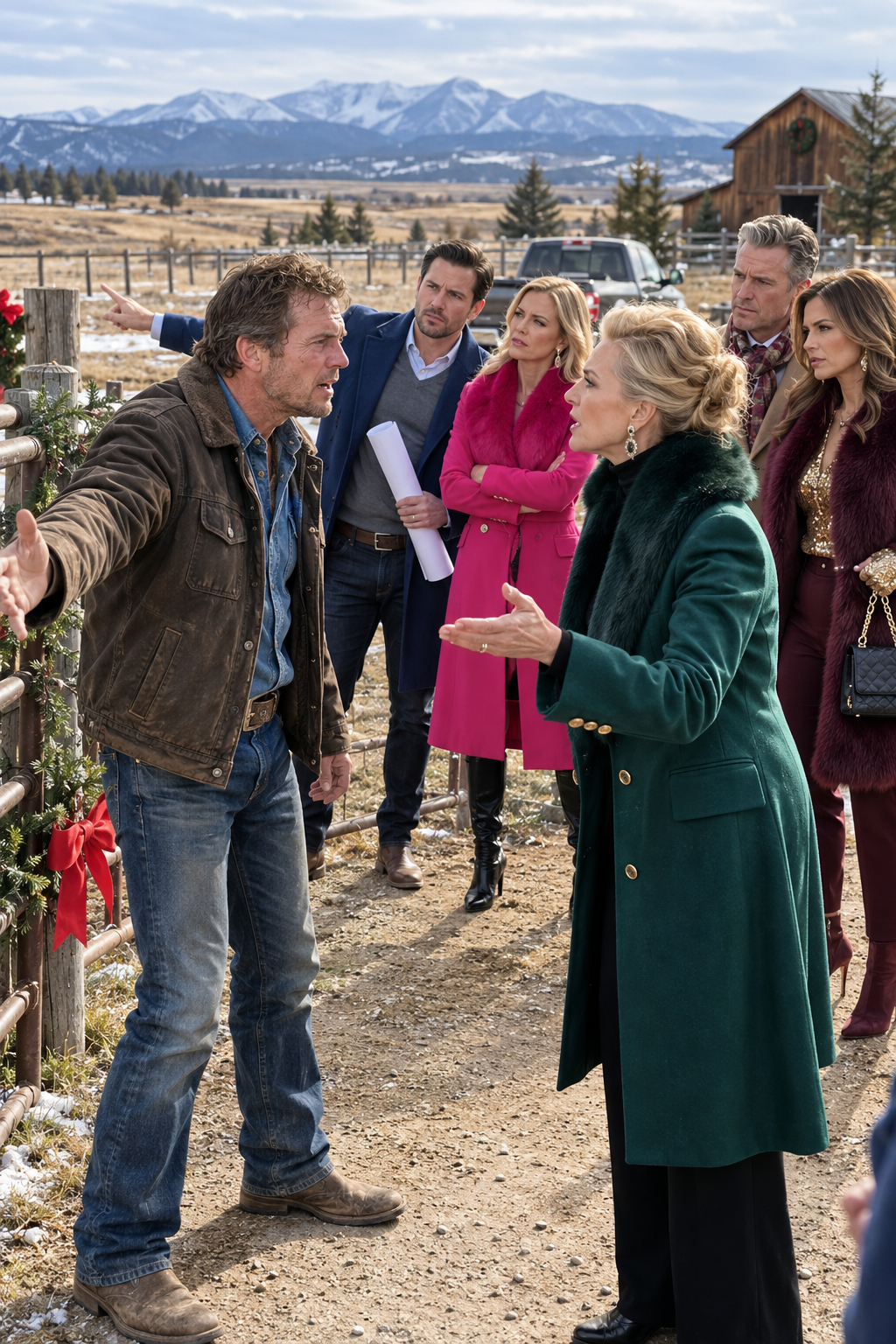
HOA Put My Ranch on Its Christmas Development Map—Then I Learned Who Was Secretly Selling My Land
The first trespasser arrived on my ranch three days before Christmas carrying a bottle of champagne and a printed map that showed my barn as a future luxury clubhouse.
The second showed up with a contractor.
The third told me, with complete confidence, that I needed to move my horses because he had already put down a $75,000 deposit on the hill where my mother was buried.
I didn’t scream.
I didn’t threaten him.
I looked at the glossy brochure in his hand, read the name printed across the bottom, and felt something inside me go very still.
CEDAR RIDGE ESTATES — PHASE IV.
Below that was a gold rendering of thirty-two “exclusive ranch-view homes.”
Twenty-six of them were drawn on my land.
My name is Claire Whitaker.
I’m thirty-nine years old, divorced, childless by choice, and the legal owner of 1,840 acres outside a fast-growing Colorado town called Millstone.
My family had run cattle on that land since 1947.
The ranch wasn’t a hobby.
It wasn’t an “unused parcel.”
It wasn’t a pretty green space waiting for someone with a zoning map and a golf shirt to discover it.
It was my livelihood.
And apparently, somebody had decided to sell it.
The man holding the brochure was named Brad Lennox.
Late forties.
White Range Rover.
Brand-new cowboy boots that had never met manure.
He stood beside my west pasture fence while snow drifted gently over the foothills behind him.
His wife remained in the passenger seat, sipping from a paper coffee cup.
A real estate agent in a cream wool coat stood beside Brad, smiling too hard.
“Miss Whitaker,” she said, “I think there’s been a misunderstanding.”
I folded the brochure once.
“Whose misunderstanding?”
The agent’s smile tightened.
“I’m Melissa Grant. I represent Evergreen Premier Realty.”
“I didn’t ask who you represent.”
Brad shifted his weight.
Melissa glanced toward the hill behind me.
The hill with the old cottonwood tree.
The hill where my mother’s ashes were buried beneath a stone bench.
The brochure labeled it:
LOT 118 — PANORAMIC MOUNTAIN VIEW — $1.4M.
Brad pointed at it.
“That’s the parcel we reserved.”
“No,” I said.
He blinked.
Melissa stepped closer.
“The HOA development office provided us with preliminary parcel authorization.”
“What HOA?”
She looked surprised by the question.
“Cedar Ridge.”
Cedar Ridge Estates sat against my eastern boundary.
Two hundred and eleven oversized homes, three ornamental ponds, a clubhouse, tennis courts, an aggressively beige entrance monument, and a homeowners association whose president had spent the previous year trying to convince me that my private ranch road was somehow a community amenity.
Her name was Patricia Vance.
Silver-blonde hair.
Pearl earrings.
A wardrobe consisting almost entirely of jewel-colored blazers.
And the confidence of a woman who had never heard the word no without interpreting it as an invitation to schedule another meeting.
We’d already fought once.
Eight months earlier, Patricia sent me a “courtesy notice” demanding that I remove two livestock gates because they interfered with Cedar Ridge residents’ “recreational continuity.”
The gates were on my property.
The trail was on my property.
The residents had no easement.
I sent the HOA a survey, a title report, and a letter from my attorney.
That should have ended it.
Instead, Patricia sent another letter proposing a “mutually beneficial access partnership.”
I ignored it.
A month later, I caught three residents biking behind my hay barn.
I installed cameras.
Two weeks after that, the HOA newsletter warned homeowners not to enter Whitaker Ranch because access rights were “under legal review.”
That phrase bothered me.
Access rights were not under review.
They didn’t exist.
So I had my attorney, Daniel Reeves, send a sharper letter.
The trespassing stopped.
For a while.
Then came Brad Lennox with champagne.
I held up the brochure.
“Melissa, who gave you this?”
“Cedar Ridge’s expansion committee.”
She hesitated.
“Patricia Vance.”
Brad’s expression changed.
But enough.
People reveal themselves in tiny movements.
He stopped looking irritated.
He started looking nervous.
I also noticed the stamped code in the lower-right corner of the brochure.
CR-IV-DEC-17.
December 17.
Six days earlier.
This wasn’t some old concept drawing that had accidentally resurfaced.
This was new.
“Brad,” I said, “who took your deposit?”
Melissa answered for him.
“Evergreen Premier handled the transaction.”
“I asked Brad.”
He pulled off one glove.
“Cedar Ridge Development Holdings.”
That name was new.
I felt the cold more sharply then.
Not because I was frightened.
Because I understood something.
HOAs send stupid letters all the time.
They overreach.
They threaten.
They bluff.
But creating a development company, collecting deposits, and marketing privately owned land?
That wasn’t neighbor drama.
That was paperwork.
That was banking.
That was fraud.
I looked at Brad.
“How much?”
“Seventy-five thousand.”
“And you signed something?”
“Do you have it?”
Melissa stepped between us verbally.
“I don’t think sharing client documents—”
He looked at his wife.
Then at me.
Then he unlocked his phone.
“I have the PDF.”
“Email it to me.”
Melissa actually laughed.
It was small and incredulous.
“Absolutely not.”
Brad looked at her.
Then back at my hill.
“What happens if she owns it?”
Melissa said nothing.
“What happens to my money?”
Still nothing.
Brad emailed me the contract.
That was the first mistake Cedar Ridge made.
Not the first mistake chronologically.
But the first one that gave me something I could use.
I opened the PDF on my phone.
At the top:
CEDAR RIDGE DEVELOPMENT HOLDINGS, LLC.
BRADLEY AND KIMBERLY LENNOX.
Lot 118, Cedar Ridge Estates Phase IV.
Then came a legal description.
Not complete.
Not professional.
But close enough that I knew immediately what they had done.
Someone had taken part of my ranch survey, changed reference numbers, and overlaid Cedar Ridge lot numbers onto my land.
There was even a signature line for “authorized land representative.”
Patricia Vance.
I didn’t say anything for several seconds.
Brad watched my face.
“I need you to leave.”
His jaw tightened.
“You just said this is your land.”
“Then somebody stole seventy-five thousand dollars from me.”
“Possibly.”
“Possibly?”
“I don’t make accusations before I verify documents.”
Melissa folded her arms.
“Thank you.”
I looked at her.
“That wasn’t for your benefit.”
Her face stiffened.
I handed the brochure back to Brad.
He didn’t take it.
“Keep it,” he said.
Then he asked the question that changed the entire shape of my Christmas.
“How many people did they sell to?”
I looked toward Cedar Ridge.
Snow-covered roofs stretched down the valley.
Christmas lights blinked along the entrance road.
A twenty-foot wreath hung over the clubhouse doors.
From a distance, it looked peaceful.
I looked back at Brad.
“I’m going to find out.”
That evening, I drove every fence line on the eastern side of my ranch.
I found four sets of boot prints.
Three survey stakes.
Two orange utility flags.
And one laminated placard tied to my fence.
FUTURE SITE OF CEDAR RIDGE PHASE IV.
I took pictures.
Then I cut the placard down and laid it on the passenger seat of my truck.
I did not call Patricia.
That matters.
Because when people believe you’re emotional, they prepare for noise.
When they believe you’re angry, they prepare excuses.
When they believe you’re coming, they lock doors.
I wanted none of those things.
I wanted Patricia comfortable.
I wanted her sleeping.
I wanted her texting people normally.
I wanted documents moving through email accounts.
I wanted nobody deleting anything.
So I went home.
I fed the horses.
I checked the trough heaters.
I made coffee.
Then I sat at my kitchen table under the same brass light fixture my father had installed in 1989 and opened every public record I could find.
Cedar Ridge Development Holdings had been incorporated seven months earlier.
Registered agent: Mark Delaney.
Mark was Cedar Ridge’s HOA attorney.
Manager: Patricia Vance.
Mailing address: Cedar Ridge HOA clubhouse.
Business purpose: real estate acquisition and residential development.
My first reaction was almost admiration.
Because this wasn’t sloppy.
The company was real.
The bank account was probably real.
The contracts were polished.
The buyers believed they were buying pre-construction lots from an HOA-linked developer expanding an established luxury community.
Someone had built a machine.
The problem was that the machine was standing on my ranch.
At p.m., I called Daniel Reeves.
He answered on the fourth ring.
“Are you drinking?”
“One bourbon.”
“Good. Stop at one.”
“That sentence is never followed by good news.”
“I need you sober.”
Another pause.
“What happened?”
I emailed him the contract.
For thirty seconds, I heard nothing.
“That’s what I said.”
“No, Claire. This is an attorney ‘oh.’”
“I need ten minutes.”
“Take five.”
Daniel had represented my family for twelve years.
Forty-six years old.
Former county prosecutor.
Never dramatic.
The man had once reviewed a lawsuit involving an escaped bull, two wrecked SUVs, and a ruptured propane tank while eating yogurt.
If Daniel sounded rattled, I listened.
He called back six minutes later.
“Do not contact Patricia.”
“I wasn’t planning to.”
“Do not contact the HOA board.”
“Wasn’t planning that either.”
“Do not post anything online.”
“I don’t use Facebook.”
“Bless you.”
“What did you find?”
“The contract has title insurance language.”
“So pre-construction developers don’t usually promise title coverage casually unless they expect a title company to issue something.”
“Could be boilerplate.”
“Could be.”
“You don’t think it is.”
I looked through the kitchen window.
Snow was thickening against the dark pasture.
My old mare, Clover, stood beneath the shelter.
Beyond her, the ridge disappeared into white.
“What are you thinking?”
“I’m thinking somebody may have done more than draw fake lots.”
“What does that mean?”
“It means tomorrow morning, I want a fresh title pull on every parcel you own.”
“Every parcel?”
There were fourteen separate legal parcels within Whitaker Ranch.
Some created decades ago when my grandfather bought neighboring acreage.
Others divided for agricultural lending.
Daniel knew that.
“Because if someone recorded something against one of them, we need to know.”
“You think Patricia could file something against my land without me knowing?”
“I think Patricia cannot legally sell your land.”
“That isn’t what I asked.”
Daniel sighed.
“No. It isn’t.”
At 10:03 p.m., another motion alert hit my phone.
I opened the camera feed.
A black SUV had stopped outside.
Two people got out.
A man and woman.
They walked to the gate.
The man photographed my No Trespassing sign.
The woman pointed toward my barn.
I turned on the camera microphone.
“You are on private property surveillance.”
They jumped.
The woman looked directly at the camera.
“We’re prospective buyers.”
“This land is not for sale.”
The man raised something toward the camera.
A brochure.
“We have a nine-thirty tour tomorrow.”
“No, you don’t.”
“Our agent confirmed it.”
“No authorized tours exist.”
The woman looked at him.
He looked at her.
Then he asked, “Is this not Phase IV?”
“It is Whitaker Ranch.”
“What lot is this?”
“There are no lots.”
The woman lowered the brochure.
“Is Patricia here?”
“You know Patricia?”
The man stepped closer to the gate.
“We wired earnest money yesterday.”
“How much?”
He hesitated.
“One hundred thousand.”
My pulse slowed.
That happens to me when things get serious.
Some people’s hearts race.
Mine seems to narrow.
Like my body clears everything unnecessary out of the room.
“What’s your name?”
“Evan Ross.”
“Mr. Ross, send me your contract.”
I gave him my email.
His wife whispered something.
The contract arrived before they drove away.
Same seller.
Same signature.
Purchase price: $1.65 million.
Earnest money: $100,000.
I called Daniel again.
“There’s another one.”
“How much?”
“One hundred.”
“Thousand?”
“I thought you said no drama.”
“That was not drama. That was theology.”
I almost smiled.
Then he said, “Claire, listen to me carefully. Put every gate camera on cloud backup tonight.”
“Already doing it.”
“Download copies.”
“And check the barn, equipment shed, and house locks.”
That caught my attention.
“You think someone will come here?”
“I think whatever this is, money is already moving.”
“How much money makes people stupid?”
“All of it.”
By midnight, I had seven cloud backups running.
By one, I had pulled every survey and deed from my office safe.
By two, I had found something strange.
A survey from six years earlier was missing.
Not the original deed.
Not the newer boundary survey.
An intermediate ALTA survey my father had commissioned during a refinancing.
I stared at the empty folder slot.
Then I remembered exactly where I had seen it last.
At Cedar Ridge.
Nine months earlier.
When Patricia asked to discuss a possible emergency access route through my property, I had attended one HOA meeting.
I brought property documents to prove the road belonged to us.
Patricia asked if their attorney could photocopy the survey.
I said yes.
They returned it.
At least, I thought they did.
At a.m., I searched an old email from Daniel.
Attachment:
WHITAKER_ALTA_2020.pdf.
I opened it.
Then I opened Brad’s fake contract beside it.
The reference numbers matched.
Not approximately.
Someone had copied the survey.
I leaned back.
The house was silent.
Christmas cards sat unopened near the fruit bowl.
A tiny ceramic Santa my mother had owned stood on the windowsill.
I looked at him for a long moment.
Then I started making a list.
Not of people to confront.
Of evidence to preserve.
Because I had learned something after my divorce.
You don’t win serious fights by being louder.
You win by being the person who still has the receipts when everybody else starts lying.
I saved the emails.
I saved the contracts.
I saved the camera footage.
I saved the corporation records.
I saved every photograph.
I saved everything Patricia might later wish had never existed.
I saved it because anger fades.
I saved it because memory changes.
I saved it because powerful people become forgetful when lawyers enter the room.
I saved it because Christmas was three days away, and someone had just tried to turn my family’s ranch into thirty-two pieces of inventory.
At seven the next morning, December 23, I was at the Millstone County Clerk and Recorder’s Office when the doors opened.
Daniel met me there.
He wore a navy overcoat and carried two coffees.
“You look terrible,” he said.
“You look divorced.”
“I am divorced.”
“Then we’re both observant.”
He handed me coffee.
Inside, holiday music played softly from a speaker near the ceiling.
A plastic Christmas tree leaned beside the records counter.
The clerk, a woman named Denise Parker who had known my father, smiled when she saw me.
“Claire. Merry Christmas.”
Her smile faded.
Daniel leaned toward the counter.
“We need full recording histories for fourteen parcels.”
“All yours?”
Denise glanced between us.
“Possibly.”
That word was doing a lot of work lately.
For the next forty minutes, we pulled documents.
Agricultural easements.
Water rights notices.
Normal things.
Parcel one.
Parcel two.
Three through nine.
Parcel ten.
Daniel stopped.
He moved the screen toward himself.
Denise stepped closer.
“What did you find?”
There was a document recorded five months earlier.
NOTICE OF EQUITABLE DEVELOPMENT INTEREST.
Filed by Cedar Ridge Development Holdings, LLC.
Against 312 acres of Whitaker Ranch.
My eastern ridge.
The area shown as Phase IV.
My mouth went dry.
“What is that?”
Daniel read silently.
His jaw tightened.
“Someone is claiming your father entered a land option agreement before his death.”
I stared at him.
“My father died four years ago.”
“He never signed a land option.”
Denise whispered, “Oh, dear.”
“Show me the signature.”
Daniel scrolled.
There it was.
ROBERT E. WHITAKER.
My father’s name.
My father’s handwriting.
I leaned closer.
Daniel didn’t answer.
“It’s fake.”
“I believe you.”
“No. Look at the R.”
“My father wrote capital R’s with a closed loop. Always. It drove my mother crazy because she said they looked like B’s.”
This R was open.
Close enough for a stranger.
Wrong enough for a daughter.
My gaze dropped to the notary block.
Notary Public:
Elaine Mercer.
Commission valid through 2027.
Daniel typed the name into his phone.
Then he stopped.
He turned the screen toward me.
Elaine Mercer was Patricia Vance’s sister.
For the first time since Brad Lennox stepped onto my ranch, something hot moved through me.
Cold, clean rage.
Daniel saw it.
“Do nothing.”
“I am doing something.”
“Not today.”
“We’re standing in front of a forged document.”
“Recorded against my property.”
“With my dead father’s signature.”
The clerk looked uncomfortable.
Daniel lowered his voice.
“And if you walk into Cedar Ridge right now, they know we found it.”
I stared at him.
He was right.
I hated that he was right.
He continued.
“They currently believe the document worked.”
“It didn’t.”
“They’ve already marketed lots.”
“They’ve already collected deposits.”
“So let them keep believing they’re ahead for another few hours.”
Denise quietly printed the filing.
The alleged option agreement was attached.
Dated June 2019.
Two years before my father became seriously ill.
It claimed Robert Whitaker had granted Cedar Ridge’s predecessor company a ten-year option to acquire up to 400 acres for residential expansion.
Purchase price:
$11,500 per acre.
I nearly laughed.
In 2019, comparable land in the corridor had already traded above $30,000 per acre.
My father had been stubborn.
Not stupid.
And even if he had wanted to sell, there was something Patricia didn’t know.
He couldn’t have signed that agreement alone.
Whitaker Ranch had been held by a family trust since 2008.
My mother had been co-trustee until her death.
Then I became co-trustee.
Any sale or development option affecting more than fifty acres required two trustee signatures.
The forged agreement had one.
My dead father’s.
Patricia had found an old survey.
She had copied a signature.
She had filed a claim.
But she had missed the trust.
That was our first real advantage.
Daniel looked at me.
“Don’t smile.”
“I’m not smiling.”
“You are a little.”
“She missed the trust.”
“She doesn’t know.”
“Probably not.”
“Very good.”
At a.m., Daniel called a title litigation attorney in Denver.
At , I called the sheriff’s non-emergency line and documented the recurring trespassers without making broader accusations.
At 10:10, we sent preservation notices to Cedar Ridge HOA, Cedar Ridge Development Holdings, Evergreen Premier Realty, Mark Delaney’s law firm, and the notary.
At 10:26, Patricia called me.
I let it ring.
Then she texted.
CLAIRE, WE NEED TO DISCUSS THE CONFUSION AT THE EASTERN BOUNDARY. PLEASE CALL ME BEFORE YOU ALARM ANY MORE BUYERS.
I showed Daniel.
He laughed once.
“Confusion.”
I typed nothing.
At 10:41, she texted again.
THIS CAN STILL BE RESOLVED AMICABLY.
Daniel said, “Don’t.”
YOUR FATHER UNDERSTOOD THE LONG-TERM PLAN FOR THIS AREA.
I stopped breathing for half a second.
Daniel read it.
“Still don’t.”
I put the phone down.
ROBERT WANTED CEDAR RIDGE TO GROW.
That message nearly got me.
Not because I believed it.
Because Patricia had used my father’s first name as if they’d been partners.
My father hated Cedar Ridge.
He called it “the kingdom of identical mailboxes.”
When developers first approached him about selling the east pasture, he told them he would rather raise goats in his living room.
He didn’t even own goats.
Daniel took my phone away.
“I’m fine.”
“You’re gripping the table.”
I released it.
At noon, we learned there were at least eleven buyers.
Not because Cedar Ridge voluntarily disclosed them.
Because Brad Lennox had started calling other prospective buyers.
By 12:30, my inbox held six contracts.
By one, eight.
By two, eleven.
Total earnest money deposited:
Projected lot sales:
over $16 million.
And then came the detail that made Daniel stand up so fast his chair rolled backward.
The escrow instructions.
The deposits were not sitting in a neutral title company account.
They had been transferred to a private development account controlled by Cedar Ridge Development Holdings.
“That’s bad?” I asked.
“That’s extremely bad.”
“Depends how the contracts are structured and what representations were made.”
“They represented ownership.”
“They don’t own it.”
“They filed a forged agreement.”
“Allegedly.”
I looked at him.
He shrugged.
“I’m a lawyer. We sprinkle ‘allegedly’ on felonies like parsley.”
By late afternoon, snow had begun again.
The county offices were closing early for Christmas.
Daniel left to meet the title litigation attorney.
I drove home.
At the ranch entrance, I found a white pickup parked sideways across my gate.
Two men stood beside it wearing reflective vests.
One held a surveying tripod.
I stopped twenty feet away.
Rolled down my window.
“Can I help you?”
The older man walked over.
“Survey crew.”
“I can see that.”
“We’ve been retained to mark utilities.”
“NorthPeak Civil.”
“That’s not who hired you.”
He checked a clipboard.
“Cedar Ridge Development.”
“You’re on private property.”
“We were told access was authorized.”
“It isn’t.”
He frowned.
“Ma’am, we have a work order.”
“I have a deed.”
He looked at his younger coworker.
I kept my voice calm.
“Pack your equipment. Leave through this gate. Do not cross any fence on Whitaker Ranch.”
“We’ve already set some marks.”
He pointed toward the ridge.
I felt my stomach tighten.
“You entered?”
“The gate was open.”
I looked at the chain.
Not unlocked.
The heavy steel loop hung in two pieces.
I got out of the truck.
The surveyor saw it.
His face changed.
“That wasn’t us.”
“I believe you.”
“We came through after lunch. It was open.”
“What time?”
“One fifteen, maybe.”
I photographed the chain.
Then the truck.
Then both men’s company identification with their permission.
The older one gave me the work order.
Authorized access contact:
Patricia Vance.
Emergency field contact:
Mark Delaney.
Utility staking for twenty-six residential parcels and one shared amenity structure.
Twenty-six.
Not thirty-two.
That mattered.
“Do you have a site map?”
He handed it over.
This one was more detailed than the brochure.
Water lines.
Electrical corridors.
Drainage easements.
And a wide strip running straight through my calving pasture.
EMERGENCY CONNECTOR ROAD.
I stared at it.
That road connected Cedar Ridge Phase IV to State Highway 17.
Through the middle of my ranch.
“Who designed this?”
“NorthPeak.”
“Based on what?”
He pointed to a note.
Client-provided boundary and access documentation.
Cedar Ridge.
Then I saw something else.
A parcel shaded gray just south of my house.
My machine shed.
My small guest cottage.
My father’s original workshop.
All inside something labeled:
FUTURE MUNICIPAL ANNEXATION CORRIDOR.
The surveyor watched my face.
“You didn’t know?”
He removed his hat.
“I’m sorry.”
I looked toward the ridge.
Orange flags flickered in the snow.
Someone had cut my gate.
Someone had sent workers onto my property.
Someone was no longer merely selling imaginary lots.
They were preparing to build.
“Please leave,” I said.
“And email me everything you were given.”
He hesitated.
“I can ask my supervisor.”
“You can tell your supervisor the landowner is documenting unauthorized entry and would prefer cooperation before subpoenas become necessary.”
He stared at me for one beat.
“I’ll email you.”
Sixteen minutes later.
That night, December 23, Patricia finally came to my house.
She brought Mark Delaney.
I watched their Mercedes and Cadillac come up the ranch road on camera.
Daniel was twenty minutes away.
I called him.
“They’re here.”
“Do not let them inside.”
“I wasn’t going to.”
“Record everything.”
“Colorado is one-party consent.”
“I know. I’m proud.”
I put my phone in my coat pocket with the recorder running.
Then I stepped onto the porch.
Patricia walked up first.
Emerald-green wool coat.
Cream gloves.
Silver-blonde hair untouched by the wind.
Mark followed with a leather briefcase.
“Claire,” she said warmly.
Too warmly.
“Merry Christmas.”
I looked at her.
She waited.
When I didn’t return the greeting, she continued.
“I think this has escalated unnecessarily.”
“My gate was cut.”
Her face barely moved.
“From whom?”
“One of our vendors.”
“Your vendors shouldn’t be on my ranch.”
“That is one interpretation.”
There it was.
The first real crack.
Not confession.
Entitlement.
Mark stepped forward.
“Ms. Whitaker, we’re not here to argue.”
“That’s fortunate.”
“We believe certain historical documents establish development rights along the east boundary.”
“Historical?”
“Your father entered into an agreement.”
“My father entered into many agreements.”
That answer surprised them.
They had expected denial.
I gave them none.
Mark opened his briefcase.
Patricia looked relieved.
“We’re prepared to make this easy.”
He handed me a folder.
Inside was a proposed settlement.
Cedar Ridge would pay me $1.8 million.
In exchange, I would “ratify” the 2019 option agreement, grant road access, release all claims, and cooperate with immediate Phase IV development.
One point eight million.
For land currently worth at least twelve.
Plus a road easement.
Plus silence.
I looked up.
Patricia smiled faintly.
“This gives everyone certainty.”
“You keep the bulk of your ranch.”
“How generous.”
Her smile faded.
“Claire, change is coming whether we like it or not. Millstone is growing.”
“Then grow somewhere else.”
“The infrastructure plan is already aligned.”
“That sounds inconvenient.”
Mark spoke.
“Your father understood the economic reality.”
I closed the folder.
“You knew him?”
“Professionally.”
Mark blinked.
“Excuse me?”
“When did you meet my father?”
Patricia shifted.
Mark recovered.
“Several times.”
“Name one.”
“One meeting.”
“This is becoming adversarial.”
“You came to my house with a contract allegedly signed by a dead man. I’m asking when you met him.”
Mark’s face hardened.
“I am not going to participate in an interrogation on your porch.”
“Then you know where the road is.”
Patricia raised a hand.
I looked at her.
For the first time, the polished warmth was gone.
“Your position is not as strong as you think.”
That sentence interested me.
“Whose position is?”
She stared.
I continued.
“You’ve got buyers. Contractors. Engineering plans. Deposits. Somebody committed real money.”
Mark interrupted.
“You should be careful about repeating assumptions.”
“I didn’t say whose money.”
Patricia glanced at Mark.
“Why the rush?”
Patricia’s eyes narrowed.
“It’s not a rush.”
“You launched lots six days before Christmas.”
“You sent surveyors before closing.”
“You collected nearly a million dollars before title confirmation.”
Mark’s expression changed.
Only slightly.
He hadn’t known I knew the amount.
“Who told you that?” he asked.
“Now this feels like an interrogation.”
Headlights appeared behind them.
Patricia looked over her shoulder.
Then back at me.
“I had hoped we could handle this as neighbors.”
“We aren’t neighbors.”
“We share a boundary.”
“A boundary you appear to be having difficulty recognizing.”
Mark closed his briefcase.
“Do not destroy or alter any documents in your possession.”
Daniel was climbing out of his truck when I said it.
Mark froze.
Patricia went still.
Daniel walked toward us.
I repeated, “Any documents.”
Daniel reached the porch.
“Good evening.”
Nobody returned the greeting.
He looked at the folder in my hand.
“What’s that?”
“A Christmas present.”
Patricia gave me a thin smile.
“You’re making a mistake.”
“No,” I said. “I’m documenting one.”
Christmas Eve morning, Cedar Ridge sent an email to all Phase IV buyers.
Brad forwarded it to me.
SUBJECT: HOLIDAY SCHEDULE ADJUSTMENT.
It claimed development tours were temporarily suspended because of “routine boundary verification.”
No refunds were mentioned.
No ownership dispute was mentioned.
No fraudulent filing was mentioned.
But one sentence caught Daniel’s eye.
ALL CONTRACTUAL DEADLINES REMAIN IN EFFECT.
“They’re keeping the buyers locked in,” he said.
“Because cancelations could trigger repayment.”
“They have the deposits.”
I looked at him.
“You said maybe like that again.”
“We need bank records.”
“Can we get them today?”
“Not without cooperation, litigation, or law enforcement.”
“Which one is fastest?”
He gave me a look.
“I know which answer you want.”
At 10 a.m., an investigator from the county sheriff’s office came to the ranch.
Detective Aaron Cole.
Mid-fifties.
Gray mustache.
No nonsense.
I showed him the cut chain, camera footage, contracts, recorded filing, and fake signature.
He listened more than he talked.
Then he asked me to explain the trust.
“Your father couldn’t sell this without you?”
“Not after 2008.”
“Could he grant an option?”
“Not one covering this acreage.”
“Could he do it without the second trustee signature?”
“Were you the second trustee in 2019?”
“You ever sign anything?”
“You ever discuss a sale with Cedar Ridge?”
He looked at Daniel.
“Forgery analysis?”
Cole nodded.
Then he asked me something I hadn’t expected.
“Who knew your father’s signature?”
“A lot of people.”
“Who had copies?”
“Banks. Attorneys. accountants.”
I thought about the old survey.
“Possibly.”
“Anything else?”
I remembered the meeting.
“Their lawyer copied a survey.”
Mark Delaney.
Cole wrote it down.
Then he looked at the Phase IV map.
“What’s here?”
He pointed to the south end.
“Old workshop.”
“And here?”
“Guest cottage.”
“Machine shed.”
He looked toward the window.
“Anybody living in the cottage?”
“Motion sensor.”
“Let’s look.”
The guest cottage sat half a mile from the main house.
My grandparents had lived there briefly in the seventies.
Later it became a bunkhouse.
I used it for visitors.
When we reached it, the front door was closed.
Cole tried the knob.
I unlocked it.
Inside, nothing looked disturbed.
Small kitchen.
Plaid sofa.
Wood stove.
Two bedrooms.
Cole walked slowly.
“What are we looking for?” I asked.
“Don’t know.”
“That’s comforting.”
He checked windows.
Then stopped at the small desk near the living room wall.
“What normally sits here?”
There was a clean rectangular patch in the dust.
About eighteen inches wide.
My stomach tightened.
“A filing box.”
“What was in it?”
“Old ranch records.”
“What kind?”
I pictured it.
Tax receipts.
Equipment registrations.
Old loan documents.
Canceled checks.
Copies of my parents’ trust paperwork.
My father’s correspondence.
His signatures.
Lots of signatures.
I looked at Cole.
“It’s gone.”
Christmas Eve afternoon, the sheriff’s department formally opened an investigation into the break-in and possible forged filing.
By five, I should have been preparing dinner.
Instead, I was standing in my barn with Daniel, stringing replacement chain through the west gate.
He had brought pizza.
We ate it from paper plates beside the tack room heater.
Snow tapped the metal roof.
My horses chewed hay.
Somewhere across the valley, church bells rang.
Daniel wiped sauce from his thumb.
“Merry Christmas.”
I looked at the bolt cutters on my workbench.
“Very festive.”
“You okay?”
“That was too fast.”
“I’m functional.”
“That I believe.”
I leaned against the stall door.
“My mother used to make cinnamon rolls tonight.”
“From scratch?”
“Of course.”
“My mother opens a tube and calls Pillsbury a family tradition.”
Then it disappeared.
“They stole his records.”
“You know they did.”
“We don’t know who.”
“Somebody stole a box with my father’s signatures, and then Cedar Ridge produced a document with my father’s signature.”
“They planned this.”
Daniel folded his plate.
“Probably.”
“For how long?”
He didn’t answer.
My phone buzzed.
Brad Lennox.
Merry Christmas, I guess.
Then another message.
You need to see this.
He sent me a screenshot.
A private email Patricia had sent selected Phase IV buyers.
She was inviting them to a “confidential purchaser briefing” on December 26 at the Cedar Ridge clubhouse.
TO PROVIDE CLARITY REGARDING AN UNEXPECTED TITLE OBJECTION RAISED BY A NEIGHBORING LANDOWNER.
Neighboring landowner.
Daniel read it.
“They’re telling buyers you’re the obstacle.”
“Of course.”
“They may be preparing to claim your objection is frivolous.”
“Can they?”
“They can claim anything.”
“What time is the meeting?”
He looked at me.
“I didn’t say anything.”
“You thought it loudly.”
“I’m going.”
“You are not a buyer.”
“I’m the neighboring landowner.”
“They’re discussing my property.”
“My dead father.”
I looked at him.
“Fine. But we go together.”
Christmas Day was quiet.
No trespassers.
No survey crews.
No Patricia.
I spent the morning with my horses.
At noon, I drove to the cemetery where my parents had a memorial marker, even though my mother’s ashes were on the ranch.
The sky was blue.
The roads were white.
I stood in front of my father’s name.
ROBERT EDWARD WHITAKER.
My father had not been sentimental.
He believed most problems could be solved by fencing, maintenance, or refusing to lend money to cousins.
When I divorced, he never told me he was sorry.
He came to my house with a toolbox and changed every exterior lock.
That was his version of love.
I stood there with my hands in my coat pockets.
“They used your name.”
The wind moved through the bare trees.
“I’m going to fix it.”
I looked down at the snow.
Then I added:
“But I think you knew something.”
Because one detail had been bothering me.
The missing box.
My father had kept duplicates of important records.
One copy at home.
One in a safe-deposit box.
After he died, I closed the box.
I moved everything to the ranch safe.
Or I thought I had.
That afternoon, I searched again.
Behind the title documents, I found an old envelope.
On the front, in my father’s handwriting:
CLAIRE — EAST RIDGE.
Inside was a single handwritten note.
If Vance comes back about access, do not sign anything.
I read it twice.
Then three times.
Not Patricia necessarily.
Could have meant her husband.
Could have meant someone else.
Below that:
They need the ranch more than they are admitting.
No explanation.
No attachments.
Just two sentences.
I called Daniel.
He answered.
“Merry Christmas.”
“My father knew.”
“Knew what?”
“I found a note.”
“Photograph it. Put the original somewhere secure.”
“What does ‘need the ranch’ mean?”
“I don’t know.”
“I hate that answer.”
“Cedar Ridge already has highway access.”
“One road.”
“They have a back service entrance.”
“Restricted.”
“Fire code?”
I thought about the emergency connector road on NorthPeak’s plans.
Straight across my ranch.
Then something clicked.
Phase IV might not be the real prize.
The road might be.
At 8 a.m. on December 26, Daniel called the county planning department.
By nine, we had an answer.
Cedar Ridge had submitted preliminary materials for a much larger project than the one being marketed.
Not thirty-two homes.
One hundred and eighty-seven.
Phase IV was only the first stage.
Phase V and VI extended across land Cedar Ridge already controlled north of my ranch.
But there was a problem.
Emergency access.
The county required a second full-width evacuation route before approving more than a certain number of additional homes.
Their current configuration couldn’t provide it.
Not without crossing my property.
I stared at the planning map.
“That’s why they need the connector road.”
“How much is the larger project worth?”
Daniel did quick math.
“Depending on final home values? Easily over a hundred million.”
And there it was.
The motive.
Not personal.
Not some HOA president drunk on power.
Huge money.
Cedar Ridge’s expansion stalled without my road.
Without my eastern acreage, they couldn’t build the next phases efficiently.
Without Phase V and VI, somebody lost tens of millions.
Patricia had offered me $1.8 million for a signature that could unlock a nine-figure development.
Suddenly, everything looked different.
The forged option.
The Christmas sales.
The buyer deposits.
The survey crews.
They weren’t improvising.
They were racing a deadline.
“What happens if they don’t get county approval soon?” I asked.
Daniel called the planning office again.
The answer came fifteen minutes later.
A state infrastructure grant supporting the project expired December 31.
If Cedar Ridge couldn’t demonstrate site control and compliant emergency access by then, they risked losing $8.4 million in road and utility funding.
I sat back.
“They’re desperate.”
“And they have five days.”
Daniel looked at me.
“That can make them dangerous.”
At p.m., we parked outside the Cedar Ridge clubhouse.
The parking lot was full.
Range Rovers.
Christmas wreaths still hung on the doors.
A carved wooden sign read:
WELCOME HOME.
Daniel looked at it.
I opened my door.
Inside, around forty people stood holding wine and sparkling water.
Patricia was at the front.
Royal-blue suit.
Mark Delaney stood near a projector screen.
Melissa Grant, the real estate agent, hovered by the windows.
When I walked in, the room went quiet in waves.
First the people nearest the door.
Then the middle.
Then Patricia.
Only for a second.
Then smiled.
“Patricia.”
“This is a private purchaser meeting.”
“You weren’t invited.”
Brad Lennox stood near the back.
He raised his glass slightly.
I almost smiled.
Daniel stepped beside me.
Mark Delaney came forward.
“Ms. Whitaker, you need to leave.”
Daniel said, “On what basis?”
“This is HOA property.”
I looked at the sign-in table.
A stack of maps sat beside name badges.
“Are those Phase IV maps?”
Nobody answered.
I took one.
Mark reached for it.
I stepped back.
“Don’t touch me.”
He stopped.
Every phone in the room seemed to rise simultaneously.
Patricia understood the optics.
She walked toward me.
“Claire, I know you’re upset.”
“Anyone would be.”
“I’m not upset.”
Her smile faltered.
“I’m informed.”
That landed.
Brad spoke from the back.
“Do you own Lot 118?”
Patricia turned.
“Brad, we’ll address questions shortly.”
He didn’t sit.
“Does she own it?”
Another buyer spoke.
“What about Lot 121?”
A woman near the front said, “My attorney found the Whitaker deed yesterday.”
Patricia raised both hands.
“Everyone, please.”
The room quieted.
She looked at me.
Then she did something clever.
Very clever.
She changed the story.
“There is an old contractual disagreement between Cedar Ridge and the Whitaker family,” she said. “Claire inherited property subject to prior development commitments.”
She continued.
“These situations are not uncommon when land passes between generations.”
I almost admired her.
She didn’t say I was lying.
She didn’t say she owned the land.
She framed it as an inheritance dispute.
Buyers could believe that.
Then she added:
“Robert Whitaker signed the option voluntarily.”
There it was.
I stepped forward.
“Show them.”
Patricia blinked.
“The agreement.”
Mark cut in.
“You’re telling buyers my father signed it. Put it on the screen.”
The room went very still.
Patricia recovered.
“This is not the appropriate forum.”
A man near the front said, “Why not?”
Someone else said, “I want to see it.”
“Put it up.”
Phones remained raised.
Patricia looked at Mark.
He gave the smallest shake of his head.
That was enough.
I pulled copies from my bag.
“I brought it.”
Patricia’s face changed.
I handed copies to the nearest buyers.
“Recorded July 14 of this year.”
Paper moved through the room.
I continued.
“The signature is not my father’s.”
Mark said loudly, “That is an unsupported allegation.”
People looked at him.
He had just walked into it.
“So we’re having it examined.”
Patricia said, “Claire is grieving.”
That almost made me laugh.
Four years later, suddenly grief was a legal category.
Then Daniel stepped forward.
“Would you also like to explain the trust?”
Mark’s face emptied.
Patricia stared.
That was the moment I knew for certain.
They didn’t know.
Daniel continued.
“Whitaker Ranch has been trust-held since 2008. Robert Whitaker did not have unilateral authority in 2019 to grant the option recorded by your development company.”
Whispers became voices.
Brad walked closer.
“What does that mean?”
I answered.
“It means even if my father’s signature were genuine, the document still wouldn’t give them what they claim.”
A woman shouted:
“Then why did you take our money?”
Melissa Grant stepped backward toward the wall.
Patricia raised her voice.
“Please remain calm.”
Brad laughed.
Another buyer:
“You took ninety thousand from us.”
“One hundred twenty.”
“We sold stock for that deposit.”
The room broke.
Accusations.
People calling attorneys.
Patricia stood in the center of it, still trying to command attention.
“Nothing has been lost.”
Brad said, “Refund us tonight.”
“We will follow contractual procedures.”
“Refund us.”
Patricia looked at Mark.
Mark said nothing.
That silence was loud.
I watched him.
Then I watched Melissa.
She was crying.
Not dramatically.
Just staring at her phone with one hand over her mouth.
I walked toward her.
She looked up.
“I didn’t know.”
“I didn’t ask.”
“I swear to God, I didn’t know.”
She turned her phone toward me.
From Evergreen Premier’s accounting department.
Received twenty-three minutes earlier.
SUBJECT: CEDAR RIDGE ESCROW DISCREPANCY.
She whispered:
“The deposit account is empty.”
Everything in the room seemed to drop away.
“The money’s gone.”
I looked at Daniel.
He was already moving toward us.
“How much?” he asked.
Melissa shook her head.
“All of it.”
“I don’t know.”
Patricia saw us.
Saw Melissa’s face.
Saw the phone.
And for the first time since I had known her, Patricia Vance looked afraid.
She turned toward the side exit.
Brad saw it too.
“Where are you going?”
Patricia stopped.
“I’m calling our accountant.”
“Call him here.”
Mark pushed through the room.
“This meeting is over.”
Nobody moved.
Then the clubhouse doors opened.
Detective Aaron Cole walked in with two deputies.
And behind him was a woman I didn’t recognize.
Mid-forties.
Dark red coat.
State investigator badge clipped to her belt.
Patricia’s face went completely white.
The woman walked directly toward her.
“Patricia Vance?”
Mark stepped forward.
“I represent Mrs. Vance.”
The investigator looked at him.
“Good. Then you may want your own attorney.”
The room went silent.
Mark stopped.
Detective Cole looked at me once.
Nothing obvious.
Just confirmation.
This was bigger now.
The state investigator introduced herself as Special Agent Rebecca Sloan from the Colorado Division of Securities.
Securities.
Not real estate.
That surprised me.
It surprised Daniel too.
Patricia found her voice.
“I don’t understand.”
Agent Sloan held up a folder.
“We have questions regarding Cedar Ridge Development Holdings and investor funds connected to a private infrastructure offering.”
Investor funds.
I looked at Daniel.
He looked at me.
“What infrastructure offering?” I whispered.
“I have no idea.”
Neither did the buyers.
But Mark did.
A tiny collapse around his eyes.
Agent Sloan saw it too.
Patricia looked at him.
He didn’t answer.
That was the second major crack.
Not the missing buyer deposits.
Not the forged agreement.
Something underneath both.
Agent Sloan continued.
“We’re also executing preservation demands regarding financial transfers made through three development accounts.”
Patricia whispered, “Three?”
Mark closed his eyes.
Just for a second.
Three accounts.
Cedar Ridge Development Holdings had one account we knew about.
So what were the other two?
Detective Cole asked everyone to remain available.
Agent Sloan took Patricia and Mark into separate rooms.
No handcuffs.
No dramatic arrest.
Life is rarely that satisfying on schedule.
But by p.m., twenty-three Phase IV buyers had demanded their money back.
By eight, Evergreen Premier suspended all Cedar Ridge listings.
By nine, NorthPeak Civil stopped work.
By ten, the county planning department placed Cedar Ridge’s expansion application on administrative hold.
Miniature doors closing.
One by one.
The machine was stopping.
I drove home through falling snow.
Daniel followed.
At the ranch, we sat at my kitchen table with coffee.
No bourbon.
Neither of us wanted cloudy thoughts.
“You realize what happened tonight?” he asked.
“They lost control.”
“The deposits are gone.”
“Securities is involved.”
“You sound remarkably calm.”
“I’m tired.”
He leaned back.
“This may no longer be about your land.”
“It’s still my land.”
“You know what I mean.”
I unfolded my father’s note.
They need the ranch more than they are admitting.
Daniel read it again.
“What if he knew about the bigger financing plan?”
“Maybe Cedar Ridge approached him years ago.”
“He would have told me.”
“Would he?”
I looked at him.
“My father told me everything.”
Daniel said nothing.
That bothered me.
He rubbed his jaw.
“There’s something I haven’t mentioned.”
“That is not a sentence I want to hear this week.”
“Your father called me about Cedar Ridge before he died.”
The room changed.
“About six months before.”
“Why didn’t you tell me?”
“He didn’t hire me to act.”
“What did he want?”
“Information.”
“About what?”
Daniel hesitated.
“Condemnation.”
I sat very still.
“What kind of condemnation?”
“He asked whether a county or special district could take ranch land for emergency infrastructure.”
I stared at him.
“The road.”
“What did you tell him?”
“That eminent domain requires lawful public purpose, procedure, compensation, all the usual things.”
“Why was he asking?”
“He wouldn’t say.”
“You didn’t press?”
“He was your father.”
“That is not an answer.”
“It actually explains a lot.”
I almost snapped at him.
Instead, I stood.
Walked to the window.
The yard light illuminated falling snow.
My father knew Cedar Ridge needed access.
Maybe years ago.
Maybe before Patricia ever approached me.
“Did he name Vance?”
“Cedar Ridge?”
“Exact words.”
Daniel thought.
“He said, ‘If those people can’t get permission, can they make the county take it?’”
A chill ran through me.
Not from the window.
“What did you say?”
“I told him no private developer can simply order a county to condemn land for private benefit.”
“He said, ‘They’re working on making it look public.’”
Daniel nodded slowly.
“That is what he said.”
My father had known.
Not everything.
But enough to worry.
“What makes a private road look public?”
“Emergency evacuation. Utilities. Fire access. Regional infrastructure.”
“An $8.4 million state grant?”
Daniel’s expression sharpened.
I sat again.
We spread the planning maps across the table.
Emergency connector.
Municipal annexation corridor.
Then Daniel pointed at a note in tiny print along the bottom.
Proposed Millstone Regional Safety Improvement District.
“What is that?”
He reached for his laptop.
Twenty minutes later, we found it.
A special district proposal.
Filed nine months earlier.
Its stated purpose was to improve wildfire evacuation, emergency response, drainage, and utility resilience for the eastern Millstone corridor.
Reasonable.
Public-minded.
The district map covered Cedar Ridge.
Two neighboring subdivisions.
A planned commercial center.
And one narrow strip through Whitaker Ranch.
The exact route of the emergency connector road.
I felt physically cold.
“They were setting up condemnation.”
Daniel nodded.
“Possibly.”
“Stop saying possibly.”
“I legally cannot.”
“The road is on their development map.”
“It’s on the special district map.”
“My father asked about eminent domain.”
“Patricia forged an option after he died.”
“Allegedly.”
He lifted both hands.
“Fine. I deserve that.”
My phone buzzed.
Unknown number.
I ignored it.
It rang again.
Same number.
I answered.
“Claire Whitaker?”
“This is Thomas Keene. I served on the Cedar Ridge board until September.”
I put the phone on speaker.
Daniel leaned forward.
“How did you get my number?”
“Brad Lennox.”
“What do you want?”
“To tell you Patricia didn’t start this.”
I looked at Daniel.
“Start what?”
“The land plan.”
“Your father.”
I felt the floor disappear.
“That’s what Patricia told us.”
“Patricia lies.”
That answer stopped me.
Thomas continued.
“She showed the board documents claiming Robert Whitaker had approached Cedar Ridge years ago about selling eastern acreage.”
“Forged documents?”
“I don’t know.”
“He didn’t.”
“Then you need to see the board archive.”
“Because it disappeared.”
Daniel mouthed, When?
“September. The week I resigned.”
“Why did you resign?”
Another pause.
“Because I found payments.”
“What payments?”
“To county officials.”
Daniel straightened.
“I never proved who received them.”
“Then how do you know?”
“The accounting labels.”
“What labels?”
“Consulting. Outreach. Corridor support.”
“How much?”
“About six hundred thousand over three years.”
I gripped the phone.
“From the HOA?”
“From Cedar Ridge Development?”
“Then where?”
Thomas exhaled.
“A company called FrontRange Civic Partners.”
Daniel was already searching.
I asked, “Who owns it?”
“That’s why I called.”
“I thought it was an outside consultant.”
“I found incorporation papers in an archive Patricia forgot to delete.”
My heartbeat thudded once.
“FrontRange Civic Partners was formed eleven years ago.”
“The original registered manager was Robert E. Whitaker.”
I looked at my father’s note.
Daniel stopped typing.
Neither of us spoke.
Thomas continued carefully.
“I don’t know if it’s the same Robert Whitaker.”
“How can you know?”
Because my father’s middle initial was E.
Because Millstone was small.
Because my father had apparently been asking questions about condemnation before he died.
And because suddenly the neat story in my head had cracked open.
Maybe Patricia had forged his signature.
Maybe she hadn’t started the scheme.
Maybe my father had once been inside it.
“I need those incorporation records.”
“I’ll send them.”
The email arrived seconds later.
FrontRange Civic Partners, LLC.
Organized eleven years earlier.
Robert E. Whitaker.
Business address:
Not Whitaker Ranch.
Not Cedar Ridge.
A downtown Millstone office building demolished six years earlier.
I kept reading.
Initial member contribution:
My father had never mentioned it.
Then another page.
Additional member.
Patricia Vance.
I felt my hand go numb around the phone.
Daniel whispered:
“Oh, hell.”
My father and Patricia.
Business partners.
Eleven years ago.
I wanted to reject it.
Call it another fake.
Another planted document.
But the filing predated the current land dispute by years.
And unlike the forged option, this signature looked right.
The R was closed.
Almost a B.
Exactly the way my father wrote it.
Thomas was still talking.
“There’s more.”
I closed my eyes.
“Of course there is.”
“The company wasn’t dissolved after your father died.”
“Who controls it?”
“I don’t know.”
“Patricia?”
“Then what do you know?”
His voice dropped.
“Last year, FrontRange received $3.2 million.”
“From where?”
“A company called Summit Meridian.”
Daniel searched.
Nothing obvious.
“What for?” I asked.
“I never found out.”
“Development?”
“No invoice.”
“Consulting?”
“No contract.”
“Then why three point two million?”
“I don’t know.”
I looked at the map.
Special district.
Emergency road.
Three development accounts.
Securities investigators.
Missing buyer deposits.
This wasn’t just an HOA trying to steal land.
It had roots going back more than a decade.
Thomas said, “Claire, I need to ask you something.”
“Did your father ever own land north of Cedar Ridge?”
“You’re sure?”
“What about through another company?”
I almost said no.
Then stopped.
Three hours earlier, I would have sworn my father had never owned a civic consulting company with Patricia Vance.
“I don’t know.”
Thomas went quiet.
“Find out.”
The call ended.
Daniel and I stayed at the table until after midnight.
At 12:47 a.m., Detective Cole called.
“Sorry about the hour.”
“What happened?”
“We executed a search warrant on a storage unit connected to the development company.”
Daniel was listening.
“What did you find?”
“What kind?”
“Property records. Contracts. HOA archives.”
“My father’s records?”
“Possibly.”
My pulse jumped.
“Possibly?”
“We found a box labeled Whitaker.”
“Was it mine?”
“We need you to identify contents tomorrow.”
“What else?”
Cole paused.
That pause was too long.
“What else?”
“We found maps.”
“Cedar Ridge?”
“Your ranch.”
“That isn’t new.”
“These are older.”
“Dates go back fourteen years.”
Before Patricia’s current presidency.
Before my divorce.
Before Cedar Ridge had half its present homes.
Before FrontRange Civic Partners was officially created.
“What do the maps show?”
Cole lowered his voice.
“More than Phase IV.”
I looked at Daniel.
“How much more?”
“How much?”
“Your entire ranch.”
I stopped breathing.
He continued.
“Not as residential lots.”
“Then what?”
“Different versions. Roads. Utility corridors. Water storage. Commercial parcels.”
My hand tightened around the phone.
“And one has a title block.”
“What title?”
“Millstone East Regional Redevelopment Master Plan.”
I had never heard those words.
Neither had Daniel.
Cole said, “There’s a signature on the cover.”
My stomach dropped before he even said it.
“Your father’s.”
I closed my eyes.
“Is it fake?”
“I don’t know.”
“Does it look fake?”
“It looks different from the option signature.”
The closed R.
I already knew.
“What year?”
The year my mother got sick.
The year my father almost sold the cattle herd.
The year he began spending one Wednesday a month “in Denver.”
Or so he told me.
Daniel was staring at me.
Cole continued.
“There’s something else.”
I laughed once.
It sounded terrible.
“Why does everybody keep saying that?”
“This map wasn’t prepared for Cedar Ridge.”
“Who was it prepared for?”
“A company called Summit Meridian Group.”
The company that had transferred $3.2 million to FrontRange.
“What is Summit Meridian?”
“We’re checking.”
“Who owns it?”
“We’re checking.”
“What do they want with my ranch?”
“We’re checking.”
I paced to the kitchen counter.
My father’s ceramic Santa smiled stupidly from the windowsill.
“You said the entire ranch.”
“Was my house on the map?”
“What was it labeled?”
Paper moved on his end.
Then silence.
Too much silence.
“Your house isn’t shown as a residence.”
“What is it?”
He exhaled.
“Reservoir control parcel.”
I stared out the window at my snowy yard.
The cottonwoods.
The pasture.
A reservoir?
“There’s no reservoir here.”
“What do you mean, not now?”
“The plan shows a proposed water impoundment.”
Daniel was beside me now.
I put the phone on speaker.
He asked, “How large?”
Cole replied, “Roughly six hundred acres.”
My throat tightened.
“Most of the central ranch.”
“My house?”
“Inside it.”
“The barn?”
“My mother’s hill?”
A longer pause.
I sat down.
Not because I was weak.
Because suddenly I understood why my father’s note didn’t say they want the east ridge.
They need the ranch.
The whole ranch.
Daniel asked, “Was this ever submitted to the county?”
“Not under that project name.”
Then Cole said something that made every hair on my arms rise.
“We also found a photo attached to the plan.”
“What kind of photo?”
He hesitated.
“It’s Robert Whitaker standing beside Patricia Vance and three other people.”
I looked at the incorporation papers again.
“One appears to be a county official.”
“Which one?”
“Former commissioner Dale Mercer.”
Elaine Mercer.
The notary.
Same last name.
Maybe coincidence.
“Who else?”
“We identified one as a Summit Meridian executive.”
“And the last person?”
“We haven’t confirmed him.”
“Send me the photo.”
“I can’t release evidence tonight.”
“Describe him.”
Cole sighed.
“Older man. Tall. Gray hair. Probably late sixties at the time.”
“That tells me nothing.”
“He’s wearing a military-style signet ring.”
My chest tightened.
“What kind?”
“There’s an eagle on it.”
I went silent.
Daniel noticed.
I walked away from the phone.
Opened the drawer beside the refrigerator.
Moved batteries.
A pocketknife.
Then pulled out a small velvet box.
Inside was my grandfather’s ring.
Army eagle.
Except this one had never belonged only to my grandfather.
My father had inherited a matching ring from his older brother.
Uncle James.
James Whitaker.
The man my family had buried after a private plane crash in 2004.
At least, that was what I had been told.
I turned back toward the phone.
“Does the unidentified man have a scar on the left side of his chin?”
Daniel stared at me.
Cole said slowly:
“How did you know that?”
The room felt suddenly too small.
My uncle had that scar.
A horse kicked him when he was nineteen.
I had seen it in every family photograph from my childhood.
But James Whitaker died nine years before the photo on Cole’s evidence map was taken.
Or he was supposed to have.
My phone buzzed with an incoming email.
Unknown sender.
No subject line.
One attachment.
Daniel said, “Don’t open that.”
I looked at him.
Then opened it.
A photograph filled my screen.
Not Cole’s evidence photo.
A newer one.
Taken at night.
My ranch gate.
My house lights visible in the distance.
December 26.
Forty-nine minutes earlier.
Someone had been outside.
Beneath the photograph was one sentence.
CLAIRE, YOUR FATHER TRIED TO STOP THE RESERVOIR TOO LATE.
Then a second message arrived.
THIS TIME, THEY WON’T ASK FOR THE LAND.
Daniel reached for his coat.
“What does that mean?”
Before I could answer, every light in the house went out.
The refrigerator died.
The heater stopped.
The yard light vanished.
Outside, the ranch disappeared into absolute black.
Then my security system chimed once.
Backup power.
East gate camera offline.
West gate camera offline.
Barn camera offline.
Machine shed camera offline.
One after another.
Daniel pulled out his phone.
“No cell signal.”
Mine had none either.
Then, from somewhere in the darkness beyond the kitchen window, headlights appeared.
Not one vehicle.
A line of them.
Moving slowly up my private ranch road.
I counted six.
Then eight.
Then twelve.
Heavy trucks.
White utility trucks.
Excavators on trailers.
And at the front of the convoy was a black SUV.
It stopped beneath the dead yard light.
The driver’s door opened.
An older man stepped out.
Long black coat.
Even through the glass, even after twenty-two years, I recognized the way he stood.
Recognized the narrow shoulders.
Recognized the scar along his chin.
Recognized the silver eagle ring when he lifted one hand toward my house.
My dead uncle looked straight through the kitchen window.
And smiled.
✓ Lynn R. Adams
HOA Put My Ranch on Its Christmas Development Map—Then I Learned Who Was Secretly Selling My Land The first trespasser arrived on my ranch three days before Christmas carrying a bottle of champagne a…