He Threw His Wife Out of His Million-Dollar Mansion—Then Her Lawyer Asked Who Gave Him Permission to Live There
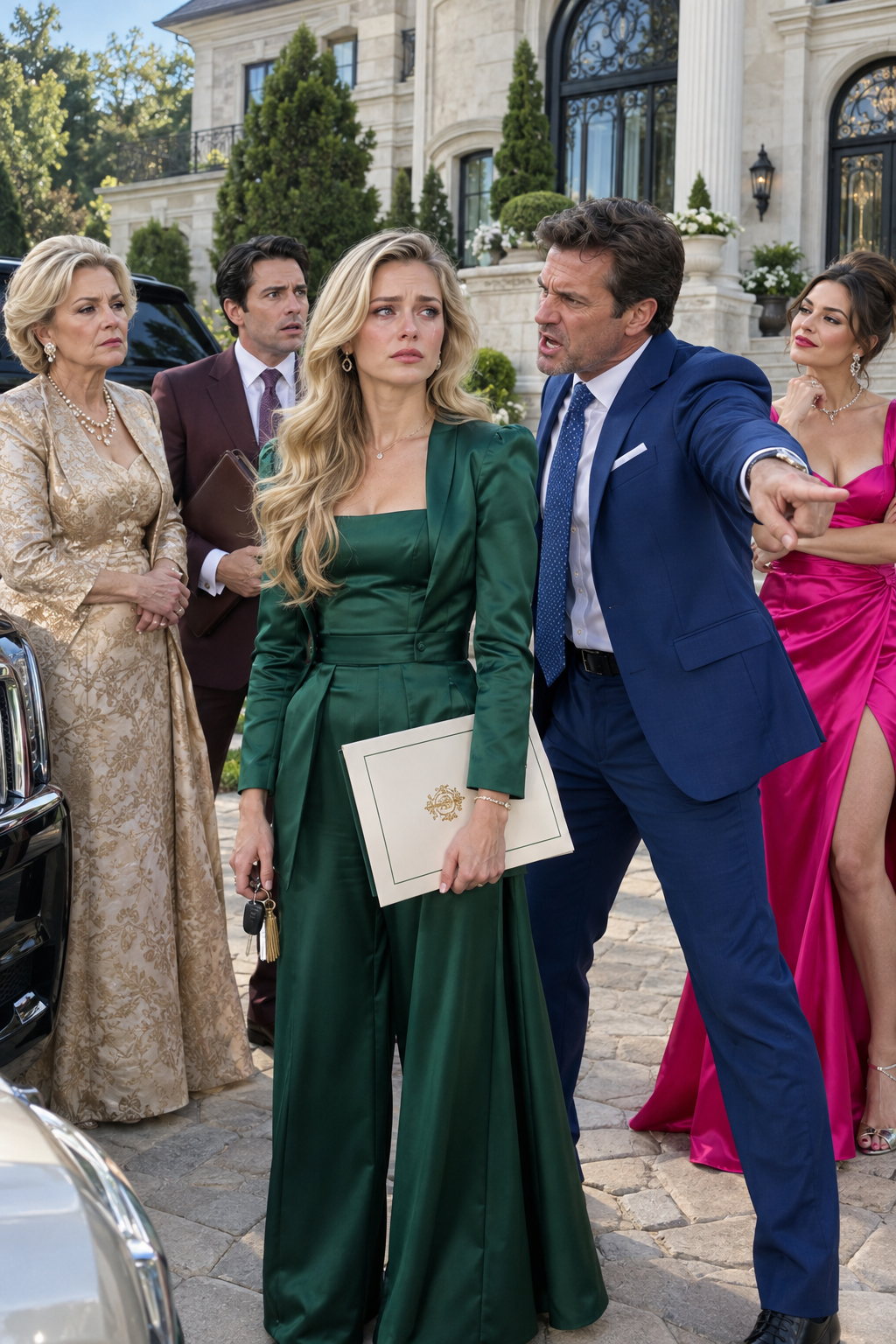
He Threw His Wife Out of His Million-Dollar Mansion—Then Her Lawyer Asked Who Gave Him Permission to Live There
“Get out of my house.”
My husband said it while his girlfriend stood barefoot on my grandmother’s marble floor, wearing my robe and drinking coffee from my favorite blue mug.
Then he tossed my suitcase down the front steps.
What neither of them knew was that the mansion wasn’t his.
Neither was the driveway.
Neither were the gardens, the guesthouse, the pool, the twelve acres behind it, or the private road leading to the gate.
Every square foot beneath his expensive Italian shoes belonged to me.
And I had spent six years letting him believe otherwise.
My name is Claire Whitmore.
At thirty-eight, I had learned that anger could be useful, but only if you didn’t waste it screaming.
So when my husband, Grant Whitmore, stood in the entrance hall of our home outside Greenwich, Connecticut, with one hand in his pocket and the other pointing toward the open front door, I didn’t cry.
I didn’t beg.
I didn’t ask him if he had lost his mind.
I simply looked past him at the woman standing near the staircase.
Madison Price.
Thirty-one.
Marketing director at Grant’s real estate investment company.
And, judging from the silk robe tied loosely around her waist, no longer limiting her duties to marketing.
Rain tapped softly against the tall windows.
My suitcase lay open on the limestone porch.
Two sweaters had fallen out.
One sleeve dragged through a puddle.
Grant’s jaw tightened.
“You heard me.”
“Then why are you still standing there?”
I glanced around the foyer.
The antique walnut console my grandmother bought in Charleston.
The chandelier my mother had restored before she died.
The faint scratch near the baseboard where our golden retriever, Murphy, had tried to chase a Christmas ornament three winters earlier.
This was the house where I had spent my tenth birthday.
The house where my father taught me to play chess.
The house where my mother died.
The house Grant had referred to as “his estate” so many times that apparently he had begun believing it.
Madison shifted behind him.
“This doesn’t have to be ugly, Claire.”
I looked at her.
She was holding my mug with both hands.
“You’re wearing my robe.”
Her cheeks colored.
Grant stepped between us.
“Don’t start.”
“I wasn’t starting anything.”
“You always do this.”
“That calm thing.”
For the first time that morning, I almost smiled.
Grant hated calm.
He could negotiate with attorneys, bully contractors, charm investors, intimidate employees, and lie to reporters without blinking.
But silence made him nervous.
Especially mine.
He rubbed his jaw.
“I’ve already spoken to Jeffrey.”
Jeffrey Pike was the attorney Grant used for most of his business matters.
“He says I’m well within my rights.”
“To throw your wife into the rain?”
“To ask you to leave the marital residence.”
There it was.
Marital residence.
A phrase Grant had probably repeated after hearing it from Jeffrey once.
“What else did Jeffrey tell you?” I asked.
Grant hesitated.
Madison moved closer to him.
It was subtle.
Half a step.
But I saw it.
So did Grant.
He put his hand at the small of her back.
He wanted me to see that too.
Six years of marriage reduced to a gesture.
I looked down at his hand.
Then back at his face.
“When did this start?”
He exhaled sharply.
“I’m curious.”
“It doesn’t matter.”
“Three months?”
Madison looked at the floor.
That gave me my answer.
“Longer,” I said.
Grant’s mouth tightened.
“Why are we doing this?”
“We aren’t.”
I walked toward the front door.
He actually looked surprised.
Maybe he expected a scene.
Maybe he wanted one.
A screaming wife would have made him feel powerful.
Broken glass would have justified his story.
Tears would have fed the fantasy he had apparently built with Madison—that I was dependent, emotional, and terrified of losing the life he had supposedly given me.
Instead, I bent down, picked up the wet sweater, placed it back inside the suitcase, and zipped it shut.
Grant followed me onto the porch.
“Your car is still in the garage.”
“You can take it.”
“How generous.”
His eyes narrowed.
“That’s exactly what I mean.”
I straightened.
“About what?”
“You always make everything sound like I’m the villain.”
Madison appeared in the doorway.
I looked from her to him.
She was wearing my dead mother’s robe.
He had thrown my clothes into the rain.
And somehow his greatest concern was tone.
I rested one hand on the suitcase.
“I’m not making you sound like anything, Grant.”
His face hardened.
“You haven’t been happy for a long time.”
“Neither have you.”
“We want different lives.”
“No. You want my life with a different woman standing in it.”
That landed.
Madison’s face tightened.
Grant looked away.
I continued.
“You want the house.”
He said nothing.
“The company dinners.”
“The club membership.”
His eyes came back to mine.
“The photographs by the fireplace at Christmas.”
“The summer parties.”
He swallowed.
“The address.”
Madison shifted.
“The land.”
Grant’s expression changed slightly.
Not enough that most people would have noticed.
Because Grant understood money.
And because the land was the one thing he had never fully understood.
I leaned closer.
“You want everything around me, Grant.”
I picked up my suitcase.
“You just decided you no longer wanted me.”
Then I walked into the rain.
I did not tell him the mansion was mine.
Not that morning.
Not while Madison watched.
Not while Grant stood beneath the roof my grandfather had replaced in 1998, acting like a king graciously banishing someone from his castle.
There was no reason to spoil the surprise.
Because Grant had made one mistake.
One enormous, arrogant, expensive mistake.
He thought possession meant ownership.
And by sunset, he was going to learn the difference.
My car was a gray Volvo wagon Grant hated.
He called it “a librarian’s car.”
I loved it precisely because no one noticed it.
I loaded the suitcase into the back, climbed behind the wheel, and sat there without starting the engine.
The garage smelled faintly of cedar and motor oil.
Grant’s black Range Rover was parked beside me.
Madison’s white Mercedes sat behind it.
I opened my phone.
Seventeen missed calls from my sister.
Four from my attorney.
One from an unknown number.
The text from my sister, Anna, was short.
CALL ME BEFORE YOU DO ANYTHING.
She answered before the first ring finished.
“Where are you?”
“In the garage.”
“Are you okay?”
“I’m okay.”
“Did he actually throw you out?”
“He packed one suitcase.”
Anna went silent.
Then I heard something strike a desk on her end.
Probably her palm.
“You’re kidding.”
“He threw you out of your own house?”
Another silence.
Then Anna said a word our mother would have hated.
I laughed despite myself.
“Where are you?”
“At the office.”
“Is Peter there?”
Peter Hall was not merely my attorney.
He had been my father’s attorney.
Before that, he had worked with my grandfather.
He knew every deed, trust, easement, boundary, tax agreement, and ownership structure tied to Whitmore Hill.
Including the one Grant had never bothered to read.
“Good,” I said. “Tell him I’m coming.”
“Claire, what are you going to do?”
I looked through the windshield at the interior door leading from the garage into the mudroom.
For six years, I had walked through that door carrying groceries, Christmas gifts, muddy boots, dry cleaning, and once a sick dog wrapped in a beach towel.
Now my husband had decided it belonged to him.
“I’m going to let Grant explain himself.”
“Eventually?”
I started the engine.
“To everyone.”
The Whitmore family had owned the property since 1947.
Not Grant’s Whitmores.
That confusion had caused more than one awkward conversation after we married.
My maiden name was Claire Bennett.
But my mother had been Eleanor Whitmore, the only daughter of James and Margaret Whitmore.
When I married Grant Whitmore, people joked that I had somehow married back into my own family name.
There was no relation.
His Whitmores were from New Jersey.
Mine had come from Boston, then Connecticut.
Different families.
Different money.
Different history.
But Grant liked the coincidence.
More accurately, Grant liked what people assumed because of it.
At parties, strangers sometimes believed he had inherited Whitmore Hill.
He rarely corrected them.
At first, I thought it was harmless.
Then he began saying things like, “My family’s place.”
Later, it became, “Our property.”
Finally, somewhere around year four of our marriage, I heard him tell a banker, “I own an estate outside Greenwich.”
That was when I started paying attention.
I had inherited Whitmore Hill through a family trust after my mother’s death.
The arrangement was deliberate.
My grandparents had seen too many marriages collapse around money.
They had watched a cousin lose half a property in a bitter divorce.
So the mansion, the acreage, and several surrounding parcels had been placed inside the Eleanor Whitmore Bennett Property Trust.
I was its sole beneficiary.
I was also, after turning thirty-five, its sole controlling trustee.
Grant knew there was a trust.
He knew the property had belonged to my family.
But he had never asked many questions.
Why would he?
In his mind, marriage converted “hers” into “ours,” and “ours” gradually became “his” whenever he was speaking to another man.
I hadn’t corrected him.
Maybe I should have.
Maybe my silence had helped build the monster now standing in my foyer.
But silence can do two things.
It can hide weakness.
And it can hide strength.
I drove through the open gates without looking back.
Peter Hall’s office occupied the top floor of a brick building near Greenwich Avenue.
He was sixty-seven, silver-haired, and incapable of hurrying.
When I entered his conference room, he was sitting at the long table beside Anna.
A yellow legal pad lay in front of him.
Beside it sat a leather folder.
He looked up.
“Did you bring your key?”
“Good morning to you too.”
“Garage opener?”
“Gate remote?”
“In the car.”
Peter nodded.
“Excellent.”
Anna stared at him.
“That’s your reaction?”
“I’m an attorney.”
“You don’t think this is insane?”
“I think marriage frequently is.”
I sat across from them.
Peter pushed a cup of coffee toward me.
“I’m fine.”
“Drink anyway.”
He folded his hands.
“Start from the beginning.”
I told him about Madison.
The suitcase.
Grant claiming the residence.
Peter did not interrupt until I repeated Grant’s exact words.
“Get out of my house.”
Peter removed his glasses.
“He said ‘my house’?”
Anna leaned back and covered her mouth, trying not to laugh.
I looked at her.
“You’re laughing.”
“Because this is going to be catastrophic.”
Peter pointed at her.
“Do not enjoy legal catastrophes prematurely.”
Anna’s shoulders shook.
Peter turned back to me.
“Has Grant ever received any written authorization from you to occupy the property independently?”
“Ownership interest?”
“Transfer agreement?”
“Has he personally paid property tax?”
“Major structural expenses?”
“Not directly.”
“Mortgage?”
“There isn’t one.”
Peter nodded.
“Utilities?”
“That means nothing.”
He opened the leather folder.
Inside was a certified copy of the property deed.
I had seen it before.
Many times.
But that morning the typed lines looked different.
Perhaps because thirty minutes earlier, my husband had thrown me off the land described on those pages.
Peter tapped one paragraph.
“The main residence sits on Parcel A. Thirty-eight acres total under the trust after the northern parcel merger.”
“Twelve acres,” Anna said.
Peter looked at her.
“The landscaped residential footprint is about twelve. The deeded property is larger.”
I stared at him.
He gave me an odd look.
“You knew that.”
“I knew there were woods.”
“There are nineteen acres of woodland, the old orchard parcel, a conservation strip, and the access road.”
I sat back.
“How much does Grant think we own?”
Anna snorted.
“Apparently he thinks he owns it.”
Peter ignored her.
“Claire, what do you want?”
That was the important question.
Not what could I do.
What did I want?
I looked out the window.
People moved along Greenwich Avenue beneath umbrellas.
A delivery van stopped at the curb.
A woman in a red coat pulled a small dog away from a puddle.
My life had cracked open, and the rest of the world was still buying coffee.
“I want a divorce.”
Anna reached across the table and squeezed my hand.
Peter nodded once.
“And the property?”
“I want him out.”
“How quickly?”
I pictured Madison drinking from my mug.
Peter considered that.
“Possible.”
Anna leaned forward.
“Grant is there by permission of the beneficiary. Permission can be revoked.”
“He’s her husband,” Anna said.
“For the moment.”
Peter slid another document from the folder.
“We proceed carefully. Claire left voluntarily after being ordered out, which is useful. We document the condition. We send written revocation of occupancy rights. We notify security. We restrict access to the private portions of the estate. We do not touch personal belongings without inventory.”
I listened.
Calm returned to me in layers.
Grant had thrown a suitcase.
I had a deed.
He had a girlfriend.
I had a trust.
He had anger.
I had documentation.
He had made a scene.
I would make a record.
That difference mattered.
Peter continued.
“You also need to decide whether you want to disclose the property ownership immediately.”
Anna looked at me.
Peter’s eyebrows lifted slightly.
“What are you thinking?”
“I want to know what else he thinks is his.”
Peter leaned back.
That was when Anna stopped smiling.
Because she understood.
Grant’s behavior that morning wasn’t spontaneous.
The suitcase had been packed.
Madison was already inside.
Jeffrey had supposedly given legal advice.
Grant had planned this.
And people who plan to remove their wives from houses usually plan what comes next.
“His company,” I said.
Peter said nothing.
“Whitmore Capital has been struggling.”
Anna frowned.
“How badly?”
“I don’t know.”
“You’re married to the CEO.”
Grant had stopped discussing details with me almost a year earlier.
He called it “protecting me from stress.”
At the time, I had been dealing with my mother’s final estate matters and assumed he was trying to be kind.
Now it looked different.
Two months earlier, he had asked strange questions about the property.
Whether the guesthouse could be converted into offices.
Whether the western field could be subdivided.
Whether the old orchard had independent road access.
I had thought he was brainstorming.
Maybe he had been calculating.
Peter’s face had gone still.
“Has he attempted to use the property as collateral?”
“I don’t know.”
“Could he?”
“Not legally.”
“That wasn’t my question.”
The room went quiet.
Peter turned to Anna.
“Call David Chen.”
Anna nodded and left.
I looked at Peter.
“Who’s David?”
“Forensic accountant.”
My stomach tightened.
“You think Grant forged something?”
“I think wealthy men facing liquidity problems occasionally become creative.”
“That sounds like something you say right before someone goes to prison.”
“It is something I say when I want facts before adjectives.”
He closed the folder.
“Until we know more, don’t confront Grant about ownership.”
“I wasn’t planning to.”
My phone buzzed.
Peter glanced at the screen.
I answered.
Grant didn’t bother with hello.
“Where did you go?”
I looked at Peter.
“I know that. Where?”
“You told me to leave.”
“I didn’t tell you to disappear.”
“You threw my suitcase outside.”
“I was angry.”
His voice lowered.
“Can you stop doing that?”
“Doing what?”
“Talking like a lawyer.”
Peter raised one eyebrow.
I almost smiled.
Grant continued.
“Look, I want us to handle this privately.”
“No family drama. No social media. No trying to embarrass Madison.”
Interesting.
Not apologize.
Not explain.
Protect Madison.
“I don’t use social media, Grant.”
“You know what I mean.”
“What do you need?”
He hesitated.
“I want you to come by tomorrow and get the rest of your clothes.”
Madison spoke faintly in the background.
I couldn’t hear the words.
Then Grant said, “And I need your garage remote.”
I looked at Peter.
His pen stopped moving.
“My garage remote?”
“For security.”
“The gate recognizes my car.”
“I’m changing the system.”
There it was.
He was planning to lock me out.
Peter scribbled something and turned the pad toward me.
“Why what?”
“Why are you changing the gate?”
“Because we’re separating.”
“And I don’t want you coming in whenever you feel like it.”
Peter’s pen moved again.
I stared at the new sentence.
LET HIM KEEP TALKING.
“So you’re living there with Madison?”
Grant exhaled.
“In the house?”
“Claire, don’t make this weird.”
I nearly laughed.
“What would make it less weird?”
“We’re adults.”
“Of course.”
“We can be reasonable.”
Another pause.
Then he said, “There are some papers in the library I may need you to sign.”
Peter’s eyes sharpened.
“What papers?”
“Nothing dramatic.”
“Then tell me.”
“It’s related to refinancing.”
I felt my entire body go cold.
Peter wrote one word.
“Refinancing what?”
“My business line.”
“That has nothing to do with me.”
“It’s procedural.”
“Then why do I need to sign?”
Grant was silent for two seconds too long.
“Spousal acknowledgment.”
Peter’s expression changed.
But enough.
He took off his glasses.
“Send it to my email,” I said.
“I’d rather explain it in person.”
“It’s complicated.”
“Then I’ll read slowly.”
His patience snapped.
“This is exactly why our marriage failed.”
I looked down at my coffee.
“Because I read contracts?”
“Because everything becomes a challenge with you.”
“No. Everything becomes a challenge when you won’t answer questions.”
“You know what? Forget it.”
He hung up.
The room was silent.
Peter picked up his phone.
She answered from the other room.
“Tell David we need him immediately.”
By noon, we knew two things.
First, Whitmore Capital was in much worse shape than Grant had admitted.
Second, someone had recently ordered an appraisal of Whitmore Hill.
Not the house alone.
The entire property.
David Chen arrived with two laptops, a messenger bag, and the energy of a man who had spent his career being delighted by other people’s financial lies.
He was forty-four, compact, fast-talking, and wore bright red socks with a conservative gray suit.
“I found the appraisal request through a commercial underwriting contact,” he said.
Peter gave him a look.
David smiled.
“Legally enough that you don’t need details.”
“I absolutely need details.”
“Then pretend I said public sources.”
Peter sighed.
David turned the laptop toward me.
An appraisal firm in Stamford had prepared a preliminary valuation six weeks earlier.
Estimated property value: $14.8 million.
My eyes froze on the number.
Anna leaned over my shoulder.
Peter raised a finger.
“I know. Mom would disapprove.”
“Your mother has been dead twelve years.”
“She would still disapprove.”
David scrolled.
“Here’s the interesting part.”
Requested client:
Whitmore Capital Holdings LLC.
Secured credit facility.
Collateral:
Real property, 14 Whitmore Ridge Lane, Greenwich, Connecticut, including improvements and associated acreage.
I read the sentence twice.
Then a third time.
“That’s my property.”
“Yes,” David said.
“Grant’s company has no ownership interest.”
“So why would an appraiser—”
“Because someone represented that Whitmore Capital expected to pledge it.”
Peter leaned closer.
“Expected?”
David nodded.
“The appraisal itself doesn’t create a lien. It’s due diligence.”
“Who signed the request?”
David clicked.
Grant’s name appeared at the bottom.
Grant Whitmore.
Chief Executive Officer.
Something inside me shifted.
Not heartbreak.
That part had already happened upstairs near the staircase when I saw Madison in my robe.
This was different.
This was clarity.
The affair was personal.
This was deliberate.
Grant wasn’t merely replacing his wife.
He was trying to monetize her inheritance.
Anna whispered, “That bastard.”
I kept staring at the screen.
Peter looked at me.
“You still want to wait before disclosing ownership?”
David smiled faintly.
Peter did not.
“This is not a game, Claire.”
“Then why wait?”
“Because I want the paperwork he wanted me to sign.”
Peter considered that.
“Good answer.”
At p.m., Grant emailed it.
A fifteen-page document.
The subject line said:
Routine Authorization.
David actually laughed.
“I love people.”
Peter opened the attachment.
Page one looked boring.
Page two looked boring.
Page three looked boring.
That was the point.
Buried on page nine was a clause describing spousal consent to encumber “marital residential assets associated with Whitmore Capital principal Grant Whitmore.”
Peter read it twice.
Then removed his glasses.
“He’s trying to get you to consent to collateralization.”
“Of my property?”
“Would that make it legal?”
“Not by itself. But depending on what representations have been made elsewhere, your signature could be used to support a claim that Grant has an equitable or beneficial interest.”
David tapped another section.
“And this references a separate schedule.”
“There’s no schedule attached,” I said.
Peter nodded.
I felt suddenly tired.
“He wanted me out of the house before asking me to sign this.”
David shrugged.
“Control the environment. Create emotional pressure. Make you feel financially vulnerable.”
Anna’s voice was quiet.
“Then offer a path.”
“What path?” I asked.
She looked at me.
“Sign this and maybe the divorce stays friendly.”
No one spoke.
Because that sounded exactly like Grant.
For years, I had admired his ability to structure negotiations.
He liked to create urgency.
He liked to frame choices.
He liked to make people believe the outcome he preferred was also the safest one available.
I had watched him do it across dinner tables.
At charity boards.
During construction disputes.
With business partners.
Now I realized he had brought the same method home.
Make Claire feel displaced.
Make Claire feel uncertain.
Make Claire believe Grant controls the money.
Then place a document in front of her.
I closed the laptop.
“I’m going back.”
Anna stared at me.
“Absolutely not.”
“Not inside.”
Peter understood first.
“You want to see what he does.”
“Take someone.”
“I’ll take Anna.”
Anna blinked.
“Apparently I’ve volunteered.”
Peter looked unhappy.
“If he becomes aggressive, leave. Do not argue. Do not enter any locked space. Do not sign anything.”
“And record nothing illegally.”
He leaned forward.
“Grant thinks you are emotionally compromised. That makes him dangerous in a very specific way.”
“He will underestimate you.”
Whitmore Hill looked different when I returned.
Not because anything had changed.
Because I had.
The rain had stopped.
Clouds hung low above the trees.
The gravel drive was dark and slick.
When my Volvo reached the gate, the sensor didn’t open.
Tried the remote.
Grant had already changed the code.
Anna stared through the windshield.
“He works fast.”
“So do we.”
I called the estate security company.
The account was in the trust’s name.
Two minutes later, the gate opened.
Anna grinned.
“Tiny victory.”
“First of many.”
We drove up the hill.
Madison’s Mercedes was gone.
Grant’s Range Rover sat near the front entrance.
But there was another vehicle beside it.
A black Cadillac Escalade.
I recognized the plate.
Jeffrey Pike.
Anna muttered, “Perfect.”
Before I reached the front door, it opened.
Grant stepped out.
His expression went from confusion to irritation.
“How did you get through the gate?”
“That was fast.”
“Changing the code.”
“I told you I was changing it.”
He glanced at Anna.
“Why is she here?”
Anna waved.
“Good to see you too.”
Grant ignored her.
“You said you’d come tomorrow.”
“No. You told me to.”
His jaw flexed.
Behind him, Jeffrey appeared.
He was in his fifties, broad-shouldered, expensive suit, permanently tanned.
He gave me a professional smile.
“I’m sorry things have become difficult.”
Anna made a noise that sounded suspiciously like a cough.
Grant folded his arms.
“I don’t want a scene.”
“I came for the papers.”
“I emailed them.”
“You said there was more to explain.”
That caught him.
Jeffrey looked at Grant.
Grant looked at Jeffrey.
Small look.
Half second.
But enough.
“Come inside,” Grant said.
I didn’t move.
“You threw me out three hours ago.”
“I was upset.”
“Now I’m trying to be reasonable.”
Behind him, through the open door, I saw something that stopped me.
Two framed photographs had been removed from the console.
Our wedding photo.
And a picture of my parents.
In their place sat an arrangement of white roses.
Madison had already begun redecorating.
Three hours.
That was all it had taken.
I stepped inside.
Anna stayed beside me.
Grant shut the door.
The house smelled like someone had burned vanilla candles.
I hated vanilla candles.
Jeffrey led us toward the library.
As we walked, I noticed more changes.
My coat was gone from the hook near the mudroom.
My shoes had disappeared from beneath the bench.
A framed watercolor I bought in Maine was leaning against the wall.
There were cardboard boxes near the stairs.
My life was being packed while I was still legally married to the man doing it.
Inside the library, Grant poured himself water.
He didn’t offer anyone else any.
Jeffrey opened a folder.
“The authorization is standard.”
Anna remained standing.
“Then explain page nine.”
Jeffrey blinked.
Grant looked at him.
I watched both men carefully.
“The collateral acknowledgment?”
Jeffrey adjusted his cuff.
“It’s protective language.”
“For whom?”
“The lender.”
“Against what?”
He smiled slightly.
“Claire, I don’t want to overwhelm you with technical detail.”
Anna’s face changed.
I put one hand on her wrist without looking at her.
She stayed quiet.
“I can handle technical detail.”
“Of course.”
“Then explain it.”
Jeffrey leaned back.
“Grant is restructuring certain company obligations. Because your marital residence may be considered part of the broader financial picture, the lender wants acknowledgment that you won’t later contest the financing.”
I nodded slowly.
“Does the lender believe Grant owns this property?”
Very small.
Very useful.
Grant jumped in.
“This is exactly the kind of thing I’m talking about.”
I looked at him.
“What kind of thing?”
“You turn everything into an interrogation.”
“I asked one question.”
“You know this house has always been part of our family assets.”
Our family assets.
Interesting wording.
“Which family?” I asked.
Grant stared.
Jeffrey tried to interrupt.
“No, I’m curious.”
I turned back to Grant.
“Which family’s asset is it?”
His face hardened.
“Seriously?”
“We’re married.”
“That isn’t an answer.”
He laughed without humor.
“You’ve lived here with me for six years.”
“I’ve invested in this place.”
“I’ve maintained it.”
I almost admired the confidence.
“You paid the pool company twice.”
His face reddened.
“I paid for the kitchen renovation.”
“No. Whitmore Capital’s vendor negotiated a discount. The trust paid the invoices.”
His eyes sharpened.
“You’re keeping score now?”
“Sounds like it.”
Jeffrey held up a hand.
“This isn’t productive.”
“It is for me.”
I looked at him.
“Does the lender believe Grant owns the mansion?”
Jeffrey’s polished expression slipped.
“I can’t speak for the lender’s internal assumptions.”
“Did you provide them with a deed?”
“Did Grant?”
“I don’t know.”
Grant snapped, “Why does any of this matter?”
I turned toward him.
“Because you asked me to sign something.”
“You’re my wife.”
“Not your secretary.”
“I didn’t say you were.”
“Then answer the question.”
His voice rose.
“Because I need the credit line.”
Not all of it.
“How much?”
“That’s confidential.”
“Then my signature is unavailable.”
His eyes widened.
“I’m not signing.”
“Do you understand what this could do?”
“My company.”
“Your company.”
“Our finances.”
“My property.”
The words slipped out before I intended them to.
Grant went still.
Jeffrey’s head turned.
Anna looked at me.
But too early.
Grant frowned.
“What do you mean, ‘my property’?”
“The clothes you packed.”
His eyes narrowed.
That bought me time.
I walked toward the door.
Grant followed.
“Don’t be childish.”
“Childish?”
“You know what I mean.”
“No. Explain it.”
He lowered his voice.
“We built this life together.”
“And today you threw me out of it.”
“That was about our marriage.”
“You changed the gate code.”
“Because you don’t live here anymore.”
I looked at him.
There it was.
The sentence I wanted.
I took out my phone.
Not recording.
Just checking the time.
“Say that again.”
His face changed.
“You said I don’t live here anymore.”
“I said what I said.”
I walked out.
Anna followed.
Once we were outside, she whispered, “You almost told him.”
“That would have been incredible.”
“It’ll be better later.”
As we reached the car, Grant called after me.
For a second, something almost human crossed his face.
Maybe regret.
Maybe fear.
“Don’t make this harder than it needs to be.”
I looked back at the house.
Then at him.
His shoulders relaxed slightly.
He misunderstood.
I got into the car.
I meant I was going to make it very simple.
At p.m., Peter delivered formal notice.
At , Grant called me.
I didn’t answer.
At , he called again.
Then Jeffrey called.
At , I finally answered Grant.
“What the hell is this?”
I was sitting in Anna’s kitchen eating takeout Thai food.
“Which part?”
“REVOCATION OF RESIDENTIAL PERMISSION?”
He practically shouted the phrase.
“What does that even mean?”
“It means exactly what it says.”
“You’re trying to evict me?”
“Not trying.”
Anna stopped chewing.
I continued.
“Your permission to occupy Whitmore Hill has been revoked.”
Grant laughed.
It was a sharp, disbelieving sound.
“You can’t revoke my permission to live in my own house.”
“It isn’t your house.”
Not ordinary silence.
The kind where an entire worldview cracks.
“The mansion belongs to the Eleanor Whitmore Bennett Property Trust.”
He breathed once.
“I know about the trust.”
“Apparently not enough.”
“The trust owns the residence, guesthouse, pool structures, private road, orchard, woods, and thirty-eight acres.”
“That’s not—”
“I’m sole beneficiary.”
Another silence.
“And sole controlling trustee.”
His voice dropped.
“You’re lying.”
“The house is a marital asset.”
“We’ve lived there for six years.”
“I paid for things.”
“You bought a grill.”
“You know damn well that isn’t what I mean.”
I sat back.
Anna was watching me across the table.
I stayed calm.
“The trust predates our marriage.”
“You can’t just decide I don’t live there.”
“Actually, I can.”
“Jeffrey says—”
“Jeffrey may want to speak with a real estate attorney.”
The line went quiet.
Then Grant said something unexpected.
“You planned this.”
I almost laughed.
“You threw me out this morning.”
“You were waiting for an excuse.”
“You always kept the house separate because you knew you’d do this eventually.”
“You never trusted me.”
That one hurt.
Because six years earlier, I had trusted him enough to let him move into the most meaningful place in my life.
I had given him keys.
What I had not given him was ownership.
Apparently, to Grant, those were the same thing.
“I trusted you,” I said.
“You hid this.”
“I never hid it.”
“You never told me you could evict me.”
“I never imagined I’d need to.”
His breathing changed.
I could picture him pacing the library.
Then he asked, “Where am I supposed to go?”
The audacity was almost impressive.
“You’re a millionaire.”
“That’s not the point.”
“No. The point is you threw me out of a house you didn’t own.”
He said nothing.
“You gave me one suitcase.”
Still nothing.
“You moved your girlfriend in before I was even gone.”
His voice sharpened.
“Madison has nothing to do with the property.”
I let the next sentence settle.
“She has even less right to be there than you do.”
He hung up.
At p.m., Jeffrey emailed Peter.
At , Peter forwarded it to me.
Grant requested seventy-two hours to vacate.
I granted forty-eight.
Not because I owed him.
Because I didn’t want a judge later hearing that I had been vindictive.
Peter approved.
Document everything.
Inventory the premises.
Security present.
No direct confrontation.
That evening, I slept in Anna’s guest room.
Or tried to.
At 11:43 p.m., my phone lit up.
I stared at her name.
I had never saved her number.
Grant must have given it to me months earlier when she coordinated a company event.
I answered.
She spoke quickly.
“I didn’t know.”
“Know what?”
“That the house was yours.”
I said nothing.
“Grant told me it was his family estate.”
Of course he had.
“He said you were staying there because of the marriage.”
Interesting.
“What else did he say?”
“He said you didn’t really work.”
I looked at the dark window.
I sat on the board of two charitable foundations, managed three family investments, and oversaw the trust.
Apparently that translated to not really working.
“He said you lived off him.”
I almost smiled.
Grant’s salary during our first two years of marriage had been less than the annual income from one of my family’s commercial properties.
Not that it mattered.
But lies revealed priorities.
“What do you want, Madison?”
“I’m leaving.”
“That seems wise.”
“He’s furious.”
“That seems predictable.”
“He keeps saying you humiliated him.”
“I’m not there.”
I heard movement on her end.
She was packing.
Then her voice dropped.
“Claire, there’s something else.”
“Earlier today, before you came back, Jeffrey brought papers.”
“What papers?”
“I don’t know. Grant put them in the safe.”
My pulse changed.
“What safe?”
“The one behind the painting in the library.”
I knew the safe.
My father had installed it years ago.
Grant had started using it for business documents.
“What did you see?”
“Then why are you telling me?”
“Because they were arguing.”
“The bank.”
I sat very still.
“What about the bank?”
She whispered.
“Jeffrey said, ‘If Claire gets a lawyer before the closing, we have a problem.’”
That was enough.
“Anything else?”
“I’m sorry.”
“For which part?”
She didn’t answer.
Then she hung up.
I called Peter.
He answered on the second ring.
“If you’re calling about murder, wait until morning.”
“The safe.”
“Grant has bank papers in the library safe.”
Peter was instantly awake.
“How do you know?”
“Do you know the combination?”
“Do not go there.”
“I wasn’t going to.”
“I mean it.”
“We handle it tomorrow.”
I lay back down.
But I didn’t sleep.
Because for the first time, I realized Grant’s affair might not be the worst thing he had done.
The next morning, David found the loan.
$6.2 million.
Pending closing.
Secured, according to preliminary documentation, by Whitmore Hill and “related beneficial residential interests.”
Grant needed the money within five business days.
Whitmore Capital had a debt payment due the following week.
Without refinancing, David believed the company could default.
That gave Grant motive.
Not to cheat.
The cheating was almost incidental now.
“He’s cornered,” David said.
We were back in Peter’s conference room.
“How cornered?” I asked.
David turned his laptop.
“Three major developments are behind schedule. One investor withdrew. There’s a pending contractor lawsuit. Cash reserves are ugly.”
“How ugly?”
“If Whitmore Capital were a patient, I’d call the family.”
Anna stared at the numbers.
“Why didn’t anyone know?”
“Private company. Lots of intercompany entities. Grant moved debt around.”
Peter asked, “Illegal?”
“Not necessarily.”
“Misleading?”
David smiled.
“That’s why accountants exist.”
I ignored them.
“What happens if he doesn’t get the loan?”
“Possibly restructuring. Possibly bankruptcy. Possibly forced asset sales.”
“So he needed my property.”
David nodded.
“He needed something lenders liked.”
“And he thought I’d sign.”
“He thought you’d sign while believing you needed him.”
There it was again.
Control the environment.
Create dependence.
Offer rescue.
I sat back.
Grant hadn’t thrown me out because he had finally chosen Madison.
He threw me out because he needed me frightened.
That was the first real twist.
And it changed everything.
At a.m., I returned to Whitmore Hill with Peter, a licensed property manager, and two security officers.
Grant had been notified.
He was waiting outside.
Madison’s car was gone.
So was Jeffrey’s.
Grant looked like he hadn’t slept.
His shirt was wrinkled.
No polished CEO expression.
Just anger.
“You brought security?”
Peter answered.
“The trust did.”
Grant ignored him.
“Claire, can we talk alone?”
That word surprised everyone.
Especially Grant.
I studied his face.
“What do you want to say?”
He looked at Peter, then the security officers.
“This is humiliating.”
I said nothing.
“You’ve made your point.”
Still nothing.
“I understand the property is technically held by your trust.”
“Technically?”
His jaw tightened.
“You know what I mean.”
“No. I don’t.”
“It’s your family property.”
“But this has been my home too.”
His eyes flashed.
“Forty-eight hours?”
“You gave me forty-eight seconds.”
Peter looked down, possibly hiding a smile.
Grant stepped closer.
One security officer shifted position.
I held up a hand.
“It’s fine.”
Grant lowered his voice.
“I made a mistake yesterday.”
“Which one?”
“You know.”
“The girlfriend?”
He closed his eyes briefly.
“The suitcase?”
“Changing the gate?”
His jaw flexed.
“Calling my inheritance your house?”
“Trying to use it as collateral?”
That one hit.
His face drained.
Peter watched him carefully.
Grant recovered fast.
“I don’t know what you think you know.”
“I know an appraisal was commissioned.”
His expression changed again.
“I know about the $6.2 million facility.”
He looked at Peter.
Peter said nothing.
“I know you wanted my signature before closing.”
Grant rubbed a hand over his face.
“You don’t understand the situation.”
“Then explain it.”
He looked toward the security officers.
“I’m not discussing company finances here.”
“This is my property.”
He stepped toward the door.
I shook my head.
“This is ridiculous.”
“We can discuss it on the patio.”
“You’re treating me like a criminal.”
“I’m treating you like a man who tried to pledge property he doesn’t own.”
His nostrils flared.
“I never pledged anything.”
“You ordered an appraisal.”
“That isn’t pledging.”
He looked relieved for half a second.
Then I added, “It’s preparation.”
The relief vanished.
Peter stepped in.
“Mr. Whitmore, we’re here to inventory trust property and supervise transition. If you wish to discuss financial matters, your counsel can contact me.”
Grant stared at him.
“This is my marriage.”
Peter’s voice stayed flat.
“You brought your lawyer into it yesterday.”
That ended the argument.
We entered.
The first thing I saw was my mother’s robe folded on a chair.
Madison had left it behind.
I picked it up.
The fabric still smelled faintly of her perfume.
I pressed it once between my hands.
Then placed it over my arm.
For the first time, genuine shame appeared on his face.
It lasted maybe two seconds.
But I saw it.
He turned away.
The property manager began photographing each room.
Grant’s personal belongings were marked for removal.
Trust furnishings remained.
Halfway through the library inventory, we reached the safe.
Grant moved quickly.
“That contains private business records.”
Peter looked at me.
“Safe belongs to the trust?”
Grant snapped, “Contents don’t.”
“Then you can remove your contents under supervision.”
Peter’s tone sharpened.
“Mr. Whitmore.”
“I’ll do it later.”
The room changed.
Security officer near the door.
Property manager holding clipboard.
Anna wasn’t there.
Just me, Grant, Peter, and two witnesses.
I walked toward the painting.
Grant stepped in front of me.
“I said those are private.”
“The safe is fixed to the wall.”
“You’re not opening it.”
That was the moment I knew.
Not suspected.
Something inside mattered.
Peter stepped forward.
“Mr. Whitmore, obstructing the trustee’s access to a fixture owned by the trust is unwise.”
Grant laughed bitterly.
“You attorneys all talk like fortune cookies.”
Peter shrugged.
“We bill hourly.”
I almost smiled.
Grant didn’t.
Finally, he stepped aside.
I moved the painting.
Entered the combination.
My father’s birthday.
The lock clicked.
Inside were three stacks of documents.
A small velvet jewelry box.
Two passports.
And a thick blue folder from Harbor National Bank.
Grant reached for it.
Peter stopped him.
“It’s mine.”
“Then we’ll verify that.”
I picked up the folder.
Grant’s face turned red.
I opened it.
The first page was a draft loan agreement.
The second was a property schedule.
The third was a document that made my hands go cold.
AFFIDAVIT OF BENEFICIAL OWNERSHIP.
Grant Whitmore represented that he held a 50 percent equitable marital interest in Whitmore Hill.
Not legal title.
Beneficial marital interest.
Enough, apparently, to support negotiations.
There was a signature at the bottom.
Except I had never signed it.
For several seconds, no one moved.
Peter spoke first.
Very quietly.
“I see it.”
Grant said, “That’s not final.”
I looked at him.
“That is my signature.”
“It’s a draft.”
“My forged signature.”
“I didn’t forge anything.”
Peter stepped between us.
“Everyone stop speaking.”
Grant pointed at the page.
“It’s a specimen.”
“A sample. For document preparation.”
Peter turned.
“A specimen of her signature?”
Grant realized how that sounded.
“I didn’t create it.”
“Then who?”
Grant’s face changed.
The hesitation.
The first crack.
Someone else existed.
Someone beyond Jeffrey.
Someone involved enough to place my forged signature inside a bank folder.
Peter held out his hand.
“Give me the document.”
He slipped it into a clear evidence sleeve from the property manager’s supply case.
Grant stared.
“This is insane.”
Peter’s voice went cold.
“No, Mr. Whitmore. This is potentially criminal.”
Grant laughed, but the sound was thin.
“You’re blowing this up.”
“You used her signature.”
“I said I didn’t.”
“Then you should be extremely interested in discovering who did.”
Grant didn’t answer.
That told me more than anything.
A man falsely accused should want the truth.
Grant wanted the conversation to end.
The velvet jewelry box sat beside the folder.
I opened it.
Inside was my grandmother’s emerald brooch.
I had been looking for it for eight months.
I stared at Grant.
“Why is this here?”
He looked genuinely confused.
“I have no idea.”
“You had my grandmother’s brooch in your safe.”
“I’ve never seen that.”
For once, I believed him.
Peter looked at the brooch, then at the documents.
“Claire, don’t touch anything else.”
We stopped the inventory.
Police were not called that morning.
Peter wanted copies, forensic examination, and a controlled strategy.
The bank was notified through counsel that no transaction involving Whitmore Hill was authorized.
The closing froze before lunch.
At p.m., Whitmore Capital’s lender suspended the entire facility.
At , Grant called.
I declined.
At , he called again.
At , he sent a text.
YOU JUST DESTROYED MY COMPANY.
I stared at the words.
Then typed:
No. I stopped you from using my property to save it.
I didn’t send it.
Peter had advised no direct communication.
So I deleted the message.
That restraint was harder than screaming.
By Friday afternoon, Grant had moved into a hotel.
Security watched movers remove his clothing, office equipment, wine collection, golf clubs, and boxes from the garage.
I stood upstairs in my bedroom as they carried his life down the stairs.
No satisfaction came.
That surprised me.
I expected victory to feel louder.
Instead, the house became quiet.
His shoes vanished from the closet.
His razor disappeared from the bathroom.
His books left gaps on the library shelves.
His side of the bed looked suddenly unnecessary.
Six years did not vanish because someone carried boxes through a doorway.
They simply became history.
Anna arrived with groceries.
“You need food.”
“I have food.”
“You have mustard, olives, and one frozen pizza.”
“That is food.”
“That is evidence of depression.”
She set bags on the kitchen counter.
“Peter called.”
“He said not to discuss the signature.”
“He also said you probably won’t listen.”
“Also true.”
Anna pulled out bread.
“What happens now?”
“I mean with the forgery.”
“I don’t know.”
She studied me.
“Do you think Grant did it?”
Her eyebrows rose.
“He manipulates.”
“He cheats.”
“Thank you for the summary.”
“You’re welcome.”
“But the signature looked too polished.”
“What does that mean?”
“It wasn’t traced badly. It looked like mine.”
She stopped unpacking.
“Maybe he copied it electronically.”
“And the brooch?”
“I don’t know.”
Anna leaned against the counter.
“That is weird.”
“You think someone has been inside the house?”
“I think someone had access.”
“Possibly.”
Grant and I had a housekeeper three days a week, gardeners, a pool company, occasional contractors.
But the library safe required a combination.
Only three people knew it.
Anna saw it.
“My mother.”
Her expression softened.
I shook my head.
“She knew the combination before she died.”
“She wrote it down.”
“In her estate binder.”
Anna’s face changed.
The binder had gone missing after our mother’s death.
We assumed it had been misplaced during months of paperwork.
Most documents existed electronically or through attorneys, so we stopped searching.
But the safe combination would have been inside.
Along with copies of deeds.
Trust summaries.
Investment statements.
Possibly signature samples.
Anna whispered, “Who had the binder?”
I knew the answer.
“Everyone.”
During my mother’s final weeks, the house had been full.
Estate staff.
My mother’s longtime financial adviser.
And one person I hadn’t thought about in years.
My uncle Robert.
My mother’s younger brother.
The family screwup.
The charming one.
The one my grandfather had cut out of the property trust after discovering Robert had used family land as collateral for a failed business deal twenty years earlier.
History doesn’t repeat itself perfectly.
Sometimes it just changes the signature.
Anna saw my face.
“I don’t know.”
“I said I don’t know.”
“He lives in Arizona.”
“Last I heard.”
“He hasn’t been here since Mom’s funeral.”
That should have made it less suspicious.
My phone rang.
I answered.
His first words were:
“Do you know a man named Robert Whitmore?”
Anna and I stared at each other.
“Your uncle?”
“Come to my office.”
“What happened?”
“Come now.”
Peter wouldn’t say more over the phone.
When we arrived, David was already there.
So was another man I didn’t recognize.
He introduced himself as Samuel Ortiz, a private investigator.
Peter closed the conference room door.
“Robert contacted Harbor National Bank three months ago.”
I sat down slowly.
“He represented himself as an adviser to the Whitmore family trust.”
My stomach tightened.
“He isn’t.”
“What did he want?”
“Information.”
“What kind?”
David answered.
“Whether the bank would finance development secured by Whitmore Hill.”
Anna whispered, “Oh my God.”
Peter continued.
“Harbor National refused to discuss trust assets without documentation.”
“So what did Robert do?”
Samuel slid a printed email across the table.
From: Robert Whitmore.
To: Senior lending officer.
Subject: Whitmore Residential Holdings.
The email claimed Robert was coordinating “family restructuring” with Grant.
With Grant.
I looked up.
“They know each other?”
Peter nodded.
“Apparently.”
“How long?”
“We’re finding out.”
Anna leaned forward.
“Grant said he’d barely met Robert.”
I remembered the exact conversation.
Christmas, two years earlier.
Robert had sent a bottle of bourbon.
Grant made a joke about “Claire’s mysterious desert uncle.”
Had that been an act?
Samuel placed three photographs on the table.
Restaurant surveillance images.
Eight months earlier.
Grant sat at an outdoor table.
Across from him was Robert.
Another photograph.
Hotel lobby.
Six months earlier.
Grant and Robert again.
Third photograph.
Four months earlier.
This time Jeffrey Pike was with them.
I looked at Peter.
“You had surveillance already?”
“Then where did these come from?”
“Harbor National’s internal fraud investigation.”
My skin went cold.
“Fraud investigation?”
David nodded.
“The bank noticed inconsistencies before we contacted them. Not enough to kill the loan initially, but enough to flag certain documents.”
I looked at Grant’s face in the photo.
He had been meeting secretly with my uncle for months.
Maybe longer.
My marriage suddenly felt like a room with hidden doors.
“Why would Robert help Grant?” Anna asked.
No one answered.
But I knew one reason.
Whitmore Hill.
Robert had wanted the property for decades.
My grandfather had denied him.
My mother had controlled it.
Then I inherited it.
Maybe Robert saw Grant as a way back inside.
“Was the forged signature Robert’s?” I asked.
Peter shook his head.
“Did Grant know?”
“Why didn’t the bank stop the loan earlier?”
David answered.
“Because financial fraud often looks normal right up until the second someone verifies the wrong detail.”
I sat back.
“So Grant was working with Robert.”
“It appears so.”
“Against me.”
Peter’s voice was careful.
“We do not yet know their exact arrangement.”
I looked at him.
“Something was happening.”
That night I returned to Whitmore Hill alone.
For the first time since Grant left, I walked through every room.
Not checking for damage.
Remembering.
The study where my grandfather taught me chess.
The hallway where Anna and I raced in socks.
The kitchen where my mother made pancakes badly and confidently.
The back porch where Grant proposed.
That memory hurt most.
Cold evening.
He had hidden the ring inside an old wooden chess piece because he knew how much the house meant to me.
Or maybe he had always known exactly what the house meant.
That thought frightened me.
Not because it proved anything.
Because I could no longer tell which memories were real.
I stood in the library.
The safe was empty now.
Police had taken copies of certain documents after Peter made a report.
The brooch sat in a secure evidence bag.
I moved toward my father’s old desk.
A drawer stuck halfway.
Pulled harder.
Inside were old photographs, stationery, tax receipts, pencils, a dried-out fountain pen.
Then my fingers found something beneath the drawer liner.
I had never seen it before.
Attached was a faded paper tag.
I turned it over.
On the back, in my mother’s handwriting:
DO NOT GIVE ROBERT ACCESS.
My heart began pounding.
Below that, smaller:
West cottage.
I grabbed my coat.
Whitmore Hill had several structures.
The main mansion.
Guesthouse.
Pool house.
Carriage barn.
Old gardener’s shed.
And, deep beyond the western orchard, an abandoned caretaker cottage that hadn’t been used regularly since I was a child.
We called it the west cottage.
I had not been inside in maybe fifteen years.
The gravel path was too narrow for my car, so I walked.
The air smelled like wet leaves.
Trees moved softly in the wind.
My phone flashlight bounced over the ground.
The cottage appeared beyond the orchard.
Stone chimney.
Sagging porch.
Dark windows.
I almost turned back.
Then I remembered the note.
DO NOT GIVE ROBERT ACCESS.
The brass key fit.
The door opened with a groan.
Old furniture covered with sheets.
I found the light switch.
Electricity had been disconnected years ago.
My flashlight moved across the room.
Old cabinet.
Nothing obvious.
Then I noticed scratches across the floorboards beneath the cabinet.
Recent scratches.
Someone had moved it.
I set my phone on a shelf and pulled.
The cabinet was heavy but shifted enough.
Behind it was a narrow door.
Not a room.
A storage recess.
Inside stood three banker boxes.
They were clean.
Far too clean for a cottage abandoned fifteen years.
My hands began to shake.
I opened the first.
Copies of land surveys.
Letters between my grandfather and Robert from twenty years earlier.
The second box contained development plans.
Not old ones.
A luxury subdivision.
Forty-two homes.
Private club.
Retail pavilion.
Estimated project value:
$186 million.
Project name:
Whitmore Ridge Estates.
The map covered my property.
The mansion.
The orchard.
Even the family cemetery at the far northern boundary.
I stared at the page.
Grant wasn’t trying to borrow six million against my home.
That was just step one.
Someone planned to take the entire estate.
The third box contained contracts.
Most were unsigned.
One wasn’t.
A development partnership agreement.
Grant Whitmore.
Robert Whitmore.
And a third partner whose name I did not recognize.
Everett Dane.
Forty percent.
Thirty percent.
Thirty percent.
My name appeared nowhere.
I photographed everything.
Every page.
Every signature.
Then I found the envelope.
Cream paper.
Handwritten across the front:
My mother’s handwriting.
I stopped breathing.
The envelope had been opened before.
The flap slit cleanly.
Someone else had read it.
I removed the letter.
My mother had written it four months before her death.
If you are reading this, then I either finally found the courage to explain something your grandfather kept hidden, or someone has made it necessary.
Whitmore Hill was never only a house.
Your grandfather fought for thirty years to keep Robert from learning what lies beneath the western acreage.
I continued.
The land has value that does not appear on any ordinary appraisal.
Do not sell it.
Do not borrow against it.
Do not subdivide it.
And under no circumstances allow Robert to control Parcel W-7.
My flashlight trembled slightly.
Parcel W-7.
I pulled out the survey.
A narrow seventeen-acre strip near the western boundary.
Mostly woods.
Worth maybe a few hundred thousand dollars on paper.
Why would Robert care?
The letter continued.
If Robert comes back, it will not be because he misses us.
If anyone approaches you about development, financing, mineral rights, utility rights, or subsurface access, call Peter immediately.
Subsurface access.
I read the line again.
Then heard something outside.
A branch cracked.
Another sound.
Too measured.
I switched off my flashlight.
Darkness swallowed the cottage.
The footsteps came closer.
Porch board creaked.
I held my breath.
The doorknob moved.
Moved again.
Someone whispered outside.
I couldn’t hear the words.
Then the door opened.
A beam of light swept across the room.
I crouched behind the cabinet.
My heart hammered against my ribs.
The stranger entered.
Heavy shoes.
Slow steps.
He went directly to the hidden recess.
No searching.
No hesitation.
He knew exactly where the boxes were.
A flashlight illuminated the floor inches from my hand.
Then a phone rang.
The man cursed quietly.
He answered.
“No. The boxes are here.”
“I don’t know.”
“Grant said she never comes out here.”
My blood went cold.
The man listened.
Then said something that changed everything.
“No, Robert. We don’t have time anymore.”
He was speaking to my uncle.
Another pause.
Then the man lowered his voice.
“The geological report is missing.”
Geological report.
I gripped my phone.
“Without that report, Dane won’t move.”
“Yes, I know what the old man found.”
My grandfather.
The stranger turned.
His flashlight passed across the wall above me.
Then he said:
“If Claire finds out what’s under Parcel W-7, Grant’s divorce is the least of our problems.”
He disconnected.
For a second, the cottage was silent.
Then his flashlight stopped.
I realized what he was looking at.
The dust on the floor.
My footprints.
Leading from the front door.
To the cabinet.
The man slowly turned.
I didn’t wait.
I slammed the cabinet toward him.
He shouted.
The flashlight fell.
Out the door.
Across the porch.
Into the orchard.
Branches tore at my coat.
Mud slipped beneath my shoes.
Behind me, footsteps pounded.
I didn’t look back.
My car was nearly a quarter mile away.
I cut toward the old stone wall.
My lungs burned.
The man yelled.
He knew my name.
I ran harder.
The path opened ahead.
Moonlight filtered through the trees.
Then headlights exploded across the orchard.
A vehicle approached from the main drive.
For one wild second, I thought the stranger had backup.
Then the headlights stopped.
A door opened.
I nearly collapsed.
He ran toward me with one of the estate security officers.
The man behind me vanished into the trees.
Peter grabbed my shoulders.
“What happened?”
I could barely speak.
“There was someone in the cottage.”
Security ran past us.
Peter looked at my face.
“What cottage?”
“The west cottage.”
“What were you doing out here?”
I held up my mother’s letter.
His expression changed instantly.
“You found it.”
I stared at him.
“You knew?”
Peter looked toward the dark woods.
Then back at me.
“I knew there was a letter.”
“You knew about Parcel W-7?”
He didn’t answer quickly enough.
His face looked suddenly older.
“Claire, we need to get inside.”
“This isn’t safe.”
I held the letter between us.
“You tell me right now.”
He looked toward the security officer disappearing between the trees.
Then exhaled.
“Your grandfather discovered something in 1989.”
“He never proved the commercial value.”
“What is under my land?”
Peter looked at me for a long moment.
Then said four words.
“We need the report.”
I almost screamed.
“What report?”
“The geological survey.”
“The man inside the cottage was looking for it.”
Peter went still.
“What man?”
“I don’t know.”
“What did he say?”
“That Dane wouldn’t move without the geological report.”
Peter’s face drained.
“Everett Dane?”
He actually took a step backward.
“You know him.”
“Who is Everett Dane?”
Peter looked terrified.
I had never seen Peter Hall terrified.
Not when my mother died.
Not during lawsuits.
Not when Grant forged paperwork.
But now he looked toward the dark trees as if something far larger than my divorce had just arrived.
“He owns Dane Energy Infrastructure.”
“He doesn’t build houses.”
My pulse slowed.
“What does he build?”
“Pipelines. Storage facilities. Energy terminals.”
The world seemed to tilt.
I unfolded the development map again.
Forty-two luxury homes.
A beautiful fake project covering Parcel W-7.
“What did my grandfather find?”
Peter opened his mouth.
Before he could answer, my phone rang.
I looked at the screen.
Peter shook his head.
I answered.
Grant sounded breathless.
“Where are you?”
I said nothing.
“Claire, listen to me carefully.”
My grip tightened.
“You need to leave the property.”
I looked at Peter.
“You no longer get to tell me that.”
“This isn’t about us.”
“Then what is it about?”
I heard a car engine on Grant’s end.
He was driving fast.
Then he said:
“I didn’t know Robert would send someone.”
My entire body went still.
“You knew Robert was involved.”
“You lied.”
“Did you forge my signature?”
“Did Robert?”
“I don’t know.”
“You expect me to believe that?”
“No. But I need you to believe this.”
His voice cracked.
I had never heard Grant sound afraid.
“Robert lied to me too.”
Peter moved closer, listening.
Grant continued.
“He told me the land development was legitimate.”
“You planned to develop my property behind my back.”
“I planned to convince you after the financing.”
I laughed once.
Disbelieving.
“That is your defense?”
“Then what?”
“He said Parcel W-7 was just an access issue.”
“Access to what?”
“I didn’t know.”
“Stop swearing.”
“He paid Whitmore Capital two million dollars six months ago.”
There it was.
The mystery cash.
“Investment?”
“Consulting agreement.”
“For what?”
“Help getting control of the property.”
My stomach turned.
“You sold me.”
“You accepted two million dollars to help someone take my land.”
“I was going to repay him.”
“You moved your girlfriend into my house.”
“That was separate.”
“Congratulations.”
“Claire, listen.”
His voice became urgent again.
“I found something tonight.”
“In Robert’s files.”
“You’re with him?”
“Where are you?”
“Driving to you.”
“How do you know where I am?”
That terrified me more than any answer.
“How do you know where I am, Grant?”
“Your car.”
“What about it?”
Another pause.
“There’s a tracker.”
Peter’s face changed.
I felt suddenly sick.
“You put a tracker on my car?”
“I think Robert.”
“Since when?”
“I don’t know.”
I looked toward the Volvo parked near the orchard.
A harmless gray car.
My librarian car.
Grant spoke quickly.
“Claire, get inside with security. Lock the gate.”
“Because Robert isn’t trying to buy the land anymore.”
“What is he trying to do?”
Grant’s breathing was loud.
“He’s trying to prove the trust is invalid.”
Peter whispered, “What?”
I put the call on speaker.
Grant continued.
“He found an old amendment.”
Peter went pale.
“What amendment?” I asked.
“Something your grandfather signed before he died.”
Peter stepped closer to the phone.
“Grant, listen to me. What does the document say?”
Grant recognized his voice.
“What document?”
“I only saw one page.”
“What page?”
“It says if Parcel W-7 is ever determined to contain commercially extractable resources, ownership reverts.”
The night went silent.
Even the wind seemed to stop.
“Reverts to whom?” I asked.
Grant did not answer.
“To the original Whitmore male line.”
My mouth went dry.
Peter whispered, “That’s impossible.”
Grant said, “Apparently Robert doesn’t think so.”
Peter’s face hardened.
“That language was removed.”
“Do you have proof?”
Peter stopped.
That silence answered everything.
The proof was missing.
Maybe inside the estate binder.
Maybe with the geological report.
Maybe stolen years ago.
Grant spoke again.
“There’s more.”
I closed my eyes.
Of course there was.
“Dane isn’t interested in what’s under the parcel.”
Peter frowned.
“You just said—”
“I was wrong.”
Grant’s engine roared through the phone.
“He’s interested in what can be built through it.”
I stared at the survey.
Parcel W-7 stretched from the western ridge toward state-owned land beyond our boundary.
A narrow corridor.
Peter saw it too.
“Pipeline,” he whispered.
Grant heard.
My skin prickled.
“How much?”
Grant didn’t understand.
“How much is the easement worth?”
He hesitated.
“Robert told me sixty million.”
Anna would have cursed.
I just stood there.
Sixty million dollars.
For seventeen wooded acres everyone in my family had treated like forgotten land.
Now the fake subdivision made sense.
Luxury houses were camouflage.
Get control of the estate.
Rezone access.
Transfer corridor rights.
Sell the easement.
Maybe Grant thought he was entering a $186 million real estate development.
Maybe Robert had promised him a fortune.
Maybe Everett Dane had an entirely different plan.
“What did my grandfather find?” I asked again.
Peter rubbed his forehead.
“I think I know.”
“Then what?”
He looked toward the western ridge.
“Your grandfather was approached in the late eighties about an interstate energy corridor. He refused. He believed construction would damage the watershed and force condemnation of neighboring farms.”
“Why keep it secret?”
“Because once developers understood Whitmore Hill controlled the cheapest route through this section of the ridge, the family began receiving pressure.”
“What kind of pressure?”
Peter looked at me.
“The kind that made your grandfather put everything into a trust.”
The pieces aligned slowly.
The strange restrictions.
Robert’s obsession.
The missing amendment.
My mother’s warning.
Grant’s financing.
The forged signature.
This was never about the mansion.
The mansion was simply sitting on top of the key.
A security officer emerged from the orchard.
“No one there.”
I looked at him.
“Check the road.”
Grant’s voice came through my phone.
“I’m five minutes away.”
Peter said, “Do not enter the property.”
“Because I don’t know which side you’re on.”
Grant swore.
“I’m trying to help Claire.”
“You accepted two million dollars to take control of her land.”
“I didn’t know what Robert was doing.”
Peter’s voice sharpened.
“You knew enough to hide it from your wife.”
That shut him up.
Then headlights appeared at the far end of the drive.
One vehicle.
Security turned.
Peter stepped in front of me.
“Inside. Now.”
But the vehicle stopped near the stone wall.
Black Range Rover.
He jumped out before the engine stopped.
I had never seen him look like that.
Hair disheveled.
Blood on his shirt.
Peter moved toward him.
“What happened?”
Grant held up both hands.
“It’s not mine.”
“I don’t know.”
“You don’t know?”
“Someone broke into my hotel room.”
“They wanted my phone.”
He held it up.
Cracked screen.
“I got out through the service stairwell.”
Peter looked toward the gate.
“Did anyone follow you?”
“I don’t think so.”
“That isn’t good enough.”
Grant turned to me.
“Claire, there’s something in the house.”
My patience snapped.
“You’re going to need a more specific noun.”
“What file?”
“I hid it here six months ago.”
“You hid Robert’s files in my house?”
“One file.”
Grant looked toward the mansion.
“Your mother’s room.”
Every hair on my arms rose.
“You went into my mother’s things?”
“I didn’t know where else to put it.”
“You had an office.”
“Jeffrey had access.”
Peter looked sharply at him.
“Why did that matter?”
Grant stared at the ground.
“Because Jeffrey introduced me to Robert.”
The second twist landed harder than the first.
Peter went utterly still.
“Jeffrey was working with him?”
Grant nodded.
“Longer than I was.”
“How long?”
“I don’t know. Years.”
Peter whispered something I couldn’t hear.
Grant continued.
“The file is why Robert turned on me. I copied documents after I realized the development numbers didn’t make sense.”
“Why didn’t you tell me?”
“Because by then I had already taken the money.”
At least he finally sounded ashamed.
“And you thought you could fix it yourself,” I said.
“By forging my signature?”
“I did not forge it.”
He looked directly at me.
“I swear to you, Claire. I was going to get your real signature. That’s why I pushed you out. I thought if you believed you needed a settlement, I could get you to sign the authorization during negotiations.”
Even Peter looked disgusted.
Grant swallowed.
“No,” I said. “You don’t.”
I stepped toward him.
“You cheated on me.”
He lowered his eyes.
“You tried to make me feel homeless.”
“You tried to make me feel financially dependent.”
“You planned to turn my fear into leverage.”
His eyes closed.
“You accepted money from my uncle to gain control of my inheritance.”
His face tightened.
“And now you want credit because someone else may be worse than you?”
For once, he didn’t defend himself.
“I want you alive.”
That stopped me.
Before I could answer, Peter’s phone rang.
He looked at the screen.
Unknown caller.
He answered.
His expression changed.
Another pause.
He hung up.
“What happened?” I asked.
Peter stared at Grant.
“Jeffrey Pike is dead.”
Grant took a step back.
“Car accident. Merritt Parkway.”
Grant’s face went white.
Peter’s phone buzzed.
A photograph arrived.
He opened it.
His jaw tightened.
“What?” I asked.
Peter showed me.
Jeffrey’s black Cadillac.
Crushed against a concrete barrier.
Police lights behind it.
Forty-seven minutes earlier.
Grant whispered, “That wasn’t an accident.”
Peter looked at him.
“How do you know?”
Grant’s voice trembled.
“Because Jeffrey called me an hour ago.”
“What did he say?”
“He said Robert knew someone had found the cottage.”
I felt cold.
“I don’t know.”
Grant looked at me.
“He told me to get the file and leave Connecticut.”
Peter pointed toward the mansion.
“Where is it?”
We ran inside.
Not walked.
Up the stairs.
Down the east hallway.
My mother’s bedroom remained nearly untouched since her death.
Not because I was sentimental.
Because grief has strange logistics.
You clear medicine.
Donate clothes.
Cancel services.
Then one drawer of scarves becomes too difficult, so you close the door and somehow six years pass.
Grant went straight to her old dresser.
He pulled out the bottom drawer.
Removed it.
Reached inside the cavity.
His face changed.
“What?” I said.
“It was here.”
Peter pushed forward.
“Taped underneath.”
Grant dropped to his knees.
Ran his hands beneath the wood.
“Someone took it.”
I felt rage rising.
“What was in the file?”
“Emails. Contracts. A map. One letter.”
“From whom?”
“Your grandfather.”
My breath caught.
“To Robert?”
Grant nodded.
“What did it say?”
“I only read it once.”
“It said Robert misunderstood the west parcel.”
Peter stared.
“Misunderstood how?”
Grant rubbed his forehead.
“I don’t remember exactly.”
“It said the valuable property wasn’t W-7.”
“He wrote that W-7 was intentionally highlighted in older correspondence.”
“To draw attention away from something else.”
Peter and I looked at each other.
Parcel W-7 was bait.
Whatever my grandfather had protected was somewhere else.
Grant continued.
“There was another parcel number.”
“What number?”
“I can’t remember.”
“W-9? W-11? Something like that.”
Peter pulled out his phone.
“I need the master survey.”
I said, “There’s one downstairs.”
We headed toward the library.
Halfway down the stairs, every light in the mansion went out.
The security system began beeping.
Peter stopped.
Grant whispered, “Power failure?”
“No,” I said.
The generator should have activated immediately.
Then the beeping stopped.
Security died.
My phone still had service.
I dialed the security officer outside.
Peter tried the second.
Grant moved toward the window.
“Don’t,” Peter said.
A vehicle rolled slowly through the open front gate.
Headlights off.
Then another.
Black SUVs.
They stopped at the edge of the driveway.
My heart started pounding.
Grant whispered, “Robert.”
I grabbed Peter’s arm.
“Back stairs.”
Toward the kitchen corridor.
Then a sound came from the front hall.
Someone entering.
Grant grabbed a fireplace poker from beside the sitting room.
Peter hissed, “Put that down.”
“Because you’re not Bruce Willis.”
Under any other circumstances, I might have laughed.
We reached the kitchen.
The rear door opened into the garden.
Locked electronically.
I used the manual bolt.
It wouldn’t move.
Someone had jammed it from outside.
Grant swore.
We moved toward the mudroom.
Voices echoed from the front hall.
At least three.
Then one voice I knew.
A voice that used to call me sweetheart at Christmas.
Uncle Robert.
Grant grabbed my arm.
I pulled away.
“Claire,” Robert called again.
“Don’t make this theatrical.”
The audacity of the sentence nearly made me laugh.
Peter whispered, “We need police.”
I had already dialed 911 silently.
The call connected.
I kept the phone against my side.
Robert continued walking through my house.
His shoes clicked across the marble.
Grant’s face hardened.
Robert sounded amused.
“I know you’re here.”
We backed toward the garage.
Then lights suddenly flooded the kitchen.
Emergency power.
Not the full generator.
A limited system.
Enough to illuminate hallways.
And enough for me to see the man standing behind us.
Everett Dane.
I recognized him from photographs online.
Sixty-something.
Tailored black coat.
No weapon visible.
He smiled politely.
“Mrs. Whitmore.”
Grant swung the fireplace poker up.
Dane barely reacted.
“I wouldn’t.”
Two men stood behind him.
One held a gun low against his thigh.
Peter raised his hands.
“This is trespassing.”
Dane smiled.
“You’re an attorney. Surely you can do better than that.”
“You are committing multiple felonies.”
His gaze settled on me.
“I apologize for the dramatics.”
“You broke into my house.”
“Not personally.”
“Good distinction.”
His smile widened.
Grant whispered, “Claire.”
Dane looked at him.
No respect.
Just dismissal.
Grant had thought he was a partner.
He had never been one.
Dane returned his attention to me.
“You found the cottage.”
“And Margaret’s letter?”
“My mother was Eleanor.”
“Of course.”
That bothered me.
He knew enough to invade my property but not enough to remember my mother’s name?
Or he was testing me.
“You’ve confused generations,” I said.
He tilted his head.
A chill moved through me.
Robert entered the kitchen.
He looked older than I remembered.
Silver hair.
Expensive outdoor jacket.
He smiled when he saw me.
He flinched slightly at the lack of Uncle.
“Your mother would hate this.”
“My mother warned me about you.”
That landed.
His smile faded.
“You found the note.”
Robert glanced at Dane.
Dane was clearly in charge.
Interesting.
Robert said, “Your grandfather poisoned everyone against me.”
“Did he also make you steal documents?”
“I didn’t steal anything.”
“Forge my signature?”
His eyes flickered.
Grant saw it too.
“You did it,” Grant said.
Robert snapped, “Shut up.”
Grant moved toward him.
One of Dane’s men lifted the gun.
Everyone stopped.
The 911 call was still active.
I prayed dispatch could hear enough.
Dane sighed.
“This has become needlessly emotional.”
“You invaded my home with armed men.”
“I came for documents.”
“You could have called.”
“You would have said no.”
His smile returned.
“At least we understand one another.”
I crossed my arms.
“What document?”
“The geological report.”
“I don’t have it.”
“I believe you.”
Robert turned.
Dane ignored him.
“I don’t think Claire has ever seen it.”
Somehow, he knew.
“Then why are you here?”
“Because your husband took something more important.”
Grant’s face tightened.
“The file is gone.”
Dane glanced toward the hallway.
Then Jeffrey’s death flashed through my mind.
I felt sick.
“You killed him.”
Dane’s expression did not change.
“I would be careful with accusations.”
“You knew the file was gone.”
“Many people knew.”
Robert shifted.
That nervous movement again.
Dane looked at him.
Only for a second.
And suddenly I understood.
Robert was afraid too.
This wasn’t Robert’s operation anymore.
Maybe it never had been.
I asked, “What was my grandfather hiding?”
Dane smiled faintly.
“You’re still asking the wrong question.”
“Then give me the right one.”
“Why did he need a decoy?”
He continued.
“Why would a man hide a pipeline route behind a fake mineral-rights dispute?”
My mind raced.
“Because the route wasn’t the real value either.”
Dane’s smile disappeared.
That was the first time I knew I had touched something.
Peter saw it.
“So W-7 is another distraction,” he said.
Robert looked confused.
Dane’s jaw tightened.
Robert genuinely didn’t know.
Grant didn’t know.
Jeffrey may not have known.
Then who did?
Dane said, “Your grandfather was a difficult man.”
“So I’ve heard.”
“He believed certain things should stay buried.”
“Literally?”
The word came out before I could stop it.
Dane’s eyes met mine.
And I knew.
Something beneath Whitmore Hill.
Not minerals worth sixty million.
Something else.
Robert whispered, “What did James find?”
Dane turned toward him slowly.
“You never knew?”
Robert’s face changed.
All these years.
All this obsession.
And he had been chasing the wrong secret.
Dane almost looked amused.
“My God, Robert.”
He laughed once.
“You really thought this was about a pipeline?”
Robert stepped toward him.
“You told me—”
“I told you what I needed you to believe.”
Grant whispered, “We need to get out of here.”
Dane heard.
“You’re free to leave, Grant.”
Grant stared.
“You were never important.”
It hit Grant harder than shouting could have.
Dane looked at Robert next.
“Neither were you.”
Robert’s face collapsed.
Two men who had betrayed me because each believed he was entering a larger circle of power.
Neither realized he was disposable.
Dane turned back to me.
“You, however, matter.”
I said nothing.
“You control the trust.”
“You control the land.”
“And somewhere in this house is a document your grandfather made certain only the controlling trustee could use.”
“What document?”
“The original survey.”
Peter frowned.
“We have dozens of surveys.”
“Not that one.”
Dane looked at the floor.
As if he could see through it.
“The 1989 subsurface survey.”
My mother’s letter.
Call Peter if anyone asks about subsurface access.
“What does it show?”
Dane’s voice became quiet.
“Something my company has spent thirty-seven years trying to verify.”
Robert whispered, “Everett.”
Dane ignored him.
My voice echoed slightly in the kitchen.
“What is under my property?”
Before Dane could answer, red and blue lights exploded across the windows.
Dane’s men moved.
Grant grabbed me and pulled me down behind the island.
Peter dropped beside us.
Someone shouted.
Glass shattered.
Robert yelled.
Dane disappeared through the pantry corridor.
One armed man ran toward the back.
The other dropped his weapon and raised his hands.
Everything became noise.
Grant covered my head with his arms.
For one strange second, the man who had thrown me into the rain the day before was protecting me on the floor of the kitchen he had tried to steal.
Life has an ugly sense of humor.
Police flooded the house.
Robert was arrested in the front hall.
One of Dane’s security men surrendered.
The other was captured near the orchard.
Everett Dane escaped.
There was an old service tunnel beneath the pantry.
I had forgotten it existed.
That bothered me most.
He knew my house better than I did.
By a.m., statements had been taken.
Police cars still lined the drive.
Grant sat in the back of an ambulance with a bandage on his forehead.
Robert sat handcuffed in a cruiser.
Peter stood beside me on the front porch.
The same porch where Grant had thrown my suitcase twenty-four hours earlier.
It felt like another lifetime.
“You need to leave tonight,” Peter said.
“I’m not leaving my house.”
He studied me.
Then nodded.
“Security will stay.”
“Police will patrol.”
He looked exhausted.
“What are you going to do about Grant?”
I looked toward the ambulance.
He was staring at me.
When our eyes met, he looked away.
“I’m divorcing him.”
Peter nodded.
No surprise.
“Will you cooperate if prosecutors investigate the loan?”
“Even if it hurts him?”
I looked at Peter.
“He made choices.”
“That he did.”
I thought about Grant shielding me during the raid.
One good act didn’t erase the others.
People liked clean categories.
Real people were worse.
Grant had betrayed me.
Manipulated me.
Tried to leverage my fear.
He had also risked himself to warn me.
Neither truth canceled the other.
That was his burden now.
At sunrise, I finally went upstairs.
My bedroom looked exactly as I had left it the previous morning.
Except for one thing.
An envelope sat on my pillow.
Police had searched the room.
Security had cleared the house.
No one should have been able to leave something there.
I called Peter immediately.
He came upstairs with an officer.
The envelope was photographed.
Evidence bag.
Then opened.
Inside was a single Polaroid photograph.
Four men stood near an excavation site.
My grandfather James.
A much younger Everett Dane.
A man I didn’t recognize.
Peter’s face went white.
“You were there.”
He said nothing.
“You knew Dane.”
The officer looked between us.
Peter sat slowly on the edge of a chair.
“That was 1989.”
“You were at the excavation.”
“You lied to me.”
“I withheld information.”
“Do attorneys learn that sentence in school?”
His eyes closed briefly.
I picked up the second item from the envelope.
A folded sheet of paper.
Map coordinates.
And one sentence typed beneath them.
ASK PETER WHAT YOUR GRANDFATHER FOUND ON OCTOBER 17, 1989.
I looked at him.
“What did he find?”
Peter’s face had lost all color.
“What did my grandfather find?”
He glanced at the police officer.
Then at the photograph.
Then out the window toward the western ridge.
When he finally spoke, his voice was barely audible.
I stared at him.
“Not one body.”
The room seemed to contract.
Peter swallowed.
“Thirty-seven.”
I stopped breathing.
The officer stepped closer.
“Mr. Hall?”
Peter looked at me.
“Your grandfather didn’t find minerals beneath Whitmore Hill.”
My hands went cold.
“He found a buried site.”
“What kind of site?”
“I don’t know.”
“You were there.”
“I was twenty-nine. I was a junior attorney. James called me after the excavator hit the first containment wall.”
“Containment wall?”
Peter nodded.
“There was concrete underground.”
“We never found out.”
“What were the bodies?”
“Some were decades old. Others…”
He stopped.
“Others what?”
“Were not.”
The officer said, “You need to stop talking until detectives are present.”
Peter ignored him.
“James closed the excavation. He contacted someone in Washington.”
“I don’t know.”
“Then who?”
Peter looked toward the door.
“That’s what frightened him.”
“They arrived before he finished making the call.”
My skin prickled.
“Who arrived?”
“Federal vehicles.”
“What agency?”
“No markings.”
The officer’s expression changed.
Peter continued.
“They sealed the excavation. Took the survey. Took the remains.”
“Then why does Dane want the survey?”
“Because one copy survived.”
“With my grandfather.”
“And Dane?”
Peter stared at the Polaroid.
“Everett was there before the government arrived.”
“He funded the geological crew.”
Everything connected backward.
Dane knew what had been found.
My grandfather knew.
Peter knew.
My mother knew enough to warn me.
Robert knew there was value but not why.
Grant had been recruited through greed.
I whispered, “What was buried there?”
Peter shook his head.
“We never learned.”
“That’s not good enough.”
“It’s the truth.”
“What did my grandfather think?”
Peter hesitated.
“He thought the bodies were evidence.”
A knock came at the bedroom door.
One of the officers downstairs entered holding a sealed plastic evidence bag.
“Mrs. Whitmore?”
“We found this in the west cottage.”
Inside was a metal document tube.
Mud-stained.
My heart hammered.
“Under the floor.”
Peter stood.
The officer handed the bag to a detective who had followed him upstairs.
The detective opened it carefully.
Inside were rolled papers.
The missing geological report.
Peter whispered, “Oh, God.”
The detective unfolded the first sheet.
Survey lines.
Depth measurements.
Handwritten notes.
Then another sheet.
Photographs.
Black-and-white.
Excavation.
Concrete chamber.
Objects covered in tarps.
The detective’s expression changed.
“What the hell?”
I stepped closer.
One photograph showed my grandfather standing beside a rectangular opening in the earth.
Behind him, painted on the concrete wall, was a symbol.
Three vertical lines.
And beneath it:
Peter stared.
“I never saw that marking.”
Another page slipped loose.
A list of names.
Thirty-seven.
Some handwritten.
Some typed.
Dates beside them.
The oldest: 1951.
The newest: 1989.
Then I saw the final name.
My blood turned to ice.
Eleanor Whitmore Bennett.
October 11, 2026.
I stared at it.
Peter grabbed the page.
His face collapsed.
“That’s impossible.”
My mother had died six years ago.
Yet her name was listed beside today’s date.
Then I noticed something below it.
A second name.
Claire Bennett Whitmore.
Tomorrow’s date.
October 12, 2026.
No one spoke.
The detective took the page.
“This is a threat.”
Peter shook his head.
“What do you mean, no?”
He pointed at the typeface.
“The names above were typed in 1989.”
“So were those.”
I stared at him.
“That’s impossible.”
The room went completely silent.
Then my phone buzzed.
Unknown number.
A photograph arrived.
Live image.
Taken from outside my bedroom window.
The detective.
All standing around the report.
Someone was watching us from the grounds.
A message appeared beneath the photo.
YOUR GRANDFATHER SHOULD HAVE LEFT SITE 14 BURIED.
Then another.
YOU HAVE UNTIL MIDNIGHT TO RETURN WHAT HE STOLE.
I typed before anyone could stop me.
What did he steal?
Three dots appeared.
Appeared again.
Then one final message arrived.
A photograph.
My grandfather in 1989.
Standing beside the excavation.
Holding a small metal case.
Stamped across the front:
U.S. DEPARTMENT OF DEFENSE PROJECT NIGHTGLASS CLASSIFIED
Peter whispered, “I’ve never seen that.”
The detective reached for my phone.
Before he touched it, another message arrived.
This time there were only six words.
GRANT KNOWS WHERE THE CASE IS.
I looked toward the window.
Down in the driveway, the ambulance was gone.
So was Grant.
And taped to the inside of the glass, where nothing had been minutes earlier, was a fresh white envelope with my name written across it.
In my husband’s handwriting.
✓ Lynn R. Adams
He Threw His Wife Out of His Million-Dollar Mansion—Then Her Lawyer Asked Who Gave Him Permission to Live There “Get out of my house.” My husband said it while his girlfriend stood barefoot on my gr…