At 52, Her Family Threw Her Out—Then Grandpa’s Ruined Lake House Revealed the One Wall They Never Wanted Opened
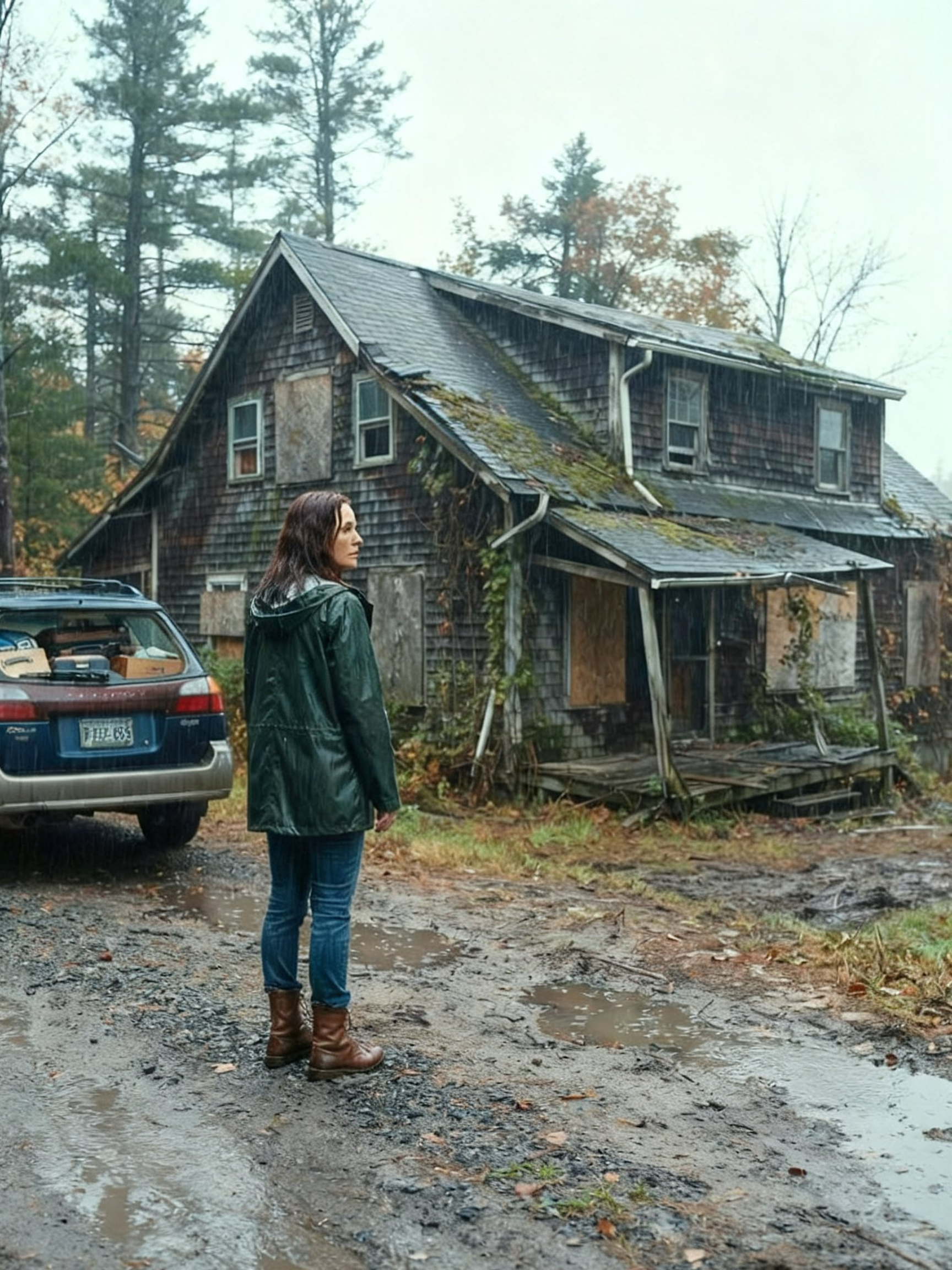
At 52, Her Family Threw Her Out—Then Grandpa’s Ruined Lake House Revealed the One Wall They Never Wanted Opened
“Take the boxes you can carry, Rebecca. The rest belongs to the estate.”
My brother said it three days after we buried our mother.
Three days.
I was still finding strands of Mom’s silver hair on the collar of the robe I had washed for her every Sunday when Daniel Hale stood in the front hallway of the house where I had cared for her through eight years of heart failure and told me I was no longer welcome.
My sister Allison leaned against the staircase with a paper coffee cup in one hand and Mom’s diamond earrings in the other.
She had already put them on.
“You knew this was coming,” she said.
I looked at her.
Then at Daniel.
Then at the locksmith kneeling by the front door.
He would not look at me.
There were two more people in the living room.
Daniel’s wife, Melissa, had her laptop open on Mom’s antique writing desk. She was making an inventory of furniture.
Our cousin Eric stood beside the fireplace, pretending to examine his phone while waiting to see if I would scream.
They all expected something.
An accusation.
I gave them nothing.
That bothered them more than anger would have.
Daniel folded his arms.
“This house is being prepared for sale. Allison and I are executors. You had plenty of time to make other arrangements.”
“Plenty of time?” I asked.
It was the first thing I had said in almost five minutes.
He mistook the softness of my voice for surrender.
“Mom had been sick for years, Rebecca.”
“You had to know she wasn’t going to live forever.”
Melissa gave a small impatient sigh.
“That’s not what Daniel means.”
“I know exactly what Daniel means.”
Allison slipped one of Mom’s earrings through her left ear.
The little diamond caught the January light.
“You stayed here rent-free,” she said.
That was when I almost laughed.
Instead, I picked up another cardboard box.
I had stayed there “rent-free” because eight years earlier, when Mom could no longer drive, Daniel had a consulting firm in Denver, Allison was building a real estate business in Minneapolis, and neither one wanted their lives interrupted.
I had left my position as an operations manager at a manufacturing company in St. Paul.
I had cashed out part of my retirement account.
I had moved back to the small Minnesota town where we grew up.
I had taken Mom to cardiology appointments in Rochester.
I had sat beside her in emergency rooms at two in the morning.
I had learned the names of eleven medications.
I had cleaned blood from bathroom tile after she fell.
I had argued with insurance companies.
I had paid property taxes twice when Daniel forgot to transfer money.
I had replaced the furnace.
I had refinanced my car.
I had spent six Christmases at home because Mom could no longer manage stairs safely and refused to be carried into anyone else’s house.
Daniel visited when photographs were convenient.
Allison came when Mom was having a good day.
They called it helping.
I called it Tuesday.
But I did not remind them.
Because my grandfather had taught me something when I was twelve years old.
Never interrupt people while they are showing you exactly who they are.
Daniel followed me into the dining room.
“We’ll give you until six tonight.”
“It’s more than fair.”
I turned to him.
“I’m fifty-two years old.”
His face tightened as though I had accused him of something.
“I’m aware.”
“I’m not asking you to let me stay.”
“I’m trying to understand why you need me gone in four hours.”
Nobody answered.
That was the first thing that felt wrong.
I looked toward Mom’s old china cabinet.
Two shelves had already been emptied.
A stack of folders sat on the dining table beside Melissa’s computer.
When Melissa saw me looking, she shut the laptop.
Too quickly.
I noticed that.
I noticed a lot when I was quiet.
Daniel stepped between me and the table.
“We have buyers coming through tomorrow.”
“For the house?”
“For several family properties.”
I held his gaze.
“What family properties?”
Allison answered before Daniel could stop her.
“The northern parcels.”
He looked sharply at her.
She shrugged.
“What? She’ll find out.”
I set my box down.
Our family had owned scattered land around Birchwater Lake since my grandfather, Samuel Hale, began buying exhausted logging parcels in the 1960s.
Most had been sold decades earlier.
At least, that was what I had been told.
Grandpa’s original lake house still stood on the western shore, abandoned beneath towering pines.
Nobody had lived there in almost twenty years.
The roof leaked.
The dock had collapsed.
A storm had split the chimney.
The county had threatened to condemn it twice.
Daniel called it the dead house.
Allison called it a teardown.
Mom called it the only place her father had ever been happy.
And Grandpa had called it home.
“What northern parcels?” I asked again.
Daniel smiled.
It was a controlled smile.
The smile he used during negotiations.
“Old timberland.”
“How much?”
“It doesn’t concern you.”
That answer was worth more than a number.
I bent down, picked up my box, and walked past him.
On my way upstairs, Allison called after me.
“By the way, we found Grandpa’s old deed packet.”
I stopped on the fourth stair.
Daniel said her name.
“What?” she said. “It’s funny.”
She was smiling now.
“Funny how?”
She walked to the dining table and picked up a yellow legal envelope.
My name was written across the front in my grandfather’s handwriting.
For the first time that day, my fingers went cold.
Grandpa had been dead nineteen years.
Allison shook the envelope.
“We were going through Mom’s safe deposit papers. Apparently Grandpa left you something.”
Daniel’s jaw tightened.
“Just give it to her.”
Allison enjoyed the moment too much.
She slid one sheet from the envelope.
“A quitclaim deed. The old lake house and a little surrounding parcel. Congratulations.”
Melissa smirked.
Eric finally looked up from his phone.
Allison continued.
“Eight-point-seven acres. One ruined house. Back taxes current, somehow. No usable well. Septic probably shot. County value is laughable.”
She held out the document.
“You finally got your inheritance.”
I walked down the stairs and took it from her.
Daniel watched my face.
Allison watched too.
They were waiting for humiliation to land.
I looked at Grandpa’s signature.
Then the legal description.
Then a sentence typed near the bottom.
SUBJECT TO ALL EASEMENTS, RESERVATIONS, COVENANTS, EXHIBITS, AND CONDITIONS OF RECORD.
My grandfather had underlined the word exhibits in blue ink.
Three times.
I folded the paper.
“Thank you.”
Allison blinked.
“That’s it?”
“What would you like me to say?”
She laughed.
“I don’t know. Maybe admit Grandpa knew exactly what you were worth.”
Melissa covered a smile with her coffee.
Eric looked uncomfortable.
Daniel did not.
He was studying me.
I put the deed inside my coat.
Then I asked, “Do I get the keys?”
Nobody moved.
I asked again.
“The lake house keys.”
Daniel reached into a drawer near the kitchen and tossed a tarnished brass ring across the room.
I caught it.
There were three keys.
Two ordinary.
One unusually long and blackened with age.
Grandpa had tied a faded red string around that one.
I remembered it.
I had not seen that key since I was seventeen.
Grandpa used to carry it in the watch pocket of his jeans.
“Don’t lose that,” he once told me.
“What does it open?”
“Something people shouldn’t open until they’ve learned what things cost.”
At seventeen, I thought he was being dramatic.
At fifty-two, standing in my dead mother’s hallway while my siblings prepared to sell land I did not know existed, the memory felt different.
Daniel pointed toward the stairs.
“Four hours.”
Then I went upstairs.
I did not cry.
Not when I packed my clothes.
Not when Melissa removed framed family photographs from the hallway before I had finished carrying my boxes through it.
Not when Allison told the locksmith to change the garage code.
Not when I found Mom’s favorite blue cardigan in the laundry room and realized nobody had thought to put it aside for me.
Not when Daniel handed me an envelope containing a check for $4,800 and called it “a fair reimbursement for incidental caregiving expenses.”
I looked at the check.
Eight years.
Four thousand eight hundred dollars.
Fifty dollars a month.
Not enough to cover the gasoline I had burned driving Mom to Rochester.
I tore the check in half.
Then again.
Daniel’s face hardened.
“That was unnecessary.”
“So was this.”
For one second, something moved behind his eyes.
Guilt, maybe.
Then it disappeared.
I carried my last box outside at .
Snow had begun falling.
Fine, dry flakes blew across the driveway and gathered along the edges of my Subaru.
Melissa had already placed a FOR SALE folder on the kitchen counter.
I could see it through the window.
Allison stood behind the glass wearing Mom’s earrings.
Daniel stood beside her.
Neither came outside.
I loaded the last box.
Closed the hatch.
And drove away from the house where I had grown up.
I did not look back.
People later told me that was the moment my family made its biggest mistake.
They were wrong.
Their biggest mistake had happened years earlier.
They had mistaken silence for ignorance.
They had mistaken caregiving for weakness.
They had mistaken a ruined house for worthless property.
And most dangerously, they had mistaken my grandfather for a sentimental old man who had died without finishing his business.
He had finished it.
He had simply hidden the ending inside a wall.
Birchwater Lake was seventy-six miles north of town.
By the time I reached the county road, darkness had fallen and the snow had thickened.
The plow had not yet come through.
My headlights carved a narrow tunnel between pine trees.
I had no plan beyond getting somewhere nobody could throw me out.
That sounds pathetic.
It did not feel pathetic.
It felt clean.
There is a strange dignity in reaching the point where nobody can threaten you with losing what they already took.
I had two suitcases.
Six cardboard boxes.
A coffee thermos.
My mother’s blue cardigan.
Four hundred and eleven dollars in checking.
A retirement account I had tried not to touch.
And a deed to a ruined lake house my siblings had laughed about.
That was enough.
The driveway had nearly vanished under brush.
I found it because I remembered the old stone marker Grandpa built beside the road.
Half of it had collapsed.
I turned in slowly.
Branches scraped both sides of the Subaru.
The house appeared after a quarter mile.
For a moment, I almost drove back out.
It was worse than I remembered.
The place sat on a low rise above the frozen lake, a two-story structure of gray fieldstone and cedar siding.
One side of the porch had sagged.
Three upstairs windows were boarded.
A pine limb had punched through the roof above the kitchen.
Snow had blown through broken screens and collected in small white drifts along the porch.
The chimney leaned slightly east.
But the house was still there.
And somehow, in the yellow sweep of my headlights, it still looked stubborn.
Like Grandpa.
I sat in the car with the engine running.
Then I laughed for the first time all day.
“You always did know how to make an entrance,” I whispered.
The front door opened with the second key.
Cold air hit me from inside.
The house smelled like cedar, stone, dust, mice, and old winters.
I found the electrical panel with my phone flashlight.
I expected that.
The propane tank outside showed nearly empty.
I had brought two battery lanterns, a sleeping bag, and a small camping heater from Mom’s basement.
By nine that night, I had cleared a corner of the living room, swept mouse droppings into a pile, covered a broken window with plastic, and made myself a bed on the old leather sofa.
I should have been exhausted.
Instead, I kept thinking about the third key.
The long one.
Blackened metal.
Red string.
At 10:17, I began searching.
It did not fit the basement door.
It did not fit Grandpa’s desk.
It did not fit the built-in cabinet by the fireplace.
I tried every lock I could find.
Then I noticed the wall.
It was in the upstairs hall.
A narrow section between Grandpa’s bedroom and the linen closet.
I remembered that hallway differently.
As a child, I used to run from one end to the other in socks.
Something about the proportions bothered me.
I stood there with the lantern.
Measured the wall with my eyes.
Then went into Grandpa’s bedroom.
The bedroom wall should have extended another three feet.
It did not.
There was dead space between the two rooms.
A hidden cavity.
My heartbeat changed.
I returned to the hallway and ran my fingers across the cedar paneling.
Most of it was tongue-and-groove.
One narrow plank was wider.
Near knee height, almost hidden by age-darkened grain, was a tiny black keyhole.
I stared at it.
Then at the key in my hand.
The long key slid in perfectly.
I turned it.
Something inside the wall released with a deep metallic click.
The panel moved half an inch toward me.
I remember stepping back.
Not because I was frightened.
Because I suddenly understood that my grandfather had expected someone to be standing exactly where I was.
Someone holding that key.
Someone he had chosen.
The panel opened inward.
Behind it was a narrow vertical space lined with galvanized steel.
Inside sat three things.
A blue metal document box.
A leather ledger.
And a mason jar filled with old brass survey markers.
On top of the box lay an envelope.
REBECCA ONLY.
IF ANYONE ELSE IS READING THIS, YOU HAVE ALREADY MADE A SERIOUS MISTAKE.
I sat on the hallway floor.
For several seconds, I could hear nothing except wind.
Then I opened the envelope.
Grandpa’s handwriting filled four pages.
If this house came to you because everyone else decided it had no value, then at least one part of my plan worked.
Then kept reading.
Do not call your brother.
Do not call your sister.
Do not call any Hale family attorney until you read the blue ledger, the trust declaration, and Exhibit C.
Especially Exhibit C.
There are people in our family who understand property but do not understand ownership.
There are people who understand money but do not understand obligation.
And there are people who will one day mistake your patience for permission.
Do not correct them too early.
My smile disappeared.
I turned the page.
Your grandmother Evelyn and I purchased 312 acres around Birchwater Lake between 1967 and 1981. Much of that land was placed in the Birchwater Preservation Trust in 1984.
The trust was created for two reasons.
First, to prevent the shoreline from being divided and stripped for quick money.
Second, to guarantee that the child or grandchild who actually cared for family when care became inconvenient would never be left without a home.
I stopped reading.
The wind moved through the attic above me.
I looked toward the dark staircase.
Then back at the letter.
That beneficiary may not be named in advance. The beneficiary is determined under Article Seven by documented caregiving, residence, financial contribution, and direct support of a Hale family elder for no fewer than sixty consecutive months.
My mouth went dry.
I read Article Seven twice when I opened the trust binder.
Then a third time.
The language was dense but clear.
Grandpa had created a conditional remainder interest.
The original lake house parcel was not the inheritance.
It was the key.
Literally and legally.
Whoever lawfully held the lake house deed and satisfied Article Seven became successor trustee and beneficial owner of the remaining trust property when the final life beneficiary died.
The final life beneficiary had been my mother.
Margaret Hale.
She had died three days earlier.
I sat against the wall for nearly twenty minutes.
Then I opened the second folder.
Property maps.
Parcel numbers.
Old tax records.
Aerial surveys.
The trust did not own eight-point-seven acres.
It owned 176 acres directly.
It held permanent conservation control over another ninety-four.
And, through a complicated ninety-nine-year ground lease, it owned the land beneath most of something called Birchwater Landing Development.
I knew that name.
Everyone in northern Minnesota knew it.
Birchwater Landing was the luxury lakeside development Daniel and Allison had bragged about for years.
Forty-three homes.
A private event pavilion.
A restaurant.
A wellness center under construction.
Daniel’s consulting company had arranged the financing.
Allison’s brokerage represented the property.
Their family partnership claimed ownership.
I pulled out my phone.
Maybe that was good.
I looked at the map again.
The red boundary line wrapped around nearly the entire western shoreline.
My grandfather had not left me a ruined lake house.
He had left me the ground beneath my family’s fortune.
Then I found Exhibit C.
It was only six pages.
It frightened me more than everything else combined.
The original ground lease allowed Hale Development Partnership to construct buildings on trust land.
But title to the underlying land remained with the trust.
The lease contained renewal provisions, maintenance requirements, conservation restrictions, and one extraordinary clause.
No sale, mortgage consolidation, redevelopment, subdivision, or transfer affecting more than twenty percent of the leased property could occur without written approval from the successor trustee after the death of Margaret Hale.
Any attempt to conceal such a transaction automatically triggered suspension of development rights and an immediate accounting of all revenue derived from the trust property.
At the bottom, Grandpa had written:
They will call this language old-fashioned.
Judges call it recorded.
Then came the legal warning.
The duplicate documents hidden in the wall were not the originals.
Grandpa had anticipated fire, theft, and dishonest relatives.
Original trust instruments had been recorded in two counties.
Certified copies were held by an independent trust company in Duluth.
Another sealed copy had been deposited with a law firm in Minneapolis that had never represented the Hale family.
A final note was attached.
If they believe possession is ownership, let them believe it.
If they try to sell, refinance, or pledge the whole development, ask one question before you show them anything:
Where is Exhibit C?
I slept less than an hour.
At sunrise, I stood on the frozen shore holding Grandpa’s letter.
The lake stretched white beneath a pale pink sky.
Across the water, half a mile south, I could see new roofs between the trees.
Birchwater Landing.
My family’s development.
Or rather, their buildings.
On land they did not fully own.
For the first time since Mom died, grief hit me.
Not because of the money.
Because Grandpa had known.
He had known someone in the family would one day become useful enough to exploit and unimportant enough to discard.
He had not known it would be me.
But he had built protection for whoever it became.
And I hated that I was grateful.
I hated that a dead man had protected me more carefully than my living siblings.
My phone found one bar of signal near the dock.
There were seventeen messages.
Daniel had sent five.
You left some paperwork.
Need you to sign receipt of distribution.
Do not remove anything from lake property without clearing it with estate.
Call me today.
Allison had sent three.
Hope the palace is cozy.
Don’t burn it down.
Seriously, insurance situation is complicated.
Melissa sent one.
Please confirm you have vacated Mom’s residence permanently.
I answered none of them.
Instead, I drove into Birchwater village and found the public library.
At , I called the Minneapolis law firm listed in Grandpa’s letter.
“Caldwell, Pierce and Rowan.”
“My name is Rebecca Hale. I’m calling about the Birchwater Preservation Trust.”
Then the receptionist’s voice changed.
“One moment, Ms. Hale.”
A man came on the line.
“My name is Benjamin Rowan.”
The name appeared in Grandpa’s papers.
He sounded older.
“Are you Samuel Hale’s granddaughter?”
Another pause.
“Is Margaret gone?”
My throat tightened.
“Three days ago.”
“I’m sorry.”
“Thank you.”
“Did you find the wall?”
I closed my eyes.
He exhaled.
“Then Samuel was right.”
“About what?”
“That nobody would listen to the quiet granddaughter until it was too late.”
I met Benjamin Rowan the next morning.
He was seventy-one, tall, narrow, white-haired, and wore an old wool coat that looked more appropriate for a college professor than an attorney.
He brought no dramatic briefcase.
No army of assistants.
Only a canvas document bag.
We met in a diner outside Duluth.
He ordered black coffee.
I ordered nothing.
He studied me for several seconds.
“You look like Margaret.”
“That’s what everyone says.”
“No. They probably mean your face. I mean the way you wait before speaking.”
That irritated me because it was true.
I slid Grandpa’s letter across the table.
“Is this real?”
“All of it?”
“How much is the trust worth?”
Benjamin did not answer immediately.
“That depends what you mean by worth.”
“Market value.”
“Land, leasehold interests, conservation rights, revenue participation, and improvements affected by reversion clauses?”
“Conservatively?”
“Somewhere between sixty-eight and ninety-two million dollars.”
I stared at him.
The waitress refilled his coffee.
Neither of us spoke until she walked away.
“Ninety-two million.”
“Possibly.”
“My checking account has four hundred dollars.”
“I’m aware that those facts feel incompatible.”
“They feel insane.”
“They’re legally unrelated.”
I almost laughed.
Then Benjamin opened his bag.
“You need to understand something more important than the valuation.”
He placed a certified trust document between us.
“Your grandfather did not structure this to make someone rich.”
“Then why?”
“To keep the shoreline intact and prevent exactly what your siblings appear to be doing.”
My attention sharpened.
“What are they doing?”
Benjamin looked at me.
“Last month, Hale Development entered negotiations with NorthStar Equity Partners.”
I knew the name.
A Chicago investment group.
“They’re selling Birchwater Landing?”
“They intend to sell controlling interests in the development, marina rights, future construction phases, and associated shoreline access.”
“How much?”
“The proposed transaction is one hundred eighteen million dollars.”
Everything inside me went still.
That explained the locksmith.
The urgency.
The northern parcels.
The closed laptop.
The need to get me out before I started asking questions.
Benjamin continued.
“Your siblings may believe the family partnership owns the land outright.”
“They should know better.”
“Because Daniel signed an amendment twelve years ago.”
I stared at him.
“What amendment?”
Benjamin slid over a copy.
Daniel’s signature appeared on the last page.
The amendment acknowledged that Hale Development Partnership was a tenant under the master ground lease.
It specifically referenced trustee consent provisions.
Including Exhibit C.
“He knows,” I said.
“She signed as witness.”
I sat back.
For several seconds, the diner seemed too bright.
“They knew.”
Benjamin nodded.
“And they gave me the broken house because they thought it was worthless.”
“Did they know the deed transferred successor rights?”
“That is less clear.”
I thought about Allison shaking the yellow envelope.
Grandpa knew exactly what you were worth.
I heard her voice again.
Benjamin took off his glasses.
“Rebecca, listen carefully. We have not confirmed whether NorthStar Equity knows the title structure. We do not know what representations Daniel made. We do not know whether documents were omitted, altered, or misunderstood. Do not accuse anyone publicly. Do not threaten anyone. Do not sign anything.”
“I wasn’t planning to.”
“And do not tell Daniel what you found.”
I looked out the diner window.
Snowplows moved along the highway.
“What should I do?”
Benjamin smiled slightly.
“Samuel would say nothing.”
I looked back at him.
“For how long?”
“Long enough for everyone to put their own intentions in writing.”
So I went quiet.
More quiet than before.
That frightened Daniel.
He called six times the next day.
Then Melissa called.
Then Allison.
I answered none.
Two days later, Daniel drove to the lake house.
I saw his black Range Rover from the upstairs window.
He parked beside my Subaru and walked onto the porch without knocking.
I opened the door before he could.
He looked past me.
“You’re really staying here?”
“It’s twenty degrees.”
“I noticed.”
His eyes moved across the room.
I had cleaned.
The fireplace worked after a chimney technician inspected the flue.
An electrician had restored partial power.
The living room still looked rough, but it no longer looked abandoned.
“You hired people?”
“With what money?”
I stared at him.
He caught himself.
“That’s none of my business.”
He smiled without warmth.
“Can I come in?”
That surprised him.
The old Rebecca would have stepped aside.
The useful Rebecca.
The accommodating Rebecca.
The woman who said yes before people finished asking.
That woman had frozen somewhere between Mom’s driveway and Birchwater Lake.
Daniel put his hands in his coat pockets.
“We need to clean up some probate paperwork.”
“And Grandpa’s parcel transfer.”
“The deed is nineteen years old.”
“Yes, but there are title issues.”
“What issues?”
“Technical things.”
He looked irritated.
“Rebecca, this is why lawyers exist.”
“Which lawyer?”
“Our family firm.”
He hesitated.
“Hale, Brenner and Cole.”
I knew them.
They had represented Daniel’s company.
Allison’s real estate business.
Mom’s probate estate.
They had also prepared documents for Birchwater Landing.
Grandpa’s warning came back to me.
Do not call any Hale family attorney.
“I’m not signing anything.”
Daniel’s face hardened.
“I didn’t ask you to.”
“Then why are you here?”
He glanced toward the frozen lake.
“We’re consolidating some old parcels.”
“How many?”
“That doesn’t matter.”
“Does the lake house parcel affect consolidation?”
Silence makes liars work harder.
Daniel finally sighed.
“Okay. There’s an old access easement running across part of your parcel. The buyer wants it clarified.”
“The buyer.”
I did not smile.
“You said buyer.”
He rubbed the back of his neck.
“It’s preliminary.”
“NorthStar.”
“For Birchwater Landing?”
His expression changed.
“How do you know that?”
I leaned against the doorframe.
“You just told me.”
For the first time in my life, Daniel looked unsure what version of me he was speaking to.
He recovered quickly.
“It’s a good deal. For everyone.”
“Everyone?”
“The whole family.”
“I’m part of the family?”
“Don’t start.”
“I didn’t.”
His jaw tightened.
“All we need from you is cooperation regarding the access strip. You sign a boundary acknowledgment, they close the transaction, and everyone moves forward.”
“What do I get?”
He looked almost offended.
“For signing?”
“For cooperating.”
“We could pay you.”
“How much?”
“Ten thousand.”
I said nothing.
“Twenty-five.”
I tilted my head.
He mistook it for interest.
“Twenty-five thousand dollars for a strip of land you didn’t even know you owned a week ago.”
There it was.
Not the offer.
The assumption beneath it.
You didn’t know.
Therefore you don’t deserve.
You didn’t earn.
Therefore we can define value for you.
You cared for everyone.
Therefore you understand sacrifice better than ownership.
I looked past him at the trees.
Then I asked, “Why are you worried?”
His face went blank.
“You drove seventy-six miles through snow to offer me twenty-five thousand dollars for something you say doesn’t matter.”
“Why are you worried?”
He stepped closer.
“Because this family has spent years building something substantial, and I’m not going to let you create trouble because you’re angry about Mom’s estate.”
I looked directly at him.
“I haven’t mentioned Mom’s estate.”
“You don’t have to.”
“Did Mom know about the NorthStar sale?”
“Did she approve?”
“Of course.”
“Did she sign?”
He hesitated.
Another small thing.
Another loose thread.
“I’m done with this conversation,” Daniel said.
He turned toward his SUV.
I called after him.
He stopped.
I almost asked the question.
Where is Exhibit C?
But Benjamin had told me to wait.
So I asked something weaker.
“Did Grandpa ever tell you why he kept the old house?”
Daniel laughed.
“Because he was sentimental.”
Then he drove away.
That night, I opened the blue ledger.
Grandpa had written names and dates across forty years.
Who paid for what.
Who borrowed money.
Who repaid it.
Who did not.
He had documented every loan to his children.
Every land transfer.
Every renovation.
Every time one family member claimed an expense paid by another.
It was not a financial ledger.
It was a moral history.
My mother appeared on page after page.
Margaret stayed with Evelyn after surgery.
Margaret gave Robert her portion of timber sale so he could keep business afloat.
Margaret declined cabin parcel so Thomas’s children could have college accounts.
Margaret cared for me after stroke.
My mother had spent her life giving.
Grandpa had watched the pattern.
A note from 1999 read:
Families often reward the loudest claimant instead of the greatest contributor. Paper does not have to make the same mistake.
I put my hand over my mouth.
Not because I wanted the money.
Because somebody had seen us.
The women who stayed behind when everyone else was busy becoming important.
Grandpa had seen us.
That was the real inheritance.
Not being invisible anymore.
Three days later, Allison arrived.
Unlike Daniel, she brought a bottle of wine.
She wore a cream wool coat and expensive boots unsuited for snow.
She looked around the repaired living room.
“Wow. You’re really leaning into pioneer widow.”
“I’m not a widow.”
“Figure of speech.”
She put the wine on the table.
“Peace offering.”
“For what?”
“For everything.”
I stared at her.
She laughed.
“Okay. Maybe not everything.”
She lasted thirty seconds.
Then she sat across from me.
“Daniel told me you’re being difficult.”
“Rebecca, the NorthStar transaction is huge.”
“All of us benefit.”
She looked at me.
“You don’t need to do this.”
“Pretend you don’t understand.”
I said nothing.
She exhaled.
“Fine. The family partnership gets a major payout. There are tax consequences, debt retirement, investor obligations. It’s complicated.”
“How much does Daniel get?”
“That’s private.”
“How much do you get?”
“Also private.”
“How much does Eric get?”
Her eyebrows moved.
That one surprised her.
Eric had not been publicly involved in Birchwater Landing.
“Why are you asking about Eric?”
She studied me.
“Did you find something in this house?”
The question came too casually.
My pulse remained steady.
“Like what?”
“I don’t know. Grandpa papers?”
“Why would Grandpa papers matter?”
“They wouldn’t.”
“Then why ask?”
Her jaw tightened.
“You brought it.”
“I’m driving.”
“So am I. Eventually.”
She ignored the joke.
“Rebecca, listen. There are old legal documents attached to this property that could confuse things.”
“Confuse who?”
“The buyer.”
“What documents?”
“I don’t know exactly.”
“Then how do you know they’re confusing?”
“This is what you do.”
“You make people feel stupid by asking questions.”
“No. I ask questions when people assume I won’t.”
Her face changed.
For one second, I saw something I had never seen in Allison.
Not contempt.
She walked toward the door.
Then stopped.
“Mom was worried about you.”
“She thought you’d become bitter.”
I almost answered.
Then I remembered the last coherent conversation I had with Mom.
She had been in her bedroom, weak enough that I had to lift the water glass to her lips.
“Becca,” she whispered.
“I’m here.”
“I should have told you.”
“Told me what?”
“Your father always said Daniel needed confidence. Allison needed encouragement.”
Mom looked at me for a long time.
“You never seemed to need anything.”
I remember smiling.
Not because it was funny.
Because there are sentences so cruel people can only say them by mistake.
I had kissed her forehead.
“I needed you to notice that I was trying not to need anything.”
She cried then.
It was one of only two times in those final weeks.
Now Allison stood by Grandpa’s door using Mom’s worry as a weapon.
I opened it for her.
“Drive carefully.”
She stared at me.
“That’s all?”
She stepped onto the porch.
I almost closed the door.
Then she turned.
“Daniel says NorthStar closes February third.”
“Good for Daniel.”
“If you interfere with this, you will be hurting a lot of people.”
There it was.
The moral trap.
Always the same.
When powerful people take, it is business.
When the person being taken from resists, suddenly everyone wants to discuss responsibility.
“How many people?” I asked.
“Employees?”
“Homeowners?”
“Investors?”
“That does sound serious.”
She relaxed slightly.
Then I said, “Maybe Daniel should have thought about them before selling something he doesn’t own.”
Allison stopped breathing.
Only for a second.
But I saw it.
Her face emptied.
“What did you say?”
I smiled faintly.
“Drive carefully.”
Then I closed the door.
The next forty-eight hours changed everything.
Benjamin’s firm notified the independent trustee bank that Article Seven had been triggered.
My caregiving records were reviewed.
Eight years of medical appointment logs.
Tax payments.
Utility bills.
Residence records.
Insurance correspondence.
Mom’s physician statements.
Signed caregiver authorization forms.
A notarized letter Mom had completed six years earlier confirming that I provided primary daily care.
I had never known she signed it.
Benjamin did.
Grandpa had required annual evidence during Mom’s incapacity.
The trust company had quietly collected it.
The paperwork my siblings considered proof that I had wasted my life became proof that I had satisfied the trust.
My sacrifices were not sentimental.
They were documented.
On January twenty-third, I was formally recognized as successor trustee and beneficial holder of the trust’s remainder interest.
Benjamin slid the certificate across his conference table.
I did not touch it immediately.
“This paper changes everything?”
I looked up.
“The recorded trust changed everything decades ago. This paper confirms who now has authority.”
“What happens to Birchwater Landing?”
“That depends on your siblings.”
“They’re still trying to close?”
“Can they?”
“Not lawfully under the existing deal structure.”
“Do they know?”
Benjamin adjusted his glasses.
“We sent notice this morning.”
My phone began ringing at 11:14.
Then Allison.
Then Daniel again.
Then an unknown Minneapolis number.
Then Melissa.
By noon, I had thirty-one missed calls.
At 12:07, Daniel left a voicemail.
“Rebecca, whatever attorney you found does not understand the family structure. Call me before you cause permanent damage.”
“This trust argument is nonsense. Dad and Mom resolved those issues years ago.”
“NorthStar has paused closing. You need to fix this.”
“You are exposing the family to tens of millions in liability.”
“If this is about money, say the number.”
I listened to that one twice.
Not because I wanted money.
Because after fifty-two years, my brother had finally admitted he understood my silence had value.
At , Allison left a message.
“You have no idea what Daniel has put into this.”
I deleted it.
At , Melissa left one.
“We all made sacrifices.”
I saved that one.
It made Benjamin laugh.
The meeting happened four days later.
NorthStar demanded it.
Their attorneys had discovered that a significant portion of the development’s title package omitted the master ground lease.
They wanted explanations.
Daniel wanted control.
I wanted facts.
We met in a glass conference room on the twenty-second floor of a Minneapolis office tower.
Snow covered the city below.
NorthStar had four attorneys present.
The trust company sent two.
Benjamin sat beside me.
Daniel arrived with the Hale family firm.
Allison came with her own lawyer.
Melissa sat behind Daniel.
Eric was there too.
He looked sick.
For the first fifteen minutes, nobody addressed me directly.
Men in dark suits discussed title exceptions, financing conditions, recorded interests, lender concerns, and indemnification.
Then Daniel’s attorney, Martin Cole, finally turned toward me.
“Ms. Hale, I think much of this can be resolved if we separate emotional family grievances from commercial realities.”
Benjamin did not move.
Neither did I.
Martin continued.
“The partnership has operated Birchwater Landing openly for many years.”
“Your mother was aware.”
“She accepted distributions.”
“According to the ledger, yes.”
“The development paid taxes, maintained roads, improved shoreline infrastructure, and created substantial value.”
“So it would be inequitable for a newly identified technical beneficiary to disrupt a transaction benefiting numerous parties.”
Technical beneficiary.
I almost admired the phrase.
It turned eight years beside a dying parent into an administrative accident.
I looked at Daniel.
He would not meet my eyes.
Then I looked back at Martin.
“Are you finished?”
His expression tightened.
I opened the blue ledger.
Nobody knew what it was except Benjamin.
I read from one page.
“June fourteen, 2008. Margaret used personal funds to satisfy unpaid property tax on west trust parcels after Hale Development missed deadline.”
Daniel looked up.
I turned a page.
“October third, 2011. Margaret waived distribution so Daniel could refinance marina project.”
Another page.
“March twenty, 2014. Margaret declined repayment of eighty-six thousand dollars, requested funds remain in partnership for employee payroll.”
Allison shifted in her seat.
I kept reading.
“August sixteen, 2017. Rebecca paid Margaret’s medical expenses during temporary insurance lapse. No reimbursement requested.”
I closed the ledger.
“My family likes the word sacrifice.”
Nobody spoke.
“So let’s use it accurately.”
Daniel leaned forward.
“This has nothing to do with the sale.”
“It has everything to do with why the trust exists.”
“You are not qualified to run a development.”
“I have no intention of running your development.”
“Then what do you want?”
There it was.
The question they had been circling for days.
Everything in Daniel’s world had a price because price was easier than accountability.
I folded my hands.
“I want a complete accounting.”
Martin Cole interrupted.
“That would be extraordinarily burdensome.”
“Then it’s fortunate Grandpa required one automatically after an unauthorized transfer attempt.”
Martin looked at Benjamin.
Benjamin smiled politely.
NorthStar’s lead attorney opened a binder.
“She is correct.”
Daniel’s face changed.
Allison whispered something to her lawyer.
I continued.
“I want all trust land surveyed.”
Daniel shook his head.
“Unnecessary.”
“I want environmental compliance records for every shoreline alteration after 2010.”
“I want the marina revenue statements.”
“You don’t understand how—”
“I want copies of all partnership distributions made from operations located on trust land.”
Daniel stood.
His chair rolled backward.
Nobody else moved.
He pointed at me.
“You want revenge.”
I looked at his hand.
Then at his face.
“That’s exactly what this is.”
“You think because you sat beside Mom’s bed you earned the right to destroy what the rest of us built?”
That sentence hung in the room.
Allison closed her eyes.
Even Melissa looked at him.
Daniel had gone too far.
But anger is often the moment people finally stop editing themselves.
I let the silence stretch.
Then I asked, “Who do you mean by the rest of us?”
My voice stayed quiet.
His face reddened.
Eric looked down.
“Investors.”
I leaned forward.
“Anyone except the woman whose unpaid care allowed Mom’s money to stay invested in your company.”
Daniel said nothing.
“Anyone except the woman who paid the house expenses while Mom waived distributions so your marina could survive.”
Still nothing.
“Anyone except Mom.”
“That isn’t fair.”
I nodded once.
“It wasn’t.”
Martin Cole tried to intervene.
“Ms. Hale—”
I raised my hand.
Not dramatically.
Just enough.
He stopped.
I looked at Daniel.
“I do not want revenge.”
“Then approve the sale.”
His mouth opened.
I continued.
“I want correction.”
The NorthStar executives were silent now.
“I want the employees protected before investors receive another distribution. I want the homeowners’ access rights clarified so nobody can use this fight to threaten families who bought in good faith. I want the shoreline conservation provisions restored. I want money taken from trust operations without proper accounting returned. I want Mom’s loans recognized instead of erased from family history.”
Daniel laughed bitterly.
“And what do you get?”
“Something I should have had when I was twelve.”
“A family that cannot profit by pretending inconvenient people contributed nothing.”
Nobody laughed.
NorthStar suspended the acquisition indefinitely.
That was when Daniel’s real trouble began.
The accounting revealed irregularities.
Not dramatic at first.
Small discrepancies.
Missing lease references.
Management fees paid to affiliated companies.
Revenue assigned to Hale Development from property legally subject to trust participation.
Then larger problems appeared.
Two years earlier, Daniel had used future marina revenue as collateral for a business loan.
The lender had not been given the full trust restrictions.
A proposed condominium phase included seven acres that could not legally be developed because of the conservation covenant.
Allison’s brokerage materials described certain shoreline parcels as “developer-owned.”
They were not.
Eric’s construction company had billed the development for retaining-wall work that inspectors could not verify had been completed.
Melissa’s consulting company had received $410,000 over four years for “strategic administration.”
She could not explain what strategic administration meant.
They had not stolen ninety million dollars.
Reality was messier.
They had spent years behaving as though temporary control meant permanent ownership.
Each shortcut made the next shortcut easier.
Each family member trusted that nobody would examine old paper.
And why would anyone?
Grandpa was dead.
Mom was sick.
Rebecca was busy changing sheets.
That was the system.
Not one villain.
A brother who believed his success excused entitlement.
A sister who believed property belonged to whoever sold it best.
A cousin who took contracts and asked no questions.
A spouse who turned family access into invoices.
A law firm that represented too many related interests.
Accountants who relied on summaries prepared by management.
Bankers who assumed the title work had been done.
And a family culture that rewarded confidence over truth.
The more the accountants uncovered, the quieter I became.
Daniel hated that.
He began attacking publicly.
First through relatives.
An aunt called me.
“You are tearing the family apart.”
I asked, “Which family?”
She hung up.
A cousin wrote a six-paragraph email about forgiveness.
I replied with one sentence.
Forgiveness does not require false accounting.
Allison posted photographs online about “choosing grace when others choose bitterness.”
I did not respond.
Three days later, her attorney advised her to remove the post.
Then Daniel tried something different.
He came to the lake house alone.
It was late February.
The roof had been repaired by then.
I had running water.
The damaged kitchen wall was open for renovation.
Grandpa’s hidden panel remained exactly where I found it.
Daniel stood beside the fireplace.
He looked tired.
Not defeated.
“I remember this place,” he said.
“He used to make pancakes on Sundays.”
“You always got the first one.”
I looked at him.
“Because I woke up early and helped him carry wood.”
He laughed softly.
“Of course you did.”
We stood there in silence.
Then he said, “NorthStar is gone.”
“They withdrew yesterday.”
“They’re demanding reimbursement of due diligence costs.”
“Hale Development can survive,” he said. “But only if the trust doesn’t demand immediate repayment.”
“Benjamin told you we’re not demanding immediate repayment.”
“He also told us you’re restructuring.”
“You’re really doing it?”
I had decided the trust would retain ownership of the land while offering long-term stable leases to homeowners and legitimate businesses.
The event pavilion would remain.
The restaurant would remain.
The marina would remain, subject to environmental repair.
The unfinished wellness center would be redesigned within existing restrictions.
Thirty-one acres of undeveloped shoreline would be permanently protected.
A percentage of annual trust revenue would fund caregiver respite grants in three Minnesota counties.
Benjamin called that last provision sentimental.
I told him Grandpa would approve.
Daniel walked to the window.
“You could cash out.”
“Sell everything. Take eighty million. Maybe more.”
“You always complained about money.”
“I complained about paying Mom’s heating bill while you told me you were temporarily illiquid.”
He flinched.
“I paid you back.”
“Sixteen months later.”
“I paid you.”
“So why not take the money now?”
“Because Grandpa could have sold the shoreline too.”
“That doesn’t answer me.”
“Yes, it does.”
He stared at me for a long time.
Then his voice changed.
Less polished.
“You think I’m a bad person?”
There are questions that tempt easy cruelty.
This was one.
I could have said yes.
It would have felt good for five seconds.
Instead I shook my head.
“I think you became the person everyone kept rewarding you for being.”
His eyes narrowed.
“What does that mean?”
“Dad praised you for winning. Mom protected you from consequences. Grandpa financed your first company. Allison admired money. Melissa admired control. Every time you pushed, somebody moved.”
“I moved too.”
He said nothing.
“I changed plans. I covered bills. I stayed home. I said it was easier if I handled things.”
“That was your choice.”
That surprised him.
I continued.
“That’s the part I had to learn. You didn’t steal every sacrifice from me. I volunteered for some because being needed felt safer than asking to be valued.”
Daniel looked away.
“That doesn’t excuse what you did.”
“I didn’t say it did.”
He sat in Grandpa’s old chair.
For the first time, he looked like my little brother.
Not the developer.
Not the negotiator.
The boy who used to be afraid of thunderstorms.
“Am I going to prison?” he asked.
“I don’t know.”
He laughed once.
“You could sound more concerned.”
“I spent eight years being concerned for everyone.”
I sat across from him.
“I’m trying something new.”
He rubbed his face.
“There was no grand plan, Rebecca.”
“We weren’t sitting around plotting to steal Grandpa’s land.”
“We thought the partnership controlled it.”
“You signed the amendment.”
His hands stopped moving.
“That was years ago.”
“You signed it.”
“I signed hundreds of documents.”
“You signed it.”
He looked at the floor.
“You knew enough to know there were restrictions.”
“And when NorthStar offered one hundred eighteen million?”
He said nothing.
“You chose not to look too closely.”
His eyes lifted.
“That’s not fraud.”
“Maybe not.”
I held his gaze.
“But it’s not innocence.”
He stayed another twenty minutes.
When he left, he did not ask me to approve anything.
He did not apologize either.
Allison took longer.
She fought the accounting.
She fought the title corrections.
She fought the brokerage complaint.
She called the trust structure archaic.
She called Grandpa controlling.
She called me vindictive.
Then one afternoon, six months after Mom’s death, she arrived carrying a small velvet box.
Mom’s earrings.
She placed them on my kitchen table.
“I shouldn’t have taken them.”
I looked at the box.
“I told myself Mom wanted me to have them.”
The old Allison might have added an excuse.
This one did not.
I opened the box.
The diamonds were small.
Worth maybe a few thousand dollars.
Nothing compared with the trust.
Yet my hands shook more holding them than they had holding documents worth millions.
“Mom wore these when Dad took her to Chicago for their twenty-fifth anniversary,” I said.
“She let me borrow them for prom.”
Allison sat down.
“I hated you for staying.”
I looked up.
“That’s interesting.”
“I mean it.”
“Because every time I visited Mom, I felt guilty.”
“That wasn’t my fault.”
“But you made it my fault anyway.”
She looked toward the window.
“So I told myself you liked being the martyr.”
“Sometimes I did.”
That surprised her.
I smiled sadly.
“It gave me an identity.”
She studied me.
“You’re different.”
I shook my head.
“I think I’m just done translating myself into a version other people find convenient.”
For once, Allison had no reply.
The investigations lasted almost a year.
No cinematic army of federal agents stormed Daniel’s office.
No one was led away in handcuffs.
Reality delivered something slower.
More humiliating.
Depositions.
Insurance claims.
Revised tax filings.
Civil settlements.
Bank negotiations.
Professional discipline.
The kind of consequences wealthy people cannot dismiss because they arrive in envelopes, not sirens.
Daniel agreed to surrender his managing position in Hale Development as part of a restructuring.
The lender required independent governance.
He paid a substantial settlement from his personal holdings.
He avoided criminal charges because investigators found insufficient evidence that he deliberately falsified the title records himself, but the final civil findings stated that he had acted with reckless disregard for recorded restrictions.
That phrase hurt him more than any fine.
Reckless disregard.
For a man who built his identity around being the smartest person in every room, carelessness was unbearable.
Allison settled claims related to inaccurate marketing and lost her role as exclusive broker.
Eric repaid improperly documented construction charges.
Melissa’s consulting agreement vanished.
Hale, Brenner and Cole withdrew from representing multiple Hale entities after a conflict review.
Martin Cole never apologized to me.
He did send a very polite Christmas card.
I kept it because it made Benjamin laugh.
The trust survived.
So did Birchwater Landing.
That mattered to me.
The homeowners had done nothing wrong.
The restaurant employed twenty-three people.
The marina employed twelve during the summer.
Families had built lives there.
Justice that destroys innocent people to punish guilty ones is only revenge wearing expensive clothes.
Grandpa understood that.
I wanted to as well.
So we rewrote leases.
We protected access.
We corrected titles.
We required environmental restoration along damaged shoreline.
We established transparent accounting.
We capped certain development densities.
And we created the Margaret Hale Care Fund.
The first year it paid for temporary in-home assistance for forty-seven caregivers.
People taking care of parents with dementia.
Spouses with cancer.
Veterans recovering from injuries.
Children with disabilities.
People whose lives had quietly narrowed because love required somebody to stay.
The trust paid for someone else to step in so they could sleep.
Take a weekend.
Attend a daughter’s graduation.
Sit alone in a coffee shop and remember who they were before everyone needed something.
When Benjamin showed me the first grant report, I cried.
Not delicately.
Not cinematically.
I sat at Grandpa’s kitchen table and cried until my face hurt.
Then I laughed because I could almost hear him complaining about water stains on the paperwork.
The lake house took eighteen months to restore.
I refused to make it luxurious.
I repaired the stone.
Rebuilt the porch.
Saved the cedar walls.
Restored Grandpa’s desk.
Replaced the roof.
Updated plumbing and electrical systems.
The hidden wall stayed.
So did the little black keyhole.
Inside, the blue document box now held copies.
The originals remained secure.
I added something new.
Mom’s blue cardigan.
Folded carefully.
Beside it, I placed a letter of my own.
Not for children.
I never had any.
Not for Daniel’s sons or Allison’s daughter specifically.
For whoever eventually became responsible for the trust.
The letter began:
If you are reading this because people decided kindness made you easy to ignore, do not make the opposite mistake. Power can make you just as blind as sacrifice once made me.
I wrote about Mom.
About Grandpa.
About the years I stayed quiet.
About how easy it is to become proud of suffering.
About how dangerous it is when families assign one person the role of giver and another the role of winner.
I wrote that money exposes character more often than it changes character.
I wrote that property is temporary.
Stewardship is not.
And I wrote one sentence three times.
Never confuse being needed with being loved.
A year and nine months after Mom died, Daniel came to the lake house for dinner.
So did Allison.
It was the first time all three of us had sat at one table since the probate meeting.
Nobody brought lawyers.
That was progress.
Daniel was working for an infrastructure company in Wisconsin.
Not as president.
Not as owner.
As an employee.
He hated it at first.
Then, according to Allison, discovered that sleeping at night had advantages.
Allison reopened her brokerage under stricter compliance rules.
She was quieter too.
Not transformed.
People rarely transform.
They adjust.
They learn.
Sometimes that is enough.
After dinner, we walked to the lake.
The dock had been rebuilt.
Autumn leaves moved across the water.
Daniel shoved his hands into his jacket pockets.
“Grandpa would hate the new railing.”
“He would say it looked like a government building.”
Allison laughed.
For a moment, we were children again.
Then Daniel looked toward Birchwater Landing.
Lights glowed between trees across the shore.
“Do you ever regret it?” he asked.
“Not selling.”
“You could have been unbelievably rich.”
“I am unbelievably rich.”
He rolled his eyes.
“I walked into that one.”
“I mean cash.”
“I have enough.”
Allison looked at me.
“How much do you actually take from the trust?”
“A reasonable trustee salary.”
“How reasonable?”
“None of your business.”
She laughed harder than I expected.
Daniel smiled.
Then he became serious.
“I was angry at you for a long time.”
“I thought you had been waiting for a chance to punish us.”
“I wasn’t.”
“I know that now.”
He picked up a flat stone.
Then it sank.
“Why didn’t Grandpa just tell everyone?”
I had wondered that too.
Benjamin had an answer.
But Grandpa’s letter had a better one.
“Because then everyone would have performed for the inheritance.”
Daniel turned toward me.
“If people knew caregiving controlled millions of dollars, would anyone’s kindness have been trustworthy?”
He looked across the lake.
“Grandpa wanted the property to go to whoever stayed when staying appeared to cost everything and earn nothing.”
Allison was silent.
Then she asked, “Did Mom know?”
“Not the full structure.”
“Are you sure?”
I looked at the water.
Because there was one final document I had never shown them.
I found it after the renovation began.
Not in the hidden wall.
Behind Grandpa’s desk.
A sealed letter in Mom’s handwriting.
Dated seven months before she died.
Your grandfather told me enough years ago that I suspected the lake house mattered.
I did not understand how much.
I should have told you.
I almost did.
Then I became afraid.
Afraid Daniel would fight.
Afraid Allison would resent you.
Afraid telling you would make your care for me feel purchased.
Mostly, I was ashamed.
I let your strength become an excuse.
Every time you said, “I’ll handle it,” I felt relief before I felt guilt.
That is a terrible thing for a mother to admit.
You were the child I worried about least, so you became the child I asked the most from.
I am sorry.
If your grandfather’s plan works the way he once described it, you will have choices after I am gone.
Please choose a life.
Not another obligation.
I never showed Daniel or Allison.
Some apologies belong to the person who needed them, not the audience that might learn from them.
I kept Mom’s letter in the hidden room.
Beside the cardigan.
Beside Grandpa’s warning.
Beside the trust documents that changed my life.
People in town eventually stopped calling the house ruined.
They called it Hale House.
I disliked that.
So I changed the sign.
MARGARET HOUSE.
The main floor became meeting space for the caregiver fund during certain months.
The upstairs remained mine.
Every January, on the anniversary of the day Daniel threw me out, I made pancakes in Grandpa’s kitchen.
Not as revenge.
The first year I ate alone.
The second year Benjamin came.
The third year Daniel arrived carrying maple syrup.
Allison brought blueberries.
Nobody mentioned the anniversary until breakfast was almost over.
Then Daniel looked toward the upstairs hallway.
“The wall still there?”
“Can I see it?”
Allison laughed.
“Seriously?”
“What’s in there now?”
“Things that belong there.”
Daniel shook his head.
“Still mysterious.”
“I learned from Grandpa.”
He poured more coffee.
Then he looked at me with an expression I could not quite identify.
“You know what’s strange?”
“If you’d screamed that day, I probably would’ve understood you better.”
“But you just packed.”
“That scared me.”
“Did you already know about the trust?”
“Then why were you so calm?”
The kitchen went quiet.
This was the question underneath everything.
Why didn’t you break?
Why didn’t you beg?
Why didn’t you fight harder when we still had power?
I looked at my brother.
Then my sister.
Then at the morning sunlight falling across Grandpa’s restored floorboards.
“I wasn’t calm,” I said.
Daniel waited.
“I was finished.”
Neither of them spoke.
There is a difference.
Calm means the storm has passed.
Finished means you have stopped standing where the storm can reach you.
That was the thing my family never understood until the money forced them to look.
They believed they had cast out a fifty-two-year-old woman with nowhere to go.
They believed the ruined lake house was a joke.
They believed caregiving had made me dependent.
They believed the important documents were the ones inside offices with polished conference tables.
They believed possession meant ownership.
They believed confidence meant truth.
Most of all, they believed I would keep protecting them from the consequences of underestimating me.
They were wrong.
Grandpa’s wall held millions.
But the money was never the treasure.
The treasure was evidence.
Evidence that Mom’s sacrifices happened.
Evidence that mine happened.
Evidence that the land had rules.
Evidence that memory could be written down strongly enough to survive people who preferred another version.
Evidence that being overlooked did not make a life small.
When Daniel and Allison left after breakfast, I walked them to the porch.
A light snow had started.
Daniel paused beside his truck.
“You never answered something.”
“That first meeting. When everything blew up.”
“I answered a lot of things.”
“No. There was something you kept looking like you wanted to ask.”
He frowned.
I put my hands in the pockets of Mom’s old blue cardigan.
After everything—the audits, the settlements, the restored shoreline, the fund, the house, the apologies, the years of learning how to live without earning my place by serving everyone else—the question still sounded almost childish.
The kind of question people dismiss when they are certain they hold all the power.
I looked at my brother.
Then I asked it.
“If Birchwater Landing was always yours, Daniel… where was Exhibit C?”
✓ Lynn R. Adams
At 52, Her Family Threw Her Out—Then Grandpa’s Ruined Lake House Revealed the One Wall They Never Wanted Opened “Take the boxes you can carry, Rebecca. The rest belongs to the estate.” My brother sa…